Was Princess Diana’s D*ath Planned? | Xtreme Mysteries S1E1
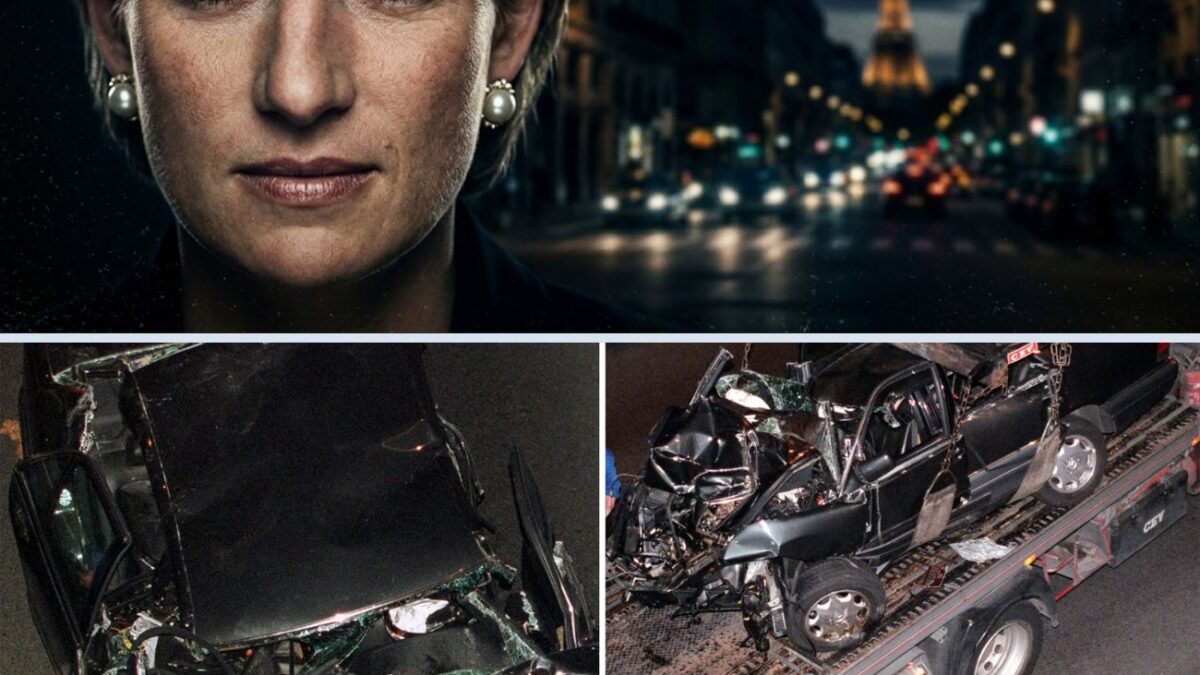
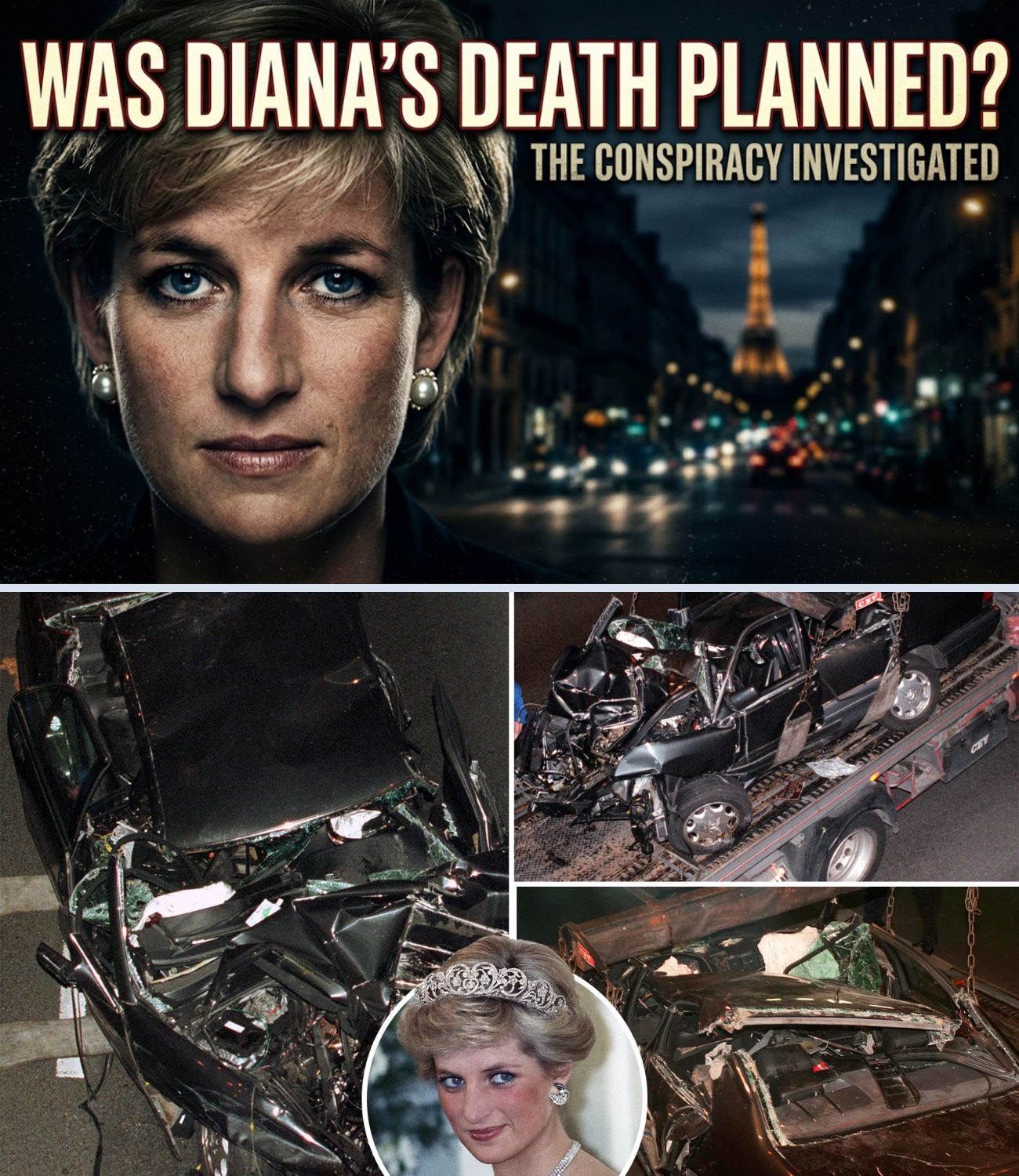
We have been told that at 12:25 a.m. on August 31st, 1997, a black Mercedes sedan crashed into concrete pillar number 13 in the Alma tunnel in Paris, an accident resulting from too much speed, alcohol, and drugs. Was there more than just paparazzi on motorbikes chasing the speeding Mercedes? Is it possible that the driver of a white Fiat Uno was really a British agent? And if so, what was his role in turning the Alma tunnel into Diana’s death trap? Princess Diana expressed fear of British Secret Service operatives working for MI5 and MI6.
Was this fear finally and irrevocably proven correct? Was all of this really just a garden-variety accident involving speed, booze, and drugs? Or is there something British and French authorities aren’t telling us? We’ll attempt to rip open the shroud of secrecy surrounding the death of Princess Diana when we come back.
A mystery that cannot be explained. An enigma that defies reason. A surprising and unexpected answer. To encounter such a mystery first hand may change your life forever. Face to face with the greatest riddles of the ages, the world’s most profound mysteries reach out and touch your life in ways you never imagined possible.
Extreme Mysteries. Do the actual circumstances, evidence, and witnesses of the Alma tunnel crash support the Paris judges conclusion that alcohol, drugs, and high speed caused a fatal crash? Was Henri Paul really drunk at the wheel? Dodi’s father, Mohamed Al-Fayed, is certain that’s not what happened in the Alma tunnel.
“It was a plot, conspiracy to get rid of Diana and my son. And I am not going to rest until get the truth.”
Within 24 hours of the crash, a campaign of disinformation was orchestrated, we believe, by the security services, which showed that Henri Paul, the driver of the car, was three times over the drink-drive limit. This was done before the body samples were even analyzed. There were headlines in the British and the French press showing that this man was “drunk as a pig.”
I went to Paris with Professor Peter Vanezis on Tuesday, just over a day after the fatal crash. And at that time, Peter Vanezis asked for the right to conduct a separate, independent postmortem, as would be the right either in the UK or the United States of America. But this was refused without reason by the French. He then asked to be present or have another person present at any subsequent examination of the body, so that they could take an independent view of that examination. That was not only refused, but on the Thursday the French conducted themselves a second examination of the body when they allegedly then found drugs in his blood.
Some months later we received a toxicology report which showed that there was a trace of drugs in a hair sample that taken from Henri Paul. It showed also that the hair sample had not been properly measured and the drugs in that hair sample were too small to measure. They were the sort of drugs that half of France takes as an antidepressant.
Irrespective of these findings, the press persisted in this report that there was a cocktail of drink and drugs sufficient to cause Henri Paul to lose control of the car. And the press labeled Henri Paul an alcoholic even though tests showed his liver to be normal. It was solely on the back of the highly suspicious blood analysis that the crash was declared an accident.
But do the blood tests really match Henri Paul’s physical appearance and condition immediately preceding the crash? And are we certain that it was Henri Paul’s blood? Perhaps the best judges of Henri Paul’s physical condition are the people who spent time with him that night. Many of them who were around Paul that night were asked if they noticed any unusual behavior.
On Monday morning, as soon as the press reports came out that Henri Paul was drunk, I saw Kes Wingfield. He was the nearest living witness to what happened on that Saturday night. He was the other bodyguard working with Trevor Rees-Jones and had been with Henri Paul all day whilst Henri Paul was driving the backup car. He described his demeanor as exactly the same that night as it had been all day. He said he was not drunk.
Henri Paul had passed a rigorous physical exam to renew his pilot’s license just 3 days before the crash, and the exam revealed no indications that Paul was a heavy drinker or a user of drugs. When French officials finally released a copy of the final autopsy report to the families of the deceased, they immediately engaged independent forensic pathologists to review the written report. Their conclusions were astonishing. Professor Peter Venizelos conducted a 12-hour review of Henri Paul’s autopsy. His family wanted to know if there was any evidence from the examination indicating Paul was an alcoholic.
“No, there was no indication of that at all at the autopsy.”
There is ample evidence of negligent handling of Paul’s blood sample. Blood samples taken from him then were not refrigerated. This raises the real possibility of contamination.
“If samples are not stored at reasonably cold temperatures, then you have the added element of the blood actually slightly decomposing and producing extra alcohol within the blood, and this can give you problems with the analysis.”
Blood alcohol content was lacking, but what they did find still has pathologists shaking their heads. Henri Paul’s autopsy also revealed the inexplicable level of 20% carbon monoxide in his blood. How could that much carbon monoxide get into his bloodstream? Had Paul shown any symptoms of carbon monoxide poisoning before the crash?
“The level that was measured in Henri Paul at the time that he died would indicate that say some 2 hours prior to his death, he might have had a level of 30%. But, if you’ve got a level of about 30%, someone would have a decided headache. You would have real throbbing in the temples. The headache would be unmistakable. There would be certainly a lack of coordination. Doesn’t strike me when you look at the pictures of Henri Paul of a man who is really suffering. It doesn’t look as if he’s got a headache. He’s not massaging his temples to try and reduce the pain in any way. He seems to be someone who is quite relaxed in his environment, in control. He’s talking to people, giving orders.”
The official French report of the accident adopted the explanation put forward by the official French pathologist and toxicologist that the carbon monoxide could have come from the airbags. Is this even possible?
“Mercedes-Benz have confirmed that there is no carbon monoxide in their airbags. Their airbags are designed to save life, not to kill.“
In any event, Henri Paul died instantly. He could not have drawn a breath.
“We’ve also checked the blood of Dodi from sampling, and it shows that he had no carbon monoxide in his blood. The statement put out by the French that the carbon monoxide in Henri Paul’s blood was due to the airbags was blatantly false.”
Is it possible that somehow the blood sample was not even Henri Paul’s? To this day, the French have refused any independent evaluation of Paul’s blood.
“The smoking gun for this investigation would be evidence that the blood tested was not that of Henri Paul’s.”
There were 15 bodies in the morgue that night, and the level of carbon monoxide supposedly in Paul’s blood would be more indicative of someone who had committed suicide by breathing in a car exhaust. The French government, however, will not release any information about any of the other victims so that we can confirm whether or not the blood was actually Paul’s.
If the evidence of this just being your average everyday alcohol, drugs, and excessive speed accident suddenly appears to be on shaky grounds, could it be the crash was in fact a deliberate act, a conspiracy to murder Diana? And why did French authorities try to blame the crash on the dead driver, Henri Paul?
The police arrested some of the paparazzi at the scene. Firstly, for failing to render assistance at the scene, the good Samaritan law, and secondly, invasion of privacy. But 2 years later, the judges dismissed all charges against the paparazzi. Since the judge found Henri Paul, rather than the paparazzi, responsible for the crash, no further investigations or public trials have taken place. Consequently, thousands of pages of investigative material have been kept from the public, and there’s been no opportunity to question any of the witnesses or any part of the report.
From the moment Diana and Dodi arrived in Paris on August 30, the paparazzi seemed to know their every move in advance. Were they somehow tipped off about the movements of Diana and Dodi prior to the crash? If they were, by whom?
Many people are suspicious about intelligence agencies, in large part because I listened 2 years ago in Washington to an innocuous portion of a taped conversation between Princess Diana and a friend of hers, made available to me by an American intelligence officer, who said that they were part of a series collected by the National Security Agency.
When Princess Diana and Dodi returned to the Ritz Hotel, owned by his father, at about 10:00 on that Saturday evening, there was a throng of paparazzi outside the front of the hotel. After the crash, we reconstructed the video footage to show who was actually watching them. And among it was two men who have never been identified. And we believe that these two men were possibly from the security services.
Meanwhile, the Ritz Hotel called Henri Paul, head of security for the Ritz Hotel, who was then off duty, but apparently decided to come back to work immediately. But, there are more question marks surrounding Henri Paul. For example, was he actually an intelligence operative?
“I know that Henri Paul worked for MI6, the British intelligence unit that I worked for. I saw his name in files in 1992 on an operation that I was working on, and he worked for MI6 right until his death.”
According to an American law enforcement official and an American intelligence officer, Paul spent the several hours before the accident with an officer from the DGSE, the French equivalent of the CIA. During the meeting, Paul was paid. He had about $2,300 on him in his pocket when he died. According to two American sources, he discussed Dodi and Diana that night with his French security officer.
Henri Paul had numerous Paris bank accounts totaling over $300,000, which seems to suggest he not only led a double life, it was also steady and lucrative. Did American intelligence officers know the movements of Henri Paul? Can it be proven, in spite of official protests, that American intelligence was watching Diana and Dodi while they were in Paris? The plot, if indeed that’s what it turns out to be, thickens when we return.
Extreme Mysteries. What started as a brief trip to Paris quickly turned complicated and disastrous for Diana and Dodi.
Back at the Ritz Hotel, a decoy plan was devised to evade the growing crowd of paparazzi waiting outside. But, whose plan was it?
At about 20 minutes past midnight, Princess Diana and Dodi left the Ritz Hotel to return to Dodi’s apartment. It’s not clear why the couple decided to leave the Ritz. In a phone conversation, Mohamed Al-Fayed told Dodi to stay there that night. The Mercedes was to leave from the rear of the Ritz, while the paparazzi focused on the limo at the main entrance. It was plain that neither Mohamed Al-Fayed nor London Security Control would have approved. Both Wingfield and Rees-Jones confessed that they did not notify London of this ill-conceived plan, which was contrary to all outlined procedures and instructions.
Curiously, instead of taking the most direct route to Dodi’s apartment from the Ritz Hotel, which was up the Champs-Élysées, it is possible that agents told Paul to drive the other route alongside the River Seine. Henri Paul knew every inch of the road from the Ritz to Dodi’s apartment. He certainly would not have willingly taken the Alma Tunnel route, which would have meant going away from Dodi’s apartment. As the Mercedes approached the Alma Tunnel, chased by a car and at least one motorcycle, his final exit route to the right to the Champs-Élysées was blocked by a motorcycle, which forced him to drive into the Alma Tunnel.
There was a white Fiat Uno waiting at the mouth of the Alma Tunnel, and as the Mercedes approached, the Fiat Uno edged over the center lane, forcing the Mercedes off course. At the same time, a motorcycle pulled in front of the Mercedes, and an eyewitness said that there was a huge flash, which blinded Henri Paul. The combination of speed and the blinding light, along with the intervention of the Fiat Uno, pushed Paul off course, and the Mercedes crashed into the 13th concrete pillar in the tunnel. The paparazzi arrested at the crash claimed that they could not keep up with the Mercedes and were nowhere near when it passed into the tunnel.
Is it possible that the motorbike and white Fiat Uno only looked like frenzied paparazzi pursuing the Mercedes, but were really agents with an entirely different purpose? When former MI6 agent Richard Tomlinson heard about the Alma tunnel crash, it seemed eerily similar to an MI6 plot he had seen earlier designed to assassinate a political leader.
“I saw a plan to assassinate Serbian leader Slobodan Milosevic virtually identical to what happened in the Alma tunnel. It proposed using a powerful laser strobe to disorient Milosevic’s driver as he went into a road tunnel in Geneva. A tunnel is a perfect place for an assassination because there are fewer witnesses. The Alma tunnel is also ideal because there are no crash rails along the central pillars, so it’s a death trap.”
For 2 weeks, the French authorities dismissed the idea that a second car was involved in the crash. Then finally, they admitted to finding a mysterious scratch on the Mercedes that contained paint fragments and the bumper material identified as coming from a white Fiat Uno.
“It was our investigators, not the French police, who found the Fiat Uno. It was found in a garage in Paris and traced to a paparazzi named James Andanson. Andanson was an Anglophile with close connections to the British. According to Andanson, he was in Paris at the time of the crash, but for some unexplained reason, decided to get up at 3:30 a.m., 2 hours after the crash, and board a flight to Corsica from Orly Airport in Paris. The French police and the magistrate accepted an alibi based on a simple gas receipt from Andanson, albeit that the paint and bumper samples from the white Fiat Uno matched those left on the Mercedes.”
Three years later, the Andanson story took an unexpected and sinister turn.
“On the 5th of May, 2000, Philippe Andanson was found burned to death in his car. The car was locked. He could only be identified from dental records. The French officials claimed that this was suicide, but it’s not a suicide known to this world.”
Then, the plot took another startling twist. About a week later, three masked men broke into Andanson’s office at the SIPA photo agency in Paris and shot the security guard.
“The burglars spent 3 hours ransacking the office, and despite frantic phone calls from people in the office, the Paris police never attended. In fact, some people in the photo agency actually felt the burglars were from the French security services. Undoubtedly, the security services were looking for photographs taken before, at the time, and after the crash, which would show the presence of British MI6 officers there.”
Sometime later, in fact, a matter of 36 hours, a photographic agency in London was broken into, as was the home of a photograph agent.
Meanwhile, early that morning, amid all the frantic activity back at the Alma tunnel, the fate of the most famous woman in the world lay in the hands of French emergency workers. According to media reports, Diana was semi-conscious, but had signs of internal bleeding, low blood pressure, and difficulty breathing. And for some as yet unexplained reason, it took 1 hour and 43 minutes from the time of the crash to deliver Diana to a hospital that was only 3.8 miles away. Why?
“The French prefer to stabilize accident victims at the scene, whereas American emergency technicians rush them to the hospital as soon as possible. But, even given the differences in approach between the two systems, some American experts I spoke to consider the delay inexcusable.”
Just a month before the crash, the Chicago Tribune had reported that Diana told reporters from the Al-Fayed yacht, “You are going to get a big surprise with the next thing I do.” The reason Dodi and Diana arrived to Paris on the 30th of August to pick their engagement ring.
Security camera video footage taken by the Ritz Hotel clearly shows Dodi, accompanied by his bodyguard Trevor Rees-Jones, going to the Repossi Jewelers opposite the Ritz, where he picked up the engagement ring for Princess Diana. This should put to rest claims by the British establishment press that the engagement was a sham. It should also put to rest the claims in the book supposedly written by Trevor Rees-Jones that there was no engagement. I do believe that this book was not written by him, but by the security services.
Meanwhile, back at Buckingham Palace, how was the royal family responding to Diana’s rapidly developing relationship with Dodi Al-Fayed?
“Prince Philip was openly opposed to the relationship between Princess Diana and Dodi, who he described as an oily bed-hopper.”
“Prince Philip will never have allowed my son, as an Egyptian, naturally to be the stepfather of Prince William and future king.”
Ironically, on the day of the crash, the Sunday Mirror published an article describing Prince Philip’s views on the Diana-Dodi Al-Fayed relationship. An unnamed friend of the Royals reported to the Sunday Mirror, “Prince Philip has let rip several times recently about the al Fayeds. He’s been banging on about his contempt for Dodi and how he is an undesirable stepfather to William and Harry. Diana has been told in no uncertain terms about the consequences should she continue with the relationship with the Fayed boy. Options include possible exile, although that would be difficult.”
That the article actually appeared on the day of the crash makes its final sentence particularly ominous. But now the royal family may decide it is time to settle up. But settle up how? And what were the links between MI6, the royal household, and American intelligence agencies?
“MI6 is routinely asked by the royal household to provide intelligence on potential threats to members of the royal family. This service would frequently extend to asking friendly intelligence services, such as the CIA, to place members of the royal family under discreet surveillance, ostensibly for their own protection. MI6 documents reveal vital information about the surveillance of Princess Diana in the days leading up to her death.”
Did Diana herself feel threatened by the royal family and the British secret services? One of Diana’s former love interests, James Hewitt, believes that Diana feared for her life. And according to Hewitt, he was himself threatened during their relationship. And Diana confided her fear of the Royals to Mohamed al-Fayed.
“And always she expecting that something going to happen to her one day. She flying a helicopter and they will—the helicopter will be blown up or anything, you know, because all the time she is suspicious that the palace would not let her survive.”
But is there proof that both British MI6 and American intelligence agencies were conducting full-blown surveillances of Diana and Dodi in their final months and days, is there anything that would add credence to Al-Fayed’s accusations?
“We’ve learned that Richard Spearman, the chief of staff to the director of MI6, the late Sir David Spedding, and Nicholas Langman, a senior MI6 agent, were at the British Embassy in Paris immediately prior to and after the crash.”
“We’ve confirmed the NSA has more than 1,000 pages of documents in its possession. The CIA and the FBI have also confirmed they have records. We’ve initiated litigation against the government, but so far it’s blocked every effort we’ve made to try and gain access to this information.”
The trail of evidence appears to lead to people and top-secret documents of both British and American intelligence services. And recent testimony reveals that Diana spoke freely of her fears for her life at the hands of the British secret services, MI6 and MI5. She’s reported to have stated publicly, “Someday, I shall go up in a helicopter and it’ll just blow up. MI5 will do away with me.”
“The evidence and facts which I know, for example, the plan to assassinate Slobodan Milosevic, the fact that Henri Paul was a paid informer for MI6, all of these facts point to me very strongly that this crash was engineered and that it was an assassination, a murder.”
Some questions about how, what, or who killed Princess Di will likely never be answered to everyone’s satisfaction, but sooner or later, the world will discover who killed Princess Di.
You Might Also Enjoy

“We Thought They Would Negotiate”—What Argentine Soldiers Said When The British Attacked Goose Green

“You’ll Never Finish My Ruck March, Limey” — US Sergeant Who Challenged the SAS, Then Fell Out First






