“We Can’t Hit Anything! Call The Brit!” — The Moment US Marines Begged An SAS Sniper To Save Them
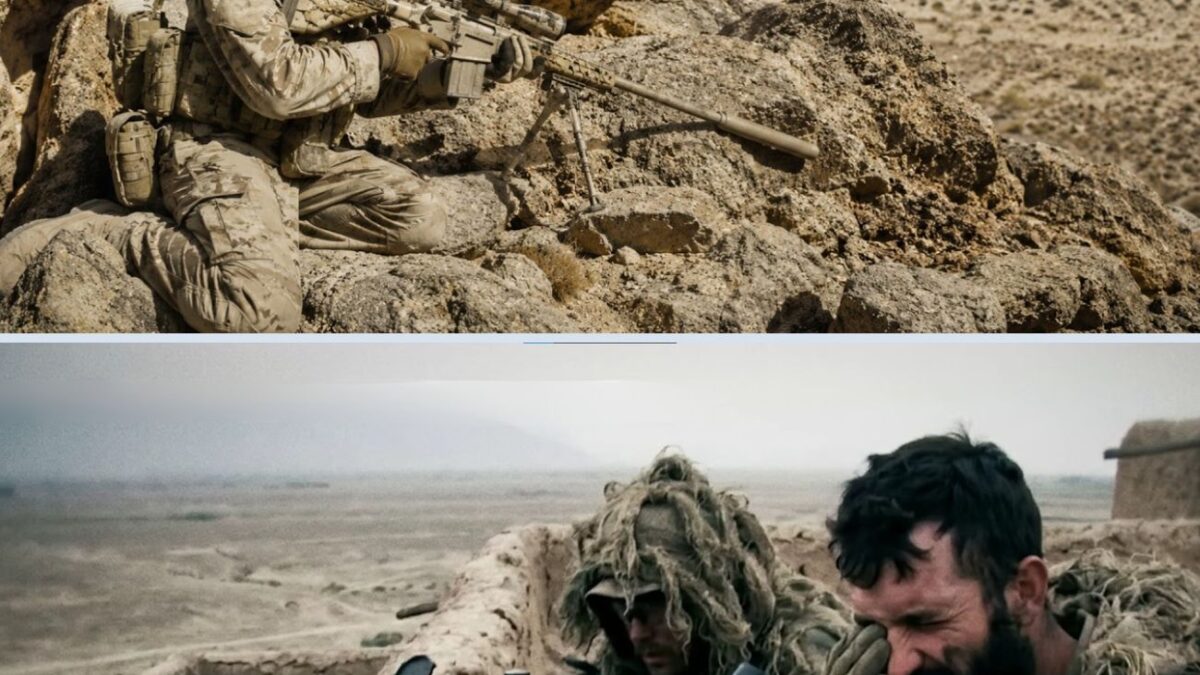
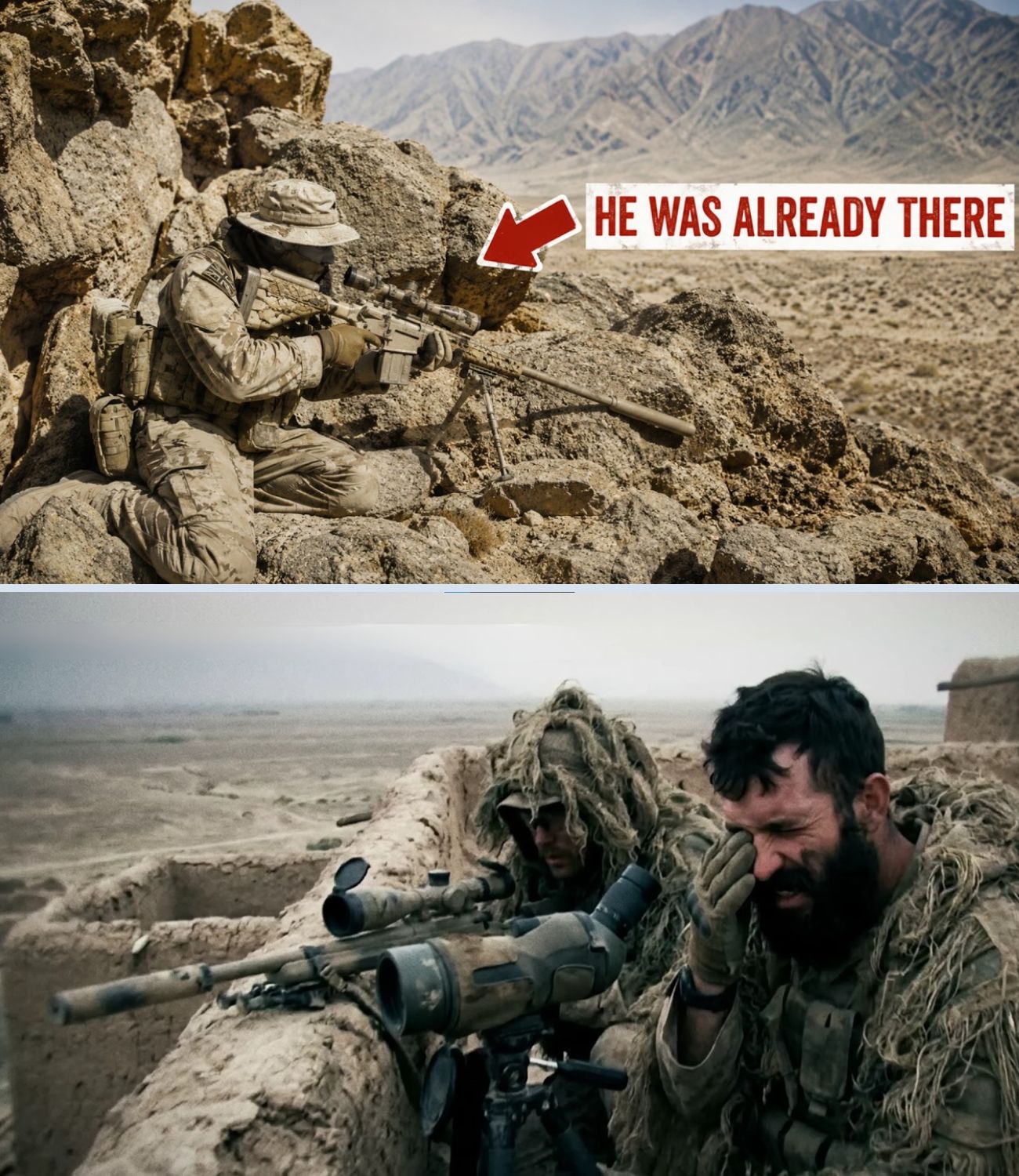
Intelligence declared that the enemy held the open market. It was a 700-metre expanse of unbroken canopy, and crossing it was considered a death wish. The British operator and the American planners had entirely different approaches to the route. First, the Brit studied satellite photographs of Ramadi taken eighteen months prior. He spotted a viable path that the American planners hadn’t even considered, largely because nobody had maintained an updated database.
This meticulous nature was forged in the Brecon Beacons, where he had once crawled on his belly for forty kilometres, his visibility reduced to nothing. In that environment, one wrong step could cost you your life. He was given a six-figure grid reference and was expected to reach it flawlessly, with absolutely zero margin for navigational error.
During Special Air Service selection, a 99% failure rate was considered normal. But physical endurance and map-reading were merely the foundation. The SAS training team spent 44 months honing skills that didn’t even exist in American special operations doctrine. A sniper learned to calculate bullet drop by feeling the temperature of the brass. He learned to read the wind by watching the movement of plastic bags snagged on barbed wire a thousand metres away.
He left the forward operating base and covered 2.3 kilometres without triggering a single motion sensor laid down by US forces. After the operation concluded, a separate briefing revealed his movements, backed by physical evidence that baffled the Americans.
No single source could tell the whole story. A Marine stationed two kilometres from the surveillance line heard a single rifle report. There was no muzzle flash. No further shots were fired.
Stafford, the American planner, made a note in his logbook regarding the British operator. The updates rolled in slowly. By the 47th minute, a patrol reported a fortified enemy position. They had found a solitary boot print in the dust—one that the patrol leader had managed to spot just before the wind wiped it away. The tread pattern didn’t match anything in the American inventory.
Shortly after, Stafford received a report that completely shifted their understanding of the battlefield. A surveillance drone had captured footage of an individual moving across an open 47-metre bridge at an astonishing pace. The image analyst noted that the movements were far too calculated to be a regular insurgent. The figure knew exactly where the blind spots were, navigating obstacles with a rehearsed fluidity.
But the true anomaly was a shadow. The analyst noticed a shadow cast by a corrugated sheet, angled strangely against the morning sun.
“Sir, whoever put that corrugated sheet up in the morning and positioned it is creating a shadow where there shouldn’t be one,” the analyst said.
“Explain it to me,” Stafford replied.
“Whoever he is, he knew precisely the trajectory of the sun. He created a hide out of thin air that even thermal cameras can’t detect, because the material absorbed the ambient heat all morning,” the analyst explained.
The operator’s plan hadn’t started in Ramadi; it had begun in the jungles of Brunei. There, he had spent five weeks learning to construct a hide completely invisible to aerial surveillance. He had been taught to calculate the angle of the sun based on the season and the depth of his cover. He learned to select materials that matched the ambient temperature perfectly. The philosophy was simple: when the enemy surrounds you, you forfeit your presence, not your lethality. Complete invisibility was the only option.
Later that day, an unknown building took fire. An American Marine was hit, his ballistic vest absorbing the brunt of the impact. He was knocked to the ground but survived.
The atmosphere in the command centre grew incredibly tense. The enemy sniper had fired once, and eleven seconds later, fired again. The crack echoed across the district.
Then, a completely different shot rang out. There was no sound of a muzzle blast from the origin point, no flash, and no acoustic sensor picked it up. Forty-three seconds later, the drone operator monitoring the rooftop reported in.
“Target moving. Profiling does not match the enemy,” the drone operator stated.
The room fell silent. A Marine lieutenant scoffed at the idea of the British operator’s involvement.
“What exactly is he doing out there?” the lieutenant asked.
He didn’t realise the British operator was navigating a completely different psychological battlefield. While the Americans relied on technology to hunt the enemy sniper, the Brit was looking for subtle tells: a scratch on a wall where a rifle barrel had rested, or discoloured concrete where someone had lain for hours.
He understood the enemy shooter’s mindset, not just his location. The enemy’s shot at the Marine had been designed to draw a reaction. The British operator knew that a trained marksman would inevitably try to confirm his kill or check his hide. He anticipated the movement.
Following the engagement, the insurgent fighters in the area were eliminated by the battalion’s exploitation team in the ensuing chaos. When Stafford finally debriefed the Brit, he tried to piece it together.
“So, we almost knew their commander would be in that building at that specific time,” Stafford said.
“I suppose that is one way to look at it,” the operator replied, not even looking up from cleaning his rifle.
The Brit’s true brilliance was his patience—the deliberate choice not to take the first available shot. By waiting, he allowed the situation to develop, ultimately identifying and eliminating the true high-value target.
The logistical disparity was staggering. During that deployment, the average cost of an American sniper mission—factoring in helicopter support, quick reaction forces, and communications—was $87,000 per outing. Seventeen missions totalled nearly $1.48 million.
The British operator had purchased his own supplemental gear for about $1,100. He inserted on foot. He required no air support, no standby reaction force, and maintained complete radio silence. The total cost of his mission was roughly $3,000. He used a single bullet.
Three weeks later, a classified report circulated through Marine Special Operations Command. It noted that US sniper teams in Helmand province had an 11% kill ratio per deployment. The contrast was impossible to ignore.
Eight years later, in 2019, Stafford retired as a Marine Colonel. His final posting had been the Director of the Scout Sniper School. At his retirement ceremony, the attendees expected him to tell a grand, heroic tale about that endlessly patient British operator. Instead, Stafford stepped up to the podium and looked at the new graduates.
“Your sniper habits are predictable, gentlemen,” Stafford said.
The audience chuckled, assuming it was a self-deprecating joke about American tactics. Stafford didn’t correct them.
A few months later, Stafford received a parcel at his home. There was no return address. Inside was a small wooden box containing a single spent .338 Lapua Magnum cartridge. There was no note, no explanation, and no indication of who had sent it.
Stafford understood perfectly. He placed the brass casing on his desk, right next to a photograph of his old battalion.
“What’s that from?” his wife asked.
“Just a memory of an old campaign,” Stafford replied.
It was a tribute from a man with no public identity and a heavily redacted service record. A man who had endured 71 hours of absolute silence, waiting for the perfect moment to expend just one round.
You Might Also Enjoy

“We Thought They Would Negotiate”—What Argentine Soldiers Said When The British Attacked Goose Green

“You’ll Never Finish My Ruck March, Limey” — US Sergeant Who Challenged the SAS, Then Fell Out First






