“We Could Only Watch” — What US Troops Said After Seeing the SAS in Sangin
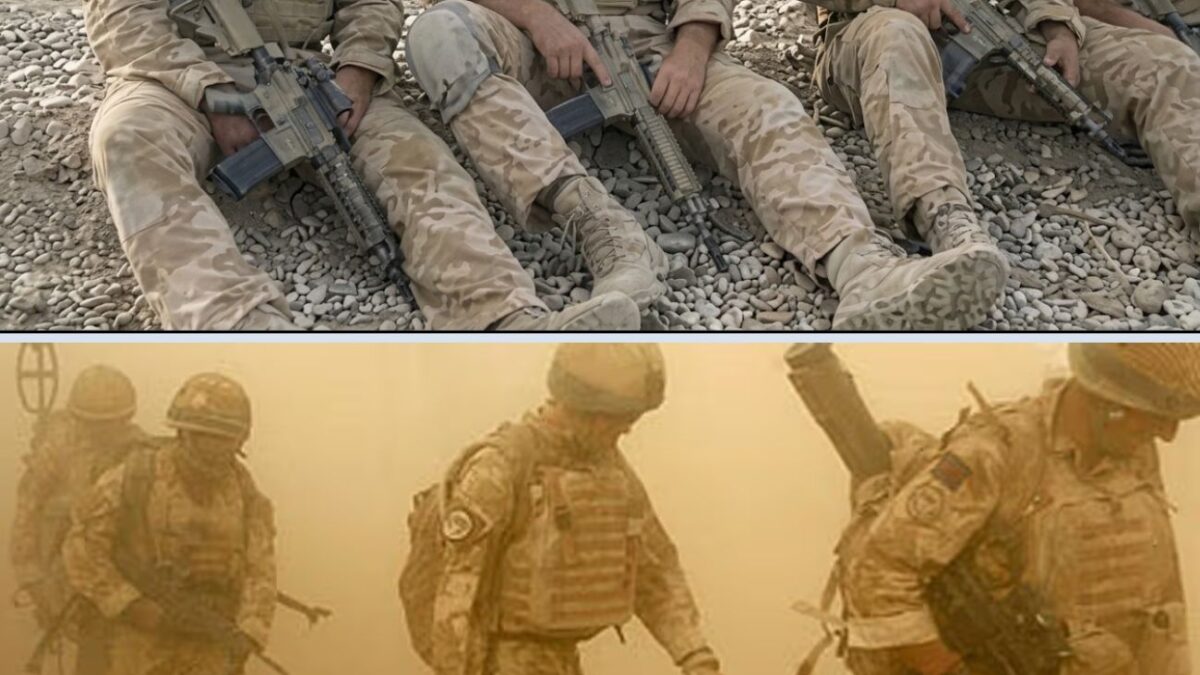
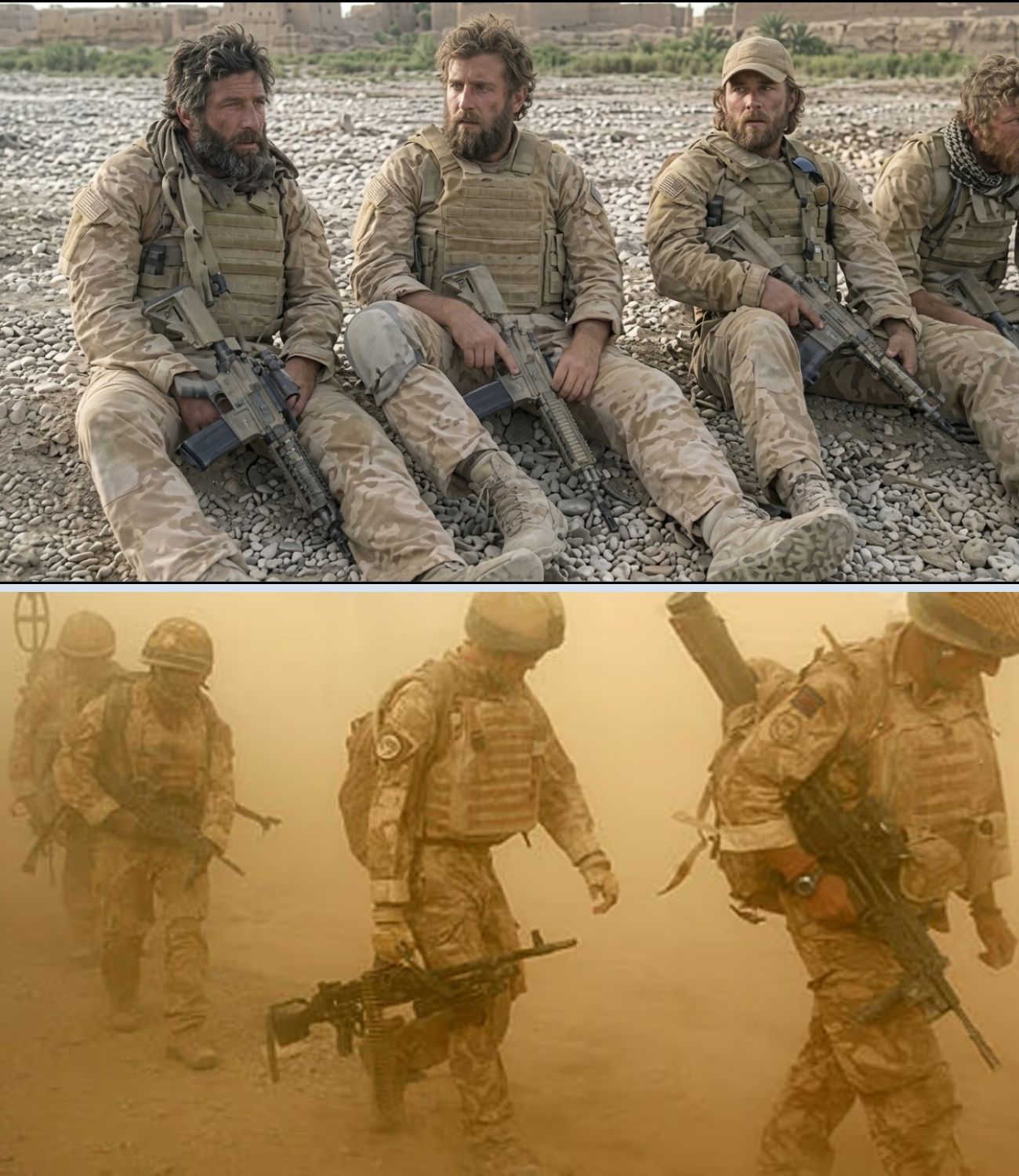
July 2010, Sangin District, Helmand Province. The air tastes of dust and something chemical, ammonium nitrate. The smell that in this valley means either fertilizer or the bomb that will kill you tomorrow. There is no in between in Sangin. Everything here serves two purposes and one of them is always death.
Staff Sergeant Kyle Deckard is sitting on a Hesco barrier outside Patrol Base Wishton, body armor still on, M4 across his thighs. He is 28 years old from Beaumont, Texas and he has a photograph of a baby girl he has held exactly once, tucked into the admin pouch over his heart. He cracks his knuckles, left hand, then right, the way he does before every patrol brief, the way he did in Ramadi, the way he did in Marjah.
He has been in Sangin for 11 days. Three Marines from his platoon have already been medevac’d, two from buried devices, one from a round through the pelvis fired by a man they never saw. Deckard does not crack his knuckles because he is nervous. He does it because it is the last thing that still feels like routine. The stars above Sangin are so bright and so dense that Marines from Chicago and Detroit walk outside and stare at them like tourists.
Deckard does not look up anymore. He is watching something he does not understand. Four men are preparing to leave the wire. Not a platoon, not a squad, four men. They move with an economy that looks like laziness until you watch more carefully and realize it is the opposite. Every motion is deliberate, nothing wasted, nothing checked twice because everything was checked hours ago. They wear no helmets.
Their plate carriers are slimmed down to almost nothing, a single front plate, a single rear plate and pouches so flat they look empty. No rucksacks, no machine guns, no visible radios except small earpieces and a whisper microphone barely visible against the cheek. One of them, older with a calm that borders on eerie, is drinking tea from a steel mug.
He finishes it, sets the mug on a sandbag with the care of a man placing a chess piece, and picks up a carbine so short it looks like a submachine gun. The four men walk toward the gate. Nobody says goodbye. Nobody calls out a pre-mission brief. There is no formation, no radio check anyone can hear, no vehicle warming up to take them somewhere.
They just walk into the dark and the dark takes them. Deckard looks at the Marine next to him.
“What the hell was that?”
12 hours before Deckard watched those men disappear, there had been a coordination meeting in the operations center at Forward Operating Base Inkerman, 2 km north of Patrol Base Wishton. Captain Aaron Mosley, Lima Company Commander, 32 years old, an Annapolis legacy, his father had been a Navy captain, was briefing his platoon commanders on Operation Hammerfall.
The target was a compound in the village of Wisan East, 900 m south of the patrol base, where an IED facilitator known as Loy Jan Bah had been operating for weeks. Loy Jan Bah was responsible for the devices that had killed or maimed 14 Marines in 21 days. He built the circuits. He drew the maps. He told the implacers where to dig.
Mosley’s plan was textbook Marine Corps, and it was textbook for a reason. Cordon with two platoons, breach with a third, two AH-1W Super Cobras overhead, an AC-130 gunship on call, eight mine-resistant vehicles, a Reaper drone providing continuous overwatch, dedicated casualty evacuation staged at Inkerman, 130 Marines, millions of dollars in air assets, a 12-page operations order that had been briefed, rehearsed, and wargamed twice.
This was how you took down a compound in Sangin if you wanted your Marines to come home. 3rd Battalion, 5th Marines, the Darkhorse, had already buried too many of its own. Mosley believed in mass, in firepower, in armor that stood between his men and the shrapnel that haunted every road and footpath in this district.
Then the SAS liaison walked in, a quiet major with no rank insignia visible, and a voice like he was ordering coffee. He informed Captain Mosley that a four-man team from 22 Special Air Service would be conducting a deliberate detention operation against Loy Jan Bah that night, before dawn. They would like access to the Marine drone feed. That was all they needed.
Mosley’s response was immediate. He did not lower his voice. He did not need to. The room was his. Two of his lieutenants laughed. The SAS major did not. He nodded once, said,
“Appreciated,”
and left the room. Mosley was not a cruel man. He was not even wrong by his own experience. In Sangin, small units died.
His experience said so. The ground said so. The 14 Marines in body bags and on operating tables said so. His dismissal came from a place the dead had carved into him. That night, four men with no helmets, no vehicles, no air support of their own, and a combined equipment load lighter than a single Marine’s rucksack walked into the most dangerous square kilometer in Afghanistan.
94 minutes later, they walked back, and the company-level operation plan for dawn was canceled. This is the story of what happened in those 94 minutes. And what the Marines said when they watched it happen. 2200 hours, Patrol Base Wishton. The base was small, a cluster of buildings inside HESCO barriers and razor wire, surrounded by the maze of Sangin’s compound walls.
For the only time during this deployment, the Marines and the SAS team were in the same physical space. The contrast was visible from across the courtyard. In the platoon area, the Marines preparing for the dawn operation were going through pre-combat checks. The process was loud, familiar, and heavily laden.
Corporal Nate Rosales, 24 years old from Tucson, Arizona, machine gunner, opened the feed tray cover of his M240B and kissed it. His ritual, his prayer. Then he checked the headspace and timing for the third time that day. The gun weighed 27 and 1/2 lb empty with a 100-round assault pouch and a spare barrel.
The weapon system pushed close to 40 lb before Rosales added his own body armor, helmet, water, sidearm ammunition, rations, batteries, radio, and first aid kit. His patrol load for the morning would be 97 lb. He was 5 ft 9 in. Other Marines were loading magazines, taping infrared chem lights to their helmets, running radio checks that echoed off plywood walls.
There was a controlled urgency. These men were professional, experienced, and thoroughly equipped. Every piece of gear existed for a reason written in blood. The body armor was heavy because IED fragments were real. The helmets were mandatory because snipers in Sangin aimed for the head. The machine guns were carried because when an ambush opened at 60 m, suppressive fire was the margin between dying in a ditch and fighting out of it.
Deckard walked through, checking his Marines’ equipment. He was satisfied. This was what a fighting force looked like. 30 m away, in a room that used to be a goat pen and still smelled like it, the four SAS operators were preparing in near silence. Taff, the team leader, a warrant officer class two whose real name the Marines would never learn, was sitting on an ammunition crate, drinking tea from the same steel mug.
He was 38, Welsh, 17 years in the regiment. He had the build of a long-distance runner who also happened to be able to carry another man over a wall. Wiry, dense, nothing excess. He was reviewing a hand-drawn sketch of the target compound on a piece of paper he would burn before stepping off.
Sergeant Danny Harlan, 34, from Burnley, Lancashire, was taping a green filtered penlight to his left forearm with electrical tape. The tape cost pennies. The penlight cost £2. He had been doing this before every night operation for 7 years, and it had never failed him. Across the back of his left hand ran a scar. A breaching charge misfire in Baghdad, 2005.
On his chest, beneath his slimmed-down plate carrier, he wore a silver expedition compass on a lanyard. A $35 civilian hiking compass. He also had a Garmin GPS. He trusted the compass more. The youngest trooper, Jake Elliott, 26, an ex-Royal Marine from Poole, Dorset, who had passed selection on his first attempt, was performing a function check on his suppressed L119A1 carbine, a Colt Canada variant with a short 10-in barrel.
The weapon looked like a toy next to the rifles the Marines were carrying. Elliott worked the action once, checked the suppressor mount, and set it down. Entire process, 11 seconds. Then he sat still and said nothing, which was apparently his default state. Deckard watched from the doorway. He turned to Rosales, not quite quietly enough.
“What the hell are they carrying? That’s it. My ruck in Ramadi weighed more than all four of those dudes combined.”
He was not far off. The SAS patrol’s total load, all four men, was approximately 140 lb. Deckard alone would carry 97. At 0130, Taff finished his tea. He set the mug on the sandbag. He looked at his three men and said, calmly, as though suggesting they go for a walk,
“Same as Musa Qala. In through the soft side. Don’t rush it. If it’s not there, we walk away and try again Thursday.”
That was the brief. The whole brief. A fourth operator, unnamed, never introduced, adjusted his gear and stood at 0145. No radio call, no formation. The four men walked toward the gate of Patrol Base Wishton. They did not look back.
The dark swallowed them. For men outside the wire, the alleys of Sangin closed around them like a throat. Harlan was on point. He flipped down his PVS-31A binocular night vision goggles, $11,000 of American-made glass, ironically strapped to a British head, and the world turned from absolute black to a granular green-white phosphor landscape.
The compounds loomed on either side, mud walls thick enough to stop rifle rounds. The alleys between them were barely wider than a man’s shoulders. Grape furrows, deep irrigation ditches cut into the earth, ran perpendicular every 30 m, forcing the patrol to step down, cross, and step up again in a rhythm that would have exhausted a less conditioned team inside an hour.
The pace was slow, deliberately slow. They were not rushing to the target. They were reading the ground. Harlan navigated not by GPS, but by the compass on his lanyard, counting paces, reading the angle between walls. The alleys in Sangin were too narrow and too walled in for satellite positioning to provide reliable direction at the resolution needed to distinguish one compound from the next.
The compass did what a $12,000 military GPS could not. It read the gap between two walls where satellites lost their line of sight. There was no sound except dogs. Dogs barked constantly in Sangin, from compounds, from fields, from rooftops, at everything and nothing. This was both a curse and a blessing. The background noise masked movement.
The SAS patrol moved between barking sequences. When a dog started up close, they froze. When it faded, they advanced. The ammonia smell that meant either fertilizer or death hung in every alley. Thicker here in the green zone, where irrigation ditches fed the fields and the same ammonium nitrate fed the bombs.
Meanwhile, at Patrol Base Wishton, Deckard was on the roof of the command post looking through his rifle optic into the dark. He could see nothing. The SAS had left 8 minutes ago and had already been absorbed by the terrain as though they had never existed. In the operations room below, three flat screen monitors showed the Reaper feed, grainy infrared imagery captured from 18,000 ft.
The drone, operated by a crew at Creech Air Force Base in Nevada, 6,000 mi away, was tracking four small white figures moving through a maze of compound walls. The figures moved in a pattern that did not look like a military patrol. They drifted. They paused for long periods. They doubled back. To the Marines watching, it looked disorganized. It was the opposite.
Every pause was a listening halt. Every doubling back was a route clearance. They were probing the sound environment ahead of them the way a blind man reads braille. Except they could see perfectly. They were reading noise, not light. Gunnery Sergeant Ray Pacheco, the senior enlisted man in the operations room, 36 years old, 18 years in the Corps from San Diego, watched the screen and said nothing.
He had seen enough combat to know that what looked like wandering was something else entirely. He just did not know what yet. The patrol was 600 m from the patrol base when the complication hit. A compound door opened 40 m ahead. Light spilled into the alley, yellow kerosene lamp light, harsh and blinding through night vision.
A man stepped out and walked directly toward the patrol. The four operators were in single file in an alley less than a meter wide. There was nowhere to go, no doorways. The grape furrows were behind them. The man was 30 m away and closing. Taff’s voice came through the personal role radio, a lightweight encrypted set that allowed whispered communication at ranges up to 500 m.
“Stand still.”
Two words through bone conduction earpieces. That was it. Four men in a meter-wide alley, weapons up, night vision on, standing absolutely motionless. The man walked toward them. 20 m. 15. He was carrying a jug of water, probably from a communal pump. He was not Taliban. He was a farmer getting water in the dead of night because the pumps were cooler and the lines were shorter. At 7 m, he stopped.
He looked up the alley. Through his naked eyes, in near total darkness, he could see nothing. Four men in camouflage, faces blackened, standing within spitting distance. He paused for 5 seconds that lasted 5 years. Then he turned and walked back into his compound. The door closed. The light vanished. On the Reaper feed, the Marines watched it happen in infrared.
Four white figures, one white figure approaching, a pause, and then the single figure retreating. Rosales, who had come into the operations room to watch, exhaled audibly.
“How did he not see them?”
Pacheco, without looking away from the screen,
“He was looking for people, not statues.”
The patrol continued. At 0219, they entered the final approach, a dense cluster of compounds around the target building.
The alleys here were roofed over in places with wooden beams and straw, creating tunnels impervious to overhead surveillance. The reaper feed showed the four white figures enter one of these tunnels and disappear. $14 million of airframe and sensor ball, and it was staring at a mud roof. The screen showed nothing. The SAS were not providing radio updates.
Mosley, who had come into the operations room to monitor, looked at the blank screen and then at Pacheco. Neither man spoke. The silence in that plywood room, with its maps taped to every wall and the smell of coffee that had been on the burner for 7 hours, had physical weight. Outside, Rosales was back at a sandbag position on the perimeter, his M240B trained south, the direction the SAS had gone.
27 lb of sustained fire capability, and he had been told not to use it unless the SAS sent a code word that meant they needed help. The code word was foxglove. He had not heard foxglove. His fingers stayed outside the trigger guard. He could hear his own heartbeat. What the Reaper could not see, and what the Marines in the operations room could not know, was happening at ground level in near total silence.
The SAS patrol had split into two pairs. Taff and Harlan approached the target compound from the south, the soft side. The wall that faced away from the village center, the side with no door, no window, just 18 in of dried mud. Elliott and the fourth operator looped east to cover the single exit. Harlan reached the compound wall. He pressed his ear against the dried mud.
He could hear a television, a Pashto language program, tiny audio from a cheap speaker, one male voice speaking softly. He held up one finger to Taff. One voice confirmed. Taff keyed his radio. Three words.
“Elliott, set, go.”
The gate on the east side was steel, corrugated metal on a crude welded frame. Elliott did not kick it. He did not use explosives. He inserted a modified Halligan bar into the gap between the gate and the frame and applied steady pressure. The mechanism was a simple padlock hasp, screws driven into dried wood. The screws pulled free with a sound like tearing paper. Time from tool placement to gate open, 8 seconds.
On the south side, Taff and Harlan went over the wall. Harlan cupped his hands. Taff stepped, boosted, rolled over the top, and dropped inside. Harlan followed using the same mud wall surface cracks he had identified through the green white world of his night vision. The wall was 18 inches thick and 6 feet high.
Time from approach to both men inside, 12 seconds. They were inside the compound courtyard. The television sound was coming from a ground floor room. The door was wood, old, swollen in its frame, latched from the inside with a drop bar. Elliott came through the east gate. He and the fourth operator took positions covering the courtyard and the single staircase to the roof.
Harlan placed himself beside the wooden door. Taff stood on the opposite side. Harlan reached across and tried the latch. It did not move, barred from inside. Elliott’s suppressed carbine came up. The sound it made was no louder than a palm slapping a table. One round into the wooden drop bar at the point where it seated into the wall bracket.
2,800 lbs of Canadian engineering, built to kill quietly, but in this case, killing a piece of wood. The bar splintered. Harlan pushed the door open. They are inside. The room is 12 ft by 10, mud walls, a rug on the floor, a television flickering in the corner, and a man sitting against the far wall on a sleeping mat.
Loy Jan Bah, the IED facilitator who has killed or maimed 14 Marines in 3 weeks, is a thin man in a gray shalwar kameez with a trimmed beard and wire-rimmed glasses sitting on a pile of papers beside him. He is not armed. There is no weapon in the room. Taff enters first, two steps to cross the room.
He places a hand on the man’s shoulder and pushes him face down onto the mat. Harlan is behind him, flex cuffs out. The man’s hands are secured behind his back in 4 seconds. He has not made a sound. His eyes are wide. The room smells like green tea and dust. Elliott enters and begins exploitation. The rapid intelligence collection that turns a capture into a gold mine.
Under the sleeping mat, a Nokia cell phone. In a plastic bag behind the television, a Toshiba laptop. Folded inside a copy of the Quran on a shelf, a hand-drawn map with markings and Pashto notations. Elliott does not know it yet, but what he is holding will save lives that have not yet been threatened. Target secured.
Taff keys his radio. One word to the SAS liaison at Forward Operating Base Inkerman.
“Jackpot.”
In the operations room at Patrol Base Wishton, the radio crackles. Every Marine in the room hears it. Mosley sets down his coffee. 0234 to 0247. 13 minutes inside the compound after the target was secured.
The team was methodical. Harlan photographed the room, the papers, the sleeping mat, the position where Loy Jan Bah had been sitting. Elliott bagged the phone, the laptop, the map. The fourth operator maintained security in the courtyard, watching the darkness for any sign that the neighborhood had woken. Loy Jan Bah was walked out through the east gate, barefoot, flex-cuffed, silent.
Taff walked behind him with one hand on his shoulder, guiding, not shoving. A man who is not heard, not panicked, and not shouting does not alert the neighborhood. This was not brutality. This was craft. Extraction began. Back through the alley maze, same route in reverse. The sergeant from Burnley on point again, compass out.
The pace was fractionally faster. They had what they came for, and the calculus tipped toward speed, but only fractionally. They still froze when dogs barked close. They still paused at every junction. At 0305, the Reaper picked them up again. Four white figures emerging from the roofed-over section, plus a fifth figure walking between two of them.
In the operations room, the Marines saw the fifth figure and the room shifted. Everyone leaned forward. Everyone knew what the fifth figure meant. Rosales, on the perimeter, saw movement in his night vision at 300 m. Figures approaching from the south. His thumb moved to the safety. Then his earpiece crackled. The SAS voice.
“Friendlies inbound your position from the south. Four plus one.”
Rosales moved his thumb away. His hand was shaking, not from fear, from the sheer weight of what he was processing. The gate at Patrol Base Wishton opens. Four men walk in with a fifth, barefoot, flex-cuffed, blinking in the red lens glow of a single flashlight.
Deckard is there. Rosales is there. A dozen Marines who could not sleep are there. They stand in a loose semicircle, watching. 94 minutes. Step off to return. Four men, zero shots fired in anger, zero casualties on either side. One high-value target captured alive. One phone. One laptop. One map. 16 minutes inside the target compound.
The company-level operation plan for dawn, 130 Marines, eight armored vehicles, two attack helicopters, a gunship on call, a drone overhead, 12 pages of operations orders, was canceled. Four men had already done it in the dark without firing a shot. The captain, who had promised to leave a light on, was standing in the operations room.
He was looking at the drone feed replay. He was looking at the flex-cuffed man being led to a holding area. He did not speak. Not a word. The reactions were quiet. This was not a film. There was no cheering. Gunnery Sergeant Pacheco stood in the operations room doorway, arms crossed. He watched the SAS team hand Loy Jan Bah over to the intelligence section.
Then he said, to no one in particular and everyone in the room,
“I’ve been in the Marine Corps for 18 years. I have never seen anything like what just happened.”
Nobody argued. Rosales found Deckard on the roof. His voice had that cracked quality of a man rearranging his understanding of what is possible.
“We were sitting there talking about how they were going to get killed. And then they walked back in carrying the target’s phone, his laptop, and his maps. Four guys, 90 minutes. I need to rethink my entire career.”
Deckard did not answer for a while. The stars were still there. Sangin was still there. His knuckles ached.
Inside the goat pen room, the SAS team was already debriefing. It took 4 minutes. Taff asked each man one question,
“Anything different next time?”
Elliott’s answer, when asked how the four-man team had cleared a compound that a Marine platoon had been tasked to assault at dawn,
“We knocked.”
No celebration. No backslapping. The sergeant from Burnley made tea. Elliott stripped and cleaned his weapon. The fourth operator went to sleep. Outside, the sky began to lighten over Sangin. The call to prayers sounded from a mosque to the north, tinny, warped by the speaker, floating across the compound walls and the grape furrows and the 11 IEDs that were still in the ground, but would be found that day because of a map drawn on notebook paper by a man now sitting in a holding cell.
Deckard stood on the roof and watched the sky turn gray. He cracked his knuckles, left hand, then right. Somewhere in Beaumont, Texas, his daughter was sleeping. Somewhere in the operations room below, the 12-page order for Operation Hammerfall was being filed without a completion stamp. He thought about what 94 minutes looked like from the other side.
In the weeks that followed, two things changed at the institutional level. First, 3rd Battalion, 5th Marines established a formal liaison protocol with the SAS task force in Helmand, where previously the special operations teams and the conventional Marine units had operated in parallel with minimal coordination. The Loy Jan Bah capture demonstrated that small team surgical operations could achieve what company level clearances could not.
Specifically, the capture of high-value individuals alive along with their intelligence networks without the collateral disruption that large operations cost. Captain Mosley sat in a meeting at Inkerman with the same SAS major he had dismissed. This time he was asking questions, specific questions. How do you navigate the alleys without reliable satellite positioning? How do you train for the civilian encounter scenario? What is your trigger point for aborting? The major answered each one.
Moseley wrote notes in a green logbook. He never repeated the joke about the missing persons report. Second, Marine Corps Special Operations Command quietly requested a briefing on the SAS deliberate detention methodology. The request went through coalition channels and arrived at Hereford 6 weeks later. The details of that briefing remain classified.
Three weeks after the Loy Jan Bah operation, Marines from 3rd Battalion, 5th Marines detained a member of the same IED cell during a cordon and search operation south of Sangin, cataloged as detainee 1147. He was questioned at Camp Bastion’s tactical interrogation facility. Among his statements, translated from Pashto, was this,
“We knew when the Americans were coming. You could hear the vehicles from 2 km. You could see the drones, the noise they make, like a mosquito that never lands. We had hours to prepare or to leave. But the British who come at night, we called them Siha, ghosts. There was no warning, no sound. The door would open and they were already inside your room. Loy Jan Bah was taken from his bed. His guard was sleeping in the next room and did not wake up until after they were gone. How do you fight men who are already inside your house before you know they have come?”
Separately, a signals intelligence team at Inkerman intercepted radio chatter the morning after the operation. The translated transcript read,
“Loy Jan Bah is gone. The house is empty. No one heard anything. Do not sleep in the same place two nights. The night people are in Sangin.”
Months later, in a separate operation, a Taliban squad leader captured by British forces in Nad-e-Ali district stated during tactical questioning,
“The Americans fight like a storm. They are loud and they are powerful and you can survive a storm if you know it is coming. The British special ones fight like a sickness. You do not know you are infected until it is too late.”
The phone taken from Loy Jan Bah’s compound yielded 47 contacts. Those contacts led to 11 additional operations across northern Helmand over the following 4 months. The laptop circuit diagrams were used to update counter IED training at the Royal School of Military Engineering. The hand-drawn map led to the safe disposal of all 11 in-place devices within 48 hours. Not one of those 11 bombs ever detonated. Not one Marine ever stepped on them. 11 futures that continued because of a map found under a sleeping mat at 2:30 in the morning.
Staff Sergeant Kyle Deckard finished his deployment with the battalion that had buried 25 of its own. He returned to the United States and applied for assessment and selection with Marine Special Operations Command. He told his wife it was because of a night in July when he watched four men walk into the dark and come back 94 minutes later carrying everything that mattered.
Captain Mosley completed his command tour with Lima Company. He never publicly discussed what happened that night. But those who served under him noted that after July 2010, his operations orders began to include a section they had never seen before, special operations integration alternate approaches. Taff, Harlan, and Elliott continued to serve with B Squadron, 22 Special Air Service through the end of United Kingdom combat operations in Helmand.
Their names do not appear in any public record. Their ranks may have changed. Their methods have not. You can spend $14 million on a drone that watches from the edge of space. You can put 130 Marines in body armor behind armored vehicles with attack helicopters overhead and a gunship on call. You can write a 12-page operations order and brief it to three platoons and rehearse it until every man can recite it in his sleep.
Or you can train four men until the dark is not a problem, but a tool. Until silence is not the absence of action, but the deadliest form of it. Until a compass and a pair of hands can do what satellites and missiles cannot. That is the regiment. That is the legacy. That is what the Marines saw in Sangin. There are operations that never made the news.
Teams that move through places most people have never heard of and did things that will not be declassified for decades. Somewhere in Hereford, in a building with no sign on the door, there is a man with a scar on the back of his left hand who still tapes a penlight to his forearm before he goes to work. He does not need it anymore. He does it anyway.
You Might Also Enjoy

“We Thought They Would Negotiate”—What Argentine Soldiers Said When The British Attacked Goose Green

“You’ll Never Finish My Ruck March, Limey” — US Sergeant Who Challenged the SAS, Then Fell Out First






