“We Felt Like Idiots” – When Delta Operators Trained With the SAS For 1 Day
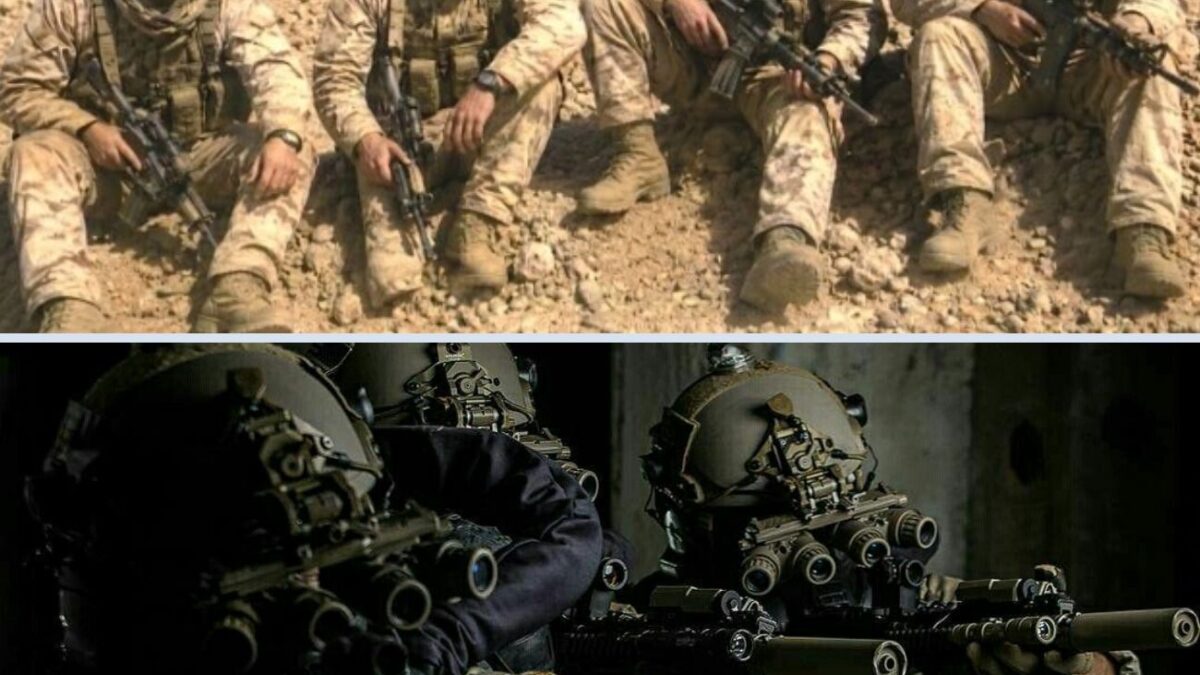
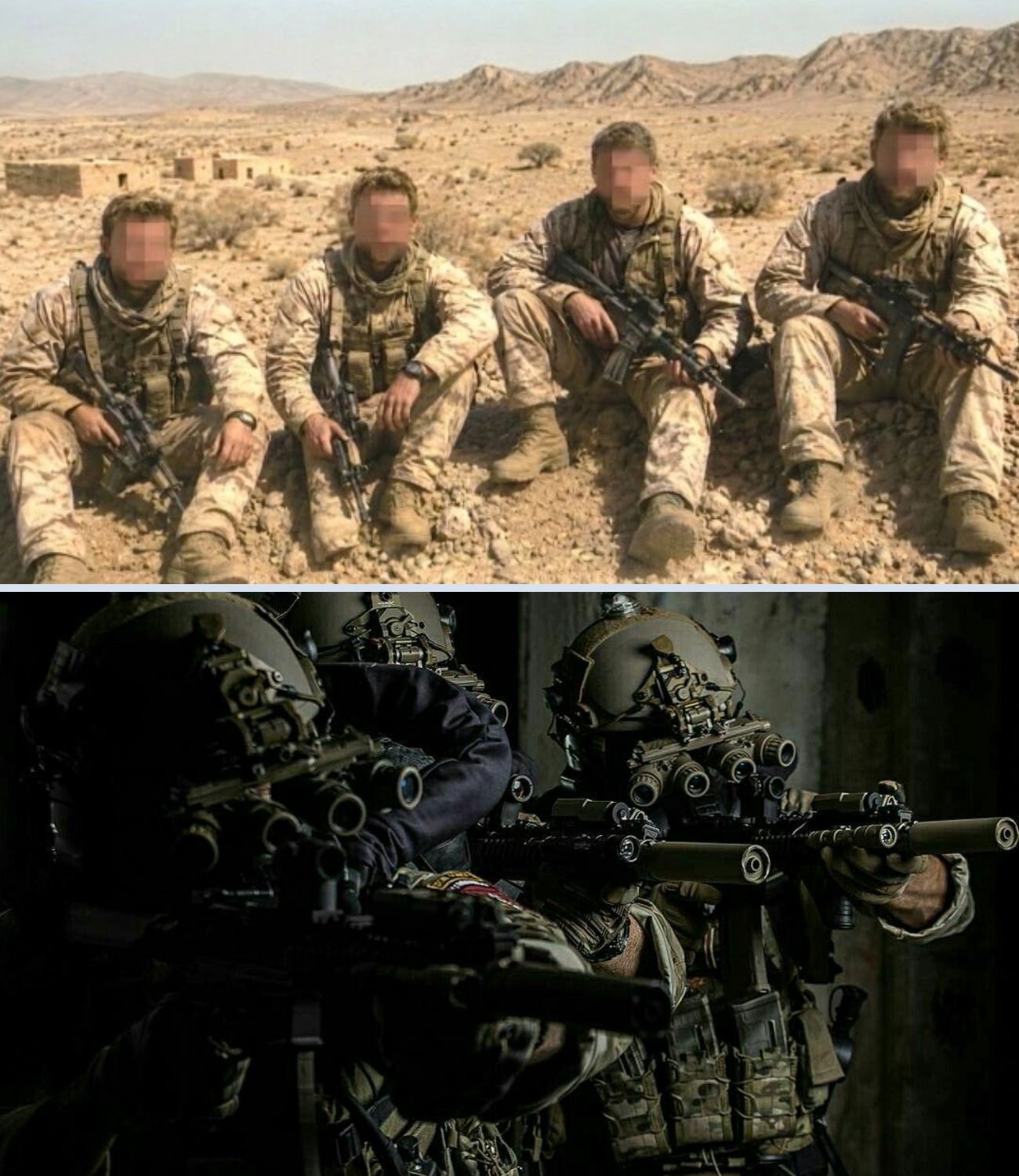
Sterling Lines, Credinhill, Hereford, October. Master Sergeant Cole Braden stands in a car park that could belong to an insurance company. The sky is gray and low, pressed against the Welsh hills like a damp cloth. The air smells of cordite and wet stone and something else he can’t place.
Damp grass maybe, or centuries of rain soaking into brick. He’s 34 years old, 12 years in the army, six in the unit, 11 combat deployments across four countries, and he’s staring at a building that looks like it was designed to process tax returns. He rolls a challenge coin across his knuckles. It’s a habit from his first deployment, a thing he does when he’s thinking, and right now he’s thinking that this is the most famous special operations base on Earth, and it looks like a community college campus in November. A clock tower, a memorial wall with names he can’t read from here, a car park full of civilian vehicles, Vauxhalls and Fords, not armored suburbans, no blast walls, no guard towers, no visible weapons anywhere. The quiet bothers him most. Fort Bragg hums. Generators, rotors, diesel engines, the ambient electrical pulse of a machine that never sleeps. This place whispers.
The only sound is wind moving through wet grass and somewhere distant, the flat crack of a rifle on a range. A door opens across the car park, a man walks out carrying two mugs of tea. He’s shorter than Braden by 4 inches, thinner by 20 pounds, and missing the tip of his left ring finger. He hands Braden a mug without introduction, without a handshake, without a name.
"Milk, no sugar. If that's wrong, sort it yourself."
The tea is strong enough to strip paint. He wraps both hands around it because the October air is doing something to his fingers that Texas never prepared him for. The man—Braden doesn’t know his name yet, won’t learn it for another hour and won’t understand what it means for another 3 weeks—gestures toward a low concrete building at the far end of the base. No sign on it, no markings, no windows. It sits on the grass like something that was poured rather than built.
"That's where we'll start," the man says. "Drink your tea first. You'll want to be awake for this."
Braden looks at the building. It looks like a storage shed. It is not a storage shed.
Six weeks before Braden stood in that car park, a decision was made at Fort Liberty that would quietly embarrass one of the most decorated operators in Delta Force. Not in combat. Not in a firefight, not in any of the scenarios he had spent six years training to dominate. In a training exercise, in a country that was supposed to be an ally’s polite living room. The decision was this: send two Delta Force assaulters to 22 SAS regiment’s home base at Hereford for a 4-week immersive training exchange. Not the usual 3-day liaison handshake where senior officers compared PowerPoint slides and shook hands over dinner, but four full weeks embedded with D Squadron, sleeping in their barracks, running their ranges, eating their food, learning their methods, or as the official tasking order phrased it with bureaucratic delicacy, “assessing SAS close quarters battle and surveillance methodology for potential integration into JSOC training pipelines.”
The United States military had spent $2.3 billion on special operations training infrastructure in the previous fiscal year. Delta’s compound at Fort Liberty was by any material measure the most advanced special operations training facility on Earth. Purpose-built kill houses, full-scale aircraft mockups, urban warfare complexes that could simulate any city block on the planet, and a technology integration lab that defense contractors visited the way pilgrims visit shrines. The SAS base at Hereford looked like it had been built on a council budget in 1962, because it had been.
Staff Sergeant Aiden Weir, Braden’s breacher, his closest friend in B Squadron, a 29-year-old from Bangor, Maine, who kept a strip of 100 mph tape wrapped around his left wrist at all times in case the world needs holding together, saw the SAS facilities on day one and said, loud enough for three SAS troopers to hear:
"This is it. This is what they've been talking about since Beckwith. Bro, our shoot house at Bragg has more tech in the bathroom."
One of the three SAS troopers smiled. The other two didn’t react at all. Their faces held the patient blankness of men who had heard every version of this comment from every visiting unit for decades. None of them said a word. Twenty-six days later, Weir would ask if he could come back—not as a visitor, for real.
This is the story of how two of America’s best operators walked into a training facility that looked like a relic and discovered that the building wasn’t the weapon. The men inside it were, and that everything Delta had spent a decade perfecting in technology, the SAS had spent four decades perfecting in human judgment. The Texan with the challenge coin was about to learn the most expensive lesson of his career. It didn’t cost a dollar. It cost his certainty.
Day one. A classroom at Sterling Lines. Folding chairs arranged in two rows, a whiteboard that had been wiped but still showed ghost marks from previous briefings, a projector in the corner that took two full minutes to warm up, during which nobody in the room acknowledged the delay because nobody in the room cared about projectors.
Braden and Weir arrived with two Pelican cases each. The cases contained their personal loadouts, weapons, optics, night vision, communications gear. They’d been told to bring their own equipment, standard protocol for exchange visits: you fight with what you know. Braden unpacked methodically. He removed each item, inspected it, and placed it in his locker without display. Weir did not share this instinct. The tape on his wrist caught on the case latch as he opened it, and he peeled it free with a grin, then pulled out his HK416 and set it on the desk in front of him like a man showing a poker hand.
The Elcan Spectre DR optic gleamed under the fluorescent lights. The laser designator was zeroed with a piece of white tape marked W7, his personal identifier. The SureFire weapon light was toggled to its highest setting as if it might need to illuminate the classroom. The SAS men in the room glanced at the weapon the way a carpenter glances at someone else’s toolbox—professional interest, the brief assessing look of men who use similar instruments for similar purposes and have no need to be impressed by the brand name. No envy, no reaction.
Braden noticed this. Weir didn’t. What Braden noticed specifically was how these men carried themselves. No swagger, no gear torque, no comparisons of optic magnification or barrel length or which holster rode better on a plate carrier. They sat in the folding chairs like men who had been sitting in uncomfortable chairs their entire careers and had stopped registering discomfort as a category of experience.
Their kit, what he could see of it, was functional, old and clean—belt order chest rigs instead of plate carriers, which meant they were carrying less armor and less weight. Colt Canada C8 carbines with ACOG optics that had been modern 10 years ago. Dual tube night vision units that Delta had retired from frontline use years earlier, but they moved through the room without making a sound on the linoleum floor. Braden, who moved quietly for a living, who had spent hundreds of hours practicing soft footwork on hard surfaces, heard his own boots with every step. He didn’t hear theirs.
Sergeant Major Alistair Menses entered the room, and Braden didn’t notice for several seconds. The man was already standing by the whiteboard when Braden looked up, and there was no way to know how long he’d been there—a ghost who materialized at the front of a classroom. The missing fingertip on his left hand, lost to a breaching charge that cooked off early in Helmand in 2009, was the first thing Braden saw. The second thing was the eyes—not cold, watchful, the way a man looks at weather when he has to walk in it regardless.
Menses’s briefing lasted 10 minutes. No slides, no printed handouts, no acronym-laden doctrine overview with color-coded phases and appendices. He spoke softly in a Dundee accent that Braden had to lean forward to catch, and his voice never rose above the volume of a man ordering tea.
"Four weeks. Week one, the CQB house. Week two, ranges and surveillance methodology. Week three, field phase, Brecon Beacons. Week four, full mission profile exercise. You'll do everything our lads do. If you can't, you'll tell me. If you don't tell me and you get hurt, that's on you. And I'll be cross about the paperwork."
Then the line to Braden delivered quietly after Weir’s comment about the bathroom had settled into the room like smoke:
"Your friend talks a lot. That's fine. We'll give him something to talk about."
In the back corner of the classroom sat Trooper Declan Marsh, 26 years old from Hereford itself—unusual for the regiment, a man who had grown up in the shadow of the base and then walked through its gates. Five years in, two since passing selection. He said nothing during the entire briefing. He smiled once when Menses described week three. The smile was the kind of smile a man has when he knows something you don’t and doesn’t feel the need to tell you yet.
Menses looked at his watch. Not a G-Shock, not a Suunto with altimeter and barometric pressure readings—a Casio F-91W that cost $8 and had told accurate time since the regiment bought them in bulk in 1991.
"Killing house in 40 minutes. Kit up. If you've got questions, bring them with you. You'll answer most of them yourself."
Braden rolled the challenge coin once, tucked it in his pocket, followed the men who made no sound on the floor.
Day three. The CQB house at Sterling Lines. Braden had been observing for two days, watching SAS troopers flow through rooms with live ammunition, studying their entry techniques, their communication methods—sparse hand signals, no verbal commands inside the structure, and the particular way they seemed to know where the walls were without looking at them. Today, he ran the course himself.
He stripped his HK416, checked it by feel in the darkness of the ready room, loaded a magazine of live ammunition. Five thousand dollars of precision engineering in his hands once you counted the Elcan optic, the laser designator, the weapon light. He’d fired this weapon on ranges and in rooms and in buildings in countries whose names he still couldn’t say at a dinner party. It was an extension of his nervous system.
He was given the scenario. Four rooms, linear hallway, targets and non-combatants mixed. Standard close quarters clearance. Timed. He flipped his quad tube night vision down—$43,000 of panoramic glass, the same system that had been used in Abbottabad, and the world bloomed green and wide. Nearly 120 degrees of vision. No dead spots. No tunnel vision. He could see everything.
The lights die. The door charge fires—a flat percussive clack. He moves. Four rooms. The hallway smells of burnt propellant and rubber matting. Brass casings hit the floor and roll. His muzzle transitions between doorways with mechanical precision. Each target, cardboard silhouettes in tactical positions, receives two rounds center mass. He doesn’t think; his body thinks. 11.22 seconds. Every round in the kill zone. Textbook Delta methodology at its finest: speed, violence of action, overwhelming sensory dominance through superior technology.
He emerges and flips the night vision up. His heart rate sits around 110, controlled, clean. Then the lights come on in the rooms. In room two, there was a chair. In it sat a man in civilian clothes, a real man, an SAS training volunteer who had been sitting three feet from the line of fire while Braden sent live rounds past him. The man’s face was calm. He’d done this before many times.
In room four, another chair, another man. Braden stared.
"Hold on. Those were real people sitting in those chairs."
Menses from behind him, voiced no louder than it ever was:
"They're always real people."
The SAS had been conducting live fire training with human role players since the 1970s—one of the only units in the world that still did. The logic was brutal and simple: if you train with dummies, you learn to shoot around dummies. If you train with people, you learn to shoot around people. The fidelity of the training had to match the fidelity of the mission or the training was a lie.
Then Marsh ran the same scenario, same four rooms, same target layout, same hostage chairs, but Marsh used his Colt Canada C8 with the older ACOG optic and dual tube night vision that gave him a narrower field of view—80 degrees instead of 120—and a price tag of $8,500 instead of 43,000. He moved slower, 14.1 seconds, nearly 3 seconds behind Braden. But Marsh’s movement pattern told a different story.
He didn’t just clear corners. He discriminated. Each room a fractional pause—not hesitation, not uncertainty, but processing. His muzzle tracked past the hostage chairs without stopping because he had already identified them as non-threats before he crossed the threshold. His peripheral awareness wasn’t technological. It was trained. It lived in his nervous system the way music lives in a pianist’s hands.
14.1 seconds. All targets hit. Both hostages alive. Not because he saw them better, but because he understood what he was seeing. Braden’s 11.2 seconds was faster. It was also irrelevant. If either hostage had been a real civilian in a real embassy, his method would have killed two innocent people. Marsh’s didn’t.
"Speed solves a lot of problems," Menses said, watching Braden’s face. "But it doesn't solve the one that matters most."
The $43,000 night vision gave Braden a wider picture. It did not tell him what to do with it.
Week three. The Brecon Beacons, South Wales. October. Braden and Weir were dropped individually at two points on the northern edge of the beacons for a 48-hour escape and evasion exercise. Thirty-five pounds in their Bergens plus water and a deactivated weapon. No GPS, no radio, no night vision, a paper map in a waterproof case, a silver compass, and a set of grid references marking checkpoints across 23 km of terrain that existed, as far as Braden could tell, to demonstrate that nature was not an ally.
Braden had never operated without technology, not once in his career. Delta’s entire operational architecture was built on the assumption that communications, navigation, and overhead surveillance were always available. His training hadn’t been about surviving without those systems; it had been about using them better than anyone else on Earth. This exercise removed all of it in one stroke and left him with a laminated map and a device that pointed north.
October in the Brecon Beacons was not winter, but it was not anything a man from Beaumont, Texas would recognize as autumn. The rain didn’t fall; it flew horizontal, cold, driven by a wind that didn’t gust, but pushed, constant, like a hand on the chest that never lifted. Peat bogs sucked at his boots with every step, turning a mile into an hour. Visibility dropped to 20 m without warning, and stayed there. Sheep tracks that looked like footpaths led to cliff edges. Pen y Fan rose to 886 m ahead of him, its summit invisible in cloud.
The cold didn’t bite; it seeped wet and patient through every seam in every layer he wore. Weir lasted until day two. He stepped wrong on a scree slope in zero visibility and sprained his ankle badly enough that maintaining pace became impossible. He activated the emergency beacon, a concession the SAS included for visitors, not for their own candidates. A Land Rover materialized from the mist within an hour. Weir’s face when the vehicle arrived told the story before he could—a man who had survived six combat deployments pulled out of an exercise by a Welsh mountain.
Braden finished the 48 hours. He navigated the full 23 km across terrain that looked identical in every direction in weather that tried to kill him every hour with nothing but the map and the compass. He reached the vicinity of the final rendezvous point. He was proud of this. He had earned the right to be, but he was captured by the hunter force—SAS territorial army soldiers playing the enemy role within 400 m of the extraction point. They had been waiting. They had found his sign: boot impressions in soft peat, broken bracken, a pace too fast for the ground, leaving marks that a trained tracker could read like a sentence.
Menses was standing at the rendezvous point when Braden was walked in with his hands on his head. The Scotsman said nothing for several seconds. He looked at Braden the way a teacher looks at a student who got the right answer to the wrong question. Then softly:
"Speed is a signature. You moved like a man who wanted to be somewhere. We found you because you were in a hurry to not be found."
Braden had run 11 combat deployments. He had kicked doors in four countries. He had been praised by colonels and thanked by generals. No one had ever spoken to him the way Menses just did—not with anger, not with disrespect, but with the quiet certainty of a man who knew something about movement that Braden simply did not know. The mountain hadn’t tested his fitness; it had tested his patience, and he had failed.
Week three, evening. The barracks at Sterling Lines—a room that could have been a monk’s cell if monks issued green wool blankets and provided a single radiator that ticked like a slow clock. Two beds, one locker each, no television, a kettle, and a box of PG Tips tea on a shelf by the door. The window overlooked the memorial garden, names of SAS soldiers killed in action, carved into stone. Braden couldn’t read them from the bed, but he knew they were there. Menses had told him on day one, pointing at the garden without breaking stride:
"We don't put our names on things while we're alive."
The beacons had done something to his legs that he hadn’t felt since selection at Fort Bragg—a deep wet ache in the tendons that no amount of stretching could reach. His pride hurt worse. Weir was on the other bed, ankle wrapped, cycling through frustration and embarrassment with the restless energy of a man who didn’t like being still. The tape on his wrist was fraying. He picked at it without looking.
Braden spoke slowly as if he were working out the words as he said them, testing each one before he let it go:
"I don't think we're worse than them. I think we've been solving a different problem, and I'm not sure our problem is the harder one."
What he meant, and what he couldn’t quite say, so the silence said it for him, was this: Delta’s problem had always been, “How do we get there faster with better equipment and overwhelm the target?” The SAS’s problem was, “What do we do when there is no helicopter, no drone feed, no satellite uplink, and the man next to us is all we have?” Delta’s answer was technology and speed. The SAS’s answer was selection and judgment. Both answers worked, but one broke when the technology broke. The other didn’t break because there was nothing to break.
He looked at his HK416 in the case by his bed. Seventy thousand dollars of equipment on his chest every time he worked. Marsh walked into a room carrying $18,000 and 30 years of accumulated knowledge and the judgment to know which corners held threats and which held human beings.
The following morning, Menses called them into the classroom for the week four briefing: final exercise, full mission profile. Pontrilas training area, the SAS’s dedicated hostage rescue facility near Hereford—a compound with aircraft fuselage mock-ups, multi-story embassy replicas, and underground tunnel systems that made Delta’s most sophisticated training structures look like they were missing a dimension.
The scenario: night hostage rescue. Three rooms. Two hostage role players. Six enemy targets played by SAS training staff in full protective equipment firing simunition marking rounds. Four-man team: Braden, Marsh, and two D Squadron troopers Braden had trained alongside for 3 weeks.
Menses gave Braden the mission plan and the team leader position. Then quietly:
"Plan it however you want. Your methods, our methods, something new. The only metric is hostages alive at the end."
Braden looked at Marsh. Marsh looked back. Said nothing, smiled. It was the same smile from the day one briefing—the one that knew something.
Braden sat with the four-man team in a briefing room at Pontrilas. Maps on the table, diagrams of the building, entry points marked in red grease pencil. He started to plan the way he had always planned: simultaneous entry, dual breach points, maximum speed. His quad tube panoramic night vision providing total visual dominance, overwhelming the kill zone in under 12 seconds.
Marsh listened. The D Squadron troopers listened. Nobody interrupted. The room was silent except for Braden’s voice and the hum of the fluorescent light overhead. When Braden finished, Marsh said the first substantial thing Braden had heard him say in 3 weeks:
"It's a good plan, fast, but the hostages are in room two and room three. Your breach puts shooters through both rooms in the first 4 seconds. That's 4 seconds where your muzzle crosses a hostage."
He paused. The pause was longer than the sentence:
"We can do it in 18 seconds and never cross a hostage."
Braden looked at his plan, looked at Marsh’s face. The younger man wasn’t arguing. He wasn’t challenging. He was offering, the way a man offers an umbrella when he can see rain:
"You can't."
Twelve years, 11 deployments, 6 years in the unit, $70,000 of equipment on his chest, and the training compound at Fort Liberty that cost more than some country’s defense budgets. All of it came down to this moment. Did he trust his equipment, or did he trust the 26-year-old trooper from Hereford, who ran ultramarathons on weekends and cleared rooms 3 seconds slower because he was thinking 3 seconds harder?
Braden folded his plan. Put it face down on the table.
"Show me yours."
Marsh smiled for the third time.
Pontrilas training area. 02:14. Week four, day two. Darkness. Total. The smell of wet concrete and blank fire propellant residue hangs in the corridor like something alive. The four-man team stacks on the entry point. Braden is number two. Marsh is number one. This is the first time in Braden’s career that he has entered a room behind another man and chosen to be there.
His holster holds a Sig P226, not his Glock 19. He asked Marsh for one before the exercise, and Marsh handed it over without a word, the way you lend a book to someone who’s ready to read it. Iron sights only. No red dot. A heavier trigger pull. A pistol the regiment has carried since the late 1980s. It feels like holding someone else’s history in his palm.
The door charge fires—a sound like a textbook slamming shut in an empty hallway. Marsh goes through the door and turns left. Braden follows and turns right. Simunition rounds from the training staff begin immediately—sharp, high-pitched cracks. Nothing like live fire, but they sting through protective gear like hornets with a grudge.
Room one. Two targets. Marsh fires twice. Both hit. Braden fires once. Hit. The third target is in his sights for a fraction of a second and his finger begins to take up pressure on the trigger because six years of training tell him to shoot what he sees. But Marsh’s positioning a half step wider than Delta Doctrine would place a number one man has already created a clear lane. The target goes down from the D Squadron trooper coming through the secondary entry. Braden doesn’t fire. The round stays in the magazine—a round he would have taken, a round he didn’t need to take.
Room two. One target, one hostage. The hostage, a real person, a training volunteer, sitting in a chair under fluorescent light that blazes to life the moment the door opens, flinches. Marsh’s muzzle tracks past the chair without pause. One shot. Target down. The hostage sits in the chair with his hands in his lap and his eyes wide open, untouched.
Room three. Three targets, one hostage. The D Squadron troopers enter from the secondary breach point. Three shots in a sequence so tight they sound like one sound with two echoes. Three hits. Braden comes through the connecting door. His lane has one target. He fires. It drops. The hostage, a man in his 40s wearing a yellow high-visibility vest, doesn’t even close his eyes.
18 seconds. Then silence. The echo of simunition and door charges fading into wet concrete walls. Six targets neutralized. Two hostages alive. Four rounds from Braden’s weapon. All four hits. But the two rounds he didn’t fire. The targets he would have engaged under Delta Doctrine. The shots his training told him to take, the reflexes that six years had built into his hands. Those are the rounds that matter. Marsh’s positioning made them unnecessary. Three additional seconds of time purchased zero collateral risk. The 11.2 seconds in the killing house meant nothing. 18 seconds at Pontrilas meant everything.
The lights came up. Training staff pulled off their protective helmets, rubbed the welts from simunition impacts, and started resetting the rooms with the bored efficiency of men who did this three times a week. The hostage volunteers stood, stretched their legs, and walked out into the corridor. Routine for them. Not routine for Braden.
He stood in room three with the borrowed P226 at his side, still unholstered, and stared at the chair where the hostage had sat 14 inches from his line of fire. Under Delta’s standard assault profile, his muzzle would have crossed that chair at second floor. Under Marsh’s plan, it never crossed it at all.
Marsh appeared beside him. The younger trooper looked at the chair, then at Braden. He didn’t say anything profound.
"Good shots."
Braden nodded. He wasn’t sure he trusted his voice.
Outside the car park at Pontrilas, a Land Rover idling with its headlights on, cutting yellow cones through mist. Menses was leaning against the bonnet, drinking tea from a thermos cap. He didn’t ask how it went. He already knew.
Braden sat on the tailgate. The P226 was still in his hand. He hadn’t holstered it. He looked at it for a long time—the scratched slide, the iron sights, the weight of it, the decades of operations it represented.
"I need to go home and rethink six years of how I enter a room."
Menses said nothing, sipped his tea, the mist moved through the headlight beams.
Later, back at Sterling Lines, the barracks, the green blanket, the radiator ticking, the memorial garden outside the window lit by a single floodlight. Weir sat on the edge of his bed, his ankle was better, his ego was not. But when he spoke, it was quietly, without bravado, without the volume that had defined him since the moment he’d stepped off the transport 3 weeks earlier:
"Can we come back? Not as visitors. For real."
Braden rolled the challenge coin across his knuckles. He didn’t answer. He didn’t need to. He walked to the window. The memorial garden glowed under the floodlight. He could read some of the names now—men who had died in Borneo, Oman, the Falklands, Northern Ireland, Sierra Leone, Iraq, Afghanistan. Men who had carried belt order rigs and $8 watches and pistols with iron sights. Men who had entered rooms 3 seconds slower because they were thinking 3 seconds harder.
He placed the challenge coin on the windowsill. It sat there catching the light from the garden for the rest of the night. A man who had been certain for 6 years was no longer certain. And that uncertainty, Menses would tell him tomorrow over tea, is where the real training begins.
Six months after Braden and Weir returned to Fort Liberty, a classified review document circulated through the Joint Special Operations Command training directorate. The language was bureaucratic, it always is, but the implication cut through the jargon like a blade through paper: “The SAS methodology prioritizes hostage survivability over operator tempo in a way that JSOC’s current close quarters battle doctrine does not adequately address. Recommend integration of SAS discrimination under stress protocols into Delta operators’ training course curriculum.”
Colonel Ray Dunham, who had authorized the exchange, read the report in his office. He had expected a three-page summary confirming that Delta’s methods were competitive with the SAS, perhaps noting a few minor adjustments worth exploring. Instead, he received a 14-page recommendation to change how Delta trained its operators to think inside a room, not just move through it. The exchange that was supposed to last 4 weeks generated curriculum changes that took 18 months to implement. Delta’s close quarters battle training now includes a module called discrimination under stress—a module that did not exist before the man who needed to rethink 6 years sat on a tailgate and admitted it out loud.
In 2014, a former Taliban subcommander captured during an international security assistance force operation in Helmand Province was debriefed by coalition intelligence officers. When asked to compare the forces he had encountered, he spoke without prompting, a rarity in interrogation, the kind of candor that comes not from cooperation, but from something closer to professional respect between men who have fought on opposite sides of the same war. His words, translated from Pashto and recorded in the debrief summary:
"The Americans come fast, they break the door, and they are everywhere at once. You hear the helicopters first, then the explosions, then the shouting. The British come quiet. You don't hear the British. You are asleep, and then you are in handcuffs. With the Americans, you know you are being raided. With the British, you know nothing until it is over. The Americans want you to know they were there. The British don't care if you know. They only care that you are taken."
A former Iraqi insurgent cell leader debriefed by CIA personnel in Baghdad in 2011 offered a more tactical observation:
"We learned to listen for the helicopters. The Americans always brought helicopters. When the British came, there were no helicopters. There was nothing. And then there were men in the room. We could not prepare for something we could not hear coming. The sound of the British was no sound at all."
These testimonies were never intended as compliments. They were the observations of men who lost, but they described in language stripped of military jargon and institutional ego exactly what Braden had experienced at Hereford: a force that had spent decades perfecting the art of doing more with less, of arriving without announcement, of valuing judgment over technology, because judgment doesn’t need batteries, doesn’t need satellites, and doesn’t fail when the power goes out.
Braden returned to Hereford 8 months later for a second exchange, this time for 8 weeks. Weir came with him. Neither of them brought Pelican cases full of personal loadouts. They used what the SAS gave them. Marsh was promoted to sergeant. He still ran ultramarathons on weekends. He and Braden exchanged emails with the irregularity of men who respected each other deeply and didn’t need to prove it with frequency.
Brigadier Hugh Calder, director SAS, made a remark to his staff after reviewing the exchange program’s results. The remark was never officially recorded, but it was repeated in the regiment for years afterward, passed between troopers in the quiet way that truths travel when they’re too sharp for official channels:
"The Americans are the best equipped soldiers on Earth. That's not a compliment. It's an observation about dependency. Our lads are trained to operate when everything fails. Their lads are trained to ensure nothing fails. Ask yourself which assumption is more dangerous."
And the relationship between Delta and the SAS has only deepened since the exchange. But the dynamic shifted—not superiority in one direction, not deference in the other, a recognition hard-won, expensive in pride, that the oldest special forces unit in the world had been right about something fundamental. Something that $2.3 billion in training infrastructure couldn’t buy. Something that lived not in equipment or facilities or budgets, but in the accumulated wisdom of men who had been entering rooms since before most of them were born.
You can spend $43,000 on a piece of glass that lets you see in every direction. You can build a training compound that costs more than a small country’s military budget. You can equip an operator with $70,000 of gear and train him until he can clear a room faster than any human being alive. Or you can train a man to think inside that room, to carry less and know more, to move 3 seconds slower, because those 3 seconds are the difference between a rescued hostage and a flag-draped coffin. That is the regiment’s method. That is Hereford’s legacy. That is why a Delta operator with 11 deployments sat on a tailgate in the English dark and said he needed to rethink his entire career.
Somewhere in Hereford, in a barracks room overlooking a memorial garden, there is a windowsill. On it sits an American challenge coin that a Texan left behind three years ago. Nobody has moved it.
You Might Also Enjoy

“We Thought They Would Negotiate”—What Argentine Soldiers Said When The British Attacked Goose Green

“You’ll Never Finish My Ruck March, Limey” — US Sergeant Who Challenged the SAS, Then Fell Out First






