“We Had Satellites. They Had Guts.” — Why a CIA Officer Called the SAS a Different Species.
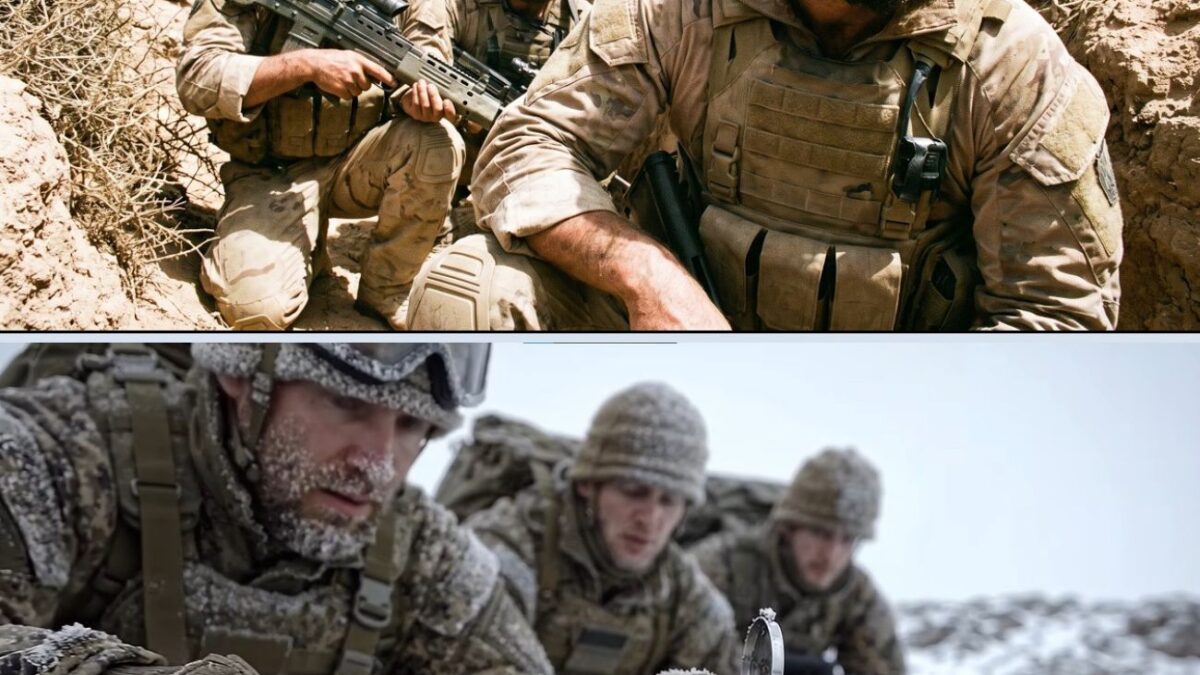
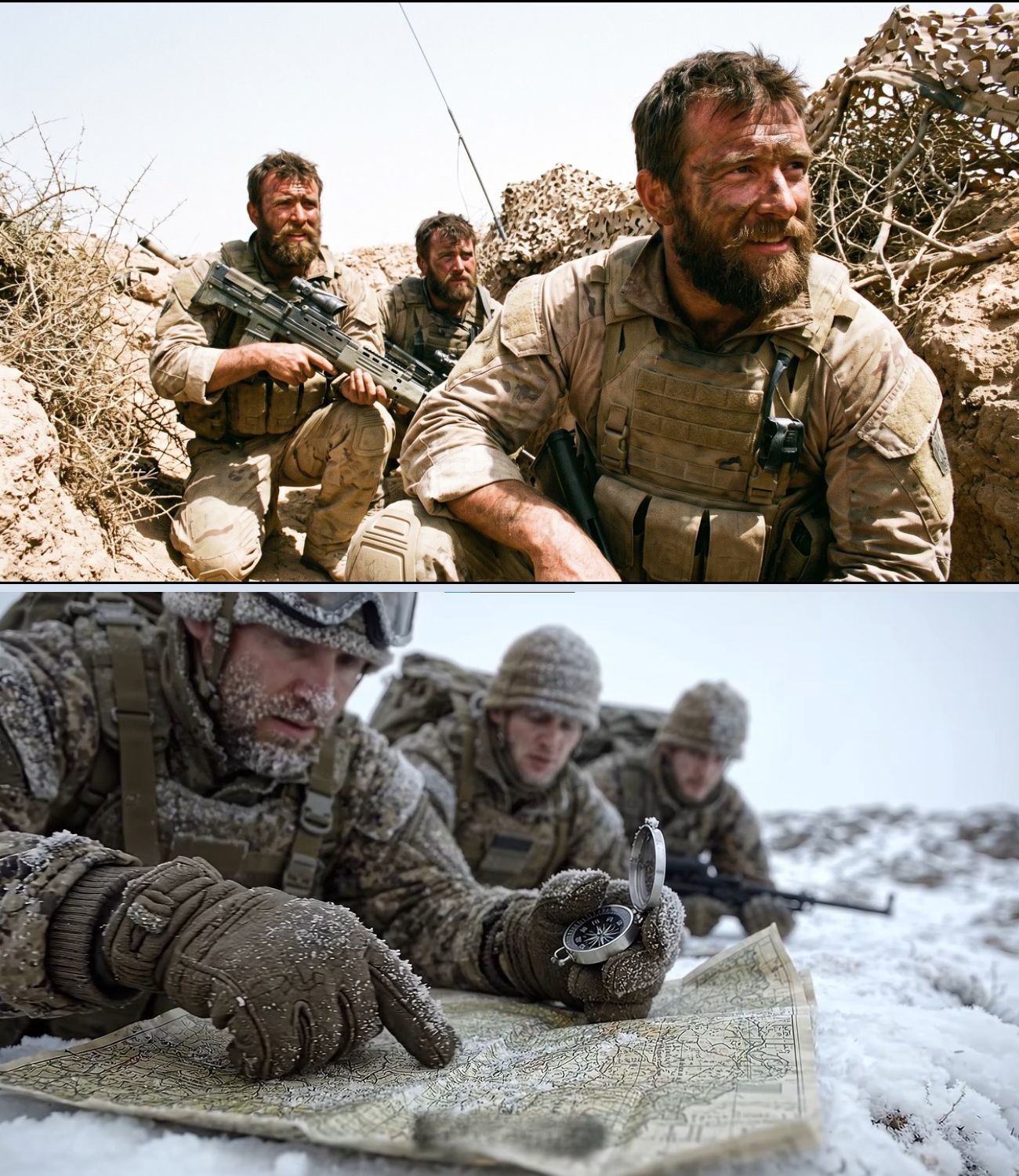
Northern Iraq. Late February 1991, in the closing days of the Gulf War’s ground campaign, a four-man SAS reconnaissance patrol lay in a shallow scrape cut into frozen ground 18 km from a suspected mobile Scud launch site, with a handheld compass and a folded 1:50,000 map as the only navigation aids between them and a rendezvous point 40 km to the south.
Snow had fallen twice that week, unusual for the region, and the patrol’s water had frozen solid inside two of their four containers. A CIA paramilitary officer attached loosely to the coalition’s special operations coordination cell, watching a satellite image relayed to a tent 40 miles away, had marked the same stretch of desert as too exposed for any ground team to survive 48 hours unsupported.
The four men had already been there for 60.
The CIA officer’s name for the purposes of this account was Warren Kesler, a field operative who had spent the preceding decade working denied-area operations across the Middle East and who arrived in the coalition’s joint special operations planning cell in January 1991, already skeptical of what he considered Britain’s romantic attachment to small, lightly equipped teams operating far beyond any realistic support radius. Kesler had access to imagery, signals, intercepts, and a targeting apparatus that dwarfed anything the SAS squadrons carried into the desert with them.
He stated in a planning meeting the week before the ground war began, according to two officers present: “Coalition satellites can see more in a single pass than eight men crawling across open desert could confirm in a week, and sending patrols that deep, that lightly resourced, amounts to accepting casualties for information a predator-era sensor architecture, once it matured, would eventually gather.”
He was not being cruel; he believed with real conviction that technology had begun to make the entire model obsolete.
Kesler’s skepticism was not eccentric within the coalition’s planning apparatus that winter. The joint special operations coordination cell he worked from—based in a cluster of tents and portable cabins on the Saudi side of the border—ran on a genuine and largely unresolved disagreement between two schools of thought that had coexisted uneasily since the cell was stood up in August.
One school, which Kesler represented alongside several American planning officers, argued that the campaign’s overwhelming technical advantage—satellite reconnaissance, signals intercept coverage, and an emerging generation of unmanned reconnaissance aircraft still in their infancy—meant that risking small ground teams deep inside Iraqi territory produced diminishing returns against the risk of losing trained men to capture or death in terrain coalition forces did not control.
The other school, represented most consistently by the British special forces liaison staff attached to the same cell, argued that a signature on a screen could be counted, cataloged, cross-referenced against a dozen other passes, and still be wrong in exactly the way that mattered most, and that only a man close enough to see a fuel line actually being connected could resolve the specific ambiguity. A screen, however detailed, could never fully close on its own. Both positions were held in good faith. Both had already been proven right at least once that winter, which was precisely why the argument had not settled either way by the time the patrol went in.
The patrol Kesler was tracking that week, with a call sign known only within the operational zone compartment, had been inserted 11 days earlier by helicopter, dropped short of its intended landing zone by 4 km after the pilot judged the primary zone too exposed to ground fire from a nearby Iraqi position. That first narrowing—an insertion point moved at the last possible minute—cost the patrol most of a night’s marching before they even reached the ground they were meant to observe, burning through daylight hours they had planned to spend static and hidden.
The patrol commander, a captain referred to in later regimental accounts only by the nickname “Digger”—a name colleagues attached to him for his habit of overpreparing every scrape and observation post rather than any connection to a real individual’s actual identity—had briefed his three men before insertion on exactly how little support they could expect once on the ground. There would be no quick reaction force within any useful range. There would be no immediate resupply beyond the single planned drop on day seven. There would be, in the event of serious injury or compromise, a walkout plan covering roughly 60 km of open desert to the nearest friendly position—an option every man understood to be a last resort rather than a genuine contingency since covering that distance on foot undetected while carrying the wounded was closer to a theoretical possibility than a plan anyone expected to use.
The second narrowing came from the weather. Northern Iraq in March is not the furnace of summer, and coalition planners had underestimated how cold high-desert terrain could turn after dark, particularly with an unseasonal snow system moving in from the north. The patrol’s water, carried in hard plastic containers strapped to their packs, froze twice over the following week, forcing the men to thaw it against their own bodies inside sleeping systems never designed for that purpose—a slow, deliberate discomfort that cost sleep every single night rather than any one dramatic crisis.
The third narrowing was compromise. On day four, a civilian shepherd moving flocks through the patrol’s observation area came close enough to their position that the patrol commander judged discovery a near certainty within hours. Standing orders in that theater gave patrol commanders wide latitude to decide how to handle exactly this kind of encounter, and the commander chose neither to detain the shepherd, which risked an incident with unpredictable political consequences, nor to abandon the position outright, which would have ended the mission’s usefulness entirely.
He chose instead to relocate the observation post 600 meters under cover of a wadi line—a decision that halved their effective sightline to the launch site’s suspected access road while preserving their concealment. It was a trade the patrol accepted because a degraded view that survived was worth more than a perfect view that got them captured.
The move itself took most of a night: four men and their equipment shifting position across broken ground without lights, without radio traffic, and without any certainty the shepherd had not already noticed something amiss. One of the four, a signaler responsible for the patrol’s radio equipment and remembered by colleagues under the name Fenwick—a plainly invented designation used here in place of his actual identity—later described the relocation as the most physically exhausting single night of the entire patrol, more taxing even than the extraction that followed it eight days later, because every step had to be placed with total silence across ground none of them could properly see.
He fell twice into a shallow depression neither map nor moonlight had revealed, catching himself both times without a sound—an unglamorous, unrecorded piece of self-discipline that made no report and earned no recognition beyond the fact that the patrol reached its new position undetected.
The shepherd himself, an old man moving a flock of perhaps 30 animals along a route he had likely walked for decades, never learned how close he had come to triggering either his own arrest or a firefight that would have ended the operation on its fourth day. Patrol members who observed him through their optics in the hours before relocating described him only in the driest, most functional terms their trade allowed: age, gait, the direction his flock was moving—nothing that suggested any awareness that four foreign soldiers, invisible against the terrain, were assessing in real time whether his continued presence meant the mission was already over.
The fourth narrowing was resupply, and this was where Kesler’s skepticism first met the operation directly. The patrol’s original support plan called for a helicopter resupply drop on day seven, bringing fresh water, batteries for their radio, and additional rations. Kesler’s own cell, reviewing the flight risk for that resupply mission against updated imagery showing increased Iraqi air defense activity along the approach corridor, recommended the mission be canceled rather than risk a helicopter and crew for four men who could, in his assessment, simply be extracted early instead.
The special forces coordination staff pushed back, arguing that early extraction would abandon a target that remained live and valuable, and a compromise was reached. The resupply would proceed, but via a longer, more circuitous approach route that added 90 minutes to the helicopter’s exposure time over hostile territory.
The air crew tasked with that resupply mission belonged to a special forces flight whose pilots had flown similar low-level runs throughout the campaign, and the pilot on both attempts—a flight lieutenant colleagues remembered as unusually methodical even by the standards of that community—briefed his own crew before the first attempt that he would rather abort twice than descend into terrain he could not read clearly through cloud, a caution that drew no argument from anyone who had watched two other aircraft take ground-fire damage earlier that month on comparable resupply runs elsewhere in theater.
That resupply flight was aborted twice. On the first attempt, ground fire near the revised approach route forced the helicopter to turn back before reaching the drop coordinates—an outcome Kesler later cited, not without some justice, as proof his original caution had been warranted.
On the second attempt two nights later, the aircraft reached the drop zone, but was unable to confirm the patrol’s exact position through thickening low cloud, and the crew released the resupply bundle nearly a kilometer off target rather than risk descending lower into terrain they could not clearly see. The patrol spent four hours of a critically short night moving to recover it—a physically brutal stretch across broken ground in the dark that left one man with a twisted ankle. He did not report it until the mission’s later debrief because reporting it at the time would have changed nothing except how the other three men thought about him for the remainder of the patrol.
Recovering that off-target bundle meant crossing ground the patrol had deliberately avoided during their initial approach 11 days earlier: a dry riverbed the patrol commander had flagged on the original map reconnaissance as a likely route for Iraqi vehicle patrols moving between two known positions. Crossing it at night, loaded down with freshwater containers and replacement batteries on the return leg, left the four men exposed for nearly 20 minutes longer than any of them were comfortable with.
Fenwick, the signaler, later recalled counting his own footsteps as a way of keeping his mind from calculating how visible their silhouettes might be against the pale stream bed under a partial moon. Nothing came of the crossing beyond the discomfort of it, but the patrol commander noted afterward in the operation’s own debrief that the resupply’s off-target landing had cost them more than four hours of sleep. It had cost them a margin of safety they did not get back for the remainder of the patrol, since the same riverbed now had to be avoided a second time on any future movement, narrowing their options for repositioning even further than the shepherd encounter already had.
The fifth narrowing was the one that mattered most, and it arrived from Kesler’s own satellite imagery—ironically, the very tool he had argued should have replaced patrols like this one. A pass on day nine picked up what analysts read as increased vehicle activity, consistent with launch preparation at the suspected site: exactly the kind of confirmation the entire operation existed to obtain.
But the imagery alone could not distinguish a genuine launch preparation from a decoy exercise, something Iraqi forces had used successfully elsewhere in the campaign to draw coalition air power onto empty ground. Kesler’s own analysts flagged the ambiguity honestly. Only eyes on the ground, close enough to see actual fueling activity rather than infer it from vehicle silhouettes, could resolve the question in time to matter. And the patrol Kesler had wanted extracted six days earlier was now the only asset in theater capable of providing that resolution before any strike package could be authorized.
The patrol commander, informed of the imagery and the narrow window it created, moved his observation post forward again, back toward the original 600-meter line he had abandoned after the shepherd encounter, accepting renewed exposure because the alternative—an air strike launched on ambiguous imagery against what might be a decoy—risked wasting scarce strike assets on nothing while the actual launcher, if it existed, escaped untouched.
This was the sixth narrowing: time compression stacked directly on top of physical risk with no clean way to reduce either without abandoning the mission’s entire purpose. The decision was not made in isolation. Digger raised it by burst radio transmission with the coordination cell before committing his men forward—a departure from the patrol’s usual practice of acting on its own authority once inserted, made because the strike decision that would follow their confirmation sat well above his own pay grade to risk lightly.
The exchange that followed, compressed into the barest possible language to minimize transmission time, has been described consistently by two officers who monitored it from the cell.
Digger stated the ground truth requirement plainly: “The ambiguity in the imagery, the narrow window before any Iraqi relocation, and the exposure his own move forward would create.”
The response he received back authorized the movement without qualification, on the understanding—unspoken but clearly carried in the brevity of the reply—that the coordination cell was not going to second-guess a decision made by the only men in a position to actually judge the ground in front of them.
Kesler, present for that exchange, is reported by one of the two monitoring officers to have said nothing throughout it, which itself marked a change from the man who had argued a month earlier that operations of exactly this shape amounted to accepting unnecessary casualties. He had, by day nine of the patrol, stopped arguing the underlying premise and begun instead simply tracking the operation’s outcome with the same close attention he gave his own agency’s collection product—a shift two colleagues noticed without either of them remarking on it directly to him at the time, the kind of quiet change of mind that rarely announces itself in a single sentence and is instead visible only in retrospect, once enough small decisions have accumulated in one direction to make the earlier position impossible to hold with a straight face any longer.
They confirmed fueling activity at 0340 on day 11 using a spotting scope from 400 meters—close enough that one of the four men later described hearing individual voices carried on cold night air, and close enough that a compromise at that range would have ended in contact rather than evasion.
The report went out over a radio whose batteries the failed and partially successful resupply drops had left at barely a third of their rated capacity, transmitted in a burst format designed to minimize exposure time and received at the coordination cell within four minutes of the observation being made.
Kesler was in the tent when the confirmation came through. He read the transmission twice, according to a signals officer present, before turning to a British liaison major beside him and asking: “How close is the patrol actually to the site for that kind of visual confirmation to be possible?”
He was told: “400 meters on foot, unsupported, with frozen water and a wounded ankle nobody outside the patrol yet knew about.”
He did not say anything for a long moment.
The strike package was authorized within the hour, launched against a confirmed live target rather than an ambiguous silhouette, and struck the site before the vehicles observed in the earlier imagery could disperse. The strike aircraft—a pair of coalition fighters diverted from an alert posture rather than a scheduled sortie—arrived over the target within 22 minutes of the confirmation transmission, a speed of authorization to impact that a targeting officer at the coordination cell later described as close to the fastest the cell had achieved for any target that entire campaign, technical or human-sourced.
That speed was itself a product of the same tension Kesler and the British liaison staff had been arguing over for weeks: a decision chain shortened not by removing caution, but by removing the layers of confirmation that would ordinarily have sat between a single human report and a strike release—layers Kesler himself had until that night argued were necessary precisely to prevent exactly this kind of high-speed authorization from being used carelessly. He did not argue that point that night. The patrol had already done the confirming work those layers existed to provide.
The patrol, still lying in cover 400 meters from the site, felt the strike rather than watched it, the ground beneath them carrying the concussion of the impact before the sound itself reached them a fraction of a second later. Digger’s own account, given in a debrief three days afterward, noted only that the patrol held its position for a further 90 minutes after the strike to confirm no secondary activity suggested a second launcher elsewhere in the compound—a detail that made the debrief report, but never the version of the story that circulated informally afterward, which tended to end more satisfyingly at the moment of impact itself rather than the long, cold, uneventful wait that actually followed it.
The patrol’s extraction, planned for the following night, ran into its own final crisis. The helicopter tasked to recover them developed a hydraulic fault during pre-flight checks, grounding it entirely, and the only available replacement aircraft was committed to a separate, higher-priority casualty evacuation elsewhere in theater. The patrol commander was informed that extraction might slip by as much as 24 hours—a delay that would leave four exhausted men, one with an undiagnosed but clearly worsening ankle injury, exposed in territory now considerably more alert following the strike their own reporting had triggered.
Kesler reportedly was the one who pushed hardest against that delay, a detail two officers who served in that cell independently confirmed that surprised nobody who had watched him over the preceding two weeks change from skepticism to something closer to advocacy. He argued through channels he had no formal authority over, but considerable informal credibility within by that point, that a patrol which had just delivered exactly the kind of ground truth his own systems could not provide deserved every available asset redirected toward its recovery rather than left to a queue.
A third aircraft held in reserve for a different contingency was released within three hours, and the patrol was lifted out shortly after last light the following evening—41 minutes after the replacement helicopter’s rotors first became audible to the four men waiting in cover, the longest 41 minutes, according to one of them, of the entire 11 days.
The extraction itself was not straightforward once the aircraft arrived. The landing zone Digger had selected during the original planning phase sat close enough to the strike site that Iraqi forces in the area—alerted by the earlier impact and now actively searching the surrounding desert for whoever had called it in—had moved a mobile patrol within roughly 3 km of the pickup point by the time the replacement helicopter made its approach.
The pilot, informed of the contact risk by the coordination cell only minutes before departure, adjusted his final approach heading on his own initiative to keep a low ridge line between the aircraft and the reported Iraqi position for as long as possible—a decision that added 90 seconds to the exposed hover time on pickup, but kept the helicopter masked from direct line of sight until the last possible moment.
Those 90 seconds spent motionless on open ground waiting for an aircraft audible but not yet visible were recalled by every one of the four patrol members afterward as more nerve-testing than anything that had happened during the strike confirmation itself, precisely because there was nothing left for them to do but wait.
The helicopter’s crew chief, working the winch and door gun simultaneously as the aircraft settled briefly onto the ground rather than risk a full stop, later told a colleague that he counted four figures moving toward the aircraft and did not fully believe all four were actually there—uninjured beyond the one ankle—until he had physically pulled the last man aboard and felt the aircraft’s weight shift under him.
The whole pickup, from touchdown to liftoff, took under 40 seconds—a figure the pilot noted with some satisfaction in his own post-flight report, aware that every second spent on the ground in that stretch of desert that particular evening carried a cost that had nothing to do with fuel consumption. The door gunner kept his weapon trained outward toward the reported Iraqi position for the entire duration of the pickup, never firing a round, the readiness itself doing the necessary work of holding a threat at bay simply by being visibly, unmistakably present.
The wounded ankle turned out to be a hairline fracture discovered only once the patrol reached a field hospital south of the border, and the soldier who had carried it silently for four days of the operation’s most physically demanding stretch was, by his own later account, more embarrassed at the fuss made over it afterward than proud of having concealed it.
He told a medic in a remark that made its way into an informal after-action conversation rather than any official record that there had not seemed to be a useful moment to mention it, and that the patrol had needed four working legs each rather than three and a half.
The field hospital’s senior medical officer, reviewing the fracture and the four days it had gone unreported, raised the case afterward in an informal note to the squadron’s own medical staff—not as a reprimand, but as an observation about how completely operational necessity could override a man’s own judgment about his physical limits, and how difficult that made it afterward to build any reliable system for catching an injury like it before it worsened. The note recommended nothing more specific than closer post-mission physical checks for patrols returning from extended observation tasks—a modest procedural recommendation that nonetheless became, over the following years, a standard element of the regiment’s own post-operation medical protocol, one small permanent change traceable to four days a young soldier had spent quietly deciding his ankle was not yet the patrol’s most urgent problem.
That soldier, whose own account of the injury only became fully available in a later oral history project decades afterward, described the sensation less as pain and more as a persistent, grinding wrongness with every step, something he had trained himself across the preceding days to treat as background noise rather than signal—the same discipline that let a man ignore hunger, cold, or fear when a mission required it.
He said in that later interview that the discipline itself was not remarkable; what surprised him afterward, looking back, was how easily it had worked, how completely his body had gone along with the decision his conscious mind had made almost automatically without any real deliberation the moment he understood what reporting the injury immediately would have cost the other three men relying on him to keep moving.
Kesler’s own assessment of the operation, written up for his agency’s internal record in the weeks that followed, abandoned entirely the position he had argued a month earlier. He wrote, according to a colleague who later saw a redacted version of the document, that the operation had demonstrated something his own targeting architecture could not replace: the capacity of trained men on the ground at close range to resolve an ambiguity that every satellite pass, every signals intercept, and every analytical model available to the coalition had been unable to settle from a distance.
He is reported to have used a phrase in conversation with colleagues rather than in the formal document itself—one that circulated afterward among officers who worked alongside both organizations for years: “The agency had satellites, and the regiment had something satellites could not replicate: men willing to close the distance a sensor could only measure.”
The remark reached the SAS squadron itself only indirectly, relayed by the British liaison major who had stood beside Kesler in the tent that night, and it became over the following years one of those quietly repeated lines that circulated inside the regiment’s own institutional memory without ever being formally attributed or verified beyond the handful of men who had heard it firsthand.
Nobody in the patrol itself ever met Kesler directly, and the four men who had lain in the frozen scrape near the launch site returned to ordinary squadron duties within weeks, their names never associated publicly with the operation in any account released in the years that followed.
The strike against the confirmed launch site was credited in the coalition’s own after-action assessment with disrupting a pattern of mobile Scud operations that had in the weeks before proven almost impossible to target from the air alone, since the launchers dispersed and relocated faster than any sensor-to-shooter chain built purely on overhead imagery could react. The patrol’s 11 days on the ground—and specifically its final close confirmation—were cited as the single clearest example that spring of a broader lesson the coalition’s targeting staff absorbed only slowly and unevenly across the rest of the campaign: that exquisite technical collection and ground-truth human confirmation solved different halves of the same problem, and that neither on its own closed the gap the other left open.
That lesson did not settle the underlying argument as cleanly as the story’s tidier retellings later suggested. The debate between technical collection and ground-truth human confirmation continued within the coalition’s planning staff for the remainder of the campaign and well beyond it, resurfacing in different forms across the following decade. As satellite resolution improved, as unmanned aircraft matured from experimental platforms into standing capabilities, and as each new generation of planning officers arrived with fresh confidence that the balance had finally tipped decisively toward technology, the Northern Iraq patrol became in that ongoing argument a reference point rather than a conclusion—cited by whichever side needed a concrete example of exactly the kind of ambiguity a sensor alone could not resolve, useful precisely because it refused to prove either side entirely right.
A British liaison major who had stood beside Kesler in the tent that night—and who was not named here at his own family’s later request—carried the story into his own subsequent postings, using it according to two officers who served under him not to argue against technical collection, but to argue for a specific and narrower point: that whatever system the coalition built next needed to preserve a fast, trusted channel between a man on the ground and the authority to act on what he saw, because the value of the patrol’s confirmation that night had depended entirely on the speed with which it reached someone able to use it. A brilliant piece of human intelligence arriving too slowly through too many layers of verification would have been no better than the ambiguous satellite pass it was sent to resolve.
Kesler remained in theater for the remainder of the ground campaign and was reassigned afterward to a training and liaison role within his own agency, where colleagues recalled him arguing for years afterward against proposals to reduce human intelligence collection capacity in favor of purely technical systems, citing an unnamed operation in northern Iraq whenever the argument required a concrete example rather than an abstraction.
Colleagues who worked with him during that later posting recalled him refining the story over the years into something closer to a teaching tool than a memory, stripping it down each time to its essential structure: an ambiguous signal, a narrow window, a small team willing to close the physical distance a system could not close on its own, and a decision authorized fast enough to matter. He reportedly used it in at least one internal training session for junior analysts, framing it not as an argument against their own discipline, but as a caution against mistaking a high-confidence technical read for a certain one—a distinction he said had taken him considerably longer to learn than it should have, given how plainly the Northern Iraq patrol had demonstrated it.
He was less forthcoming, according to the same colleagues, about the earlier version of himself who had argued the opposite position with equal conviction only weeks before the patrol proved him wrong. One colleague recalled asking him directly years later whether he found it difficult to have been so certain and so mistaken in the same season, and Kesler’s answer, delivered without any evident defensiveness, was that the two positions were not as contradictory as they sounded. He had been right that satellites could see more than any patrol could confirm in the same amount of time, and right separately that four men on the ground could see something no satellite could confirm at all, and the mistake had only ever been assuming one fact meant the other did not also matter.
He never named the patrol, the site, or the regiment specifically in any setting where classification did not permit it, but the shape of the story—four men, frozen water, a shepherd, a wounded ankle nobody heard about until it was already healing wrong—traveled through both organizations for years in the way these stories do: attributed loosely, repeated carefully, and trusted completely by everyone who had any reason to know it was true.
The patrol commander, asked years later by a junior officer during a training exercise what he remembered most clearly about those 11 days, did not describe the strike, the confirmation, or the extraction that nearly slipped by a full day. He described instead the specific, unglamorous discomfort of thawing frozen water against his own chest for the fourth night in a row, and the moment on the sixth night when he realized the shepherd’s flock moving back across the same ground two days after the first encounter had somehow never noticed them at all the second time—a small mercy that had nothing to do with skill and everything to do with luck, and that he had never once in the years since allowed himself to fully explain away as anything other than exactly that.
He was asked in that same later conversation, many years on from the actual events themselves, whether he had ever learned anything meaningful about the American officer whose satellite imagery had first flagged the launch site and later authorized the strike that followed the patrol’s own hard-won confirmation. He said quite plainly that he had not, and had never particularly wanted to, on the simple grounds that the operation had never actually depended on the two of them ever meeting, only on each man doing the specific part of the work only he was positioned to do. The patrol on the ground saw up close exactly what the satellite passing high overhead could never quite see clearly enough; the satellite saw a stretch of desert wide enough that four men alone could never have covered it on foot in time to find the target at all. Neither piece of the work was ever truly complete without the other—a fact he said he had understood clearly enough at the time without needing it explained to him later patiently by anyone wearing a different uniform or answering to a different flag.
Fenwick, the patrol signaler, left the regiment some years later and settled into a quieter trade, and colleagues who stayed in touch with him afterward said he rarely discussed the operation directly, preferring instead, when the subject arose at all, to talk about the cold in specific and almost clinical detail: the particular ache of thawed water against skin that had been too cold for too long, the way frost formed on the inside of a sleeping bag’s hood by the fourth night regardless of how carefully it was sealed—small physical facts that carried for him more of the operation’s real texture than any account of the strike itself ever could. It was, he told one former colleague, easier to talk about the cold than about the 41 minutes waiting for a helicopter that might not come, and nobody who had been there with him ever pushed him to talk about the second thing instead. The silence around it, respected without ever being formally agreed to, became its own quiet way of keeping faith with everything those 41 minutes had actually cost each of them.
Warren Kesler’s internal report—the one that reversed his own earlier position so completely—was declassified in a limited administrative release decades later, its operational specifics still redacted, but its central line of argument left legible: that the coalition’s investment in technical collection had been necessary but not sufficient, and that four men willing to close to 400 meters from a target his own satellites could only estimate had made in the end the difference between a strike that hit something real and one that hit nothing at all.
He is not known to have ever revised that conclusion again in the years that followed, and colleagues who worked with him afterward said he kept on a shelf in an office few visitors ever saw closely a single unmarked satellite photograph from that week in March—the one showing vehicle activity his own analysts could not fully interpret, the one that four men on frozen ground had ultimately been the only ones able to read correctly. That photograph, according to the one colleague who described it afterward, was never annotated, never framed formally, and carried no caption explaining what it showed or why it mattered enough to keep. It simply sat over the years on a shelf crowded with other unremarkable objects, indistinguishable to anyone who did not already know its history, which was in its own understated way exactly the kind of memorial an operation built on silence and close margins was always going to end up with: unmarked, unglamorous, and entirely dependent on the small handful of people still alive who happened to know precisely what they were looking at and why it had ever mattered at all.
The suspected launch site itself, reduced afterward to a scorched depression in the desert floor, was never formally surveyed or cataloged as a coalition landmark, and no marker of any kind was ever placed there afterward to note what had actually happened on that particular stretch of ground during the closing days of February 1991. Satellite imagery from later years shows only sand, wind-shifted and resettled many times over, indistinguishable from a thousand other stretches of empty, wind-blown terrain scattered across that same wide province, holding no visible trace of the four men who had once lain 400 meters away in the cold, watching close enough to hear voices carried thin across the freezing night air, waiting patiently for a picture no sensor in orbit, however capable, could ever have completed entirely on its own.
You Might Also Enjoy

“We Thought They Would Negotiate”—What Argentine Soldiers Said When The British Attacked Goose Green

“You’ll Never Finish My Ruck March, Limey” — US Sergeant Who Challenged the SAS, Then Fell Out First






