“We Walk, You Die” — The SAS CRUSH an Arrogant Delta Colonel.
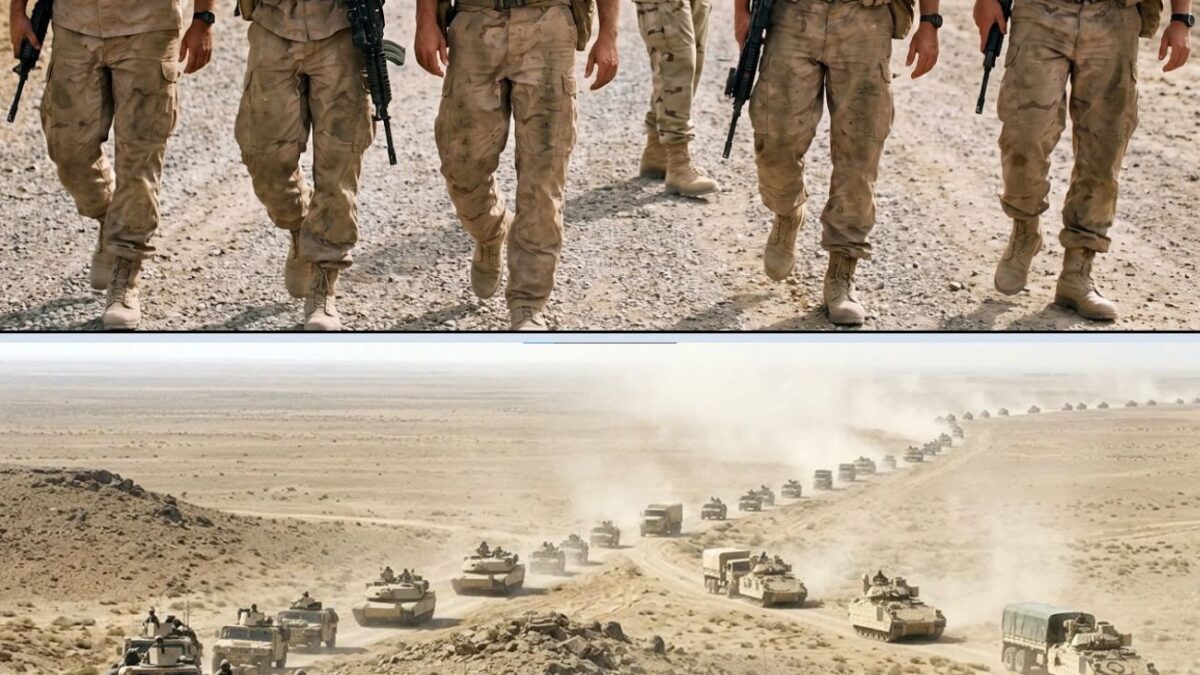
Shortly after 02:00 on 16th of April 2006, two Puma helicopters came down low over a landing zone northeast of Yusufia in the belt of farmland southwest of Baghdad that American soldiers had already nicknamed the triangle of death. The rotor wash flattened a stand of reeds along an irrigation ditch. Men went out the doors in pairs, weapons up, and the aircraft lifted away within seconds, leaving them alone on open ground in the dark. From the landing zone to the target, an insurgent-held farmhouse on the edge of the village lay several hundred meters of orchard, date palms, and low scrub, soft earth that swallowed footfall. No track wide enough for a vehicle to follow them in, even if anyone had wanted one to.
They walked it, spaced and silent, weapons tracking the tree lines on either side, boots sinking a little with every step into ground still wet from the irrigation channels that fed the orchard. Each man close enough to see the shape of the one in front of him and no closer. Behind them, further back, an AC-130 gunship and a command aircraft held station overhead, and a company of American paratroopers waited to seal the roads. None of that hardware would matter for the next several minutes. What mattered was 8 to 10 men from B Squadron, 22 Special Air Service Regiment, closing the last stretch of ground, the only way anyone had judged it could be closed without losing the element of surprise before they ever reached the door.
The operation would be logged afterward as Larchwood 4, one entry in a long, quiet list of raids most of the British public would never hear about under its real name. It sat inside an argument that had been running in one form or another for nearly two years by that point. An argument less about courage than about trust, fought out not in the orchard, but in the planning rooms of a headquarters most of its own staff were not legally permitted to describe in public.
The habit of walking into a target rather than driving into it was not something the squadron invented for Iraq. It had been built up over decades in wars that had almost nothing else in common with the triangle of death. In the mountains of Dhofar in the 1970s, where patrols lived off what they carried for weeks at a time. In the Falklands in 1982, where reconnaissance troops crossed open ground on foot under the noses of Argentine positions. In the fields and border country of Northern Ireland, where a vehicle on the wrong road at the wrong hour could end a surveillance operation before it began.
Delta Force’s own founder, Colonel Charlie Beckwith, had built the unit in 1977, partly in the SAS’s own image, after an exchange tour with 22 SAS convinced him the US Army needed something like it. But three decades of divergent growth shaped by hostage rescue work, a much larger budget, and the particular demands of mechanized warfare in Iraq had pulled American practice toward heavier vehicles, bigger support packages, and compressed high-speed assaults, while the British squadron’s habits stayed closer to the leaner, patience-first tradition Beckwith had originally borrowed from.
Both approaches had been proven repeatedly in the wars that shaped them since. Neither was designed with the other’s assumptions in mind. And nobody at Fernandez had sat the two doctrines down together and declared a winner before 2006 forced the question.
That headquarters was known inside the wire as the station main support site Fernandez, a requisitioned compound inside Baghdad’s fortified zone, home since early 2004 to a British Sabre Squadron working under the American Joint Special Operations Command. The arrangement had never been straightforward. From the start, American commanders running JSOC’s hunt for al-Qaeda in Iraq’s leadership reserved the most sensitive, highest-value targeting work for their own units, chiefly Delta Force, the Army’s dedicated special mission unit built around speed, firepower, and years of practice hunting exactly this kind of target.
The British squadron spent its first 18 months in Iraq largely on the outside of that inner circle. Major General Stanley McChrystal, who took command of JSOC in 2003 and shaped its culture for years afterward, kept the unit outside the task force’s core targeting cycle for much of that period. A decision that reflected caution about an unfamiliar partner more than any judgment on its competence.
The caution had real roots, and not all of them were flattering to the Americans either. In late 2003, a colonel sent to inspect a secret American detention facility inside Baghdad’s airport complex used to hold and question high-value detainees before they were passed further up the system had come away alarmed enough by what he found there to raise it with his own chain of command. Concerns about detainee treatment that would later surface publicly when American press investigations examined the facility’s record in detail. British officers at Fernandez heard enough through informal channels and their own liaison contacts to grow wary of where detainees captured on joint operations might end up.
In October 2004, that weariness hardened into policy. British authorities barred SAS personnel from handing prisoners into American custody whenever those prisoners were likely headed toward interrogation arrangements London did not trust. A month later, during the assault on Fallujah, the SAS was kept out of the fight entirely alongside its American counterparts. A decision driven by political pressure back in London rather than anything happening on the ground.
Neither episode made headlines at the time. Both meant that for most of 2004 and 2005, the unit at Fernandez did real, dangerous work on the margins of the American effort, while the men running the war’s most important manhunt kept the biggest prizes for their own people.
Daily life inside the station reflected that margin status in small, practical ways that had nothing to do with courage or competence. Briefing slots scheduled around the American targeting cycle rather than alongside it, intelligence packages that arrived a day or two after the Americans had already acted on the freshest version of them, and a steady diet of lower-priority leads that kept the squadron sharp without ever quite testing it against the network’s top tier.
Nobody at Fernandez complained about it loudly because complaining loudly was not how this particular argument was ever going to be won. The squadron’s answer to being kept on the margins was simply to be better repeatedly on whatever it was actually given until the margin itself became the thing that needs explaining.
The American side of that distrust had its own history and it ran deeper than any single decision about one British squadron. The irregular detention facility inside Baghdad’s airport complex, known inside the task force as Camp Nama, had been the beating heart of the American manhunt since the earliest weeks of the occupation. The place where high-value detainees captured by Task Force 20 and later its successor formations were held and questioned before being passed further up the chain.
Colonel Stuart Harrington, sent to inspect the facility’s detention practices in late 2003, came away alarmed enough to report signs of detainee mistreatment to the senior army intelligence officer in Baghdad. Subsequent investigations run long after the fact upheld five of 29 formal complaints and led to disciplinary action against 34 soldiers.
McChrystal himself, who had taken over JSOC in 2003, moved against the abuse once it reached him in the spring of 2004, shut Camp Nama down, and relocated the task force’s main detention and operation center to Balad Air Base, the same base that would later host the British liaison staff under Operation Traction.
None of that history made the Americans careless about who they trusted with detainees afterward. If anything, it made them more careful in ways that cut directly against the British squadron trying to prove itself worthy of the war’s biggest targets while operating for its first two years essentially on the manhunt’s margins.
The scale of what that manhunt had already achieved by the time the British squadron arrived in strength only sharpened the sense inside Fernandez of how much was being withheld from it. Major General Dell Dailey’s Task Force 20, built around a Delta squadron under Lieutenant Colonel Pete Blaber alongside Ranger battalions and armor, had driven deep into western Iraq during the 2003 invasion after General Tommy Franks personally overruled Dailey’s more cautious instinct to hold Delta back for weapon sites and leave the deep raiding to someone else. A decision that let Blaber’s teams tie down Iraqi forces and seize airfields far ahead of the main advance.
The same lineage of units went on through the rest of 2003 to capture senior Ba’athist officials, kill Saddam Hussein’s sons, Uday and Qusay, in a prolonged firefight in Mosul that July, and finally run Saddam himself to ground near Ad-Dawr that December after 12 earlier raids had come up empty. It was an extraordinary record built by an American special mission unit that had spent years training almost exclusively for this kind of work, and it was the standard, however unfairly, against which every newer, less proven partner at Fernandez was quietly measured.
Early in 2004, the squadron had come close to ending that hunt outright on its own. Acting on intelligence that Zarqawi himself was inside, a troop assaulted a house in Baghdad, pulled back briefly after finding a booby trap rigged near the entrance, then went back in and overwhelmed the men inside. Zarqawi was not among them. He had left the building shortly before the raid went in, a near miss painful enough that it shaped how carefully JSOC weighed every subsequent tip on his location for years afterward.
It was exactly the kind of failure a results-driven command culture could have used to argue the British unit simply wasn’t ready for work at this level. Instead, over the following two years, the squadron kept being handed smaller, patient jobs—raids, captures, source development—that slowly built a record nobody at Fernandez needed to advertise because the operation files did the advertising on their own.
In April 2005, G Squadron captured Fadil Ibrahim al-Mashadani, a former senior aide to Saddam Hussein, cornering him inside a house after days of surveillance rather than simply kicking down the first door that intelligence pointed to. The target had moved twice in the preceding fortnight, and the troop watching him had adjusted its plan each time rather than forcing a premature assault on outdated information. A small, unglamorous discipline that nobody outside the squadron would ever hear praised, but one that British officers later pointed to in internal training as the real difference between a raid that worked and a raid that merely looked decisive on paper.
Around the same period, the unit detained a former senior Ba’athist and a second man during a separate search for kidnappers, only to release both after American intelligence confirmed they were sources working for the CIA. An uncomfortable reminder of how tangled the loyalties on the ground had become and how easily a clean operation could still end in an awkward phone call between agencies that were nominally on the same side.
The unit’s own name became a casualty before any single mission did. On 19th September 2005, two undercover SAS soldiers working under an operation codenamed Hathor, dressed in local clothing and headdresses, surveilling an Iraqi police officer whose crime unit was rumored to run its own death squads, were stopped at a checkpoint in Basra. When an Iraqi policeman tried to pull one of them from their car, they opened fire, killing at least one officer, and drove off under pursuit before surrendering once they judged they could not outrun it.
Iraqi police beat the two men and locked them inside the Al-Jameat police station, a building the British already suspected of being infiltrated by illegal militias. What followed was not a quiet extraction. Around 20 members of A Squadron and a platoon of paratroopers from the Special Forces Support Group moved to cordon the station, backed by Warrior armored vehicles and Challenger 2 tanks from the Coldstream Guards and the Staffordshire Regiment.
A crowd gathered, threw stones and petrol bombs, and set at least one Warrior ablaze. Three British soldiers were hurt in the standoff, and two British officers sent in to negotiate were themselves briefly taken hostage. By the time the two SAS men were moved to a house nearby, the situation had become less a hostage rescue than a small siege in the middle of a British-administered city.
For hours, the standoff held in a kind of grinding stalemate. Armored vehicles idling at the edges of a crowd that would not disperse, officers on both sides working radios to find a way through that did not end in a battle inside a city British troops were supposed to be stabilizing, not besieging.
After nightfall, with a Predator drone and a Lynx helicopter feeding live pictures back to the command cell, British armor finally broke through the compound’s walls, and troops stormed both the station and the house in the same coordinated push, finding the two SAS men locked in a bare room, unharmed, with no resistance at the second site at all. An anticlimax in the end bought at the cost of an afternoon and evening most of Basra had watched unfold in the street outside.
The Basra governor Mohammed al-Waili condemned the raid afterward as barbaric, savage, and irresponsible, an unusually public rupture between the British military and the local authority it was supposed to be partnering with. The unit’s name, until then kept out of print, surfaced in the press coverage that followed. Within days, internally, it was renamed from Task Force Black to Task Force Knight, a bureaucratic fix that solved a security problem on paper and did nothing to settle the Americans’ nerves about how tightly this partner’s secrets could be kept.
It took until January 2006, under an initiative known internally as Operation Traction, for senior British staff officers to be integrated forward into JSOC’s own headquarters at Balad. A structural vote of confidence almost two years in coming and one that still left plenty of officers inside the American chain treating the British squadron as a useful but secondary asset suited to raids Delta didn’t have the bandwidth to run itself.
In the months before that, through the autumn and winter of 2005 into early 2006, the task force had thrown itself into a long, grinding series of raids under the umbrella of Operation Lightwater, hunting for the location of three Western hostages held by kidnappers claiming to be the Swords of Righteousness Brigade, members of the Christian Peacemaker Teams organization seized earlier that year.
Dozens of buildings were hit. Dozens of men were detained and questioned. Most nights produced what the operation logs with no attempt to dress it up called dry holes—raids that cost the same planning, the same rehearsal, the same risk as a successful one, and returned nothing.
A troop would spend a full day building the picture on a single address, walk the approach that night exactly as carefully as they would for a confirmed target, breach the door, and find nothing but a frightened family and furniture nobody needed to search twice. Fifty such buildings were hit before the operation produced anything resembling a lead, and 47 men were detained and questioned along the way, most of them released within days once it became clear they had no connection to the kidnapping at all.
It was exhausting, unglamorous work, the kind that never gets filmed and rarely gets remembered, carrying exactly the same physical risk on an empty house as it did on an occupied one since nobody walking through a darkened doorway at 2 in the morning knew in advance which kind of night they were about to have. It was also, in its own way, the clearest evidence the squadron had yet produced that its methods could sustain a long campaign of grinding, repetitive pressure rather than a single lucky night.
The three Christian Peacemaker Teams hostages were eventually recovered alive in the spring of 2006, the payoff for a winter of mostly empty rooms that none of the men who cleared them would ever get any public credit for.
Nine months before Larchwood 4, the task force had already shown what the partnership could look like when the Americans themselves had no spare capacity to run an urgent lead and handed it over instead. On 23rd July 2005, intelligence reached JSOC of a planned multiple suicide bombing being readied inside a safe house in southern Baghdad. JSOC’s own assault squadrons were already committed elsewhere that day, tied up in a separate operation. So, the mission went instead to M Squadron of the Special Boat Service, then on its second rotation through Task Force Black with elements of G Squadron SAS in support.
Delta Force itself contributed only its vehicles, lending ground mobility vehicles for the approach, while a platoon of American Rangers held back as a reserve and a flight of Puma helicopters carried snipers overhead. As the British troops closed on the building on foot, a man wearing a suicide vest ran at them and detonated it early. The blast caused one of the orbiting Pumas to lose control for several seconds before the pilot recovered it just above the rooftops.
A second bomber spotted fleeing out the back of the house was killed by snipers in the air. A third charged the entry team inside a corridor and was shot down before he could trigger his vest. The assault recovered explosives and vest components scattered through the building and handed the site over to bomb disposal teams once it was clear. Both the ground troops and the Puma pilot were commended afterward.
It was precisely the kind of operation—urgent, dangerous, and handed down from an American command that simply had nobody else free to run it—that should, by the normal hierarchy at Fernandez, never have reached this unit’s door at all. That it did, and that it came back with the bombers dead and the site made safe, was the kind of evidence a colonel keeping score could not entirely ignore even if nobody mentioned it directly in the argument over Larchwood 4 nine months later.
That was the texture of the relationship in the weeks before Larchwood 4 was planned: not open hostility, but a settled, largely unspoken hierarchy in which the Americans ran the primary hunt and the British squadron supported it from one step back.
The target that April, a man the operation files referred to by the cover name Abu Atia, sat inside a farmhouse on the outskirts of Yusufia that intelligence connected to al-Qaeda in Iraq’s leadership network. By the standards that had governed the task force’s work for two years, this was Delta’s kind of target, the sort of high-value lead that 18 months earlier would almost certainly have gone to the American unit by default.
It went instead to B Squadron, and inside the American liaison cell at Fernandez, at least one senior officer made no secret of thinking that was the wrong call. His objection, as it was later described by British officers who worked alongside him, was not personal. It was institutional. Delta had the depth of experience against this specific network, the manpower, and, in his view, the demonstrated record against targets of this weight. Handing a lead this good to a squadron that had spent most of two years on the outside of JSOC’s own targeting cycle struck him as an unnecessary risk to run with intelligence that might not come again.
The squadron’s own commanding officer disagreed, and the plan that went forward was built around the same doctrine the unit had quietly relied on through two years of smaller jobs: insert light, move on foot across the ground a vehicle would betray, and let patience and timing do what firepower alone could not.
In the two days before the raid, the assault teams rehearsed the orchard approach against a mockup of the farmhouse laid out on open ground near Fernandez, walking the route in full kit until the spacing between men and the pace across soft earth became close to automatic. Loads were trimmed hard—water, ammunition, breaching charges, and a stripped-down medical kit carried between them—with anything that did not earn its place on a man’s back left behind in the storeroom.
One operator later recalled in an account used years afterward to train newer recruits that the detail he remembered most clearly from the final rehearsal was not the house or the fire plan, but the quiet instruction from his team leader to drop his spare water bottle rather than carry weight he would not use before the job was done.
“Two liters,” the team leader told him, “is enough for a man who isn’t planning on being out there all night.”
The team split into two assault groups to approach the farmhouse from the east and the south, led in the field by an SAS captain—his name for the purposes of this account and in the account journalist Mark Urban’s later reporting gave him was Euan—alongside a second, less experienced captain commanding the other group.
A platoon of paratroopers from the Special Forces Support Group cordoned the area after being flown in separately by Chinook, while two Lynx helicopters carrying SAS snipers orbited the target, and an American infantry company—Charlie Company, 2nd Battalion, 502nd Infantry Regiment—held a blocking position on the roads nearby as the designated quick reaction force. Overhead, the AC-130 and the command aircraft watched the whole thing unfold in infrared, available to pour fire into the compound in seconds if the assault teams called for it.
None of that weight of American support changed the fact that the final 100 meters belonged to men walking through an orchard in the dark. Two operators scouted the farmhouse’s southeast corner first and found a door standing open—an opportunity and a warning. In the same instant, since an open door on a target like this one could mean carelessness or an ambush waiting on the other side, Euan ordered the assault.
The first team through the door was hit immediately by gunfire down a narrow corridor, and three operators went down wounded in the first exchange. The team pulled back under fire, and the paratroopers outside opened up to suppress the house while the wounded were dragged behind a low sandbank and given first aid in the open in the dark with the fight still going 20 meters away.
It did not end there because the house had not finished fighting. Insurgents inside and on the roof kept up fire and threw grenades down into the courtyard. Euan pushed the assault forward a second time under covering fire, using grenades of his own to clear the corridor, taking two more wounded before an insurgent inside was killed.
A man wearing a suicide vest ran from the building and took cover under a parked car, killed before he could close the distance by the snipers on the orbiting Lynx and by the paratroopers on the cordon. Inside, the assault team worked the ground floor room by room, killing a second insurgent, and found civilians in several of the rooms—some wounded, at least one already dead.
On the stairs leading to the roof, a wounded NCO came face to face with a third man who detonated a second suicide vest at point-blank range. Another insurgent killed himself on the roof rather than be taken.
By the time the house went quiet, five SAS operators had been wounded in the assault—none fatally, all back on duty within days—and five insurgents were dead, including the two suicide bombers. One civilian had been killed in the crossfire and four more wounded, a cost the operation’s own after-action record set down plainly rather than minimized because pretending otherwise would have taught the next planning cell nothing useful about what this kind of raid actually costs when it goes wrong room by room.
Among the dead was not the target. Abu Atia was found alive among the civilians on the ground floor along with a second man who would matter almost as much. Both were flown out for interrogation while the wounded British and Iraqi went to the 10th Combat Support Hospital.
What the squadron carried out of that farmhouse besides two prisoners was a quantity of documents, phones, and recovered material that took weeks to fully exploit—the part of any operation that never makes it into a dramatic retelling because it is paperwork and patience rather than gunfire, and because it is also where the mission’s real value turned out to live.
The second detainee, identified in the files as al-Qaeda in Iraq’s so-called admin Amir for its Abu Ghraib network, held out against questioning for weeks. Around 20th May, more than a month after the raid, he was finally tricked into naming a man known as Sheikh Abu Abdul Rahman, Zarqawi’s own religious adviser—a detail that turned a stalled interrogation into the best lead JSOC had developed on Zarqawi’s location in nearly two years of hunting him.
Surveillance built around that single name eventually tracked the Sheikh to a farmhouse in Hibhib near Baqubah, where on 7th June 2006, a Predator drone watched a man matching Zarqawi’s description arrive. Two F-16s dropped 500-lb bombs on the building. American troops recovered Zarqawi’s body from the wreckage soon after.
The chain connecting a date orchard outside Yusufia to a bomb crater outside Hibhib ran through 52 days, one tricked interrogation, and a raid the senior American liaison colonel at Fernandez had argued weeks earlier should never have been given to the British squadron in the first place.
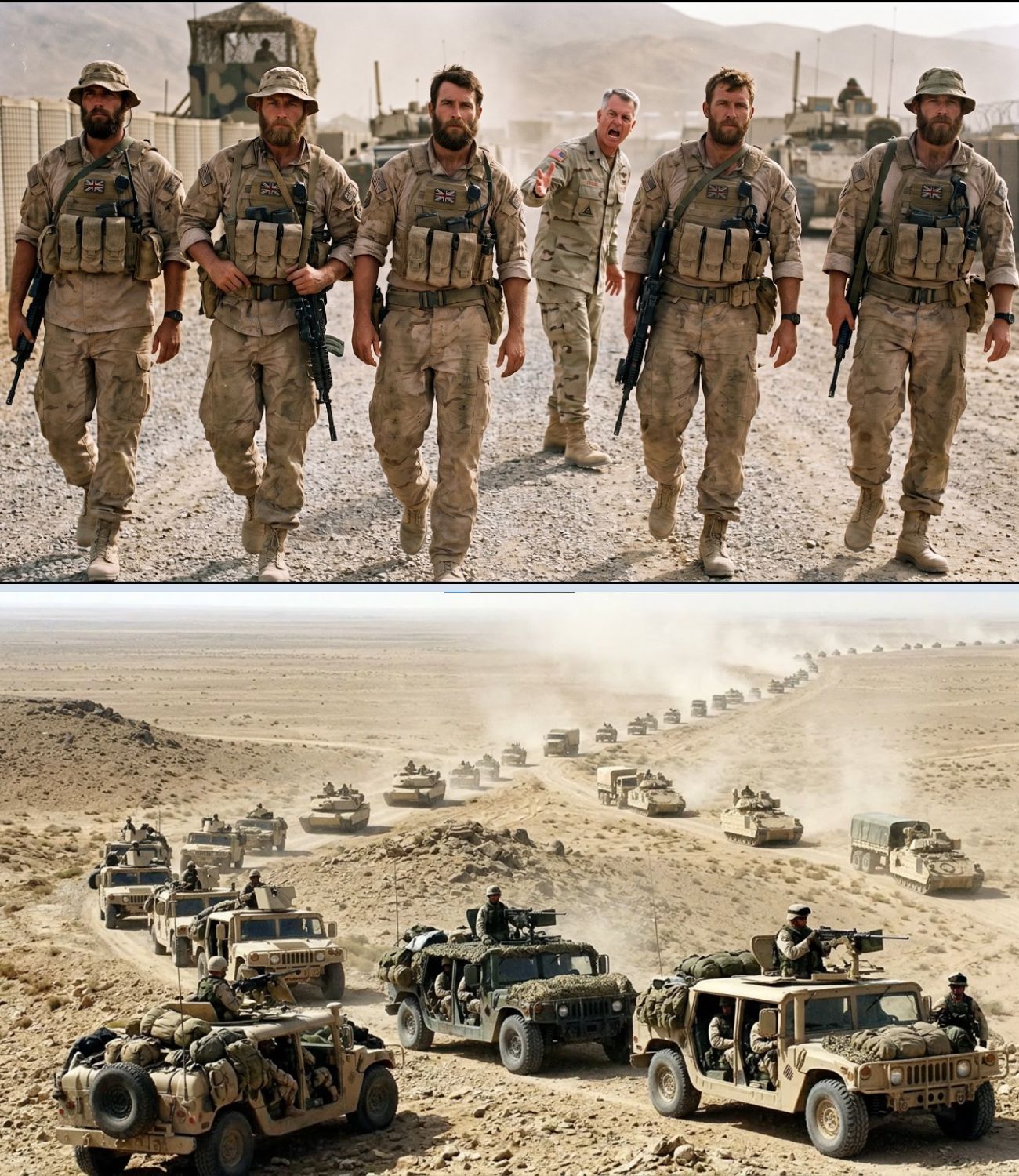
The irony sitting underneath the colonel’s objection was that the very risk calculus he had built his career trusting was by the spring of 2006 failing his own side on the roads around that same stretch of Iraq. Improvised explosive devices had by then become the leading cause of American deaths in the war, and the Triangle of Death earned its name specifically because armored convoys moving along its handful of usable roads kept finding them at a cost in killed and wounded that dwarfed anything the orchard walk-in had risked.
None of that made his caution foolish. A convoy hit by a buried charge and a foot patrol spotted crossing open ground were different kinds of danger, not interchangeable ones, and a model built to manage the first kind could not simply be swapped for the second without real analysis. But it meant the colonel’s confidence that Delta’s heavier, more mechanized methods were the safer default did not rest on quite as solid ground in this particular belt of farmland as two years of institutional habit had led him to assume.
The squadron he doubted had in effect found the one approach to that stretch of Iraq that sidestepped the single greatest killer of the whole American effort there simply by refusing to put wheels on the ground at all for the last kilometer.
Nobody at Fernandez staged a victory lap over that chain of events. And by the account British officers gave afterward, the American reaction was not resentment, but something closer to relief mixed with respect. Commanders on the American side of the headquarters were, in the words later used to describe their mood, thrilled with how the operation had turned out, and the raid went on to be treated inside the task force as proof that the British squadron could be trusted against the same tier of target Delta Force had handled almost exclusively until then.
It did not erase two years of institutional caution overnight, and it did not need to. What it did was remove the argument’s foundation. A colonel who had warned that this target was too important to risk on an unproven partner now had a file in front of him showing the partner walking into a defended farmhouse, taking five wounded, killing the men who needed killing, recovering the target alive, and producing two months later the intelligence trail that ended Zarqawi’s life.
There was no further recorded objection from him or from anyone else at Fernandez about whether the squadron belonged on targets of this weight. It would be dishonest to pretend the cost of that validation was small or that the men who paid it walked away unmarked. Five operators wounded in a single assault, a civilian killed in a house full of people who had no say in who their neighbors sheltered, two suicide vests detonated at close range inside a building that eight men had to clear room by room in the dark.
This was not a clean story, and nobody who was there described it as one afterward. What made it count in the particular ledger that mattered to the people running the war was that the squadron had absorbed that cost, finished the job, and kept the chain of intelligence intact all the way through to its end. Institutions do not usually change their minds because of an argument; they change their minds because of a file that simply will not support the argument’s conclusion anymore.
In the months that followed, American planners at Fernandez and Balad began asking British troop commanders in briefings that would have been unthinkable two years earlier to walk them through exactly how a foot approach like the one at Yusufia was built: the reconnaissance timeline, the rehearsal standard, the load calculations that decided what a man carried and what he left behind.
It was never adopted wholesale, and nobody who understood the two different wars being fought under the same headquarters roof would have wanted it to be. A model built for flat farmland south of Baghdad had no business being forced onto the close, overlooked streets further north or east. But the fact that American officers were now asking the question at all, rather than assuming their own doctrine was the only serious option on the table, was itself a measure of how far the argument had traveled since the days when the British squadron’s targets were whatever Delta didn’t have the time to take.
One liaison officer who rotated through Fernandez later that year put it to a colleague more in professional respect than in any grand statement in terms that stuck with the people who heard it, saying that he’d come to Iraq assuming the Americans had already worked out the smartest way to get men onto a target, and left having learned that the smartest way changed depending on which 100 meters you were standing on.
The trust that Larchwood 4 helped establish kept being tested, and not every test that followed ended as cleanly. By that autumn, the task force’s attention had shifted south again toward Basra, where a British sergeant named John Hollingsworth—a veteran of three tours before he joined D Squadron, already decorated with the Queen’s Gallantry Medal for earlier service in Northern Ireland—was shot in the back of the neck during a raid in early November 2006, narrowly missing his carotid artery, and returned to duty within days rather than go home wounded.
He led another raid on an insurgent-occupied block of flats in Basra on the night of 23–24 November 2006—the kind of dense urban target that gave a dismounted assault team almost no standoff distance and no second chance to reposition once the first shot was fired. He was hit early in the firefight going through the building, evacuated under fire to a waiting vehicle and from there to the military hospital at Shaibah, and died of his wounds that night, aged 35.
He was the first British special forces soldier killed in action since October 2003, and the news of his death, like almost everything else the unit did, never carried his unit’s real name in public. His widow was received privately by the prime minister.
A little over a month later, on 25th December 2006, soldiers from the 1st Battalion, Staffordshire Regiment, raided the same Al-Jameat police station where the two SAS men had been held 15 months earlier, killed seven gunmen, freed 127 prisoners who British officials said were being held and tortured by Shia militias, and then demolished the building outright—a coda to the Basra incident that the squadron’s own work had quietly set in motion.
Across the length of the British task force’s campaign in Iraq, six of its soldiers would eventually be killed and roughly 30 wounded, a toll that sat unpublicized behind almost every operation this account has described.
The following year brought a harder test of a different kind. In the spring and summer of 2007, as Task Force Knight extended its operations into Sadr City, a crowded Shia district controlled block by block by Mahdi Army militia fighters, several SAS personnel were seriously wounded in fighting that offered none of the open farmland and patient timing that had made the Yusufia approach work. There was no orchard to walk through in Sadr City, no two kilometers of flat ground to study from a hidden observation post for five quiet nights running.
Streets were narrow, overlooked from every rooftop, and saturated with fighters who had spent years learning the same lesson about noise and exposure that the squadron itself relied on elsewhere. The task force adjusted its methods accordingly rather than pretending one doctrine fit every target, leaning harder on vehicles, armor, and close air support in exactly the kind of ground where the American model had always made more sense than the British one—a quiet, unremarked admission inside the planning cell that the argument settled at Yusufia had never been about which doctrine was right in general, only about which one fit a particular stretch of ground on a particular night.
That same year, after a UK government mandate restricted the unit’s activity involving Iranian nationals operating inside Iraq, the task force’s attention shifted again, this time toward Arab Jabour, another al-Qaeda stronghold south of the capital that called for the same patient, low-footprint approach the squadron had been refining since 2004. By 2008, a second Sabre squadron, B Squadron, had extended the task force’s reach into Tikrit and Anbar Province, carrying the same accumulated habits: insert light, move quiet, let timing do what firepower alone could not, but know when the ground itself takes that option away—into country the unit had not routinely worked in its earlier years.
None of this, start to finish, resolves into a tidy lesson about British grit against American caution, and it would misrepresent the record to pretend it did. The colonel who doubted handing Larchwood 4’s target to an unproven partner was not a fool, and the institutional caution he represented had saved lives elsewhere in a war where impatience with an unfamiliar ally could just as easily have gotten people killed the other way.
What the operation actually settled was narrower and in its way more durable: that a squadron kept for two years on the margins of the war’s most important manhunt had, when finally trusted with a target that mattered, delivered—not without cost, not without civilian harm, it would have been dishonest to hide, but completely all the way through the 52 days of interrogation and surveillance that followed to a farmhouse outside Hibhib and a result the colonel’s own files could not argue away.
UK special forces remained in Iraq under the task force structure until the British military mission there concluded in May 2009, by which point the squadron’s record under JSOC included dozens of operations the public would likely never hear described under their real names at all, spread across five years, two task force renamings, and a widening arc of territory that had started at Fernandez and ended up reaching Tikrit and Anbar Province by the time the last rotation handed its ground over and went home.
Mark Urban’s later account of those years, built from the fragments people were eventually willing to share once they had left the service, remains the fullest public telling of a unit that spent its first 18 months in Iraq being quietly managed around and its last three years being handed exactly the kind of work it had spent those 18 months trying to prove it could do.
Men who trained later rotations on the lessons of that period in Iraq and afterward in Afghanistan did not teach Larchwood 4 as a story about one American colonel being proven wrong, and anyone who reduced it to that in a classroom would have been teaching the wrong lesson to men whose lives would depend on getting it right. They taught it more usefully as a question to ask fresh every single time a new target came in rather than inherit from the last tour or the last success: whether the ground in front of you that night actually rewarded weight or quiet, whether the enemy watching it had the patience to notice an engine before they noticed a boot, and whether the plan sitting on the table had been built for the war you were fighting right now or for the one you had fought 18 months earlier in a different province against a different enemy on ground that looked nothing like this.
Sadr City a year later taught the same lesson in reverse, and the squadron that had proven the value of walking into Yusufia adjusted without complaint once walking stopped being the answer among the operators themselves rather than in any official record.
The period around Larchwood 4 was remembered less for the raid’s detail than for a dry, half-joking line that circulated for years afterward among men who had served at Fernandez—a way of summing up to anyone new who complained about the weight of a Bergen on a long foot approach exactly what two years of being doubted had bought the squadron the right to say to the people who had doubted it: that the men riding could keep their engines, and the men walking would be the ones still standing when it mattered.
The farmhouse outside Yusufia is still there on satellite imagery today, an unremarkable scatter of walls beside an orchard that looks from directly above like nothing in particular, not the kind of ground that announces itself on a map pinned to a wall in an air-conditioned headquarters as the place where an institution’s two-year argument about who could be trusted with its most important target finally ran out of road.
The colonel who wrote his objection into that operation file never got the chance to argue the point again at Fernandez. By the time anyone might have raised it, there was nothing left in the file to argue with. What the chain that started in that orchard actually proved was smaller and plainer than any speech could make it, and it had nothing to do with which army was braver. The 100 meters a vehicle could not cross without being heard were on that one night the 100 meters on which the whole argument turned, and the men who walked them already knew before anyone in a planning room agreed to admit it which side of that argument the orchard was going to settle.
You Might Also Enjoy

“We Thought They Would Negotiate”—What Argentine Soldiers Said When The British Attacked Goose Green

“You’ll Never Finish My Ruck March, Limey” — US Sergeant Who Challenged the SAS, Then Fell Out First






