“We’ve Been Here Two Years.” — Why an SAS Patrol Refused Orders From US Officers in Helmand.
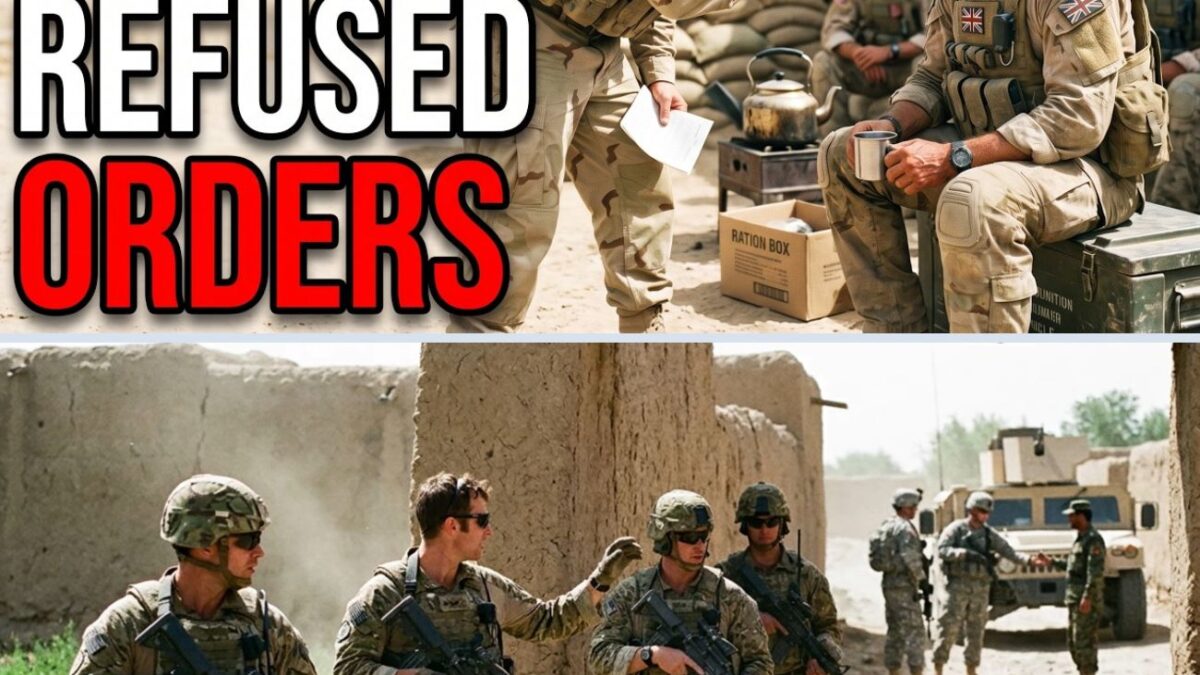
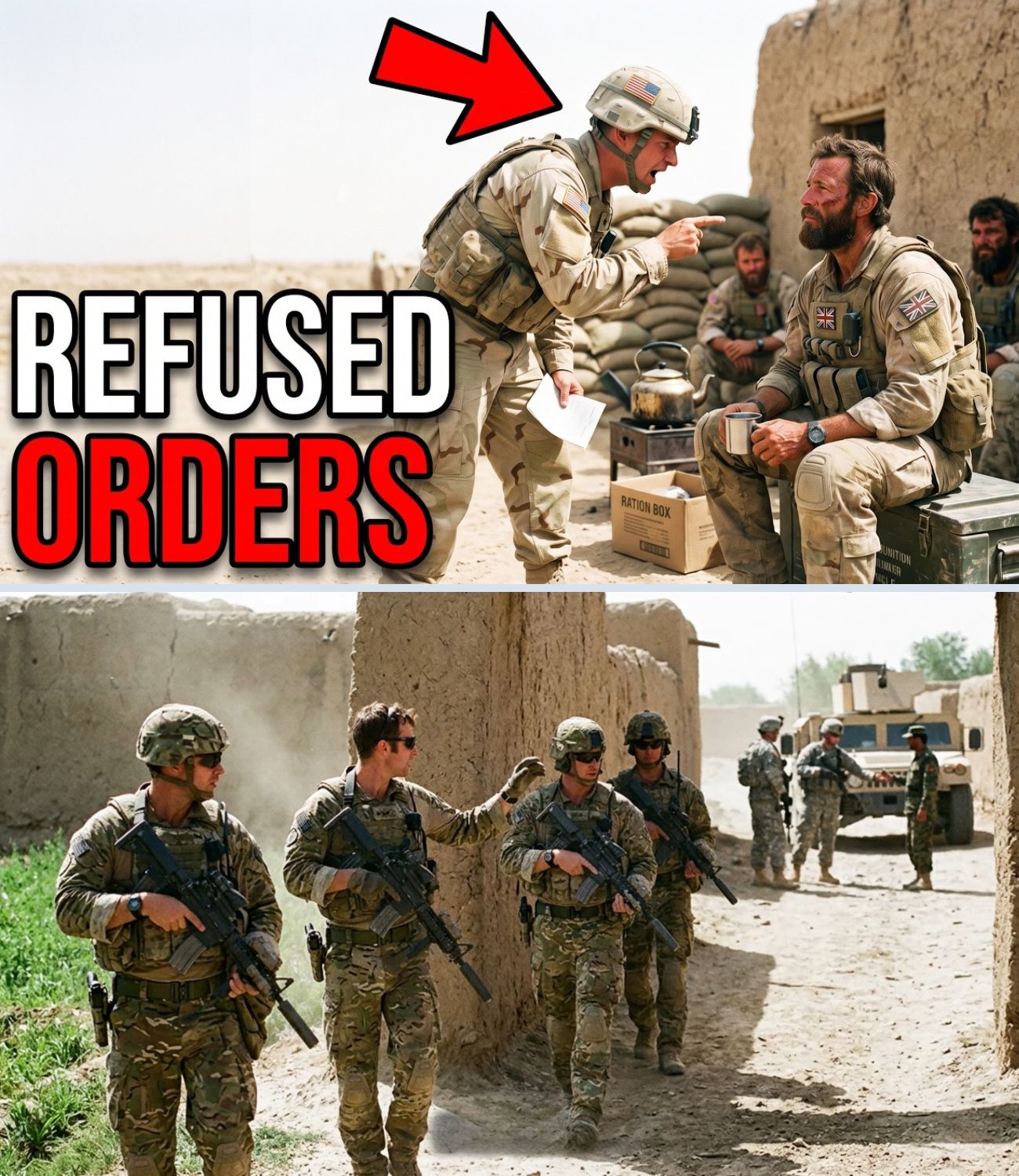
19th of March 2008, a mudbrick compound on the northern edge of Sangin District, Helmand Province, and four SAS soldiers are sitting around a folding table with a hand-drawn map spread flat under a paraffin lamp, its paper gone soft at the folds from two years of handling. Every canal crossing on it is marked in pencil, some crossed out and redrawn twice.
A newly arrived American major stands in the doorway with a laminated operations order in his hand, telling the patrol commander that “from Thursday, foot movement into the green zone stops and every patrol goes outmounted in armored vehicles on a fixed timetable.” His own headquarters has approved. The patrol commander does not stand up.
He taps the map once on a canal crossing marked in three different colors of pencil and says, “We have been walking that ground for 2 years and the vehicles will not fit.”
The patrol belonged to a small mobile team from 22 Special Air Service Regiment. Four men rotated in and out of Sangin district since the summer of 2006 under a mentoring and liaison tasking that had by 2008 outlasted three separate American advisory rotations at the district level.
Call signs on the radio log went by a single letter each—standard practice—and the patrol commander that spring was a sergeant the squadron’s own records list only as N. Ashworth, a soldier on his second extended tour in that specific stretch of the Helmand River Valley, fluent enough in the local Pashto dialect to conduct a conversation without an interpreter standing between him and the man he was talking to.
The other three corporals the files name only as Colton, Spite, and a signaler called Mariner had between them close to 5 years of accumulated time in that same 11 km stretch of green zone, canals, tree lines, and compound clusters running parallel to the Helmand River. That accumulated time was the whole of the patrol’s value, and it was also the thing the newly arrived major could not see on any map his own staff had given him.
Major David Holt had landed at the district’s forward operating base 11 days earlier, attached from a National Guard brigade tasked with standardizing partnering procedures across three districts simultaneously. A mandate that made sense on a whiteboard at brigade headquarters and made considerably less sense on the ground in Sangin where the terrain, the tribal politics, and the two years of relationships Ashworth’s team had built with specific elders in specific compounds did not standardize particularly well with anything happening 40 km away in Geresk or Garmsir.
Holt himself was not, by any of the surviving accounts, a careless officer, and it would be a disservice to the actual texture of that spring to paint him as one. He had served two prior tours, one in a conventional infantry brigade and one advising an Iraqi police unit. And he arrived in Sangin with a genuine, well-founded concern about the inconsistency he had seen across three districts where one unit’s informal judgment calls left a gap that a determined enemy could and did exploit by learning which district’s patrols moved predictably and which did not.
His instinct toward standardization was not vanity. It was a reasonable response to a real problem applied in this one instance to a patrol whose entire operating logic ran directly against the assumption that one district’s risk profile could ever really resemble another’s.
Holt’s order was not unreasonable on its own terms. A string of roadside bombs across the wider province that winter had killed or wounded a dozen coalition soldiers in dismounted patrols, and brigade’s own casualty analysis produced by a staff that had never walked the ground in question recommended mounted movement wherever the road network allowed it.
The trouble, which Ashworth tried to explain across a table in a voice that stayed level for longer than most men would have managed, was that the road network in question did not in fact allow it. Not along the specific canal-side tracks Ashworth’s team used to reach three compounds where the patrol’s entire informant relationship was built on being seen arriving quietly on foot with no more than four men, exactly as they had arrived for two years running.
An armored vehicle on that same track would need to cross a culvert rated for a fraction of its weight, would announce its approach for a kilometer in either direction over open ground, and would tell every compromised watcher in the district exactly which compound the patrol was visiting and precisely when.
Ashworth’s refusal was not, strictly speaking, insubordination. And this was the detail that made the standoff more complicated than a simple clash of personalities. The SAS team in Sangin operated under its own national chain of command, tasked to the coalition effort, but answerable for its actual patrolling decisions to a British headquarters 2 hours’ flight away rather than to the American brigade Holt represented at district level.
Holt could request strongly and repeatedly that the patrol adopt his standardized procedure. He could not, in the strict letter of the arrangement neither man had invented and neither man particularly enjoyed navigating, simply order it. That distinction, thin as it sounds stated plainly, was the entire hinge on which the following 11 days turned.
Holt pressed the point anyway through the district’s senior American officer, a lieutenant colonel named Ferris Lund, who ran the forward operating base and who had until Holt’s arrival left Ashworth’s team largely to its own judgment on patrol method. Lund’s own instinct, formed over four months in the district, ran closer to Ashworth’s than to his newly arrived major’s.
But Holt had brigade’s written recommendation behind him, and Lund, weighing a subordinate officer’s mandate against an informal understanding with a foreign special forces patrol, chose for the first several days to let Holt’s standardization order stand as the district’s working policy, at least for the American and Afghan units under his own direct command.
Holt’s arrival had not been the patrol’s first friction with an incoming American command element, and it would not be the last, but it landed at a particularly unhelpful moment. Ashworth’s own team had spent the preceding 6 weeks absorbing a separate blow with no connection to Holt at all.
One of their two WMIK Land Rovers—the lighter, more maneuverable vehicles the team used for the short stretches of movement that could not be done on foot—had thrown a track pin crossing a dry wadi bed in February, damaging the running gear badly enough that it sat awaiting parts at the district’s own maintenance point for the better part of two months. That left the patrol with a single working vehicle for any movement beyond walking distance. A constraint that made the foot-based method Ashworth was defending not simply a preference, but for 6 weeks running close to the only option the team actually had.
The first crack in that policy appeared 4 days later, and it appeared in exactly the terrain Ashworth had warned about. A National Guard platoon following Holt’s new mounted procedure on a parallel track 2 kilometers south of Ashworth’s own patrol area drove a mine-resistant vehicle onto a culvert crossing that had held foot traffic and light vehicles for years, but had never been engineered for 12 tons of armor.
The culvert did not collapse under a buried device. There was none there, as it turned out. It collapsed simply under the vehicle’s own weight, dropping the front axle into a canal bed and stranding the platoon in the open for the better part of three hours while a recovery asset fought its way down from the district center on a track barely wide enough for a single vehicle at a time. Nobody was killed. Three soldiers were treated for minor injuries sustained bracing against the vehicle’s interior as it dropped.
The incident also cost the district roughly two days of the recovery asset’s availability for any other tasking. A knock-on consequence that rippled through brigade’s own weekly logistics report and drew within 48 hours a pointed query from a staff officer at brigade headquarters asking why a standardized procedure barely a week old had already produced a stranded vehicle and a diverted recovery effort—a question Holt himself had to answer in writing in language considerably less confident than the memo that had introduced the policy in the first place.
It was, by any honest measure, a lucky outcome for what could easily have been a considerably worse afternoon, and it happened on exactly the kind of ground Ashworth had specifically flagged as unsuited to mounted movement in a conversation with Holt that a British liaison officer attached to the base had, fortunately for the historical record, taken the trouble to summarize in writing:
“The same afternoon it occurred.”
Ashworth’s own patrol had by then quietly continued moving on foot regardless of Holt’s standardization order, a decision made not in defiance for its own sake, but because the alternative, in Ashworth’s plain assessment delivered to Lund rather than to Holt directly, was losing two years of built trust inside a single week for the sake of a policy written by people who had never seen the ground it applied to.
That decision carried its own risk, and it was not a small one. Two of the three compounds Ashworth’s team still visited on foot belonged to elders whose cooperation depended entirely on discretion—men who fed information on Taliban movement through intermediaries precisely because an open, visible relationship with coalition forces would have gotten them killed inside a season.
A four-man foot patrol arriving quietly at dusk, indistinguishable at a distance from a routine agricultural check, was the entire mechanism by which that discretion held. An armored vehicle idling outside the same compound gate would have ended it in an afternoon. And everyone at that table with the paraffin lamp understood exactly what ending it would have cost in a currency measured in months of accumulated trust and potentially in the lives of men whose names never appeared on any coalition manifest at all.
The relationship that water arrangement rested on had itself been built in small, deliberately unremarkable increments over two years. The kind of texture that never appears in an operation summary, but that four men who lived it remembered more clearly than most of the district’s actual engagements.
Ashworth’s own habit on the first visit to any new compound was never to ask for anything at all beyond a greeting and perhaps 20 minutes of unhurried conversation about the harvest or the canal levels—a habit Colton once described dryly as “the slowest possible way to get a cup of water and also the only way that ever actually worked in that district.”
It was months before the same elder who eventually granted the well access asked unprompted whether the patrol needed water for its own use. A small offer that both men understood without either saying so as the actual moment the relationship had tipped from cautious tolerance into something closer to trust.
The water problem when it arrived was not a physical shortage, but a logistical one, and it illustrated exactly how much the patrol’s continued foot movement depended on relationships Holt’s standardized procedure could not replace. Ashworth’s team drew a portion of its daily water, not from the forward operating base’s own supply chain stretched thin that spring by a resupply convoy delayed 9 days on a washed-out stretch of the main provincial road, but from a well inside one of the three compounds drawn with the owner’s blessing as one small unspoken part of a relationship built over two years of mutual accommodation.
It was a detail so far beneath the level of any brigade planning document that it never once appeared in Holt’s own risk assessment, and it was also, in the plainest terms, the difference between a patrol that could sustain itself quietly in the green zone for days at a time and one that could not.
Holt, to his credit, did not simply dig in once the culvert incident forced the question into the open. He requested through Lund a direct conversation with Ashworth rather than another written order. And the two men spoke for the better part of an hour in Lund’s own office, a conversation neither side’s surviving notes record in full, but which both officers later described separately in broadly consistent terms.
Holt’s position was that a standardized procedure existed precisely because individual units making individual judgment calls, however well-informed, produced exactly the kind of unpredictable exposure brigade was trying to eliminate districtwide. Ashworth’s position, delivered without raising his voice according to Lund’s own account, was that the entire value of his team’s presence in that district was the two years of specific, non-transferable local knowledge that no standardized procedure could replicate, and that applying a policy built for average conditions to a patrol that had spent two years learning exactly how on average its own 11 km of ground actually was would not reduce risk; it would relocate the risk onto the one relationship structure actually keeping it manageable.
Lund, caught between a subordinate officer executing a mandate from above and a foreign patrol answerable to a different chain entirely, made the decision that ultimately settled the matter. And he made it in writing rather than by simply letting the disagreement fester unresolved.
Ashworth’s team would continue foot movement into the three specific compounds where informant relationships depended on it, logged and reported through the British liaison channel as before. Holt’s standardized mounted procedure would apply to every other coalition element in the district, American and Afghan, with engineering surveys conducted on any culvert crossing before a mine-resistant vehicle used it—a direct response to the crossing that had failed four days earlier.
It was in effect a partial retreat from Holt’s original order, dressed carefully in language that let both officers walk away from the table without either having formally lost the argument, which is how most disagreements of that kind are actually resolved inside a coalition headquarters, whatever the official record chooses to say about it afterward.
The arrangement held for 11 days before it was tested in a way nobody at that table had anticipated. One of Ashworth’s three protected informants—an elder the patrol’s own files identify only by the letter code his intermediary used on the radio net—passed word through the usual quiet channel that a Taliban logistics cell was moving a cache of weapons through a compound cluster half a kilometer from his own, timed to cross the following night.
The tip was specific in a way informant reporting in that district rarely managed to be: a rough count of fighters, an approximate route along a tree line the patrol already knew intimately, a window of perhaps 90 minutes either side of last light. It was exactly the kind of actionable intelligence Holt’s own brigade had been requesting from every district for months.
And it existed at all only because Ashworth’s team had kept walking into that compound on foot quietly for 2 years rather than parking an armored vehicle outside its gate for a single afternoon and losing the relationship for good.
Passing that intelligence up the chain fast enough to act on it produced its own compressed, uncomfortable problem. Ashworth’s team had no organic strike capability of its own in the district that night, and the standard procedure for actioning informant reporting of that kind required routing it through Lund’s own operation cell, coordinating a response force, and doing all of it inside a window of a few hours without exposing the informant to a level of scrutiny that might get him killed, regardless of how the operation itself went.
Mariner, the patrol signaler, spent the better part of two hours on the net, working the report through channels still half-built around Holt’s newly standardized reporting formats—formats that asked for exactly the kind of precise grid coordinates and named units the whole point of protecting an informant made impossible to provide without unacceptable risk to the man who had passed the tip.
That two hours very nearly became three when Mariner’s own primary radio set began dropping intermittently partway through the exchange. A fault traced afterward to a battery contact corroded by weeks of damp ground conditions in a district where the irrigation network kept humidity high even through a dry Helmand spring.
Mariner switched to a backup set carried specifically against that possibility, losing perhaps 4 minutes in the changeover—four minutes that felt considerably longer to a signaler aware that an informant’s tip has a shelf life measured in hours rather than days, and that every minute spent troubleshooting equipment was a minute the weapons cache spent moving closer to wherever its handlers intended to cache it for good.
The weather added its own narrow complication that same evening. A rising wind out of the northwest had begun lifting fine dust off the desert fringe bordering the green zone from midafternoon onward—the kind of localized haze common enough in that district each spring that nobody at the forward operating base treated it as remarkable.
But it thickened enough by early evening to cut visibility along the tree lines to perhaps 300 meters, complicating the two SAS soldiers’ task of guiding the Afghan response section through terrain they would otherwise have read at a glance.
Colton, who took the lead position for that stretch of the approach, later described picking his way forward largely by memory and by the specific sound of water moving through a particular culvert he had crossed dozens of times before, because the dust had reduced the visual landmarks he would ordinarily have used to something closer to guesswork.
Time worked against the section from the moment Mariner’s report cleared the operation cell. The 90-minute window either side of last light that the informant had given them left almost no margin for the kind of deliberate, fully rehearsed approach a larger, better-resourced force might have insisted on before committing troops to unfamiliar ground after dark.
Ashworth made the call to move the section out with barely 20 minutes of planning beyond confirming the route and the rally points—a decision that would have looked reckless to a headquarters accustomed to a 24-hour targeting cycle, and looked to the four men who had spent two years learning exactly how fast that particular window of opportunity tended to close like the only version of the plan that still had a chance of mattering by the time the section reached the crossing.
The section itself carried a heavier load than a routine foot patrol would have, cross-loaded at the last minute with additional ammunition and a stretcher in case the interdiction turned into something more than a chase—weight that slowed the already dust-hampered movement further, and that Spite, managing the section’s pace from the rear, had to balance constantly against the shrinking window before the reported crossing time.
It was the same arithmetic Ashworth’s team had been running for two years on smaller patrols, applied now under compressed notice to a larger and less experienced group. They had never moved through that specific stretch of ground together before that night.
Lund resolved that friction the same way he had resolved the culvert dispute 11 days earlier by making a personal call rather than waiting for the paperwork to catch up with the moment. He authorized a mixed response element: a section of Afghan National Army soldiers under American mentorship moving on foot rather than in vehicles, guided at a discrete distance by two of Ashworth’s own men who knew the ground well enough to move the group quietly through terrain. Neither the Afghan soldiers nor their American mentors had walked after dark.
It was in its small way the exact opposite of Holt’s original standardization order, built instead around the specific hard-won local knowledge that order had nearly discarded 11 days earlier.
The Afghan section itself carried its own quiet complication that Ashworth’s team had learned to manage over two years, but that Holt’s own staff had never fully accounted for in any planning document.
One of the ANA soldiers assigned that night—a private the patrol’s own notes record only by his first name, Raheem—came from a family with distant but acknowledged ties to one of the compound clusters the operation was meant to move through—a fact Ashworth’s team had known for months and had weighed deliberately against the value of a soldier who knew the ground and spoke the local dialect without an interpreter’s delay.
Spite, moving with the section that night, kept Raheem close rather than at the front—a small, unremarked adjustment that cost the operation nothing in speed and closed off a risk nobody at brigade level would ever have known existed, because nobody at brigade level had spent two years learning which families in that district were owed a specific, careful kind of trust and which were owed a more careful kind of watching.
Spite’s own account of that adjustment, given years later to a fellow soldier rather than in any official record, was almost apologetic in tone. He had not suspected Raheem of anything, he was careful to say, only recognized that a young soldier moving toward his own extended family’s ground on an operation nobody outside four men and a lieutenant colonel fully understood was a variable worth managing quietly rather than leaving to chance.
It was the kind of judgment that requires knowing a private soldier’s family history in a foreign army well enough to make a call about him inside a night’s notice—a level of granular understanding that took 2 years to accumulate and that no incoming officer, however capable, could reasonably be expected to inherit inside 11 days.
The rules under which the section could actually act once the weapons cache came into sight at the canal crossing were narrower than Holt’s own standardized order had any bearing on at all, set instead by a coalition-wide restriction requiring positive identification of a hostile act or hostile intent before any element could open fire—a policy driven by the same political pressure that shaped so much of that year’s fighting across Helmand, a coalition leadership acutely conscious of the cost in both Afghan public opinion and in coverage back home of an operation that killed men who turned out on close inspection to be smugglers or simple opportunists rather than confirmed fighters.
Ashworth’s own instruction to the section that night, relayed through Spite rather than broadcast on an open net, was to let the men at the crossing run if they broke rather than stood—a decision that traded a clean capture for the certainty of no contested engagement in poor visibility with an Afghan-led section still finding its own confidence under fire.
It was, in the flat judgment of men who had made that same call before, the safer trade, even though it meant nobody was taken into custody that night and no interrogation followed to confirm exactly who the fighters had been working for.
The interdiction that followed was, by the patrol’s own later account, almost anticlimactic, which is usually the best outcome a covert operation of that kind can hope for.
The weapons cache was intercepted at a canal crossing shortly after full dark, the fighters moving it scattering into a tree line rather than standing to fight a force whose approach they had not detected until it was within sight of them. And the response element recovered a quantity of small arms and ammunition without a shot fired on either side.
No arrests were made that night. No headline followed. The recovered weapons—a mix of rifles, ammunition, and a small quantity of explosive material later assessed by an ordnance disposal team flown in the following morning—were logged, photographed, and destroyed on site rather than transported back to the district center, a routine precaution against exactly the kind of secondary device risk that had made the entire coalition wary of handling recovered material more than briefly necessary.
The whole business took less than 4 hours from the moment the section moved out to the moment it returned inside the wire—a fraction of the time a fully rehearsed brigade standard operation would have required to plan and authorize.
And it worked precisely because it did not wait for that standard planning cycle to run its course. What the operation produced in the flat currency that actually mattered to the men running that district was a validated tip from a protected source, a demonstrated route through ground the response force could not have crossed quietly by vehicle, and a second consecutive occasion inside a fortnight where the standardized procedure Holt had arrived with would have made the outcome measurably worse rather than better.
Ashworth’s own report on the standoff, filed through the British liaison channel rather than through Lund’s American operation cell, reached a British lieutenant colonel at the regional headquarters two hours’ flight away within 3 days—an officer the surviving paperwork names only as Colonel Whitmarsh, whose own job that spring included fielding exactly this category of friction between embedded SAS teams and the rotating cast of American and coalition commanders they answered to informally at district level.
Whitmarsh’s response, forwarded back down the same channel, was notably brief:
“Continue current tasking method at patrol commander discretion as before.”
It was not a dramatic intervention. It did not need to be. The single line carried in the understated register the regiment used for exactly this purpose the full institutional weight of a headquarters confirming that its own man on the ground had made the correct call and that no amount of standardization pressure arriving from an adjacent chain of command was going to change that judgment.
Holt’s reaction to the operation when the after-action summary reached his own desk two mornings later was recorded by the same British liaison officer who had documented the culvert incident, and it reads in its own careful phrasing like a man doing arithmetic he had not expected to be doing. He acknowledged in a short written note attached to the summary that the intelligence had been superior to anything his own reporting formats had produced that quarter, and he raised, almost as an aside, a question about whether the district’s standardization policy needed a formal exception written in for elements operating on long-term relationship-based tasking rather than rotational patrol duty.
It was not an apology, and nobody who worked alongside Holt in those weeks expected one, because a mandate handed down from brigade is not the kind of thing a single major simply abandons on the strength of two incidents, however persuasive.
What it was, in the plain language available to a professional soldier revising his own confident assumption in the space of a fortnight, was the beginning of a much narrower policy than the one he had arrived with 11 days earlier, full of exceptions—most of them shaped without anyone quite saying so in writing around the specific patrol that had refused to fit itself into his original order.
Lund’s own final word on the matter, delivered at a routine coordination meeting the following week and preserved because a clerk was again taking minutes that day, ran to a single sentence directed at nobody in particular:
“Some ground you learn by walking it for 2 years and no policy written somewhere else changes that arithmetic.”
Holt did not contest the point at the meeting. By most later accounts from officers who served alongside him afterward, he did not contest it again at all.
Lund’s own position in the district, sandwiched for those 11 days between a subordinate officer carrying out a brigade mandate and a foreign patrol he had by his own private judgment already come to trust well before Holt’s arrival, was rarely comfortable, and he said as much himself later in an unusually candid aside to a British officer visiting the district on an unrelated liaison trip.
Command in that district that spring, he said, consisted mostly of choosing again and again which of two reasonable men to disappoint slightly less than the other, and the culvert and the canal crossing had simply made that choice for him rather than leaving it to his own judgment alone. It was not an especially flattering description of command, and Lund did not offer it as one.
It was, in his own plain estimate, simply what the job had actually been that spring, stripped of the confident language any after-action report would eventually use to describe it.
The three informants whose relationships had been at the center of the entire dispute never learned how close their own arrangement with Ashworth’s team had come to being dissolved by a policy written 40 kilometers away. And that in its way was the whole point of the exercise succeeding as quietly as it did. None of them were exposed. None of their names appeared in any report that left the district then or afterward, protected by exactly the discretion an armored vehicle idling at a compound gate would have destroyed in a single visible afternoon.
The map with its pencil-marked canal crossings, redrawn and annotated across two years of patrols, continued to be updated by hand through the remainder of Ashworth’s tour, each new crossing added in whichever pencil happened to be in a pocket that week—three colors deep by the time the team finally rotated home that autumn.
What outlasted the argument itself inside the regiment, if nowhere else, was a phrase that made its way into training discussions at Hereford within the year, stripped of names, dates, and any detail that might identify the specific district or the specific officers involved, reduced instead to a single instructive principle:
“Local knowledge is not sentiment. It is intelligence infrastructure, and it takes exactly as long to build as it takes, regardless of what a headquarters 2 hours’ flight away needs to believe about how quickly a policy can be standardized.”
An instructor working with newly badged operators preparing for extended embedded taskings is recorded using a version of that phrase for several years afterward without ever naming the patrol, the district, or the major whose own arithmetic had briefly, uncomfortably, and ultimately usefully been forced to change.
Mariner’s own corroded battery contact—the small fault that had cost the section four minutes during the informant relay—was replaced the following week along with every other radio set the patrol carried. A minor maintenance action that made it into no report at all except Mariner’s own private equipment log, and that stands in its modest way as one more example of how much of that operation’s success rested on unglamorous, unrecorded fixes made by tired men in the hours between missions rather than on anything a policy document could ever have anticipated.
The damaged WMIK finally came back from the maintenance point in late April, its running gear rebuilt from parts flown in on a routine logistics run, and Colton drove it on its first patrol back with what Spite later described without much elaboration as visible relief at having a second working vehicle again, regardless of how rarely the team actually chose to use it over the following months.
The team’s preference, even with both vehicles running, remained foot movement into the three compounds that mattered most—a pattern that held for the remainder of Ashworth’s tour, and that his eventual replacement, briefed carefully on exactly why, continued without needing the argument repeated to him by anyone.
Colton, for his part, remembered the whole episode less as a dispute over policy and more as a lesson in patience, the kind selection never quite manages to teach in a course measured in weeks rather than years: that the hardest ground to hold in that war was rarely a compound or a canal crossing, but a relationship built one unhurried conversation at a time, and that no amount of rank on either side of a folding table could shorten the two years it had taken to earn it.
Holt himself served out the remainder of his own rotation without another confrontation of comparable size, and by the account of officers who worked alongside him in his final weeks in the district, he had grown, if anything, quietly protective of the arrangement he had once tried to overturn, citing the interdiction’s outcome more than once in his own briefings to visiting staff officers as an example of exactly the kind of exception a good standardization policy needed to be able to accommodate rather than crush.
It was not the outcome either man could have predicted across that folding table in March. And it was in its own understated way the more interesting ending: not a major humbled into silence, but a major who genuinely changed his mind, slowly on the evidence, in a district where changing your mind slowly on the evidence was itself a kind of rare achievement.
Ashworth himself, asked about the episode long after leaving the regiment, gave an account notably free of triumph, closer in tone to a man describing an ordinary week than a confrontation that had briefly put his own patrol’s method at odds with an allied brigade’s written policy. His own summary of it, as one such recollection reportedly went, was simply that the argument had never really been about who outranked whom, because, in the strict sense, neither side did, but about which of them had actually spent two years learning the ground both were arguing over.
He did not remember Holt unkindly. He remembered him, in fact, as the kind of officer who was capable of being wrong loudly and then quietly, deliberately, being right instead, which Ashworth considered, in his own flat estimation, rarer and more useful than an officer who was never loudly wrong in the first place.
Whitmarsh’s brief endorsement from regional headquarters, filed and forgotten within weeks by everyone except the four men it had quietly vindicated, was never framed or quoted in any subsequent ceremony. It sat, as most such messages do, in a routine communications log among hundreds of others from that same spring, indistinguishable in format from a fuel request or a weather advisory, its actual significance legible only to the small number of people who understood exactly what argument it had settled and exactly how close that argument had come to being settled the other way.
The hand-drawn map, three colors of pencil deep by the time Ashworth’s team rotated home that autumn, was not preserved in any museum or archive. It was handed over, as such things generally were, to the incoming patrol commander in a short, informal briefing inside the same mud-brick compound, folded along the same soft creases it had carried since 2006, one more crossing added to it in a fourth color of pencil before the year was out, the ink long gone, the paper still holding somewhere in Sangin district the exact shape of two years nobody at any headquarters had been able to compress into a policy.
Ashworth kept for himself only one small memento of that spring: a single brass rifle casing picked up off the ground at the canal crossing the morning after the interdiction, carried home in a kit bag and never displayed anywhere, never explained to anyone outside the four men who had been there, sitting for years afterward in a drawer as the only physical trace of a fortnight in which a folding table, a hand-drawn map, and a patrol commander’s flat refusal to move quietly had outlasted a written order from a headquarters that had never once walked the ground it was trying to govern.
You Might Also Enjoy

“We Thought They Would Negotiate”—What Argentine Soldiers Said When The British Attacked Goose Green

“You’ll Never Finish My Ruck March, Limey” — US Sergeant Who Challenged the SAS, Then Fell Out First






