What American Green Berets Said After Training With the British SAS in the Jungle
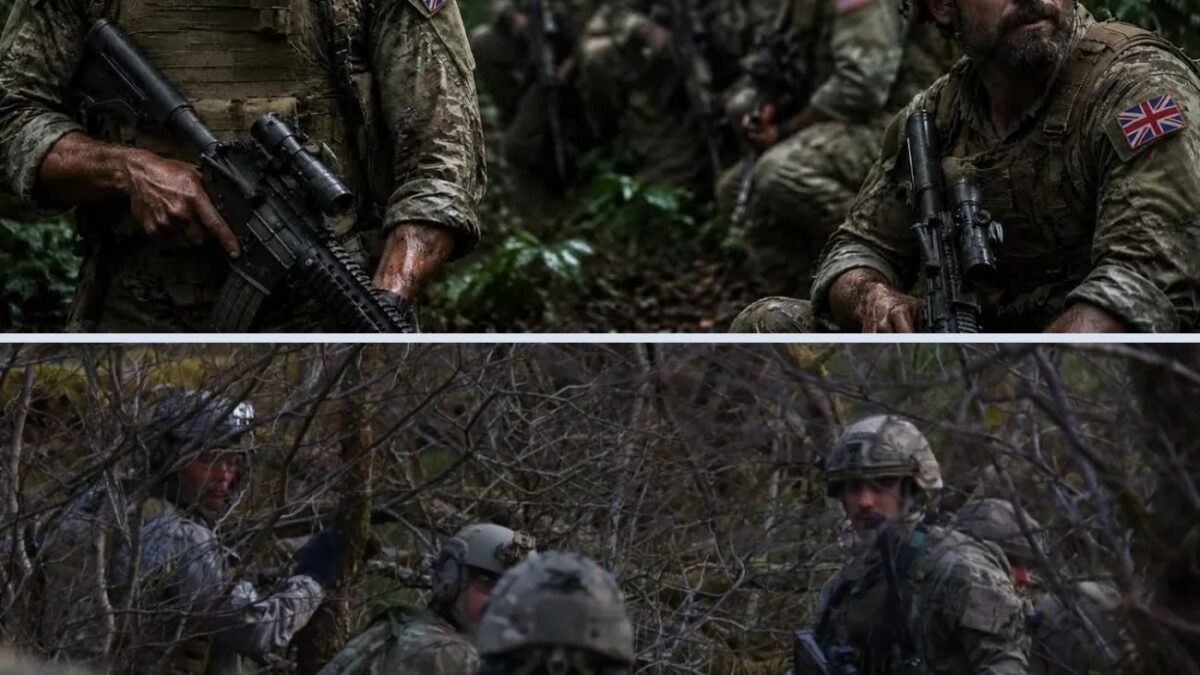
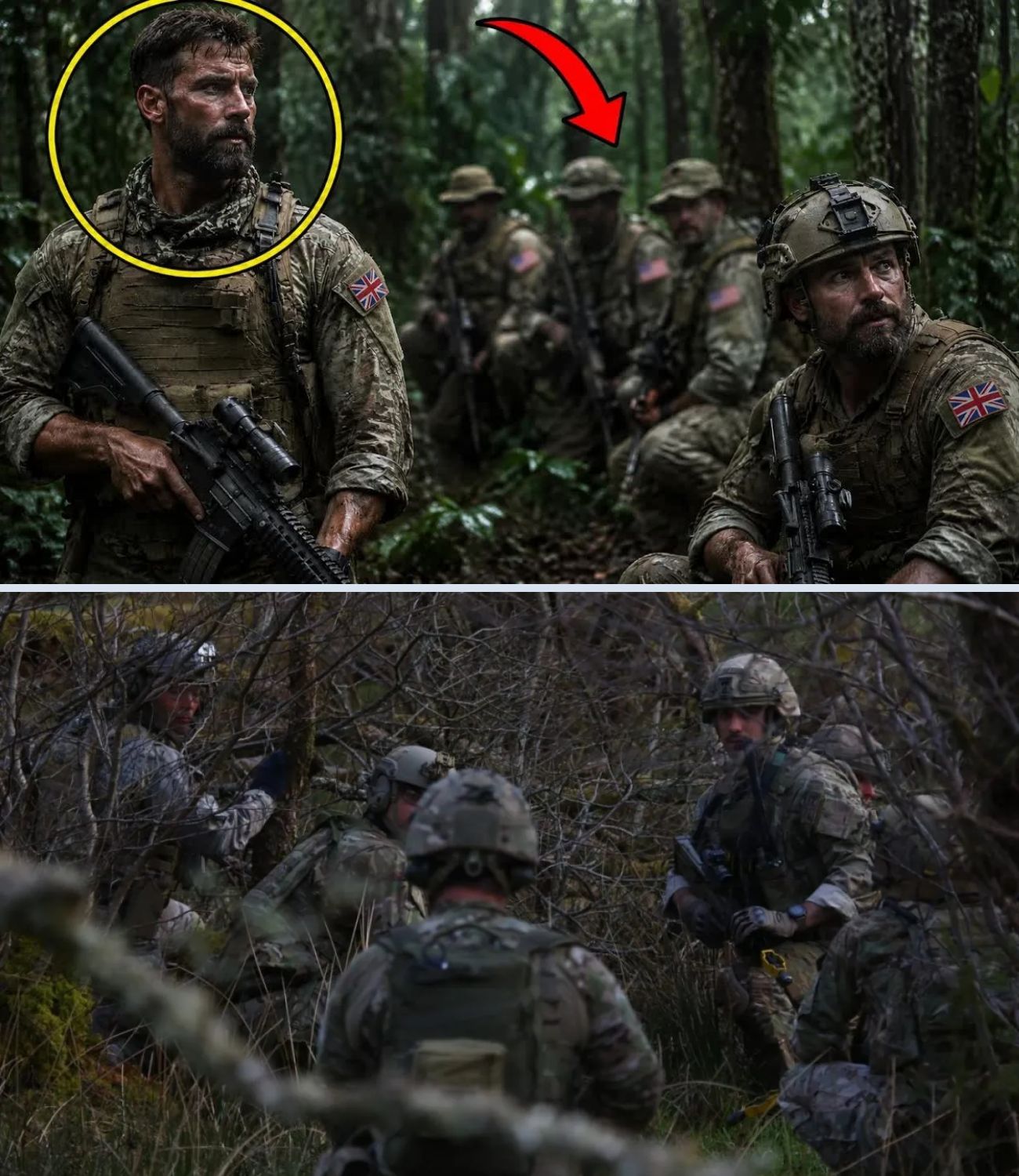
You are lying on your belly in Belizean mud and you have been lying there for 3 hours and the man you are hunting has just walked past your left elbow without seeing you. Except he has seen you. He has seen you the whole time. He simply chose not to react until he was already behind you and now his hand is on your shoulder and his voice is a whisper you can feel through your smock rather than hear.
"Morning mate."
Master Sergeant Ethan Vickers is 18 years into United States Army Special Forces. He has done this exact thing, an observation post in Triple Canopy on three continents. He has taught it. He holds a graded record at the special forces advanced urban combat course that his own team still quote on quiet evenings at Fort Campbell.
And a British staff sergeant whom he had cleared through his own arc of fire twice has just put a warm palm on his shoulder blade and greeted him like they had bumped into each other in a supermarket. Vickers does not move. There is nothing to be gained by moving. He listens to his own breathing and finds that it has been shallower than he thought for longer than he should have allowed.
Somewhere behind him, and this is the part that will stay with him for years, three more men he never heard have crossed the same ground. He can smell the wet leaf on their boots. He can smell the cotton of their shirts. He can smell the faint iron of gun oil that is not his own. The British staff sergeant’s hand is already gone. There is no smirk in the voice, no swagger, no lesson, just "Morning mate" and then movement and then silence again.
The kind of silence that closes over a place as if nothing had disturbed it at all. Rain begins. It begins the way it always begins here without any transition, a shift from dry air to a solid wet noise on the leaves overhead. And Vickers lies there in the sudden hammering of it and understands with a clarity that is not comfortable that whatever he thought he knew about jungle work three weeks ago is not the same as what he knows now.
2 days from now, an operational detachment of American green berets will sit around a corrugated tin mess table in the interior of a small Central American country and put words to what happened to them there. One of them will stand up. He will not have notes. He will say something on behalf of all of them and it will not be the sentence any of them had planned.
Those words are the reason this account exists. To understand what happened to Ethan Vickers in Belize, you have to understand what Ethan Vickers was before Belize. He was 39 years old. He had enlisted out of a small town in eastern Kentucky at 19, gone infantry, transferred to special forces selection at 23, and passed the Q course on his first attempt at 24.
It was a fact that mattered to him then, and had stopped mattering to him a decade ago, because in the company he now kept, it had stopped being unusual. By the time he stepped off a C-17 onto the pierced steel of Philip Goldson International Airport, he had spent time on the ground in Iraq during the surge, in northern Syria as part of the campaign against Daesh, in the southern Philippines against Abu Sayyaf, and in a handful of countries whose names are not printed on the sleeves of the men who worked there.
He was the team sergeant of operational detachment Alpha 5312 out of fifth special forces group at Fort Campbell. And inside that team he was by every measure the American system used the operational spine. He kept a small green notebook in his left breast pocket. It was a rite-in-the-rain cover softened from years of sweat and the first entry in his current one was dated 2004.
Since that year, he had written in it after every training day and every operation in short lines in a hand that would have failed a fourth grade cursive test. The notebook was how he thought. It was, in a way, how he kept track of what version of himself was standing on any given piece of ground.
He was, by his own honest reckoning, and by the reckoning of the men who had worked alongside him, one of the best jungle soldiers the American army had at that moment. He had run tracker courses. He had taught small unit patrolling at Fort Sherman before Fort Sherman closed. He had spent enough weeks under triple canopy in Mindanao to know how his own body handled 90% humidity, and to know the way the light lied under a heavy roof of leaves.
When his detachment received orders to spend six weeks attached to a British special air service jungle cadre in Belize, an exchange on paper and a hard-graded assessment in practice, his first thought was gratitude for the flight schedule and his second thought was the one that would take him 3 weeks to unlearn.
"I know this ground," not this specific ground. He had never been to Belize, but this kind of ground, broadleaf, secondary growth, hills that went up and down without ever going anywhere, rivers that were roads until the rain arrived, and then were rapids. He had made his peace with jungle. It was the environment he understood best. It was the environment he was most confident he understood better than the men he was about to meet.
There is a difference, and Vickers would come to name it in his own notebook by the end of week two, between competence and system. Competence is what an operator carries in his hands and his head and by that measure Vickers had no reason to be nervous about the special air service. He had shot with tier one units before.
He had run rooms with the best of them. The British had a reputation and reputations were earned but reputations were also in his experience portable. A Delta operator and a green beret and a special boat service operator and a seal once you took away the flags and the accents were doing broadly the same job with broadly the same tools.
That was the belief. That was the belief the jungle was going to take apart. The British had been running jungle training in Belize since the country was still called British Honduras and they had never really stopped. When the garrison drew down, the training footprint stayed. It sat deliberately unglamorous under a unit called the British Army Training Support Unit, tucked into the interior at a place that most soldiers who had been there simply called up country. It was not Hereford.
It was not a purpose-built facility with fiberglass walls and a dedicated range complex. It was a cluster of low buildings under corrugated roofs, a briefing room with a whiteboard that never got dry, a cookhouse that smelled of Tabasco and diesel, and beyond the perimeter wire, 6,000 square kilometers of the kind of jungle that had been used to break and to build generations of British special forces soldiers.
Operational detachment Alpha 5312 arrived on a Tuesday. There were 12 of them. Captain Sam Devo was in command, a Yale graduate who kept the fact hidden inside his Bergen the way another man might hide a paperback he was embarrassed to be reading. Chief Warrant Officer Perez, quiet to the point of unnerving, was his intelligence and operations spine.
Sergeant First Class Marcus Boothy, 6’2″ and given to sunflower seeds, was the weapons sergeant, and Vickers ran the team. They stepped off a sky van into wet heat and were met on a strip of pierced steel matting by a man in a green shirt with no rank slide on it.
"Adrian Pike," he said, offering a hand. "Squadron Sergeant Major D Squadron. You'll be with us for 6 weeks."
That was the introduction. There was no welcome speech. Pike was warrant officer class 2 in his mid-40s with a face that had been sunburned and rained on for so many years that it had stopped registering either. He never raised his voice. Later in the briefing room, Vickers watched him sharpen a pencil with a Swiss Army knife while a lieutenant colonel talked and understood without knowing yet what the understanding meant that the pencil sharpening was the more important activity in the room.
Pike walked them through the outline in 11 minutes. Two weeks of skills refresh, which meant navigation, tracking, small team drills, contact drills, jungle close quarter battle, two weeks of extended patrolling, a final 10-day exercise built around a marked target, live opposition, and a real extraction. He named the two lead instructors, Staff Sergeant Ree Emmerich and Sergeant Owane Trellone, with Corporal Danny Ashcom as the medic and lead scout.
He did not describe the men. He simply named them. Then he asked whether there were questions. There were none. Then he said, "Right, kit check in an hour." And walked out.
Vickers watched him go and turned to Devo and Boothy. And it was in the low, half-humored, half-professional register of a team sergeant to his team that he said the sentence which would come to define the arc of the next 6 weeks.
"How different," he asked, "can a bunch of guys in a jungle really be from a bunch of guys in a jungle?"
Boo grinned around his sunflower seeds. Devo, more careful, did not answer. Perez off to one side was already looking at the tree line with the flat attention of a man who trusted no environment on principle. Nothing about Pike’s manner had insulted them.
Nothing about the briefing had condescended. And yet Vickers, standing on that matting with his kit at his feet, had felt himself dismissed in a way he could not name, not by the words which were correct, and not by the tone which was neutral, but by the sheer flatness of a professional to whom their reputation had been legible, cataloged, and set to one side, so that the work could begin.
He wrote nothing in the notebook that first night. He would remember that later as the first thing that was already wrong. The morning of day two, Emmerich took them into the tree line. Staff Sergeant Ree Emmerich was 34, an inch shorter than Vickers, with the kind of build that looked slight in a t-shirt and stopped looking slight the moment he picked up a Bergen.
He was missing the top joint of his right little finger, and he never mentioned it, and no one who worked with him ever asked. He had been badged into the regiment eight years earlier out of the Royal Marines and had by the time the Americans arrived spent enough time in Belize that he moved through the undergrowth the way another man moves through his own kitchen at night.
The Americans arrived at the rendezvous with their Bergens and their belt kit and their weapons and their standard-issue everything. And for a moment Vickers looked at what the British had laid out on the ground and looked at what his own team had laid out, and the difference was neither dramatic nor flattering in either direction.
His men had more of most things. The British men had less of most things, and had thought harder about what less meant. It was a difference of philosophy, not of budget, and he registered it once and set it aside. It would not be the point.
Emmerich’s brief was 6 minutes long. He did not say, "Listen up." He did not say, "This is important." He walked into the middle of the group, stopped, and spoke at a volume that assumed the men in front of him wanted to hear him.
"The jungle doesn't care what you did before. It doesn't care what your unit is. It doesn't care what your record is. It's 100% humidity, poor visibility, and no rescue. Everything you do here is slow. Every corner you cut here kills someone. If you're used to running, you're not going to run. If you're used to talking, you're not going to talk. We move at the speed of the man in the patrol who's the most tired, and we stop when the scout stops, and we don't stop for anyone else. Any questions?"
It was not a question. There were none. They moved off into the tree line in single file. Corporal Danny Ashcom was on point, 40 meters ahead, out of sight within 30 seconds. Sergeant Owen Trellone was somewhere in the middle of the file. Vickers watching Trellone move noticed that the man’s lips moved silently when he was thinking, and that the words shaping them were not English.
Welsh, he would learn later. Trellone was from a village near Bangor and worked out complex ground problems in his first language. They walked for 6 hours. It was not a hard 6 hours by any measure Vickers had ever used to judge a hard walk. What made it strange was the silence. Vickers had patrolled with a lot of men. Every patrol he had ever run had a low murmur to it.
Communications checks, tactical whispers, the small necessary communications of a team keeping itself alive. The British patrol had none of that. It had hand signals so economical that he missed the first three because he was still looking for the American versions. It had a rhythm of stops. Ashcom ahead would halt for reasons no one on the file could see and the file would fold down onto one knee and then Ashcom would move and the file would rise and no one had spoken.
It was not showmanship. It was, as far as Vickers could tell, simply how they did it, and it had been how they did it for so long that speaking would have felt to them like waving a torch. Somewhere around the fourth hour, Vickers realized he had not heard his own breathing become part of the environment the way it usually did, because everything else had become quieter than his breathing, and the environment had grown around him instead of around his patrol.
That was the first crack. It was not about skill. His men were skilled. It was about what the British had decided did not need to be said. He watched Emmerich 20 meters away adjust his position at a halt without ever taking his eyes off his arc. And he watched the way Emmerich’s hand knew where his water bottle was without looking. And he understood without wanting to understand it that the economy he was watching was not a style.
It was a discipline. And the discipline had been paid for. That night, in the notebook, he wrote three words: "They don't talk," underlining the middle one.
The first graded exercise was a night navigation over a jungle box of roughly 9 kilometers done singly with only a compass, a set of grids, and a pace count. The British system was old-fashioned and deliberate about it. There were no satellite receivers. There was a red-filtered head torch to be used at map checks and never on the move. There was a start point, four intermediate points, and an end point, and a time window, and the instruction delivered by Emmerich without emphasis that a man who took longer than the window would be spoken to.
Vickers understood, listening to the brief, that this was a test he had already passed a 100 times in a hundred worse pieces of ground with less equipment. Land navigation was the bone the American Q course had made him grow, and 18 years had not softened it. He looked at his grids in the dim briefing hut, and worked out his legs before he stepped outside, and he knew, as men who are good at something know, that he was going to finish inside the window, and probably near the front.
He stepped off at 19:47 local into a darkness that closed on him with a physical weight, and inside 90 seconds he had recalibrated everything he thought he knew. There was no ambient light in this jungle. None. In Mindanao, there had at least been the diffusion of a village generator somewhere, a smell of wood smoke to orient by.
Here, there was only canopy. Every direction was the same direction. Every step was into a space he could not see. He held the compass at his chest and walked into the dark on a bearing, and the ground began immediately to teach him what it thought of his previous experience. Roots, vines that were braced across the ground at ankle height, and did not give small unseen holes that took a boot to the shin, slopes that were subtle in daylight and became falls at night.
The pace count that had been reliable to him for two decades became unreliable inside 600 meters because a stride in this ground was not a stride. It was a negotiation and every negotiation was different and by the time he reached what he estimated was his first checkpoint, he was already 2 minutes over his own schedule and had not yet found the marker. He found the marker.
He was 3 meters off. He took the fact into himself the way a professional takes an unwelcome fact without argument. Between the second and third checkpoints was the river. He had known there would be a river. He had not in his American reading of the map understood what the river would be.
Belizean rivers in the wet season are not lines. They are conditions. This one had risen since the brief and was moving fast enough to be audible from 200 meters out. And by the time he was standing on its bank in a darkness that had not admitted a single star, he could not see the far side. The recognized crossing point marked on his map by a small crossed sword symbol was a place where the current narrowed and shallowed and became in daylight a knee-high wade. It was not knee-high.
He stood there in the noise of the water for a full 90 seconds and did what a good soldier does when the environment has changed under his plan. He revised. He moved 50 meters upstream. He found a place where the current fanned out around a submerged log. He crossed there with his weapon held above his head and his rifle sling shortened.
And he came out on the far bank with his belt kit heavy and his boots full and a mind that had without permission started keeping a quiet log of the number of decisions he had already got wrong. Somewhere behind him and above him on the ridge a shape moved. He would learn at debrief that it had been Corporal Ashcom sitting inside a hide he had constructed from three fronds and a strip of hessian 30 meters from the crossing watching every American attempt the river and marking on a clipboard what each man did.
Ashcom had been there since the previous afternoon. Vickers finished the box. He finished it inside the window by 7 minutes. He was when he stepped into the rendezvous one of the first four Americans to arrive and the first of his detachment. He was pleased with none of it. Emmerich was at the rendezvous with a mug of tea in one hand and a clipboard in the other.
And he did not comment on Vickers’s time. He asked one question: "Where did you cross the river?"
"50 meters upstream of the marked point." Vickers said the marked point was too high.
Emmerich nodded slowly once and made a mark on his clipboard and said, "Good." And Vickers understood, standing there with river water still coming out of his boots, that the exercise had not really been about the time.
It had been about whether the American would keep walking into a plan that had already broken because his ego needed the plan to hold, or whether he would revise. Half the Americans, he would learn later, had tried the marked crossing and been swept 15 meters before they had recovered themselves. Two had been pulled out by Trelone, who had been sitting in a second hide 100 meters downstream, because the British had already known what the river would do.
That was the assumption that broke. Not that he was slow, not that he was unfit, not that his navigation was bad. His navigation had held, and Emmerich had marked good, and Emmerich did not lie. What broke in that gray pre-dawn on a strip of jungle track, with the noise of a river he could no longer see behind him, was the assumption that he had come into this environment with the whole of what the environment demanded.
He had brought his craft. The British had brought their craft and the ground. He wrote that in the notebook in the small hut with the tin roof before he took his boots off: "They own the ground." Then he took his boots off and he sat on the edge of his cot for a long time in the dark and he did not sleep.
There is a stage in a professional’s humbling, and every professional who has been humbled will recognize it, where the ego having been struck gets up quietly and sets about explaining the strike away. This is not weakness. It is the immune system of competence. Without it, a man who has been good at something for two decades would collapse the first time he was outperformed.
And no soldier who ever passed selection has that kind of glass in him. Vickers’s version of it over the two days that followed the river went like this. Navigation was one skill. The British owned this specific ground because they lived on it. That was expected. That was in fact the point of an exchange. The next phase of training would move into contact drills and jungle close quarter battle, which were skills a man carried in himself and not in a piece of country.
On that ground, he had 18 years of confidence, and he had every reason to keep it. He wrote none of this down, he knew, even as he was thinking it, that writing it down would look like exactly what it was. On the second evening of the reset, he found himself outside the briefing hut at last light, folding a map he had already folded three times, and warrant officer Pike was sitting on a fuel drum by the corner of the building, sharpening a pencil.
Pike did not look up. He said, "You crossed upstream."
"Yes, sir."
"Don't sir me. I work for a living." Pike moved the blade half a degree and took another shaving off the pencil. It fell in a curl onto his boot. "Half your team went at the marked crossing. Your captain went at the marked crossing. Your captain went in as far as his chest before he came back out. Still cross about it?"
Vickers cautiously said nothing.
"Do you know why we mark it there?" Pike said. It was not a question. "It's the crossing. Because in most conditions it's the crossing. In some conditions it's not the crossing. The map is the map. The ground is the ground. The soldier is what happens between them."
He held up the pencil, inspected the point, and put the knife away. "Most of the men we lose in selection are men who trust one of the three more than the other. We are looking always for the ones who watch all three."
Vickers stood there in the wet dusk with a folded map in his hand. Pike stood up. He was shorter than Vickers by 2 inches and gave the impression of being taller.
"You'll shoot tomorrow," he said. "Emmerich got the pits ready. You'll shoot the way you shoot and then you'll shoot the way we shoot and we'll see what happens. Get some sleep."
He walked off in the direction of the cookhouse without looking back. Vickers stood there for a long time. What is coming, he thought, without letting the thought form in words that would betray it, is a test I cannot ready myself for by ego, because ego is what the ground already stripped, and if I bring what remains of it into the pit tomorrow, the pit will take that, too.
He went to his cot. He did not open the notebook. In the morning, he would need what remained of the ego cleaned. The jungle close quarter range at the school was not a range in any sense an American would recognize. It was a strip of primary jungle 100 meters deep by 50 wide, cut through with pig tracks festooned with target boards fixed to trees and worked so hard by so many patrols over so many years that the ground under the leaf litter had the compaction of pavement.
There was no berm. There was no firing point. There was a track that entered the strip at one end and a track that left it at the other. And the soldier walked through with his weapon in the low ready and his mind in a place he had spent years training himself to reach. Vickers had walked ranges like this at Bragg. He had built ones like it.
He had graded younger operators through them. He held without having to think about it his own record on the special forces advanced urban combat course that his own team still repeated to each other on quiet evenings. He goes through the range first as team sergeant and he goes through it the way an American green beret goes through it.
His weapon is at low ready, a Diemaco L119, the same carbine the British are carrying. So no advantage there. He walks. Targets appear. He engages two rounds center mass, one to the head where the shot presents. He clears the strip in 9 minutes 40 seconds. He does not miss.
When he comes out at the far end and turns, Emmerich is standing by the exit track with his clipboard and nods and says, "Fast that, fast and clean."
Vickers waits. He knows there is more.
"Go again," Emmerich says. "This time when a target appears, count to two before you engage."
Vickers stares at him. "Count to two?"
Emmerich says, "Slash 1,000, 2,000, then engage."
"That's giving the target a full second to fire first."
"Yes."
He does not understand, but he does it. He walks the strip. A target appears at his 10 o’clock, 2 meters away. He counts 1,000, 2,000 and in that second in the length of that stupid disciplined refused reflex he sees the target fully the way he never sees a target on an American range.
He sees that the board has been painted with a figure that is holding a child. He sees that the figure 2 meters to its right on a separate board is armed. He puts his rounds into the correct board. He walks on. He clears the strip in 11 minutes 40 seconds. Slower by 2 minutes, he has hit every correct target.
He has for the first time in his career chosen not to hit two boards he would have hit on the first walk through. Emmerich says, "You saw the child on the first pass? No? Go again."
The third time through, everything is different. It is raining now. The rain in Belize does not announce itself. It commits. It comes down in vertical rods, and it turns the leaf litter into a wet noise that swallows footfall, and the target boards, which are painted matte and roughened, drink the water, and darken.
He walks the strip in the rain, and the light is the strange green light of jungle in rain, a light that is not day and not dusk, and Emmerich has told him nothing about what will be different. He walks. The first target does not appear at eye level. It appears at knee height, angled up from behind a fallen log.
The second target appears above him, 10 feet up, lashed to a branch, and it is aimed at him from above, and it has been there since before he entered the strip. The third target does not appear at all. There is a rustle to his right. He turns, there is nothing. He turns back and a target has swung out on a rope from his left and is level with his face at 2 meters.
He engages. He engages the ones he sees. He does not engage the ones he does not see. He clears the strip in 14 minutes 40 seconds. He has on the third pass missed two targets he would have staked his career on hitting.
At the end, Emmerich is not smiling. He is not disappointed. He is holding the clipboard the way a doctor holds a chart. "First pass," he says, "you shot the range you trained on. Second pass, you learned to look. Third pass, we changed the range on you. Two targets you missed, one would have killed you. One would have killed the man behind you. That's the jungle. The range moves, the light moves, the enemy moves. The way you train, mate, and I mean this properly, is beautiful for what it's for. What it's for isn't this."
Vickers stands in the rain with his weapon slung and his hands at his sides. He does not answer. Behind him in the wet is Sergeant Trelone, who has walked the strip already. He walked it in 8 minutes 20 seconds on the third configuration cold without knowing where the targets would appear. He hit all of them. Vickers had not been watching.
He watches now as Corporal Ashcom steps into the strip and walks it. And he watches how Ashcom moves, how his eyes do not scan side to side, but move in the way a swimmer moves in slow, full arcs that include the canopy and the ground in the same look. And he understands, standing in the rain, that his shooting is not what has failed him.
His looking is what has failed him. He has been trained expensively and well to look at what a range would put in front of him. He has not been trained to look at everything a jungle can hold. And the second assumption, the private one, the one he did not admit to Devo or Boothy or himself, cracks and falls off him in the rain, and he is standing there without it, and the rain is on his face, and it is possible he is grateful.
The breaking point did not arrive at the range. It arrived 4 days later on an observation post. The task was simple by the description: two men forward, hold in, 400 meters from a track junction the exercise had designated as being frequented by opposition patrols, 24 hours in position, nothing to do but watch. Vickers was paired with Emmerich.
It was a paired observation post designed transparently to put the American team sergeant next to the British staff sergeant for a full day in a hide the British staff sergeant had already selected. They went in at last light. Emmerich moved first.
Vickers, who had been on a hundred observation posts, who had taught the construction of hides at Camp McCall, watched the way Emmerich chose the hide site, and understood in the first 3 minutes that he had been choosing hide sites for 18 years without understanding what a hide site was.
Emmerich did not choose a spot with good cover. He chose a spot with good going out. He did not think about where a passing patrol would look. He thought about where a passing patrol would put its hands if it had to steady itself on the slope.
He did not build the hide against a tree that gave the best backdrop. He built it against a tree that would make a specific sound if a bird landed on the far side so that they would have 3 seconds of warning that no other position in this jungle would give them.
The hide took an hour. It was invisible from 8 meters. Vickers inside it could not see the sky. They lay on their bellies. Emmerich beside him breathed at a rate Vickers could not match without concentrating. The Welshman did not fidget. Emmerich did not fidget either.
In 18 years, Vickers had never met a man who did not fidget on hour four of an observation post. Emmerich was a stone with an arc of fire. At 03:00, a patrol came past. It was not opposition. It was Trelone and Ashcom running a check.
They came past the hide at a distance of 2 meters, and Vickers was aware for the whole of their passage that his own body had been the loudest thing on the hillside for hours, and that he had not known it. He could smell the wet leaf on their boots. He could smell the cotton of Ashcom’s shirt. He did not move.
Emmerich’s shoulder against his was completely still. They passed. Somewhere below on the slope, one of them, he never knew which, reached back in the dark and put a warm palm briefly on Emmerich’s shoulder blade and moved on.
The vocabulary was not spoken. It did not need to be spoken. It had been spoken once on a different day to Vickers, for reasons Vickers now understood. It was not a joke. It was not humiliation. It was the physical acknowledgement of a professional to a professional in a language that did not require sound that they had been seen and that they had been counted and that they were now part of the hillside instead of on it.
Vickers in the dark closed his eyes. He did not sleep. He did not weep. He did not do any of the things a smaller man might have done. He simply lay there in the mud next to a British staff sergeant with a missing joint on his right little finger who had at some earlier moment in his life paid the specific price for the specific skill he had just demonstrated.
And Vickers understood the way understanding arrives not as thought but as a physical settlement in the chest that everything he had assumed about the difference between his craft and this craft had been assumed in a room that did not have this hillside in it. The notebook stayed in his pocket. He did not reach for it. There was nothing in this moment that a written line could hold.
Toward dawn, when the light began to come up in the way it came up in that country, gray filtered through wet green, Emmerich shifted once to relieve a cramp, and Vickers saw the hand with the missing joint move to adjust the sling of the L119, and he did not ask, and Emmerich did not offer, and the two of them lay there in the light.
And Vickers’s framework, the framework he brought with him from Kentucky and Bragg and Mindanao, was not gone. It was just no longer the only framework in the world. That was the breaking point. It was quieter than he had expected. It was the quietness of it that stayed.
The turn for Vickers came at the end of an unremarkable afternoon on the fifth week. The team had been running rehearsals for the final exercise, the 10-day capstone built around a marked target. And one of the patrol drills involved a river crossing under load in daylight at a point Trelone had selected.
It was not the same river as the night navigation. It was a smaller tributary, but it was fast, and it was deep in the middle, and the load was a full Bergen plus belt kit plus weapon plus a casualty simulator, a 60 kg sandbag on a stretcher carried by four men. Vickers was the second man on the stretcher. Boothy was behind him. Two British men were on the front poles.
Halfway across the river in the current, Vickers’s boot went off a rock and he lost his footing. And the stretcher yawed and the whole load, the sandbag, the stretcher, his weapon on its sling, pulled left and downstream, and for a moment the entire crossing was about to fail. And he knew it and there was nothing in his hand to fix it with.
Corporal Danny Ashcom, who was the front left man on the stretcher, did something Vickers would remember for the rest of his career. He did not shout. He did not tell Vickers to recover. He simply dropped his own line of the stretcher 2 inches and rotated his shoulder into the current so that his body became the brace the yaw needed and he held the rotation for the 4 seconds it took Vickers to get his boot back under him and then he lifted his line again and they walked on and no one on the crossing said anything and no one at the far bank mentioned it.
Ashcom rolled his own cigarettes, but never smoked them in the field. And Vickers on the far bank watched the corporal take a roll-up out of a tin, put it in his mouth, and hold it there dry. And he understood that the tin was a discipline, and the unlit cigarette was a discipline, and the shoulder rotation in the river was a discipline, and that all three came from the same place.
The place Vickers thought was not talent. His own record was talent. He had known talent. This was something else. That evening he sat on the step of the hut and wrote in the notebook for the first time in 9 days: "The economy isn't arrogance. The economy is care. They do not waste effort on you because they will need the effort for you. Everything they do not do is a thing they are keeping in reserve for the moment it saves your life."
He read it back. He crossed out your. He wrote my. The turn was done. It was not a conversion. He was not going to walk out of Belize wearing a beige beret in his heart. But it was the moment his framework began to admit that another framework existed that was not weaker than his and was not better than his in any way a table of scores could show and was older than his in a way he had not previously believed was a category that mattered.
Two nights from that evening, he would lead his fire team into the final exercise, 10 days into a jungle he no longer felt he owned against opposition who had been in it longer than his career. Somewhere on the fourth day on a hillside he would not name in any debrief he ever filed, the whole detachment would do something together and afterwards they would sit around a corrugated tin mess table and one of them would say the sentence this whole account has been walking toward.
The final exercise was called on paper a camplift. The scenario was an insurgent training camp in a remote valley 20 kilometers from the nearest track with a marked high-value target and a mixed opposition force of 30. The American detachment and the British troop would go in together genuinely together, mixed patrols, four fire teams of six, and would walk in over four days, live off what they carried, hit the camp on the fifth night, and walk out over four days, extraction on day 10.
The opposition was real, a company of Belize Defense Force soldiers who had been trained by this school and who knew this ground better than the school did. Vickers commanded one of the mixed fire teams. He had Trelone with him. He had Boothy. He had three others. He walked in for four days over ground that was worse than any ground he had ever walked.
And on the evening of the fourth day, an hour before last light, they were in a lie-up 2 kilometers from the camp, and everything he had learned in 6 weeks was about to be examined. It is raining. Of course, it is raining. They move at last light. The plan is simple by design and complex by execution. Two teams onto the flanks, one on the assault, one on the block.
Trelone’s Welsh is running under his breath as they cross the last ridge line. Vickers hears it and does not translate. He does not need to. The rhythm of it, low and continuous, is the rhythm of a man doing sums in his own kitchen, and it is the calmest sound Vickers has ever heard on approach. They halt at the forming up point. Silence. The camp is 180 meters down the slope.
Seven basher shelters under camouflage netting. Two sentries on the northern edge. A fire that has been let go too low. A radio somewhere playing music through a bad speaker. Vickers on his belly in the wet watches the sentries through his optic and sees them the way Ashcom had taught his eyes to see: full arcs, canopy included, ground included, the small movement at the base of a tree that is a boot shifting.
He sees the third sentry. The third sentry is not on the northern edge. He is in the tree line 10 meters up-slope of the northern edge in a hide that is not a hide the school built. He has built it himself. Vickers sees him because a moth passes across the front of the hide and turns. And the turn is a turn a moth makes around a warm body.
Vickers signals to Trelone. Trelone sees it. Trelone signals to the assault team commander. The plan changes in 14 seconds without a word being spoken. The block moves 8 meters left. The assault comes in at a different angle.
The third sentry is neutralized in the exercise sense, tapped on the shoulder by Ashcom, who has come around the back of the hide from a direction none of them saw him take, 6 seconds before the assault steps off.
The assault goes. They are moving through the camp now and the assault is fast in the way jungle assaults are fast, which is to say not fast at all by the measure of a range or a shoot house. It is deliberate. It is quiet at first and then it is not quiet and the two sentries on the northern edge are engaged and the first basher is cleared and the second basher is cleared and the marked target is in the third basher and he is coming out of it with a weapon, and Boothy puts him down clean and the block engages a runner going south.
And inside 4 minutes, the camp is theirs. And inside 7 minutes, the detachment and the troop are moving off the objective with the target under control and two prisoners walking and no friendly casualties on the play sheet. They do not stop.
They move for 6 hours through the wet in silence. And they are 3 kilometers from the pickup at first light. And the pickup is a helicopter that the school has committed to sending on time. And the helicopter comes on time. And they load and they lift.
And Vickers is sitting in the door of the aircraft with his boots dangling and his weapon between his knees. And the sun is coming up over the ridge line in a way he will not forget. And Trelone beside him has stopped speaking Welsh and is asleep with his head against the airframe.
Vickers looks at his hands. They are still. He has run assaults harder than this. He has run assaults on real ground with real opposition and taken real casualties and brought men home. This exercise is not the hardest thing he has ever done.
What it is and what he understands sitting in that door as the country falls away underneath him is the cleanest thing he has ever done. There is no wasted movement. There is no wasted word. The method from the forming up point to the pickup has done exactly what a method is for. It has held under pressure and the pressure has passed through it and out the other side and every man on the ground has known his part and no man has needed to be told.
"The third sentry," he thinks, "that was mine. I saw him because I had learned to look the way they look. I contributed. I did not carry and I was not carried. I fitted."
That, he understands, is the highest compliment the six weeks have paid him. He had not come to Belize to fit. He had come to compare and somewhere in the fifth week without ever agreeing to it, he had started fitting. The helicopter turns north.
On the last night in Belize, the detachment and the British troop ate together in the cook house. There is not much to say about the meal itself. It was standard issue food in a standard issue mess under a corrugated roof with the rain doing what it always did on that roof and the two units sitting mixed rather than separate at the long tables for the first time in 6 weeks. Warrant officer Pike was there. Emmerich was there.
Trelone and Ashcom were at a table with Boothy and Perez. Devo the Yale captain was in conversation with a British lieutenant colonel whose name Vickers never learned. At some point after the plates had gone, Pike stood up at the head of his own table without ceremony and said:
"Right, you've had six weeks. Anyone from your side got anything they want on the record? We're listening. If not, we all get on the aircraft in the morning and nobody has to make a speech. Your call."
There was a pause. Vickers stood up. He did not have notes. The notebook stayed in his pocket. He said later in an oral history recorded years afterwards for an American military archive, and it is from that recording and from the recollections of the men who were in the room, that this account is drawn, that he had not planned to speak, and that when he stood up, he had not decided what he was going to say, and that what came out of his mouth was, as he put it, what 6 weeks had already written in me.
By his account, this is what he said:
"I've been in the American Army for 18 years. I've been special forces for 15. I came here thinking I knew what jungle work was because I've done it in three countries and taught it in two. And I came here because the exchange was on the calendar and my team was up. I want to be clear about what I'm going to say because I've said harder things in worse rooms and I don't want this to sound like anything but what it is."
He paused. The rain on the roof made itself heard.
"We are not the same. We are not worse. We are not better. We are not the same. You do less than we do and you get more out of what you do. You talk less than we talk and you say more with less of it. You carry less than we carry and you carry it further. Every one of my guys in the first week thought that was a style. By the third week, we all knew it wasn't a style. It's the thing itself. It's what you are."
"I have watched over 6 weeks four men from your troop do things in this jungle that I did not know a man could do. I have watched a corporal cross a river under a stretcher and hold a man's weight with a shoulder without a word being said. I have watched a staff sergeant put a hand on my shoulder in an observation post after crossing an arc of fire I had cleared twice. And I have watched a sergeant walk a close quarter battle strip in the rain in 8 minutes 20 seconds on a configuration he had never seen and hit every board. I have watched your sergeant major sharpen a pencil while the colonel talked and I have understood standing there that the pencil was the important thing in the room and I've been in the wrong rooms my whole career."
"I'm going to tell my detachment this on the flight home, and I'll tell it here first because you deserve to hear it in your own cookhouse. What we do, we do with your whole life. There is a difference between competence and craft, and craft is what you have, and it is not a thing you can package and ship home in a bergen. It is a thing that has to be paid for in this country over years by men who agree to be less than we are on paper so that they can be more than we are on the ground. I'm not going to try to be you. My guys aren't going to try to be you. But every man on my team is walking out of here changed. And if any American detachment in the next 20 years gets 10 days in this school, they should take it and they should shut up while they're in it, and they should listen the way I did not listen in the first week and finally listened in the fifth."
He sat down. Emmerich across the table did not smile. He looked at Vickers for a long second and then he nodded once and said, "Cheers, mate" and picked up his tea.
That is what the American Green Berets through their team sergeant said. The detachment flew home the next morning. They landed at Fort Campbell 36 hours later in a cold February that felt to all of them like it belonged to a different planet from the one they had just left. There was no ceremony. There was a debrief that lasted 2 days.
Captain Sam Devo wrote a report that has in the 12 years since been quietly cited inside the United States Army Special Forces Training Pipeline as one of the more useful documents produced by any exchange in the modern era. What it recommended is not for this account. What it did was change in specific ways how a certain kind of jungle training was run at a certain school in the American South.
Vickers stayed in the teams for another four years. He rotated to a training role after that at the special forces qualification course where he was known until his retirement for two things.
The first was a small green notebook in his left breast pocket that he wrote in after every training day. The second was a habit he had brought back from Belize of pausing for two seconds before he engaged a target on the range and of asking his students when they queried the pause whether they had seen the board or the whole range.
He does not in interviews use the word superior about the British regiment. He was asked once on a recorded oral history whether he thought the special air service were better than special forces. He gave the same answer he had given in the cookhouse in Belize and he gave it slowly so that the interviewer would not misquote it: "We are not the same."
Corporal Ashcom, by the way, was killed in an accident on a training exercise in a country that will not be named here 18 months after Vickers left Belize. Vickers went to the funeral. He was not the only American there. He stood at the back in a suit with the notebook in his breast pocket, and he did not speak.
And when a British staff sergeant with a missing joint on his right little finger came past him at the door of the church and put a warm palm on his shoulder blade without a word, Vickers understood again and finally what had been said to him on a hillside in Belize by a man he had not seen coming. And he understood that some vocabularies do not translate and do not need to.
"Morning mate." That was the vocabulary.
There is a hillside somewhere in the interior of a small Central American country where a river rises in the wet season and stops being a line and becomes a condition. And where a British staff sergeant taught an American master sergeant that the map is the map and the ground is the ground and the soldier is what happens between them.
And there is a mess table under a corrugated roof where 12 American green berets sat down at the end of six weeks. And one of them stood up and said on behalf of all of them what all of them had come to know.
If stories like this one, stories about the men who go quietly into hard countries and come home changed and tell the truth about what they saw are the kind of story you want to keep hearing, there will be more of them. There are a lot of hillsides. There are a lot of vocabularies and there are a lot of men on both sides of the ocean who have not yet had their say.
"We are not the same. We are not worse. We are not better. We are not the same."
You Might Also Enjoy

“We Thought They Would Negotiate”—What Argentine Soldiers Said When The British Attacked Goose Green

“You’ll Never Finish My Ruck March, Limey” — US Sergeant Who Challenged the SAS, Then Fell Out First






