What American Soldiers Couldn’t Understand About British Soldiers
“Don’t be misled by the British tendency to be soft-spoken and polite. If they need to be, they can be plenty tough.” Those two sentences were printed in 1942 by the United States War Department in a thin booklet handed to American soldiers on their way across the Atlantic. Its title was plain, “Instructions for American Servicemen in Britain.”
Most of the booklet dealt with small things, the money, which it called an impossible accounting system, the traffic on the wrong side of the road, the drinks. “The British don’t know how to make a good cup of coffee,” it told the GIs. “You don’t know how to make a good cup of tea.”
The line about the soft voice sat among all that advice like a point of etiquette. It read like manners. It was a warning. And nine years later, on a range of hills above a river in Korea, an American general would learn exactly what it meant, too late to act on it.
April 1951, a British brigade holds 12 miles of front along the Imjin River north of Seoul. On its left flank, a single battalion of the Gloucestershire Regiment. The men call themselves the Glosters.
After two days of fighting, the commander of the American 3rd Infantry Division, Major General Robert Soul, asks the British Brigadier a simple question, “How are the Glosters doing?”
Brigadier Tom Brodie answers in the only language he has ever used for bad news, “A bit sticky. Things are pretty sticky down there.”
That exchange was reported by the Daily Telegraph in 2001 from the accounts of men who were there. To an American ear, sticky means trouble, inconvenience, something a good unit sorts out by morning. The Glosters are standing fast. By then, they are surrounded.
Ask most people about the Korean War, and they will name Inchon or the frozen Chosin Reservoir. Very few will name a bare hill marked on the maps as 235. Fewer still will know that the United States Army, the same army whose general misread that word, would give the men on that hill its highest honor for a unit in combat.
So, the question that runs through this story is a strange one. How does a man describe one of the hardest last stands of the 20th century as a bit sticky? And why did it take the Americans a casualty list to understand what he meant?
To understand the word, you have to understand the men who used it. Thomas Brodie was born on the 20th of November 1903 in Bellingham, a small town in Northumberland. He studied at Durham University, took his degree in 1924, and was commissioned into the Cheshire Regiment two years later. In the spring of 1951, he is 47 years old and commands the 29th British Independent Infantry Brigade Group.
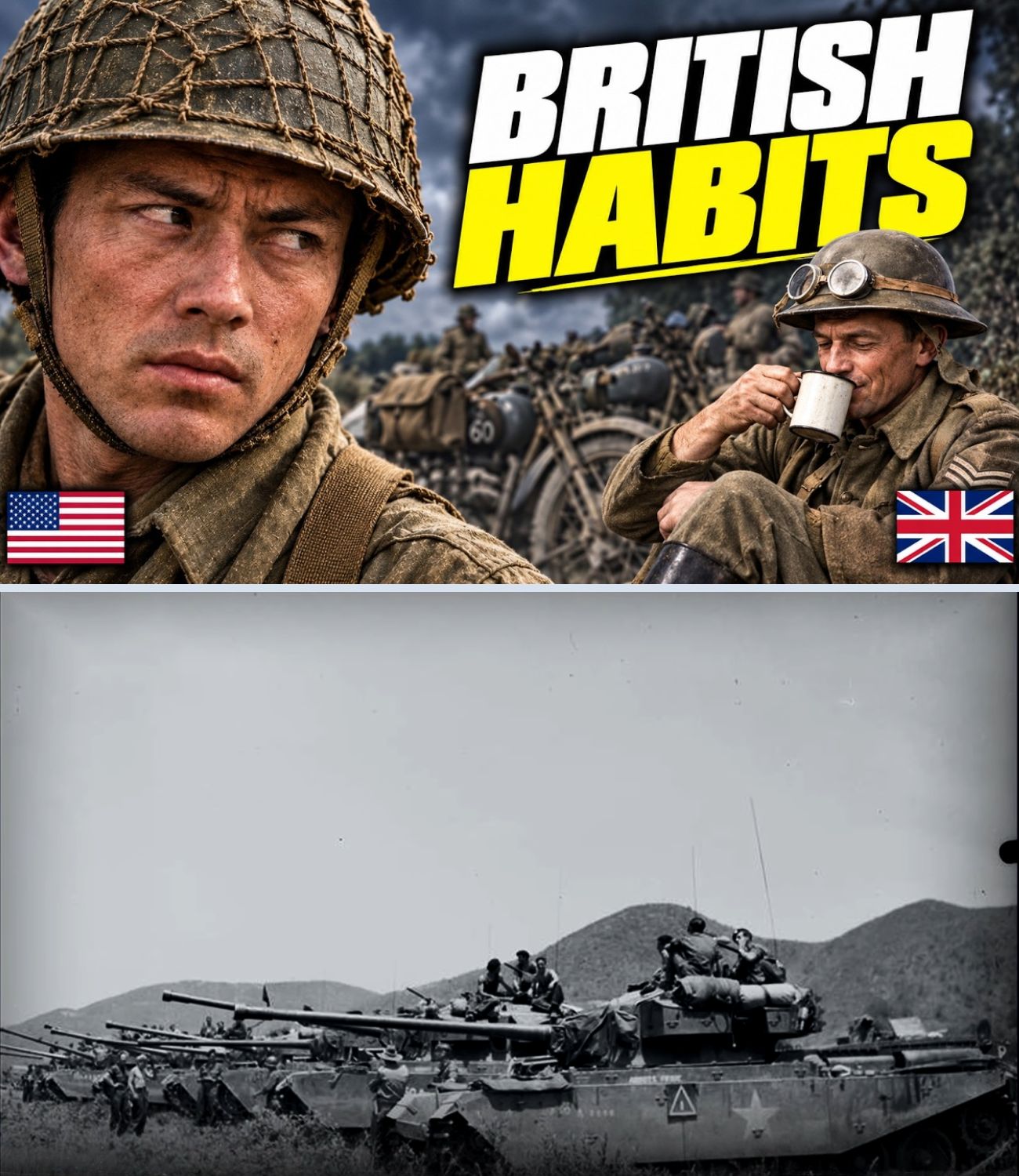
Four battalions, the Royal Northumberland Fusiliers, the Royal Ulster Rifles, a Belgian battalion of about 700 men, and the first battalion, the Gloucestershire Regiment. Behind them, the Centurion tanks of the 8th King’s Royal Irish Hussars, the guns of 45 Field Regiment, Royal Artillery, and the heavy mortars of 17 Independent Mortar Battery. 12 miles of front, four battalions, gaps between them that no one has the men to fill.
The Glosters are commanded by Lieutenant Colonel James Power Carne. He was born in Falmouth in Cornwall on the 11th of April 1906. He joined the regiment as a second lieutenant in 1925. He has served in it for a quarter of a century. In April 1951, he has just turned 45.
His adjutant is younger and harder to classify. Captain Anthony Farrar-Hockley was born in Coventry on the 8th of April 1924, the son of a journalist. As a boy, he lied about his age and enlisted in the Gloucestershire Regiment during the Second World War. The army found out and sent him home. He enlisted again in 1941 and volunteered for the Parachute Regiment the following year. He is 27. He has already fought one war and he has come back to the regiment that once sent him home for being too young.
Then there is a lieutenant in A Company named Philip Curtis. Curtis was born on the 7th of July 1926 in Devonport, Plymouth, the only child of a laborer. As a teenager during the Second World War, he served as an air raid warden. He married a woman named Joan. She died before the Korean War began. In April 1951, he is 24 and he has a daughter, Susan, back in England. She is 7 years old.
And one more man who carries no rifle in this story, Drum Major Philip Buss of the battalion’s drums platoon. Remember the instrument he carries. It will matter on the last night.
On the other side of the river, the numbers are of a different order. On the 22nd of April 1951, China launches its spring offensive. Against the 29th Brigade comes the 63rd Army of the People’s Volunteer Army, three divisions, the 187th, the 188th, and the 189th. By the most commonly cited estimate, around 27,000 men in 27 battalions. Four battalions against 27.
The Glosters sit on the brigade’s left, guarding the most obvious crossing on the river, the old route south towards Seoul. How many men the battalion counted that morning depends on the source. The Regimental Museum gives about 700. Other accounts give closer to 850. The Telegraph, half a century later, wrote 650. No source puts them anywhere near the size of the force crossing toward them.
The night of the 22nd of April, the river is low. It can be waded. A 17-man patrol under Lieutenant Guy Temple of C Company is watching the ford. The first Chinese column enters the water. Temple’s men open fire. The column breaks. A second attempt, broken again. A third, broken again. Three crossings turned back by 17 men until the ammunition runs low and Temple pulls his patrol back up the hill. Temple would later receive the Military Cross, but a ford is only one point on a river.
Across the brigade front, the Chinese are already over. They hit the Belgians on Hill 194. They hit the Fusiliers on Hills 257 and 52. They come up the slopes toward the Glosters in numbers no patrol can stop. A Company holds Hill 48. The men call it Castle Hill. The odds there, in the battle’s standard account, are 6 to 1.
Before dawn on the 23rd, the Chinese take a bunker on the slope and a machine gun inside it begins firing down into the British positions. Lieutenant Curtis is ordered to take it back. He leads his platoon forward. The fire stops them. He orders some of his men to cover him. He goes alone. A grenade wounds him badly. His men drag him back into cover.
His official citation records what comes next. He breaks free of the men holding him and goes forward again, throwing grenades as he runs. He is killed by machine gun fire within a few yards of the bunker. His last grenade lands. The bunker is destroyed.
Philip Curtis would be awarded the Victoria Cross after his death. A 24-year-old widower from Devonport with a daughter of seven waiting at home.
Castle Hill cannot be held. On the 23rd of April, A Company and D Company fall back to the higher ground behind them, Hill 235. The Belgians are pulled south. The Glosters are now on their own.
There is a pause that afternoon, the kind of pause that is not rest. Men dig into stony ground. They count magazines. They carry the wounded to the aid post near battalion headquarters. They watch the valleys fill.
Carne moves among the positions. His Victoria Cross citation, published later, describes a commanding officer moving among his troops under heavy fire and twice leading assault parties himself with rifle and grenades to drive the enemy back.
The night of the 23rd to the 24th of April, B Company is on its own hill. The first assault comes in the dark. It is beaten back. A second, a third, a fourth, a fifth, a sixth. The company is outnumbered by the standard account, 18 to 1. When the Chinese reach the trenches, the company calls the British artillery down on its own position. At 10:08 in the morning, the seventh assault. This time B Company has to leave the hill. The survivors make their way to the battalion on 235.
On the 24th of April, the brigade tries to reach them. A relief column moves up the narrow valley road. The leading tank, an M24, is knocked out. Its wreck blocks the route. Nothing can pass. The relief force is withdrawn.
It is on these days, after two days of fighting, that General Soul asks his question, and Brodie gives his answer, “A bit sticky.”
Stay with that word. It will appear once more in this story. Written in a different hand, and when it does, it will finally be measured.
The order that comes back down the line is to stand fast. The Glosters stand fast. Ammunition is going. The wounded can no longer be evacuated. The water is running out. The battalion is pressed into a tighter and tighter perimeter on the summit of Hill 235.
In the special communique he issued in May, General James Van Fleet, commander of the US 8th Army, would describe the Glosters calling for close air support as their ammunition dwindled.
Then the last night begins. The night of the 24th to the 25th of April. Every Chinese attack on that hill is announced in the dark by bugles. Bugles to gather. Bugles to advance. The sound carries across the slopes from every side at once.
In the early hours of the 25th of April, someone on the British side decides to answer. Accounts differ on who gave the order. Several British accounts credit the adjutant, Farrar-Hockley. An article published by the US Army’s own news service credits Carne. On the rest, the sources agree. A bugle is brought from the drums platoon.
Drum Major Philip Buss stands up. He plays Reveille. Then he keeps going, call after call, almost every call in the British Army’s book, except one. He does not play the retreat. On a hill surrounded by an army, a man in the open plays the calls of an ordinary barracks day, the routine of a peacetime camp sounded at the enemy.
The surviving accounts say the Glosters cheered. They say the Chinese bugles fell silent for a short while, as if no one on the other side could quite work out what the British were doing. It did not change the arithmetic. It changed how the arithmetic felt to the men on the hill.
At 8:00 on the morning of the 25th of April, I Corps issues its order for a general withdrawal, Plan Golden A. For the Glosters, there is nowhere to withdraw to. Every road is cut. Brodie leaves the final decision to Carne, break out or surrender. Carne decides that those who can move will try to get out. The companies are to make their own way. The wounded cannot be moved. They stay on the hill.
Then the battalion comes apart into small groups and goes down the slopes. Most of them do not get far. One group does, the remains of D Company under Major Mike Harvey, down through the valleys, into the ditches, under fire from the ridges. Men fall. The others keep moving.
Then ahead, tanks, Allied tanks. The men climb out of the ditches to reach them. The tank crews see figures running at them across open ground. They take them for Chinese. They open fire. Six of Harvey’s leading men go down. Above the valley, the pilot of a spotter aircraft sees what is happening. He drops a streamer to the tank crews. The firing stops. Five officers and 41 men reach safety. That is what is left of the Glosters who fought their way out.
Carne does not come down the hill as a free man. Neither does Farrar-Hockley. Neither does Drum Major Buss. They go into captivity.
Now, the word, the second time it appears among the letters held by the National Army Museum in London is one written by a British Lance Corporal named Arthur Stone describing that week to the people at home. He writes, “We had it pretty sticky for a few days. Our casualties up to Wednesday were approximately 1,000.”
The 25th of April 1951 was a Wednesday. There it is, the same word Brodie used to an American general from the pen of a junior soldier. And this time a number follows it, sticky about 1,000. That was the vocabulary. For the British soldier, the scale of a disaster went into the figures. The words around the figures stayed small. The Americans had read the words and the figures came too late.
On the 27th of April, the battalion that had held the Imjin crossing could muster 217 men. The British 29th Brigade lost 1,901 men in those four days. Of those, around 620 were Glosters. 59 of them were killed in action. The commonly cited count of Glosters taken prisoner is 459, though some sources give 522. 34 of the prisoners would die in captivity.
On the Chinese side, there is no agreement. Western estimates put the losses of the 63rd Army at a minimum of 10,000, possibly more than 15,000. Figures drawn from the operational records of the Chinese commander, Peng Dehuai, have been cited at between 20,000 and 30,000. The gap between those numbers cannot be closed from the evidence available.
What the sources do agree on is the result. The 63rd Army lost more than a third of its strength and was pulled out of the line. And the road to Seoul stayed shut. The delay forced the Chinese to commit reserves that their offensive needed. And the United Nations forces were able to form a new defensive position north of the capital, the No Name Line. There, the offensive was stopped. The action is often called the battle that saved Seoul.
Two weeks later, the Americans paid the bill in their own currency. On the 9th of May 1951, The Times of London reported a parade in Korea. A three-sided square, the Union Jack, the colors of the Brigade, the flags of Belgium and Luxembourg, an American flag held by military police, the Royal Northumberland Fusiliers as guard of honor, and the pipers of the Royal Ulster Rifles.
Lieutenant General James Van Fleet, commander of the US 8th Army, came to present the Presidential Unit Citation, the highest honor the United States gives to a unit for gallantry in action. It went to the 1st Battalion of the Gloucestershire Regiment and to C Troop of 170 Independent Mortar Battery.
The battalion’s new commanding officer, Lieutenant Colonel Digby Grist, stepped forward to receive it. Behind him stood the men who were left. According to The Times, between 40 and 50 men of the fighting battalion had come back. They had left 600 killed and missing on the field.
Van Fleet’s special communique, published days later, described a battalion completely surrounded by tremendous numbers, which fought back with unsurpassed fortitude and courage. He would later go further. He called the stand of the Glosters the most outstanding example of unit bravery in modern war.
40-odd men in a square receiving a ribbon on behalf of 600 who were not there. The Americans had needed a casualty list to translate one word. Now they had it.
The men who stood on Hill 235 went separate ways. James Carne spent the next two and a half years as a prisoner of the Chinese. As the senior British officer in captivity, he was singled out. He spent long months in solitary confinement and later described a softening-up process with drugs intended, in his words, to make his brain like a sponge, capable of receiving any kind of information.
He was released in late August 1953, three stone lighter than when he was taken. He received the Victoria Cross, published in the London Gazette on the 27th of October 1953. The citation said his powers of leadership can seldom have been surpassed in the history of our army. The United States awarded him its Distinguished Service Cross.
When the Queen asked him about conditions in the prison camps, his answer has been preserved, “They were not too bad, ma’am. The worst part was the boredom.”
He retired to the village of Cranham in Gloucestershire and served as church warden there for 18 years. He died in Cheltenham on the 19th of April 1986, days after his 80th birthday, and almost exactly 35 years after the battle. His ashes lie in Cranham churchyard.
Anthony Farrar-Hockley spent two years as a prisoner. He tried to escape six times. His captors tortured him with simulated drowning and cigarette burns, and he did not give them what they wanted. In 1954, he published his account of the battle and the camps, The Edge of the Sword.
He went on to command a parachute battalion in the Gulf and in Red Fan, then a parachute brigade, then British land forces in Northern Ireland, and rose to senior posts in NATO. He died on the 11th of March 2006, aged 81.
Philip Curtis never left Korea. He lies in the United Nations Memorial Cemetery at Busan. His Victoria Cross went home without him to a daughter who was 7 years old when he charged the bunker on Castle Hill.
Drum Major Philip Buss went into captivity with the rest of his battalion. The calls he played that night are still told in the regiment as part of its legend.
Brigadier Tom Brodie retired from the army in 1955. He died in Basingstoke in Hampshire on the 1st of September 1993.
And Major General Robert Soul, the American who asked the question, a Wyoming man the army knew as Shorty, died in Washington at the age of 51.
Why does so little of this survive outside Gloucestershire? Part of the answer is the war itself. Korea came five years after the largest war in history and ended in an armistice. In America, it would be remembered as the forgotten war. In Britain, the men who came home from the prison camps in 1953 came home to a country that had moved on.
Part of the answer is the men. They did not tell the story loudly. Carne spoke about boredom to his queen. A lance corporal wrote, “Pretty sticky,” to his family. The way they talked about the battle was the same way they had fought it and it made very little noise.
So, the record survived in other hands. In a Times report of an American parade, in a communique signed by an American general, in a United States presidential unit citation, in a museum in Gloucester that keeps the letters, in an article on an American Army news site, 75 years later retelling the story of a British drummer.
Now, return to the beginning, to that booklet of 1942. “Don’t be misled by the British tendency to be soft-spoken and polite. If they need to be, they can be plenty tough.”
The War Department wrote that sentence for young men going to England to learn the money and the tea. On the Imjin, it described the answer to the question we started with.
Brodie did not soften the truth because he failed to grasp it. In his regiment, in his army, the worse things became, the quieter you were expected to say them. Calm was part of the discipline.
The same restraint that hid the danger from an American general was what kept a surrounded battalion in its trenches for three nights and put a drummer on his feet to play reveille at an army.
The Americans could not understand the word until they counted what it cost. Once they had counted, they put it into their own language and their own language was a citation.
“A bit sticky.”
600 men. The size of a story is in its numbers, not in the voice that tells it.
You Might Also Enjoy

“We Thought They Would Negotiate”—What Argentine Soldiers Said When The British Attacked Goose Green

“You’ll Never Finish My Ruck March, Limey” — US Sergeant Who Challenged the SAS, Then Fell Out First






