What British Soldiers Did When SS Officers Demanded Special Treatment
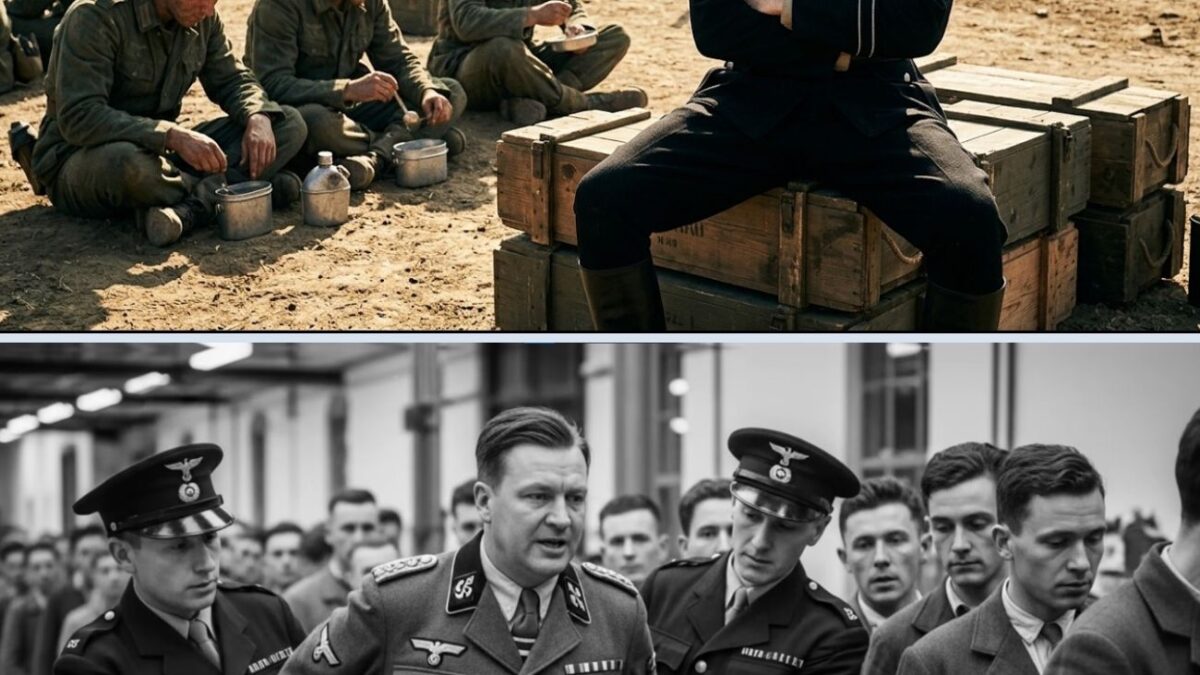
By the final months of the Second World War, the Waffen SS had developed a very specific idea of what their surrender would look like. They imagined it as a kind of transaction, a handover between military elites. They would lay down their weapons, the British would recognise their rank, their sacrifice, their exceptional status, and some sort of mutual professional respect would follow. Perhaps a firm handshake, separate quarters, a decent meal. What they got instead was a cup of cold tea, a queue, and a Tommy private from Birmingham who had absolutely no interest in their opinions.
The British Army in 1944 and 1945 was not an army of aristocrats. It was factory workers, farm hands, coal miners, and shopkeepers in uniform. Men who had been bombed out of their homes in London, who had watched friends die on the beaches of Normandy, who had walked through the gates of Bergen-Belsen and seen with their own eyes exactly what the SS had been doing for the past decade. They were not impressed by the silver runes. They were not impressed by the rank. And they were certainly not interested in special treatment.
What followed inside the wire of British-run prisoner-of-war camps across Germany, Austria, and Italy was one of the most quietly devastating psychological dismantling in military history. The SS demanded deference. The British gave them a bucket and told them to get on with it.
The SS officer’s first encounter with British captivity usually happened at a processing centre, often a converted farmhouse or barracks near the front lines, staffed by exhausted, mud-covered soldiers who had been fighting non-stop since Normandy. The procedure was simple. You got in line, you waited your turn, you were processed. For a Waffen SS Obersturmbannführer, a lieutenant colonel, who had spent years being saluted by an entire division, the concept of queuing alongside enlisted men, regular Wehrmacht soldiers, and in some cases foreign labourers was genuinely incomprehensible.
The complaints came immediately. SS officers would step out of line, march to the front, and announce their rank to the British NCO running the processing desk. They expected to be waved through ahead of the others. They expected a separate station. They expected, at the very least, acknowledgement of who they were.
The British NCOs, sergeants and corporals who had been processing prisoners for weeks and had long since run out of patience, had a standard response. It was not formal. It was not respectful. They would simply give a very direct instruction:
“Get back to the end of the queue.”
If the officer refused, he was escorted there.
British military culture had its own rigid hierarchy, but it was not blind to context. These men had seen the SS file past columns of starving concentration camp prisoners. They had read the intelligence reports. They had, in many cases, fought the SS directly in Normandy, where the 12th SS Panzer Division had massacred Canadian prisoners of war at the Ardenne Abbey. The idea that these men deserved courtesy was, to the average British soldier, genuinely offensive.
One account from a British military police sergeant, recorded in regimental diaries held at the Imperial War Museum, described processing an SS general who marched up and demanded:
“I want to speak to a senior British officer immediately!”
The sergeant looked at him and replied:
“You can speak to whoever you like after you have been searched, photographed, and assigned a prisoner number.”
The general complied. He had no choice. The queue was the first lesson. Rank here meant nothing.
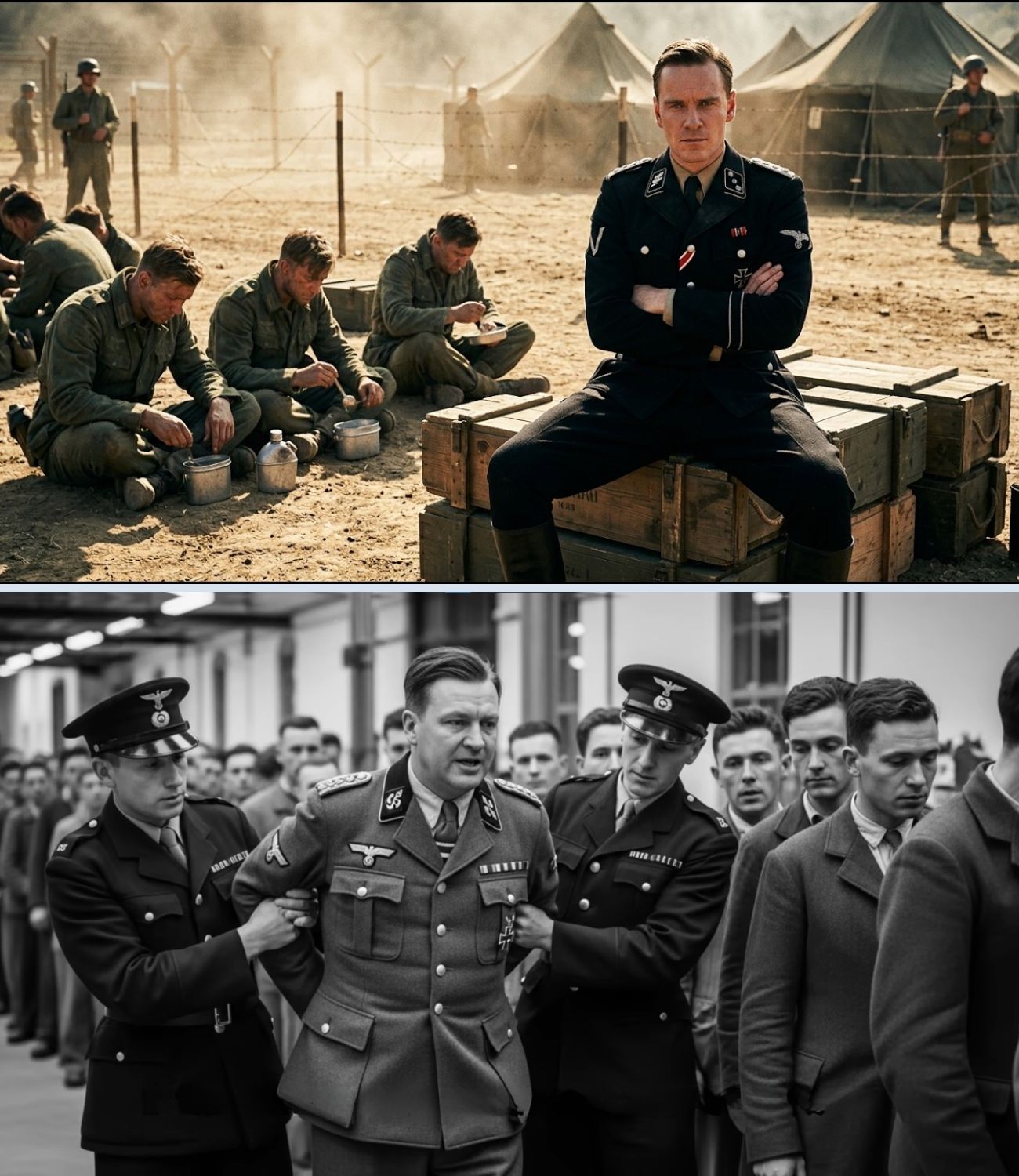
The SS were not stupid. They had legal minds among them, and they had studied the Geneva Convention carefully before surrendering. They arrived in British captivity with a working knowledge of exactly which protections they were entitled to, and they intended to use every single one. Article 17 of the 1929 Geneva Convention was their favourite citation. Commissioned officers could not be compelled to perform manual labour. They were entitled to separate accommodation from enlisted men. They were to be treated according to their rank and, in theory, with the dignity appropriate to their station.
The British Army took the Geneva Convention seriously. Unlike some other theatres of the war, British camp administration generally followed the rules. Officers were not beaten, not starved, not deliberately mistreated in ways that would constitute a formal violation. But the British Army had also developed, over centuries of colonial administration, imperial policing, and sheer national stubbornness, a remarkable gift for following the letter of a rule while completely dismantling its spirit.
The convention said officers could not be forced to do labour. Fine. They would not be forced. But it said nothing about the conditions of their accommodation. It said nothing about how often those accommodations would be inspected. It said nothing about what standard of cleanliness would be considered acceptable. And it said nothing about what happened if the officer himself decided he would prefer to maintain his own quarters to a passable standard rather than live in filth.
British camp sergeants became remarkably attentive to camp hygiene regulations the moment SS officers arrived. Detailed inspections, lengthy written reports, standards that somehow required a great deal of personal effort to meet. The officers who complained loudest about their rights under the convention were often the officers whose quarters required the most corrective attention. It was never framed as punishment. It was always framed as compliance with camp regulations. The SS could not argue with camp regulations. They had already used up their best argument, the convention, and the British had simply nodded, agreed entirely, and handed them a mop.
The British Army, like the American Army, had within its ranks soldiers from every corner of the Empire and Commonwealth. Indians, Nigerians, West Indians, Kenyans, South Africans of colour, Palestinian Jews fighting under the British flag. The SS ideology was not subtle about what it thought of these men.
British camp commanders, some out of deliberate policy, others out of what can only be described as a very dry sense of institutional humour, assigned guard duties at SS enclosures without particular reference to the sensitivities of the prisoners. Jewish soldiers from the Jewish Brigade who had enlisted specifically to fight the Third Reich and had lost entire families to SS operations in Europe were stationed at gates through which SS officers had to pass every single day.
The psychological impact was, by multiple accounts, extraordinary. SS officers who had spent years processing human beings for extermination were now required to present themselves at a gate, state their prisoner number, and receive permission to move from a Jewish soldier who held the only key. Some refused. They would stand at the gate and simply not speak. The Jewish soldiers, for their part, were noted for their patience. They would wait, calmly, for as long as it took. The SS officer could stand there until his legs gave out. The gate did not open until the procedure was followed. Eventually, it always was.
Indian Army units guarding camps in Italy reported similar dynamics. SS officers who had been steeped in Nazi racial theory were required to receive medical inspections from Indian Army doctors, take orders from Sikh NCOs, and submit complaints. Those endless, formal, written complaints to duty officers who were not white, not German, and not remotely interested in the racial philosophy of their prisoners. The complaints were logged. They were read. They were filed. Nothing further was done with them.
This was not accidental. British military intelligence understood clearly that the SS drew enormous psychological sustenance from the idea of racial hierarchy. Dismantling that hierarchy, quietly, procedurally, without drama, was considered one of the most effective tools of what was already being called, in 1945, denazification. You did not argue with the ideology. You simply arranged reality so that the ideology made no sense.
The SS uniform was not just clothing. It was a carefully engineered instrument of terror. The death’s head insignia on the cap, the silver runes at the collar, the black breeches, the custom-fitted tunic, the leather greatcoat, every element had been designed by Heinrich Himmler’s office with a specific purpose, to make the wearer look not like a man, but like a symbol. Something cold, powerful, and beyond ordinary reach.
British soldiers looked at the uniforms and saw something different. They saw very good leather. The process of confiscating SS insignia and personal effects was officially a standard security procedure. Prisoners were entitled to retain their uniforms. The convention was clear on this. But items deemed to pose a security risk or that were considered non-standard military issue could be removed. British soldiers interpreted this category with considerable imagination.
Leather greatcoats were flagged as non-standard. The silver SS runes, small, detachable, and easily concealed, were removed as potential contraband. The death’s head insignia came off caps. The custom-tailored tunic, if it contained any embroidery or insignia beyond basic rank markings, was exchanged for a standard issue replacement. What was left was a man in a badly fitting grey tunic with nothing on it to distinguish him from the regular Wehrmacht private in the next compound. The SS officer who had arrived projecting the full visual weight of the Third Reich left the processing table looking like a clerk.
It was not violent. It was not even particularly confrontational. But accounts from British guards describe the change in demeanour as almost immediate. Without the uniform, without the symbols, without the theatre of terror, many of the most aggressive SS officers became visibly quieter, less certain of themselves, almost as though the costume and the confidence had been one inseparable thing.
One British corporal interviewed for a regimental history in the 1970s recalled watching a senior SS officer, a man who had reportedly commanded an entire regiment, sitting alone on a wooden bench outside a processing hut in a plain grey tunic waiting to be assigned a bunk. He observed:
“Without the insignia, he looked entirely ordinary, slightly lost, like someone waiting for a bus that was already very late.”
On the 15th of April, 1945, British forces liberated Bergen-Belsen concentration camp. What they found there, the living skeletons, the mass graves, the 60,000 survivors so weak that many would die in the weeks that followed despite every effort to save them, changed the atmosphere in every British POW camp in Europe within days, for word travelled fast in the British Army. It always did.
Before Belsen, there had been grumbling about the way SS prisoners were being handled. Some officers in the British Army, shaped by their own class assumptions, had felt a residual awkwardness about treating officers, even enemy officers, too roughly. The conventions of gentlemanly warfare died hard. After Belsen, they died completely.
SS prisoners in British camps in the weeks following the liberation reported a marked change in the temperature of their treatment. Nothing that violated the convention, nothing that could be formally reported, but a coldness, a deliberate and total withdrawal of any human warmth that was in its own way more unnerving than anger.
British guards stopped making small talk. They stopped the occasional cigarette sharing that had, in some camps, become informal habit. They answered questions with the minimum number of words the procedure required, and nothing more. Some SS officers apparently found this more disturbing than outright hostility. Hostility they could understand. They had a framework for it. This was something else. This was the look a man gives you when he has decided you are not worth the energy of hatred.
One former SS officer interviewed by German historian Rolf Keller decades after the war described the atmosphere in a British camp in the summer of 1945 in terms that stayed with him for the rest of his life:
“The British guards treated us not with cruelty, but with a kind of thorough, business-like indifference that made it impossible to maintain any sense of significance. You could not provoke them. You could not impress them. But you could not make them see you as anything other than a problem to be administered until you could be sent home.”
He concluded:
“It was more effective than anything else could have been.”
The British handling of SS prisoners was not the product of a formal policy document. It was not handed down from Churchill’s office as a deliberate denazification programme. It was, in large part, simply what happened when you put working-class men from Coventry and Glasgow and Cardiff, men who had been bombed, bereaved, and exhausted by six years of war, in charge of men who had spent those same six years believing themselves to be the master race.
The British soldier did not debate Nazi ideology. He did not engage with the philosophical architecture of racial hierarchy. He did not write papers about the psychological roots of SS fanaticism. He handed them a mop. He put a Jewish corporal on the gate. He took the coat. He told them to get back in the queue. And in doing so, he achieved something that years of ideological counter-argument had failed to do.
He made the SS look ordinary. He made them wait. He made them subject to the same rules, the same inconveniences, the same indignities of daily life that everyone else had to endure. The SS had built their entire identity on the idea that they were beyond ordinary. The British Army, with characteristic understatement, simply declined to agree.
Beneath the black uniform and the silver runes, beneath the propaganda and the terror and the carefully constructed mythology of racial superiority, what the British soldier found was the same thing the American soldier found. Ordinary men, hungry, cold, frightened, but extremely put out about the quality of the rations. They picked up the shovel. They waited in the queue. They learned, slowly and without any particular grace, what it meant to be no more special than anyone else, which was, in the end, exactly what they deserved.
You Might Also Enjoy

“We Thought They Would Negotiate”—What Argentine Soldiers Said When The British Attacked Goose Green

“You’ll Never Finish My Ruck March, Limey” — US Sergeant Who Challenged the SAS, Then Fell Out First






