What Delta Force Said After the SAS Did in 19 Minutes What No One Had Done in 2 Years
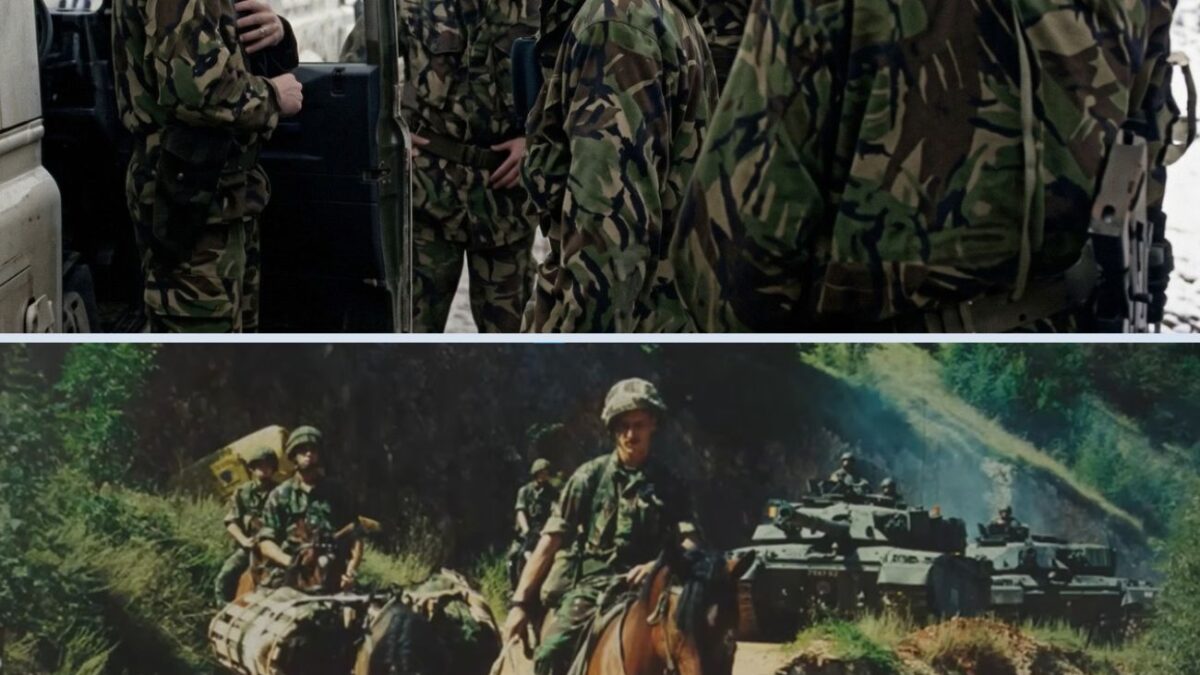
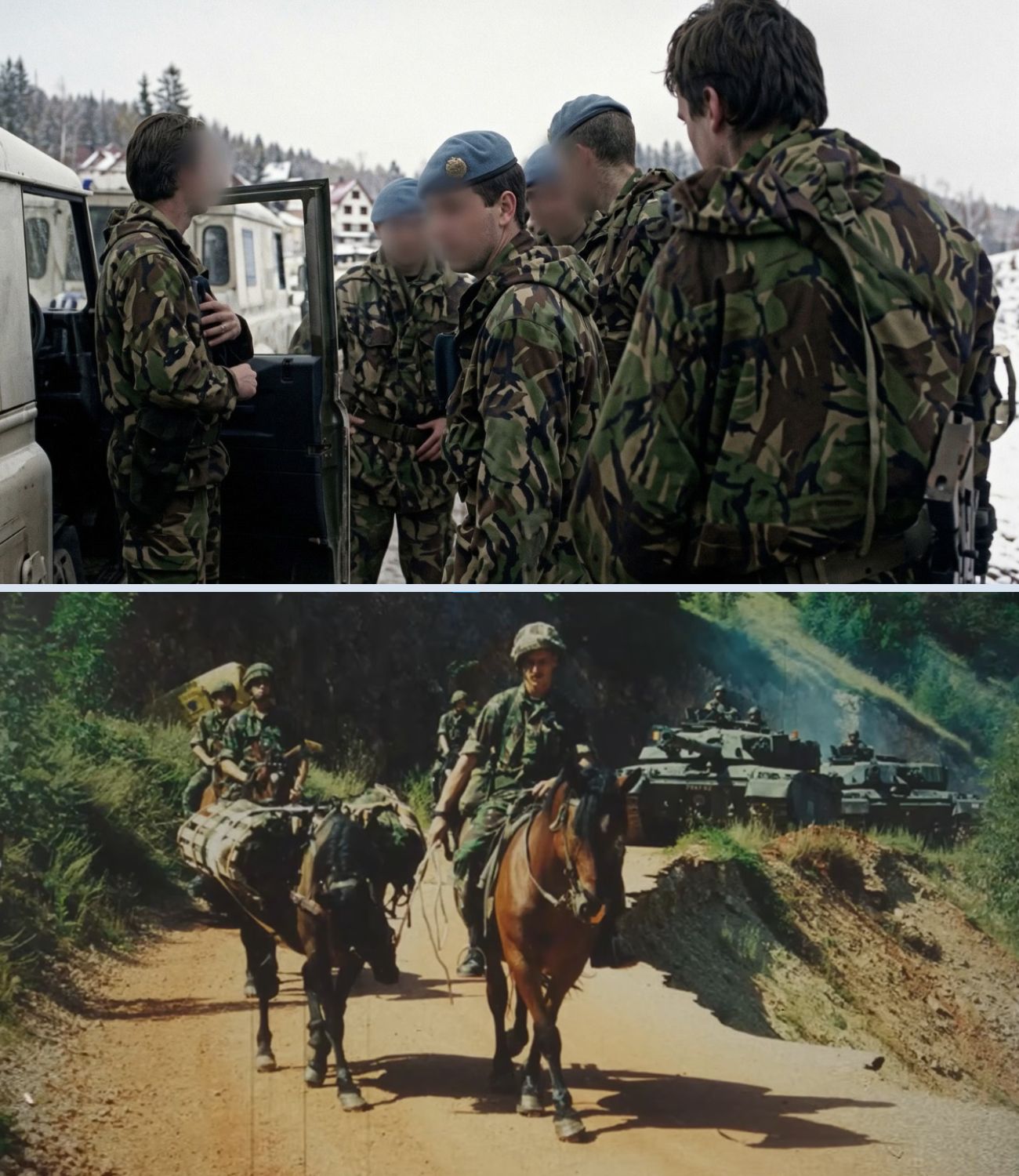
In July 1997, a Delta Force staff sergeant had everything he needed to make two war criminals disappear. The intelligence, the target packages, the skills, the appetite for the work. Everything, except the one thing that mattered, the order to move. For two years he’d watched those men walk free in a city his unit had mapped to the last doorway.
For two years Washington had calculated the cost and chosen to wait. Then the British came over the radio. Four words. Calm. No ceremony. No explanation.
“Stand down. We’ll handle it.”
19 minutes later, both targets were gone. One dead on a lake bank. One in a vehicle heading to The Hague. The staff sergeant sat in the same position he’d been in when it started and tried to find the right words for what he just witnessed.
For two years, 60,000 soldiers from 36 nations hadn’t touched these men. Nobody moved. Nobody tried. Then one morning a group of men nobody could officially account for walked into the city. 19 minutes later, it was over. Nobody saw them arrive. Nobody saw them leave. The city didn’t even know it had happened.
He’d been in special operations for 11 years. He told his team one thing afterward. He said the SAS had turned a two-year problem into a 19-minute solution and hadn’t wasted a single movement doing it. This is what Delta Force said the morning the British settled what no one else had been allowed to finish.
His name was Robert Calhoun and he was 34 years old. He was from a small town outside Valdosta, Georgia. The kind of place where the summers arrive in April and don’t leave until October and where the air sits heavy and wet and smells of pine resin and red clay. His father had farmed that land for 30 years. His grandfather before that. The assumption, never stated but understood by everyone including Robert, was that he would do the same. He was good with his hands, good with engines, good at reading weather and ground and the behavior of things that didn’t speak. He walked into an Army recruitment office two weeks after finishing high school and didn’t go back to the farm except to visit.
He served first with the 75th Ranger Regiment. Two deployments, one in Panama, one in the early days of Somalia, the latter of which he would not discuss in detail for the rest of his life except once, briefly, to a journalist writing a book that never got published. He attempted Delta Force selection in 1991 and passed on his first attempt.
He didn’t celebrate. He called his mother, told her he’d got a new posting, and didn’t elaborate. By 1997, with Bosnia entering its third year of international military presence, he had been deployed to the Balkans as part of the American component of SFOR, the NATO stabilization force holding a peace that nobody fully trusted.
He arrived with a target package, a thorough intelligence brief, and the professional expectation that he would be permitted to use both. He would spend two years discovering that expectation was wrong. And he would never fully understand why until a morning in July when a group of men he couldn’t officially account for showed him the answer in 19 minutes.
And the story of what Calhoun had been sent to resolve begins five years earlier in a war that Europe had chosen not to fully see until it could no longer look away. The Bosnian War began in April 1992 when the Republic of Bosnia and Herzegovina declared independence from Yugoslavia. What followed was three and a half years of conflict that killed approximately 100,000 people.
That number takes a moment to hold. 100,000. More than the combined populations of several mid-sized British cities gone in 3 and 1/2 years in a country the size of Wales. Behind that number were individual human beings with names and addresses and families who waited for them to come home and eventually understood that wouldn’t happen.
More than 2 million others were driven from their homes after the largest forced displacement of people in Europe since the end of the Second World War. Towns and villages that had existed for centuries were emptied in the space of days. The people who lived in them were given no notice and no choice. In the northwest of Bosnia in the Prijedor municipality, the local wartime leadership moved in the spring and summer of 1992 to remove the Muslim and Croat populations from an area they intended to make ethnically homogeneous. The methods they used have since been documented across hundreds of thousands of pages of tribunal evidence, survivor testimony, and forensic reports. The summary is this. Men and boys were separated from their families at gunpoint and taken to camps established on the outskirts of the city. In those camps, they were beaten, starved, and killed.
Young women were taken to separate facilities. The camps had names: Omarska, Keraterm, Trnopolje. Those names are now part of the permanent legal record of what human beings are capable of doing to one another. The International Criminal Tribunal for the former Yugoslavia was established by the United Nations Security Council in May 1993.
Its purpose was to prosecute those responsible. By 1997, the tribunal had issued more than 70 indictments covering crimes committed across the country. 70 sets of charges, 70 documented cases, 70 men for whom the evidence had been gathered and the legal process prepared. Dozens of them were still free. In Prijedor, two names sat near the top of the list.
Simo Drljača was 51 years old, from a village in the Krajina region, and had trained as a lawyer before the war gave him a different kind of work. As wartime chief of police in Prijedor, he had overseen the establishment of the camp system and the operations that filled it. After the war, he’d been appointed deputy interior minister of the Republika Srpska.
He attended official functions. He gave interviews. He fished on Saturday mornings at a lake north of the city. He wasn’t hiding. He had no reason to. Milan Kovačević was 54 years old, a medical doctor who had risen to run the city hospital as its director. He had been a member of the wartime crisis committee that authorized the camps and made the decisions that sent thousands to them.
He continued to practice medicine. He continued to come to work each morning, as though the years between 1992 and 1995 were something that had happened to someone else. Both men had been formally indicted. Neither had been arrested. In two full years of international military presence in Bosnia, not one person named in those indictments had been taken into custody by force.
60,000 soldiers, 36 nations, and two men fishing and running hospitals like the war had never happened. Nobody had touched them. Nobody had tried. And nobody who walked those streets every day in a NATO vehicle could officially explain why. Calhoun had read every page of the target packages on both men within 48 hours of arriving in Bosnia.
He knew Drljača’s vehicles. He knew the route to the lake. He knew the pistol the man carried every day like another man carries his keys. He knew Kovačević arrived at the hospital at the same hour every morning and left at the same hour every evening, regular as a clock in a country that hadn’t functioned regularly in 5 years.
He had planned the operations in his head before anyone asked him to. He did this the way experienced soldiers do, not as fantasy but as professional reflex. He mapped approach routes, identified vulnerabilities, calculated the time between first contact and extraction. He ran the variables: resistance, civilian presence, local police response, communications failure.
He built contingencies for each. Within 6 weeks of arriving in Bosnia, he could have briefed the operation to completion in 20 minutes. What he could not do was get permission to run it. The authorization to arrest war criminals in Bosnia sat inside a political debate that had been running since the first tribunal indictments were issued.
Washington’s position was shaped by a genuine fear of casualties and by the memory of Mogadishu 4 years earlier where 18 American soldiers had died and the images of what followed had played on television screens across the United States for days. There was also a real concern that aggressive action against Bosnian Serb figures would fracture the ceasefire that American soldiers were there to protect.
The Dayton agreement was young. The peace was fragile. An operation that went wrong and put dead bodies on a street in a Bosnian city might collapse what the diplomats had spent years constructing at a table in Ohio. Calhoun understood the reasoning. He could walk through the logic step by step and follow each movement to its conclusion.
He disagreed with where it had led. He kept this to himself. The way that special operations soldiers keep things to themselves when the audience for their opinion is limited to the people inside the same vehicles. What he did across two years in Bosnia was maintain a quality of readiness that had nowhere to go.
Like a door built perfectly to fit a frame that no one would open. His team noticed. They didn’t comment. There was a particular silence that experienced soldiers produce when they’ve been given good reasons for a decision they believe is wrong. And Calhoun had refined that silence to a precision that matched everything else he did.
What he didn’t know through most of those two years was that somewhere in that same city a British unit had been watching the same men, building the same picture, and arriving at the same conclusions. Moving through the same streets, logging the same routines, mapping the same vulnerabilities. Nobody knew where they were operating from.
Nobody could account for their movements. They appeared in no official paperwork that Calhoun could access. They were simply there. Somewhere in the city. Doing the same work in the same silence. The difference between them and Calhoun’s unit wasn’t capability. It wasn’t training. It wasn’t nerve. It was one decision from London.
The SAS squadron operating in Bosnia in the months before the operation wasn’t a unit that announced itself. That was the point. They drove ordinary vehicles. They wore ordinary clothes. They moved through Prijedor in the way that people who belong somewhere move through it without the particular quality of alertness that marks a soldier operating in civilian territory.
This was a skill. Practiced like everything else in the regiment until it was reliable under pressure. The team tasked with the Prijedor operation was from D Squadron, 22 Special Air Service Regiment. The team leader was in his late 30s, from a market town in the East Midlands, and had spent 3 years in the Royal Engineers before passing SAS selection.
The engineers taught him to read a site before he touched it, to find the load-bearing elements of a system before deciding where to apply pressure. He brought the same approach to every operation. He didn’t attack a target, he mapped it. His team had been gathering intelligence on both men since the spring.
They knew Drljača’s specific movements, the exact topography of the lake, the depth of the water near the bank, the sightlines from every approach angle. They knew he was armed. He had been photographed with a pistol at his hip on multiple occasions. Kovačević presented a different geometry.
The hospital was a public building. It would have staff. It would have patients. The arrest couldn’t produce civilian casualties and couldn’t become anything resembling a gunfight in a hospital corridor. Speed was the variable that controlled the risk. Close the distance fast enough and there was no time for the situation to become something more complicated than an arrest.
The two teams drilled the approaches separately. They walked the ground. Some they timed the routes at the exact time of day they would be running them. They planned for simultaneous execution. Both men taken at the same moment. If one moved before the other was in custody, the other would vanish and the operation that had cost months of patient work would end with one name on a tribunal list instead of two.
They had planned for the possibility that Drljača wasn’t at the lake. For the possibility that Kovačević hadn’t come into work. For resistance. For civilians who intervened. For local police arriving before the teams had cleared. For the scenario in which Drljača’s son, who sometimes accompanied him on Saturday mornings, chose to fight alongside his father.
They were the kind of thorough that comes from knowing the price of a missed variable is paid in blood. But the British government had authorized the SAS to move in the weeks before the 10th of July. The word passed to the American counterparts they had been coordinating with. The British were going in.
American units in the relevant areas were to hold their positions. Calhoun was in a vehicle outside Prijedor when the communication came through. He read it twice. Not because it was unclear, it was perfectly clear. He read it twice because 11 years of professional preparation had been pointing toward a morning like this one.
And it was taking a moment to process that the morning had arrived. And that he wouldn’t be in it. He set the communication down on the seat beside him. Looked out at the road and said nothing.
“Stand down. We’ll handle it.”
The morning of July 10th arrived dry and warm. The hills around Prijedor were green and still. There was no wind. The air smelled of pine and cut grass, and the particular freshness of a northern Bosnian summer morning before the heat has built. The light came up slowly over the eastern ridge, pale and clean. And by 6:00 the day had that quality of early morning quiet that feels like it cannot possibly contain what it is about to contain.
Drljača left his house before 7:00. He drove the route he always drove, through the roads north of the city, past fields coming into their full summer growth, and farmsteads that had stood since before the war. His son was with him. His nephew arrived at the lake a few minutes after them. Three men in ordinary clothing.
Rods in the water, the lake surface flat and dark beneath the early sky. Somewhere in the fields surrounding that lake, the SAS approach team was already in position. Nobody at the lakeside knew they were there. Nobody could see them. Nobody could locate them. They had moved into position before first light across open ground in the unhurried way of men who have practiced the art of not being seen until it became something closer to instinct than technique.
They were within 50 m of the bank before Drljača looked up. 11 km away at Prijedor Hospital, the second team had been in position since before 7:30. Nobody on the hospital staff had seen them arrive. Nobody on the hospital staff could account for their presence. The lead operator stood in a corridor from which he could see both the building entrance and the passage leading to the director’s office.
And he was waiting for a signal that would come from 11 km away. Until it came, he was simply a man standing in a hospital corridor, which hospitals have at all hours. Both teams held. The signal came. At the lake, the SAS soldiers closed the final distance at pace. Drljača saw them. He was a man who had lived alongside a pistol for 5 years, who had made the kind of decisions that require a particular quality of nerve.
He had convinced himself across 2 years of impunity that the world had made its calculation and moved on. He had been wrong about that. And in the seconds it took to understand that he was wrong, he reached for his weapon. The round he fired struck an SAS soldier in the upper leg. The soldier went down onto the bank, onto the wet grass and the cold mud at the water’s edge.
At once the operation moved into a different phase. Drljača didn’t survive what followed. He was 51 years old standing at the edge of a lake in the country he had helped to destroy and he had made his choice. The SAS had planned for a man who wouldn’t come quietly. The exchange lasted seconds.
The surface of the lake caught the pale morning light and held it flat and still while the bank came apart around it. Then it was quiet again. Drljača’s son was detained. His nephew was detained. Neither was armed. Neither offered resistance. They were held while the SAS medic reached the wounded soldier, assessed the wound, packed it, and confirmed it was serious but survivable.
The soldier was conscious. He would be evacuated. He would recover. The radio signal went to the hospital. The lead operator moved the moment the confirmation reached him. The team covered the distance to the director’s office at pace. Staff in the corridor stepped aside. A man moving with purpose through a hospital building with other men who don’t look like visitors is something that registers at a level below conscious analysis.
And the response it produces, almost universally, is to clear a path. That is what happened. Kovačević was at his desk. He was 54 years old. He had directed this hospital through the worst years the city had ever endured. He had sat in committee meetings and signed documents and been present at the making of decisions that sent thousands of people to camps from which many didn’t return.
He had then continued to come to work each morning, year after year, as though the period between 1992 and 1995 were something that had happened to someone else. When the team came through his office door, he stood. He was informed that there was an outstanding arrest warrant issued by the International Criminal Tribunal for the former Yugoslavia, and that he was being transferred to The Hague to answer for the charges against him.
He said nothing that was recorded. He was guided from the office and placed in a vehicle. The vehicle left the hospital car park and joined the ordinary morning traffic of the city. By the time anyone in Prijedor understood what had happened, it was already over. The entire operation, from the first contact on the bank of the lake to the departure of the vehicle from the hospital, took 19 minutes.
In his vehicle outside Prijedor, Calhoun received the confirmation signal. Both targets accounted for. One SAS soldier wounded. None killed. He sat with that information for a moment. Not long. Long enough. He had been monitoring the operation with the particular quality of attention that special operations soldiers develop for work they understand from the inside.
The kind of listening that runs alongside incoming information and maps it against everything already known about the ground, the targets, the variables. He had tracked the timing of the lakeside contact. He had calculated from the signals traffic what the SAS had done and how they had done it. He had planned operations of this complexity.
He had, on multiple occasions in Bosnia, reached the stage of full operational readiness and then been stood down. He knew what it cost to build to that point and receive the instruction to hold. What he was feeling in that vehicle, listening to the confirmation traffic, wasn’t resentment. It wasn’t bitterness.
It was something harder to name. Something between professional respect and a long slow recognition of what two years of waiting had actually been costing, not just his unit, but the men those two indicted men had never been made to answer for. He told his team that evening what he’d observed. He was precise about it, the way he was precise about everything.
He said the SAS had moved through Prijedor as though the city were a building they already had the plans for, that they had taken two men who had been untouchable for two years and made the operation look like something that had always been straightforward, which was the highest compliment he knew how to give and the one that cost him the most to mean.
He had been in special operations for 11 years. He hadn’t seen it done quite like that. Milan Kovačević arrived at Scheveningen Prison in The Hague on the afternoon of July 10th, 1997. He was processed, assigned legal counsel, and remanded into custody pending trial. He was the first person in the history of the ICTY to be brought before it by force.
He died of an aortic aneurysm in August 1998, 14 months after his arrest, before his trial had concluded. He was never convicted. He was also never again free. Simo Drljača was buried in Prijedor in the days after the operation. His funeral drew several hundred people, including local officials who spoke of him as a man who had died resisting foreign aggression.
The international community noted the tone and said little publicly. The ICTY’s Chief Prosecutor, Louise Arbour, who had spent years pressing NATO nations to enforce the tribunal’s arrest warrants, sent her acknowledgement to the British government. The tribunal had been in operation for four years. In those four years, it hadn’t brought a single person before it by force, until July 10th.
At the political level in Washington, there was discomfort. The United States was the primary architect of the Dayton Agreement and the primary sponsor of the SFOR mission. The fact that a British special forces unit had conducted the first war crimes arrests in Bosnia, while American operators sat in vehicles with complete intelligence packages and no orders to move.
That was a fact that produced difficult conversations at a level well above the men who had been stood down. At the military level, the response was different in tone. The Delta Force personnel who had spent months tracking the Prijedor targets didn’t speak about what they’d witnessed with anything resembling resentment.
What they spoke about in the careful way that special operations soldiers speak about other special operations soldiers when they believe the work was done well was the execution, the speed of the approach, the simultaneous nature of the two arrests, the way the hospital team had moved through a busy public building in broad daylight and brought a man out of it without the situation becoming anything other than a clean arrest, and the way the lakeside team had taken a casualty and continued to mission completion without breaking stride.
It cost something to acknowledge it had been done well. They acknowledged it. Within 6 months of Operation Tango, the political calculation in Washington had shifted. American SFOR forces began planning their own operations targeting ICTY indictees. The first American arrest in Bosnia took place in December 1997.
Others followed. The arrests that had been positioned as too dangerous to attempt, too likely to fracture the peace framework, began to happen with regularity, conducted by multiple nations without the collapse of the Dayton settlement that the political caution had been designed to prevent. The fear hadn’t been irrational, but it had been wrong.
Calhoun deployed twice more before leaving active service. He became an instructor, then a consultant, then the kind of man who shows up in the background of after-action reviews with no official title and a quality of presence that younger operators notice without being able to name. He didn’t talk about Bosnia often.
When he did, he talked about Operation Tango, the way you talk about something that showed you a version of your own profession you hadn’t seen before. Not with bitterness, not with the edge of a man recounting a grievance, but with the steady attention of someone who learned something and knew it.
He said the SAS hadn’t merely taken two men from a city in northwestern Bosnia on a Saturday morning. They had demonstrated that the thing everyone had agreed was unacceptable to attempt was, in fact, manageable. And once a thing has been shown to be manageable, the argument for managing it becomes very difficult to resist.
He said it wasn’t the 19 minutes that stayed with him. It was what the 19 minutes represented. Two years of the right people in the right place with the right intelligence and no order to move had produced nothing. 19 minutes of the right people in the right place with the right intelligence and one order to move had produced everything.
The gap between those two outcomes wasn’t capability. It wasn’t training. It wasn’t nerve. It was will. The SAS soldier shot at the lake recovered fully. He returned to duty. His name was never made public, consistent with the regiment’s practice of protecting the identities of its serving personnel.
He received no public commendation. The wound was a record in a classified file and that was understood when he joined. Operation Tango was acknowledged in stages over the years that followed as tribunal proceedings became part of the public record and the accounts of those adjacent to the decisions found their way into the histories.
The full picture assembled itself slowly, the way pictures of classified operations tend to, in pieces that each take years to find their place. What the picture shows, when assembled, isn’t primarily a story about special forces capability. The capability was already established. The SAS had demonstrated across decades and theaters what they could do when an order came.
And Delta Force, as Calhoun would tell you himself, could have run the same operation. The plans existed, the men existed, the readiness existed. What the picture shows is a story about the gap between the possible and the permitted. 60,000 soldiers in Bosnia, 36 nations, a tribunal with the legal authority and the documented evidence to prosecute men responsible for some of the worst crimes committed on the continent in 50 years.
24 months had passed since the fighting stopped. In those 24 months, not one man named in the tribunal’s indictments had been taken from the street by force. The reason wasn’t that it couldn’t be done. The reason was that the people with the authority to permit it had calculated, each time the question came before them, that the cost of being wrong outweighed the cost of waiting.
It was a calculation made by people who wouldn’t be in the vehicles about work that would be done by people who would. The British government changed that calculation. One authorization, one morning, 19 minutes. Afterward, others followed. The ICTY eventually prosecuted more than 100 individuals.
The legal precedents and institutional experience built through that work shaped the international criminal courts that came after it, in Rwanda, in Sierra Leone, in Cambodia. A framework for accountability that had existed only on paper began to function as it was designed to. It started, in practical terms, on the bank of a lake outside Prijedor.
On a July morning when a group of men nobody could officially account for walked across wet grass in the early light and closed the distance between a decision and its consequence. Nobody saw them arrive. Nobody saw them leave. The city didn’t even know it had happened until it was already done.
Calhoun put it plainly the last time he talked about it. He said that in 11 years of special operations he had met men who were capable and men who were exceptional. And he had learned to tell the difference between those two categories early. He said the SAS team that went into Prijedor on the morning of July 10th fell into the second category without question.
He said that wasn’t what stayed with him. What stayed with him was simpler than that. He said two years of the right people in the right place with no order to move had produced nothing. And 19 minutes of the right people in the right place with one order to move had produced everything. He said he thought about that for a long time.
He said it changed the way he understood the relationship between capability and permission. Between readiness and will. Between the men in the vehicles and the people making the calculations. He looked at the ground when he said it. The way men look at the ground when they’re saying something they’ve been carrying for a long time and have finally found the right words for.
Then he said this.
“The hardest thing isn’t being ready. Most good soldiers learn to be ready. The hardest thing is being ready and being told to wait. For long enough that you start to wonder whether the waiting itself has become the answer.”
He said the SAS answered that question on the morning of July 10th. He said,
“They just went.”
You Might Also Enjoy

“We Thought They Would Negotiate”—What Argentine Soldiers Said When The British Attacked Goose Green

“You’ll Never Finish My Ruck March, Limey” — US Sergeant Who Challenged the SAS, Then Fell Out First






