What Happened To Princess Diana’s Sisters After She Died
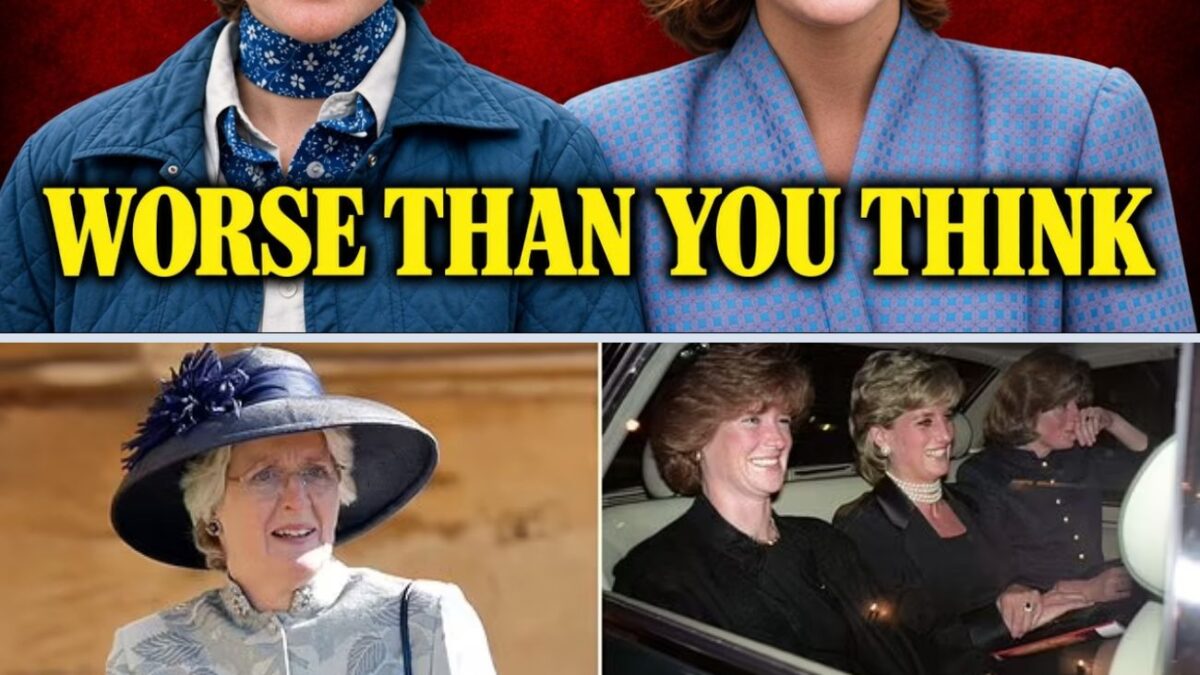
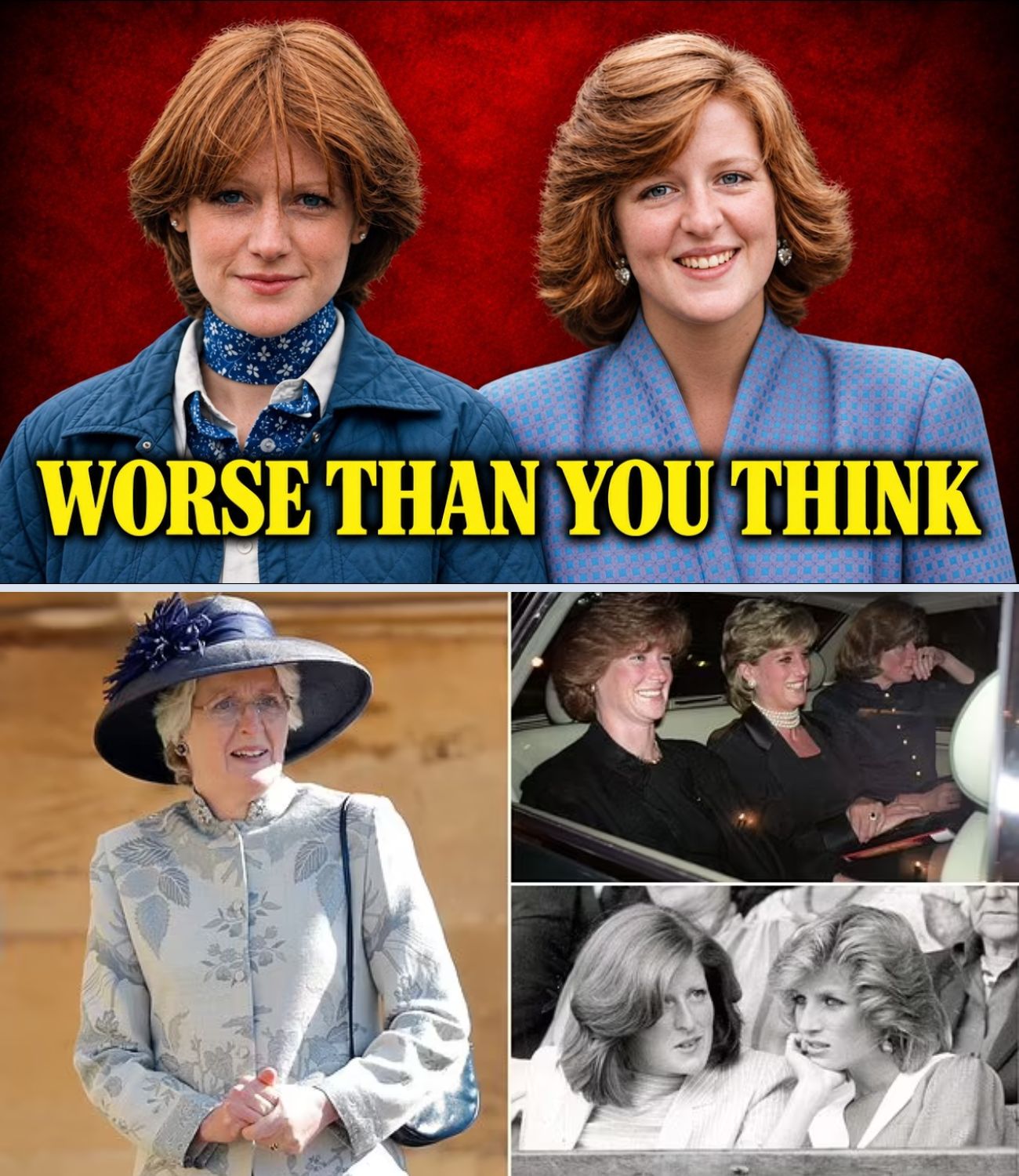
In June 2018, a bride walked into a Lincolnshire village church wearing the Spencer tiara, the same diamonds Diana wore on the 29th of July, 1981. The bride was her niece. Weeks earlier, Diana’s other sister had stood in St. George’s Chapel reading at Harry’s wedding. You’ve been told Diana’s sisters vanished into private life. One of them was executive of Diana’s estate. The other was married to the queen’s private secretary, the man running the palace. While Diana fought it days before that 1981 wedding, Diana said she told them she couldn’t go through with it. They mentioned the tea towels.
Start with the airplane because the airplane tells you who the family actually was. On the afternoon of August 31st, 1997, a BAE 146 of the Queen’s flight lifted off from RAF Northolt and crossed to Villa Kublé outside Paris. Four people of consequence were aboard. The Prince of Wales and Diana’s two older sisters, Lady Sarah McCorquodale and Lady Jane Fellows. Not her brother, not her mother. The two women who had spent 16 years being described in the press, when they were described at all, as the sisters nobody could tell apart, they were there because somebody had to be, and because in the Spencer family, the order of operations had always been clear.
Sarah was the eldest, Jane was the steady one, Diana was the youngest daughter, the one who had, by an accident of courtship and timing, become the most photographed woman on Earth. That hierarchy did not dissolve when Diana became a princess. It just stopped being visible to outsiders. And here is the thing that nobody tells you about the two women who flew to Paris that day. Within 4 months, one of them would hold legal control of Diana’s estate. Within 6 years, she’d be the public face of a charitable fund that burned through a fortune in American litigation. Within 5 years of that, she’d be in a witness box in the Old Bailey being asked in effect who owned Diana’s things.
Her sister took the opposite road and never said a word. Not in 1997, not in 2007, not now. Two strategies, same bloodline. Both of them in the end custodians of a woman who had never been allowed to be the custodian of herself. To understand how two obscure English women ended up holding the keys, you have to go back past the wedding, past the engagement, past the palace to a household where Diana was emphatically the least important person in the room.
Sarah was born in March 1955, Jane in February 1957. Diana came in July 1961 after a baby boy who had lived only hours into a marriage that was already under strain over the absence of a male heir. By the time Diana was old enough to register what was happening around her, her older sisters were half grown, confident, and in possession of something she did not have, fluency in the world their family actually belonged to. Because the Spencers were not aristocratic in the abstract. They were aristocratic in the specific geographic, slightly suffocating sense.
Park House, where the girls grew up, sat on the Sandringham estate, rented from the Queen. Their father, Johnny, had been an equerry to George VI and then to Elizabeth II. The royal children were occasionally available as playmates in the way that neighbors’ children are available. Jane and Sarah absorbed all of this early and without drama. Diana absorbed something else. Her parents’ marriage came apart in 1967, and the custody fight that followed was ugly enough that her grandmother testified against her own daughter. Frances left. The children stayed with Johnny. Sarah and Jane were at boarding school and largely out of the house. Diana, aged six, was not.
That gap matters and not for sentimental reasons. It set the shape of the relationship for the next 30 years. The older two had the vocabulary, the connections, the court manners, and the confidence. Diana, by every account, including her own, was the one who hovered, who fetched, who wanted to be included, and often wasn’t. Sarah was the dangerous one in the 1970s sense of the word. Red-haired, sharp, a fast talker, and a good rider. Thrown out of West Heath for drinking. In the mid-70s, she was treated for anorexia nervosa, something she later discussed publicly, which was unusual for a woman of her class and generation. Keep that in mind. When Diana’s bulimia began during her engagement, she was not inventing a new problem inside that family. She was repeating one.
Jane went the other direction entirely. Headgirl material, 11 O-levels, quiet, organized, allergic to publicity. If Sarah was the one the gossip columnists wanted, Jane was the one who looked at a gossip columnist the way you look at a wasp near a picnic. Those two temperaments, the one who engages, the one who withdraws are the whole story. Everything that happens after 1997 is those two instincts scaled up.
Now, the plowed field. In 1977, Sarah Spencer was dating the Prince of Wales. This is not rumor. She was photographed with him at Cirencester. She was discussed in the press as a serious contender. And in November 1977, she invited him to Althorp for a shoot. The family had moved there in 1975 when Johnny inherited the earldom. Diana was 16, home from West Heath, and was brought along. Charles later described her as jolly and amusing. Diana, in the account she gave Andrew Morton through tapes recorded in 1991, remembered thinking he was pretty amazing and remembered something else, that she was as ever the little sister being shown around.
Think about what that scene actually is. The future king is on the Spencer estate as the eldest daughter’s boyfriend. The youngest daughter is introduced to him in a field. Three and a half years later, she marries him and Sarah is the one who put them in the same place. The relationship between Sarah and Charles ended and it ended because of something Sarah did. In 1978, she gave an interview to Woman’s Own, speaking to the journalists James Whitaker and Nigel Nelson in which she said she was not in love with him, discussed her anorexia openly, and delivered the line that followed her for the rest of her life, that she wouldn’t marry him if he were the dustman or the king of England. She also said she had told him she wasn’t in love with him.
It was, depending on your reading, either an act of honesty or the single most expensive piece of candor in modern British social history. Charles, by multiple accounts, was furious about the breach of privacy, and the relationship was finished. Sarah talked, “That’s the first data point. Hold on to it.” She also maintained afterwards that she had been the one who brought them together, a claim she repeated in various forms over the years and which biographers have treated with some caution since matchmaking credit tends to improve in the retelling. What isn’t in doubt is the sequence. Sarah brought Charles to Althorp. Diana met him there. The eldest sister’s suitor became the youngest sister’s husband. That is not a metaphor for the Spencer family. That is a literal transfer of the most valuable asset in the country from one sibling to another.
Jane’s route to the palace was quieter and in power terms far more durable. On April 20th, 1978 at the Guards Chapel in Wellington Barracks, Jane Spencer married Robert Fellows. He was 36, she was 21. His father, Sir William Fellows, had been the Queen’s land agent at Sandringham, which is to say that Robert and Jane had grown up as neighbors in the same closed world. Robert had left the City for the royal household in 1977 as an assistant private secretary to the Queen. Diana, aged 16, was a bridesmaid. Read that marriage correctly, and the next 20 years makes sense. It was not a celebrity union. It was a merger between a family with a name and a family with access.
Robert Fellows was not a courtier in the decorative sense. He was on the track that leads to the desk where the Queen’s correspondence, the Queen’s statements, and the Queen’s private political judgment all passed through one pair of hands. He reached that desk in 1990 as private secretary to the sovereign. By then, his sister-in-law was at war with the institution he served. Sarah married in May 1980 at St. Mary’s in Great Brington, the Spencer church. Her husband was Neil McCorquodale, a Lincolnshire landowner and former Coldstream Guards officer and a relation of the McCorquodale family into which Barbara Cartland had married. The same family that produced Raine, who had become the Spencer children’s stepmother in 1976, and whom they loathed with a thoroughness that was practically a hobby. The degree of kinship is distant and gets overstated. The optics were still peculiar. Diana was a bridesmaid at that wedding, too.
So, by the summer of 1980, both older sisters were married and settled. Diana was 19, living in a Coleherne Court flat her mother’s family money had bought, working with small children and spending time at Kensington Palace, helping Jane with her newborn daughter, Laura. That is where she was when the courtship began, not in a palace of her own. In her sister’s grace-and-favour apartment holding her sister’s baby. The press found her within weeks. The courtship was conducted through a public frenzy neither Sarah nor Jane could do anything about, and both of them were already inside the system that was absorbing her. Jane’s husband worked for the Queen. Sarah had dated the groom.
Then came the week before the wedding and the sentence that has been quoted for 40 years without anyone examining what it reveals. In the account Diana gave Morton, she went to her sisters in the days before the 29th of July 1981 and told them she could not go through with it, that she had found evidence of the bracelet Charles had given Camilla, that something was badly wrong, that she wanted out. They laughed by her telling and said it was too late. Her face was already on the tea towels. That line has been repeated for four decades as proof of Spencer coldness. It deserves a closer look. The source is Diana herself speaking into a tape recorder in 1991, 10 years after the fact, during a period when she was constructing deliberately, strategically the case for how she had been failed. The sisters have never confirmed it. They have never denied it either because they have never discussed it at all. What we have is one woman’s recollection of a conversation in a week when she was 19 days from a televised wedding watched by roughly 750 million people.
Here’s what makes the line worth keeping. Anyway, whether or not Sarah and Jane said those exact words, they described the family’s actual position with uncomfortable accuracy. There was no mechanism for stopping it. Jane’s husband worked at Buckingham Palace. Sarah had already blown up her own chance with the same man by talking to a magazine and had watched the fallout. Their father was recovering from a cerebral hemorrhage. Their stepmother was running the house. And the tea towels existed. So did the mugs, the biscuit tins, the commemorative plates, and a security operation for St. Paul’s Cathedral. The sisters weren’t being cruel. They were being accurate. That’s worse.
Then the wedding happened and the hierarchy inside the family inverted overnight. Except it didn’t. Not really. It just acquired a protocol layer on top. Sarah went to work for her. Officially, she was appointed an extra lady-in-waiting to the Princess of Wales, and she accompanied Diana on official visits, a position the London Gazette recorded as running from 1992 until 1997. Think about what that arrangement does to two sisters. The eldest, the one who had once been the prince’s girlfriend, now stood a respectful half step behind the youngest, carrying the flowers. If there was resentment in it, nobody has ever produced evidence of it. By every surviving account, the two of them got on. But the power had moved visibly and permanently, and it had moved in a direction that families usually find difficult.
Jane’s situation was stranger. She and Robert were living at Kensington Palace in an apartment on the same complex as Diana’s. Neighbors in the most literal sense. Her children played with William and Harry and her husband was climbing toward the single most sensitive job in the British constitutional machine. In 1990, Robert Fellows became private secretary to the Queen. Now you have a household where the wife’s sister is at war with the crown and the husband is the crown’s chief of staff. There is no tidy way to live inside that. It only takes one crisis to force everyone to choose.
And the crisis arrived in June 1992. Andrew Morton’s Diana: Her True Story was serialized in the Sunday Times. It was, as we now know, built on tapes Diana recorded and had passed to Morton through an intermediary. At the time, the palace did not know that. What the palace knew was that the most damaging book ever published about a serving royal had appeared, and that the princess was publicly insisting she had nothing to do with it. Fellows asked her directly whether she had cooperated. She told him she had not. He passed that assurance on to Lord McGregor, chairman of the Press Complaints Commission, who then issued a statement condemning the press for what he called dabbling in the stuff of other people’s souls. The denial was false. McGregor had been sent out to defend a woman who had written the book, and the man who had carried the denial was married to her sister.
Multiple accounts report that Fellows offered his resignation to the Queen, and that it was refused. The detail has been repeated widely enough to be treated as established, though it rests on palace sources rather than a document anyone can hold. Consider the position this left Jane in. Her husband had been publicly made a fool of by her sister in the course of doing his job in a way that was reported in every newspaper in the country. He kept the job. He kept it for another 7 years. Nobody resigned, nobody divorced, and nobody said anything on the record, which is itself the most Fellows response imaginable.
Diana’s own view, filtered through Morton and through friends who spoke after her death, was that the Fellows household had become part of the other side. She reportedly felt watched inside her own family. That’s her perception, and it was sincerely held, and it was not entirely unreasonable, given who her brother-in-law reported to every morning. Set against it is a stubborn fact. Jane never briefed a journalist. Not during the War of the Wales, when every other person in that orbit was feeding somebody. Not after the divorce, not after the funeral, not in the 28 years since. The one interview she has given in her adult life to the Lady concerned a youth charity and did not touch her sister at all. She declined to participate in the 2017 documentary her nephews made. Two sisters and the family’s two instincts, Sarah who talks, Jane who doesn’t, had hardened into something closer to strategy.
The cooling was real. Several of Diana’s friends described a period in the early ’90s when the sisters saw less of her. A family friend later told the Daily Mail that it had been terrible for Jane that Diana died before they could properly make it up, which tells you there was something to make up. And this is where the question changes. Not were they close, the better question is what could they actually have done for her? The answer by 1996 was almost nothing. The divorce was finalized in August of that year. Diana lost the HRH, kept Kensington Palace, and received a settlement reported at around 17 million pounds, plus an annual sum for her office. On paper, she was free and wealthy. In practice, she had no private land, no estate of her own, and no house that wasn’t a grace-and-favour apartment inside the institution she had just left.
So, she asked her brother for one. Charles Spencer has publicly acknowledged that Diana asked to move into the Garden House at Althorp and that he said no. His stated reasons concerned the security circus that would follow her and the effect on the estate and his own family. He has also said plainly and more than once that he regrets it. The exchange of letters between them in 1996 has been described as cold. Now look at the three siblings in that moment. The brother owned the only piece of ground the family controlled and wouldn’t open it. Sarah was a farmer’s wife in Lincolnshire with three children. Jane was married to the Queen’s private secretary and living on crown property. The Spencers were close. They were not a refuge. There was no door in that family that Diana could walk through and shut behind her. That is the real answer to why she spent her last year surrounded by lawyers, therapists, journalists, and a shrinking circle of friends rather than relatives. She didn’t have an alternative structure. She was building one out of strangers.
Which makes the last 12 months genuinely moving because the sisters came back through 1997. Jane was among the constants. The two of them spoke regularly. Sarah was still in the role, still traveling with her, and by multiple accounts, the three of them were closer at the end than they had been in years. On the night of the 30th of August, Diana telephoned from Paris. Among the people she spoke to that evening were journalists and friends, and the calls have been cataloged exhaustively in the years since. Sarah’s own account of that last period came much later under oath. At the inquest at the Royal Courts of Justice in 2008, she gave evidence about Diana’s state of mind and about Dodi Fayed. Her testimony was that Diana had not been planning to marry him, that her sister had in effect dismissed the idea. It directly contradicted what Mohamed Al-Fayed was telling the world. Sarah was the prosecution’s kind of witness: specific, unhelpful to the conspiracy, and immovable.
But that’s 2008. Go back to the morning of the 31st of August 1997 and to the aircraft at Northolt. Charles went to Paris because the son’s father had to. Sarah and Jane went because the Queen’s advice reportedly was that family should be there and because the Spencer women were the family who could be assembled fastest. Frances Shand Kydd was in Scotland. Charles Spencer was in South Africa. The coffin came back to Northolt that evening. The two women who had by Diana’s own account told her it was too late to back out of the wedding were the two who brought her home from the marriage’s final consequence.
Six days later in Westminster Abbey, both of them read. Jane read a poem by Henry Van Dyke, the one that says, “Time is too slow for those who wait.” Sarah read as well. Their brother gave the eulogy that attacked the press and by clear implication the Windsors and got applause rolling in from the street outside. Charles Spencer became that morning the family’s public voice. He has remained it ever since. His sisters became something else entirely and it happened quietly in a probate registry before Christmas. Diana’s will had been signed on the 1st of June 1993 with a codicil in 1996 after the divorce. It named two executors, her mother Frances Shand Kydd and her elder sister Lady Sarah McCorquodale. Not her brother, not a bank, not the palace. The estate came in at a little over 21 million pounds gross, reduced after tax to roughly 13 million pounds. The bulk went into trust for William and Harry.
And alongside the will sat a second document, a letter of wishes, written at the same time, which asked that her chattels be divided between her sons and that a quarter of her personal possessions be distributed among her 17 godchildren. That letter of wishes is the piece of paper the whole aftermath turns on. It wasn’t legally binding. The executors were free to vary it. And in December 1997, they went to court and did exactly that. A deed of variation raised the age at which the princes would inherit from 25 to 30. The executors’ stated reasoning was protective: two teenage boys, an enormous sum, a world of people who would want a piece of it. They also took a decision about the godchildren. Rather than a quarter of Diana’s personal effects, each godchild received a single momento. One of them later said publicly he had been sent a piece of Diana’s china. There was no litigation, but the discrepancy between what the letter asked and what was done became in time a recurring complaint in the press.
Here is the reclassification, and it is the sharpest one in the story. For 16 years, Sarah had walked a step behind her sister, carrying the flowers. Within 4 months of the funeral, she was the person deciding what Diana’s written wishes meant. The woman who had been the lady-in-waiting now held the inventory. And an inventory is exactly what it became, because the next 5 years were a fight over objects. The Diana, Princess of Wales Memorial Fund had been set up within days of the death, improvised in response to a flood of public money that nobody had planned for. It raised well over 100 million pounds. Sarah chaired it. In 1998, the fund did something that looked at the time like simple protection of a sister’s name. It went after the Franklin Mint, the American collectibles company, over unlicensed Diana dolls and plates. The fund sued in California for unauthorized use of her name and likeness. It lost.
In 1999, a federal judge dismissed the case on the grounds that California’s right of publicity law did not protect a deceased foreign citizen, and the judge’s language about the fund’s conduct was withering. The Franklin Mint then countersued for malicious prosecution and sought damages running into the tens of millions. By 2003, the fund had frozen all new grants. Charities that had been promised money by the memorial to the most famous humanitarian in the world were told the money had stopped because the memorial was being sued in America. The case settled in November 2004 with the fund paying 13.5 million pounds into a joint charitable arrangement. The sums are staggering and the reporting at the time was brutal. The fund survived. Sarah stayed as chair and later as president until the fund wound up its grant making in 2012. Say it plainly, she had tried to stop strangers from selling her sister’s face on China. That is an entirely sympathetic impulse. It cost the charity more than most of the charities it funded would ever see. The tea towels in the end won the lawsuit.
While that was grinding through American courts, the other fight arrived and this one put Sarah in a witness box. In January 2001, police searching the home of Paul Burrell, Diana’s former butler, found a very large quantity of her possessions. He was charged with theft. The case came to the Old Bailey in October 2002. Sarah McCorquodale gave evidence for the prosecution. As executor, she was the person who could speak to what had been in the apartment and what had not. The exchanges were uncomfortable. Burrell’s defense put it to her that she had taken Diana’s audio tapes, that she had worn her sister’s shoes, that she had made a remark about the godchildren’s inheritance, a claim she denied under oath. The trial collapsed on November 1st, 2002, after the Queen recalled a conversation in which Burrell had told her he was keeping some of Diana’s papers for safekeeping. The prosecution offered no further evidence. Burrell walked out and sold his story within days. He then published A Royal Duty in 2003, followed by a second book. He gave interviews for the better part of 20 years.
So, look at what the record actually contains. Diana’s butler wrote two books. Her voice coach released her tapes. Her private secretary, her bodyguard, her therapist, her friends, her brother, all of them at some point spoke or wrote. Her sisters did not. Sarah spoke in courtrooms, which is a different thing. The inquest in 2007 and 2008 required testimony and she gave it about the last months, about Dodi, about her sister’s intentions, measured, factual, and directly contradictory to the version Mohamed Al-Fayed had been promoting for a decade. The jury’s verdict in April 2008 was unlawful killing attributed to the driver and the following vehicles. The conspiracy theory did not survive the evidence and Sarah had helped hold the line against it. Jane said nothing at all. She wasn’t called. She didn’t volunteer.
Frances Shand Kydd died in June 2004 in Scotland. She had herself given an interview or two in the intervening years and had been reported to be estranged from Diana at the end. Her death removed the only other executor. What remained of the control over Diana’s papers, possessions, and estate sat with Sarah and with the trustees. Robert Fellows retired as the Queen’s private secretary in 1999 and was created Baron Fellows the same year. He went to the City, chaired Barclays Private Bank, sat on boards, and gave almost nothing away. In one of his rare public remarks at a literary festival, he described the Morton episode in dry terms and acknowledged the obvious, that his position had been impossible. He died in July 2024. Jane, now Lady Fellows, did what she had done since 1978. She stayed off the record.
And then something happened that is easy to miss because it happened in the form of palace announcements rather than headlines. In 2015, the godparents of Princess Charlotte were named. One of them was Laura Fellows, Jane’s daughter, the same baby Diana had been helping to look after at Kensington Palace in 1980 when Charles started calling. In May 2018, at St. George’s Chapel, Lady Jane Fellows read from the Song of Solomon at Harry’s wedding to Meghan Markle. Harry chose her. The aunt who had never spoken publicly about his mother was given the only Spencer voice in the service. The following month in a church in Lincolnshire, Sarah’s daughter Celia McCorquodale was married wearing the Spencer tiara, the same diamonds Diana wore under the veil at St. Paul’s in 1981. Celia also wore the Queen Mary veil that had been loaned as such things are through family.
The photographs ran everywhere and every caption said the same thing: Diana’s tiara. It isn’t Diana’s tiara. It never was. It belongs to the Spencer family and it has been worn by Spencer brides for generations. By Sarah in 1980, by Jane in 1978, and by Diana in 1981. Diana was the third of three sisters to wear it in four years. That is the whole correction of this story in one object. The world remembers it as hers because the world only started looking when she put it on.
On July 1st, 2021, on what would have been Diana’s 60th birthday, a statue of her was unveiled in the sunken garden at Kensington Palace. William and Harry attended together at a point when their relationship had publicly collapsed. Standing with them were three people: Charles Spencer, Jane Fellows, and Sarah McCorquodale. The brothers barely interacted. The aunts were the connective tissue in the photograph. That is what the Spencer sisters became. Not forgotten, not tragic. Two different instruments of custody running in parallel for nearly 30 years. Sarah took the legal estate, the will, the letter of wishes, the fund, the lawsuits, the witness box. She fought over the objects, and she lost a great deal of money doing it, and she took the public criticism that came with being the person who had to say no to godchildren and no to the Franklin Mint.
Jane took the thing that can’t be inventoried: trust. Her daughter is godmother to a future queen. Her voice was in the chapel when Diana’s second son married. She achieved it through a strategy of total silence that she has maintained since the week her husband was handed a lie to repeat to the Press Complaints Commission. Both of them were in the system Diana was fighting. Neither of them left it. One of them had been the reason Diana met Charles in the first place. Go back to the week before the wedding and the line. Whether or not Sarah and Jane laughed, whether or not the tea towels were mentioned in those exact words, the meaning stands and has only sharpened. They told a 19-year-old that the merchandise had already been printed and the thing could not be undone. They were right. It couldn’t.
And for the rest of their lives, the two of them were the ones holding the box, deciding which of Diana’s possessions left it, which photographs were licensed, which godchild got which piece of china, which lawsuits were worth 13.5 million pounds, and which stories would never be told because the only people who could tell them refused. Diana never owned her own image, not for one day of her adult life. The two women who did own it afterwards were the ones who had warned her she already couldn’t get out.
You Might Also Enjoy

“We Thought They Would Negotiate”—What Argentine Soldiers Said When The British Attacked Goose Green

“You’ll Never Finish My Ruck March, Limey” — US Sergeant Who Challenged the SAS, Then Fell Out First






