What Navy SEALs Said After Training With The British SAS In The Desert
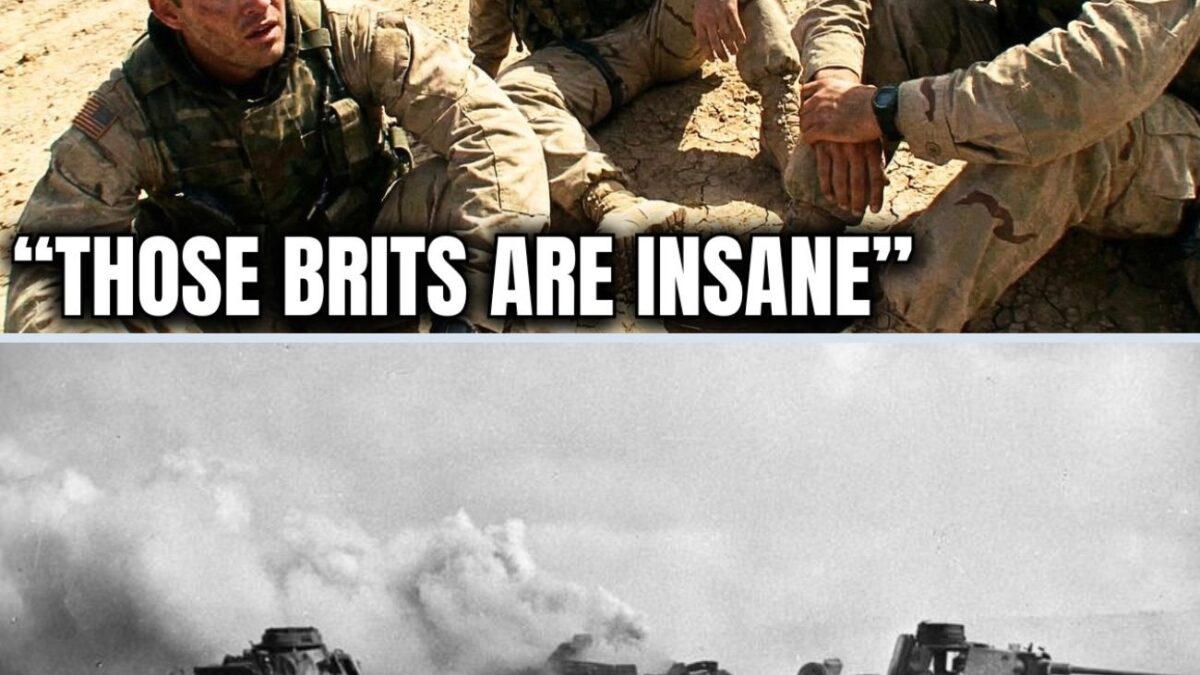
In the autumn of 2001, the most elite warriors America had ever produced, Navy SEALs, flew into the Afghan desert and came face-to-face with something that stopped them in their tracks. A small British regiment that had been mastering this exact terrain since before the United States even had special forces. The SEALs were the best in the world at what they did. But out here, in the sand and the silence, even they had to admit they were in the presence of something different. So, what did these hardened warriors, men who never bow to anyone, actually say when they came up against the British SAS?
The dust never really settled here. It hung in the air like smoke, coating everything. Your teeth, your skin, your rifle. The sun came up fast and hit hard, and by midday the ground was hot enough to blister bare skin. At night, the temperature dropped so sharply that the same men who were sweating through their kit at noon were now shivering in the dark. There were no roads worth the name, no landmarks, no coastline, just sand, rock, and silence stretching out in every direction for hundreds of miles. This was southern Afghanistan. And into this world, just weeks after the September 11th attacks shook the United States to its core, came some of the most dangerous men on the planet. Navy SEALs, the best America had. Warriors who had survived Hell Week, six days of almost no sleep, freezing cold water, and punishment that broke most men who tried it. Men who had trained for years in the dark, underwater, under fire. Men who had never really failed at anything in their lives. And yet here, in this desert, something felt wrong.
The SEALs had been built for the sea. Their whole identity was the water, the cold surf of the Pacific, the dark ocean at 3:00 in the morning, the silent approach from the waves. They knew how to move through the sea the way a shark does, quietly, deadly, in total control. But this place had no sea, no harbor, no coastline to navigate by. Southern Afghanistan was landlocked and massive, and it offered none of the familiar cues these men had trained their whole lives to read. The desert didn’t care how good you were in the water. Out here, the rules were completely different.
The problems showed up fast. Moving across open desert terrain without roads meant vehicles broke down in ways nobody had fully prepared for. Sand got into everything, engines, weapons, radio equipment. Navigation across flat, featureless ground with no landmarks was brutally difficult. A wrong turn in this terrain didn’t just mean getting lost. It could mean getting killed. The heat during the day sapped energy and clouded thinking. The cold at night hit like a wall. Supply lines were stretched thin. There was no margin for error, and error kept finding ways to creep in. The conventional approach, the one the US military had used for decades, was struggling to keep up. The idea of sending highly trained fighters into desert terrain and expecting them to simply adapt on the go was running into the hard reality of what the desert actually demanded. This was not a problem you could muscle through. This was not a challenge that more firepower solved. The desert asked a very different question, and the answer the Americans had brought with them was not quite right.
Then word began to spread through the ranks that there was another unit operating in this theater, a British regiment, small, quiet, and almost unknown to the general public back home in the United Kingdom. They wore no flashy patches. They didn’t talk about themselves. But the way they moved through this desert, the way they navigated, survived, and operated across hundreds of miles of open terrain with what seemed like almost nothing, was something the SEALs had not seen before. These men looked at the desert the way a sailor looks at the sea, not with fear, not with struggle, with something that looked almost like comfort. This was the Special Air Service, the SAS.
To understand why the SAS moved through the desert the way they did, you have to go back 60 years, back to a place called North Africa, and back to a man named David Stirling. In the summer of 1941, the war against Nazi Germany and Fascist Italy was going badly for Britain. Stirling was a young officer with a bold idea and almost no support from the men above him. He believed that a tiny group of highly trained soldiers, not hundreds of men, not an entire battalion, just a handful of the right people, could go deep behind enemy lines and cause enormous damage. He believed the desert itself was not an obstacle. He believed it was a weapon, if you knew how to use it.
Most senior officers thought he was mad. The idea of sending small groups of men hundreds of miles into the desert with no backup and no fixed base sounded less like military strategy and more like suicide. The generals dismissed him. The establishment pushed back. Stirling went ahead anyway. His first mission was a disaster. A vicious desert storm tore apart his operation before it even began. Of the 55 men who went out, only 21 came back. By any measure, it was a catastrophe. Most men, faced with that kind of failure on their very first attempt, would have stopped. Stirling did not stop. He looked at what had gone wrong, found the men who knew the desert best, the Long Range Desert Group, a unit of expert navigators and survival specialists, and he learned. He sat with them. He asked questions. He listened. He rebuilt his approach from the ground up, based not on what he had assumed the desert was, but on what the desert actually was. And then everything changed.
Now, 60 years later, the SAS carried all of that knowledge in their bones. Every selection course, every training exercise, in every operation in the decades since had been built on what Stirling and his men had first learned in the sand of North Africa. The desert was in their DNA in a way it simply was not in anyone else’s. When the Navy SEALs began to encounter these men, to train beside them, to operate alongside them, to watch how they worked, something shifted. These Americans, who had never needed to look up to anyone, found themselves paying very close attention. Because what they were seeing was something they had never been taught. The SAS was not born in a barracks or a classroom. It was born in failure. And that is exactly why, 60 years later, it was so hard to beat.
David Stirling did not come from a military family of great tradition. He was not a man who followed the rules easily. When he put forward his idea for a small, fast, independent desert raiding unit in the summer of 1941, he did not go through the proper channels. He couldn’t. If he had, the idea would have been buried in paperwork before it ever saw daylight. Instead, he walked, uninvited, with a bad leg from a parachute injury that hadn’t fully healed, into the headquarters of the British commander in Cairo, and he put his plan directly on the desk of the man in charge. It was the kind of move that could have ended his career on the spot. Instead, it launched one of the most effective fighting units in the history of warfare.
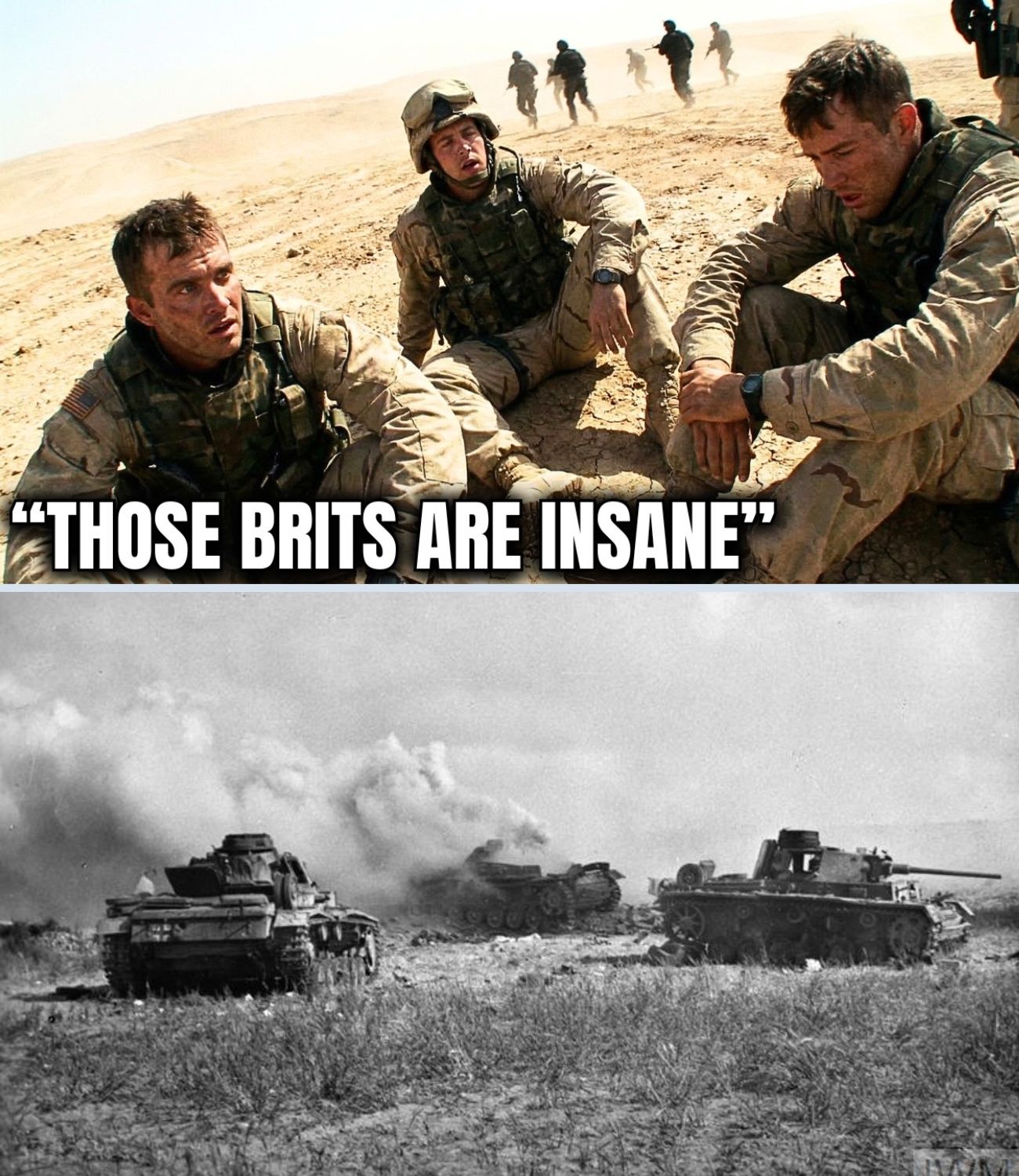
What Stirling proposed was simple in idea, but radical in practice. Forget large formations. Forget the conventional approach of massing men and material and hitting the enemy head-on. Instead, take four or five of the right men, give them the right training, and send them hundreds of miles behind enemy lines to hit airfields, supply dumps, and communication lines when nobody expected them. Strike fast, vanish into the desert, strike again somewhere else. The enemy would never know where they were coming from, and they would never know where they were going next. The desert, which most commanders saw as a barrier, was the plan’s greatest advantage. It was the SAS’s hiding place, their highway, and their weapon all at once.
The partnership with the Long Range Desert Group changed everything. Where the SAS brought aggression and daring, the LRDG brought something just as valuable, knowledge. Knowledge of how the desert moved, how it changed, how it killed the unprepared. Together, the two units became something neither could have been alone. The SAS raided, the LRDG navigated, and the desert, which had swallowed so many men before them, began to work in their favor instead of against them.
What came next was extraordinary. Once the SAS paired their raiding tactics with the LRDG’s desert knowledge, the results were unlike anything the war in North Africa had seen. In the 15 months that followed, before Stirling was captured in early 1943, his small regiment destroyed more than 250 enemy aircraft on the ground. Not in the air, on the ground, sitting on airfields where a handful of men with small explosive charges could do in one night what an entire bombing campaign might fail to achieve. They wrecked supply dumps, destroyed fuel lines, cut railway tracks, and put hundreds of enemy vehicles out of action. They did it across thousands of miles of desert, traveling light, living rough, and hitting targets that the enemy believed were completely safe.
The lesson baked into the SAS from those early days was this: The desert does not bend to you. You bend to it. You learn its temperature, its terrain, its wind, its silence. You learn to move through it the way water moves through rock, finding the path of least resistance, never forcing, never wasting energy. You learn to carry exactly what you need and nothing more, because in the desert, dead weight is a death sentence. You learn that patience is not weakness. Waiting for the right moment, the right conditions, the right window, that is how you survive. That is how you win.
Every SAS soldier who came after Sterling inherited this understanding. It was passed down, not just in training manuals, but in the way selection was designed, and in the exercises that broke most candidates before they ever got close to passing, in the culture of the regiment itself. SAS selection was, and remains, one of the hardest military selection processes in the world. Candidates are sent out alone onto the Brecon Beacons in Wales in freezing rain, carrying heavy Bergen rucksacks, navigating by map and compass across miles of open hill. There are no instructors walking alongside them. There is no encouragement. There is just the terrain, the weight, and the decision of whether to keep going or stop. Most stop. Those who don’t are the ones the regiment wants.
By the time the SEALs began training alongside the SAS in desert environments in the years following 2001, the British regiment had been refining its desert capability for 60 years. The SAS’s mobility troop, the desert specialists within the regiment, were men who had trained specifically to operate vehicles across open desert terrain, to navigate without landmarks, to survive for days on minimal water and food, and to strike targets deep in territory nobody else could reach. They drove modified Land Rovers and long-range patrol vehicles loaded with weapons, fuel, and supplies, moving across terrain that would stop most vehicles dead.
When the SEALs trained with these men, the first thing they noticed was not aggression. It was not speed or physical size. It was something quieter and, in many ways, more unsettling. It was ease. The SAS operators moved through the desert environment as though it was simply where they belonged. There was no visible struggle, no visible anxiety about the heat or the navigation or the distances involved. They read the ground the way the SEALs read water. They made decisions in the desert the way the SEALs made decisions at sea, instinctively, confidently, without hesitation.
For men who were used to being the most capable people in any given environment, this was not a comfortable thing to sit with. The SEALs were world-class. They knew it. But world-class in the water was not the same as world-class in the sand. And standing next to men who had been forged specifically for this terrain, in a lineage stretching all the way back to the burning dunes of North Africa, even the best operators America had produced found themselves doing something they almost never did. They watched, they listened, and they started to learn.
The training was one thing. What happened when both units went into the field together was something else entirely. Picture the scene. Southern Afghanistan in the dead of night. The air is cold enough to see your breath, but the ground beneath your boots is still warm from the day’s sun, radiating heat up through the soles like a slow fire. There is no moon. The darkness is total. There are no streetlights, no distant glow of a city, no reference point of any kind, just a vast, flat, silent expanse of desert stretching out in every direction. And somewhere out there, a target that needs to be reached before first light. The helicopters that dropped these men off are already gone. The sound of their rotors faded within seconds, swallowed by the emptiness. Now, it is just the men, their kit, their vehicles, and the desert.
The SAS moved first, quietly, efficiently, and without discussion. They had already studied the ground. They knew the distance, the terrain, the likely threat positions, the exact window of darkness they had to work with. One of the operators checked a compass bearing with a quick, practiced glance, the kind of movement so natural it looked like checking the time. The vehicles rolled forward, no headlights, no noise beyond what was absolutely necessary. They moved through the dark as though the desert had always been their home, because in every way that mattered, it had. The SEALs watched this and felt something shift.
The results of joint operations in Afghanistan and later in Iraq told their own story. In May 2012, a joint team of SAS and SEAL operators conducted a rescue mission for four aid workers who had been taken captive and were being held in two separate cave complexes deep in hostile territory. The force arrived by helicopter, landing 2 km from the target, and moved on foot through the dark to reach the caves. The assault was fast, clean, and total. All four hostages came out alive. All 13 of the armed men holding them did not. The operation lasted minutes. It was the kind of result that only happens when two elite units have trained together so extensively that they function as a single organism, reading each other, trusting each other, filling each other’s gaps without a word being spoken.
But it was in the smaller moments, the daily realities of desert operations, where the SAS’s influence on the SEALs became most visible. Vehicle maintenance in sand is a constant battle. Fine desert dust, far finer than beach sand, works its way into every mechanical joint, every moving part, every weapon mechanism. The SAS had developed habits around this that seemed almost obsessive to outsiders. Regular cleaning routines, specific ways of storing equipment, precise methods for keeping engines alive in conditions that destroyed them. These were not habits born in a classroom. They were habits born from decades of hard experience, from vehicles that had broken down in the middle of nowhere with no help coming, from lessons paid for in sweat and sometimes in blood. The SEALs absorbed these habits. They began to understand that in the desert, a discipline over small things was what kept you alive when big things went wrong.
Navigation was another education entirely. The SEALs were exceptional navigators at sea, using a combination of technology and trained instinct to move through the water with precision. But desert navigation, particularly across the flat, almost featureless terrain of southern Afghanistan, demanded a different skill set entirely. The SAS used a combination of compass work, star navigation, ground reading, and an almost instinctive feel for distance and direction that came from years of training in similar environments. They could look at the ground and read information from it that most people would simply not see. Subtle changes in soil color that indicated different terrain ahead, wind patterns that told them about the shape of the land beyond the horizon, the position of stars that gave them bearing corrections that no piece of technology could match if the technology failed. This was not mystical. It was the product of long, hard training carried out again and again until it became second nature. But to the SEALs experiencing it for the first time, it looked very close to magic.
Former SEAL operators who served alongside the SAS in this period have spoken about the experience in terms that are striking coming from men who are not given to easy admiration. The consistent theme across multiple accounts is one of genuine respect, not the polite, diplomatic kind that soldiers often offer each other in public, but the real kind. The kind that comes from watching someone do something you understand well enough to know is exceptional. One recurring observation was about the SAS’s physical and mental self-sufficiency. Where the SEALs were trained to operate as a tightly bonded team, drawing strength from each other, the SAS approach placed enormous weight on the individual’s ability to function alone, to keep going without support, to make good decisions in isolation. The two approaches were not opposites, they were complements. And when they came together in the desert, the combination produced something greater than either unit achieved separately.
There were frictions, too, as there always are when two proud, elite cultures meet. The SAS had a dry, understated, and very British way of going about things that sometimes read as indifference to Americans used to a more vocal, more energized culture. When an SAS operator had a problem, he fixed it quietly and got on with things. He did not announce the problem, discuss it at length, or make any particular show of solving it. This reserve was not coldness. It was confidence, the deep, unshakable kind that comes from knowing exactly who you are and exactly what you can do. Once the SEALs understood this, once they decoded the culture beneath the silence, the mutual respect deepened into something that looked, in the field, like genuine brotherhood.
The broader impact of this exchange went well beyond individual operations. The US special operations community began seriously re-examining how it trained its people for land-based desert warfare. Lessons learned alongside the SAS fed into doctrine, into training programs, into the way American special forces thought about vehicle operations, navigation, and long-range desert raiding. The ghost of David Stirling, moving silently through the North African desert with a handful of men and a head full of radical ideas, was still shaping the way the world’s most powerful military fought its wars. Just from the other side of the Atlantic and 60 years later.
And still the desert asked the same questions it had always asked. Can you navigate without landmarks? Can you survive without comfort? Can you be patient when everything in you wants to move? Can you carry only what you need and trust that it is enough? The SAS had been answering yes to those questions since 1941. And now, standing in the same sand, breathing the same dust, watching the same stars wheel slowly overhead, the Navy SEALs were beginning to find their own answers. What they found, they would not forget.
Some things in the military world change quickly. Technology improves. Weapons get more accurate. Communications get faster. The gap between what a soldier in the field can do today and what a soldier could do 20 years ago is enormous, and it keeps growing. But some things do not change. The desert does not change. The heat does not change. The silence does not change. The demand the desert places on the human body and the human mind, the requirement to navigate without comfort, to operate without support, to make good decisions when everything around you is trying to make you make bad ones, that has not changed since the first man ever tried to cross one. And the lessons the SAS learned in North Africa in 1941, the hard ones, the ones paid for with the lives of men who didn’t make it back, those lessons turned out to be just as true in Afghanistan in 2001 as they were in Libya 60 years before.
This is the part of the story that matters most. After the years of joint operations in Afghanistan and Iraq, something quiet but significant began to happen inside the American special operations community. The SEALs and the wider US special forces world began to look more carefully at how they trained for land-based desert warfare. Not because they had been failing. They had not been failing. They were still among the most effective fighting forces on the planet. But effectiveness in warfare is not a fixed point. It is a constant competition between what you can do and what the situation demands. And the situation in Afghanistan and Iraq, year after year, kept demanding things that sea-based training alone could not fully prepare men for. The desert kept asking its questions. The smart response was to find better answers.
Some of those better answers came directly from what the SEALs had learned alongside the SAS: desert vehicle operations, long-range navigation, individual self-sufficiency, the kind of patience that lets a small team sit motionless for hours in punishing heat waiting for exactly the right moment. These things began to appear more deliberately in American training programs. The exchange of personnel between the two units, which had been happening quietly for years, continued and deepened. American operators went to Hereford. British operators went to the United States. Each side carried something back that made them sharper, more complete, harder to stop.
The SAS, for its part, gained, too. The SEALs brought things that the British regiment genuinely needed. Advances in close-quarters battle techniques, intelligence-led targeting methods that had been refined through years of operations against high-value targets, and a maritime capability that the SAS’s own Special Boat Service cousins had developed alongside the Americans to a level of precision that was unmatched anywhere in the world. The exchange was never one-sided. It was a genuine conversation between equals, each bringing something the other did not have, each leaving better than they arrived. This is how the best military partnerships in history have always worked. Not one nation teaching another, but two nations teaching each other.
But the deeper legacy of this story is not about tactics or training programs. It is about something older and harder to measure. When the Navy SEALs encountered the SAS in the desert and came away with the accounts that formed the backbone of this story, the quiet admiration, the genuine respect, the frank acknowledgement that here was a unit doing something at a level they had not seen before, what they were really encountering was the product of a very specific kind of institutional memory. The SAS remembered what it cost to learn the desert. It remembered the 34 men who never returned from Operation Squatter in November 1941, killed, captured, or simply swallowed by the desert without a trace. It remembered every failed operation, every vehicle that broke down too far from help, every navigation error that turned a clean mission into a desperate scramble for survival. It carried those memories not as wounds, but as wisdom, embedded in its culture, its selection process, its training, its way of doing things. That memory made it better. That memory is what the SEALs could feel when they watched these men work, even if they couldn’t immediately name what they were seeing.
David Stirling died in 1990. He was finally knighted in 1990, the same year he died. A formal recognition at the very end of what soldiers around the world had known for decades. He never sought fame. He spent much of his later life working on other projects, other causes, moving forward the way he always had, restlessly, independently, always looking for the next problem that conventional thinking had failed to solve. The regiment he founded went on to fight in virtually every significant British military operation from the Second World War to the present day. The Falklands, the Iranian Embassy siege, Sierra Leone, Bosnia, Iraq, Afghanistan. In each of those places, the regiment carried forward the same core understanding that Stirling had hammered out in the North African desert with the LRDG at his side, that a small number of the right people, properly trained and properly led, can achieve things that no conventional force can match.
Charlie Beckwith, the American colonel who spent time with the SAS as an exchange officer in the early 1960s, went home and spent the next 15 years trying to convince the US Army to let him build something like it. He finally got his chance in 1977. The unit he created was Delta Force, modeled directly on the SAS, built on the same principles, designed to do the same kind of work. The Americans built their most elite land warfare unit in the SAS’s image. And then, 40 years later, another American elite unit, the SEALs, came to the desert and learned from the original. There is a line that runs from Stirling’s handwritten proposal in Cairo in 1941 all the way to those joint operations in the Afghan sand, unbroken across eight decades. That line is the SAS.
What does this story teach us? It teaches us that the best thing any person or any unit or any nation can do when they encounter someone doing something better than them is to put pride to one side and pay attention. The SEALs were not diminished by what they learned from the SAS. They were enlarged by it. The willingness to learn, genuinely learn, not just go through the motions of an exchange program, but actually absorb and change and grow, is not a sign of weakness. It is the thing that separates the units and the people who stay great from the ones who slowly stop being great without ever noticing it happening.
The desert is still there. It is still hot in the day and cold at night. It still asks the same questions it always has. And somewhere in its silence, the lesson that David Stirling learned the hard way in 1941, and that the Navy SEALs were taught by his regiment 60 years later, is still waiting for the next generation of soldiers to come and find it. The lesson is this. The environment does not care how good you were somewhere else. It only asks what you can do here, now, in this heat, in this dark, with what you have. The SAS learned to answer that question better than anyone. And when the best soldiers America ever produced came to the desert and trained beside them, even they had to admit, quietly, honestly, in the way that only truly great men can admit anything, that they were in the presence of something special. “Who dares wins.” It always did. It always will.
You Might Also Enjoy

“We Thought They Would Negotiate”—What Argentine Soldiers Said When The British Attacked Goose Green

“You’ll Never Finish My Ruck March, Limey” — US Sergeant Who Challenged the SAS, Then Fell Out First






