What The Delta Operator Said After They QUIT Training With SAS
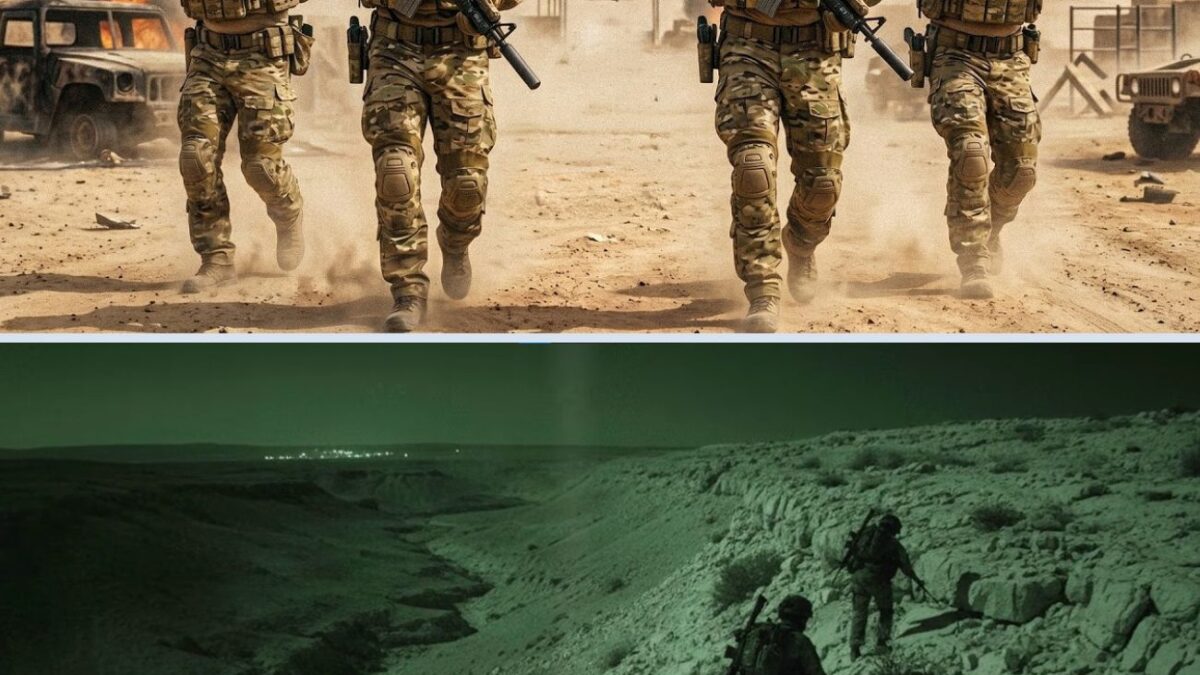
October 14th, 2019. King Abdullah II Special Operations Training Center, 30 km northeast of Amman, Jordan. The air tastes like dust and diesel, and Master Sergeant Dariusz Kowalski is standing in a gravel lot under more stars than he has seen since he was a kid in Michigan, clicking his thumbnail against his index finger. The thing he does when something does not sit right. He is watching four men prepare. Not 12, not 20. Four. Sitting on the tailgate of a battered Land Rover Defender in the kind of silence that has weight to it. One of them is drinking tea from a dented metal mug. Another is folding a map, an actual paper map, into a waterproof case. A third is lacing his boots with the patience of someone who knows exactly how long he has before he needs to move. The fourth is asleep. Kowalski’s own team is 200 m away. 12 men around a bank of laptops, drone feeds glowing blue-white against their faces, radios crackling with encryption handshakes. 3 hours and 40 minutes of planning, and they are still confirming waypoints.
These four men look like they have been ready since lunch. The one with the tea glances up, catches Kowalski looking, does not nod, does not wave, does not acknowledge, just looks. The kind of flat calm assessment that comes from a man who has been in more rooms he was not supposed to survive than he can count. Then, he goes back to his tea. Kowalski stops clicking his thumbnail. He knows what he is looking at. He has looked at himself in the mirror enough mornings to recognize it. 72 hours from now, Kowalski will make a decision that ends his career in Delta Force.
6 hours earlier, the joint briefing room at the training center smelled like whiteboard markers and instant coffee. Fluorescent lights hummed against a ceiling stained the particular yellow of military buildings that never get repainted. A wall-sized satellite image of the training compound was pinned with acetate overlays showing approach routes, opposing force positions, and kill zones marked in grease pencil. Captain Nathaniel Harding, B Squadron troop commander, had just finished a 40-minute presentation on Delta’s assault plan. Phase lines, intelligence coverage, drone windows, contingency branches. 17 slides of orchestrated precision. His boots, even in a Jordanian military briefing room, had a shine you could check your teeth in. He stood at the front of the room the way officers from West Point’s class of 2014 stand. Shoulders back, jaw set, every word delivered like it had been rehearsed in a mirror, which it probably had. Then the SAS sergeant major walked to the front of the room. He did not have slides. He had a map, a single 1:50,000 topographic sheet that he unfolded on the table and held flat with two coffee mugs and an elbow. He spoke for 4 minutes. He pointed at the compound. He pointed at a wadi to the east. He traced a line with his finger. He said, in a voice so quiet that the men in the back row had to lean forward, that his patrol would come in from the east, clear from east to west, and be finished by the time the Americans completed their first building. The room was quiet for a moment. The kind of quiet that happens when someone has said something either very confident or very stupid, and the audience has not yet decided which. Then Harding smiled, the kind of smile that is generous on the surface and condescending underneath, and said, loud enough for the entire room to hear,
“That is it. Four guys and a compass. We are clearing a 16-man compound, not doing a nature walk. No offense, Sergeant Major, but you might want to borrow some of our bandwidth.”
A few Delta operators laughed. Not Kowalski. He was watching the Sergeant Major’s face. Sergeant Major Colin Rhodes, Dusty to the three men in the world allowed to call him that, looked at Harding for approximately 2 seconds, picked up his dented mug, took a sip that seemed to last longer than physics should allow.
“We will manage, sir. We usually do.”
He folded the map, put it in his pocket, and sat down. Four minutes of briefing, and he was done. No questions asked, none invited. The briefing room did not know what to do with the silence he left behind. So, Harding filled it by moving to the next slide. Rhodes was right. This is the story of how four men from 22 Special Air Service walked into a compound that 12 Delta Force operators and $200,000 of surveillance equipment could not crack cleanly, and did it with a compass, a glass cutter, and 8 minutes and 41 seconds. And it is the story of what a Delta operator decided 72 hours later, after watching a kind of soldiering he did not know still existed.
The staging area at the training center sat on a flat gravel pad carved into the Jordanian hillside, divided by a concrete blast wall that separated the two preparation bays like a border between countries. On the western side, Delta’s bay looked like a miniature tactical operations center dropped into the desert by helicopter. Staff Sergeant Tomas Candelaria, everyone called him Candy, and he was already halfway through a bag of Skittles, ran function checks on his breaching kit with fingers that moved over detonation cord and plastic explosive sheets the way a pianist moves over keys. 91 doors in Iraq and Syria. He did not think about the number. The number lived in his hands. The laminated photo of his daughter peeked from the kangaroo pouch of his plate carrier. Her gap-toothed grin facing outward like a ward against everything the dark could hold. Harding stood behind two operators who were running feeds on ruggedized Toughbook laptops. Each screen painting a different layer of the target compound. Thermal signatures, visual overlays, annotated floor plans downloaded from a server 6,000 mi away. One operator held the control unit for the Black Hornet nano-drone. Its three airframes nestled in a case the size of a hardback novel. Each one smaller than a sparrow. Each one representing $65,000 of Norwegian micro-engineering. 12 men, 12 rifles each. One a 10.4 in barreled carbine riding a Geissele rail topped with dual-role optics and threaded with suppressors that cost more than a month’s rent in most American cities. 12 sets of binocular night vision devices. 12 multi-band radios. 12 global positioning units cross-loaded with the night’s waypoints. Everything was networked. Everything was redundant. Everything was accounted for.
“This is going to be clinical,” Harding said, not looking up from the thermal feed.
“By the numbers. We go loud on the breach, clear room by room, collapse the cordon. 16 opposing force fighters. 16 kills. We will be done in 15 minutes.”
Nobody in the bay had any reason to doubt him. Delta was the most resourced special operations unit on the planet. They had never met a problem that more technology could not solve. On the other side of the blast wall, it was quiet. Four men, one Land Rover, a Bergen rucksack each, and belt kits laid out on the Defender’s tailgate with the neatness of a surgical tray. Rhodes wore the SAS windproof smock over his plate carrier. The same plate carrier Delta wore, one of the few equipment overlaps between the two forces, and the last thing they had in common. The smock had no patches, no Velcro, no morale tabs. It looked like something you would find at a surplus shop. It was the most exclusive garment in the British military. The compass had cost 42 pounds, the map, printed on waterproof paper, another 12. Rhodes folded it into his smock pocket the way a surgeon folds a sterile drape, precise, automatic, sacred. Trooper Jamie Paxton, the youngest at 26, badged only 18 months prior, sat cross-legged on the gravel taping a penlight to his forearm with black electrical tape, 40 pence. It had never failed him. Color Sergeant Ian Driskill, Belfast-born and quiet as a confession, adjusted the four-power optic on his carbine, a weapon that cost roughly a third of what the Americans were carrying, and had never once given him reason to want anything more. The fourth man was asleep, which told you everything you needed to know about how concerned the SAS patrol was about the night ahead. Rhodes had a radio in his belt kit. He would use it if he had to. He almost never had to. No drones, no laptops, no thermal feeds, no feeds of any kind. Kowalski, leaning against the blast wall on the Delta side, looked through the gap in the concrete at the four men.
“Those four guys are going to embarrass us, Candy,” he said quietly. “I have seen that look. That sergeant major has done this for real more times than Harding has had hot meals.”
Candelaria popped a red Skittle into his mouth.
“Sir is not going to like hearing that.”
“Sir is going to find out.”
At 0200, the compound lights went dark. The exercise controllers killed the external illumination to simulate a contested environment. 16 Jordanian special forces fighters from the 71st counter-terrorism battalion settled into their opposing force positions inside the compound, a multi-building urban training facility modeled on a Syrian village. Poured concrete walls with rebar exposed at the corners, narrow alleyways, a central courtyard with a dry fountain, and gravel underfoot that crunched unless you knew how to walk on it. Two forces, two approaches, one objective. Rhodes finished his tea, set the mug on the Defender’s bonnet, and stood up. No radio call, no command, just four men materializing from stillness and walking into the darkness like they had been part of it all along. Delta stepped off 90 seconds later. They were already behind. Delta moved along the western approach road, the primary access, the obvious access, the access with the best satellite imagery, and the widest corridors of fire. Harding’s team one took point. Kowalski’s team two echeloned 40 m behind and to the left. Night vision turned the Jordanian darkness into a green phosphor landscape of walls, doorways, and shadows. The Black Hornet was already up. $195,000 of engineering hovered 30 ft above the compound. Its airframe smaller than a sparrow sending back a thermal image so crisp Harding could count the cots in the target building. He tapped through the feed on a wrist-mounted display calling positions to his team leaders with the quiet authority of a man directing traffic at a controlled intersection. Six heat signatures in building alpha, two in bravo, three on the roof of Charlie, five unlocated, probably in the subterranean level. Copy, copy, copy. 12 radios echoing acknowledgement across encrypted channels. The opposing force heard them. Not obviously, Delta was quiet by any conventional infantry standard, but the radios emitted a faint electromagnetic signature that the Jordanian fighters had been trained to detect. The drone was a whisper buzz that anyone who had operated in Syria knew to listen for. And 12 men moving on gravel, however carefully, displace more air and more stone than four. Inside the compound, the opposing force team leader heard the buzz first, then the crunch. He keyed his radio and called it,
“Western approach, 12 men, 300 m and closing. Standard formation. Prepare positions.”
The defense shifted. Two fighters reinforced building alpha’s western-facing windows. Three simulated improvised explosive devices were activated in the courtyard. Pressure plates of plywood and colored tape that an observer controller would rule lethal if triggered. The subterranean team sealed the basement entrance. Delta was walking into a prepared defense. They did not know it yet.
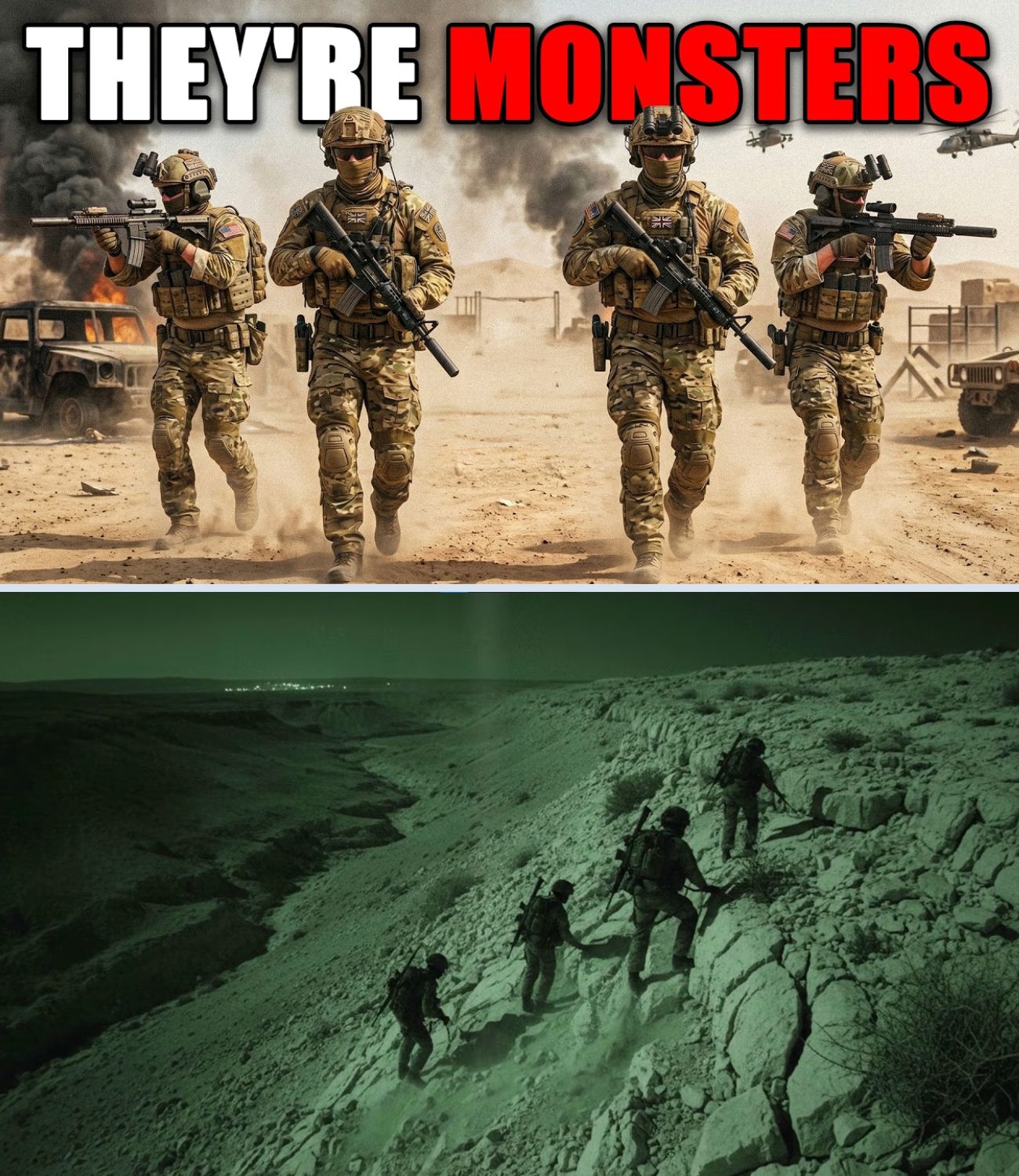
Half a kilometer east, Rhodes’ patrol was not on gravel. They were in the wadi. The exercise planners had marked this approach in yellow on the satellite overlay, impassable for tactical approach, loose limestone scree, a 40° gradient, thorn scrub that would shred fabric and skin in equal measure. No rational assault force would climb it under night vision with weapons and kit. Rhodes had seen the yellow marking during the briefing. He had said nothing. He had simply traced his finger along it. And now his finger’s prediction had become four men’s reality. Paxton, lead scout, moved 15 m ahead, finding footholds by feel. The smell of wild thyme rose from the scrub as their boots crushed it. Driscoll climbed behind Rhodes, his carbine slung across his back to free both hands. The fourth man carried bolt croppers that had cost less than dinner at a decent restaurant. No radios, no drones, no electronic emissions of any kind. Four men and the sound of their own breathing. They climbed the slope that was supposed to be impassable in 14 minutes. At the top, Rhodes checked his compass by penlight, one flash, half a second, and pointed east. The compound’s unmonitored eastern wall was 90 m away.
Delta reached the compound’s western perimeter at 02:14. Harding called the halt. His elements settled into positions along a low stone wall. Good cover, pre-planned, textbook. Then the courtyard became a problem. At ground level, Kowalski’s team two identified something the drone had not resolved, a thin wire strung ankle height across the courtyard entrance, connected to an object half buried in the gravel. Through night vision, it could have been a simulated trip wire. It could have been a clothesline. There was no way to tell without better imagery. Harding did not hesitate. This was what the technology was for. He ordered the Black Hornet repositioned from its overhead arc to a low hover 3 m above the courtyard entrance. The camera tilted. The feed refreshed. The wire was visible now, running from a doorframe to the half-buried shape. It looked like an explosive device. It was a painted block of wood. Confirming that took time. Four passes for a clean visual. A walkover from the observer controller who checked his notes and confirmed decoy, no threat. 11 minutes. The entire 12-man assault element had been frozen in place for 11 minutes by a piece of painted wood and a length of wire. Inside the compound, the opposing force was counting the seconds, too. Repositioning from their pre-planned locations into a dispersed defense that used every dead space, corner, and concrete ceiling the overhead drone could not penetrate. Rhodes did not know about the wire. He did not know about the pause. He did not need to. At 02:18, 4 minutes after Harding’s element reached the western wall, and the same minute the Black Hornet began its repositioning, Rhodes’ patrol arrived at the compound’s eastern wall. No sensor had detected them. No sentry was watching the east. The entire opposing force defensive posture had shifted west toward the noise, the drones, the electromagnetic hum of 12 networked men. Rhodes pressed his palm flat against the concrete, still warm from the day’s sun. He looked left, looked right, listened, counted heartbeats, his own, because in the SAS you learn to use your body as an instrument. He reached into his belt kit and pulled out the glass cutter. It cost £11. It made a sound like a fingernail tracing a windowpane, which is exactly what it sounded like to the opposing force sentry standing eight feet away on the other side of the internal wall. Nothing worth reporting. Paxton reached through the scored circle, unlocked the window latch, and slid the frame up. Four men entered building Charlie in nine seconds. Weapons up, feet that barely registered on the concrete floor. The first opposing force fighter they encountered was facing the other direction, watching the western courtyard through a firing port, listening to Delta’s radios, waiting for the Americans to breach. He felt a tap on his shoulder. The observer controller marked him dead. He had not heard a thing. Rhodes’ patrol cleared building Charlie in two minutes and 11 seconds. Four rooms, three opposing force fighters neutralized, zero alerts raised. They moved through doorways, not with the mechanical precision of a team following a rehearsed stack, but with the fluid intuition of men who read rooms the way musicians read silence, by what was absent as much as what was present.
Harding’s element breached at 02:27, 13 minutes behind their planned timeline. Candelaria placed his charge on building Alpha’s western door. $2,200 of breaching kit applied with the precision of a man who had done this 90 times in places where the doors hid people trying to kill him. The shaped detonation blew the door inward with a flat crack that echoed off every concrete surface in the compound. The element poured through. Weapon lights painted white cones through the dust. $8,000 of rifle per man, perfectly configured, illuminating a room they were 12 seconds too late to matter in. The room was empty. The opposing force had used Delta’s 11-minute pause to reposition entirely. Two were in the basement, three were on the roof, four had moved to building Bravo, the rest had scattered into alleyways and corners that overhead thermals could not resolve through concrete ceilings. The assault hit the first prepared position in building Alpha’s second room. Two opposing force fighters behind overturned furniture. The observer controller ruled one Delta operator killed. A red marker slapped on his shoulder. The man stepped to the wall and sat down, removed from the exercise. Harding called the push to building Bravo. Kowalski’s team moved through the courtyard past the decoy wire that now seemed to mock them. And a second simulated device in a doorway caught an operator’s boot. Another red marker, another man against the wall. Two simulated killed in action. 23 minutes into the exercise. Six opposing force fighters neutralized, 10 still active. Delta was grinding through a compound that had been given 11 minutes to prepare for them.
On the eastern side of the compound, no one had heard the glass cutter. At 02:21, 6 minutes before Delta fired their first breach charge, Rhodes’ patrol had moved from building Charlie to building Bravo. Through an internal maintenance corridor that did not appear on Delta’s satellite imagery. A passageway wide enough for one man, unlocked, unmonitored. Rhodes had found it on the map, the 54-lb map. They emerged behind the four opposing force fighters who were preparing to defend against Kowalski’s team approaching from the west. Paxton took the first, Driscoll the second and third. The fourth man got the last one. $2,400 of weapon, less than a third of what the man approaching from the other side of the building was carrying. The simulation rounds did not care about price tags. By 02:24, 3 minutes before Delta fired their first breach charge, seven of 16 opposing force fighters were already dead. The SAS patrol was inside the central building, moving east to west, and not a single alarm had been raised. The opposing force did not know what was happening. Their entire defensive orientation faced west. The threat was already behind them.
Kowalski, stacked on the courtyard side of building Bravo at 02:29, pushed through the door that Candelaria was preparing to breach, and found four opposing force fighters already sitting against the wall with red markers on their shoulders. He looked at the observer controller. The controller jerked his thumb east. SAS. About 6 minutes ago. Kowalski stood in the doorway for a long moment. Then he keyed his radio.
“Team two to team one. Bravo is clear. SAS cleared it before we got here.”
It is 02:31 when the exercise ends. The compound is clear. All 16 opposing force fighters are marked dead. The observer controllers are walking the buildings, recording timestamps, tallying results. Here are the numbers. They are the kind of numbers that make careers end and doctrines change. Delta Force B Squadron, 12-man troop element, 23 minutes, 14 seconds to complete clearance. Two simulated killed in action. Four opposing force fighters escaped the initial assault and had to be re-engaged in alleyways after the compound was nominally secure. Total kills credited to Delta, nine of 16. 22 SAS D Squadron, four-man patrol, 8 minutes, 41 seconds. Zero simulated casualties, zero escapes. Total kills credited to the SAS, seven of 16, including three fighters who had repositioned to defend against Delta, killed from behind before they could fire a single simulated round. Four men, a third of the time, no losses. And they did it while the most networked, surveilled, and technologically supported element in special operations history was frozen in place by a painted block of wood.
Harding stands in the courtyard. The drone that had seen everything and predicted nothing is back in its case. The screens are dark. His 12 men are scattered through buildings that four men had already cleared. The charge that never detonated, Candelaria’s second breaching kit, prepared for a door in Bravo that was already open, sits in his pack like an artifact from a war that did not happen. He is looking at the eastern wall, at the window with the scored circle in its glass, the entry point that no sensor detected, no drone observed, no satellite overlay marked. The captain who had offered to lend them bandwidth is silent.
Outside the compound, in the gravel lot, the SAS patrol was already breaking down kit. Rhodes poured the dregs of cold tea from his thermos into the mug, took a sip, and said nothing. Paxton peeled the electrical tape and penlight from his forearm. Driscoll sat on the Defender’s tailgate, running a pull-through cloth down the barrel of his carbine. A Delta operator, one of the two who had been killed in the exercise, walked past on his way to the debrief tent. He stopped, looked at the four men, looked at their kit spread on the tailgate, the compass, the map case, the glass cutter, the bolt croppers, the penlight.
“How?” he asked.
Driscoll did not look up from his weapon. “I’m fine,” he said, which was not an answer to the question, but was very much an answer to everything.
Inside the debrief tent, Harding sat in a folding chair staring at the printed summary the observer controllers had handed him. He read it twice. He did not look at Rhodes who was sitting three chairs away drinking tea. Kowalski stood outside the tent. He was making a decision that had been forming since the moment he watched those four men on the tailgate, since the corridor where he had told Candelaria what was going to happen, since the doorway of building Bravo where he found the opposing force fighters already dead and a thumb jerked east. It was not embarrassment. It was something closer to recognition. The sudden understanding that there was a version of this profession that did not need satellites, did not need drones, did not need anything except the man and what he had been taught to become.
72 hours later, Master Sergeant Darius Kowalski submitted a formal request through joint special operations channels to be considered for an exchange assignment with United Kingdom Special Forces, specifically to attend SAS selection at Stirling Lines, Hereford. It was, in practical terms, a resignation from Delta Force, the unit he had given six years to, the unit that had made him. He was walking away from the most elite special operations assignment the United States military offered. He found Rhodes before the SAS contingent departed. They stood outside the equipment shed in the same gravel lot under the same stars.
“Sergeant Major, I need to ask you something. How do I get to Hereford?”
Rhodes looked at him, the same flat assessment from that first night. Then the faintest suggestion of something that was not quite a smile.
“You do not get to Hereford, mate. Hereford decides if it wants you.”
Three weeks after the exercise, Lieutenant Colonel Frank Merritt convened a closed-door review at Fort Bragg, a session that would not appear on any official calendar, but the three people who were in the room later described as the most uncomfortable 4 hours of their careers. Merritt had read the after-action report at his desk. He stared at it for a full minute before looking up and saying, to no one in particular, we need to have a conversation about what just happened. And I do not mean the exercise. The conversation led to a quiet but significant revision of joint training protocols. Not a condemnation of technology, the surveillance and intelligence stack remained central to Delta’s operational identity. And no one proposed dismantling it, but a new training emphasis emerged. Degraded capability operations. What happens when the drone goes down? When the radios are jammed? When the satellites are denied? Train for the absence, not just the abundance. The comment about the nature walk was never repeated in any briefing room again.
The most revealing assessments came not from the American or British chains of command, but from the men who had been inside the compound. The Jordanian opposing force team leader spoke during the formal debrief with the blunt precision of a man who had no institutional loyalty to protect.
“The Americans, we could hear them. We knew they were coming. We could hear their drones. We could hear their radios. We could see their infrared markers through our night vision. We prepared. We were ready. The British, we did not know they were inside until the first man was already dead. I have been opposing force for 11 exercises with international special operations forces. I have never failed to detect an approach before.”
A Jordanian sergeant, one of the fighters stationed in building Charlie, wrote in his debrief questionnaire, the kind of document that gets filed in a classified binder and read by the people who make procurement decisions,
“The four British soldiers moved like they were part of the building. No lights, no lasers, no communication I could detect. One of them was standing next to me before I knew the exercise had started. I felt the tap on my shoulder. I turned around and he was already gone. Like a ghost with a rifle.”
The joint exercise observer, an American Special Forces Colonel attached to the training center as a liaison, wrote the assessment that would be cited in three subsequent strategy papers.
“The SAS patrol achieved complete tactical surprise against a prepared, experienced opposing force element using no surveillance assets, no unmanned systems, and no electronic communication during the approach phase. Their planning time was 14 minutes. Delta’s planning time was 3 hours and 40 minutes. The disparity in outcomes does not reflect a failure of American capability. It reflects a fundamental philosophical difference in how both forces define readiness.”
Rhodes returned to Hereford and never spoke publicly about the exercise. He retired from the regiment in 2022 with the rank of Warrant Officer Class 1 after 20 years of service that included operations in Iraq, Afghanistan, Libya, Syria, and places that do not appear in official records. He still lives 2 miles from Stirling Lines. Kowalski’s exchange request was approved. He reported to Hereford in January of 2020. What happened during his selection is not part of this story. The SAS does not discuss who passes and who fails. What is known is that he never returned to Delta Force. Harding continued to serve with distinction. He was promoted to major in 2021 and now commands a training detachment. He has never commented on the exercise, but officers who served under him afterward noticed a change. He began requiring his teams to complete one training exercise per quarter with no electronic support of any kind. He never called it the nature walk drill, but everyone knew what it was.
There is a line in the SAS selection handbook, the one they give you before you set foot on the Brecon Beacons, before you have earned anything, that reads, “The regiment does not seek the best equipped soldier, it seeks the most adaptable.” Most adaptable, not most lethal, not most resourced, not most connected. Four men with a compass and a glass cutter walked into a compound that 12 men with drones and satellites could not crack cleanly. That is not an indictment of technology. Technology is a tool, but tools break. Signals get jammed, batteries die, satellites get denied. What was left when all of it was gone? A man who could read terrain, a man who could move in silence, a man who could think. That is what Hereford produces. That is what selection is designed to find. That is why you do not bet against a man in a smock with no patches.
You Might Also Enjoy

“We Thought They Would Negotiate”—What Argentine Soldiers Said When The British Attacked Goose Green

“You’ll Never Finish My Ruck March, Limey” — US Sergeant Who Challenged the SAS, Then Fell Out First






