What the SBS Said When the First Gurkha Ever Passed Their Elite Selection
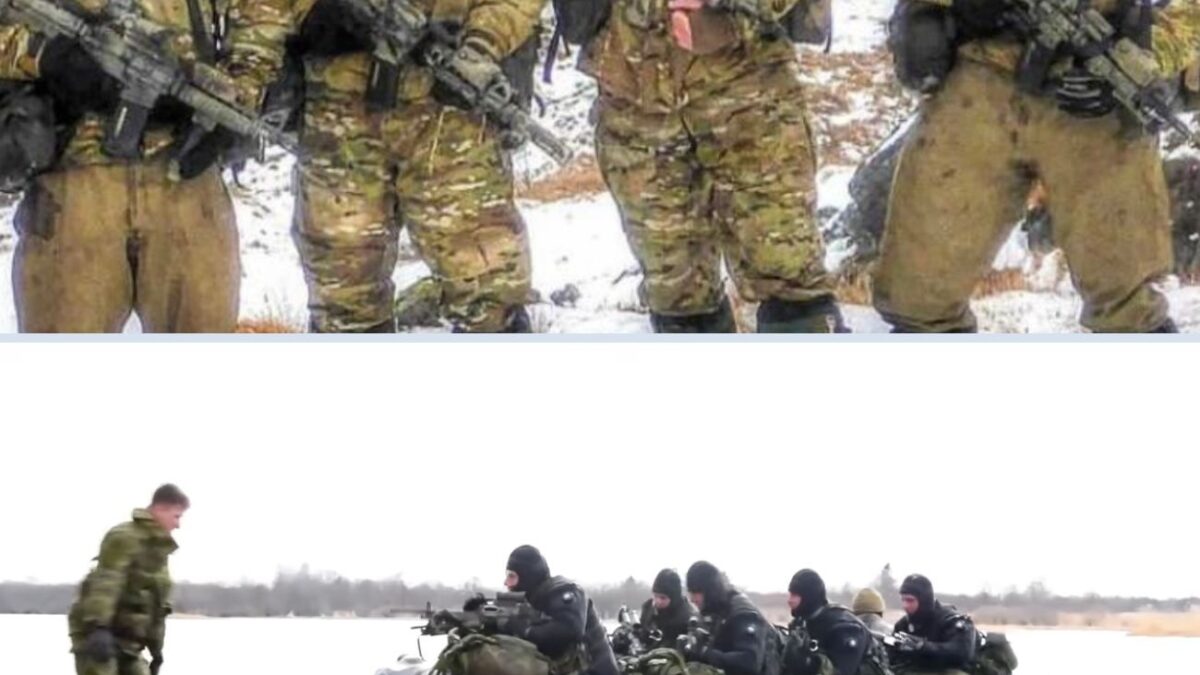
In 2009, the Special Boat Service had run selection for 60 years. Not one Gurkha had ever passed it. Not one had tried. Then a 25-year-old from a barefoot childhood in Nepal walked into their process, and the directing staff ran out of forms to describe what they were watching. They gave him a beret. No speech. But one instructor said something afterward that got passed along for nearly two decades. Not written down. Just repeated quietly in corridors by men who had watched hundreds of candidates and had never said anything like it before. This is what the SBS said when the first Gurkha walked through their door.
Pokhara, Nepal. 2003. The British Army officer running the Gurkha intake briefing had done this enough times to know who would make it. He looked at the 200 young men in front of him and made his quiet assessments. Fitness, posture, eyes. The ones who were afraid showed it in small ways. A tightness around the jaw. A stillness that was the wrong kind of stillness. Frozen rather than settled. The ones who weren’t afraid showed that, too. Not in swagger. In the way they looked at the room without needing the room to look back at them.
He looked at Nirmal Purja and wrote nothing down. Not because there was nothing to note. Because what he was looking at didn’t fit the form he was holding. What the British Army saw that morning was the beginning of something it had no category for. What the SBS would see six years later was the end of 60 years of assumptions about what their kind of soldier looked like. But to understand why a Gurkha from a barefoot village in Nepal walked into the most secretive selection process in Britain and made veterans stop talking, you need to understand what Nepal had already done to him long before Hereford ever got the chance.
Purja had grown up in Dana, a village in Nepal’s Myagdi District, at 1,600 metres above sea level. He had been born into a family with nothing measurable and everything that couldn’t be measured. His father was a Gurkha soldier. His mother farmed. His three older brothers had followed their father into the Brigade of Gurkhas. The money they sent home from Britain was the reason Nirmal could attend an English-speaking boarding school at all.
As a child, he had no shoes. Not as a figure of speech. As a fact. The paths above Dana were stone and root and the cold that comes off high ground before dawn. And he ran them barefoot because there was nothing else to run them in. He did not grow up soft. He did not grow up slow. He grew up in a place where the land made specific demands of the people on it and did not negotiate the terms. The altitude was not a concept. It was the air he breathed. The distance was not a training variable. It was Tuesday. The weight was not a programme. It was firewood and livestock and the physical reality of living at elevation in a valley that did not care how young you were or how tired your legs were getting.
The Gurkha selection process in 2003 drew approximately 25,000 applicants for roughly 200 places. The regional phase was held in Pokhara and Dharan. Physical tests, English and mathematics assessments, medical screening. British officers ran the interviews. Men who had learned enough Nepali to hold a conversation and enough restraint not to let their conclusions show on their faces. The candidates who passed regional selection moved to central selection in Kathmandu. More tests, more screening, another interview, another filter.
What the British Army was looking for at the end of all of this was a young man who possessed a combination of physical capacity, intellectual aptitude, and something harder to define and easier to recognise. A quality of being that the regiment had been selecting for since 1815 and had never found a clinical name for. The Gurkha soldiers who had been fighting for Britain for nearly two centuries had it. The ones who didn’t have it didn’t make it past the first filter. It was not manufactured by the selection process. It was identified by it.
Purja had it. He passed selection. He was assigned to the Gurkha engineers. He moved to Britain, to Catterick, to the 36-week training pipeline that would turn a young man from Nepal into a soldier of the British Army. The combat infantryman’s course, the cultural integration, the language training, the trade instruction. He absorbed it the way young men absorb things when they are paying absolute attention and the thing they are paying attention to is something they have wanted their whole lives.
He was good, better than good. He was the kind of soldier that regiments notice and file away for later. The kind that moves through training with the efficiency of someone who has understood from the beginning what the exercise is actually for. Not performing the requirement, meeting it, then looking past it to see what came next.
What came next for a significant number of men in his position would have been a career in the engineers, deployments, promotions, the slow accumulation of service that builds a soldier’s life into something with weight and continuity, a pension, a family, the kind of life his father had built and his brothers were building. An honourable life. A full one.
Purja looked at it and felt something pulling at him that he could not fully name yet. He had heard about the special forces without detailed knowledge or operational specifics of what they did or how they worked. Just the idea of them. The knowledge that somewhere beyond the standard pipeline, there was another level. Another filter. A question the British military asked of a very small number of men who had already proved themselves in every conventional way. He wanted to know what happened when a man like him asked it back.
He did not approach the idea with calculation. He approached it the way he approached the paths above Dana. Not because he had been told to run them. Because there was another ridge above the one he was already on, and he had never been the kind of person who looked at a higher ridge and decided that where he was standing was far enough.
He served. He waited. He kept his own counsel. The Gurkha engineers shaped him further. Deployments came. He did the work. He came back. He went again. Each tour added something to the architecture of who he was becoming without replacing what was already there.
In 2009, 6 years after standing in that line in Pokhara, he applied for United Kingdom Special Forces selection. He was not applying for the SAS. He was applying for the Special Boat Service. The British military had never sent a Gurkha there before. Not as policy. Not as prohibition. Simply as a gap that had existed so long it had started to feel like a natural feature of the landscape rather than a historical accident.
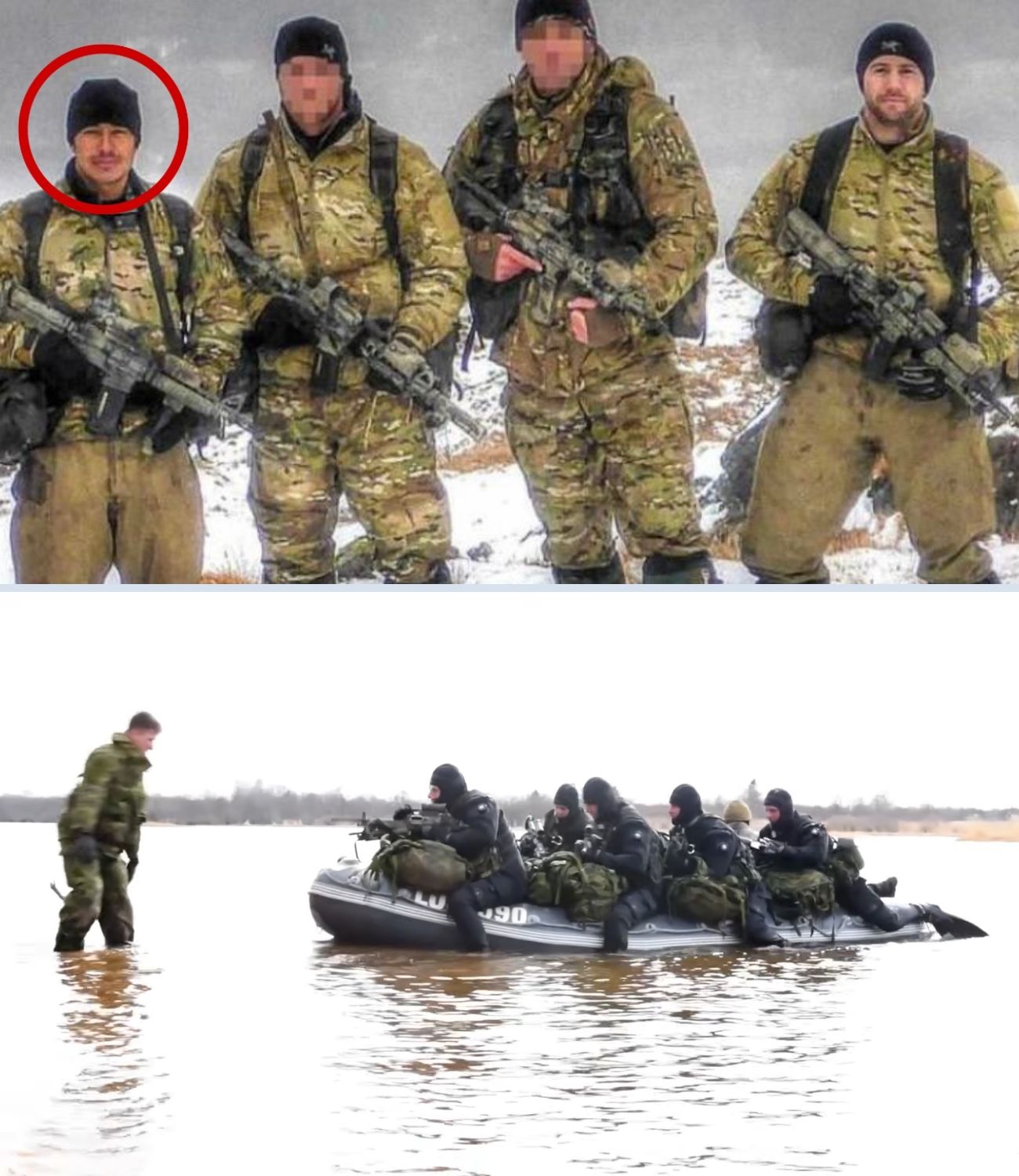
The SBS was Royal Marines territory. Navy divers. Men from the hardest corners of the conventional military who had already proved themselves extraordinary before they ever stood at the start line of selection. It was not a place Gurkhas went. Nobody had ever arrived to make the institution answer the question of why not. In 2009, Nirmal Purja arrived. And the SBS was about to find out what happens when the question finally gets asked.
The Special Boat Service does not advertise itself. When Purja arrived at the start of the selection process, he was given a number, a bergen weight, and a grid reference. Nobody asked where he was from. Nobody asked about Nepal or the engineers or what had brought a Gurkha to this particular start line. The course was not interested in biography. It was interested in what happened next.
This is not modesty and it is not oversight. It is operational architecture. The SBS traces its lineage to the Second World War, to the Combined Operations Pilotage Parties, and the men who paddled canvas canoes into occupied harbours in 1942, and came back with information that changed the course of naval operations in multiple theatres. It was built from the beginning to do things that could not be done loudly and to leave no trace that they had been done at all.
By 2009, it had spent 60 years refining that foundational principle into something considerably more sophisticated. It was a unit that operated predominantly underwater in coastal environments, in the space between what conventional military force could reach and what diplomatic cover could explain. Its operators were recruited overwhelmingly from the Royal Marines Commandos, the British military’s premier amphibious force, and from Royal Navy personnel with specialist diving qualifications. The unit was small, deliberately, structurally, philosophically small. It did not grow to meet demand. It maintained its standard and let the standard determine its size.
Selection for the SBS runs through the same initial phases as SAS selection. The beacons, the fan dance, the endurance phase, the navigation exercises conducted in conditions designed by Welsh weather and DS methodology in approximately equal measure. A candidate moving through SBS selection in the early weeks is moving through the same landscape as his SAS counterparts. The same Welsh rain arriving sideways off Pen y Fan, the same grass that holds water like a sponge and releases it directly into your boots, the same Bergen weight, the same sleep deprivation architecture.
The beacons do not adjust their conditions for which badge a man is trying to earn. It is not a failure of courage when men stop. It is not a question of fitness. The course finds the thing that fitness cannot protect. The conversation a man has with himself at 3:00 in the morning on a hillside. No one watching. Feet wet for 6 days. 11 kilometres to the next checkpoint. A question rising from somewhere below conscious thought. Why?
Most candidates discover that conversation goes somewhere they did not expect. The beacons have been hosting that discovery long enough that the DS have seen every version of it. What they had not seen was what was coming down the hill toward them now. Purja entered selection as a 6-year Gurkha engineer. He was 25 years old. He moved through the early phases with something the DS noted without immediately knowing what to do with. It was not the bearing of a man performing well. It was the bearing of a man operating inside a range of difficulty that had not yet reached his ceiling.
Performance has a texture of effort to it. Operating inside your range has a different texture entirely. It looks easy because for that particular man, at that particular moment, it is. The curiosity among the DS built gradually, not dramatically. The SBS does not do things dramatically. But by the middle phase of selection, Purja had generated the kind of attention that the directing staff reserved for candidates who require a different level of observation. Not more assessment, just more watching.
What they were watching was the altitude physiology in operation. Purja’s cardiovascular system had been built at 1,600 metres above sea level and trained further at the elevations of the Himalayan foothills. His body processed sustained physical output under oxygen-reduced conditions differently from men who had grown up at sea level. The beacons sat at a maximum elevation of approximately 900 metres. For Purja, that was lower than the village he was born in.
The cold that other candidates were managing, he had grown up inside. The sustained load over rough terrain across multiple days was a version of something his body had been doing since childhood. Not as training, as life. And they still hadn’t seen what the course would do when it moved to water.
The SBS selection process extends beyond the initial Brecon phase into specialist testing that reflects the unit’s amphibious and maritime focus. Combat diving qualifications, cold water immersion, environments and skill sets that take a man who has survived the beacons and ask him a different set of questions in a different language. The transition from mountain to water, from Bergen to dry suit, from Welsh hillside to the specific darkness of working underwater in conditions that do not forgive errors that the land would merely punish.
Purja moved through it. Not without difficulty. Not without the course extracting everything it was designed to extract. But through it, consistently, with the composure of a man whose relationship with hardship had been established early and thoroughly enough that the SBS version of hardship fell within the range of what he understood to be manageable. What began as curiosity among the directing staff shifted somewhere in the final phases. The point at which the instructors stopped treating a candidate as a problem to be solved and start treating him as an outcome becoming clear.
Nirmal Purja passed SBS selection in 2009. He was the first Gurkha in the history of the unit to do so. In 200 years of Gurkha service to the British military, through two World Wars and Korea and Borneo and the Falklands and Northern Ireland and the Gulf and Afghanistan, not one man from the Brigade of Gurkhas had stood where he was standing. The institution that had sent men to paddle canoes into occupied harbours in 1942 had spent six decades refining what it meant to operate at the absolute edge of what humans could do in maritime and cold water environments.
It had found something that it had not found before. They gave him a beret and an assignment. No speech. No ceremony. Neither from the unit nor from him. The senior DS who had run the final assessment phase said something afterward that was repeated among the directing staff for years. In corridors, over cold tea, in the shorthand of men who have watched enough candidates to know when they are looking at something outside the normal range. He said:
“The Gurkha didn’t find his limit. We just ran out of course.”
Nobody wrote it down. It was not that kind of unit, but it was passed on. The way certain things get passed on in institutions that do not celebrate loudly, but do not forget either. The unit that had no forms for him found a different solution. They built him a role instead. The SBS assigned Purja to the mountain cell.
This was no consolation posting. The mountain cell within the SBS is a specialist sub-unit responsible for extreme cold weather and high altitude operations. The environments that fall outside the amphibious mainstream of the unit’s work, but represent a category of threat and operational requirement that Britain’s Tier 1 forces cannot ignore.
Someone has to be the expert. Someone has to know what happens to equipment, to physiology, to tactics when the altitude goes above 4,000 metres and the temperature drops below the point at which most military doctrine was written. Someone has to have operated in those conditions long enough to know the difference between what the manual says and what actually happens when the temperature drops another 10 degrees and the wind picks up and the man next to you has never been above 2,000 metres in his life.
The SBS looked at what Purja was and gave him the job that matched it. He became the subject matter expert for extreme cold weather warfare. Geography and inheritance and a childhood spent running barefoot on high paths had prepared him for this role long before the British military thought to ask the question. He was not learning the environment. He was translating it. Taking what his body already knew and what the hills above Dana had already taught him, and converting it into knowledge that other men could use in places where the knowledge could save their lives.
He served for 10 years. A decade in a Tier One Special Forces unit is not a single experience. It is a series of experiences that accumulate without announcing themselves, each one adding something to the architecture of a man without removing what was there before. The early years are about learning the unit’s language, not the spoken language, the operational language, the shorthand, the way decisions get made in the SBS, which is different from the way decisions get made in the Gurkha engineers, and different again from the way decisions get made anywhere else in the British military.
The middle years are about mastery, knowing the language well enough to stop translating and start thinking in it. The later years are about something harder to name, the quiet authority of a man who has been in enough rooms, in enough situations, at enough altitudes and temperatures, and operational pressures that the room stops asking him to prove himself and starts asking him to lead.
He cannot discuss what he did in any operational detail. The MOD does not permit it. He has said only that he was present in every theatre Britain was involved in during that decade. That is enough to understand the shape of it. He was wounded. A sharpshooter’s round that missed his neck by a margin measured in centimetres, striking the buttstock of his rifle instead of the man holding it. He noted it the way he noted everything, as information, as a data point about the environment he was operating in. He continued.
That instinct to absorb, assess, and move forward was what a decade in that unit builds into a man. The years accumulated, tours, operational cycles, the rhythm of a special forces career that moves between preparation and deployment, and the quiet time in between that is never entirely quiet because the preparation never entirely stops.
What changes across a decade is not the rhythm. The rhythm stays. What changes is the man inside the rhythm. The things that used to require conscious effort become automatic. The things that used to feel extreme become the baseline. And somewhere in the middle of all of that, if a man is paying attention, he starts to notice what is still pulling at him. What the decade of extraordinary work has not quieted. What remains unsettled even after everything has been settled.
For Purja, it was the altitude. Not the tactical altitude of the mountain cell. The altitude itself. The pure vertical. The thing that had nothing to do with operations or doctrine or the British military’s requirements and everything to do with the paths above Dana and the boy who ran them and the sense, never quite articulated, never quite released, that the highest thing he could see was still not the highest thing he could reach.
In 2012, during Christmas leave, Purja went to Nepal. A friend from the SAS suggested an expedition trek to Everest Base Camp. Purja agreed. He had grown up in Nepal and had never been to Everest Base Camp. This seemed like a reasonable correction to make. He arrived at Base Camp. He looked at what was above it. He found his guide, a man named Dorje Khatri, and asked him to teach him how to climb for real. They summited Lobuche East together. 6,119 metres.
Purja had been at altitude his entire life and had never thought of altitude as a destination before. He thought of it as a condition. A fact of where you were. Standing on a summit above 6,000 metres rearranged something in his understanding of what the thing he had been born into could actually be used for. He was hooked.
He climbed Everest for the first time in 2016. During the descent above 8,000 metres in the section of the mountain called the extreme altitude zone, where the atmosphere cannot sustain human life for extended periods, he encountered a stricken climber. The man was fading away. Purja was alone. The rescue was completed. The descent followed. 18 months later, he accepted his MBE from the Queen.
In 2017, he led 13 Gurkhas to the summit of Everest in a climb commemorating 200 years of Gurkha service to the British Crown. Then 2018 and the offer that changed everything. The SAS wanted him. An invitation to transfer to the regiment that everyone outside the British military knew about and that the SBS had always operated quietly beside. The famous one. The beige beret. The winged dagger. Stirling lines.
He had already passed the harder selection. He had already done the harder job. He had spent 10 years in the Tier 1 unit that fewer people could name and had built a career and a capability inside it that represented something the British military had never had before. He thought about the offer. He said no. Not to the SAS, to the military. To all of it. He resigned as a lance corporal.
He walked away from a pension that he described as life-changing. He remortgaged his house. He had an idea that the people who knew him well thought was insane, and the people who didn’t know him well didn’t think about at all because it was too large to take seriously. He was going to climb all 14 mountains above 8,000 metres. Not eventually. Not across a career. In 7 months.
The standing record was just under 8 years. What he did to it next is the reason the mountaineering world still hasn’t fully recovered. Nobody thought it was possible. This was not a failure of imagination on anyone’s part. It was a reasonable assessment of what the human body could do at altitude across 14 extreme altitude peaks, and the weather, the logistics, and the reality of three separate climbing seasons across three different countries.
7 months was not a compression of the previous timeline. It was a different category of ambition entirely. The kind that doesn’t respond well to analysis because analysis keeps finding the same answer, and the answer is no. The people who told him it couldn’t be done were not wrong by any conventional measure. Above 8,000 metres, the atmosphere cannot sustain human life for extended periods. Climbers refer to it as the perilous zone. The name is accurate.
Each summit attempt depletes the body in ways that accumulate across a career, not across a season. Climbers who spend their lives on high-altitude peaks manage one or two 8,000-metre peaks a year at most. 14 in 7 months meant back-to-back expeditions with recovery windows measured in days rather than months. It meant flying between Nepal, Pakistan, and China with barely enough time to reacclimatise before the next ascent.
It meant operating at the absolute edge of what physiology permitted while managing permits, logistics, team coordination, and funding simultaneously. He had no major sponsor when he started. He remortgaged his house to fund the first phase. He did it anyway. Project Possible launched in April 2019. The spring season delivered six peaks in 31 days. Annapurna, Dhaulagiri, Kangchenjunga, Everest, Lhotse, Makalu.
That last sequence, Everest to Lhotse to Makalu, was completed in just over 2 days. A record that didn’t exist before because nobody had moved fast enough to set it. The mountaineering world started paying attention. The summer season in Pakistan added five more. Nanga Parbat, Gasherbrum I, Gasherbrum II, K2, Broad Peak. By that point, the attention was not casual. People were watching the way people watch something they cannot explain but cannot stop watching.
The autumn season finished it. Cho Oyu, Manaslu, Shishapangma. 6 months and 6 days. 14 mountains above 8,000 metres. A record that had stood for just under 8 years gone in a single season. And then he went back.
In January 2021, Purja stood on the summit of K2 in winter. No one had ever done it. Not in 40 years of attempts. Not by any team from any country in any season. K2 in winter was the last great unclaimed objective in mountaineering. The mountain climbers called the Savage Mountain. The one that claimed the lives of experienced alpinists in summer and had turned back every attempt in winter without exception.
The cold on K2 in winter is not a condition. It is a presence. Winds above 200 kilometres per hour. Temperatures that freeze equipment and expose skin in minutes. A summit pyramid so technical that the climbing required in those conditions sat outside what most teams were willing to attempt even in good weather.
Purja’s team reached the summit on the 16th of January. 10 Nepalese climbers. They paused at the top and sang the national anthem of Nepal into a wind that was trying to remove them from the mountain. Below them, the mountaineering world watched and tried to find the right words for what they had just seen.
What they had seen was a man who had spent his childhood running barefoot at altitude. Six years learning to be a soldier. 10 years learning to be something the military had no rank for. And then 3 years proving that the ceiling everyone else could see was not the ceiling he was working with.
The mountain had not changed. The man standing on it had been building toward it his entire life without knowing that was what he was doing. There were no right words. There was just the mountain. And the number. And the man from Dana who kept finding that the next ridge was climbable after all.
The mechanism that had moved through SBS selection in 2009. The same composition. The quality the directing staff had noticed when they watched a Gurkha from a high altitude village in Nepal move through their process and found that their forms didn’t cover what they were looking at.
The SBS did not make Nirmal Purja. They confirmed what was already there and spent 10 years pointing it at problems that needed solving. When he left, he pointed it at the mountains. The mountains responded the way the Brecon Beacons had. The way every environment he had ever entered had eventually responded to a man who treated the word impossible as a description of current conditions rather than a permanent state.
The British military had no category for him in 2003. They had no category for him in 2009. They still don’t know quite what to call him now. He has one answer for all of it. Four words he has said in interviews, on summits, in the corridors of institutions that kept running out of forms to describe him:
“Giving up is not in the blood, sir.”
He said it about the mountains. He could have said it about Pokhara. He could have said it about Wales in the rain with 60 pounds on his back and a course that had been waiting 60 years for someone to arrive and make it answer a question it had never been asked. Not in the blood.
He grew up without shoes on paths above a valley that sat higher than most of the mountains the British military used for training. His father carried a rifle for Britain. His brothers carried a rifle for Britain. He carried the rifle and then the Bergen and then the ice axe and kept going up because there was always another ridge above the one he was standing on and he had never once in his life decided that where he was standing was far enough.
The SBS said very little publicly about what they found when the first Gurkha passed their selection. They didn’t need to. The mountain said it for them.
You Might Also Enjoy

“We Thought They Would Negotiate”—What Argentine Soldiers Said When The British Attacked Goose Green

“You’ll Never Finish My Ruck March, Limey” — US Sergeant Who Challenged the SAS, Then Fell Out First






