What U.S. Special Forces Thought When British SAS Joined Their Night Raids in Iraq
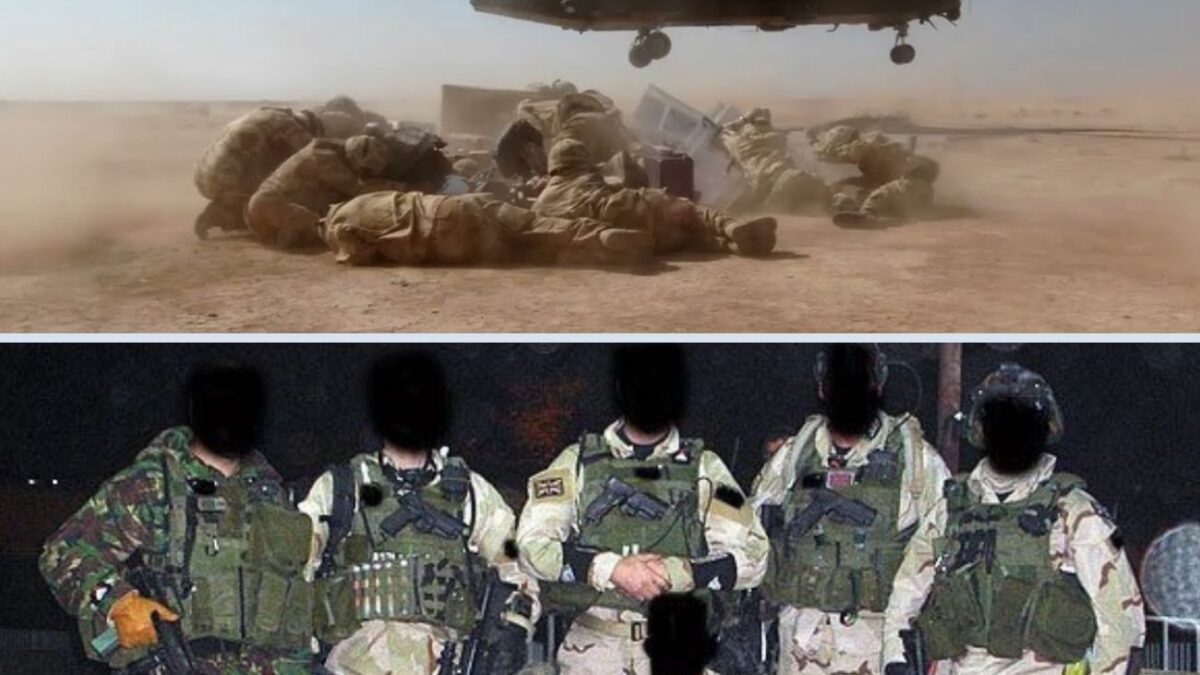
In early 2004, the most elite American special forces unit on the planet was running night raids across Baghdad and they were losing. Car bombs were killing thousands. Al-Qaeda was growing faster than Delta and the Rangers could hunt them down. And JSOC’s billion-dollar system was grinding to a halt. So, what happened when a tiny squadron of British SAS operators walked into their compound and offered to join the fight? And why did hardened American operators, who trusted almost no one, end up calling them the best allies they ever had?
The streets of Baghdad smelled like burning rubber and diesel fuel. Every night, American helicopters thumped across the dark sky carrying the most dangerous soldiers on earth into the most dangerous city on earth. These were not regular troops. These were the men of Joint Special Operations Command. Delta Force operators, Navy SEALs from Team Six, and Army Rangers from the legendary 75th Ranger Regiment. They had night vision goggles that turned blackness into a green-lit hunting ground. They had drones circling above that could read a license plate from two miles up. They had satellites, signals intelligence, and a budget that seemed to have no limit. They were the sharpest blade America had ever forged and they were losing. The numbers told the story better than any general ever could. In the months after the fall of Saddam Hussein, Iraq had crumbled into chaos. A man named Abu Musab al-Zarqawi, a Jordanian extremist turned terrorist mastermind, had built a network called Al-Qaeda in Iraq. His fighters were not a traditional army. They hid among civilians. They moved through neighborhoods in ordinary cars. They stored weapons in family homes and planned attacks from the back rooms of shops. And their weapon of choice was the car bomb, a rolling massacre packed with artillery shells and nails that could turn a busy market into a graveyard in less than 3 seconds. By early 2004, these bombs were going off almost daily. Hundreds of Iraqi civilians were dying every month. The violence was spreading like fire through dry grass and no amount of American firepower seemed able to stamp it out.
The problem was not courage. The problem was not technology. The problem was speed. Every night, JSOC would launch a raid on a suspected terrorist compound. The helicopters would roar in low over the rooftops. The operators would fast rope down, blow the doors, clear the rooms, and grab whoever was inside. Sometimes they got the right guy. Sometimes the house was empty. Sometimes the intelligence was two days old and the target had already moved to a new location. By the time the Americans finished questioning one suspect and traced his phone contacts to a new address, the network had shifted again. It was like trying to catch smoke with your hands. JSOC was killing and capturing targets every night, but the enemy was recruiting new ones even faster. For every cell they destroyed, two more seemed to spring up in its place. And the American operators knew it. One Ranger sergeant later admitted that during those months, it felt like bailing water out of a sinking boat with a coffee cup.
The man in charge of this shadow war was General Stanley McChrystal. He was tall, thin, and hard as a coffin nail. And he ate one meal a day, slept four hours a night, and ran for miles every morning before dawn. McChrystal had spent his career in special operations. He had commanded the 75th Ranger Regiment. He had led soldiers in combat from Grenada to Afghanistan. Now, as the head of JSOC, he sat in a windowless operations center at Balad airbase, 60 miles north of Baghdad, staring at screens that showed live drone feeds of a city tearing itself apart. He knew the truth nobody in Washington wanted to hear. The most advanced special operations force in human history was not enough. They needed more raids, more intelligence, more operators hitting more targets on more nights. But Delta Force squadrons rotated on 90-day deployments and by the end of each rotation, the men were exhausted and thinned by wounds. And the Rangers were stretched across multiple missions. McChrystal needed another force, one that could operate at the same level, at the same speed, in the same suffocating heat.
That force had already arrived and most Americans on the base did not know what to make of them. A Sabre Squadron of the 22nd Special Air Service Regiment, the legendary British SAS, had deployed to Baghdad. They set up in a compound not far from the American base, bringing with them a reputation that stretched back 60 years, from the deserts of North Africa in World War II to the jungles of Borneo, from the rain-soaked streets of Belfast to the burning Iranian Embassy in London. Their motto was three words that every soldier on earth recognized: Who dares wins. But reputation does not clear a room full of armed men at 2:00 in the morning. And in the eyes of many American operators, the British were an unknown quantity. One Delta operator later put it bluntly:
“We had built the most lethal targeting system on the planet and now someone was asking us to hand the keys to guys we had never worked with.”
The SAS used different radios, different weapons, different tactics. They came from a military culture that valued thinking on their feet over rigid procedures. Some Americans wondered quietly whether the Brits could keep up with the pace. What those doubters did not yet understand was that the SAS brought something no amount of technology could replace. They carried decades of hard-won experience in exactly the kind of war that was now consuming Iraq, a dirty, close-range, intelligence-driven fight against enemies who hid among the people. From years of hunting paramilitary cells through Belfast, the SAS had learned lessons about patience, deception, and the art of turning one piece of information into a chain of raids that could dismantle an entire network. They had done it with far less money, far fewer gadgets, and far smaller numbers than anything the Americans had ever used. And they were about to prove that in Baghdad, size and budget mattered far less than skill, nerve, and the willingness to go through the next door no matter what waited on the other side.
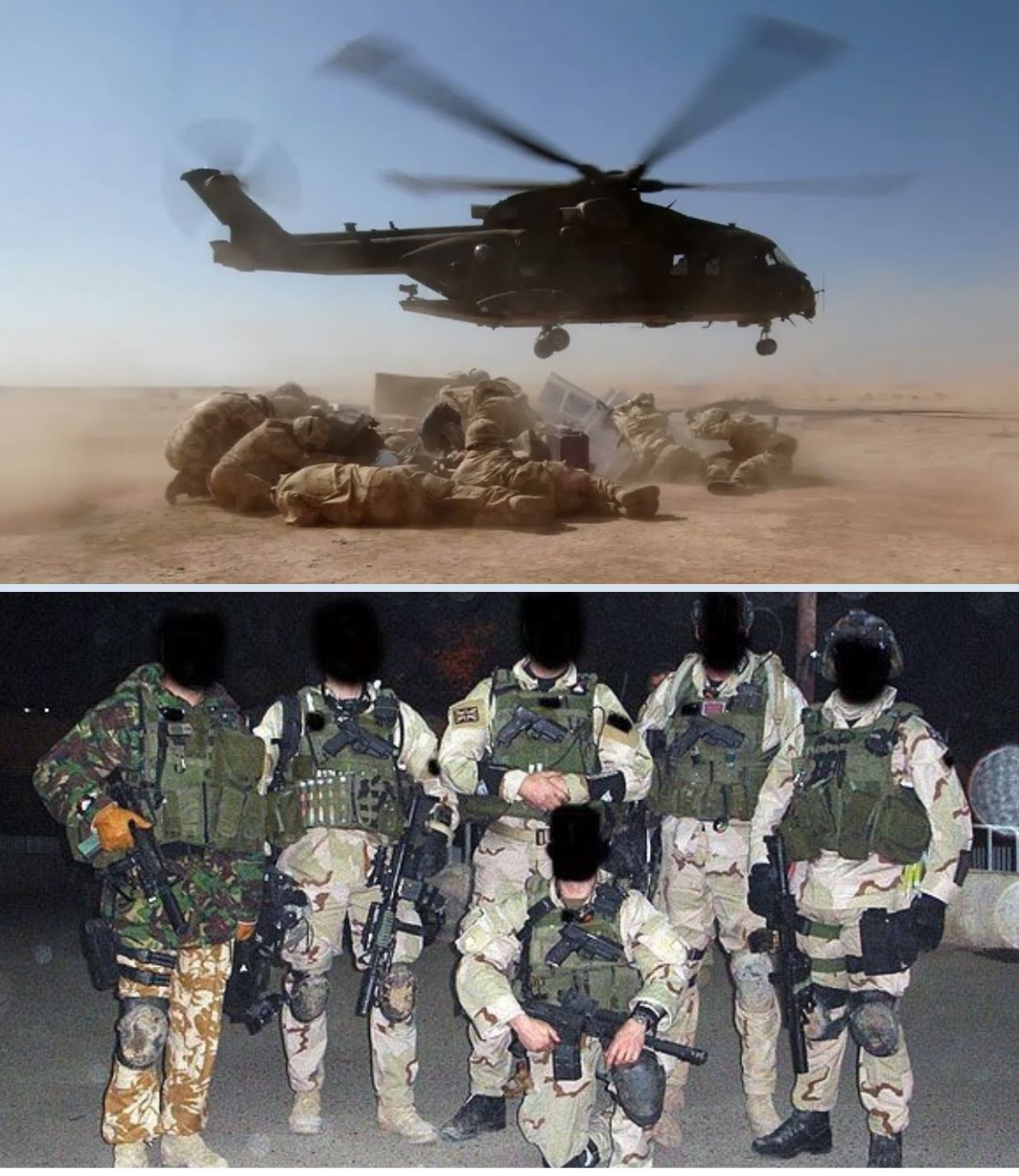
The partnership did not begin with a handshake and a smile. It began with suspicion, awkward silences, and two groups of elite soldiers sizing each other up like rival wolves circling the same kill. When the SAS squadron first appeared at the joint operations base near Baghdad, the Americans watched them closely. But Delta Force operators, many of whom had been running raids for months without a break, were not easily impressed. They had seen foreign units come and go. Some were competent. Some were liabilities. And in a war where a single mistake on a raid could get everyone in the room killed, respect was not something you gave away for free. It had to be earned, one hallway at a time, one split-second decision at a time. As one American operator put it:
“We didn’t care about their history. We cared about what they did when the shooting started.”
The British felt the tension, too. They had decades of combat behind them and did not need anyone to tell them they were good. But they also understood something important. This was not their war to lead. JSOC was an American system built by Americans. And if the SAS wanted a seat at the table, they would have to prove they could operate inside it without slowing anything down. So, they did what the SAS has always done. They shut their mouths and went to work.
The unit that took shape in Baghdad became known as Task Force Black. At its core was a single Sabre Squadron, roughly 60 to 80 SAS operators at any given time, backed by SBS commandos, specialist surveillance teams from the Special Reconnaissance Regiment, and signals experts from 18 Signal Regiment who kept the network talking. Compared to the American side, it was a tiny force. JSOC had hundreds of operators across Iraq, supported by fleets of helicopters, armed drones, fighter jets on call, and an intelligence apparatus employing thousands of analysts. Task Force Black had a fraction of that support. But they made up for it with something that could not be measured in dollars or equipment lists, raw experience, aggression, and a willingness to adapt.
The culture clash showed itself in small ways at first. The Americans operated with detailed pre-mission briefs that could last an hour, with every operator knowing exactly which room they would clear and which corner they would cover. The SAS preferred shorter briefs and more flexibility on the ground. American teams relied heavily on signals intelligence, intercepted phone calls, tracked mobiles, electronic surveillance, to build a picture of the target before leaving the base. The SAS had cut their teeth in Belfast, where the enemy often had no phone to track and no electronic footprint to follow. And they had learned to work with less information and decide faster. Neither approach was wrong. They were different tools shaped by different wars. Some American planners found the SAS approach reckless at first. The Brits seemed to thrive on ambiguity in a way that made detail-oriented Americans uncomfortable. But results end arguments and the SAS kept delivering results.
The man who forced it to work was McChrystal himself. He had spent enough time around British soldiers to know that their relaxed style masked something harder than most units could match. The SAS operated on trust. Their officers led from the front and fought alongside their men. Their sergeants had more combat experience than most American colonels. And their selection process was so brutal, a grueling weeks-long ordeal across the mountains of Wales in freezing rain, that anyone who survived it was already proven beyond doubt. Now, McChrystal did not just tolerate the SAS. He wanted them running raids alongside Delta and the Rangers, sharing the same intelligence feeds, flying on the same helicopters, hitting targets on the same nights. He championed their integration at every level. And when the first joint raids went out, American and British operators stacked up on the same compound wall, waiting for the same breach, something shifted. The Americans saw how the SAS moved through a building. No wasted motion. No hesitation at corners. A quiet, violent efficiency that needed no translation. One Ranger who was on the cordon that night said it simply:
“Those guys operate like they have done this a thousand times.”
Because they had.
The real turning point came in mid-January of 2006 with something called Operation Traction. Under this directive, the SAS deployed its senior leadership directly to JSOC’s main base at Balad. For the first time, British and American special forces were not merely cooperating. They were fused at the command level. A British sergeant major now stood in the same operation center as an American colonel, watching the same drone feed, pointing at the same compound, deciding together who would hit it. When intelligence came in at midnight, pointing to a terrorist safe house, the decision about who would launch—Delta, the Rangers, or the SAS—was made based on who was closest and who was best suited. Nationality stopped mattering. Capability was all that counted. McChrystal had built a concept he called industrial counterterrorism and the SAS became one of its most important engines. The idea was brutally simple in theory and staggeringly difficult in practice. You raid a target, you grab every phone, laptop, and scrap of paper in the building. You rush that material to the analysts. They tear through it in minutes, pulling out names, addresses, connections. Before the sun comes up, they have identified the next target and you launch again. The same night. Sometimes twice. Sometimes three times. It was a relentless cycle that never stopped and never gave the enemy time to breathe. Night after night, British operators loaded onto American Black Hawks, flew across the blacked-out sprawl of Baghdad, and went through doors into rooms where armed men waited. And night after night, the Americans who fought beside them began to realize something they had not expected. These quiet British soldiers with the dry humor and the understated confidence were not just keeping up. They were raising the bar.
The numbers changed first, then the streets changed, then the war changed. Before the SAS fully integrated into JSOC’s nightly raid cycle, Al-Qaeda in Iraq had been operating with something close to impunity in Baghdad. Car bombs were detonating at a pace that numbed even the most hardened soldiers. At its worst, the city was suffering roughly 150 bomb attacks every single month. Each one tore through crowds of ordinary people going about their daily lives. Entire neighborhoods emptied out as families fled the killing zones. Morgues ran out of space. Hospitals ran out of blood. And in the American operations center at Balad, the screens showing each day’s attacks looked like a disease spreading across a map, red dots multiplying faster than anyone could count.
Then the raids began to accelerate. With the SAS now locked into the JSOC system, the pace of operations climbed to a level no special forces unit had ever sustained. Task Force Black was launching missions nearly every night, sometimes multiple raids in a single stretch of blackness. The cycle that McChrystal had designed—find, fix, finish, exploit, analyze—was spinning faster than Al-Qaeda could react. A raid on a safe house in western Baghdad at midnight would yield a mobile phone. By 1:00 in the morning, analysts at Balad had pulled every number and cross-referenced them against a database of known contacts. By 2:00, when a new target had been identified, a flat in the Dora district where a bomb maker was sleeping, by 3:00, SAS operators were outside that flat, breaching charges ready. The enemy had no time to warn each other, no time to move, no time to hide. For the first time in the war, Al-Qaeda in Iraq was being taken apart faster than it could put itself back together. American operators who had spent months watching the network grow now watched it shrink and they knew the SAS were a major reason why.
The operation that proved the value of this partnership beyond any remaining doubt was Operation Larchwood 4. On the night of April 16th, 2006, soldiers from B Squadron of the 22nd SAS Regiment loaded onto helicopters alongside paratroopers from the Special Forces Support Group. Their target was a farmhouse on the outskirts of Yusufiyah, a town south of Baghdad that sat in the middle of what the Americans grimly called the Triangle of Death. Intelligence gathered from previous raids, some by Delta, some by the SAS, had identified this farmhouse as a meeting point for mid-level Al-Qaeda leadership. These were not the foot soldiers who planted the bombs. These were the planners who moved the money and connected the cells. Taking them off the battlefield could unravel an entire network. The helicopters came in low and fast, rotor wash flattening the dry grass as the assault teams dropped onto the target. The paratroopers fanned out to set up a cordon, blocking every escape route. The SAS operators moved toward the building in quick, practiced silence, boots crunching on hard-packed dirt. Then the night exploded. The moment the first team breached the entrance, gunfire erupted from inside. Muzzle flashes lit up the narrow hallways in blinding white bursts. Three SAS soldiers were hit in the opening seconds, bullets tearing through arms and legs as they pushed into the kill zone. The SAS did not pause. They did not pull back. The wounded kept fighting. The operators behind them stepped forward, pushed past the blood on the floor, and continued clearing room by room. Two more were wounded before it was over. But when the gunfire stopped and the dust settled, five terrorists lay dead. Five more were in handcuffs and scattered across tables and floors was a collection of phones, documents, and computer files that would prove to be one of the most important intelligence hauls of the entire war.
When the American liaison officer at Balad heard the after-action report:
“Five SAS wounded. Zero hesitation. Objective taken.”
He said two words into the radio that spread through every American unit in the building:
“Absolute animals.”
The material seized at that farmhouse revealed connections, threads that, when pulled, led straight to the top of Al-Qaeda in Iraq. Analysts worked through the captured data with frantic speed, tracing links from one operative to another, mapping a network that stretched across Baghdad and into the surrounding provinces. Other raids followed in rapid succession, each one feeding more information back into the cycle. And less than 2 months later, on June 7th, 2006, the trail that had begun in that blood-soaked farmhouse reached its end. Acting on intelligence built from the entire chain of raids, American F-16 jets dropped two 500-lb bombs on a safe house near Baqubah. Inside was Zarqawi, the architect of Iraq’s nightmare. He was killed instantly. And while the world credited the American military with the kill, the operators who had been there from the beginning knew the truth. That intelligence trail had been built brick by brick, raid by raid, by British and American soldiers working side by side.
The impact only grew from there. Beginning in early 2007, the combined task force launched an unrelenting campaign against Al-Qaeda’s presence in Baghdad. Over 18 months, they arrested approximately 3,500 terrorists and killed several hundred more. Al-Qaeda bomb attacks dropped from their devastating peak to approximately two per month. Markets that had been abandoned reopened. Streets that had been empty after dark slowly came back to life. It was not peace. Iraq was still a long way away from that. But it was the first time since the invasion that the trajectory of violence had been reversed. American commanders who had once questioned whether the SAS belonged in their operation centers now openly credited Task Force Black as one of the most effective units in the entire theater.
The cost was written in hospital beds and memorial walls. Six SAS troopers were killed during the years of operations in Iraq. 30 more were wounded, some returning to duty before their injuries had fully healed. Delta Force suffered an overall casualty rate of 20%. One in every five operators who deployed came home wounded or did not come home at all. The Rangers took their own losses on the outer cordons and blocking positions. These were not statistics on a briefing slide, but young men who went out every night knowing the next breach might be their last, and who did it anyway because the man beside them, whether he spoke with a Texas drawl or a British accent, was counting on them to be there. The sensory reality of those nights would stay with every operator who lived through them: the deafening crack of an explosive charge turning a steel door into shrapnel; the green glow of night vision turning a pitch-black room into a grainy landscape where every shadow could be a weapon; the smell of cordite and sweat hanging in the air after a firefight. American medics worked on wounded British soldiers in the back of a helicopter, while British medics did the same for Americans—rank and nationality stripped away by the simple urgency of keeping someone alive until they reached the field hospital. That was the partnership at its most honest: not a strategy paper, not a handshake between generals, just men bleeding together.
In April of 2009, after six years of that relentless grind, the last SAS operators assigned to Task Force Black packed their kit, cleaned their weapons one final time, and quietly left Iraq. There was no ceremony, no parade, no press conference. That was not how these men operated, and it was not how they said goodbye. They slipped out of the country the same way they had fought in it, without fanfare, leaving behind nothing but results and the memories of the men who had fought beside them. It was the longest sustained special operations deployment in SAS history since the regiment’s original campaigns in the Western Desert during World War II. And in terms of sheer volume—the raids, the captures, the intelligence chains exploited—it was almost certainly the most intense special forces campaign any British unit had ever fought.
The Americans who stayed behind noticed the absence immediately. Over the years, the SAS had become so deeply woven into the fabric of JSOC’s operations that their departure left a gap not easily filled. Delta Force operators who had once watched the British with quiet skepticism now spoke about them with something stronger than admiration. They spoke about them as equals. The Rangers who had pulled security on the outer cordons while SAS teams cleared buildings had seen firsthand how the British moved—fast, aggressive, and utterly calm under fire in a way that seemed almost unnatural. Rangers who rotated home would tell other units the same thing:
“The Brits were the real deal. If you were going through a breach point, there was nobody you would rather have behind you.”
General Stanley McChrystal, the man who had driven the partnership from the beginning, would go on to describe the model he built in Iraq in his best-selling book Team of Teams. The core idea that rigid hierarchies must give way to networked, trust-based organizations that can adapt faster than the enemy had been proven in the blood and heat of Baghdad. And while McChrystal wrote about the concept in broad terms, the operators who had lived it knew the SAS had been one of its most critical test cases. Here was a foreign unit from a different military with different equipment and different traditions plugged into the most secretive American war effort ever created, and it had worked. Not because someone signed a formal agreement, but because men on the ground lined up on the same breach points in the middle of the night had decided to rely on each other with their lives.
That bond was not built in a conference room. It was built in hallways full of smoke and gunfire, in helicopters shaking through the Baghdad night, in the quiet moments after a raid when British and American soldiers sat together and said nothing because nothing needed to be said. The model that emerged from Iraq became the blueprint for Allied special operations for the next two decades. When JSOC expanded its operations in Afghanistan, the integration of British and Australian special forces followed the same pattern Task Force Black had pioneered. The template was set: small Allied teams plugged directly into American-led task forces, sharing every scrap of intelligence, and launching raids together with one rule—send whoever is best, regardless of the flag on their arm.
The Americans brought scale, technology, and an unmatched ability to process intelligence at industrial speed. The British brought decades of hard-won knowledge from the Troubles, from Sierra Leone, from every complex conflict the end of empire had left behind. Together, they created something greater than either could have built alone.
For the men who fought in Task Force Black, the legacy was more personal than any strategic lesson. Many left the military in the years that followed, returning to lives that bore no resemblance to the world they had inhabited in Baghdad. Some became private security contractors unable to leave the edge behind, and some went home to small towns in England and Wales and found they could not explain why they woke drenched in sweat reaching for a weapon no longer beside the bed. Some never talked about Iraq at all—not because they were ordered silent, but because they knew no words could make someone understand what it felt like to step into a kill zone before dawn not knowing if you would walk back out. The SAS does not publish memoirs the way American special operators sometimes do. The regiment’s culture of secrecy runs deep, enforced not just by official non-disclosure agreements, but by a shared belief that the work speaks for itself. The six SAS men who died in Iraq have their names engraved on the famous clock tower memorial at the regiment’s base in Hereford. Their families know what they did. Their teammates know. For the regiment, that is enough.
McChrystal himself left the military in 2010 under circumstances that had nothing to do with Iraq. But he has spoken since about trust, adaptability, and breaking down barriers between organizations. He has never publicly singled out the SAS by name in the way some might expect, and that silence tells its own story. In the world of special operations, the highest compliment you can pay a partner is to treat them as part of your own team, not as a guest, not as a visitor, but as one of yours. By every account from those who were there, that is exactly what happened in Baghdad.
The deeper truth of Task Force Black is not about tactics or technology or the number of terrorists captured on any given night. It is about what happens when the stakes are high enough and the mission is desperate enough that two groups of proud and fiercely independent warriors set aside their differences and decide to fight as one. The Americans and the British did not become the same. They remained different in style, in culture, in the way they saw the world. But in Baghdad, those differences stopped being obstacles and started being strengths. The Americans pushed the pace. The British steadied the nerve. The Americans built the system. The British gave it teeth. And somewhere in the space between those two approaches, something was forged that neither country had ever quite achieved before: a partnership so close that the men who lived it stopped seeing flags on shoulders and started seeing only the person next to them. In the end, that is what war teaches when it teaches anything worth learning. It does not matter where you come from. It matters that you came.
You Might Also Enjoy

“We Thought They Would Negotiate”—What Argentine Soldiers Said When The British Attacked Goose Green

“You’ll Never Finish My Ruck March, Limey” — US Sergeant Who Challenged the SAS, Then Fell Out First






