What US Navy SEALs Said When The SBS Hit The Beach First In Iraq
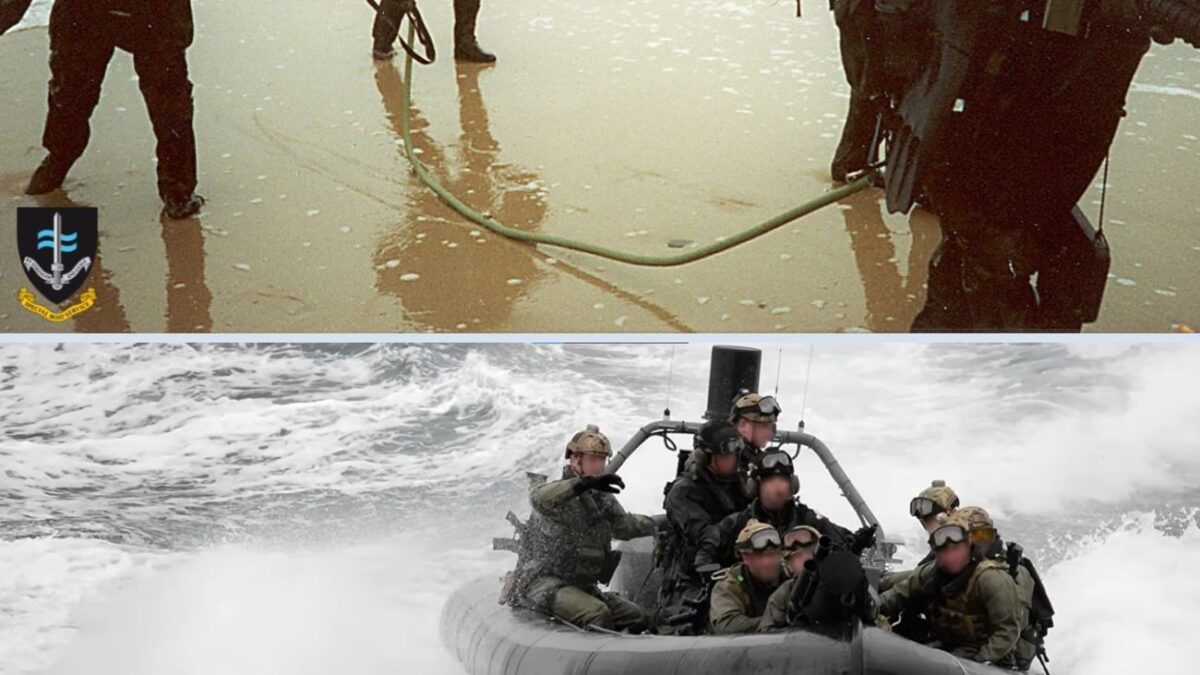
Somewhere in the Persian Gulf, on the night of the 19th of March, 2003, a small rubber boat cut through black water without a sound. No engine, no lights, no radio chatter, just paddles, cold salt air, and the distant glow of Iraqi oil infrastructure burning against a sky that had not yet been told a war was coming. The men in that boat knew something the world did not. By the time the first official shots of the Iraq War were fired, by the time the first news anchor broke the story, by the time the American president finished addressing the nation, these men had already been on enemy ground for hours, lying still in the darkness, counting guards, marking positions, memorizing the exact shape of a coastline that 800 Royal Marines and an entire naval task force were depending on them to get right. And one mistake, and the whole invasion starts in the wrong place. One sound, and they never come home. There were no cheers when they pushed off from the ship, no speeches, no fanfare, just the sound of water against rubber, and the weight of knowing that everything happening in the hours ahead, the helicopters, the Marines, the SEALs on the platforms, the entire opening act of the biggest military operation in a decade, depended on what a small group of men found on a beach in the dark.
They were not the most famous unit in the British military. They were not the regiment with the books and the television dramas and the public mythology. They were the other unit, the quieter one, the one that operated so far below the surface of public awareness that most people who watched the Iraq War unfold on their television screens in March 2003 never heard their name mentioned once. When US Navy SEALs finally reached that same shoreline, one of the most elite maritime units on Earth, men who had trained their entire careers for this kind of night, they found something that stopped them cold. The SBS had already been there. And they had done it in silence, in darkness, and completely alone. This is that story.
The Iraq war has been covered in thousands of books, hundreds of documentaries, and more television programs than anyone could reasonably count. Most of them begin on the morning of the 20th of March. Most of them start with the air strikes, or with the columns of armor crossing the Kuwaiti border, or with the moment the American president appeared on television and announced that the liberation of Iraq had begun. Very few of them begin the night before, in a rubber boat, in silence, with men who had no intention of being in any documentary at all.
Most people have heard of the SAS. Far fewer have heard of the SBS. And that gap between the unit everyone knows and the unit almost nobody talks about is not an accident. It is a choice. A deliberate, institutional, deeply held conviction that the best work happens in the dark, and that any unit which needs the world to know what it has done has already missed the point.
The Special Boat Service is headquartered at Hamworthy Barracks in Poole, Dorset, on the south coast of England. A quiet enough place. A harbor full of sailing boats and weekend fishermen. Families on the promenade, on fish and chips. Nothing about the postcode suggests that some of the most capable maritime operators on the planet go to work there every morning. That the buildings behind the wire contain people whose skill set is measured in ocean depth charts and underwater demolition tables, and the ability to lie perfectly still in freezing mud for longer than most people could stay awake.
Trace the SBS back far enough, and you end up in the Second World War, when a handful of Royal Marines began paddling wooden canoes into enemy harbors in the dead of night to attach explosives to ships. It was not glamorous work. It was cold and wet and frequently fatal. Conducted by men who understood that the mission mattered more than the recognition. The regiment that grew from those early raids carried that philosophy forward into every decade that followed. Not because it was ordered to, because it attracted men for whom that philosophy was simply the natural way to operate.
By 2003, if you were building a list of the world’s most capable maritime special forces units, the SBS was on it, near the top. But what made them extraordinary was not just what they could do in the water. It was the process that produced them. Every SBS operator first passes the same brutal selection as the SAS, the Brecon Beacons in South Wales. The long marches with weight across mountains that seem specifically engineered to break the human body and spirit simultaneously. The sleep deprivation, the cold, the weeks of assessment designed to find out not just whether a man is physically capable, but whether he is the kind of man who can be trusted to keep going when there is absolutely no reason left to do so. Typically fewer than 10% of candidates make it through. Men who fail that process do not join the SBS. Neither, for that matter, do most of the men who pass it. Because passing joint UKSF selection is only where SBS selection begins.
After earning the right to continue, SBS candidates go through the swimmer canoeist course, specifically the SC3. Eight weeks of specialist maritime training that takes everything built during the Beacons and adds a dimension that the SAS is never required to face. Closed and open-circuit diving in poor visibility, navigating underwater by compass and feel alone. Long-distance canoeing, including a 34-mi course in a Klepper folding canoe through open water in conditions that most people would not sail a boat in, let alone paddle one. Underwater demolitions. Beach reconnaissance and survey techniques developed and refined across 60 years of operational history. Submarine infiltration. Training that does not produce operators who are good in the water. It produces men who are at home there.
When a man completes the SC3 course, he is not finished. He is a probationer, on trial, watched closely by the men who came before him. The ones who survived that process and earned their place in an operational squadron become something the military world calls swimmer canoeists. 250 of them, give or take, based in Poole, known by almost nobody, trusted with the jobs that cannot go wrong.
Here is the shorthand. The SAS gets the books. The SBS gets the jobs. That is not a criticism of the SAS, which is extraordinary by any measure. It is a description of a division of labor that has existed for decades and that reflects something true about the nature of the two units. The SAS has a public identity, a mythology, a cultural weight that makes it the first thing most people think of when they hear the words British special forces. The SBS has none of that and does not want it. Their secrecy is not a marketing strategy. It is a genuine institutional preference for operating below the level of public attention. Because public attention is operationally inconvenient and personally irrelevant to men who measure their success by whether the mission was accomplished, not by whether anyone noticed.
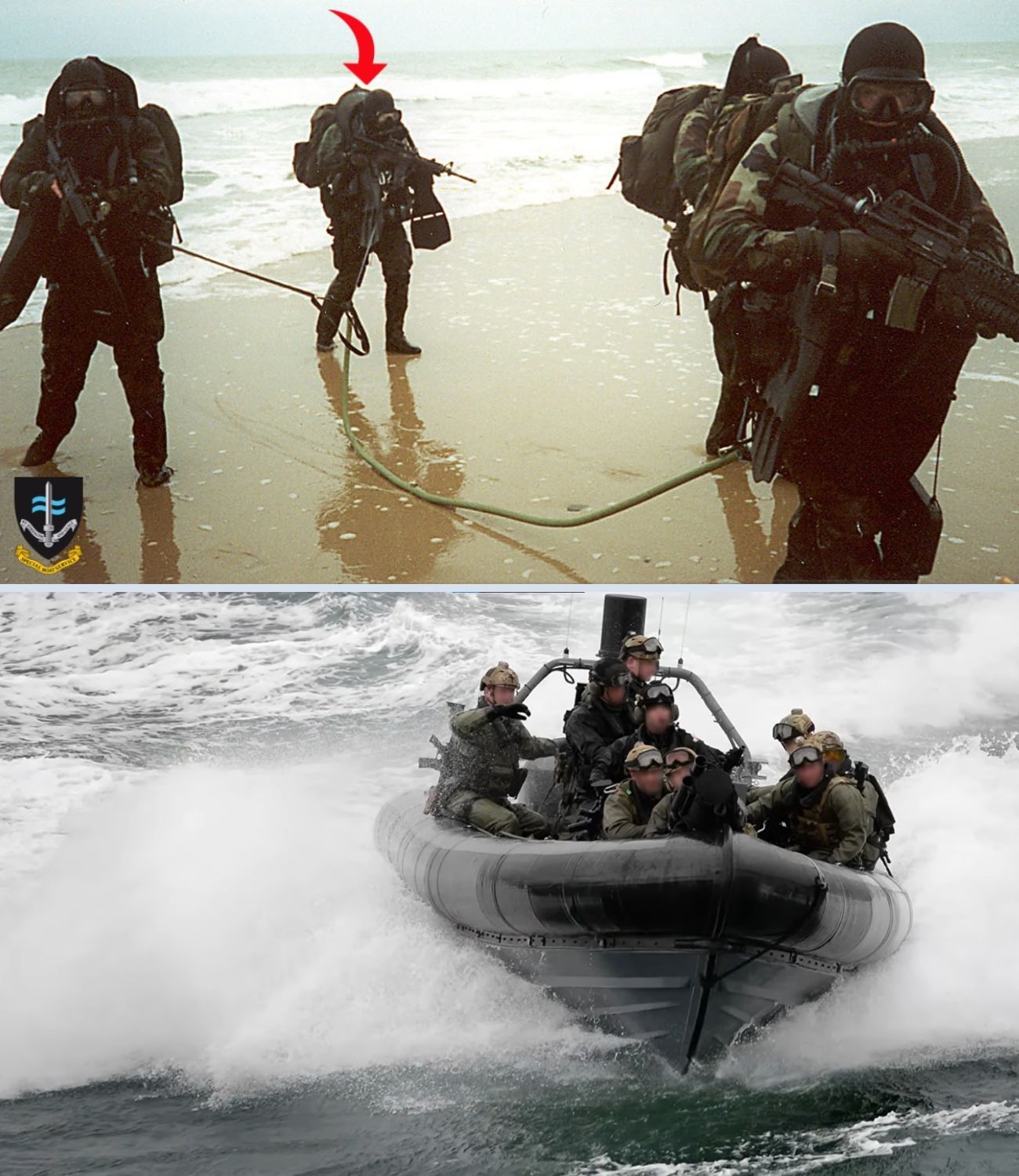
In 2003, the mission was Al-Qaeda and the margin between success and catastrophe was measured in the accuracy of work done in the dark by men whose names were never going to appear in a newspaper. In 2003, those jobs included something that would determine whether the entire opening act of the Iraq war was a success or a catastrophe. The margin between those two outcomes was not measured in armies or air power. It was measured in the accuracy of a beach survey conducted in the dark by men who were never supposed to be there.
To understand what was at stake on the Al-Faw Peninsula in March 2003, you have to go back 12 years to a moment that left a scar on the memory of every military planner who would ever have to think about Saddam Hussein again. February 1991. The Gulf War is ending. Saddam Hussein’s forces are being driven from Kuwait in a rout. So, the coalition is winning and Saddam, with his army collapsing around him, gives one final order before his troops withdraw. Set fire to the oil wells. 700 wells. All of them burning simultaneously. Columns of thick black smoke rising so high they were visible from space. A smell that reached the Indian Ocean. Temperatures on the ground so extreme that the fire crews who eventually came to put them out could not approach the wells directly. It was the largest deliberate environmental catastrophe in human history. Not a side effect of war. A choice. A statement. If I cannot have it, no one will.
Those fires burned for months. Putting them out cost billions. The damage to the soil, the water table, and the air quality of an entire region compounded for years. And the people who planned the 2003 invasion had not forgotten a single detail of it. In 2003, as coalition forces prepared to enter Iraq for the second time, the question on every planning table was the same. What would he do this time?
The Al Faw Peninsula is a narrow strip of land at the very southern tip of Iraq where the Shatt al-Arab waterway meets the Persian Gulf. From the air, it looks like a finger pointing into the Gulf. From the ground, it is mud flats, pipelines, observation towers, and the constant smell of oil that permeates everything within 20 mi of the coast. It does not look significant until you understand what is buried within it. The monitoring and metering stations, the pumping infrastructure, the pipelines carrying oil south from the Basra fields to the coast, and just offshore, the Gulf flats, and the gas and oil platforms that served as the final waypoints for Iraq’s oil exports to the world.
Before the invasion, intelligence assessments estimated that Iraqi forces had wired an estimated 400 wells and installations in the south with demolition charges. The orders, according to coalition intelligence, were clear. The moment an invasion began, destroy everything. If those orders were carried out, the environmental damage would dwarf 1991. Iraq’s oil revenue, which was supposed to fund its own reconstruction after the war, would be gone. The platforms and pipelines that had taken decades to build would need decades to rebuild. The region would be on fire before the first ground battle had been decided. There was one window to stop it. Hit the peninsula so fast, so completely, and so early that the Iraqi forces responsible for the demolition never received confirmation that the invasion had actually begun. That meant the opening moves had to be surgical, and they had to be quiet.
None of this was abstract. Before the war, Iraq was producing roughly 2 and 1/2 million barrels a day, and the vast majority of that production moved south through the Al Faw infrastructure on its way to world markets. Coalition planners understood that the cost of the war and the reconstruction that would follow were supposed to be underwritten largely by that oil revenue. Lose the infrastructure in the opening hours, and you lose the financial foundation of everything that comes after. The war might be won on the battlefield, but the peace would be lost before the fighting stopped.
It was also personal. In the way that things become personal when you have watched a catastrophe happen once and spent 12 years knowing you might have to watch it happen again. The men who had built those assessments had seen the footage of the burning Kuwaiti fields. They had watched the smoke columns on their television screens and read the damage estimates and understood that what Saddam Hussein had done in 1991 was not a battlefield decision. It was a statement. They were not prepared to let him make that statement again. And that meant someone had to go in first alone before the war started to find out exactly what was waiting on those beaches and those platforms in the dark.
You could not improvise the Al Faw assault. It was one of the most precisely choreographed military operations Britain had mounted since the Falklands. And it required a level of advanced intelligence that satellites and reconnaissance aircraft simply could not provide with the precision the planners needed. Satellites can show you a beach exists. They cannot tell you whether the sand will hold the weight of a tracked vehicle. They cannot tell you the exact depth of the water 20 m from the shoreline at 0200 on a March morning when the tide is running a particular way. They cannot tell you whether the observation post on the northern headland has a sentry rotation of 30 minutes or 45. They cannot smell the mud or feel the gradient or count the seconds between a guard passing and the darkness closing back around his position. For that, you need men on the ground. Specifically, you need men trained to be on the ground without anyone knowing they are there. And this is advanced force operations, the doctrine that sends people into a theater before the war begins so that the people who follow them can fight with information rather than guesswork.
60 years of advanced force operations sat in the SBS’s institutional memory by 2003. It ran from the beach surveys before the Sicily landings in 1943 all the way forward through the Falklands in 1982, where SBS teams had lain above San Carlos Bay for weeks mapping the terrain in detail so precise that when the task force finally arrived, it knew exactly where to land and what it would find when it got there. Same doctrine in 2003. Better tools. Same stakes. Small boats. No engine noise. Paddling in undercover of darkness and moving immediately to their observation positions. They would hold there for as long as required. Hours, days if necessary, and close enough to enemy positions to hear conversation, to time patrol rotations, to map the terrain with the level of detail that comes from being physically present on it rather than photographing it from above. Depths at the waterline recorded. Load-bearing capacity of the beach surface tested. Routes from the shore to the first objectives inland walked and judged. The positions of Iraqi defensive installations, the sightlines, the dead ground, the approaches that offered cover and the approaches that did not, all of it noted. Then, they would extract without being detected, transmit their intelligence to the fleet, and stand ready to go in again.
What the SBS found on Al Faw confirmed the operational picture the planners had feared. The defenses were real and manned. The terrain was treacherous in the precise ways the satellite imagery had suggested, but could not confirm. The window for a successful insertion was narrow. They reported every detail. The planners took that information and built the entire assault around it. The helicopter routes, the landing zones, the sequencing of objectives, the timing of the SEAL assault on the offshore platforms relative to the Marine insertion on the coast. Everything that happened in the hours that followed was built on what the SBS had found in the dark.
There is a detail about the Al Faw Peninsula that matters here, and that most accounts of the invasion overlook. The ground on the peninsula is not ordinary shoreline. It is tidal mud flat overlaid in places with a surface crust that can appear solid from above and give way completely under load. Coalition planners had satellite imagery and aerial reconnaissance and the best cartographic data available. None of it could answer the question that would determine whether 800 Royal Marines made it off the beach or became stranded in mud under Iraqi fire within the first hour of the invasion. The SBS answered that question by going there. By pressing their hands into the surface of that beach in the dark and measuring what it gave back. By walking routes that vehicles would later have to drive and judging whether the ground would hold. This is the sort of intelligence that cannot be gathered remotely. It requires a human being to be physically present on the objective in the dark under the noses of the people defending it. The SBS was designed specifically to be that human being.
The night of the 19th of March, 2003, the invasion of Iraq is hours away from its official beginning. In Washington, the final statements are being prepared. In Baghdad, Saddam Hussein does not yet know that British operators are already lying in the mud of his southern coastline, marking the positions his guards have been walking past all evening without looking down. This is the moment that never makes the documentary. Not the firefight, not the explosions, not the dramatic breach of a compound door. The moment of lying absolutely still on enemy ground and waiting, watching, counting.
What the SBS teams on Al-Faw were doing that night requires a form of discipline that combat training alone cannot produce. Physical stillness under pressure is one thing. Mental stillness, the ability to observe without reacting, to note without recording your presence, to exist in a space and leave no trace of having been there is something that takes years to develop and that the SC3 course exists in part to begin building. Every man lying in that mud was recording everything. The exact position of every guard post they could see, the timing of every patrol rotation, the location of the defensive earthworks that would need to be avoided or cleared before the landing zones were usable, the exact gradient of the beach surface at the points where vehicles would have to come ashore, the composition of the ground, whether it would hold. None of this appears in official accounts with the kind of granular detail that would allow a reconstruction of the exact timeline. The SBS does not publish memoirs the way other units do. The operators who were on that beach have not given television interviews. The classified reports that document their movements that night remain what classified reports generally remain, classified. But the outcome speaks for itself.
When the helicopters came in across the Gulf with 800 Royal Marines aboard, they came in on the correct lines at the correct time on landing zones that had been confirmed viable. The Iraqi positions that could have turned those landing zones into kill grounds had been precisely mapped and were hit immediately. The beach surface held the vehicles. The routes inland were passable. What followed was one of the most successful large-scale amphibious operations Britain had mounted since the Falklands. Fast, precise, and lethal to Iraqi resistance before that resistance could organize. The oil infrastructure, when the wells and the pipelines and the metering stations that Saddam had ordered destroyed, was in coalition hands before the demolition orders could be confirmed and carried out. 1991 did not repeat itself. Not through luck. Not because the Iraqis lacked the will, because the SBS had been there first. Because the information they had gathered in the dark had allowed 800 men to land in precisely the right place at exactly the right moment. Nobody saw them go in. Almost nobody knew they had been there. That was entirely the point.
While SBS teams were clearing the beaches and guiding the Marine landings ashore, a parallel operation was unfolding 2 miles offshore in the dark water of the Gulf. The geo plats, the gas and oil platforms, rose out of the Persian Gulf like industrial towers. Lit at night, visible for miles. They were the terminal points of Iraq’s oil export system. Everything produced in the southern fields eventually passed through these platforms before leaving Iraqi waters. They represented an enormous percentage of Iraq’s pre-war revenue and an even larger percentage of what the country would need to rebuild after the fighting stopped. They were also wired with explosives or at least coalition intelligence assessed that they were or would be shortly after the first shots were fired. Securing them was not optional. This was the mission assigned to US Navy SEALs from SEAL Team 3. Fast rope insertion from helicopters onto a structure in open water in darkness against an armed guard force. With the objective of reaching the demolition positions before anyone with a radio could confirm the invasion was real and pass the order to blow the charges. The insertion window was measured in minutes. The margin for error was essentially nothing. They executed it cleanly. Platforms secured. Charges found and neutralized. Iraq’s offshore oil infrastructure survived the opening night of the war intact.
What followed across the peninsula and the surrounding waters in the hours and days after the initial assault was a joint operation between the SBS and the American SEALs that became one of the most effective combined maritime special forces deployments of the entire Iraq campaign. And two tier one units from two different nations operating in the same battle space with coordination that only comes from having trained together long enough to trust each other’s judgment without needing to explain it. Years of it. Between the SBS and SEAL Team 6. Exchange programs, joint exercises, shared doctrine development. The institutional relationship that military bureaucracies rarely advertise, but that operators on both sides point to when asked why the two teams work so naturally together in the field. One former SBS operator reflecting on the partnership years later put it simply:
“We have always had a close relationship,” he said.
“For the last 20-plus years, we have fought and bled alongside each other in different places.”
That relationship runs deeper than recent decades. Delta Force was founded in 1977 by an American officer named Charlie Beckwith, who had served on exchange with the SAS in the 1960s and returned to the United States convinced that America needed something similar. SEAL Team Six was built on principles that owed their origins partly to British maritime special forces doctrine. The Americans had been learning from the British for a generation before Al Faw, and both sides knew it.
What that history produced, in practical terms, was an ability to operate together without the friction that normally slows down coalition forces. When the SBS and the SEALs divided the Al Faw mission between them, there was no argument about doctrine and no lengthy negotiation about who would take which objective. The beach reconnaissance was the SBS’s domain. The offshore platforms were the SEALs’ domain. Both units understood what the other was doing, trusted that it would be done correctly, and got on with their respective jobs without needing to check in at every step. That degree of trust between allied units is rarer than military press releases suggest. It is built over years of exchange programs, joint exercises, and the accumulated credibility that comes from watching another unit perform under pressure and seeing that they do not fold. The SBS and the SEALs had been building exactly that credibility with each other since long before the Iraq war. By the night of the 19th of March 2003, when the operation mattered more than any training exercise ever had, the trust was already there. It held. The operation worked. And when the SEALs reached the beaches that the SBS had already cleared, what they found was precisely what had been reported. No surprises, no errors. The terrain was as described, the positions were as marked, the intelligence was right. That, more than anything, is what the SEALs said about the SBS after Al Faw. Not in a press conference or a published account. In the way that operators communicate respect, which is by trusting another outfit’s work with your life, and finding, when the moment arrives, that the trust was warranted. On the night of the 19th of March, 2003, the product of that decades-long relationship was visible in the choreography of a single operation. The SBS on the beaches, the SEALs on the platforms, both moving simultaneously in the dark toward objectives that depended on each other succeeding. Neither unit failing, neither unit needing the other explain to them that it worked because it had been built over years to work.
The story of the SBS in Iraq in 2003 did not begin and end on the Al Faw peninsula. While the beach teams were in the mud, and the SEAL operation was unfolding on the platforms offshore, a completely separate SBS element was operating hundreds of miles to the north in a situation that would become one of the most dangerous and chaotic moments any British special forces unit had faced in the modern era. M Squadron had deployed to Jordan in the weeks before the invasion as Task Force 7, attached to the Combined Joint Special Operations Task Force covering the Western theater. Their mission in northern Iraq was threefold: to locate and make contact with the Iraqi Fifth Army Corps to negotiate a surrender that would remove a substantial defensive force from the coalition’s path without bloodshed; conduct reconnaissance of key Iraqi airfields; and mark viable landing zones for follow-on forces that would need to push through the northern corridor once the main invasion was underway.
The initial insertion went smoothly. A small reconnaissance team mounted on Honda all-terrain vehicles crossed from Jordan into Iraq in the dark, moving fast and quiet across the desert. Their first objective was an Iraqi airbase. They found it, assessed it, and reported the intelligence back to the task force. Clean. Professional. Exactly as planned. Then a goat herder looked up and saw them. A civilian witness in hostile territory is not a tactical problem. It is a countdown. Now, the man had no reason to be loyal to Saddam Hussein’s government. He may have had no interest in the approaching soldiers whatsoever. But he had seen them, and in a country where the Fedayeen Saddam, Saddam’s irregular paramilitaries, specifically trained and organized to hunt coalition special forces operating behind Iraqi lines, were actively looking for exactly this kind of contact, being seen was the same as being reported.
Within hours, the larger M Squadron column, now operating with Land Rovers and ATVs in greater strength, had Fedayeen units on their trail. The hunters were following tire tracks across the desert, narrowing the distance, waiting for the right terrain. They found it near Mosul. It came at night from prepared positions, lines with heavy machine gun fire and rocket-propelled grenades hitting the column from multiple directions. It was a well-constructed trap by any measure. And then, out of the darkness ahead, came the thing that confirmed this was not a skirmish that could be fought through with small arms: a T-72 tank.
The column broke apart immediately. Several Land Rovers became bogged in a nearby wadi and could not be recovered. The operators planted demolition charges on them before falling back, but several of the charges failed to detonate. Within 24 hours, Iraqi state television was broadcasting footage of British military vehicles captured intact as evidence of a coalition defeat in the field. Three separate groups now. Each one fighting its own way out of Iraq through a country that was actively hunting them. The one group called in coalition air support, but the aircraft could not identify them as friendly forces. The SBS vehicles lacked infrared strobes. They fought their way to an emergency rendezvous point and were extracted by RAF Chinook. A second group, largely on ATVs, went to ground and arranged their own extractions separately. The third group had two operators on a single ATV. They drove straight for the Syrian border, crossed it, were detained by Syrian authorities, and waited in custody until their release was negotiated through diplomatic channels. Every man out, zero casualties. That footage ran on Iraqi television for days. It looked, to anyone watching, like a British defeat. What it actually was was the aftermath of a successful extraction in impossible circumstances by men trained to survive this scenario precisely. The world drew the wrong conclusion. The SBS were already home.
Years of war followed that opening night. Three weeks for the invasion, the better part of a decade for what followed, and it cost thousands of lives on all sides. By the end of it, the human weight of the conflict had become something that resisted simple accounting. But on the night of the 19th of March 2003, before any of what came after had begun, something remarkable happened that the broader history of the war has consistently undervalued. The most powerful military coalition ever assembled, a force with more firepower, more technology, and more intelligence capacity than any army in history, launched the most complex opening operation of a modern war. And the unit that moved first was not the one the cameras were following. It was not the one with the call signs the journalists knew. It was not the regiment whose story would be told in the television programs and the best-selling accounts that appeared in the years that followed. It was the SBS from Poole, from a town on the south coast of England where nobody who passed through on a summer weekend would have any reason to think about special forces operations in the Persian Gulf.
None of the men in that rubber boat on the 19th of March received the public recognition that other elements of the Al Faw operation received. They were not identified by name in the press briefings. The specifics of their movements remained classified. The beach survey they completed, which shaped the entire landing plan for 800 Royal Marines, appeared in the public record only as a line in a Ministry of Defense summary stating that the SBS had scouted and secured the beaches ahead of the amphibious landings. That line understates what happened by several orders of magnitude.
The relationship between the SBS and the US Navy SEALs did not end at Al Faw. From 2006, the SBS took over as the lead UKSF unit for all special forces operations in Afghanistan, running missions across Helmand Province and beyond in coordination with coalition units, including their American counterparts. Joint operations, shared intelligence, the same choreography of trust that had worked on the beaches and platforms of the Gulf applied now to a desert war that had no coastline and no oil platforms, but required exactly the same qualities. Precision, patience, and the willingness to operate far forward of any visible support.
Ask the SEALs who worked alongside the SBS at Al Faw. Ask the ones who followed in the years after. The answer comes back with a consistency that itself says something. Not just capable. Ahead of you. Already there. They had already solved the problem you were still working out. That is what greeted the SEALs when they arrived on those beaches on the night of the 19th of March. Not an empty shoreline waiting for them to make it safe. A shoreline that the SBS had already mapped, assessed, and handed back to the fleet in the form of intelligence that made the entire landing plan possible.
Four words. That is the SBS motto. By strength and guile. Nothing about fame. Nothing about recognition. Nothing about the documentaries that get made about other units or the books or the press briefings where other units get their names in the papers. Just strength and guile. On the night the Iraq war began, on a beach in the dark at the southern tip of a country that was about to be changed forever, a small group of British operators lived out those four words in a way that the men who came after them, Marines, SEALs, and everyone else who landed on that coast in the hours that followed, depended on entirely. They were there first. They found what needed finding. They got it exactly right. And then they slipped back into the dark, the way they always do. Which is why almost nobody knows their name.
You Might Also Enjoy

“We Thought They Would Negotiate”—What Argentine Soldiers Said When The British Attacked Goose Green

“You’ll Never Finish My Ruck March, Limey” — US Sergeant Who Challenged the SAS, Then Fell Out First






