When 200 Taliban Had 40 Marines Cornered in Sangin — But 6 SAS Came Out of the Dark.
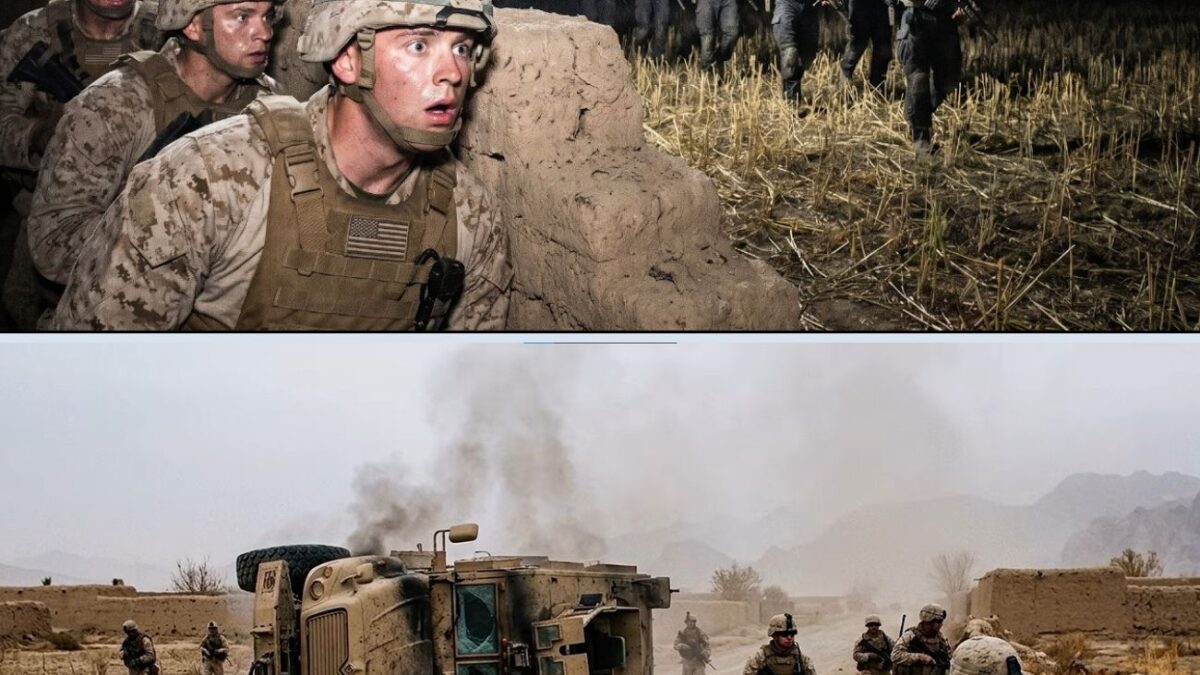
At a quarter past 11 on the night of 9th December 2010, the temperature on the east bank of the Helmand River stood at about 1° above freezing and a wind out of the northwest was lifting the fine gray dust of the valley into the air in sheets.
Inside a mud-walled compound 6 km north of the Sangin District Center, 40 United States Marines lay behind sandbags they had filled by hand, counting rounds.
The compound carried a number on the company’s map. In this account, it will be called Anvil. Its radio operator had just written a figure on the back of his glove with a marker pen, roughly 200.
Nobody was coming by road because Route 611 had been seeded again after the engineers left it.
Nobody was coming by air because the helicopters sat at Camp Bastion with their blades tied down against the wind.
What was coming on foot from the south through fields the Marines had learned to fear was six men from the Special Air Service. No vehicles, almost nothing anyone at Anvil would have called a rescue.
To see why six men were the only answer that existed that night, you have to start with the district itself and with the people who had just given it away.
Sangin sits in the Helmand River Valley at roughly 900 m, about 95 km northeast of Lashkar Gah. And for more than a decade before 2010, it had been the commercial heart of the southern opium trade.
The valley floor was what the coalition called the green zone, a narrow band of canal-fed fields, mud compounds, orchards, and tree lines bounded on both sides by the open desert and cut lengthways by a single road, Route 611, running from Highway 1 at Gereshk up to the Kajaki Dam.
The British had arrived in the district in 2006 with a small force and a large ambition and had ended up holding it from a string of fortified outposts they called patrol bases. Many of them barely more than a few compounds with a wall.
By the summer of 2010, more than 100 British servicemen had died in the district, nearly a third of all British deaths in Afghanistan to that point, and the outposts themselves had become the problem. So many of them to defend that a large part of the garrison existed only to keep the garrison alive.
In July 2010, the Defense Secretary, Liam Fox, announced that the British would hand Sangin to the Americans. The Ministry of Defense took pains to say it was a redeployment and not a retreat. And a retired commander called it a handover and not a pullout. And both statements were true in the way that official statements are true.
On 20th September, 40 Commando Royal Marines handed the district over and United States Marines took it.
The first of them, the third battalion of the seventh Marines, spent the late summer pushing the Taliban away from the river in an effort they called Sangin Sunrise.
In early October, they were relieved by the third battalion of the fifth Marines, a unit with the nickname Darkhorse and a commander, Lieutenant Colonel Jason Morris, who had come to the district believing, in the words of one account, that the Taliban had been fighting there for years and his battalion had not.
Morris had a habit that told his Marines more than any briefing. Inside the wire of his own base, he had his men bury fake bombs in the dirt and then search for them day after day until finding a buried charge by hand became something the body did without being told.
The Americans had looked at the British experience in Sangin and drawn a blunt conclusion that a force which retreats into its bases gives the enemy the countryside. So, the Marines went out. They patrolled on foot. They patrolled in mine-resistant vehicles when the roads allowed it, and they stayed out.
It was an aggressive approach, and the price was posted every week. By 6 November, 13 men of the battalion had been killed since the move into Sangin. Four of them in a single explosion that had destroyed one of their mine-resistant vehicles on a road they believed had been cleared.
Later that month, two more Marines were shot dead inside a patrol base by an Afghan soldier who fired on them and fled. A memorial service was held on 26 November for three more.
Between 29 November and 6 December, in an operation known as Outlaw Wrath, the engineers of the 1st Combat Engineer Battalion pushed up Route 611 towards Kajaki with line charges and mine detectors and cleared some 50 bombs from the road, turning a journey that had taken more than 8 hours into one that took 18 minutes.
Every Marine in the district understood what that figure meant. 50 bombs had been under the road, and the engineers had found those, and nobody could say how many remained in the fields on either side.
Anvil stood in that unfinished country. Its garrison on the night of 9 December was a reinforced platoon of the sort that every rifle company in the district had been forced to assemble in pieces. Rifleman, a machine gun section, two engineers with a mine detector and a cutting charge, a navy corpsman, a forward air controller, a mortar team with a single tube, and an Afghan National Army squad that had shrunk since the November shootings from 11 men to six.
40 Americans in all, counting the Afghans as a courtesy.
The commander of the compound was a captain whose name, for the purposes of this account, was Briggs. He was 31 in his second deployment, and he carried a hand-drawn map of his own patrol area in the cargo pocket of his trousers because he did not trust the laminated one on the wall.
Life at Anvil had a rhythm that had nothing to do with heroics. Water came in on the backs of the men who patrolled out because a truck could not reach the compound without a day of preparation and a road clearing team. And by the second week of December, the garrison was drinking from jerrycans that had frozen overnight into slabs.
The stove in the platoon’s one habitable room burned a mixture of ration cartons and scavenged wood. Men slept in their boots.
A corporal had hung a hand-lettered sign over the sandbagged door that read, in careful capitals, “The Hotel.” And nobody had taken it down because it made someone smile each morning, and that was the only reason a sign needed to exist.
His gunnery sergeant, a man this account will call Teague, was the one who noticed first.
A little after 9:00 that evening, the compound’s regular evening patrol had come back without incident, and Teague had walked the wall line and found that something he could not name had changed.
The dogs in the village to the east had stopped barking. The call to prayer had come and gone from the nearest mosque, and the usual evening traffic on the footpaths, the boys driving goats, the men walking back from the canal, had not come at all.
Teague had spent a tour in Iraq and a summer in Helmand, and he told Briggs the thing that every Marine in the district had learned to say in the first week, “When the farmers go inside early, somebody has told them to.”
Briggs sent a report to the battalion at 9:40. The reply he wanted, a platoon on its way, did not come back because by 10:00, the northwest wind had risen to the point where the unmanned aircraft overhead were returning dust-blind screens.
At 10:20, the first rounds hit the north wall. They were not a probing burst, they were a heavy sustained volume from at least three directions, followed within the minute by rocket-propelled grenades that struck the sandbag line and threw a spray of dry mud over the machine gun position on the roof.
Briggs counted 11 muzzle flashes on the northern tree line and stopped counting.
It was an old Taliban technique and by December 2010, the Marines had met it often enough to recognize it. Men came in small groups from separate compounds, never moving as a body until the night had enough of them to matter.
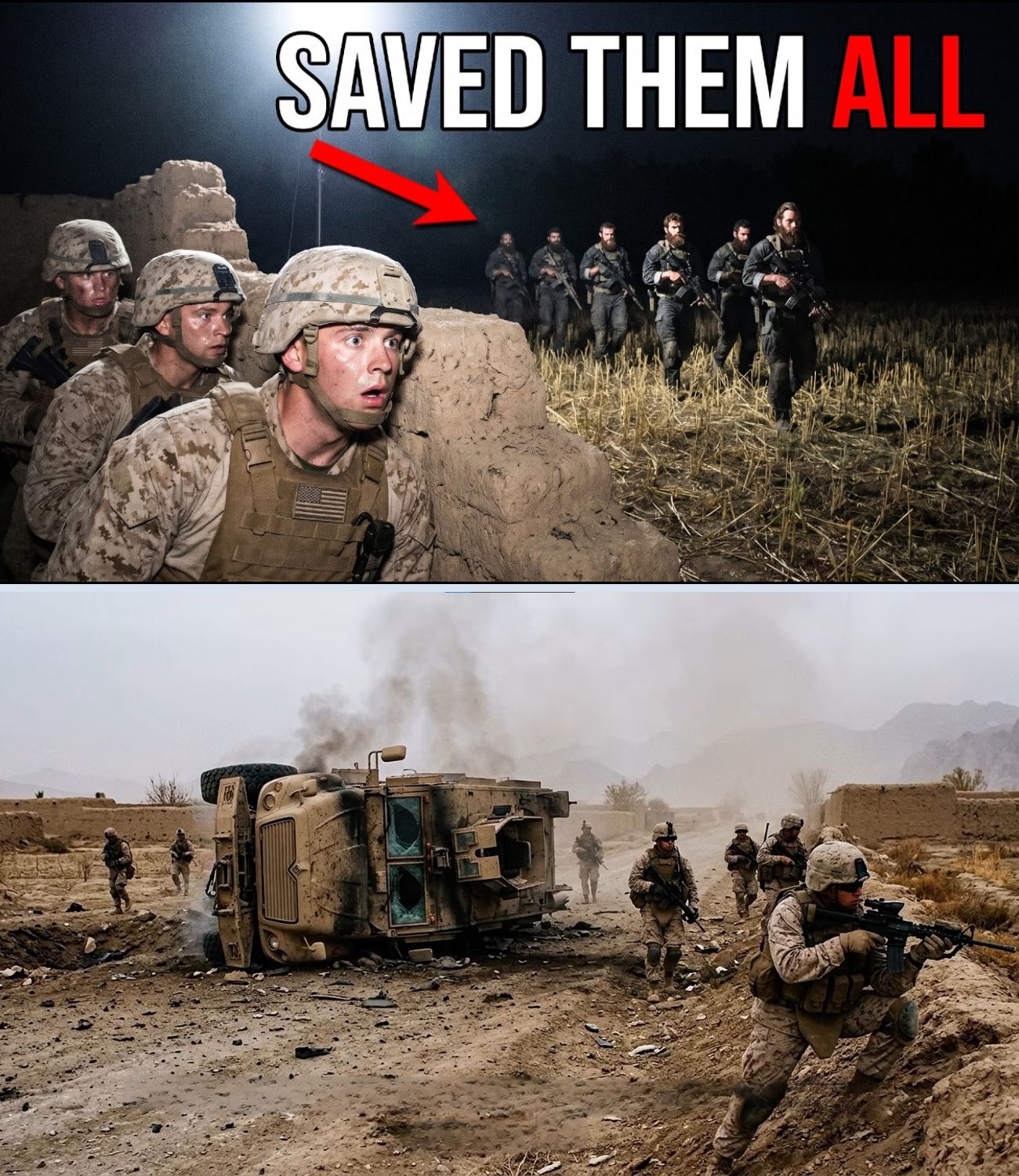
The district’s valley floor was ideal for it. Between the canals and the tree lines, a fighter could cross a kilometer and a half of ground without one standing in the open and every compound along the way was a place to hide a rifle, a belt of ammunition, a bag of rice.
The Marines at Anvil could not see them. They could only measure them by what arrived and what arrived at Anvil that night across the first 90 minutes was a rate of fire the corporal on the roof described afterward as the sound of someone dragging a chain across a tin roof.
The Taliban commanders behind it had done what any patient planner would have done with the winter. For 2 months, they had watched the Marines of Anvil go out on the same few lanes because those were the lanes that had been cleared and a force that is careful about where it steps is also unavoidably predictable about where it goes.
The fighters had learned the patrol times the way the Marines were learning the fields. They knew which compound the machine gun covered and which it could not. They knew the engineers had left the road. And they knew, because everyone in the valley knew, that a base like Anvil could be isolated by a handful of well-placed charges and a bad night for flying.
By midnight, the radio count had reached the figure on the glove. The battalion signals listeners had logged more than a dozen separate Taliban commanders talking to each other on handheld sets and a fighter’s voice that had said in Pashto that the foreigners were finished.
A surveillance aircraft in its last clear pass before the dust closed in had counted vehicles and motorcycles stacked in compounds beyond the eastern tree line. 60 fighters would have been a serious attack on a platoon-sized base. 100 would have been a siege. The figure passed up the net with no one willing to put a decimal point on it was 200.
The first problem with the arithmetic was that the only people who could do anything about it were bound by a procedure.
The coalition’s tactical directive, which General David Petraeus had reissued in August to every unit in the country, was clear that a commander approving an airstrike or a mortar mission had to be satisfied that no civilians were present and that where he could not assess the risk, he could not fire.
It was a rule that had been written in answer to a real problem, a string of strikes on compounds that turned out to be full of families. It was also a rule that applied by a tired lieutenant colonel on a watch floor 8 km from the fighting made a drifting dust cloud into a legal obstacle as well as a physical one.
The man on that watch floor in the regiment’s operation center was a lieutenant colonel whom this account will call Whitcomb. He was not a coward and he was not a bureaucrat. He had the picture in front of him, a screen with a red marker over Anvil, a count of enemy that grew each time a new voice came up on the intercept, and a Harrier section with 11 minutes of loiter time over Sangin that had been circling since 10:30.
What he did not have was an eye on the ground that could tell him whether the compounds around the base were empty. The forward air controller at Anvil could see muzzle flashes. He could not see walls, doors, or children.
Whitcomb asked three times whether anyone could confirm that the eastern compounds were clear and three times the answer was no. The Harriers made two dry passes and went home to refuel. The men in the sandbags heard them go.
The quick reaction force was the second option and it died in the same room. A rifle company at the district center kept a platoon on 30 minutes notice with four mine-resistant vehicles and a mine-clearing roller and the platoon’s commander, a first lieutenant, was ready to go at 11:15.
The regiment would not release him. Route 611 had been cleared for a single week and then left unwatched, and an engineer’s report received that same afternoon had described the freshly disturbed soil at three places along the stretch the platoon would have to cross.
The four men lost together in one mine resistant vehicle that autumn, a lesson the entire battalion had absorbed, was not an abstraction in that room. Whitcomb was being asked to send 12 men and four vehicles at night down a road he knew to be wired to relieve 40 men who were, for the moment, still holding. He declined. He told the battalion to hold the force in readiness for daylight.
There was one more option, and it belonged to someone else.
The Americans in northern Helmand worked next door to a British special forces task force that had been in the province since the winter, and a liaison officer from that organization sat in the American headquarters at Camp Leatherneck beside the British base at Bastion to prevent exactly the sort of misunderstanding that tended to follow when two armies owned the same ground in different colors.
At 11:40, a Marine major from the regiment staff walked to that liaison officer’s desk and asked a question that no one on the American side had asked before, whether the British could do anything for a base that nobody could reach.
The answer depended on a British colonel whom this account will call Aldis, who commanded the task force from a hardened building on the Bastion side of the fence, and who was, at that hour, in the middle of an argument.
His squadrons were committed. Two of his troops were on the ground elsewhere in the province on raids planned for weeks, and the aircraft he would need to move anyone were the same Chinooks that were tied down by the wind, a shortage so well known that a year earlier the British in Helmand had been counted at 10 Chinooks against the Marines’ 120 helicopters.
A request for help from an American regiment to a British special forces unit on a night when the unit’s own tasking was fully booked did not move quickly through a chain of command that had been written for another purpose.
Aldis listened. He asked what the Marines wanted. When he was told that they wanted a rescue, he said what an officer in his position was bound to say, that he did not have one to give.
Aldis did not give an order, and that was the point. A colonel in his position could order a squadron into an operation. He could not decently order six men to walk 9 km into an ambush for another nation’s Marines on his own authority, with no air, no vehicles, and no reserve, and he knew it. So, he did the only thing a careful commander could do. He passed the question down to the person who would have to answer it with his legs.
What he did have was a troop commander 20 km from Anvil, between jobs, with two Jackal vehicles and a patrol of six.
The patrol commander’s name, for the purposes of this account, was Hollis. He was a sergeant in his 30s from a regiment that traced its lineage to the Western Desert, and he had been in Helmand since the summer.
When the call reached him at 10 past midnight, he had been asleep on the floor of a vehicle for 90 minutes. He listened to the colonel’s offer, which was not an order, and which came with the unusual qualification that nobody would think any less of him for saying no.
He asked three questions. How long had the Marines been fighting? How many casualties? And whether anybody on the American side knew what ground lay between the nearest point a vehicle could safely go and the compound’s wall.
The answers were 2 hours, 3, and no.
Hollis took the patrol’s own map out of its waterproof sleeve and spread it on the bonnet. The green zone ran across it as a dark band on both sides of the river.
Somewhere in the third square from the top, a kilometer and a half south of Anvil, the map showed a long, thin line, one of the district’s older irrigation canals with raised banks on either side. It was an old route. Farmers used it, which meant that the banks had been walked daily by people who did not want to die in their fields, and that the Taliban, who laid their bombs where foreigners were expected to walk, had no reason to waste explosives on a footpath that children used.
That was the whole of the plan, and it was not a plan so much as an observation. It was 9 km from the last firm road to the wall of the compound.
His five men were the people he would have chosen anyway. A signaler, this account will call Daker, who carried the radios and could tell by ear whether a Pashto voice on the net was a farmer, a policeman, or a commander. A medic, called Price, a Welshman who had spent the previous winter treating frostbite on a mountain, and treated the Helmand cold as a minor matter. A trooper, Tarn, who could navigate a featureless landscape by the stars, as the regiment’s founders had done in the desert. A younger man, Keogh, in his third month, who had been told to come because he was the best shot with the sniper rifle they would be carrying. And a corporal named Marsh, who had joined from the Parachute Regiment, had a bad knee and carried the heaviest pack because he insisted that carrying it was the only thing that stopped it hurting.
They left the Jackals at an abandoned compound at the edge of the cultivated land at 20 to 2:00 in the morning and sent them back.
This was the first decision that mattered because the vehicles had weapons and armor and a radio of their own, and any soldier in the world will tell you that leaving them is the opposite of caution, but the vehicles made noise. They needed roads. They would be seen from 4 km away on a clear night and heard from one on any night, and a patrol that wanted to reach Anvil unannounced had no use for either.
Hollis took what a man could carry on his back and nothing else. Each man had 4 L of water and a bag of dates. The packs came to between 35 and 40 kg. They carried rifles, a sniper rifle, a tripod-mounted laser designator, the radios, three tourniquets each, and a bundle of Afghan bank notes, several thousand Afghani in 10s and 20s for a purpose that Hollis did not explain.
The cold arrived at once. A dry, hard, flat cold with the wind coming up the valley and carrying the gray dust into their eyes.
They moved in a staggered file, six paces between men with Tarn at the head, Daker behind him, and Marsh at the rear, walking backwards for 10 steps out of every 50 to look at the dark behind.
There was a moon, but it was a thin one, and the dust took even that. In that light, a farmer’s footpath was a paler stripe across the ground, and a man walking on it could feel through his boots where the compacted soil ended and the loosened soil began.
The crisis funnel began 800 m in, as it nearly always does, with something small. The canal they had chosen was supposed to be dry. It was not.
Somebody had opened the sluice gate upstream, and the banks, which the map showed as firm, ran with several centimeters of freezing water and a slurry of mud that took a boot to the ankle with every step. It slowed them to half the planned pace.
Daker, whose job it was to keep the time, told Hollis in a whisper that they were going to run out of night.
Hollis, who had been reading the water, said that he thought the sluice had been opened on purpose to flood the lanes a patrol like theirs would use, and to leave the dry ground to the Taliban’s own people. It was a guess. It was also the first time that night that anyone in the patrol realized the Taliban were thinking about the ground as carefully as they were.
At half past 2:00, they hit the second problem. Tarn, at the front, stopped without lifting his hand and went down on one knee.
Ahead, where the canal bank met a track, a line of disturbed earth crossed the path from one side to the other with a thin darker line in it the width of a finger. It was a command wire, buried and lightly covered, running to something off to the left.
It was not meant for the footpath. It was meant for whatever walked there tonight, and it told Hollis two things that he had not wanted to know. The Taliban had not simply gathered fighters on the east side of Anvil. They had also prepared the ground to the south for anyone who tried to come to Anvil’s rescue and had done it in the previous 48 hours. Whoever was commanding the attack was thinking about the relief as well as the assault.
They went round it. It cost 40 minutes and a wide loop through an orchard in which Price behind Thorne put his foot through a rotten irrigation plank and spent a quarter of an hour in dead silence with his boot full of ice water saying nothing because the moment a man complains in that kind of dark is the moment the others stop trusting his silence.
At 3:00, the patrol was a kilometer and a half from Anvil and they could hear it.
The gunfire was no longer continuous. It came in pulses, a hard burst from the north, a pause, a ragged answer from the compound, a longer pause, then the thump of an RPG and the flat dull sound of a grenade going off on the wall.
Dacre put the handset to his ear. The Marines net was almost empty. The signalers inside Anvil had stopped talking because they had stopped having anything good to say.
Then a dog barked. It was a farm dog in a compound 40 m to the right and it had picked up their scent on the wind.
Somebody inside the compound kicked the door open. A man came out into the yard with a rifle and a torch and stood there swinging the light across the field.
Hollis put the patrol down in the canal and lay in 2 in of freezing water for 11 minutes with the torch beam passing over their packs. A second man came out. They talked in low voices.
Dacre, 6 m away and flat on his stomach, understood about half of it, enough to be sure that the men in the yard were not farmers. They were a Taliban security picket, one of dozens placed in compounds that morning and they were talking about someone called the commander who had arrived before dawn and expected the Americans to have fallen by then.
Then the dog stopped and the torch went out and the men went back inside to the stove.
It was the most useful thing that happened all night. When the patrol stood up out of the water, soaked to the thigh and shaking with the cold, they knew something that nobody in the American headquarters knew. The rifle fire had been a screen. The real enemy force, the part that mattered, was still gathering. It had not yet reached the wall.
The count of 200 assembled out of fragments was not quite wrong, but the part of it that was actually engaged at Anvil that minute was probably fewer than 70 fighters kept in con- tact to hold the Marines in place until the rest arrived before first light, which meant that the fight was a clock and the clock had a time. Hollis wrote it down in pencil because pencil works when the paper is wet.
Then he led the patrol around the picket compound the long way by a ditch that ran at the edge of a poppy stubble field and at 20 to 4, the south wall of Anvil rose up out of the dust.
A Marine sentry on the wall saw six dark shapes come out of the field in a file and a rifle came up.
Daker, who had been walking at the front for the last 100 m, called out the one thing a signaler in a foreign army can call out that will not get him shot, which was the name of the American unit’s forward air controller, whom he had spoken to on the radio twice the night before, and the rifle stayed where it was.
A hand pulled the patrol over the wall one man at a time. Keogh went last over the wall because he had been given the sniper rifle and the job of watching their back, and as he came down onto the compound’s dirt floor, he found that his hands would not close. The cold had taken them.
Price, without a word, pulled Keogh’s gloves off, put both his hands inside his own jacket against his ribs, and held them there for 2 minutes while the first Marine to reach them looked on in silence. It was the sort of thing the Marines noticed. They would remember it longer than the rest.
They were met by a captain with a gray face and mud to the elbows who looked at the six men, the packs, the lack of any visible vehicle, and said in a voice that carried very little emotion at all, “That’s that.”
Hollis said, “That was it.”
Briggs looked at them a moment longer. Teague, standing behind him, had the grace not to say anything, though several Marines nearby remembered later that it took visible effort. It would be easy to read that as contempt, and it was not. Briggs had been awake for 20 hours, had lost three men in the previous month, and had spent the evening listening to his battalion explain on the radio why the people he had been promised could not come.
The sight of six wet foreigners at 4:00 in the morning was not what he had been promised. It was, however, the only thing that had arrived, and it was the first time in 5 hours that anyone had walked into his compound instead of speaking to it through a handset.
What he said next was a practical question. How many of them were medics?
Price said, “One.”
Briggs said, “He’s got work.”
The compound was in worse shape than the radio traffic had suggested. Three Marines were wounded, one seriously, with a fragment in the thigh that the corporal had packed and tourniqueted, but could not close. The mortar tube had one box of rounds left. The machine gun section on the north wall was down to its last two belts per gun, and two of the six Afghan soldiers had stopped firing and were sitting against the wall with their helmets in their laps. The water was nearly gone.
The only radio that still worked was the forward air controller’s, and the controller himself, a young captain with a cracked voice, had been talking for 5 hours to aircraft that could not see.
It was there that the six began, without discussion, to do what they had actually come for.
Dacre sat beside the American controller and listened to his net for 10 minutes without speaking, the way a good mechanic listens to an engine.
Hollis walked the wall with Teague, not giving orders, just looking, asking short questions about where the enemy had fired from, and which side had the lighter volume.
Kayo, who had come all that way carrying a sniper rifle, was put on the southeast corner on a stack of ammunition boxes, a position from which the Marines had not been able to see the nearest tree line and now could.
Price took the thigh wound from the corporal, closed it, and told the corpsman, a quiet young Marine from Ohio who had been working alone for 5 hours, that he had done everything right.
None of this was dramatic. That was what the Marines remembered. The British did not shout and did not take over and they certainly did not fight the Taliban in any sense a film would recognize. They watched and then they asked questions and then they changed a few small things and the sum of those things was the difference between a position that was surviving and a position that could think.
The most important of the changes came from the designator. Hollis and Daker had spent a quarter of an hour on the roof with the American controller and from the roof with the thermal sight Keogh had carried, the picture was different from any the Marine had seen.
The dust was thinner above the third meter. Through it, the sight showed warm shapes in two compounds beyond the eastern tree line, 15 or 20 men in each, many of them carrying heavy loads, moving in a line along the back of an irrigation embankment.
They were not attacking. They were resupplying. They were bringing ammunition and the people with the ammunition were the people whom Hollis had overheard in the dark.
The directive’s question, the question the lieutenant colonel on the watch floor had been unable to answer, was whether anyone in those compounds was not a fighter. Hollis and the Marine controller looked at them together for 6 minutes.
They watched the line of men, the weapons, the way they moved and the way they stopped and a woman or a child, had one been present, would have been visible against the heat of the stoves. There were none. The compounds had been emptied by the people who now held them, which was what Teague’s dogs and goats had been telling the base since 9:00 the evening before.
Daker passed the picture to the Harrier section who were back on station with fuel for 20 minutes and the controller gave the clearance in the form the regiment required.
The bombs fell at 4:20. Two of them precise on the two supply compounds beyond the eastern tree line and the dull white flashes were visible from the roof.
The effect on the attack was not instant. It was progressive. The rate of fire from the north slackened, then stopped, then rose again in an angry disorganized burst and then stopped for longer. The men who had been carrying the ammunition forward had been caught with it.
In the next 40 minutes, the tree lines to the north and east stayed quiet in a way they had not been quiet for 6 hours and Teague, who had been counting rounds all night, started counting something else.
That was the moment Hollis told Briggs what he thought. He did not say it as advice. He said it as an observation in the same voice he had used to ask about the ground.
The attackers had planned for a night, he said, and for a morning. By first light, the rest of them would be at the wall. The picket they had seen would have reported that the Americans had visitors and the relief would not arrive by road because the road had been seeded to prevent it.
The helicopters would not fly until the wind dropped, which the forecast said would be 9 or 10. The compound had 5 hours of fighting in it, perhaps, and not 6.
The best chance of every man leaving alive was not to wait for a rescue that the Taliban had spent 2 days preparing to meet. It was to leave now in the dark by the one route that the Taliban had not thought to prepare for, which was the way six men had just come in.
Briggs asked the obvious question. How did he know the way back was clear?
Hollis said that he didn’t, exactly, but that the Taliban had planned their ambush for the road and the obvious tracks. And the canal bank was the one place where they had had no reason to put explosives because their own farmers used it. The wire they had met was in a spot where the canal crossed a vehicle track, not on the footpath itself.
The plan was to walk out along the same line with the wounded on stretchers, using the six as a front and a rear guard. There was no way of making it safe. There was a way of making it less certain to fail.
It was Briggs’s decision and it should have been Whitcomb’s. He called the regiment on the one working radio and gave the lieutenant colonel the picture, the situation inside the compound, the enemy that had been engaged, the supply compound struck, the British assessment of the enemy’s plan.
He asked for permission to withdraw on foot at 4:35.
There was a long pause on the net. Whitcomb was not a man to take a decision lightly, and the decision he was being asked to take involved abandoning a patrol base for the first time in the battalion’s tour.
He asked how many Marines would leave. All of them.
He asked who would hold the wall while the others went.
“Nobody,” said Briggs. They would go in order, the machine guns last.
Whitcomb told him to hold. Briggs told him, with a politeness that his staff afterward remembered as colder than any shouting, that he was going to move. He said he would send his position every 10 minutes. He said it was his judgment, and he put his name to it on the net for the log.
Then he put the handset down and gave the order.
The preparations took 20 minutes, and they were the quietest 20 minutes of the night. The Marines broke down what they could not carry. The mortar was rendered useless and left. The wounded were strapped onto improvised litters, one of them made from a door lifted off its hinges. The Afghan soldiers were told they could come or go as they chose, and all six came. Radios were wiped. The sensitive paperwork went into a hole and was burnt.
Teague went along the wall one last time and found on the sandbag by the northeast machine gun a single round standing upright where a Marine had put it as a counter and left it there.
They went at 4:55. Tarn first with Hollis behind him. Then the Marines in file with the litters in the middle. Briggs near the front. Teague at the back with Marsh, who had insisted on being there. Price and the Corman walked on either side of the worst of the wounded. Daker carried the radio, and the American controller, whose cracked voice had finally given out, carried nothing but the laser.
46 men went out through the south gate in the cold over a wall that a minute earlier had been the entire world, and into the dark.
They went along the canal. It was slow, and it was exactly as bad as Hollis had said it would be. The mud, the freezing water, the weight of the litters, the long file stretching away in the dust.
Twice they stopped. Once for a man who had gone down with cramp, and once because Tørn thought he had heard a motorcycle. And each time they lay in the water for several minutes and listened.
At half past 5:00 the first light came, a pale gray smear at the top of the sky. And Hollis, looking back, could see the dark outline of Anvil’s North Wall a kilometer behind them with the first tracer of the morning rising from the tree line beyond it.
The Taliban had arrived. The reinforcements, the part of the force that had still been gathering, came through the tree lines at first light and found the compound quiet. They fired on it for 20 minutes before anyone went in. When they did, they found a bunker with its roof torn open, three mortar rounds, a cooking pot, and a single standing cartridge on the sandbag by the northeast gun.
By then, the column was nearly 3 kilometers to the south and moving.
The dust cleared at 9:00. By 10:00, the helicopters had lifted from Bastion and a section of Cobras flew a line along the canal and found 46 men sitting along its bank outside a rifle company’s patrol base eating ration packs and drinking from bottles of water that someone had handed over the wall.
A Marine captain who had been the company’s executive officer stood with his hands on his hips and counted them twice with his lips moving. Then he asked Briggs in the flat voice of a man too tired to be delicate why he had walked out of a patrol base without orders.
One small thing remained to be settled, and Hollis did it before he slept.
A farmer had arrived at the patrol base shortly after 9:00, an old man in a gray wool shawl, with a complaint that the foreigners and their wounded had trampled the winter wheat along the whole length of his canal bank.
Through the Afghan soldier’s interpreter, Hollis listened to him in full. Then, he counted out the bundle of Afghani he had carried since the Jackals, several thousand notes in 10s and 20s, and put it in the man’s hands.
The farmer counted it, too. He asked through the interpreter whether the foreigners would be using his bank again.
Hollis said he hoped not.
The farmer said, “In that case, the price was fair.”
The debrief 3 days later was a good deal more careful than the conversation on the bank.
The regiment staff wrote a summary that credited the Marines with holding a position for 6 hours against a numerically superior enemy, and recorded the use of precision air support on enemy supply nodes. It said that the garrison had withdrawn on foot on the commander’s judgment. It did not use the word British.
In the margin of an annex, in a different handwriting, someone had added a single sentence, which Briggs read and then did not mention to anyone for years, “The sixth did not fight the Taliban. They found where the Taliban wasn’t.”
Whitcomb’s own reaction was more complicated than anyone expected. He had refused to authorize a withdrawal and been overruled by a captain on a radio at 5:00 in the morning, and he was left with a choice of making that a disciplinary matter or accepting it. He chose to accept it. He wrote in the log that the commander on the ground had a better picture than the headquarters did, which was the kind of sentence that regiments are not generally comfortable writing.
Aldis, in his own report, noted that his troop had not been tasked to the operation and that the patrol commander had exceeded the scope of his instructions by going in on foot. He did not recommend any action. He added that the matter had been handled by the troop at the lowest possible level, and that the Americans had expressed their thanks.
The thanks were not unmixed. Some of the Marines at the district center were irritated in the way that a proud organization is irritated when a stranger solves its problem with a bag of water and a map. Others were not.
One of the platoon sergeants who had walked out along the canal said afterward with a dry bluntness that has been repeated ever since that he had spent 4 months being taught how not to die on the road, and a man from another army had taught him in one night how to walk next to it.
What the larger system took from the night was, in the end, a question of willingness.
The Marines in Sangin had firepower enough to flatten the entire valley and a staff competent enough to plan an operation of any size and an air wing with more helicopters in one province than the British had in the whole country. What they had lacked at 11:15 on 9 December was not equipment. It was permission to take a risk that did not fit a template, to send six men without vehicles to walk 9 km through an enemy ambush, and then to walk 46 men back out again along the same line on the strength of a sergeant’s reading of the ground.
Nobody in the chain had said no, exactly. They had said, in sequence, “Wait for the weather. Wait for the road. Wait for confirmation. Wait for the morning.”
The six had not waited.
The lesson went further than the night itself. In the weeks that followed, the Marines of 3rd Battalion, 5th Marines, changed the way they moved around the green zone. They walked more, drove less, and learned from the farmers which paths were walked daily because the farmers’ feet had cleared them.
They stopped assuming that the newly cleared road was safe. In November and December, when Kilo Company of the 3rd Battalion, 25th Marines, and Echo of the 2nd Battalion, 9th Marines, were fed into the battalion’s line to replace its losses, new men were given that one idea before they were given anything else, that the ground itself will tell you where the bombs are not if you know how to read where people live.
The battalion stayed in Sangin until April 2011 when the 1st Battalion, 5th Marines, relieved it. It had lost 25 men killed and some 184 wounded, the heaviest casualty rate of any Marine unit in the war up to that time, and it left behind a district that was quieter than the one it had inherited.
Hollis’s patrol went back to its parent troop the same day, and then out again on another night and another. The British never confirmed the operation or its name or the names of the men who took part. None of them asked to be thanked.
A few weeks later the squadron rotated home, and the six men at the center of this account went into the regular business of their regiment, which is not talked about. Marsh retired the following year. Kay Hob trained recruits. Tarn is said to have taught navigation to a new generation of selection candidates using a story about a canal.
And in the operations tent at the Sangin District Center, pinned beside the whiteboard where the battalion’s tally of days, bombs found, and men lost was written in blue marker, there was a hand-drawn map. It had been brought in by a captain, and it showed a stretch of the Helmand Valley south of a patrol base that no longer existed, in pencil with a single line along a canal bank, and under the line, in a sergeant’s handwriting, two words, “Walk it.”
You Might Also Enjoy

“We Thought They Would Negotiate”—What Argentine Soldiers Said When The British Attacked Goose Green

“You’ll Never Finish My Ruck March, Limey” — US Sergeant Who Challenged the SAS, Then Fell Out First






