When the Taliban Had Navy SEALs Cornered — But the SAS Came From the Ridge.
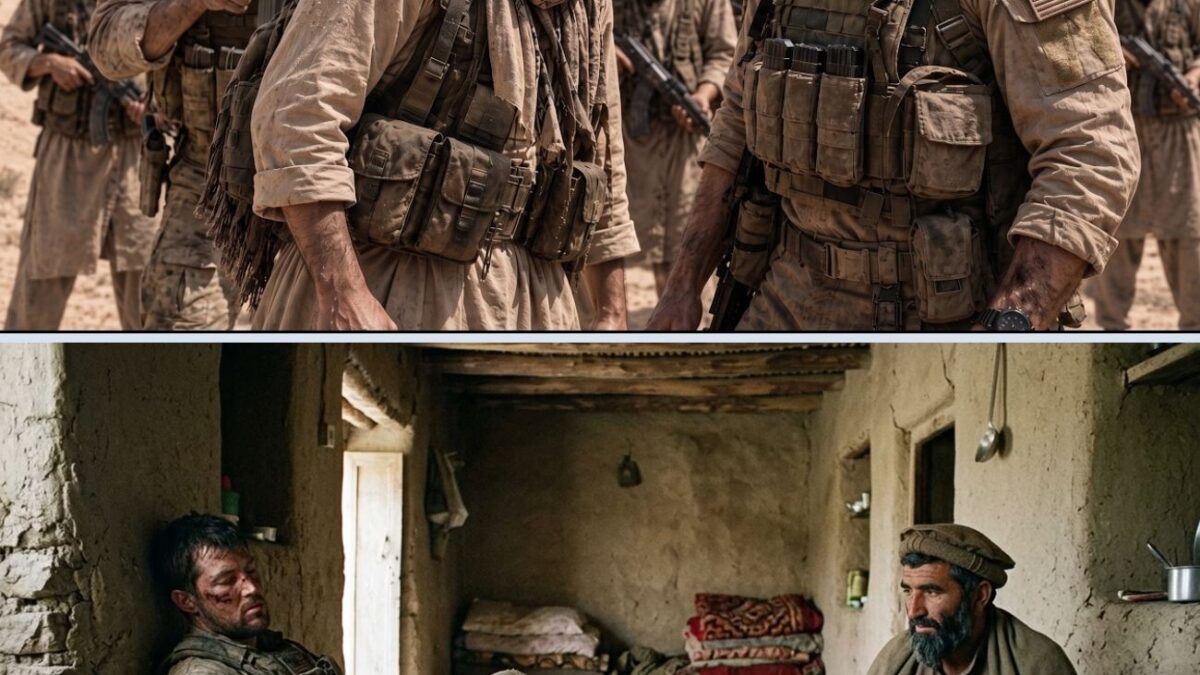
At 08:20 on the morning of 9 September 2005, on a rock spur above an unnamed side valley of the Pech River in Kunar Province, six American Navy SEALs lay behind a wall of stones they had stacked themselves over three nights.
The wall was knee-high. It was the only cover on the ridge. Below them, at the edge of the oak and cedar, a line of men with Kalashnikovs and one PKM machine gun was spreading out along both sides of the spur. They were not climbing it. They were closing it.
The team’s radio man had been talking to the operations center for over an hour. The Chinook that was supposed to carry them out had not left the ground, and the reason had a date attached to it, 28th June, 10 weeks earlier.
The last full bottle of water had gone around the wall twice. Nobody was coming up from the valley. The only people who could still reach that spur were already on the mountain above it, and they had not been told the SEALs were there.
On 28th of June 2005, in these same mountains of Kunar, a four-man SEAL reconnaissance team had been found by a goat herder, had let him go, and had been hunted down and destroyed within hours. Three of the four died on the ground.
A quick reaction force of 16 men, eight SEALs and eight crewmen of the 160th Special Operations Aviation Regiment, the Nightstalkers, lifted off in an MH-47 Chinook to reach them, and a rocket-propelled grenade brought that helicopter down on the mountainside. All 16 died. 19 Americans in a single day.
The sole survivor, Marcus Luttrell, crawled and stumbled for days and was finally hidden and protected by villagers until American troops found him. It was the worst single day in the history of the Navy SEALs.
And everybody who sat in an operations center after that afternoon did the same arithmetic. A helicopter flown into a valley where the enemy was already awake was a helicopter that might not come back. 16 men had been aboard the last one. By September, nobody had written the rule down in an order, but everybody knew it.
No Chinook went into a hot valley in the Pech without armed escort, without a clear ceiling, without a plan for being shot at, and without a colonel’s signature. That is the world a six-man SEAL element walked into on the night of 5 September.
They had been given a job that sounded small. Sit on a ridge above a trail network that ran from the Pakistani border toward the Pech Valley. Count who used it and report. The parliamentary elections were 9 days away, due on the 18th. And the people who wanted the elections to fail were moving men and mortar rounds along exactly those trails.
The element had been built from a platoon at Bagram. And the man who led it was a lieutenant in his early 30s. For the purposes of this account, his name was Nate Corbin.
Beside him went a senior chief of 18 years service who the others called the chief, Dale Weller. Thomas Reyes carried the radios. Eddie Park walked point. A corpsman, Joel Brant, whom everybody called Doc, carried the medical bag that weighed as much as a small child. Cole Merritt carried a scoped rifle and a notebook in which he wrote in pencil every time a man crossed the trail.
They were not reckless men. If anything, they were the opposite. After 28 June, every team heading into Kunar had spent hours at Bagram going through that day minute by minute as a lesson in what not to do. Corbin had read the report twice. He had also been told in plain words by the task force staff that if his team got into trouble, help would come, but that help would have to be argued for.
They flew in by helicopter in the dark of 5 September and were set down on a bare saddle two valleys away because nobody wanted to put a rotor wash on the ridge itself. From there they walked.
It took them two nights to reach a spur at roughly 2,900 m, a long finger of limestone and broken rock that ran north to south and gave a clear view of three separate trails below. They each carried between 35 and 42 kg. Water was 4 L a man plus purification tablets for what they might find in the streams. Food was for 6 days. They did not carry tents. They built a hide of loose stone along the spine of the ridge, covered it with a camouflage net, and settled down to count.
For 3 days it worked. Merritt wrote down 41 men on the trails in 72 hours, most of them carrying nothing more than a blanket roll and a rifle, and one string of 11 mules carrying wooden crates that Reyes reported by satellite radio to Bagram as consistent with mortar ammunition. The operations center thanked them. Nothing else happened.
That was the problem with the quiet, Chief Weller said afterward. The quiet made everybody think the ridge was safe.
What none of them knew, and what nobody in the operations center at Bagram had cross-checked, was that 9 km to the east on a higher ridge across a deep gorge, four other men had been lying behind another wall of stones for 11 days. They were watching the same trails. They were British, and they had never heard of Nate Corbin.
The four men on the eastern ridge belonged to a saber squadron of 22 special air service regiment, the regiment that the British Army keeps in Hereford and rarely admits to having anywhere. Their patrol commander was a sergeant in his late 30s and the regiment does not release the names of its men. For the purposes of this account, his name was Dan Whitlock.
With him were a signaler, Pete Harro, a medic, Ollie Grange, and a Welsh sniper with a very quiet voice, Reese Bevan.
Whitlock’s tasking was not the SEALs tasking. His squadron worked for a different line of command. It sat in a compound with its own radios and its own staff, linked to the American task force through a liaison cell and a couple of shared telephone numbers, and the arrangement had a specific purpose. The British government in 2005 was prepared to commit a small number of special forces to Afghanistan and was absolutely not prepared to see them in the newspaper.
The squadron’s role was to find and report. It was not to fight a battle in the Pek Valley. In those 11 days, Whitlock’s patrol had learned the trails better than the men who used them. Bevan had a habit of naming the regular travelers by what they carried, the teapot, the accountant, the man with the umbrella. Harro’s own notebook held the times of 18 separate crossings at a stream bed that the Taliban obviously considered safe. Grange had counted the mules.
They had water for 3 more days and a resupply plan for the 13th. Their burgans, the big British rucksacks, weighed between 40 and 45 kg when they walked in and a good deal less now. Whitlock still carried the same thing in his smock pocket that he had carried on every patrol in 15 years of soldiering, a small tin of boiled sweets which he handed out one at a time like a man dealing cards.
It was Harro on the evening of 8th September who noticed the first sign that something on the mountain had changed. A trail that had carried a dozen men a day was suddenly carrying 20, then 30, all of them moving in one direction, west, toward the ridge across the gorge, and none of them carried a blanket roll.
At first, Whitlock assumed they were headed for a village. Then Bevin, who was watching through the sniper scope, said something in the same flat tone he used for everything. He said that a man at the front of the column was looking up at the spur on the far side of the gorge, and that he was not looking at it the way a man looks at a mountain. He was looking at it the way a man looks at a house he is about to enter.
Whitlock looked at the spur for a long minute. He saw rocks. He saw a dead tree. He saw nothing at all. But 3 minutes later, from the far end of the glass, he saw what Bevin had seen. A very faint, sharp line against the limestone, too regular for nature. A net.
That was the first time anyone from the SAS patrol knew that there were Americans on the other ridge. It was also the first time they understood that the Americans were about to be found.
The man who found them was a boy. His name was Gul Mohammed, and he was about 13. He had been sent out before dawn on 9th September to look for a lost kid goat, a task given to boys because boys are small and do not mind scrambling. He did not know there was anybody on the spur. He climbed the final slope with a stick in his hand and came over the edge of the ridge and stood face to face with Eddie Park, who was lying on his belly in the stones 8 m away with a rifle.
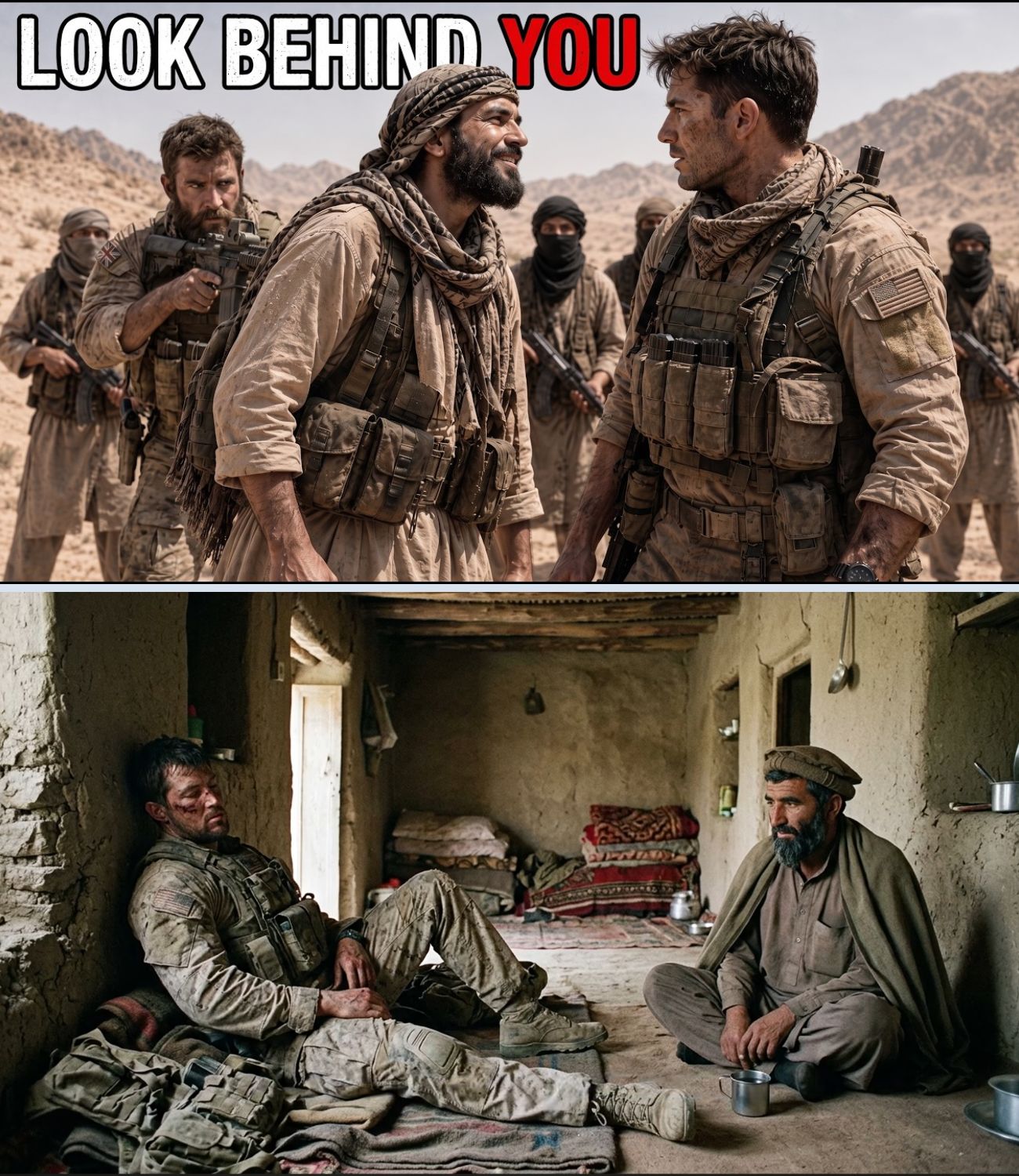
Nobody moved. Park told the team afterward that the boy looked at him, then at the net, then at the other men beneath it, and then, very slowly, raised his empty hands. That was all. A 13-year-old with a stick and a six-man team on a ridge that suddenly belonged to nobody.
The team had precisely this decision in the training slides from 20-28th June. A goat herder had found the Redwings team and the team had let him go. The men who made that decision had died for it, or so most Americans in the special operations community believed, and it had become the most argued over choice in the whole special operations community.
Corbin did not argue it. He did not have time. He had about 30 seconds. Weller was already crouching beside the boy and Reyes was already on the radio.
The chief spoke Pashto well enough to ask the one question that mattered. Where were the other men?
And the boy answered at once, pointing down the slope towards the village called Shahi, then at the sky, and then at his own mouth, which Weller understood to mean that the boy had been told to say nothing.
Corbin decided, in the time it took to ask, killing a 13-year-old was a thing he would not do and a thing his team would not forgive him for. Holding him was a thing that could not last. He did the third thing. He gave the boy a packet of food and a bottle of the team’s precious water, told him through Weller to go home and keep his mouth shut, and watched him down the slope until the cedars took him.
Then he told Reyes to call Bagram and tell them that the hide was compromised, that he was staying on the ridge because he had no better place to be, and that he would like an aircraft on standby. It was 05:55.
By 06:40, a man on the trail below them had made a call on a handheld radio that Merritt could hear without any equipment at all.
By 07:10, the first of the Taliban fighters had come out of the trees at the bottom of the spur. They did not rush. That was the thing Weller kept returning to in later years. 18 years of serving, and in three tours in Afghanistan and Iraq, he had never watched an enemy take its time with such confidence. They took positions on both flanks in the folds and gullies of the lower spur and began to dig in. A PKM machine gun went into a rock fold to the east at roughly 400 m. Two RPG gunners moved to the west. And a third group, the one that worried Merritt the most because he could not see all of it, began to climb the backside of the ridge, the side the SEALs could not observe.
Merritt put the number at somewhere between 35 and 40. He wrote it in the notebook in pencil, and under it he wrote, “Not a patrol, a cordon.”
Corbin went to the radio and made his call. The operation center at Bagram was a converted hangar annex, and at 07:14 that morning, the watch officer on the task force floor was a naval commander named Alan Pruitt. For the purposes of this account, that is what he was called. A man of 40, a former helicopter pilot himself, he had been on the floor on 28th June. He knew exactly what was being asked of him.
Reyes put it simply, “A six-man element comprised a cordon forming around the ridge, estimated 35 to 40 enemy, one machine gun, rocket-propelled grenades, mortars suspected, request immediate extraction and immediate fire support.”
Pruitt knew the aircraft problem before Reyes finished speaking. It was arithmetic. The nearest Chinooks sat at Bagram. The flight was about 40 minutes in clear air. The valley was under a cloud deck that the weather cell put at 2,800 m, which was below the height of the spur. And a Chinook flying into a canyon in cloud was not a Chinook, it was a coffin.
The only gunships available that morning were a pair of Apaches that had just returned from a refueling stop. Their weapon loads were not complete. And the commander of the aviation detachment, a chief warrant officer named Ray Soto, a man who had lost four friends on 28th June, was standing at Pruitt’s shoulder saying in his quiet voice that he would fly the mission, but that he would fly it once, and he would fly it properly.
Pruitt believed him, and that was precisely the trouble. Pruitt could not authorize it, not alone. He had to get a colonel.
The colonel was named Walt Dempsey, and for the purposes of this account, that was also a name used only for narrative clarity. An army man of 50 with a gray mustache who had a habit of closing his eyes when he thought. He closed them now.
In the 30 minutes that followed, the following happened in that operation center, in order.
At 7:20, Dempsey asked how sure the team was of the numbers.
Reyes answered that they were not sure they could count between 35 and 40, and more were arriving.
At 07:26, he asked for the weather again. It had not changed.
At 07:31, he asked whether there were any other friendly forces in the area.
Pruitt said there were not. That was untrue, as it turned out, and nobody on the floor knew it. A liaison cell two corridors away held the grid reference of a British patrol 9 km east, and a young captain at that cell had been staring at both maps for 10 minutes trying to decide whether the dots could possibly be the same ridge.
At 7:38, Dempsey authorized the Apaches to launch and hold at a rally point on the PEC, and nothing more. The Chinook would wait until the ceiling lifted.
Reyes took the answer without a word, set the handset down on a stone, and looked at Corbin. Corbin looked at the sky, which had come down to a gray roof about 300 m over their heads. He checked his watch.
“We’re going to have to do this ourselves for a while,” he said.
It was the whole of the briefing.
9 km away, Dan Whitlock had been watching the cordon close for an hour and a half. He had not been told to watch it. He had been told to watch trails, but when 20 men became 30, and 30 became 40, and when a machine gun was carried up a slope and set among rocks facing a net he could barely see, the job had changed without anyone giving him the order.
Whitlock lay on his stomach with the spotting scope and called out what he saw to Harrow in a low, steady voice, and Harrow wrote it down. By 0750, the notebook held a sketch with the fold of the ground, the machine gun, two rocket gunners, and a third group of about a dozen men that had split from the others and was working up the far side of the spur, out of the Americans’ view.
It was Bevin who said what all of them had been thinking. If the third group got to the crest above the net, the men in it would be behind the Americans. They would not need to assault. They would need only to look over the edge.
Harrow raised the squadron. He did it on the satellite set with the aerial pointed at a gap in the cloud, and at 754, the voice that answered belonged to the squadron’s major, a man who for the purposes of this account is not named at all, because the regiment’s officers are even less visible than its sergeants.
He asked three questions, and they were the questions a careful officer asks. Were the men on the ridge Americans?
Whitlock said they were almost certainly seals, based on the net, the posture, and the fact that nobody else would build a hide like that.
Had the Americans asked for help?
Whitlock said he did not know, because he had no way to speak to them.
Was it his job? That was the last question, and the major asked it in a flat voice, the voice of a man who would have to explain the answer to London. The squadron’s orders, the written ones, said observe and report. They said nothing about crossing an 11-km gorge on foot to defend an American team that the Americans’ own headquarters had not found a way to reach.
The British government had agreed to put the regiment’s men on that mountain on the understanding that they would not become a story. A firefight in the PEC involving a British patrol and a compromised American team would be a story by the end of the week, and probably by the end of the day.
Whitlock did not argue, because Whitlock was not a man who argued on radio. He said, and Harro wrote it down because Harro wrote everything down, “They’ll be dead before anyone else gets there, boss.”
There was a pause of about 11 seconds. Then the major said, “Go. Leave the burgans. Report every hour. And Dan, don’t make me read about it.”
That was the whole of the authorization. It was granted by a man who knew exactly what he was risking on the word of a sergeant who had not asked for anything.
There was one more problem, and it was a small one, and it turned out to be the most important problem of the morning. The patrol could not talk to the Americans. British special forces and American special forces in 2005 used different radios and different frequencies for tactical work. And on the satellite channels, they used different procedures.
The liaison cell at Bagram had solved this in the way these things are usually solved by handing each squadron a printed card and an American handset when the patrol deployed with the daily frequencies and challenge words of the task force. Harro had carried that handset for 11 days. He had never once used it. He had complained about the weight twice. He took it out of his bergan now and checked the battery, then slid the card into his smock pocket next to Whitlock’s tin of sweets.
They left the burgans, the sleeping bags, the stove, and the cooking gear in a cleft of rock under a net with a note in a plastic bag for whoever came to collect them. And they went down the mountain with what was left. Each man carried about 18 kg. Rifles, belts of machine gun ammunition for the squad’s single GPMG, a sniper rifle, a medical pouch, 2 L of water, and 3 days of the kind of food that can be eaten while walking.
At 8:02, they went over the edge. It was 9 km on the map and a good deal more on the ground. Between the British ridge and the American one, there was a gorge 600 m deep, and the only way across was down into it, along a stream bed choked with boulders the size of cars, and up the other side.
The descent took 90 minutes. They did not use a path because paths were the places where men with Kalashnikovs expected men to appear. Instead, they moved in short bounds from rock to rock, with one man always watching, and every 10 minutes Whitlock raised a closed fist and the patrol froze while he listened to the mountain.
At 09:05, from the far side of the gorge, they heard the first firing. It was a flat, hammering sound that rolled down the valley and came back from the cliffs a second later, so that it sounded like two machine guns instead of one. Harrow looked at his watch. Grange looked at the cliff. Bevin, who had the slowest heart in the regiment, looked at nothing at all.
“Keep going,” Whitlock said.
On the other ridge, the mortar rounds had started at 08:50. It began with a single round that landed 40 m short of the stone wall and threw up a gray fan of rock. The second round went long. Merrick, who had spent a decade on rifle ranges, said afterward that it was the third round that told him the Taliban crew knew what they were doing, because it landed exactly between the first two, and the fourth landed on the wall itself.
Eddie Park was hit by the fourth round. A fragment of rock and steel the size of a thumbnail went through the meat of his left thigh. He did not cry out. He said with astonished precision, “I’m hit.”
And then he lay on his back on the limestone while Doc Brant cut away the trouser leg and packed the wound. A tourniquet went on above it. Brant wrote the time on Park’s forehead with a marker, 08:56, because that was how the corpsmen were taught to do it, and because there was nothing else to write on.
It was the first of the problems, and it narrowed everything. Six men could move off a ridge quickly. Five men could move off a ridge quickly. Five men and a wounded man who could not walk could not.
The second problem was water. They had begun the day with a little under 9 L among them. The boy had taken half a liter and the others had been drinking steadily through the cold morning and now in the thin air at nearly 3,000 m with the sun starting to burn through at the edges of the cloud, the bottles were going at a rate of a liter an hour. Weller, who did most of the arithmetic on that team, wrote it on his forearm. At 10:00 they had
The third problem was the air. Over Corbin’s radio, a voice from the Apache section said in a clipped apologetic tone that the two aircraft were orbiting the Peck at 2,500 m under the cloud, that they could see the ridge only as a gray line, and that every time they climbed into the gorge to find the seals, the cloud came down to meet them.
The pilot said he could try a pass at 50 m off the stream bed and use the thermal sight.
Pruitt said no.
Dempsey, standing behind Pruitt with his eyes closed, said no. An Apache lost in that gorge would be the second helicopter lost in the Peck in 10 weeks and the first one had still been on the front page of every newspaper in America when the order came down.
A pair of A-10 ground attack aircraft checked in at 09:40. The pilots had cleared the ceiling in a short gap and were looking for the ridge. They could not find it.
Reyes gave them a grid and the lead pilot read it back and said that he saw cloud at that grid, only cloud, and that the nearest clear air was 4 km west. The cloud ceiling that was holding back the helicopters was also holding back the guns.
The fourth problem was ammunition. Chief Weller went down the wall at 10:15 and counted. Each man had started the mission with seven magazines for his rifle. They had used a little under half. He did not need to to anything. Every man had counted for himself and counted again as men do, and the fifth problem was behind them.
At 10:30, Merritt, who had kept his scope on the slope above for an hour, saw a flicker of movement on the crest of the back slope, 300 m to the north. It was a man carrying a long tube over his shoulder. Then there were two men, and then six edging along a line of rock that ran straight at the SEALs northern flank. The third group had arrived.
He told Corbin. Corbin looked at the stones, at the thigh of the man on his back, at his corpsman, who had not slept in 30 hours, at his chief, at the water. He said nothing for several seconds.
Then he picked up the handset and reported to Bagram in a tone Pruitt later described as perfectly calm that the element was surrounded on three sides, one casualty, serious but stable, water almost gone, approximately 110 rounds per man, and that he expected to be overrun between 1:00 and 3:00 in the afternoon.
Pruitt wrote it down and passed the paper to Dempsey. Dempsey read it, and after a pause that the log of the operations center times at 51 seconds, ordered the ceiling check repeated every 10 minutes, and asked the liaison cell whether there was anything anything at all on the maps in that area.
The young captain in the liaison cell, the one who had been staring at two sets of grid references for 3 hours, finally said what he had been working up to. “Sir,” he said, “I think we have a British patrol on the next ridge. I think they left their hide about 2 hours ago. I think they’re coming.”
Nobody in the operations center said anything.
After a moment, Pruitt asked, “Do they know the SEALs are here?”
The captain looked at the paper in his hand. “I don’t know, sir,” he said. “I think they just worked it out.”
Whitlock’s patrol reached the bottom of the gorge at 09:40 and began to climb. The ascent was worse than the descent. The far wall of the gorge was a broken staircase of slabs and loose shale and dwarf juniper. And at several points, the men went up on hands and knees with the rifles slung across their backs.
Grange, the medic, had a knee that he had hurt in training eight months before and had not mentioned to anyone. And by the halfway point, it was the size of a grapefruit. He said nothing about it. Whitlock noticed because Whitlock noticed everything and silently took Grange’s machine gun ammunition belts and added them to his own load.
They stopped twice for water, one swallow a man, and once for nearly 4 minutes when a shepherd’s dog started barking at them from a terrace 200 m above, and a boy with a stick came out to look at what the dog was barking at. The boy looked straight at them. The patrol lay in the juniper scrub without breathing, and the boy, who could have been Gul Muhammad’s brother for all the difference it made, looked for a very long time, called to the dog, and walked away.
That was the third time in a single morning that a local child had decided whether men lived or died. Nobody in the patrol said anything about it. Harrow only wrote the time.
At 11:50, they reached a shelf of rock 800 m above the streambed, and Whitlock pulled the patrol into a huddle and looked at his watch. Ahead of them, over the rim of a spur, they could hear the firing. It was closer now and louder with the heavier sound of the PKM and the sound of rifle fire that was ragged and getting nearer. Beneath it, very faintly, a different sound, a single shot, flat, spaced, deliberate.
That was Merit on the American side. He was not wasting a round. The patrol still had a kilometer and a half to cover. They had been walking for 4 hours.
“We’ve got an hour at most,” Whitlock said. “Maybe less. We go along the top, not the side. If we meet the third group, they’ll be looking down. We want to be above them, not beside them.”
Harrow gave a nod and they moved on.
At 12:24, the patrol lay on the crest of the back slope 350 m above the third group and for the first time in 4 hours Whitlock had a clear view of what he had come for.
The Taliban group below was 12 men. They were working their way down a line of rock toward a notch in the ground 30 m from the last of the sealed stone wall and they had been moving for an hour with the patient discipline of men who had no reason to hurry. Two carried rocket launchers. One carried a belt-fed machine gun. They were looking down at the net and the wall and the men behind it, not up.
And Bevin, who put his cheek against the stock of his rifle with the unhurried gentleness of a man settling into an armchair, said in a very low voice that he could see every one of them.
Harrow had already taken out the American handset. He keyed it and he said the thing he had rehearsed in his head for 4 hours, which was not elegant. “Any station on this net, any station on this net. This is a friendly element on the north crest of your ridge above and behind you. British. Do you read?”
On the stone wall Thomas Reyes heard an English voice speaking out of a handset in an accent he later described as coming from the middle of England and for about 2 seconds he was not certain he had heard it. Then he had it. Then he thought, this is a trick. It had been a trick on other ridges in other wars. An enemy with a captured radio, a convincing accent, a request for a position.
He turned his head to Corbin without lowering the handset. “Sir, I’ve got a voice on the squadron that’s saying he’s British. He says he’s on the north crest.”
“Authenticate.” Corbin said.
Reyes keyed the handset and read the challenge from the daily card, a word and a number, and the voice answered with the correct reply in the same flat tone and added, because he had been told to add it, the second half of the reply that the card required.
Reyes looked at the paper. It matched. “He’s good, sir.”
It was a very small moment. It happened because someone at a desk in Bagram had printed a card, and someone else had decided it was a formality, and someone else had put the card in a patrol’s pocket without thinking about it. Nobody had known that 3 hours later it would carry a handset’s worth of weight between two groups of men who had not known the other existed.
Corbin took the handset. He had perhaps 4 seconds to decide what to say. And what he said was the shortest possible thing.
“How many are you?”
“Four.”
“What can you do?”
There was a pause on the net. Then the voice said, “We can see 12 men below us. We’d rather you didn’t shoot at the north slope until we do.”
“Understood.” Corbin said. And then, because there was nothing else to say, and because he was a man who would remember it for the rest of his life, “Thank you.”
“Hold on.” the voice said. It said it in the tone of a man discussing a delayed train.
Bevin fired at 12:31. The Taliban machine gunner, the one with the belt, fell first. The second shot took the nearest rocket gunner, and the third went into the rock beside of the second, because the second gunner had dropped. It took 5 seconds.
After that, the crest of the back slope was no longer a place where a dozen men were looking at a wall. It was a place where a dozen men were looking up.
What followed was not a battle, and no one who was there ever called it one. It was an interruption. 12 men who had been planning to finish something in the next quarter of an hour discovered that the ground behind them was not empty, and they did what anyone does. They stopped, and they turned, and they began firing at something they could not see.
Whitlock, with the GPMG on a boulder, put a steady stream of fire across the lip of the notch in short bursts, never a long one. And the men below did what trained men do under fire from above, which was to get small. For nearly 15 minutes, the third group did not advance a meter.
That was the margin, 15 minutes. The cordon that had been tightening around the SEAL element for 6 hours had a soft spot in its back, and the soft spot lasted 15 minutes.
Chief Weller saw it before Corbin did. The cordon on the west side of the spur had thinned as men drifted toward the sound of the shooting, and there was a gully running south from the wall, steep and rutted and filled with rock that none of them had considered because it led nowhere. It led, in fact, to a saddle 700 m to the south.
A saddle was a place where a helicopter could, in theory, put down. It had been looked at on the map at Bagram 4 days earlier and rejected because nobody thought the SEALs would ever need it.
The chief looked at Corbin. Corbin looked at the gully. The weather, which had been coming and going all morning, chose that moment to show them a patch of pale blue sky over the southern end of the valley, perhaps 2 km wide and moving.
“Reyes,” Corbin said, “tell Bagram we’re moving to the saddle. Tell them we need the bird there now, and tell them the ceiling is lifting.”
Reyes said it. At the other end of the net, in the hangar annex at Bagram, Alan Pruitt wrote down the word saddle and the word lifting, and without looking up said, “Colonel,”
Colonel Dempsey opened his eyes. It was 12:58. He looked at the weather officer, who nodded. He looked at Ray Soto, who was already standing with his helmet in his hand. He looked at the map, at the saddle, at the time on the wall, and then finally at the paper on which the young liaison captain had written the words British patrol North Crest confirmed.
He said it quietly, “Launch it.”
For the purposes of the record, the sequence of those next minutes is the one the aviation detachment later wrote down. The Chinook lifted off Bagram at 13:06 with two Apaches in company. It flew the whole way at the speed of the slowest escort, which was the lesson of 28th June written into the flight plan, and it was 45 minutes to the pic.
At 13:44, with the cloud ceiling open to 3,400 m, Soto brought it up the valley and turned into the side gorge, and the Apaches went ahead of him with their guns down. They saw the gully. They saw the men coming out of it. They saw the saddle.
The movement down the gully took 11 minutes. It was a distance of 700 m. Weller and Merritt carried Park on a poncho with a rifle through the sleeves, one at each end, and they went down the gully at a steady stumble. The poncho slung between them and Park’s face the color of candle wax. Doc Brant walked beside the poncho with one hand on the tourniquet and the other holding a drip bag above his head. Reyes had the radios. Corbin had the rear, walking backward with his rifle on the lip of the gully, firing short bursts at anything that stuck its head above the rim.
At 13:38, with Whitlock’s GPMG still hammering on the crest and the Taliban cordon beginning to realize that its quarry had gone, the SEAL element reached the bottom.
Whitlock’s patrol came down off the crest 10 minutes later in a single clean bound in the same order they had gone up. Bevin was last. When he reached the saddle, he checked the breach of his rifle, closed it, and looked up at the sky where the second Apache was already circling at 1,000 m and said, with no inflection at all, that he thought he had seen the weather coming.
The Chinook put its wheels on the saddle at 13:51. It was, by every account of the aviation detachment, the most exposed landing of Soto’s career. A rotor wash cloud of grit and snow and pine needles. A ramp lowered into a gale of dust.
Soto kept the engines at power and held the aircraft on the ridge for 2 minutes and 50 seconds, which was 1 minute longer than the standing order.
The men got on. Park went on first on his poncho, and the medic on the aircraft took the drip bag out of Brant’s hand without a word. Then the other four SEALs, then last the British.
Chief Weller was standing at the foot of the ramp, and he put his hand out to Whitlock as the sergeant came up. Whitlock looked at it for a second, and then took it.
“Who sent you?” the chief said over the noise.
“Nobody,” Whitlock said. “That’s why it took us so long.”
At 13:54, the Chinook lifted off the saddle, and the Apaches followed it out of the valley with their guns still pointed at the ridge.
Inside on the floor of the aircraft, the men sat or lay without speaking. Weller handed his last half liter of water to Park, who drank it in four swallows and handed back the empty bottle. Grange, the British medic, lay on his back with his bad knee in the air and looked at the roof of the helicopter. And Brant, the American corpsman, who had not slept in 31 hours, looked at the knee, and then without a word, took a pair of scissors and cut the trouser leg.
Whitlock reached into the pocket of his smock and took out the tin. He opened it. There was one sweet left. He held it out to Reyes, who was nearest.
Reyes took it, looked at it, and handed it to Corbin, who had not spoken for several minutes. Corbin looked at the sweet for a long time and then solemnly put it into his mouth.
Park lived. The wound was clean. The tourniquet had held, and he was back with the platoon in 6 weeks.
Nobody was killed on the ridge that day on either side that the SEALs could count. The Taliban’s own losses were never established. The cordon dispersed that afternoon, the way such things do when the quarry is gone and the weather is lifting.
What happened next was bureaucratic, and in its way it was just as dangerous. The debrief took place at Bagram the next morning, 10th of September, in a prefabricated room with a broken air conditioner.
Colonel Dempsey presided. He had read every line of the previous day’s log, and he had a view, and he expressed it with a careful courtesy of a man who has been right for 28 years and is not sure he is right this time. A British element had left its assigned area without deconfliction. It had crossed a gorge, engaged an enemy force in the territory of another unit, and joined a rescue operation of which no one in the task force had been informed in advance.
That was a serious breach. The British Liaison Cell had been sent a formal note by Zo Wait No. A copy had gone through channels to someone at the Ministry of Defense in London.
Whitlock sat through all of it. He was shaved and fed and had slept for 6 hours. He said nothing until the colonel asked him directly why he had not requested permission from the task force.
“Because I couldn’t have asked,” Whitlock said. “I didn’t know you had Americans there.”
It was said with such evenness that the room went quiet. Dempsey looked at the liaison captain who looked at the table.
Then Nate Corbin, who had been invited to sit in on the debrief, asked if he might add something. Dempsey nodded.
Corbin said that he wanted it noted in the record that the only communication he had had with the people who rescued his team was on a frequency card that someone at Bagram had issued as a formality. That if the card had been wrong or if the patrol had left it behind or if the voice on the net had been less patient than it was, there would have been six dead seals on the ridge or five and a Chinook that nobody had dared send.
He did not say that the task force had spent 6 hours failing to ask the one question that mattered, which was whether anyone else was already on that mountain. He did not need to.
Dempsey closed his eyes for a moment and then he asked the stenographer to put it in the report exactly as Corbin had said it.
The formal complaint to London was never followed up. The Ministry of Defense did not mention the incident in public and neither did anyone at Bagram. Within weeks, the Liaison Cell had begun to publish a daily plot of every friendly element in the Pech and Kunar Val, British and American, in a format that the two squadrons could both read.
The card, in a revised form, was handed to every patrol on departure. In the autumn, a slide appeared in the pre-deployment course for the SEAL platoons rotating into Eastern Afghanistan. It showed the stone wall, the gully, the saddle, and a sketch of the north crest. It was titled with a single word, deconflict.
The elections took place on 18th of September, 9 days later, and across Kunar, the polling stations opened. The mortar crews on the Pech trails had been busy. They had not stopped the vote.
Three days after the fight, the British patrol went back up the mountain by helicopter, this time with permission to collect their burgans. They found the cleft under the men exactly as they had left it. The sleeping bags, the stove, the plastic bag with the note.
Wedged beside the bag, left there by a helicopter crew at Corbin’s request, was a plastic bottle with a handwritten label. It was water. The label said only, in marker, in Weller’s blocky capitals, that it was not for drinking until the next time they were thirsty.
Whitlock put it in his pocket next to the empty tin.
You Might Also Enjoy

“We Thought They Would Negotiate”—What Argentine Soldiers Said When The British Attacked Goose Green

“You’ll Never Finish My Ruck March, Limey” — US Sergeant Who Challenged the SAS, Then Fell Out First






