“Why Are They Drinking Tea?” — What A US SEAL Saw Before SAS Took The Tora Bora Ridge
“Why Are They Drinking Tea?” — What A US SEAL Saw Before SAS Took The Tora Bora Ridge
12 men with equipment worth £9,000 held a defensive line for 72 hours. Meanwhile, 140 American operators with close air support worth $14 million failed to secure it. Eleven days earlier, the ridge was called Tora Bora, and when it fell, every assumption that Lieutenant Commander Mercer brought to Afghanistan was shattered around it.
Mercer served 19 years in naval special warfare. He completed six combat deployments. He wrote tactical doctrine that was still being taught in Coronado when he arrived at the forward operating base in eastern Afghanistan in early December 2001. He carried with him the unshakable belief that American special operations represent the ultimate in military capability.
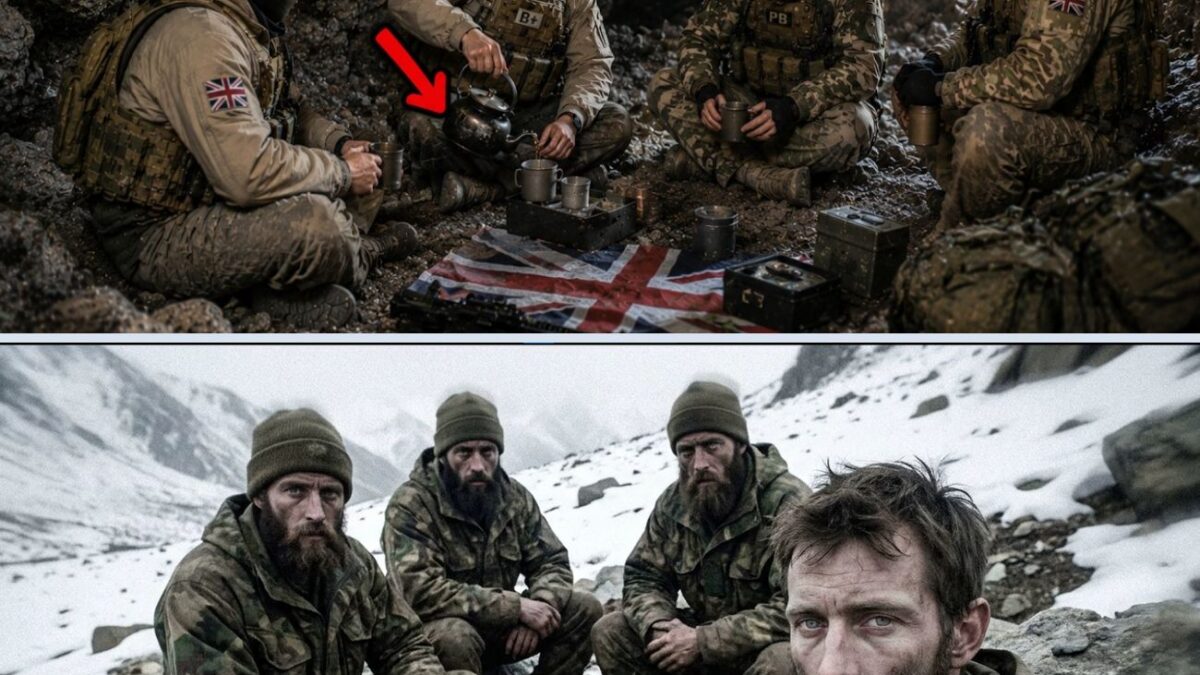
The British force he met on the second day didn’t challenge that belief in ways he expected; it simply dismantled it piece by piece, leaving him to pick up the ruins years later. The scene that greeted him defied military logic. Twenty minutes before a major attack briefing, the British operators brewed tea—not instant Maxwell House, real tea brewed in a ragged kettle that looked like it had survived the Falklands.
One of them was reading a paperback novel. Another was straightening the laces of his boots with the relaxed precision of a man preparing for a Sunday walk. Mercer checked his watch twice, sure the time was wrong. It wasn’t. What happened over the next three days would force him to reconsider everything he thought he understood about special operations warfare.
But first, he had to understand what he was looking at. The equipment gap was immediately apparent. Mercer’s SEAL team carried night vision devices, AN/PVS-15s, at a cost of $18,000 per unit. The British carried PVS-14s that cost roughly £1,100 each. American forces relied on AN/PRC-148 multiband radios priced at $4,200 per unit, encrypted and linked to satellite networks spanning three continents. The British used Bowman’s Personal Role Radio (PRR) systems, which cost £340 and had an effective range of 500 meters.
When Mercer asked about their long-term communication, the British sergeant pointed to a PRC-319 that looked like it belonged in a war museum. It cost less than the battery pack of the American systems. The boots told their own story. Mercer’s team wore Salomon tactical boots developed with donations from biomechanical researchers at a price of $360 a pair.
The British wore Altberg boots from a family company in North Yorkshire. The boots showed scuffs and wear that preceded the deployment by years. One operator’s boots had visible hand-repairs where he had re-stitched the leather himself. According to the RAND Corporation, the total value of equipment carried by a four-person US special operations team in Afghanistan during this period averaged $92,000.
A similar British patrol of four men carried equipment valued at roughly £5,600. The ratio approached 16 to 1, but the gap in results, as Mercer discovered, was in the opposite direction. The operational context necessitated British involvement, although not everyone agreed that it was wise. Tora Bora represented the last significant al-Qaeda stronghold in eastern Afghanistan.
The intelligence indicated that the senior leadership, which may have included the main objective of the entire campaign, had retreated to the cave complexes that honeycombed the White Mountains. The area was huge. December temperatures dropped to minus eight degrees Celsius at night, and the local militia forces on which the American commanders relied proved unreliable at critical moments.
Three separate operations attempted to secure the eastern ridgeline overlooking the Marawa network, the main cave complex. All three failed. In the first attempt, two operators were lost to a coordinated ambush from locations that satellite images did not recognize. The second gained temporary control of a secondary peak before being forced to withdraw under mortar fire that the supporting AC-130 gunship could not suppress without endangering the ground crew.
The third, launched with 47 operators and continuous drone cover, penetrated to within 400 meters of the target before the strike force entered a kill zone that the target had clearly pre-sighted 90 seconds earlier. The enemy had learned to move between frames. Mercer reviewed the action reports afterward with growing frustration.
The intelligence was good. Air support was crushing. The operators were among the best-trained in American military history. However, the ridge remained in enemy hands, and every day it remained gave the high-value targets more time to disperse across the Pakistan border.
The British arrived without notice. Mercer only learned of their presence when he saw an unfamiliar face in the tactical operations center. Twelve men from the 22nd Special Air Service Regiment had arrived through channels no one seemed to be able to clearly explain. Their mission briefing was three sentences long. Their equipment list could fit on a napkin.
Mercer’s initial assessment, recorded in a memo he later regretted writing, came to the conclusion that the British unit lacked the capacity for independent operations in a Tora Bora environment. He recommended assigning them to a support role, perhaps training Afghan militia forces or conducting vehicle roadblocks in the valley floor. The recommendation was politely declined by a British major whose name Mercer never learned, accompanied by a smile that contained no warmth. What happened next challenged his understanding of special operations at their core.
The British approach to pre-mission preparation was different from anything Mercer had experienced. Where American doctrine mandated detailed planning sessions, rehearsals, and redundant briefings, the British spent their final hours before movement in activities that seemed almost leisurely. Equipment tests were conducted in silence, without reference to written protocols.
A conversation about cricket that Mercer assumed was tactical turned out to be an actual discussion about the Ashes series. But when he examined their preparation closely, patterns were revealed that the relaxed atmosphere hid. Each person knew the configuration of every other person’s kit. They could locate every item in every pouch just by touch. When asked about their rescue plan, the team leader provided three alternatives without consulting notes, including one that involved a route that Mercer dismissed as impossible.
The British walked it during a reconnaissance tour that no one confirmed and no one discovered. The selection process that produced these men followed principles that overturned American assumptions about special operations recruiting. As the journalist Mark Urban documented in his book Task Force Black, the SAS selection course begins where most special operations training ends.
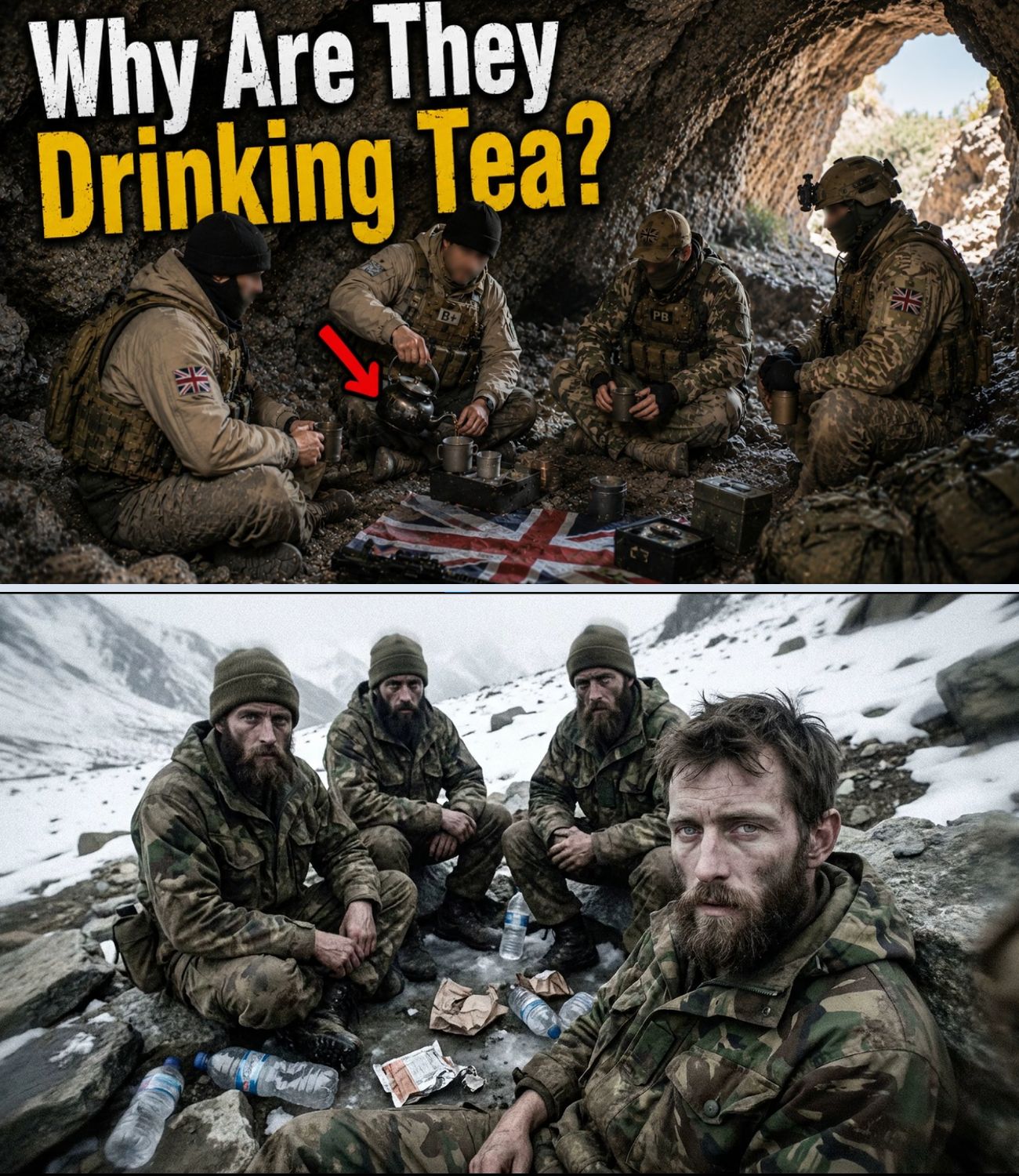
Applicants arriving at Hereford have already completed years of conventional military service. What awaits them is not meant to build skills, but to reveal character. The mountain stage alone is four weeks long in the Brecon Beacons, a Welsh mountain range specially chosen for its ability to break people.
Candidates march for more than 22 hours daily with packs weighing up to 35 kilograms across terrain that rises and descends without reason, guided only by map and compass. The instructors do not provide encouragement or feedback. The distances grow daily. The time limits tighten. The weather is horizontal rain, a mist that reduces visibility to arm’s length.
A wind that steals body heat faster than effort can replace it is considered a baseline condition and not an obstacle. Out of a typical intake of 200 candidates, between 12 and 20 reach the end of this stage, but the hills recognize only physical endurance. The jungle stage in Brunei or Belize reveals something different.
For six weeks, the candidates operate in conditions that make the mountains of Afghanistan look welcoming. Sleep averages three hours a night. Insects carry diseases that military medicine cannot completely prevent. The humidity approaches saturation, and equipment that works perfectly in temperate climates fails in ways that require utter improvisation.
Here, the instructors do not look for strength, but for adaptability. How does a person respond when everything they rely on stops working? The resistance-to-interrogation phase comes next, and Mercer would later identify this as the element that most clearly differentiated the British selection from its American counterpart.
For 36 hours, candidates are subjected to conditions that approach the legal limits of what can be applied to personnel in a training environment. Sleep deprivation, stress postures, and psychological pressure are adapted to find individual breaking points.
The goal is not to teach resistance, but to create an unambiguous point of reference. Every SAS operator knows exactly how much he can tolerate because he has already reached the absolute bottom and survived. Mercer learned these details only later, piecing together excerpts from conversations, unclassified documents, and a single interview a retired British sergeant published in 2014.
When observing the men preparing for their movement into the mountains, he saw only the paperback novels and the mending of shoelaces; the selection process that forged these men remained invisible.
The mission briefing lasted seven minutes. The head of the British team did not use slides, satellite imagery, or video clips. He described the objective, identified three potential routes, and outlined a timeline measured in nights, not hours. When an American intelligence officer offered to provide real-time drone reconnaissance, the team leader refused.
When asked about air support frequencies, he produced them, but added that he did not foresee their use. Mercer felt his skepticism curdle into something closer to concern. The moment that shattered his assumptions was still 72 hours away.
The first transmission came at 3:17 a.m. on the second night. The British team had been in position for 41 hours, and up until that moment, they had maintained complete radio silence.
The message was 17 characters long, encrypted, and took the signals intelligence team no more than four minutes to decipher. It contained grid coordinates, an estimated enemy strength of between 40 and 60 fighters, and one crucial detail: the primary target was confirmed as present. What the broadcast did not contain was any request for support, rescue, or guidance.
Mercer stared at the decoded text with a scowl and felt the first crack in his professional confidence. The drone footage didn’t tell him anything useful. The aircraft’s infrared sensors could detect heat signatures, vehicle movements, and large gatherings of people. What they could not do was peer into the network of caves and hanging rock overhangs along the ridgeline.
US signals intelligence intercepted radio traffic indicating that al-Qaeda’s senior leadership was spread across at least seven separate hubs in the Tora Bora compound. Three previous attempts to locate specific individuals had failed because the terrain absorbed electronic signatures like a sponge absorbs water.
The British team attempted something that technology proved incapable of achieving. Mercer sought clarification through the British liaison officer. What methodology did they use to confirm target presence? How did they achieve proximity without detection? The response came six hours later: “The team is operating under radio silence and cannot provide further details without compromising the position.”
But the confirmation was solid. They were there for a purpose. The phrase stayed with him: focused eyes, no thermal imaging, no signal intercepts, just human eyes close enough to make an identification. What Mercer did not know, and would not learn until the end of the operation, was that the four-man team had spent 31 hours crawling the last 1,800 meters to their observation post.
They only moved during periods of reduced visibility and timed their progress to match weather patterns that US meteorological teams dismissed as operationally prohibitive.
A British sergeant who had served in the Falklands and Northern Ireland chose his location based on a factor that did not appear in any American target matrix: the direction of the prevailing winds. The location they chose was directly downwind of the cave complex, which meant that their scent did not extend to the guard dogs al-Qaeda maintained as an early warning system.
This single consideration, which cost nothing and required no technology, superseded any American operational plan that Mercer had approved. The second broadcast came at 1:42 in the morning on the third night.
It was 23 characters long and contained updated coordinates, a revised enemy strength estimate of between 70 and 90 fighters, and something unexpected. The British team reported that they had detected a pattern in the target’s movements. He emerged from a specific cave entrance at approximately the same time each morning, spent between 12 and 18 minutes in a small clearing, and then returned underground.
The team estimated that this window represented the optimal attack opportunity. Mercer immediately began to task air assets. Two B-52 bombers were already in position carrying precision-guided munitions. An AC-130 Spectre gunship could be redeployed in four hours. The combined firepower available to him could have reduced the entire ridgeline to rubble.
What he needed was the exact timing and coordinates for the attack. The British response came through channels, and it confused him. The team did not request an airstrike. They provided intelligence for situational awareness purposes only.
Their mission was to gather observation data and locate targets, not to provide a final directive for aerial bombardment. If the American command wanted to act on the intelligence, it was an American decision. But the team would not provide a real-time strike vector. Mercer turned to his commander. The conversation lasted 11 minutes and ended with an instruction:
Extract the maximum value from British intelligence while coordinating an independent attack package. If the SAS team was unwilling to paint munitions on the target, US forces would use the provided coordinates and strike based on the identified timing window. The airstrike was scheduled for 6:15 a.m. What happened in the intervening hours would later become a test case in the classified training materials of three separate American special operations units.
The British team, monitoring American communications through their Bowman radio system, detected increased encrypted traffic indicating a strike was close. At 4:22 in the early morning, they broadcast one word: “Negative.” Mercer took this as confirmation that conditions were no longer favorable.
He was wrong. At 6:09 in the morning, 24 minutes after the planned attack, the British team broadcast again: “Target changed operating procedure. Did not exit at expected time. Cave complex showing increased activity, indicating possible movement or evacuation. Situation compromised.”
Mercer faced a decision that would define his understanding of intelligence operations. The coordinates were stable. The target had been identified with certainty at this location in the previous 48 hours. The probability estimate still suggested a successful attack.
Every doctrinal principle he had been taught urged him to continue the mission. Waiting meant risking missing the target; acting meant trusting data that might now be out of date. He watched the attack unfold over two hours. The British team continued to report. At 7:33 in the morning, they observed a convoy of three vehicles leaving the cave complex via a route that American surveillance had not previously identified.
The vehicles drove northeast along a goat path that did not appear on any operational map. The team followed them visually for six kilometers before losing sight of them. They estimated with high confidence that the target was in the second vehicle. The airstrike, if it had taken place as planned, would have killed between 40 and 70 fighters.
It would not have killed the main target. The hollowness caused by the transmission of a single word from a four-man team lying in the frozen dirt 1,800 meters from the mouth of the cave upended what would have been classified as a successful operation, but what counted by the only metric that mattered: a failure.
Mercer sat with this information for a long time. The British team had no authority to cancel or veto an American airstrike. They had no official role in the attack chain. What they did was provide accurate, timely intelligence and trust that the Americans would act rationally. They treated him as a professional capable of making sound judgments when presented with up-to-date information.
The fourth night brought the moment that would stay with Mercer for the rest of his career. The British team had been in position for 87 hours. They had exhausted their water rations, subsisted on cold food that required no preparation, and had not slept more than 40 minutes at a stretch since insertion.
American medical doctrine suggested that the effectiveness of combat operations decreased significantly after 72 hours without adequate rest. The British team performed at a level that defied everything Mercer understood about human performance. At 2:04 a.m., they broadcast coordinates for the target’s new location.
He had moved to a secondary cave complex 11 kilometers northeast of the original location. The team tracked his movement through a combination of direct observation, pattern analysis, and what the subsequent action report could only describe as local knowledge. They had somehow obtained information about the mountain paths that even the guides of the Afghan Northern Alliance did not possess.
The source of this knowledge, Mercer learned weeks later, was a technique developed during SAS Borneo operations in the 1960s. The British operators had a doctrine of befriending local populations not for immediate intelligence value, but for a cumulative understanding of the terrain. One of the members of the Tora Bora team had spent three weeks in eastern Afghanistan six months before September 11th, ostensibly on a training mission with Northern Alliance forces.
During this time, he had learned the names of 17 goat trails, the location of seasonal water sources, and the traditional migration routes used by tribes moving between Afghanistan and Pakistan. This information did not exist in any database. It could not be located by satellite. It lived only in the memory of a sergeant who earned £47,000 a year.
Mercer watched the British team prepare to deploy with a growing sense of disbelief. The Americans spent three days coordinating air assets, establishing redundant communications networks, and deploying quick reaction forces in staging areas throughout the region.
The British preparation looked like men packing for a camping trip. The four operators moved with deliberate unhurriedness, checking each other’s kit in a ritual that seemed almost casual. One man adjusted the straps on a bergen that weighed nearly 35 kilograms. Another checked his walkie-talkie by double-clicking the receiver.
No voice check, no complex communication protocol. They communicated through glances and small gestures that Mercer couldn’t interpret. What happened next completely changed his understanding of operational preparation. The team leader spread a topographical map on the hood of a Land Rover and began marking it with a grease pencil.
Mercer noticed there were no grid coordinates, no numbered waypoints, no color-coded phase lines. Instead, the leader drew a series of contour lines that followed natural terrain features—ridgelines, streambeds, areas of dead ground—and muttered annotations in Pashto.
The team leader nodded and adjusted his route. This single correction, based on knowledge that existed nowhere in the combined intelligence repositories of two superpowers, proved decisive 47 hours later. Mercer requested permission to observe the insertion from the tactical operations center.
His request was politely declined. The British liaison officer explained that their communication protocol did not support real-time observation. The team would send coded burst transmissions every six hours unless communications were terminated earlier. The Americans found this approach incomprehensible.
Delta Force operations included continuous satellite communications, live drone feeds, and the ability to reach operators within seconds. The British offered to disappear into the Hindu Kush with the help of a radio that transmitted in bursts lasting less than three seconds, specifically designed to evade electronic detection.
The team departed at 10:00 p.m. under seven percent moonlight. Mercer stood at the edge of the helipad and watched four silhouettes walk into the darkness without looking back. He noted the time in his mission journal: 22:14 local time. He would not receive their next transmission for 6 hours and 22 minutes.
The wait turned out to be harder than expected. Mercer spent the first few hours reviewing the rejected American plan of operation.
The plan called for a heliborne assault on the ridge using two MH-47 Chinook aircraft supported by AH-64 Apache gunships. The package included 24 operators, a six-man tactical air control party, and a medical team stationed at a forward operating base 12 miles from the target area. The estimated cost of the operation exceeded $4.3 million when air assets and support personnel were factored in.
The probability of achieving surprise was calculated to be less than 20 percent due to the acoustic signature of helicopters in narrow mountain valleys. The British plan cost £12,000 in direct logistical expenses. It achieved complete surprise by eliminating every element that made a noise.
At 4:36 a.m., the first burst transmission arrived. The coded message contained 11 characters that, when decoded, indicated the team had reached the designated observation point without incident, without casualties, and without requesting support. Eleven characters representing four men moving through enemy-held territory, successfully evading thousands of combatants and special operations patrols for seven weeks.
Mercer learned something about the nature of trust in that moment. Americans maintained constant communication because they trusted technology to solve problems. The British kept quiet because they trusted their operators to solve problems without help.
The second broadcast came at 10:51 a.m. Fourteen characters indicated that checkpoint 4 had been reached, and the team was intact. The message included a three-character suffix that Mercer didn’t recognize. The British liaison officer translated it as a request to extend the observation window by 12 hours.
The original plan called for 48 hours on target. The team was asking for 60. The confirmation came back in a burst of four characters. No discussion, no risk assessment, no command conference. Four characters. The request was approved.
What the team discovered during those extra 12 hours would justify every decision made in the weeks leading up to it. The British operators set up their observation post in a reverse-slope position, 340 meters away from the cave complex.
The location was chosen based on the team leader’s knowledge of traditional sighting patterns: shepherds used the eastern approaches in the summer months while avoiding the western slopes where snow lingered until June. The team settled on ground that no local would visit for another seven weeks.
They remained motionless for the first 14 hours, allowing the rhythm of the area to establish itself around their position. Mercer later learned that this technique, called “letting the ground receive you,” was taught during the jungle phase of selection in Brunei. The operators learned to become part of the environment, not its invaders.
The cave complex gradually revealed its secrets through their observation devices. The British team recorded movement patterns of guards, identified 17 commanders by their gaits, habits, and positions in the hierarchy of the complex.
One individual emerged at the exact same time every morning to perform ablutions at a spring 40 meters from the main entrance. Another supervised supply distributions with the casual authority of a man used to being obeyed. This was human intelligence in its purest form—information gathered not through firefights or electronic intercepts, but through patient observation by trained eyes.
On the second night, the team documented something the Americans had been looking for since December. A figure emerged from a cave entrance that previous surveillance had judged to be inactive. He walked with a pronounced limp in his left leg.
Two men flanked him at a distance that suggested protection rather than friendship. He stood outside for 11 minutes looking at the stars before retreating inside. The burst transmission that followed contained 23 characters. When decoded, it read: “Primary target identified with certainty. Following network.”
Mercer was present when the message reached the tactical operations center. The room fell silent. Seven weeks of tracking—thousands of hours of drone footage, hundreds of signals intelligence intercepts—had boiled down to a string of text. The coordinates were accurate to within eight meters, close enough for dropped munitions, close enough for a ground attack.
The team had solved a problem that technology couldn’t solve. But the operation was not over. The British commander made a decision that struck Mercer as incomprehensible at the time, but which he later recognized as a defining characteristic of the SAS methodology. Instead of calling in an immediate airstrike, the team was ordered to remain in position for another 24 hours.
The target was located. Now they needed to understand his movement patterns, identify the optimal window of action, and confirm whether there were secondary targets in the compound. The Americans would have launched within hours. Speed was doctrine; speed was survival; speed was the application of decisive force before the enemy could react. The British waited.
During those 24 hours, the team recorded the complete daily schedule of the cave complex. They noted the changing of the guards, the timing of meals, and the periods when the maximum number of targets were exposed in the open. They noted that the limping figure appeared twice a day—once at dawn and once at dusk—creating two vulnerability windows lasting approximately 15 minutes each.
They observed that the western approach to the complex was guarded by a two-man post that changed at irregular intervals, while the eastern approach had no permanent guard post because the terrain was considered impassable. The team had traversed this exact terrain on their approach.
The intelligence product derived from 60 hours of observation was 17 pages long after transcription. It included hand-drawn diagrams of the cave layout based on observed movement patterns, personal evaluations of key figures, ammunition storage sites identified by resupply traffic patterns, and three potential assault paths with estimated exposure times calculated to the second. No satellite could have produced this document.
No amount of signal interception could reveal these details. The information existed because four men were willing to lie motionless on frozen ground for three days, urinating into bottles and eating cold rations, watching and recording until the enemy’s secrets were laid bare.
Mercer read the complete report 12 hours after the team’s extraction. He read it twice. He then requested a meeting with the British commander to ask a question that had been forming since he first watched the tea ceremony at Bagram. The answer he received would reshape his understanding of what special operations could accomplish.
The British commander, a colonel with 23 years of service in the regiment, listened to Mercer’s questions without interrupting. When the American finished speaking, the officer set down his teacup. The tea, Mercer watched him drink throughout the conversation, provided a grounding context that no tactical manual could capture.
The numbers told a story that Mercer’s personal experience never suggested was possible in the Tora Bora sector. Of the 14 previous American reconnaissance patrols deployed into the same sector, 9 had been compromised before their mission was completed—a failure rate of 64 percent. The intelligence gathered from successful missions led to three locations that were designated as high-value targets. Two of those locations turned out to be empty by the time assault forces arrived.
The four-man SAS patrol operated for 11 days without compromise. Their intelligence package identified 17 combat positions, 4 command posts, 2 ammunition depots, and 1 communications center. More importantly, their pattern analysis correctly predicted the transit window that allowed coalition forces to intercept a courier network that had operated undetected for seven weeks.
The cost comparison was equally striking. American operations in the sector during this period consumed $4.3 million in direct logistical expenses, helicopter support, drone coverage, satellite tasking, medical evacuations, and the staging of rapid reaction forces. The British operation cost £11,000, including equipment depreciation and the tea drunk before insertion.
Mercer asked about casualty rates. The colonel provided data from a classified annex that would not be released for another 15 years. American patrol teams operating in Afghan mountain terrain between 2001 and 2003 suffered a casualty rate of 17 percent per deployment. Four-man British SAS patrols performing similar missions over the same period reported a casualty rate of 2.3 percent.
The discrepancy demanded an explanation. Mercer commanded men drawn from the finest elements of the American military, men who trained relentlessly and possessed equipment representing the absolute cutting edge of defense technology.
They were not inferior soldiers. They were not poorly led. They did not lack courage or capability. Yet the numbers were undeniable. The British commander did not offer a glib explanation. He simply noted that his men spent 18 months in field conditions before being considered ready for operational deployment.
Not 18 months of garrison training while drawing a paycheck, but 18 months of continuous discomfort, uncertainty, and physical hardship. The tea ceremony Mercer had witnessed was not a cultural quirk. It was a psychological anchor that connected the operators to a sense of normalcy while simultaneously reinforcing the patience that mountain operations required.
Mercer thought about the tea differently now. He recalled the specific moment when the team leader poured the final cup before moving toward the helicopter. The man’s hands had been completely steady. His breathing was slow and regular. His heart rate, Mercer now realized, was likely lower than Mercer’s as he stood watching from the sidelines.
This biological stillness was not natural. It was forged through years of deliberate conditioning that began in the Welsh mountains and continued through jungle phases, resistance-to-interrogation training, and countless exercises designed to normalize extreme stress. The tea was the visible expression of an inner state that American doctrine had never successfully replicated.
The casualty rate differential haunted Mercer most directly. His teams were compromised because they moved when they should have stayed still, spoke when silence was mandated, or made decisions based on schedule pressure rather than tactical reality. The British patrol dealt with discovery hazards—a herder encounter, an approaching patrol, local hunters passing within rifle range—and remained undetected through absolute stillness.
He requested the personal files of the four operators, knowing the request would be denied. Instead, the British commander provided something more valuable: a breakdown of the selection statistics that produced such men. The battalion accepted roughly 200 candidates per selection course.
The average pass rate across all courses held since 1952 was 8.6 percent. Of those who passed selection, roughly 30 percent failed the continuation training period. Among those who completed the continuation period, approximately 20 percent left the battalion within three years due to injury, personal circumstances, or performance issues.
The mathematics meant that a four-man operational patrol represented the distilled output of nearly 800 initial candidates. Every man who drank the tea had survived a filtering process that eliminated 99.5 percent of those who tried.
What struck Mercer most forcibly was what happened in the weeks following the operation. Coalition intelligence analysts used British reconnaissance data to reconstruct the entire enemy network in the Tora Bora region. The location of the communications center allowed for signals intelligence collection that had previously been impossible.
The courier tracking information enabled the interdiction of three separate courier teams over the following month. The coordinates of the ammunition cache provided targeting data for airstrikes that destroyed 14 tons of ordnance. A single patrol over 11 days yielded more actionable intelligence than the previous three months of combined coalition reconnaissance efforts in the sector.
Mercer wrote his after-action report with extraordinary care. He had been sent to observe and facilitate the integration of British special operations elements into American command structures. His initial assessment, drafted before he witnessed the tea ceremony, had recommended limited integration with clearly defined support roles for British elements.
His final evaluation recommended something entirely different. The report went through three drafts. Each draft removed more of the disclaimers and qualifications that military officers routinely use to protect their careers. The final version contained one recommendation that Mercer knew would be controversial: American special operations doctrine should be comprehensively reevaluated using the British methodology as a foundational baseline.
His commander read the report and asked for clarification. Mercer provided a two-hour briefing that covered the tea ceremony, the herder incident, the selection statistics, and the cost-comparison analysis.
The commander, a rear admiral with 31 years of service, listened without taking notes. When Mercer finished, the admiral asked a single question: “What specifically needs to change?”
Mercer’s answer focused on duration. Selection processes for US special operations typically lasted between four and eight weeks, depending on the unit. British SAS selection lasted a minimum of six months, with specialized training extending up to 18 months prior to operational deployment.
The time difference was not administrative; it was the mechanism that produced a different kind of soldier. The admiral approved the report for distribution without edits.
Seven years later, Mercer received an invitation to participate in a joint exercise at a facility in North Carolina. The exercise involved a new American unit quietly established with expanded screening protocols adapted from the British methodology.
The screening course lasted 14 weeks—still shorter than the British model, but nearly double the previous American standard. He watched the new unit conduct a reconnaissance exercise. The operators moved differently than he remembered his own crews moving. They lingered longer at decision points. They radioed back less frequently.
When they established observation posts, they remained in position for periods that would have been considered excessive under the old doctrine. During the after-action review, the unit’s commander, a colonel Mercer had never met, referenced a classified 2002 assessment that had shaped the unit’s foundational doctrine.
He did not name the author. He didn’t need to. The details of the tea lingered in Mercer’s memory long after other operational particulars had faded. Twenty-two years after Tora Bora, he attended the retirement ceremony of a British general who had commanded SAS operations across three continents.
The reception included tea. Mercer watched young British officers pour and drink with the same relaxed precision he had witnessed in that Afghan hangar. He never picked up the habit himself, but now he understood it in ways his younger self could not.
In his final interview before retirement, conducted by a military historian collecting oral histories of early Afghan operations, Mercer was asked what single observation in his career had exerted the most profound influence on his professional development.
He did not mention the Tora Bora intelligence. He did not cite statistics, cost-benefit analyses, or operational results. He described four men drinking tea before walking into mountains where death awaited at every ridgeline, and the singular quality of silence in their hands as they lifted their cups.
The historian noted that Mercer paused for 19 seconds before continuing. When he spoke again, he said only that he had spent his career trying to understand what he had seen that morning, and that he wasn’t sure he had succeeded.
You Might Also Enjoy

“We Thought They Would Negotiate”—What Argentine Soldiers Said When The British Attacked Goose Green

“You’ll Never Finish My Ruck March, Limey” — US Sergeant Who Challenged the SAS, Then Fell Out First






