Why Black American GIs Found a Different Britain During WWII
The tent smelled of diesel and warm plastic and the particular dust that gets into American military canvas and never leaves it. On the far wall three monitors glowed and on the center monitor a drone feed showed a flat rooftop in a provincial Iraqi city. A dark cross of alleys around it. Four small human shapes stacked against a wall that was not quite as thick as any of them wanted it to be.
Major General Howard Price stands with his arms folded across the medals he has not taken off in 9 hours. He is 59 years old. He commanded a Ranger company in Mosul when half the men in this tent were in middle school. He has the kind of gray beard a general grows when he has decided he no longer needs anyone’s permission. He is listening to a voice on the net. The voice is quiet. It is Welsh and it is so calm that the first time you hear it you assume the man speaking is not the man in charge. It gives a correction to a sniper on an overwatch roof. It asks a question of a breacher. It says stand by and then it says nothing for 41 seconds and in those 41 seconds a United States Army Lieutenant Colonel at Price’s elbow begins twice to open his mouth.
You watching this would have opened your mouth too. The General had asked an hour before to be put through to the officer commanding the British assault element. He had been given this voice instead. He had said in the tone a two-star uses when he is about to make a problem for someone: “Get me your officer.”
And now the voice on the net, the voice that has not told him it is in charge and has not told him it is not, is running his raid. The Lieutenant Colonel leans in: “Sir, do you want me to—”
Price does not look away from the screen: “No, leave him on the net.”
What he is watching, he does not yet have the vocabulary for. What he will say about it years later into a tape recorder in a university library in Virginia is the thing we have come here to hear. Howard Price was not a man you dismissed in a tent. He had come up the hard way, which in the United States Army of his generation meant he had enlisted at 19, carried a rifle in the 75th Ranger Regiment through two deployments to Panama and the First Gulf War, taken a commission through Officer Candidate School at 24, and then spent the next three decades proving the men who had rolled their eyes at a ring knocker’s school for Mustangs wrong. He had company command in the Rangers. He had done a plans tour at Fort Bragg with the unit whose name his generation still did not say in rooms with civilians. He had a Silver Star for an action north of Mosul in 2004 that he never spoke about and a combat infantryman’s badge with two stars on it that he did not need to.
Tucked inside the cover of the field notebook in his breast pocket was a laminated card with a set of dog tag numbers on it. The numbers had belonged to his father who had come up a cliff at Pointe du Hoc as a Ranger Corporal in 1944 and lived long enough to see his son wear the same tab. Price had carried the card for 31 years. You, if you had met him in a corridor at the Pentagon, would have made the obvious mistake. You would have read the gray beard and the arms folded over the uniform and the deliberate, unhurried way he looked at a man before answering him, and you would have decided he was a general who had forgotten what it was like to be a corporal. You would have been wrong. He had forgotten nothing. He remembered very precisely what it felt like to be 20 years old and lying in a ditch outside Riohacha with radio pressed to his cheek, waiting for an officer to make a decision.
That memory was the reason he had spent 31 years believing what he believed. What he believed was this: On a raid, on a deliberate action against a defended target with a hostage inside and a window measured in minutes and lives on both sides of a door, the man giving the orders had to be an officer, not because officers were braver or smarter. Price had served under officers who were neither. He believed it because an officer carried in the structure of his commission the moral weight of the decision. If the breach went wrong and a child was in the room, the officer answered. If a sniper fired and killed the wrong man on a roof, the officer answered. The chain of accountability ran up through the officer corps to a government that had sent them, and the chain had to be unbroken.
And the man on the ground had to be a man whose life had been shaped by that chain from the day he was commissioned. Senior non-commissioned officers, and here he was emphatic because he was one of the officers who actually listened to senior non-commissioned officers, were the backbone of the army. They ran the training. They ran the men. They were the reason a platoon worked. But the raid, the trigger, the moment of choosing who died in the next 12 seconds, that was an officer’s duty. He had written a paper about it at the War College. He had taught it informally to captains in Baghdad in 2007. He had never, in 31 years, seen a situation that made him want to revise it.
He arrived in Iraq in the spring of a year he will not let the oral historian specify as the deputy commander of a combined joint special operations task force that pulled American Tier 1 elements, Rangers, agency people, and a rotating Special Air Service squadron under one headquarters. On his second day on the ground, he was given a battle rhythm brief that mentioned in passing that B Squadron of 22 Special Air Service was running a parallel operation cell out of the far end of the compound with their own targeting process, their own aircraft, their own net. He read the slide twice. He wrote one word in the margin of his notebook. The word was liaison.
The compound sat on a stretch of flat brown ground outside a provincial Iraqi capital inside an outer ring of American concertina and an inner ring of Hesco and inside that again, almost shyly, a small arrangement of tents and a prefabricated hut that the British had put up themselves. The Americans called it, in the way Americans name things, the British Village. The British called it nothing in particular. There were no signs. The Union flag over the door of the hut was small and sun-bleached and had been there, by the look of it, through more than one squadron rotation. You could walk from the American Joint Operations Center to the British hut in 4 minutes.
In Price’s first week, he walked it twice. The first walk was courtesy. He met the officer commanding B Squadron, Major Hugh Allsop, a tall, thin man with a naval history paperback folded into his day sack, who gave him a cup of tea in a mug that did not match any other mug in the room and talked for 20 minutes about targeting cycle synchronization in a way Price found entirely competent and entirely uninformative. He left with the impression that he had been politely managed.
The second walk was business. There had been a disagreement at the morning stand-up about which element would take down a mid-value target the following week. Price had wanted it to go to one of his Ranger platoons. Allsop had, without ever raising his voice, pointed out that the target was inside a density of civilian housing that the regiment had been working for 6 weeks with sources the Rangers did not have and that the squadron would prefer, if the general did not mind, to run it themselves.
The general had minded. He had not said so. He had said pleasantly: “We’ll talk about it.” Which was the sentence a two-star used when he had decided the answer and would deliver it later through a staff officer.
That evening he sat in the American Joint Operations Center with his operations chief, Lieutenant Colonel Dan Ewing, and a mug of coffee that had gone cold without his noticing. Ewing was a long, calm man who chewed the stem of an unlit pipe when he was thinking. He never lit it. He had been chewing it now for the better part of an hour. Price said what you would have said in his place: “I’ve trained with the Brits before, Dan. The pathfinders in Kosovo, a para company in Helmand. Good men, hard men. I’m not disputing any of that, but this is not a selection course and it is not a battle group operation. This is a hostage rescue option on a defended compound in a dense urban grid and I want it run by somebody whose commission makes him answerable in exactly the way mine makes me answerable. I want a captain on that net. I want a major in that operation center. I do not want to find out at hour minus 30 that a troop sergeant is calling the shots because the captain is on leave.”
Ewing chewed the stem of the pipe. He said: “Carefully, sir, that’s not quite how they organize.”
“Then I will have a conversation with Major Allsop about how they will organize for this one.”
He did not have that conversation. The target package moved up. The hostage, an engineer whose kidnapping had attracted the attention of three different headquarters, was located in a safe house in the market quarter of the city. The window, the hours between confirmed location and the moment the man would be moved to a second location from which he would not be recovered, was 90 minutes. The decision brief was condensed. The Rangers were not available in the window. The regiment was.
Price walked across to the British village at 11:00 at night. The hut was lit. The Union flag was still. He pushed the door open and the room on the other side of the door was the first thing that did not match the picture he had carried for 31 years. The hut had one long table down the middle, two laptops open on it, and a map of the market quarter weighted down at the corners with, Price noticed and would remember, a tin of boiled sweets, a dented metal mug of tea, a paperback book splayed face down, and a child’s eraser shaped like a frog that someone had evidently been using to rub out pencil marks on an overlay.
Four men were at the table. None of them stood up. In the American operations center, Price had just left. Four officers would have stood up in sequence by rank. Here, a staff sergeant with a Northern Irish accent lifted his tea in acknowledgement and said: “Evening, sir.” and went back to the map. One of the other men, a corporal by the chevrons on his sleeve, did not look up at all. He was writing something in a notebook he held sideways on his knee, left-handed, in a very small hand.
Major Allsop was at the far end. He said: “General.” and gestured to a free chair.
Price did not sit. He had come to be briefed and to make a point, and both were served by standing: “Hugh, walk me through the ground.”
Allsop did not walk him through the ground. Allsop said: “Niall, show the general the overlay.” And the Northern Irish staff sergeant, Bowery—Price would learn his name was Bowery—turned the map a quarter turn so Price could see it right side up and began to speak. Bowery had the dented metal mug beside his hand. A mate in Basra had welded a new handle onto it, and the weld was visible, a small bright stripe along the rim. He spoke for 7 minutes without a slide. He did not use the acronyms the American briefers used. He said the compound, and he said the roof opposite, which is a woman’s house, three children. We have eyes on her routine. He pointed with a pencil, not a laser.
When Price asked a question about the breach point, he did not answer it himself. He said: “Tom.” And the corporal at the far end of the table, the one who had not looked up, closed his notebook, laid it flat, and answered.
Corporal Thomas Riderch was 29 years old. He was a shade under 6 ft, lean, brown-haired, clean-shaven in the way men were who had been in cities a long time. He had a Welsh accent, so soft Price had to lean forward to catch the ends of the sentences. He explained the breach in the order a man explains a thing he has already done in his head 12 times. The approach, the distraction, the entry, the two possibilities on the other side of the door, the decision tree for each possibility, who went where, and what he would do if the hostage was not in the room they expected him to be in.
Price listened. He had not expected to listen. He had expected to interrupt. The corporal spoke for 4 minutes, and Price did not interrupt him once. Because every time Price drew breath to ask a question, the corporal was already two sentences into answering it. When Riderch finished, he opened the notebook again and wrote something in it, and did not look up.
Price said to Allsop: “Who commands the assault element on the ground?”
Allsop said: “Corporal Riderch.”
Price turned his head slightly. He had heard the sentence. He wanted to be sure he had heard the sentence. He said: “And your captain?”
Allsop said: “Troop captain’s on compassionate leave. His father died on Tuesday. We’ve reorganized. Tom is running the assault. Sergeant Partington is second in command. I’ll be in the operations center. It’s a standard split for us.”
Price said nothing for a moment. He looked around the hut once, slowly, the way a general looks at a room when he is deciding what to say in it. On the American side of the compound, his operations chief had a desk the size of this entire table, two secure terminals, a printer, a coffee machine, and a specialist whose only job for the next 8 hours was to keep the digital common operational picture refreshed. Here, there was a tin of sweets, a map, and four men. The gap between those two desks was a fact. It was also, Price decided, and this was the only time all week he would let the thought form, not the fact that mattered.
He said: “Hugh, a word outside.”
They stepped out into the dust. The Iraqi night was warm, and the stars were doing what Iraqi stars did, which was burn in a sky so clean it looked wrong. Price said: “I want an officer on that net. Pull someone from headquarters. Put a captain over him.”
Allsop said very quietly: “Howard, I understand. I will not do that. And when you’ve seen him work, you will not want me to.”
The hangar was on the far edge of the compound, past the fuel bladders and the generator park, in a stretch of ground the Americans used for container storage. Someone, Price could not tell when, had cleared out a square of floor 40 m on a side and taped a plan of the safehouse onto the concrete in blue gaffer tape. Doors were gaps, windows were strips. A table stood where the table in the real house stood. Four chairs were arranged around the table in the exact disposition the source had reported.
It was 1:00 in the morning. Price had told himself he was not going to come. He had come anyway. He stood in the shadow of a shipping container at the back of the hangar with Ewing beside him. Both of them a pace behind Allsop, who had not insisted on their presence and had not objected to it, either. In the taped square, 12 men were moving. They were not moving the way American Tier One elements moved in rehearsal, which was precisely and loudly with a troop commander at the back calling cadence and a camera on the tripod. They were moving quietly. They were in belt kit and plate carriers, but no helmets, carrying unloaded carbines, the L119S that the regiment had carried in various forms for 20 years. Short-barreled Diemacos with suppressors threaded on and optics zeroed by the men holding them.
Riderch stood at the entry point. He said, almost under his breath: “Stand to.” And the 12 men stood to. He walked them through it once at half speed. Then he walked them through it again at three-quarter speed. Then he nodded at Sergeant Alec Partington, a sandy-haired man with the folded corner of a half-finished crossword showing at the top of his map pocket, pencil clipped to it, and he said: “Full.” And Partington said: “Stand by.” And the whole thing happened in the time it took to read this sentence.
Price had seen a hundred rehearsals in his life. He had run some of them. He understood, as a professional, what he was looking at. He also understood, as a professional, that something was happening in front of him that was not in any of the manuals he had been issued. Riderch gave no orders during the full-speed run, not one. He stood at the breach point and watched his men go past him, and he said nothing. The orders had been given before the men were on the start line, and the orders had been so thoroughly absorbed that the run was not a reproduction of them. It was the shape they had taken.
When the lead pair reached the second doorway and found that the taped floor was not quite the geometry they had expected, the number three on the stack adjusted a foot of spacing, and the number four flowed round him, and the number one took the angle the number three had opened, and nothing was said. Partington at the back watched this happen and did not react because there was nothing to react to. They did it again.
On the second run, Riderch stopped them two seconds in and said to Trooper Jamie Oakshott, the youngest man on the team, a long-faced boy who had, on a previous rotation, repaired his belt kit with dental floss and refused to replace it: “Your left shoulder’s rising when you corner. Drop it an inch.” Oakshott nodded. The corporal did not elaborate. They started again. The left shoulder dropped an inch.
Price said under his breath to Ewing: “How long have they been working this house?”
Ewing said: “Six hours, sir. Target package landed at 1900.”
Price turned his head. Six hours. He had assumed, when he saw the fluidity of the stack, that this was a team that had been drilling this specific plan for days. Six hours. He watched Riderch call Partington over to the taped doorway, and the two of them crouched there and had a conversation, pointing with pencils in which the sergeant said more than the corporal did. He noticed that. He noticed, too, that when Partington made a suggestion: “We go left on the second room, not right, because of the window.” Riderch considered it for perhaps 3 seconds, said yes, and then walked back to his place in the stack and did not announce the change. He simply knew the men behind him had heard it.
They ran it 11 times. On the eighth run, a radio handset at Riderch’s shoulder crackled. The surveillance element had updated the position of a sentry on the roof opposite. He acknowledged with two words. He did not stop the run. He waited until it ended, called the team in, and said: “There’s a man on the roof. He wasn’t there at 1800. We’ll take him with the sniper pair before entry. Nothing else changes.” Nobody asked a question. Nobody needed to.
Price had been watching command on raids for a long time. He had been the man in charge on more of them than he could put a number to. He understood in his bones the difference between a commander who was giving orders and a commander whose orders had been given earlier and were now simply arriving in the men around him on schedule. The second kind was rarer. He had served under two of them in his life, and both of them had been full colonels at the time. He also understood that command presence, the thing he had believed for 31 years was the officer’s job to bring into a room, was not something Riderch was projecting. It was something the room had already absorbed. The 12 men did not look at the corporal for reassurance. They looked at the doorway. The corporal was not the still point of the room. The plan was. He had put it there, and he had stepped out of the way of it.
They finished the 11th run. Riderch said: “That’ll do.” And the men broke, and Partington picked up the crossword from his map pocket and penciled in two letters while a trooper handed him a bottle of water.
Price turned to Allsop. He had the question he had been going to ask. He did not ask it. He said instead: “Who taught him?”
Allsop said: “The regiment taught him. He’s been in B Squadron 5 years. Before that, he was a sapper. Before that, he was a boy in a Welsh town where nobody expected much of him. We taught him the rest.”
Price nodded. He walked back across the compound with Ewing. He did not speak the whole way. When they reached the American operations center, he said: “Dan, don’t put a captain over him. Tell Major Allsop we proceed as planned.”
Ewing said: “Yes, sir.”
Price went back to his tent. He did not sleep. If you have ever changed your mind about something you built a career on, you know it does not happen in one night. It happens the way weather changes, which is slowly and then all at once with a long stillness between the first smell of rain and the first drop. Price was in the stillness.
He went back to the hut at 4:00 in the morning on the pretext of a map question he did not need to ask. Bowery was alone. The others were sleeping in a row of green camp cots behind a curtain of poncho liners. Price could see the shape of them, the boots lined up neatly at the foot of each cot, Riderch’s notebook on top of his folded shirt. Bowery was at the long table with his dented tea mug and a laptop and a thin, calm expression Price was already learning to read as I know why you’ve come.
“Ask me,” he said without introduction.
“Staff Sergeant, help me understand something.”
Bowery said: “Sir.”
Price sat down. The chair was plastic. He had not sat on a plastic chair in a tent in perhaps a decade. Generals did not sit on plastic chairs because the staff removed them before generals arrived. He put his elbows on the table. He said: “Your corporal is good. I’ll say that out loud, and I’ll say it once. In my army, a man that good at 29 is a captain. He has been to a selection course that filters the men who will carry a commission. And the commission is the point. Why isn’t yours one?”
Bowery did not answer immediately. He turned his mug a quarter turn clockwise, which was a thing Price would later notice he did when he was arranging a thought. He said: “In the regiment, sir, a troop is 16 men. The troop is commanded by a captain. On a job this size, we split the troop into two assault elements of six or seven with support. One of those elements is run by the troop staff sergeant. The other is run by a senior corporal, which, in our structure, is a tactical commander who has been doing this work for 7 or 8 years. The captain is the troop commander. He is not necessarily the man on the stack. Sometimes he is. Sometimes he is in the operations center. Sometimes he is on the roof with the sniper pair. The man who commands the assault is the man best placed to command the assault. We do not confuse the commission with the ground.” He turned the mug the other way: “Tom’s done 31 of these. He’s done them in three countries. He has lost two friends on jobs that went wrong, and he has carried four hostages out of rooms. The captain who would, in your army, be giving him orders tonight, I’m not saying that captain would be worse. I’m saying he would be learning a thing Tom finished learning 4 years ago. In the regiment, we don’t put a man in charge of a raid to teach him how. We put him in charge because he already knows.”
Price said: “And if it goes wrong?”
Bowery said: “Then it goes wrong on Tom’s shoulders and on Hugh’s shoulders and on the shoulders of the system that chose Tom. There is no shortage of shoulders, sir.”
Price sat for a long moment, then he nodded and he thanked the staff sergeant and he did not sleep then either.
The raid was in 11 hours. At 2100, the city went quiet in the way an Iraqi city went quiet on a weekday, which was not very. The call to prayer had come and gone. Shops in the market quarter were closing their shutters. The alley the regiment had been watching for 6 weeks had three cars parked along it, two of them wrong for the neighborhood. Overhead, at an altitude Price was not going to specify in his later interview, two aircraft held their orbits.
The joint operations center was the long table in the hut, now with four laptops open on it and a bank of radios ranged along the far wall. Allsop sat at the near end. Bowery stood behind the radios with a headset on one ear. Price had been offered a chair at the American end and had refused it. He had asked, in the manner of a man asking a favor, if he could stand at the back of the British hut and watch the thing happen on the regiment’s screens. Allsop had said yes without ceremony. A green camp chair had been produced from somewhere. Price had not sat in it.
Across the compound, the American operations center was running its own feed. Ewing was there with the deputy intelligence officer, a United States Army chief warrant officer named Marcus Dell, who had six rotations behind him and the habit of laughing quietly at things that were not funny, and a Ranger battalion liaison. They had the drone and the signal picture and the quick reaction force on standby. The agreement, which Price had made with himself more than with anyone else, was that the Americans would not speak on the British net unless invited.
At 21:11, Riderch’s voice came through the speaker: “All stations zero. Confirm set.” He said the sentence the way he had said stand to in the hangar. Four voices answered in sequence, two seconds apart: “One set.” “Two set.” “Three set.” “Sniper set.”
Price felt in the back of his neck the particular prickle that came when a raid he was not running was about to go live, and he was going to watch it the way a civilian watched it, which was helplessly. Riderch said: “Stand by.” For the next 22 minutes, he said in total 41 words, Price counted. He could not help counting. In an American raid of equivalent complexity, he would have expected the ground commander to use three to 400 words on the net, which was not padding. It was command. It was clarity. It was the voice of the officer binding the elements together with language. Here, there was almost none of it. What there was, instead, was something that took him most of those 22 minutes to see.
The sniper pair took the sentry on the roof opposite at 21:14. The man dropped where he stood, soundless from the compound where Price was watching, a shape going slack in gray-green pixels. Riderch said into the net: “Good.” That was all.
The assault element moved from the forming up point to the breach point along the line Partington had chosen. Three hours earlier, nobody on the net told them to move because the move was in the plan, and the plan was running.
At the breach point, the number three man found that the door was reinforced beyond the source’s description. There was a steel plate behind the wood. And he said: “Doors harder than expected.” And Riderch said: “Frame charge.” And in the hut, Bowery closed his eyes for a second because switching from a shotgun breach to a frame charge in the alley added 9 seconds, and 9 seconds was a long time to be in that alley. The frame charge went on. At 21:16, it blew. The stack flowed through the breach.
Camera feeds from the men’s helmet cams tiled across one of the laptops in a square of green-gray light. Price watched the ground floor clear. He watched the stack split at the base of a staircase. He watched a figure he eventually identified, by the shape of the shoulders, as Riderch himself move with the second pair up the stairs to the first floor.
The hostage was not in the room they expected. Price heard this on the net because he heard Oakshott say, over his own suppressed breathing: “Room’s empty.” And he heard, in the microsecond pause that followed, a decision happening. In an American raid, he would have expected to hear the ground commander ask for the drone feed, re-vector, call a reset. Here, Riderch said two words. He said: “Try two.”
Room two was across a landing. The team moved. A door opened from the inside, which was wrong, which was dangerous, which was the kind of surprise that killed men. And a man stood in the doorway with a weapon not quite raised. Oakshott, who was number one on that door, did not fire. He later said, in his own account, that he had seen the weapon was not pointed, and that the man’s eyes had the particular blankness of someone woken from sleep, and that in the quarter second available, he had made a choice. And the choice had been correct. The man was tackled, zip-cuffed, and left on the floor. He was not the bomb maker. He was the bomb maker’s cousin.
“Room three, last door.” Riderch said on the net.
The stack flowed. The door went in on the first kick. Inside, on a mattress against the far wall, with a hood over his head and his hands tied in front of him, was the engineer. Beyond him, standing by the window with a pistol half drawn, was the bomb maker. The pistol did not come up. The number two man on the stack fired twice. Two muffled coughs through the suppressor, and the bomb maker went down against the sill.
The engineer did not move until Partington, who had come up the stairs behind the main element, put a hand on his shoulder and said in Arabic: “You are safe.”
“We are leaving. Jackpot. Hostage secure. One enemy down. One detained. Three minutes to extraction.” Riderch said into the net.
Price realized that he had been holding his breath for perhaps a minute. He let it out. He looked across the hut at Allsop, who had not moved from his seat, and whose expression had not changed, and across at Bowery, whose eyes were still closed. In the American operations center across the compound, Ewing was, Price would later find out, standing with both hands flat on the desk and saying nothing to anyone. Dell was laughing, almost silently, at something no one else could hear.
The extraction went to plan. The team walked out of the alley at 21:29, with the engineer between them, wrapped in a blanket from the second room, barefoot, alive. The vehicles rolled. The orbit broke. The city went quiet again. In the hut, Riderch’s voice came through the speaker one last time. He said: “Zero out.”
Allsop stood up. He walked across the hut to where Price was standing. He said: “General, there’s tea.”
Price said: “Yes, thank you.” He did not trust his voice to say more.
He walked back to his tent at a quarter to midnight. The compound was quiet in the way compounds were in the hour after a raid, which was never truly quiet. The generators were running. Somewhere a vehicle was being hosed down. The American side of the camp had the particular hum of men coming off watch and men coming on.
Price walked past the HESCO and past the fuel bladders, and he did not stop at his tent. He kept walking out past the vehicle park to a line of empty containers at the edge of the inner wire, and he stood there in the dark with his hands in his pockets, and he looked at the horizon. If you have ever stood on the inner wire of a desert base at midnight, you know what it looks like. It looks like nothing. The horizon is a flat line where the dust ends and the sky begins, and the sky is the sky Iraqi stars burn in, and there is no middle distance, only the near thing and the far thing and the enormous nothing between.
He thought about Hassan. He had not met Hassan. Hassan was a name on a slide in a briefing 6 hours earlier. The local source who had put the regiment onto the safe house, a man in his 40s with a photograph of a son studying in Amman folded into his wallet, who had walked past the market stall opposite the alley four times that afternoon with a different kind of bread in his bag each time, which was the signal he had agreed. Hassan had made the raid possible. Hassan had, if the raid had gone wrong, been the first person killed in the next 48 hours.
The 90-minute window had not been a tactical window. It had been the window in which a man with a photograph in his wallet could still walk through his own neighborhood, Price thought.
An American captain running that raid would have done a competent job. An American captain would have cleared the ground floor, re-vectored on the empty bedroom, cleared the second, found the bomb maker, extracted the hostage. The outcome, in nine out of 10 runs, would have been the same.
He thought about the 10th run. In the 10th run, the captain would have taken, let us say, nine extra seconds at the staircase to confirm the drone picture. Nine extra seconds when the stack found room one empty. Nine extra seconds when the door of room two opened unexpectedly from the inside. 27 seconds, cumulative. In 27 seconds, a bomb maker who had heard a frame charge on the ground floor could reach the pistol on the sill, raise it, and put two rounds into the hooded man on the mattress. In 27 seconds, a cousin woken from sleep could decide to lift a weapon in his hand after all. In 27 seconds, a sniper on an overwatch roof could lose a window.
Price had believed for 31 years that the commission was the moral guarantor of the raid. He saw, standing by the containers, that this was not wrong. It was incomplete. The commission guaranteed the chain of accountability. It did not guarantee the 27 seconds. The 27 seconds were guaranteed by the man on the stack, by what he had done 31 times before, by the room absorbing a plan so completely that it did not need the commander’s voice to hold itself together, by a corporal who said, “Try two” instead of “Stand by. I need to confirm.” Because he had already confirmed in the hangar at 1:00 in the morning every version of this moment that could occur.
Hassan was walking home now. Price did not know this. He would learn it later in a routine update. Hassan was walking home with a different kind of bread in his bag, the signal that meant all is well, the thing we agreed is done, and he was walking past the stall, and he was going to his flat on a street Price would never see, where his wife would ask him why he was late, and he would say he had been held up at the market, and he would not sleep, either, and in the morning he would wire a hundred and twenty dollars to a son studying in Amman. The raid, in the end, was for Hassan’s son as much as for anyone.
Price understood this. He had understood it before. He had just, perhaps, understood whose work it was.
He walked back from the wire at twenty past midnight, and he did not go to his tent. He went to the British hut. The hut was lit low. The long table had been cleared of the operations gear and reset to its default state, which was a map, a tin of boiled sweets, the dented metal mug, and a paperback book.
The assault team had come in forty minutes earlier. Half of them had gone to the small cookhouse at the edge of the British village for the post-job meal. Soldiers, after a raid, ate the way soldiers always had, which was quickly and without conversation. And half of them were back in the row of cots. The curtain of poncho liners was drawn.
Riderch was at the long table. He was in a clean t-shirt and the trousers of his uniform and bare feet. He was writing in the notebook. He looked up when Price came in. He did not stand up.
Price said: “Corporal.”
Riderch said: “Sir.”
Price sat down opposite him. Up close, in the hut light, the man was younger than he had looked in the hangar. There were lines at the corners of his eyes that would deepen into something harder over the next ten years, and a thin scar along the line of his jaw that he had not been born with, but the face was a young man’s face. He was writing left-handed, slanting the notebook in that very small hand. Price could see the end of a line. It said: “Oakeshott breach decision correct. Debrief. Judgment not procedure.”
Price said: “What are you writing?”
Riderch said: “The lessons, sir. I write them while they’re still true. If I leave it until tomorrow, I’ll remember them as better than they were.”
Price nodded. He said, after a moment: “I came in here last night and I asked your major who commanded the assault element.”
“He told me you did.”
“I did not believe him. I believed him in the sense that I accepted the sentence, but I did not believe the thing it said. I want you to know that.”
Riderch waited. He did not fill the silence. The silence in the hut was the same silence he had used on the net.
Price said: “I was wrong.”
Riderch said: “Sir, thank you. If I may, you weren’t wrong about the thing. You were wrong about where it lives.” It was the longest sentence Price had heard him speak. It was also, Price would say later, the sentence that undid his paper at the war college in one line. He said: “Where does it live?”
Riderch said: “In the regiment, sir. In the system. In the fact that the man who’s on that stack has done it 30 times with people who’ve done it 50. The commissions are a real thing. It just isn’t the only real thing. The chain goes both ways. We answer up. We also answer across to the men on our left and our right and to the squadron warrant and to the officer commanding and to everyone who taught us. If I’d got it wrong tonight, Hugh would have answered. So would the man who put me in charge of the troop staff 3 years ago. So would the man who passed me on selection. There’s no one for it to fall off.”
Price sat with that for perhaps 30 seconds, then he said: “Carry on, Corporal.” And he stood up, and he walked out of the hut.
The raid Riderch had just run was not, as it turned out, the last one Price would watch him run on that rotation. Three weeks later, the task force gets a package it has been waiting 6 months for. The target is not a bomb maker. The target is a facilitator, a man who moves money and people between three provinces, who has been photographed in a dozen cities and detained in none, who has slipped two previous attempts because he does not sleep in the same bed twice. The window is 40 minutes. The location is a farmhouse at the end of a dirt road, 18 km from any paved surface. There is no local source this time. The target has killed his previous sources. The intelligence is signals, pattern of life, and a single photograph taken from an orbit at an angle so acute that the analyst who worked it spent a week on the shadow of the man’s hat.
Allsop briefs the plan in the joint operations center. The American operations center and the British hut have, by now, become one room. The long table has been moved into the American tent, and the boiled sweets and the dented mug have come with it. Price stands at Allsop’s shoulder. Riderch is on his other side. Ewing is at the far end with the Ranger battalion liaison.
The plan has a problem. The approach is open ground. Any vehicle on the dirt road at night will be heard from 4 km away. Any helicopter inside 8 km will be heard inside the farmhouse. The target will move. The 40 minutes will become zero.
Riderch says quietly to the map: “We don’t drive, and we don’t fly. We walk.”
Ewing looks at the distance scale. He says: “Corporal, that’s 11 km of open ground.”
Riderch says: “In 6 hours with the moon down in belt kit and plate, yes.”
Price, who has walked more open ground in his life than most men in the room, says: “And the extraction?”
Riderch looks at him. He says: “The extraction is American. We take the target. We hold the ground. Your Rangers come in on the aircraft once the farmhouse is secure. We go out with you.”
Price says: “You want my Rangers for the exfil.”
Riderch says: “I want your Rangers because they’re the best heliborne extraction force on this continent, sir. And because if we’re coming out hot, I’d like the aircraft to belong to the men whose aircraft they are.”
Ewing writes something down. Price nods once.
That night, the assault element walks. They walk from a drop point 11 km from the farmhouse in the hours either side of midnight under a moon that is not there. Riderch is on point for the last 2 km. Partington is on tail. The team moves in the loose, flexible column the regiment uses on long infiltrations with intervals that open on open ground and close in dead ground. And nobody speaks on the net because the net is only for emergencies, and this is not one.
Price is in the operation center watching the beacons on the common operational picture creep across a grid at the speed of a man walking. They reach the farmhouse at 4:17.
The assault takes 19 seconds. The target is in the main room. He has a weapon. The weapon does not come up. Oakshott is first through the door, and Oakshott does not fire. The number two does, once, low on the hip to drop and not kill, the target goes down. He is not dead. He is cuffed, patched, carried to the courtyard, loaded onto a stretcher the team has broken out of a bergen.
Riderch’s voice comes through the speaker: “Jackpot. Target wounded, stable, prepped for lift. Zero requesting extraction.”
Price says into the net himself, the first words he has spoken on the British net in 3 weeks: “Acknowledged. Birds inbound. 6 minutes.”
They are not 6 minutes. They are five. The Rangers come in low out of the west. The aircraft put down in a line of dust and rotor wash 100 m from the farmhouse. A Ranger platoon leader, a Captain Price commissioned 2 years ago at Fort Benning, is the first man off. He runs to Riderch. Riderch points at the stretcher. The captain nods. The target goes onto the aircraft. The team follows. In the back of the second helicopter, Price can see on the feed Riderch sitting with his back against the bulkhead and the notebook already open on his knee. The aircraft lift. The orbit breaks. The farmhouse is empty.
In the operations center, Allsop is pouring tea. Ewing is on a different net, talking to a two-star in Baghdad in the controlled voice of a man who has just watched something work and does not yet want to say so out loud. Price stands at the long table. He puts both hands flat on it. He breathes.
The target lives. He will be interrogated for 9 months. He will give up two networks and three safe houses and a bank in Jordan. Hassan, who is still, 3 weeks on, walking his son’s remittance to the wire transfer office every Thursday, will never know his name. The raid, which is officially called by a code word Price will not say in an unclassified interview, will be studied later at Fort Bragg and at Hereford, in the headquarters at Credenhill, where the regiment keeps its own quiet record of its own quiet nights. The study at Bragg will attribute the plan to Major Hugh Allsop. The study at Hereford will attribute it to Corporal Riderch. Both studies will be correct.
Price flies out of the compound 6 weeks after that, at the end of his rotation. On the day he leaves, he goes to the British hut for the last time. The hut is empty. The squadron has been out since dawn on a different job. On the long table in the middle of the map, somebody has left a dented metal mug upside down with a boiled sweet balanced on its base. Price picks up the sweet. He puts it in his pocket. He walks out. He keeps the sweet for 12 years.
12 years later, a historian at a university in Virginia sat down with Howard Price for an oral history of Allied special operations. The historian was a civilian. He had done his reading. He had read the war college paper Price wrote in 1998, the one that argued that command on a deliberate action belonged morally and structurally to the officer corps. He had read Price’s two subsequent papers written after retirement, which argued something more interesting, and he had come to ask about the moment in between.
Price was 67. He was a civilian, too, now in a cardigan and reading glasses, with the beard trimmed shorter and the eyes still the same. In the inside cover of the notebook on the table beside him, the laminated card with his father’s dog tag numbers was still clipped where he had always kept it.
The historian asked him the question. The historian asked it well. He said: “Sir, you were a two-star when you wrote the second paper. You said in it, and I’m quoting you here, that you had been forced to revise a view you held for 31 years. Can you tell me when that revision began?”
Price said: “Yes, it began in a tent in Iraq in a year I’m not going to give you, with a British soldier whose name I’m going to give you because he’s retired now and he’s told me I can.” He gave the name. The historian wrote it down. Price said: “I was the deputy commander of a combined joint special operations task force. We had a special air service squadron attached to us. We had a hostage rescue job in a market quarter of an Iraqi city with a 90-minute window and I asked my operations chief to put me through to the officer commanding the assault element because I wanted to make sure, before the thing went live, that I knew who was running it.” He paused. He looked at the recorder. He said the sentence the oral historian had come to hear: “I asked for the officer. They gave me the officer. He was wearing corporal stripes. He was 29 years old and he was the best tactical commander I ever watched work. I spent 31 years in the United States Army learning to run a raid. That night a British corporal taught me what I had been doing wrong.”
The historian waited. He had been doing this long enough to know when to wait. Price said, after a moment: “I want to be careful here. I am not saying our officers are inferior. I commanded officers who were the finest men I knew. I am not saying rank doesn’t matter. It does. I am saying that we, and I include myself, had come to believe that the man in charge of the trigger had to be an officer because the officer was the moral center of gravity of the raid. The British, in their regiment, had decided something else. They had decided the moral center of gravity of the raid was the plan, and the plan was the property of the man best placed to carry it. Sometimes that man was a captain, sometimes it was a sergeant. On the night I’m telling you about, it was a corporal.” He turned the glass of water on the table a quarter turn. The historian recognized the gesture from somewhere he could not place. Price said: “The thing I remember most clearly, and I remember a lot of it clearly, is that he almost didn’t speak on the net. For 22 minutes of a hostage rescue in a defended compound, he said 41 words. I counted. I had never heard a ground commander in my own army use fewer than 300. I spent most of that night and most of the next week trying to work out why his 41 worked. The answer, when it came to me, was that his orders had been given earlier. The raid wasn’t a thing he was commanding in the moment. It was a thing he had set in motion 3 hours before, so completely that his men didn’t need him to hold it together. He was in the stack because that was his place in the plan. He wasn’t the plan. And the plan belonged to the team.”
The historian said: “And that changed your view?”
Price said: “Yes. I rewrote the paper. I didn’t publish it. I rewrote it anyway for myself. I argued the opposite of what I’d argued in 1998. I argued that the chain of command on a raid should be the chain of command of the plan. And that the question of who is best placed to carry that plan on the ground is a question answered by the regiment, not by a commission date. I argued that we were, in the United States Army, probably over-ranking our tactical commanders, not under-training them, which is a different problem, but putting the wrong rank on the man at the right job. I argued, in short, that a corporal who had done 31 of these was more properly in charge of the 32nd than a captain who had done four.” He said: “The historian who comes after you, if you ever let anybody read the transcript, will say I’m being generous to the British. I’m not. I’m being accurate to what I saw.” He said his name was Corporal Thomas Riderch. He said: “Write that down.”
Howard Price retired as a lieutenant general three years after that rotation. He had been offered a third star for a job at the Pentagon that he did not want and had taken anyway in the way men of his generation took the jobs they did not want. He wrote the second paper in his first year of retirement. He wrote the third paper five years later. Neither was ever formally published. Both were widely read, in the particular way papers were widely read in the United States Army, which was in photocopied bundles that passed from desk to desk with coffee rings on the top page.
Thomas Riderch left the regiment after 17 years. He had made warrant officer by then. The sentence just a corporal, which Price had said in his tent in Iraq and would never forget saying, was by that point no longer true in rank, though in Riderch’s bearing it had never been true in the first place. He went into a job the regiment’s retired men went into, which was a job that is not written down. He kept the notebook habit. He wrote left-handed to the end.
The two men met once more in 2018 at a reception at the British Embassy in Washington. Price came in his cardigan. Riderch came in a suit that fit him badly across the shoulders because he had never bought a suit that fit him across the shoulders and did not intend to start. They shook hands. They did not talk for long. Price had a boiled sweet in his pocket. He did not mention it.
What was changed by that night in the tent and the night in the farmhouse that followed it was not easy to say. Hassan went on walking his son’s remittance to the wire office every Thursday for another 9 years until his son stopped being a student in Amman and became a surgeon in a hospital on the Gulf Coast and started sending money the other way.
The target the regiment lifted from the farmhouse spent 9 years in custody and was released in a prisoner exchange that nobody wanted to defend in public.
B Squadron rotated out of Iraq 6 weeks after Price did. The hut was dismantled. The Union flag went into a kit bag. The dented metal mug went into Bowery’s locker at Credenhill where it was still, the last time anyone looked, in service.
The thing Price said at the end of his oral history, which the historian put at the end of the transcript because it was the only place for it, was this: “We have a habit in big armies of confusing the man with the rank. The regiment doesn’t have that habit. It’s not that they don’t believe in rank. It’s that they believe in something else more. They believe in the man at the right place in the plan. I believed it in the end because they made me watch it and once you’ve watched it, you don’t unwatch it.” He said: “Leave him on the net.” They did.
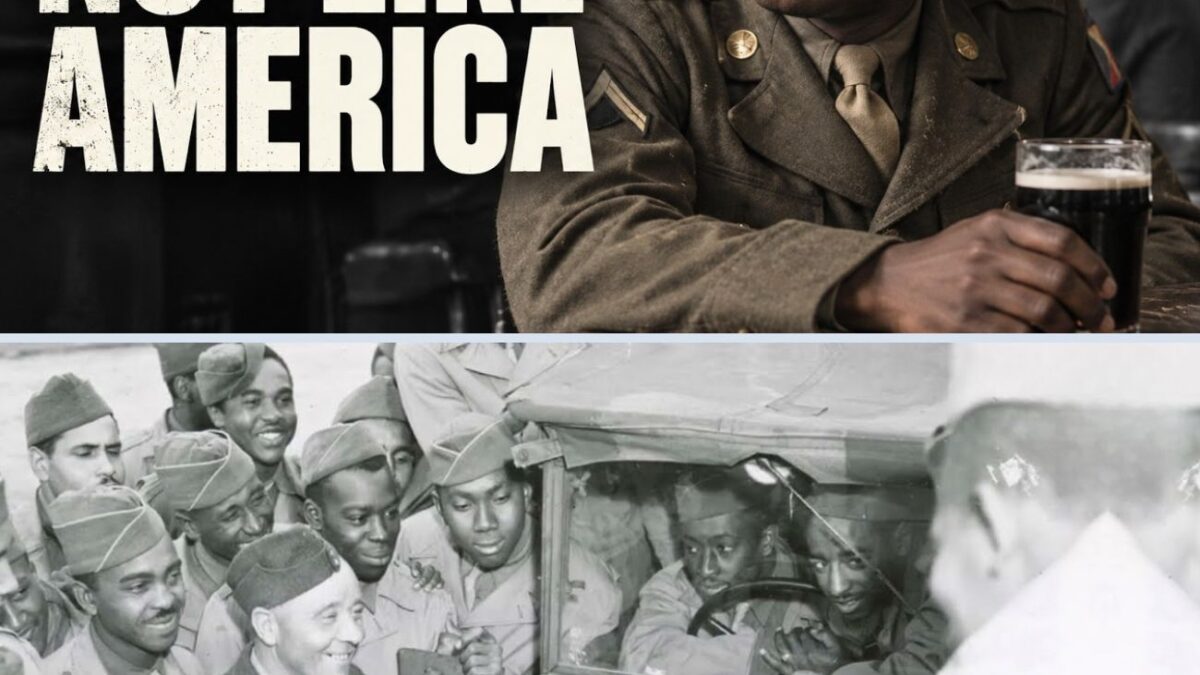
In 1942, as American troops arrived in Britain, military authorities circulated guidance to British civilians on how to treat black American soldiers. It recommended a social distance that British people were not accustomed to maintaining and that British law did not require. Practices that replicated the racial hierarchy of the American South. The British reaction to this document was not uniform, but a significant element of it was a variant of bewilderment. Britain had no legal framework of racial segregation. It had prejudice. It was not a country without racial prejudice, but it had no Jim Crow laws, no legal prohibition on black and white people sharing spaces, no formal system of racial hierarchy enforced by courts and social customs simultaneously. The American military guidance was asking British civilians to adopt a social practice that had no legal foundation and no cultural habit in Britain to support it. Many British civilians declined. This refusal, not universal, not without complications, but genuine and documented, produced one of the more remarkable social encounters of the war, the collision between American military racial segregation and British social norms, documented in letters, reports, and the accounts of those who lived through it.
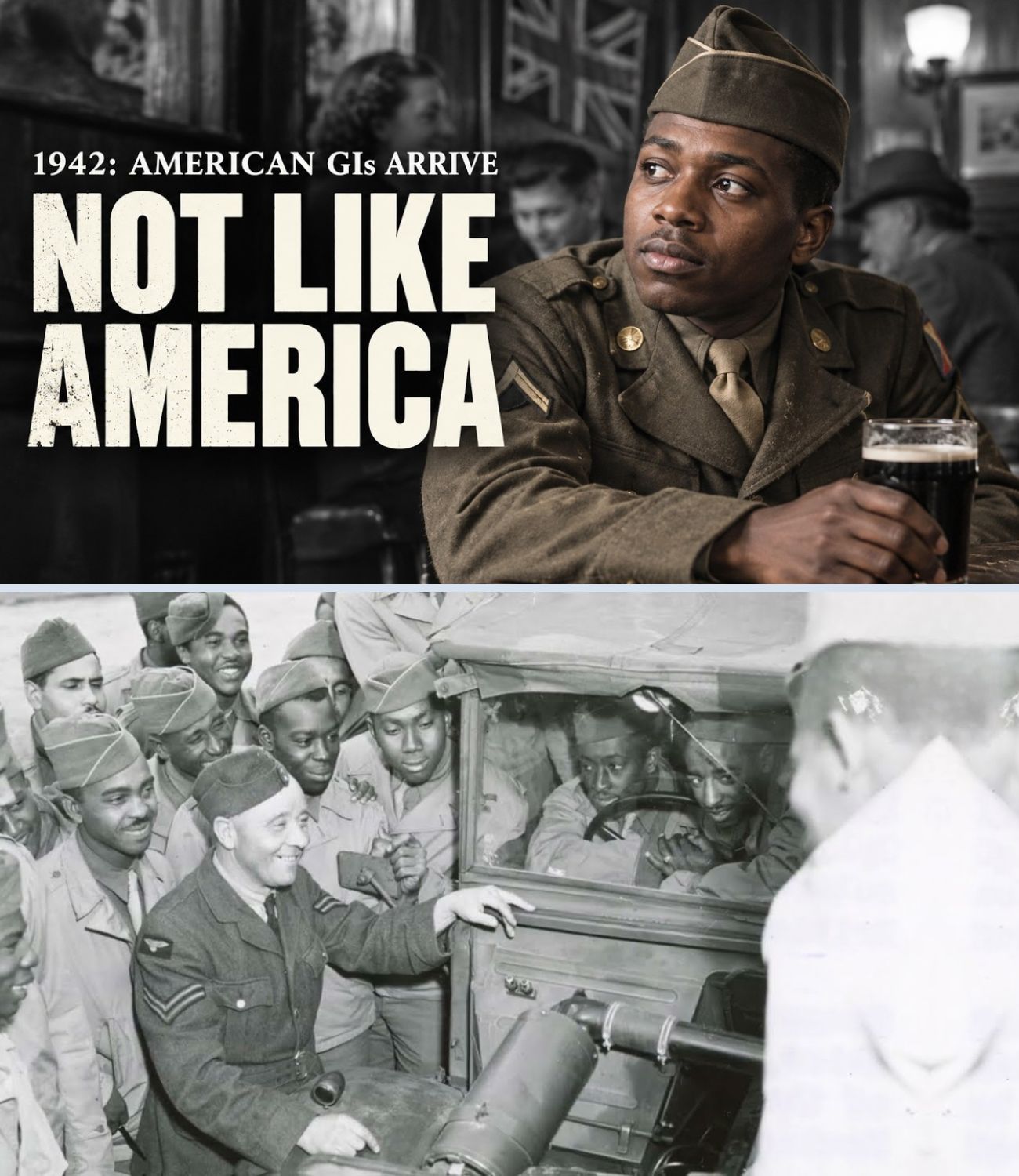
The first black American soldiers to arrive in Britain came into a society that was simultaneously more and less prepared for them than either they or it expected. British society was not racially homogeneous in 1942. Small black communities existed in the port cities. Liverpool, Cardiff, Bristol, and London had black residents whose presence went back generations, the result of maritime trade connections with Africa and the Caribbean. But these communities were small and concentrated. For most British people, particularly those in the countryside and in smaller towns, a black person was a rarity. The arrival of black American soldiers in significant numbers was for many communities their first sustained encounter with black people. The specific thing that black American GIs consistently reported their British experience in letters home, in memoirs, in later interviews, was not that Britain was perfectly free of racial prejudice. It was that Britain did not have the architecture of racial segregation.
A black soldier who walked into a pub in England was served. A black soldier who sat on a bus in England sat where he chose. A black soldier who walked into a shop was treated as a customer. These were experiences that many black American men had never had at home. Not because they lived in a country that declared itself opposed to racial equality, but because they lived in a country that declared itself in favor of equality while maintaining, in large parts of its territory, a comprehensive system for denying it. The contrast with black soldiers’ experience in the American South was made more acute by the fact that many black GIs had gone through southern military training camps before being shipped to Britain. The military installations in the American South subjected black soldiers to the full architecture of Jim Crow segregation. In the camp, in the surrounding towns, in every interaction with the civilian world outside the base. Men who had spent months in this environment arrived in Britain and encountered something different in ways that were specific and unexpected.
The letters home documented a consistent theme. The strangeness was not that Britain was welcoming. The strangeness was that welcome was ordinary. That the expectation in Britain was that a black soldier was simply a soldier, and that this ordinary expectation was extraordinary by comparison with what black soldiers had experienced at home. Understanding what black American GIs found in Britain requires understanding what they had left. The Jim Crow system of the American South was comprehensive and legally enforced. Separate schools, separate hospitals, separate restaurants, separate seats on buses and trains, separate waiting rooms, separate water fountains, separate entrances to public buildings. The system was enforced by law, by custom, and by the violence that was always available to maintain it. A black man who violated the conventions of Jim Crow, who sat where he was not supposed to sit, who went where he was not supposed to go, who did not show the appropriate deference, faced not merely social disapproval, but the possibility of physical violence and legal sanction.
The United States Army reproduced this system in military form. Black soldiers served in segregated units, separate from white soldiers under white officers in many cases, assigned disproportionately to support and labor roles rather than to combat. The military’s own spaces were segregated, separate barracks, separate mess halls, separate recreation facilities in American military installations. Black soldiers who used facilities designated for white soldiers were subject to military discipline. The specific occupational distribution of black soldiers in the American military also reflected the racial hierarchy that Jim Crow had produced. The combat arms, the infantry, the armored divisions, the prestigious fighting units, were overwhelmingly white. Black soldiers were concentrated in engineering battalions, quartermaster units, transport companies, and the logistical infrastructure that made the combat units operations possible. The men who built the roads, drove the trucks, unloaded the ships, and maintained the supplies were disproportionately black. The men who received the medals and the recognition were disproportionately white.
This distribution was not an accident of individual aptitude. It was a structural outcome of a segregated military that reflected the segregated society that had produced it. The specific contradiction that black American soldiers carried with them to Britain was one that their contemporaries named explicitly. They were fighting in uniform for democracy and freedom. The country they were fighting for denied them the democracy and freedom they were fighting to extend to others. The Double V campaign, the slogan adopted by black American press calling for victory abroad and victory against discrimination at home, expressed the specific moral position of black Americans in the war. They understood what they were fighting for. They served and they returned to a country that had not yet decided to extend that fighting’s meaning to themselves.
Britain in 1942 was not a country without racial prejudice. It would be inaccurate to present the Britain that black GIs encountered as a racial utopia that simply offered equal treatment to all. British society had its own racial hierarchies, its own prejudices, and its own history of racism that was embedded in the imperial project that was still, in 1942, the framework within which Britain understood its place in the world. What Britain did not have was the specifically American architecture of legal, formal, and comprehensive racial segregation. There was no British equivalent of the Jim Crow laws. A black person in Britain could sit where they chose on public transport, eat where they chose in a restaurant, drink where they chose in a pub. No law said otherwise. No formal social custom, enforced and backed by potential violence, required them to sit elsewhere.
This legal and formal difference was significant even in the presence of informal prejudice. Prejudice that must be exercised covertly, without legal backing, and without a surrounding culture that normalizes it through omnipresent formal enforcement, is a different thing from prejudice that operates through a comprehensive system of legal and social machinery. The prejudice some black GIs encountered in Britain was real. It did not have the architecture of Jim Crow behind it. The British government’s navigation of the American pressure to adopt segregation practices was imperfect. There were British officials who accommodated American preferences to a greater degree than formal policy allowed. There were local authorities who were more cooperative with American military segregation practices than the official position warranted.
The formal British position, that British law could not support segregation, and British civilians could not be compelled to maintain it, was not always implemented consistently. But the formal position existed, was articulated, and provided a framework that black GIs could and did point to when they encountered attempts to enforce segregation practices outside the American military’s own installations. The British government navigated this carefully. Formal policy was clear. British law did not permit racial discrimination, and British civilians could not be compelled to maintain American-style segregation. Practical policy was more equivocal. British authorities did not want to antagonize the American ally, and some British officials were more willing to accommodate American military preferences than others. The result was inconsistency. Formal British policy opposed segregation, while practical accommodations were sometimes made.
The collision between American military racial practices and British civilian society was not theoretical. It played out in specific places, in pubs, in shops, in village halls, in the streets of English market towns, and it produced specific incidents that the documentary record has preserved. The American military attempted to extend its own racial practices into Britain. Military police sought to maintain segregation between black and white American soldiers in their off-duty time. White American officers sometimes pressured British pub owners to serve only white soldiers. American military guidance circulated to British civilians recommended maintaining social distance from black soldiers, distance that British people had no cultural habit or legal requirement to maintain.
British responses varied. Some landlords complied with American pressure, designating their establishments for white soldiers only. Many did not. Some pubs in southern towns with significant American military presence became known as spaces where black soldiers were welcomed and white soldiers were understood to be less welcome. Not by formal designation, but by the preferences of the black soldiers and the hospitality of the proprietors. The all welcome sign was a statement in a context where American military pressure was pushing toward the opposite. The British military’s position was formally clear. Bernard Montgomery, commanding British ground forces, issued guidance that British soldiers should treat black American GIs with the same ordinary courtesy as any other Allied soldier.
This was, in effect, a statement that British military norms would not reproduce American segregation practices, that British soldiers were not expected to maintain the social distances that the American military’s own racial hierarchy required. The practical effect of this guidance in the complex social environment of a country hosting Allied forces was limited, but its existence documented where the British military stood formally on the question. The pub occupied a specific place in the collision between American segregation and British social norms because the pub was the primary off-duty social space for both British civilians and American GIs, and because British pub culture operated on principles that were incompatible with racial segregation.
The British pub was and understood itself to be a space of relative social equality. Class hierarchies existed and were often reflected in pub culture, but the pub was also a space where different classes and different people mixed in ways that formal British social life sometimes did not permit. A pub that refused to serve a paying customer required a specific reason, and color was not a reason that British pub culture recognized or British law endorsed. When white American military police or white American officers attempted to pressure British pub landlords to refuse service to black American soldiers, they encountered this specific resistance.
The landlords who refused to comply were not making a statement about American racial politics. They were maintaining the ordinary practices of their establishments, serving customers, maintaining the atmosphere that made a pub a pub, resisting external pressure to change the way they ran their business. The relationships that formed in British pubs between black American soldiers and British civilians were also documented as crossing lines that American racial convention specifically prohibited. Black and white people drinking together, dancing together, forming friendships, and in some cases relationships. Activities that were unproblematic by British social norms and that white American soldiers and military police found deeply disturbing precisely because they violated the specific American racial conventions about social contact between races.
The friction that these relationships caused was among the most consistently documented tensions of the American military’s presence in Britain. The accounts from Bamber Bridge in Lancashire, where an entire village had put up black troops only signs in the pubs in direct inversion of American segregation after white American MPs had attempted to enforce segregation in the town have a quality of English stubbornness that is difficult to mistake for anything else. The village had decided who side it was on, and it expressed that decision in the most English way available. By being extremely specific about who was welcome in the pub.
In July of 1943 in the village of Bamber Bridge in Lancashire, an incident occurred that more clearly than any other documented the specific tension between American military racial practices and British civilian society. Black American soldiers stationed near Bamber Bridge had found a welcome in the local pubs that they had not expected and that ran directly contrary to the practices of American military segregation. When white American military police attempted to enforce segregation to clear black soldiers from establishments they were using, the situation escalated. The confrontation became violent. Black American soldiers who had been welcomed by the local community and who now found themselves targeted by the military police of their own army responded. The incident continued through the night.
British civilians who witnessed the confrontation were documented as siding with the black American soldiers, not because they fully understood the specific dynamics of American military racial politics, but because the military police were attacking men who had been their neighbors and their customers and who had done nothing that British social norms considered wrong. The incident was suppressed in American military records at the time. Its occurrence was acknowledged, but its significance as evidence of the fundamental incompatibility between American military segregation and British civilian practice was not something the American military establishment wanted to publicize. It became part of the documented history of the period only as archives opened and as veterans and historians reconstructed what had happened.
The letters that black American GIs sent home from Britain are among the most affecting documents of the Second World War’s American experience. They describe, in the specific language of men writing to families who would understand what they were describing, what it felt like to be treated as ordinary. To walk into a pub and be served. To sit on a bus and not be directed to a separate section. To be greeted by strangers with ordinary courtesy rather than with the mixture of caution, contempt, and distance that the Jim Crow system required black Americans to navigate at home.
One letter after another described the same experience in different words. The realization that the way they were treated in England was not special treatment. It was normal treatment. Treatment that white people received without thinking about it. That black people in England apparently also received without it being remarkable. The remarkableness lay in what it showed about the abnormality of what they had left. The letters home were also, inevitably, about the contrast. Writers who described the welcome they had received in British pubs sometimes also described what happened when they returned to American military facilities, to the segregated mess halls, the separate barracks, the MP checkpoints that maintained the system they had escaped for an afternoon.
The contrast was not something that men could experience and then set aside. It sharpened the specific grievance of fighting for a country that had not extended its stated values to them. The experience of black American GIs in Britain is part of the history of the American civil rights movement in a specific and documented way. Men who had experienced being treated as equal, who had the lived evidence that a society without Jim Crow produced different social interactions, different self-perceptions, and different possibilities returned to America with that experience. They had seen what the absence of formal segregation looked like. They had sat in pubs alongside white people and been served alongside white people and been treated with the ordinary courtesy that white Americans received. They had evidence that a different way of organizing social life was not merely theoretical.
The post-war civil rights movement drew on many sources. The veterans of the European theater, including those who had experienced Britain, brought a specific kind of experience. They had fought for values that the country was not fully implementing. They had seen what a society looked like when it was not operating a comprehensive system of racial hierarchy. The moral clarity that animated the civil rights movement of the 1950s and ’60s was not created by the British experience, but for many veterans, it was sharpened by it.
The specific political demands of the post-war civil rights movement, desegregation of the military, equal access to public accommodations, equal voting rights, were not abstract ideals for men who had experienced their absence in American life and the presence of their approximate equivalents in British life. They had lived in both systems. They had experienced what formal equality of access, however imperfect in practice, felt like compared to the formal system of exclusion they had grown up in. Executive Order 9981, which desegregated the American military in 1948, was signed by Truman partly in response to the pressure that veterans organizations and civil rights groups were bringing to bear. Pressure that drew partly on the documented experience of black veterans who had served alongside white allies and been treated as equals by them.
The collision between American military racial segregation and British society in 1942 through 1945 was neither a straightforward story of British racial enlightenment nor a simple narrative of American hypocrisy exposed. It was something more complicated, an encounter between two societies, each of which had a different relationship with the question of racial equality, in which the incompatibility of those relationships produced specific and revealing conflicts. Britain was not free of racial prejudice in 1942. The British Empire was explicitly racial in its organization. British society had its own hierarchies and its own forms of discrimination that the formal absence of Jim Crow did not eliminate.
What Britain offered black American GIs was not racial equality. It was the absence of the specific formal architecture of segregation, the system of law and custom and enforced social practice that made Jim Crow not merely an attitude but a comprehensive structure. For men who had lived inside that comprehensive structure, the absence of its specific requirements was experienced as something close to freedom. They were not being treated with extraordinary courtesy. They were being treated normally. That ordinary treatment felt extraordinary because of what they had come from.
What the collision revealed about Britain was something about the specific character of informal prejudice as distinct from formal segregation. What it revealed about America was the distance between the values America declared and the system America maintained. The men who sat in British pubs alongside white customers and then returned to segregated American military facilities knew that distance in the most personal possible way.
The social history of black American GIs in Britain is a history that sits outside the dominant narratives that both countries have told about the war. The American narrative focuses on military achievement. The specific experience of black soldiers within a segregated military requires acknowledging the contradiction embedded in American participation in a war for democracy. The British narrative focuses on stoic civilian resistance and the national effort. The specific episode of the collision with American segregation requires acknowledging that the collision was also a confrontation with British ambivalence about race and empire that the formal absence of Jim Crow did not entirely resolve. The story is uncomfortable for both countries in different ways. That discomfort is part of what makes it worth examining.
You Might Also Enjoy

“We Thought They Would Negotiate”—What Argentine Soldiers Said When The British Attacked Goose Green

“You’ll Never Finish My Ruck March, Limey” — US Sergeant Who Challenged the SAS, Then Fell Out First






