Why British SAS were HATED by American Forces In Afghanistan
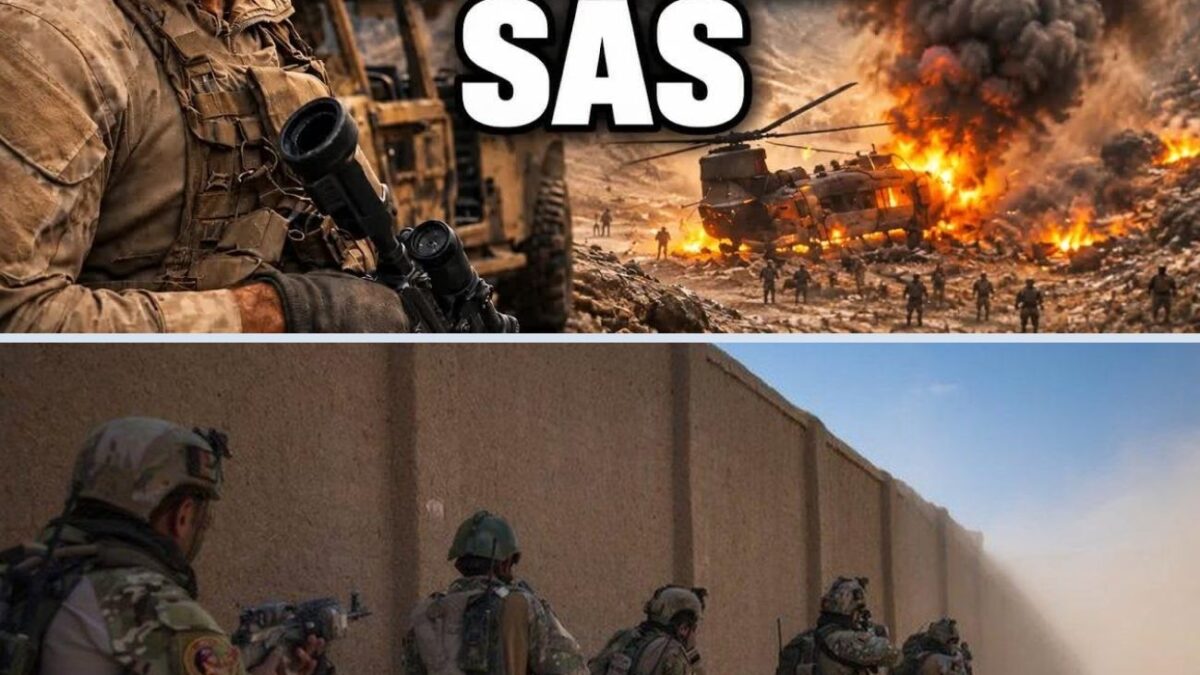
There is a burning Chinook in the bottom of an Afghan valley. The tail rotor is bent under itself, black smoke stacking straight up in the cold air because there is no wind yet, only the sound of the fire. And if you were the man crouched behind the front wheel of a stripped-down Pinzgauer with a Delta patch on your shoulder, you would be watching a British staff sergeant walk out of that smoke at a walking pace, rifle low, not shouting, not running, and you would already be trying to work out how to write down what you just saw.
His name is Wyatt Brennan. He has been a master sergeant in 1st SFOD-D for 6 years. He is not a man who is easily impressed, and he is at this exact second deeply and quietly impressed. Later, much later, when the debrief was done and the wounded were on a bird out of Bagram, and someone at a Fort Bragg bar asked him what he really thought of the boys from Hereford, he would say a word about the Special Air Service that his own community half agreed with and half would not repeat on the record. He would say that a lot of American operators in that stretch of the war hated working with them. He would say it flatly, without heat. And then, because Brennan was that kind of man, he would explain what he actually meant by the word because it was not what a civilian would think, and it was not what the headline would suggest, and it was the only honest thing he could say about the valley. Because the fire in the valley was not their fault. And what they did in the next 11 minutes was not something Brennan had a template for, or a drill for, or a paragraph in his notebook for. He had a green Rite in the Rain notebook in his left chest pocket, and he had written in it after every contact of his adult life. And that night in the tent at Camp Bastion, he opened it, uncapped his pen, and closed the notebook again without writing anything. That is the moment this story is about, how he got there, what broke, and what did not break, and what he finally said on the record about why so many of his own people used that particular word. To understand any of that, you have to start where he started, long before the valley, long before he heard a British voice on the net stay calm at a pitch that annoyed him with a Delta Master Sergeant who had trained with everybody in the world and thought he already knew how this story ended.
Wyatt Brennan came into Delta by the long road. He had grown up in a small town in eastern Kentucky, gone in through the 75th Ranger Regiment at 18, made sergeant with second battalion at Fort Lewis, and passed Delta’s operator training course on his first attempt, which was not common. He was 34 in the summer this story begins. He had a wife, two daughters, and a small horse property outside Fayetteville that he could not really afford. He had three full rotations in Iraq behind him, one of them into Anbar in the years when the door work was every night, and he had spent the winter before this trip running a close quarter battle training cell at a Delta compound, instructing new selectees on room entry and pistol transitions. He was, by any measure that any American operator would accept, one of the better close quarter battle men in his squadron. He shot to a standard his squadron sergeant major had once described, in the exact language of the community, as “offensively good.” If you asked him off duty what he was proudest of, he would not have said Iraq, and he would not have said Delta selection. He would have said his shot timer numbers on the bill drill, six rounds, one target, seven yards, from a concealed draw, clean center hits, no penalties. He ran it under two seconds on demand in front of witnesses on days when he had not slept.
Chief Warrant Officer 3 Darian Kolb, his squadron sergeant major, a man who chewed cinnamon toothpicks and had left half his left thumb behind on a door charge in Ramadi and never mentioned it, had once said to a room of new operators that Brennan’s draw was as fast as anyone Kolb had watched in 20 years. Brennan had heard that and said nothing and then had gone home and told his wife and only his wife. Here is the belief. Brennan believed that at the Tier 1 level, the difference between units was small and the difference between individual operators was large. He believed that everybody who wore a Tier 1 tab—Delta, DevGroup, Green Beret ODAs at their best, Special Air Service, GROM, KSK—was drawing from the same well and that what distinguished a great operator from a good one was reps, ammunition, and time in country. He believed the men from Hereford were competent professionals who did roughly the same job he did with cheaper kit and older doors. He believed this because it was, in his experience, mostly true. Everywhere he had gone, it had been true.
So, when the taskings came down that summer for a small Delta element to embed with a British Sabre squadron on a rotation into eastern Afghanistan, a shared task force, integrated targeting cells, joint ground assaults on a particular network of bomb makers in the mountains, Brennan volunteered his team. Not because he was particularly excited about the Brits, but because he wanted the rotation and the war was closing down at the pace politicians close wars down and there were not many rotations left. Kolb signed the paperwork, chewed his toothpick, and said:
“You’ll get on with them or you won’t. Either way, write it down.”
Brennan patted his left chest pocket without thinking, and Kolb saw it and did not smile. There is a thing American special operators used to say in bars in Fayetteville and in Virginia Beach and in Coronado about the British Special Air Service in Afghanistan. They said they hated working with them. They said it in the tone men use when they have been made to feel a way they did not want to feel, and it was true. That word was said often, but it was not a word about arrogance, and it was not a word about the British being cold, though a stranger overhearing it might have thought so. It was a word about a doctrine, two theories of how to fight a war meeting each other in the same valleys, and one of them slowly, quietly refusing to lose its argument.
Brennan learned that slowly, the way he learned most things. He and three of his men flew into Brize Norton in early autumn and were driven west through a rain that never quite committed itself to a base near a market town in Herefordshire, in England, not Wales, though Brennan had confidently told his youngest daughter on the phone that he was going to Wales for a month. The camp itself, on the edge of the village of Credenhill outside Hereford, was smaller than he expected, older buildings than he expected, a ground floor and a first floor where an American base would have had a lobby and a second, and Brennan found himself on the first morning standing in a corridor counting stairs to reset his expectations. The gymnasium was serviceable. The armory was ordinary. The car park had a Land Rover on blocks and a black Labrador asleep under it. Somewhere behind a low wall, someone was singing very quietly in Welsh while cleaning a weapon. It did not look from the outside like the address of any particular myth.
On the second evening in the mess, Brennan sat with his three men and drank a pint of a bitter he did not particularly like, and watched a group of blades at another table eat their dinner without doing anything the Delta men would have expected. No banter about the Americans, no visible curiosity. One of them was reading a paperback. Another was left-handed and drinking black tea from a mug he had brought from home. Brennan, who had trained with the French, the Poles, the Australians, and twice a DevGroup troop out of Dam Neck, leaned toward his team sergeant and said, at a volume he did not intend to be overheard:
“I’ve trained with everybody. How different can a Hereford squadron really be?”
The team sergeant laughed. The left-handed man at the next table did not look up. But the paperback reader, without lifting his eyes, marked his place with a strip of ranger green tape and closed his book and put it under his chair.
The next morning, in a small briefing room with a whiteboard and a kettle, they were introduced formally to their partners. The officer commanding B Squadron was Major Callan Whitfield, a compact man in his mid-30s with a Cambridge accent and pencil marks in the margin of his own notes. He spoke for 11 minutes. He described the network they would be going after, the rough disposition of the bomb makers in a particular valley on the border of two provinces, the expected weather, and the working relationship he intended to have with Brennan’s element. He used no adjectives. He did not raise his voice. He said thank you when it was over, and walked out. Brennan, who had been in American briefings that ran to two hours and involved slides with unit crests on them, sat in his chair for a further second than he needed to, and realized he had understood everything. That was, quietly, the first thing that annoyed him. He could not yet have said why.
They went to the range on the fourth morning, a 100-meter lane behind a berm, drizzle, no wind. Brennan had brought his own M4, a Block 2 quad rail, a hard-used low-power variable optic he trusted more than he trusted most people, and he set up with the ease of a man who has fired 10,000 rounds through a rifle he assembled himself. Beside him, a British staff sergeant was setting up with quieter fuss. Left-handed, a Diemaco C8 with a suppressor he clipped on without comment. Older glass, a folded map in his cargo pocket that had rain on it already. This was Elliot Hargreave. He was 38. He had been badged for 11 years. He drank his tea black, and on being introduced to Brennan, had said the words “Master Sergeant” as if he were pronouncing the name of a village he had once driven through. Brennan had not been sure how to take that. Watching him now, Brennan noticed that Hargreave did not check his zero with a spotter. He looked at his group at 50 yards, adjusted the rear once with his thumb, and did not check it again for the rest of the day. Brennan, who checked his zero constantly, filed that.
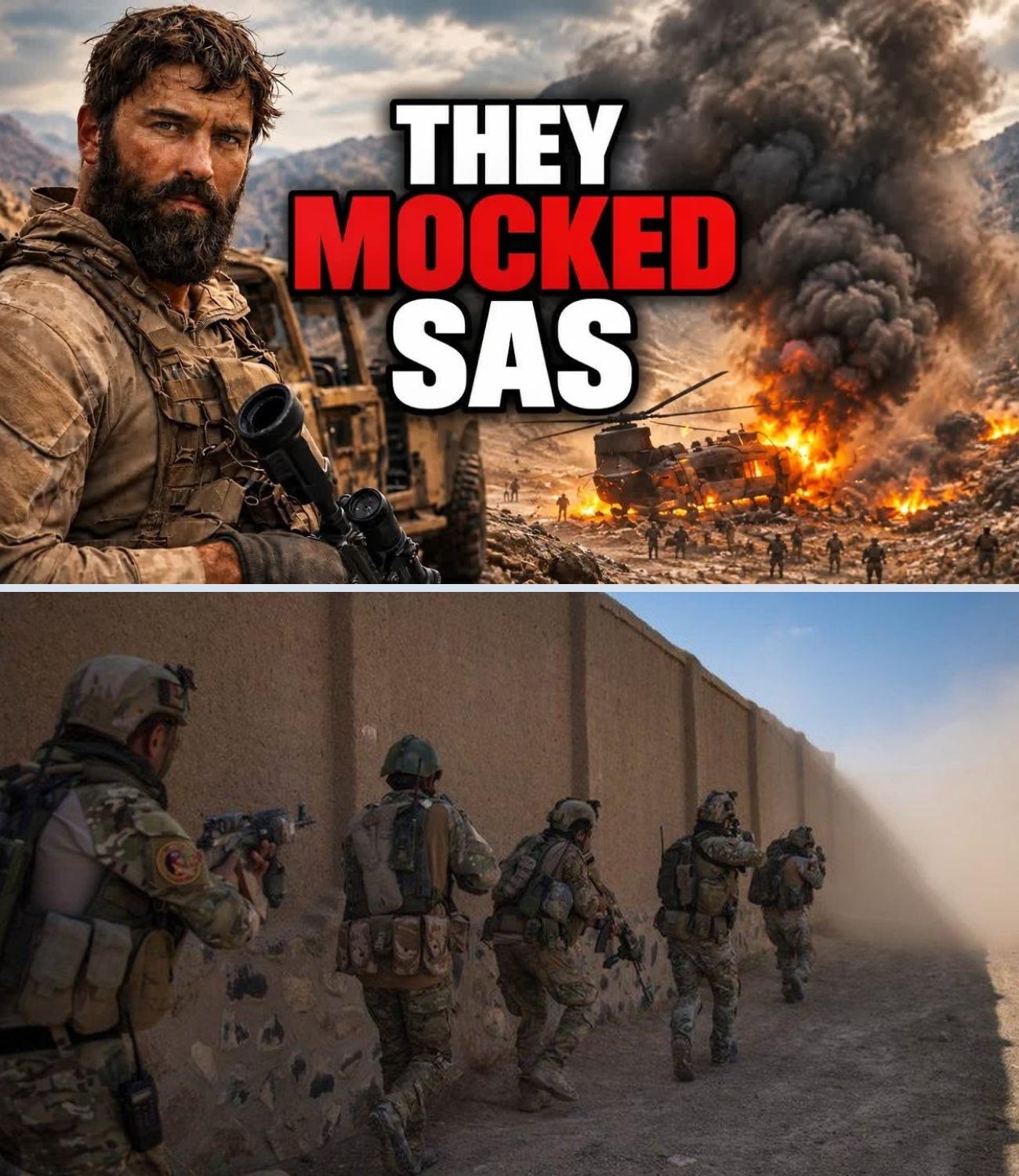
The C8 beside the Block 2 M4 was the whole visible difference between the two forces on that range. The Colt Canada rifle, a little plainer, a little older, one spare magazine on Hargreave’s belt where a Delta man might have carried three, and a small brass-cased compass where a Delta man would not have carried anything. They ran a straightforward drill, six-round string, transition to pistol, two rounds on a second target at 10 meters. On the beep, Brennan ran it cleanly under his own private standard in the light drizzle with his usual expression. He was pleased with himself and did not show it. Hargreave ran it a beat slower off the beep and half a beat faster on the finish because he had not moved his feet at all between targets, Brennan noticed. He had been taught to plant, drive, plant. Hargreave had simply not unplanted.
When they compared timers, Hargreave glanced at the numbers, said:
“That’s about right.”
and put the timer in his pocket. He did not offer his own number and he did not ask for Brennan’s. He wandered off toward the ammunition point with the black tea mug in his hand as if the whole thing had been a chore he needed to complete before lunch. Brennan stood in the drizzle for a moment and then out of habit took out the green notebook and did not write in it because he could not yet think of what to write. He put it back in the pocket. Behind him, one of his own men quietly muttered:
“That was weird, right?”
Brennan replied:
“Yeah, that was weird.”
That evening in a corridor at Stirling Lines, Brennan passed a squadron sergeant major coming the other way. A big Welshman, black-haired, with an expression that suggested he had been sent to look for something amusing and had at long last found it. He said in a light Merthyr accent:
“You’re the Delta lot.”
Brennan said yes. The sergeant major, this was E1 Prothero, put a hand on his shoulder in passing the way you might touch a horse to reassure it and said:
“Wales tomorrow. Bring a good pair of socks.”
and walked on. Brennan stood in the corridor for a second longer than he needed to. He had, over the years, been briefed on many exercises by many senior warrant officers. The advice had never been about socks. He walked back to his room. His team sergeant was on the bed, boots off, reading a threat brief. Brennan sat down and said out loud:
“I don’t understand what I just did today.”
His team sergeant looked up. Brennan closed his eyes.
“Everything they did was fine. Every single thing. It was all fine, and I don’t know why it’s bothering me.”
His team sergeant said dryly:
“Maybe that’s the point.”
Brennan opened his eyes. He did not answer.
Brennan had done selection twice. He had passed Ranger School in winter. He had done the Delta stress shoots in the Uwharrie in July. He was 34 and in the best shape of his adult life. He was about to spend a day in a Welsh mountain range and be quietly and completely rearranged. They drove west in the dark in two minibuses. The road climbed and then unclimbed and then climbed again, and Brennan watched the hedgerows come out of the headlights and go back into the dark and thought about how much smaller everything was here than in the American West. They came off the road at a lay-by that had nothing to distinguish it. A gate, a cattle grid, a signpost that pointed to a name Brennan could not pronounce and did not try. Protheroe, in the front seat of the lead minibus, was already out and walking, bergen on, and Brennan realized the exercise had started when he was still doing up his bootlaces. Nobody had called it. Nobody had counted down. The men behind Protheroe simply put their bergens on and followed. Brennan followed. His team followed him.
The rain was very fine and very cold, and it moved sideways in a way that reminded him of nothing he had felt in Iraq. The pace was not fast. That was the first surprise. Brennan had expected a punishing tempo out of the gate, the sort of speed that impresses foreigners on day one. Instead, the men moved at a walking pace that was not obviously anything over ground that was obviously a great deal. Wet grass on peat, loose rock the size of a fist, a slope that did not stop being a slope for 40 minutes. Brennan, who ran a sub-14-minute mile-and-a-half and a fast two-miler with weight, was breathing harder than he wanted to be breathing at the end of the first hour and had already fallen back two places. Hargreave was in front. He was left-handed with his walking pole and he did not look at the ground. He looked at the middle distance. When Brennan finally, sourly, looked up from his own boots for long enough to see where Hargreave was looking, he understood that Hargreave was navigating, reading the whole shape of the hill, the way a sailor reads a coast without the map that Brennan had in his own pocket been looking at every 10 minutes.
They came up onto the ridge in weather that closed to 50 meters of visibility. Brennan could not see the top. He could see the man in front of him and he could see faintly a stone marker somewhere ahead in the murk. This was Pen y Fan. He would not know it was Pen y Fan until later that night when Protheroe laughed about it in a warm room and Brennan would feel oddly cheated that nobody had told him at the time. Nobody had told him at the time because it did not matter. It was a hill. They would cross it. They would cross another one after. The route was on a folded card in Protheroe’s chest pocket and it never came out. The men were not counting bounds and they were not talking about the ground. Brennan was silently counting bounds and silently talking about the ground in his own head. And he became aware, somewhere near the trig point, that the distance between the way he was moving through the terrain and the way they were moving through the terrain was not a fitness distance. It was a relationship distance. They were at home here. He was a guest. His breathing was different because of it.
Coming off the far side, the ground turned to sedge and running water. Brennan slipped twice in 10 minutes. Hargreave, ahead of him, did not slip. Brennan watched him for the third mile and worked out that Hargreave was not choosing the same line Brennan was choosing. Hargreave was placing his feet on things Brennan would have avoided. Small flat stones, tussocks, the raised edges of peat hags, and moving faster because of it. Brennan, at some point, tried to copy him and slipped again and stopped trying and simply walked. He was not last. His two men behind him were also not last, though Brennan noticed, without pleasure, that his own team sergeant, 36 years old with two bronze stars, had gone quiet in a way that Brennan recognized as effort managed rather than effort spent. Hargreave, at the front, said nothing to anyone for the entire descent. He was left-handed with his pole. He was drinking occasionally from a plain canteen. He was going home.
They came off the ground at a farm gate in the late afternoon. The map, when Brennan finally saw it laid out on a wagon bonnet, showed a route of just over 40 kilometers over ground he would not have chosen to cross with a horse. Protheroe, over a brew, said mildly:
“That’s the short one.”
He was laughing in his particular way, which was mostly with his eyes. Brennan, sitting on the tailgate of the wagon with his boots off and his socks in his hand, took out the green notebook. He looked at it for a long moment. He wrote three words. He wrote:
“Fitness isn’t it?”
And then he closed the notebook and put it back in the pocket. He had come to Wales sure of one thing, that the difference between him and the men he was following was going to be reps. He left the mountain sure of another, that whatever the difference was, it was not the thing he had come with a plan to close. The harder question, what it actually was, was now open.
If the hills had taken his fitness card, Brennan still had a card he had not put on the table. He was, as Kolb had said, offensively good in a room. He had not yet been in a room with any of them. He believed quietly that this was the part where he would be even. They stayed that night in a farm building that the regiment used for workups. Long refectory-style tables, a wood-burning stove, a kettle on a hob that never came off it. Brennan sat with his boots off. His feet were, honestly, in a worse state than they had been in years. He was rationalizing as he ate. Every Tier 1 unit has terrain it owns. This was theirs. His terrain was closer to the target country. Wait for the doors. He said none of this out loud.
Across the table, one of the men, Sergeant Rory Ashworth, mid-40s, quiet, ex-Royal Marines, was field-stripping a Glock 17 with a rag that had seen a great many Glocks. He worked one-handed for the last few motions because his other hand was holding a mug of tea. Brennan, who prided himself on being able to strip a Glock in the dark, noticed and did not comment. Ashworth reached at one point to put something back in the belt kit at his side, and a small photograph came briefly out of a pocket with the something and went back in. It was a fell pony standing on a hillside somewhere in the Lakes, black and gray against wet ground. Ashworth did not explain it. Brennan did not ask. Later, Hargreave, without looking up from his tea, said quietly:
“Don’t ask him about the horse.”
Brennan said:
“Wasn’t going to.”
Hargreave said:
“Good.”
Which was, as far as Brennan could tell, the longest exchange he had had with the man since arriving.
Somewhere outside in the wet Welsh dark, a Land Rover started and did not go anywhere and then stopped. Brennan went outside for the air. The rain had thinned to nothing. His team sergeant found him by the wagon and said:
“You’re doing the maths.”
Brennan said:
“I’m doing the maths.”
His team sergeant said:
“And?”
Brennan said:
“Fitness is theirs. Ground is theirs. Fine.”
He looked at the outline of the ridge they had come off, still faintly visible against the last of the sky.
“But the door is ours. The room is ours. That’s the whole reason we exist. Wait for the killing house.”
His team sergeant did not say anything for a moment. Then he said:
“That’s how you want to play it.”
Brennan said:
“That’s how it is. It’s not a play.”
His team sergeant nodded once, slowly. He had known Brennan since Anbar. He said:
“All right.”
And then, more quietly:
“Just keep that notebook open.”
Brennan patted the left chest pocket out of habit, and neither of them mentioned that the notebook was, at that moment, still empty except for three words about fitness. They went back inside. Ashworth had disappeared. The kettle was going. Hargreave was on the other side of the room, in a corner, saying something inaudible to a corporal who was reading a paperback. The corporal laughed once, very briefly, which was the most human sound Brennan had heard from any of them all day. Brennan did not know it yet, but the corporal was Dominic Lestrange and the paperback was Auden and the room he was waiting for was going to be waiting for him tomorrow.
They came back to Credenhill on a gray afternoon. The killing house at Stirling Lines was low, plain, purpose-built, and older than most of the men who worked in it. Rubberized walls that were scarred and repaired and scarred again. Ceiling extractors. A working smell of propellant that never fully left the building along with the smell of paint over paint over propellant and the faint sweet chemical smell of the material they used to patch bullet holes. Brennan walked in behind Hargreave and felt for the first time in a week something recognizable. This was a place. He had been in places like this. He knew what a killing house was for. He also noticed, without being told, that the men who worked here did not walk through it the way he walked through his own. They walked as if they lived there.
Corporal Dominic Lestrange was already inside in a plate carrier that had been washed a great many times. 28, sharp-featured. He was the man from the corner the night before. He carried in the wagon on the way over a battered paperback of Auden with a strip of ranger green tape marking his page and Brennan had watched him fold the corner of the tape flat before he got out so it would not curl in the pocket. Lestrange nodded at Brennan the way a man nods at another man he has heard about. There was no rivalry in it. There was, if anything, a small polite interest. Brennan preferred the rivalry. He did not know what to do with the interest.
Hargreave set the scenario in three sentences. Two-room ground floor, a hostage unknown location, two armed men unknown location, a civilian unknown allegiance, may or may not be armed. Live ammunition, live targets, live paper. Go on the buzzer. Brennan stacks with his team sergeant and one of his Delta men because Hargreave has offered him a mixed stack and he has, out of a stubbornness he will later regret, declined. He wants his own team on the door. He wants the number in his notebook to be his number. The buzzer goes. Brennan flows through the first door with the economy he has drilled a thousand times. Left corner clear. Right corner clear. His team sergeant peels through the interior doorway. There is a target. The target is a woman. She is holding something. He fires. He fires because in his hands, at the speed he draws, the thing she is holding is a pistol and the geometry has already committed his rifle to the shot. It is a phone. It is a paper target of a woman holding a mobile phone. On the wall behind her, faintly in pencil, someone has written the word “No.” Brennan sees the word after he has fired, not before. In the second room, his team sergeant clears the two armed men cleanly. The buzzer goes a second time to stop the run. The lights come up. Nobody says anything for a moment.
Hargreave walks to the target. He looks at it. He looks at Brennan. He says:
“Fast.”
He says it the way he said master sergeant on the first day. Not cruel, not warm, just accurate. Brennan wants to say something about the ambiguity of the drill, about the speed at which he was expected to work, about the fact that in Anbar the phone would have been a phone or it would have been a detonator and neither of them would have known until later. He does not say it because in the far corner of the room without any theater, Lestrange has stepped up to the same door and asked Hargreave to reset. Hargreave resets. The buzzer goes. Lestrange flows through the door. Brennan watches. Lestrange sees the woman before he is fully in the room. Lestrange sees the phone. Lestrange does not fire. Lestrange moves past her at half a step. Closes with the interior doorway and drops the two armed targets in the second room in a rhythm that is not fast enough to be showing off and not slow enough to be safe.
Brennan stands very still. He is aware that his team sergeant is standing very still beside him. He runs the sequence back in his head. He tries to find the frame in which Lestrange saw the phone. And he did not. And he cannot find it because Lestrange is not moving faster than him. Lestrange is moving earlier than him. Lestrange has decided about the woman before he is through the door because Lestrange has been thinking about the room since Hargreave described it. Brennan, who prides himself on the calm of the draw, has been thinking about the timer. That is the difference. It is not a fitness difference and it is not a shooting difference. It is a difference in what the mind is doing in the 90 seconds before the buzzer. He watches Lestrange lower the rifle and walk out. Lestrange, on the way past, does not look at him. This is the courtesy that Brennan finally understands as courtesy.
He goes and stands by the wall for a minute. He does not take the notebook out. He is aware of it in his pocket and he is aware of the woman on the wall behind him and he lets both of those things sit. It was raining again by the time they came out of the killing house. Not hard. The kind of rain that gets into a collar. Brennan walked to the wagon on his own. He did not speak in the wagon. His team sergeant, who had known him for 11 years and had seen him bury two friends, did not push. They rode back through Hereford in the gray. A woman with a pushchair crossed the road in front of the wagon, and Brennan noticed that she was holding a phone in her right hand, and he made himself look at it until he could see it as a phone and not as anything else. He was aware that he was doing this. It did not help.
In his chest pocket, the notebook was a small hard weight, and he was aware, in a way he had not been aware in 15 years of service, that he did not know what he would write in it. He went to his room. He took the notebook out and put it on the desk. He took his boots off. He sat on the edge of the bed for a long time and looked at the notebook and did not open it. Somewhere along the corridor, a kettle went on and off. Somewhere else, a man was laughing quietly on a phone in a language Brennan half recognized as Pashto, probably an interpreter, probably on speaker, probably Captain Mikael Yousufi, the Afghan National Army Liaison, who had been drifting around the edges of the workup all week with his engineers’ quiet formality.
Brennan thought about his daughters. He thought about the bill drill. He thought about the fact that his squadron sergeant major, on a range in North Carolina, had once said in front of witnesses that his drill was as fast as anyone in the last 20 years. He thought about the fact that this was provably true. And he thought about the woman on the wall in the killing house, and about how Lestrange had walked past her, and about how his own rifle had come up before he had decided that it would. The framework Brennan had lived inside for a decade was simple: reps, ammunition, time. Everybody at his level drew from the same well. What made the difference was who drank more. He sat on the edge of the bed and understood for the first time in his adult life as an operator that this framework was incomplete. It was not wrong. It was not enough. There was a second thing. And the second thing was the thing he had watched Hargreave do on the hill and watched Lestrange do in the room and watched Protheroe do with a folded card he never took out of his pocket. It was thought done before movement. It was the map read before the map was drawn. It was, in a way Brennan could not yet phrase for himself, patience.
He was not and had never been a patient man. This was not something he had ever thought of as a shortcoming. It was, he now saw, the exact shortcoming that mattered. He put his hand on the notebook and did not open it. He said out loud to nobody:
“Ha.”
He said it flatly. It was the most honest sound he had made in a week. Later in the corridor, Protheroe passed him, the Welshman, the sergeant major from Merthyr. He did not stop. He did not put a hand on the shoulder. He said in passing at the volume he used for everything except laughing:
“Long day.”
Brennan said:
“Yeah.”
Protheroe said:
“Tomorrow’s an easier one.”
He did not smile. He did not slow down. He was gone around the corner before Brennan had decided whether it was reassurance or a warning or, as was in fact the case with almost everything Protheroe said, simply information.
Brennan stood in the corridor. He was aware that he had been standing there for a while. He walked back to his room. He picked up the notebook. He opened it. He wrote under fitness, “Isn’t it?” One further line. He wrote:
“Thought before movement.”
He closed the notebook. He put it back in the pocket. He slept. There is a moment in every honest reckoning where the man who has been resisting a thing stops resisting it, and it does not look like anything from the outside. It looks like a mug of tea. It looks like a hand held out for a strap. Brennan’s moment looked like both.
He came down early to the armory the next morning to draw kit for the deployment brief. Hargreave was already there, left-handed at a bench doing something small to a suppressor with the sort of care that a man gives to something he has done 10,000 times. There was a mug of very dark tea on the corner of the bench. Hargreave saw Brennan come in. He did not say hello. He picked up the mug, moved it 3 inches so that it was next to a second empty mug on the bench, and went back to the suppressor. Brennan understood, without a word passing, that the second mug was his. He walked over. He poured tea from the pot on the hot plate. He drank it black. It was, in fact, very bad tea, and he did not mind. He stood at the bench next to Hargreave, and Hargreave did not look up, and Brennan did not speak. And for 11 minutes, the only sounds in the armory were metal and rain and the hot plate ticking. Brennan finished the tea. He put the mug down. Hargreave nodded once at the mug. That was the whole conversation.
An hour later, on the loading bay, Brennan was setting up his bergen for the deployment workup. He was struggling with a strap. It was not a difficult strap. He was tired, and his hands were cold. Ashworth walked past, saw the strap, put his own load down, took the strap from Brennan’s hand without a word, threaded it correctly, tightened it, patted the load once, and picked his own load back up and walked on. He did not make eye contact. He did not say anything. The photograph came briefly out of his belt kit pocket when he bent down for his own strap and went back in. It took perhaps 11 seconds, and Ashworth did not make a thing of it. And Brennan realized, standing there with a correctly threaded strap, that this was the entire method. It was not standoffish. It was not cold. It was economy applied to another person. You did the thing. You did not make the person feel done to. You went on.
Brennan walked into the deployment brief that afternoon, and when Major Whitfield asked him whether he wanted his Delta element to run its own vehicle or to integrate with a British call sign for the ground move, Brennan said:
“Integrate.”
His team sergeant, next to him, did not react. Whitfield, in pencil, underlined something in his own notes and said:
“Good. Thank you. That was all.”
But Brennan sat in his chair for a further second than he needed to and realized he had just given up a thing he had come here determined to protect and that he had not given it up under any pressure. And that nobody in the room had noticed except him and his team sergeant. And that this was, as far as he could tell, the correct outcome. He put his hand on the notebook out of habit. He did not open it. He was, for the first time since the beacons, on the same side of the argument as the men across the table. It had taken him a week to get there. He did not resent the week.
Three weeks later, eastern Afghanistan, a valley narrow enough to have its own weather. The task is a night lift on a compound suspected of housing two bomb makers and a small cache. Brennan is on a British call sign, Ashworth on his left, Lestrange behind him, an Afghan section under Yousufi on the right. The insertion helicopter is a British Chinook. A second American Chinook is on the pad for exfiltration and quick reaction force. It is a cold night. The moon is at 7%. The lift goes clean. They come off the tail ramp onto a dry field terraced up the side of the valley. Brennan feels the ground through his boots and thinks absently and without pleasure of the beacons. There is no rain. There is a wind that carries the smell of wood smoke from somewhere further up the valley. Yousufi, at Brennan’s elbow, murmurs the name of the village they are approaching. His English is very precise.
They move on the compound at 02:47. Hargreave is on point, left-handed. He does not look at his feet. He has, at some point in the last hour, folded a small paper card into a pocket without anyone seeing him do it. The stack goes onto the compound wall. The breach charge is small and Ashworth places it left-handed because he has been standing on the wrong side of Lestrange and does not shuffle to fix it. The charge goes. The door goes. Brennan flows through the door on Ashworth’s shoulder. Left corner clear. Right corner clear. A doorway. A figure. Brennan sees the hands. The hands are empty. The figure is a boy. Brennan does not fire. He does not fire because he has been thinking about this room since Hargreave described the compound on the wagon 2 hours ago. And he has been thinking about the boy since Yousufi mentioned in the brief that the family had a 9-year-old son who was almost certainly asleep in the first room off the courtyard. He has been thinking, in Lestrange’s phrase which Brennan has not yet spoken out loud, before movement. The boy is still.
Ashworth passes Brennan on the left and clears the interior doorway. The two men they came for are in the second room. It is done in 90 seconds. They are pulling off the objective when the American exfiltration Chinook, on its run in over the ridge to lift them out, takes a burst from the far side of the valley. A heavy machine gun that has been sitting in a tree line nobody had put on the target folder and comes down hard in the wadi 300 meters north of the compound. The tail rotor bends under itself as it hits the ground and the fire starts almost immediately. There is a very brief moment in which nothing in the world moves. Brennan sees the flame come up. He sees the black smoke stack straight up in the cold air because there is no wind yet. He hears in his own earpiece an American voice, one of the crew, say a single word, and it is not a swear word. It is a name. Somebody’s wife.
Then Hargreave’s voice comes on the net and Hargreave’s voice does not change pitch. Hargreave says:
“Slash 2-1, moving.”
Two words. Then Hargreave is moving at a walking pace out of the compound gate and toward the smoke. Brennan is behind him. Ashworth is behind Brennan. Lestrange is with the two detainees in the section, and Yousufi is speaking calmly in Pashto to a woman who has come out of a doorway. It is the calm on the net that Brennan will remember. Not the calm of a man who does not feel it. The calm of a man who has already decided.
They cross the ground to the wadi in 5 minutes. Brennan is crouched behind the front wheel of a stripped-down Pinzgauer they have brought up from a covered position on the flank because he has 12 seconds earlier gone to ground on a burst from the same tree line, and Hargreave is walking out of the smoke at a walking pace, rifle low, pulling an American crewman by the drag handle of his plate carrier with his left hand. He is not shouting. He is not running. His face is dirty. The crewman is alive. Ashworth is behind him with a second man. There is a third man who does not come out.
Brennan, from the wheel of the Pinzgauer, is putting fire onto the tree line in short two-round bursts, because that is his job in this minute of his life, and he is very good at it. He is aware, as he does it, that he is doing the second thing he learned in Wales at the same time as the first thing he learned in Kentucky. He is thinking before he is moving. He is moving anyway. The two things are, at last, one thing. The quick reaction force comes in on a second bird from the west. The tree line goes quiet under an Apache run. The wounded are on board in 11 minutes from the crash. Brennan gets on the second bird last, behind Hargreave, who does not sit down until Ashworth has sat down. And Ashworth does not sit down until the American crewman is strapped in. And the crewman is not strapped in until Yousufi, who has come with them, has moved out of the way. The order of who sits down when is not something Brennan has ever thought about. And he sees it happen in front of him, and understands it as the same economy applied to another person that he saw at the loading bay in Hereford. Ashworth’s photograph, when he sits down, is briefly visible again. It goes back into the belt kit. Nobody says anything all the way to Bastion.
Years later, back at Bragg, retired, sitting at a bar with a man who had asked him about the Brits, Brennan finally said the thing. He said it the way he said most things, flatly, in a voice that did not rise, with the green notebook by then in a drawer at home, and the drawer mostly closed. The man who asked was, by Brennan’s account, a young operator who had come up after the Afghanistan years, and who had heard in the community the same word Brennan had once heard, that a lot of American operators in that stretch of the war had hated working with the men from Hereford. The young operator wanted to know if it was true. He wanted to know why. He wanted to know whether the men there were, as some in the community still said, arrogant, or cold, or standoffish, or all three.
Brennan took a long drink. He said, and this is his account, that yes, a lot of them had hated working with the Special Air Service, and that he had been one of the men who had used the word, and that he wanted to say what he had actually meant by it. He said they had not been arrogant. He said they had not been cold. He said they had in fact been the most courteous professionals he had ever worked with in his life, and that this was part of the problem. He said what American operators had hated, honestly, was that the British had made them feel, every single day, without meaning to, without even noticing they were doing it, that the American way was louder than it needed to be. He said the British did not tell them this. He said the British did not lecture, and did not correct, and did not compete. He said they simply did the job at a volume the Americans did not know how to match, and they did it with a patience the Americans did not know how to buy, and they walked out of rooms and off hills and out of burning helicopters at a pace that made every American in the valley have to ask himself, quietly, in his own head, whether the pace he had learned was the right pace, or only a pace.
He said that was hard. He said it was hard in a way that had nothing to do with the men themselves because the men themselves were by his account some of the best human beings he had ever worked with. He said that when American operators said they hated the Special Air Service, what they mostly meant—and here he stopped and looked at the young man across the bar and said the sentence exactly—was:
“The SAS made us feel like tourists in our own war, and none of us were ready to hear that yet.”
He said it was not a fitness thing. He said by his account of the rotation and by what he could tell about the rotations of the men he came up with that the difference had been thought done before movement and that the Americans had on the whole been the better armed force and the better funded force and the better supported force and that none of that had changed the fact that in the valleys they had fought in together the British had known where they were and why at a pitch of quiet the Americans had not yet learned to sit in.
He hedged. He said he could not talk about the specific operation because it had been the specific operation that made him say the word out loud to himself for the first time and the specific operation was not his to talk about, but he said the crewman had lived. He said the man who had walked out of the smoke had walked out at a walking pace. He said the walking pace was the whole thing. He told the young operator to go and train with them if he could. He told him to bring a good pair of socks. He told him that on his first day the men there would seem if he was honest with himself unimpressive, that the base would look small and the kit would look plain and the Land Rover in the car park would be on blocks and that if the young operator was any good this feeling would last him about a week. Brennan said this was the gift the British had given him. He said he had not on the first day wanted the gift. He said that in his account and only in his own account, the word hate had meant all along the noise a man makes when he is being taught something he did not sign up to be taught. He said he still winced sometimes remembering how confidently he had asked how different a Hereford squadron could really be. And then he paid for the drink.
The rotation finished out. Brennan and his Delta element spent the remainder of it on the same task force as B Squadron. There were two further joint operations, both of them cleaner than the one in the valley, both of them run at the same walking pace. The American crewman recovered in Germany and wrote months later a short letter to Hargreave that Hargreave did not open in front of anyone and did not throw away. The third man in the wadi did not come home.
Brennan wrote in the green notebook on the flight back to Bragg one further line under thought before movement. He wrote:
“Walking pace.”
He did not write anything after that for 6 weeks. Kolb read the three lines. He said:
“Yeah, that’s them.”
He gave the notebook back. Something moved in the years after in how the two forces trained together. Not all of it, not most of it, but the men who had been on that task force on both sides brought back small habits. American teams in some quiet training cells began holding briefs at a lower volume. British teams in some quiet exchanges began carrying a second spare magazine. Nothing about it was announced. Nothing about it was branded. It was, in the phrase Brennan used with his wife on a porch in North Carolina, little things. He said the little things were the whole thing. His wife, who had known him since he was a sergeant in Rangers, said she had been telling him this for years. He said he knew. He said he had needed to be told by a Welshman on a hill.
Somewhere in a drawer in Fayetteville, there is still a green Rite in the Rain notebook with three sharp lines in it. And in a house near Hereford, there is still, by all accounts, a paperback of Auden on a dashboard with a strip of Ranger green tape marking a page. And in a valley in eastern Afghanistan, the wadi where an American Chinook came down one cold night is now dry ground with grass through it and children who do not know what it was. The man who walked out of the smoke at a walking pace does not tell that story. The man who watched him walk out of the smoke told it once later at a bar and only when he was asked. He said the men from Hereford had not been better than his people. He said they had been earlier than his people. He said that was the whole word.
If you have listened this far and you know a man who trains for a living, a soldier, a medic, a pilot, someone whose life is reps and time and ammunition, sit with him for a minute this week and ask him what he thinks he already knows. Ask him at a walking pace. That is where the whole thing begins.
You Might Also Enjoy

“We Thought They Would Negotiate”—What Argentine Soldiers Said When The British Attacked Goose Green

“You’ll Never Finish My Ruck March, Limey” — US Sergeant Who Challenged the SAS, Then Fell Out First






