Why Everyone Who Worked For King George VI Secretly Hated Him
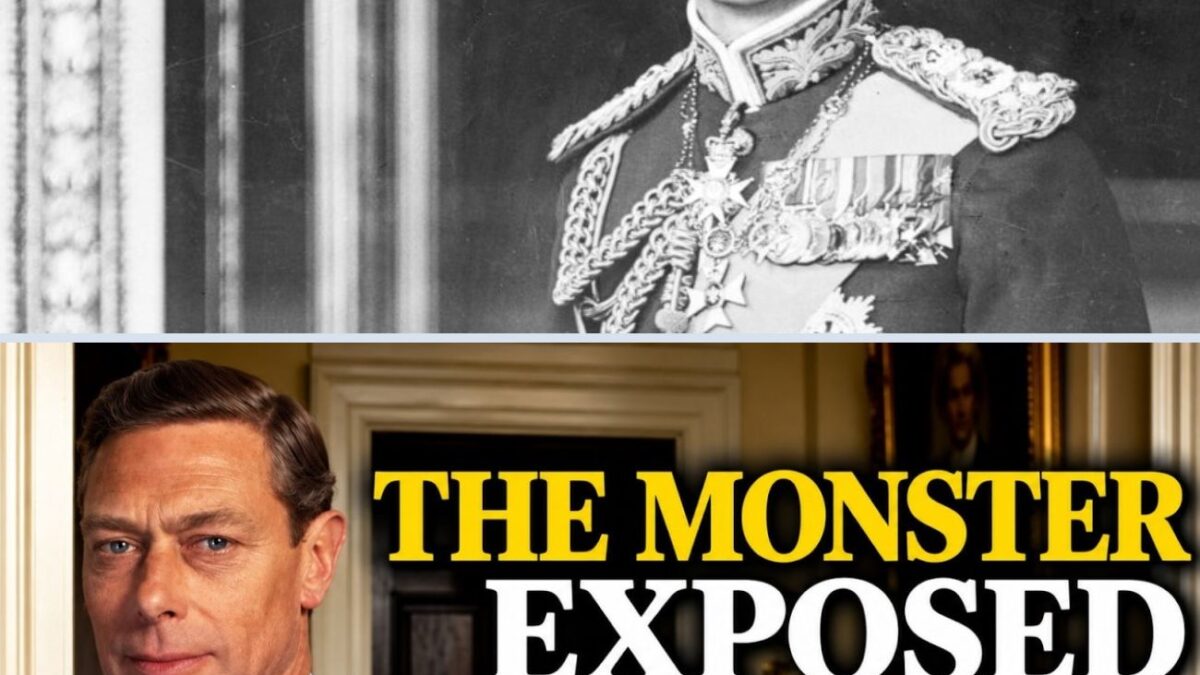
I’ve been awake for three nights with this. There’s a photograph taken sometime in late 1951 and the man standing at the window of Sandringham is already somewhere else. Not dead, not yet, but the eyes are behind him. The face is the color of paper left too long in the sun. He’s holding nothing. He’s looking at nothing and the way the winter light falls across his shoulders, he looks less like a king and more like a man who has been eaten very quietly from the inside by something that never had an official name. King George VI, born Albert Frederick Arthur George, called Bertie by the people who were supposed to love him, died the morning of February the 6th, 1952, 56 years old. His lungs had been failing for years. Surgeons had already removed the left one and yes, the cigarettes, always the cigarettes. This man who could not stop himself from that, but his lungs weren’t the whole story. They never are.
Here’s what I want to talk about, what I can’t stop thinking about, the people who worked for him inside the palace, in the private hours, in the rooms nobody broadcast from. They were afraid of him, not of the crown, not of the institution, of him, of a specific documented thing he did that the official record steps around very carefully because the official record is written for statues. His private secretary, Sir Alan Tommy Lascelles, a man who served four monarchs, not given to hysteria, kept a meticulous private diary and in those pages he gave a name to something that had no category in any protocol manual. He called it Nashville, not a place, a code word because the king mashed his teeth. That’s where it came from. These sudden seizures of uncontrolled rage, not irritation, not impatience, rage that would take hold of him with no warning and release him without explanation. His assistant, Sir Edward Ford, described them later with the precision of a man putting something on record that he knows sounds unbelievable. He called the episodes like short epileptic fits, up to a minute of unrestrained fury. And Ford’s exact words,
“Terrifying in their ferocity.”
Prince Philip, a combat naval officer, not a man who frightened easily, later said that George VI’s language during these episodes was the most extreme he had ever heard from any human being in any setting, ever. This was the voice behind the wartime broadcasts, the steady man who walked the bombed streets of London’s East End, the king who said,
“We are staying. We are here.”
He was that, all of that, and he was also this. And I think I have come to genuinely believe that if you want to understand what he was, you have to begin at the end, when the weight of it was already visible on his face, and work backward. It starts before language. Actually, wait. Let me be more precise. The thing that would one day surface inside Buckingham Palace as Nashville was being assembled methodically inside a small child at Sandringham in the 1890s by people whose job was to protect him. His first nanny, she left no recorded name, which feels like its own specific cruelty, didn’t like him. She liked his older brother Edward, golden Edward, the heir. Bertie was the second son, the one destiny hadn’t claimed yet. And so this woman, responsible for every hour of his earliest life, would pinch him before carrying him to his mother, precisely enough to make him cry, just so Queen Mary, formal and bewildered by displays of need, would hand him back, back to her. This happened for years before anyone noticed.
Now, back to the boy. He wore metal leg splints to correct knock knees, not temporarily, for years. His tutors identified that he was naturally left-handed and broke that out of him methodically, patiently, because the right hand was what was proper. Discomfort that produced conformity was the curriculum. His father, George V, not a cruel man in any simple sense, but constitutionally incapable of patience, had zero tolerance for the stammer that developed inside all of this. He’d bark at young Bertie to speak up,
“Spit it out.”
The barking produced fear, the fear produced more stammer. The stammer produced more barking. This loop ran for the entirety of Bertie’s childhood without anyone pausing to notice what was generating it. I want to stop here for a moment. Last week, Thursday night, I think, I’ve lost track of the nights on this project, I was in my kitchen waiting for the kettle, 11:00 at night. The house had gone that particular quiet it gets when everyone else is asleep, and I became aware of the clock on the wall. Hadn’t consciously heard it in months. Just tick, tick, tick, contained, going nowhere. And something in my chest went cold when I thought about a child in 1898 who cried himself out and heard no footsteps coming back. What does that build inside a person? Not the behavior, the architecture underneath it. Where does pain go when it’s delivered by the hands assigned to comfort you? It goes somewhere. It always finds somewhere.
By the time Bertie was a public figure, a duke, a husband, a man being watched and assessed, it had settled into his nervous system as something his biographer, Sarah Bradford called cleanly anxiety. As what his household staff recognized in letters, in later memoirs, in the specific way they described entering rooms, as a condition to be managed, absorbed, worked around without comment, chronic gastritis, documented an inner instability that sat beneath his daily life like a current under water that looks still from the surface. The staff could read it. They learned the way experienced sailors learn the specific sound a sky makes before it turns, when to stand closer and when to get quietly out of the room.
Then Edward abdicated and I don’t think we’ve ever fully accounted for what that actually did to him. His brother, easy, magnetic, always the one people looked at first, the one Bertie had spent 40 years measuring himself against without ever saying so, chose a woman over the crown, over the country, over the institution. He called it love. He may have been exactly right. But he left without warning, without preparation, without caring what the departure cost. And the person it cost most directly was the second son who had spent his entire life not preparing for this. Bertie found out he was going to be king with less than a fortnight’s notice. He wept. He told his mother, Queen Mary, and he wept in front of her. This man who would one day be remembered as the immovable symbol of British resolve came apart in that room. That shouldn’t read as weakness. It should read as the exact measurement of what had just been dropped on him.
But here’s what the history forgets. The abdication didn’t just change his title. It took every piece of unresolved material, the nursery, the splints, the stammer, the father’s barking, and compressed it into a sealed pressure chamber. He was now responsible for the psychological weight of an empire while waking up every morning in a body that had been telling him since infancy that the room was not safe, that the people in it couldn’t be trusted, that language, the thing a king most needs, was a mechanism designed to trap him.
Now, back to the palace. The war years produced something extraordinary in him. This is real, documented, not in dispute. He walked the streets. He and the queen stayed in London through the Blitz. People loved them for it, and they deserved that love. But inside the palace, inside the private hours, the Nashville episodes were intensifying. Lascelles coded them in his diary. Ford clocked their duration. And the queen, Elizabeth, who would become the queen mother, would hold his wrists during an episode. She would hold his wrists gently and count seconds, quietly waiting for the moment he came back to himself. Think about what it takes to learn that. To know precisely how to hold a king’s wrists, to have counted the seconds so many times that you have an approximate shape for when it ends. Elizabeth was later called the Imperial Ostrich, famous for her ability to look away from discomfort. But this wasn’t looking away. This was learned, practiced maintenance of a man who could not always be reached through words.
Philip saw the language, the ferocity of it. Lascelles documented it and kept showing up. Ford described it and kept showing up. He kept working. Every morning, the red dispatch boxes. Every morning, he pushed through. He was not a man who quit. But the cost absorbed by everyone in his orbit, the physical cost, the neurological cost, the daily cost, was real and accumulating. By 1951, one lung was gone. He was told to rest. He couldn’t rest. He didn’t know how. He died the morning of February the 6th in his sleep at Sandringham. The same estate where the metal splints had been fitted on a small boy’s legs in the dark decades before.
So, did they hate him? I’ve been turning that word over since I started this. Late nights, bad coffee, too many pages of other people’s private accounts. And here’s where I actually land. Honestly, uncomfortably. No. Not exactly. What they felt was something more structurally complicated than hate. And I think that complexity is precisely why it never gets said plainly. What they felt was the specific exhaustion of caring for someone who cannot be reached through ordinary means. The internal calculus of entering a room and running a silent assessment before taking another step. The kind of loyalty that looks from the outside like devotion, but feels from the inside like a survival practice you never signed up for and never fully named.
Lascelles stayed. Ford stayed. The Queen stayed. They all stayed and they kept showing up. And that’s the part worth examining. Not what he was, but what it means that they didn’t leave. Here’s my theory. Built from three nights in this chair and too many pages of other people’s private words. They stayed because, however dimly, they understood that what they were watching was not cruelty exercised from power. It was a man inside something. Something installed before he had any language for it. The nanny who left no name. The cold metal on his legs. The father who barked at him to speak and couldn’t see why the barking only made the silence deepen. The brother who left without looking back. None of that diminishes what Ford described. None of it makes the episodes smaller or the people who absorbed them less real. They carried something afterward that also had no name, no category, no official place to put it.
But there’s a shape to the tragedy, a closed loop. A man who was never held properly taught the people around him to hold him, literally. Wrists in careful hands, counting seconds. Because no one had ever shown him that a room could be safe. That the person in front of you might stay. He understood that in theory. He fought for it his whole adult life. The speech sessions, the broadcasts, the staying in London when leaving would have been defensible. But the body doesn’t forget what the mind decides to move past.
The people who worked for George the VI didn’t secretly hate him. I think they secretly grieved for him. Which may be the same thing viewed from a different angle. Which may be and this is what I’ve been sitting with for three nights now, in this chair, in this dark room, the only place that grief and exhaustion can go when they’ve got nowhere left. There is a photograph taken in the last months of 1951 and the man in it is already gone. Not dead, not yet, but gone.
You Might Also Enjoy

“We Thought They Would Negotiate”—What Argentine Soldiers Said When The British Attacked Goose Green

“You’ll Never Finish My Ruck March, Limey” — US Sergeant Who Challenged the SAS, Then Fell Out First






