Why Frances Shand Kydd’s Marriage Was Years of Silent Hell: Princess Diana’s Mother
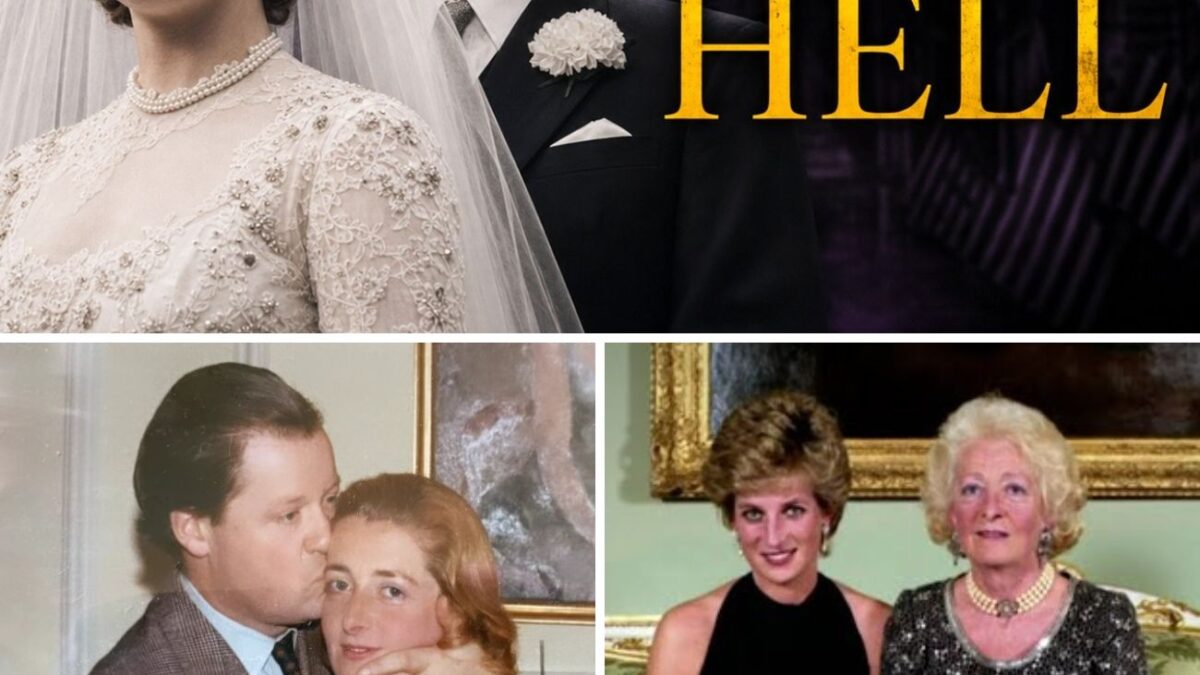
Look at the photograph everyone remembers. Westminster Abbey, June 1954. The wedding of the year, the Queen in the congregation, the bride wearing her mother’s tiara. She is 18, the groom is 30, and he used to work for the Queen. Six years later, after her infant son died within hours of birth, she was sent to Harley Street so doctors could establish what was wrong with her. Eight years after that, the woman who testified against her in court was her own mother. They called her the Bolter. She outlived almost everyone who said it.
It started in January. Frances Ruth Burke Roche turned 18 on the 20th of January, 1954. By the 1st of June, she was a viscountess standing at the altar of Westminster Abbey, while the Queen of England watched from a pew. Four and a half months. That is the entire distance between schoolgirl and married woman, and nobody involved appears to have thought it was rushed.
The man waiting for her was Edward John Spencer, Johnny to everyone who counted, and he was 30, heir to Althorp, a captain in the Royal Scots Greys, who had landed in France the day after D-Day, and was mentioned in dispatches. And more usefully, he had spent the previous four years as an equerry, first to King George VI, then to the young Elizabeth after her father died. An equerry is a personal attendant to the sovereign. He carried the schedule. He stood at the edge of the photographs. He was, in the most literal sense, staff. And being staff at that level, in that decade, was one of the most socially valuable positions a man of his class could hold.
He had tried to marry once already. The engagement was to Lady Anne Coke, the debutante of 1950, and it was broken off because Johnny’s father objected to her family, specifically to what he called mad blood, a reference to inherited instability on the Trefusis side. Anne Coke went on to become Lady Glenconner, Lady-in-Waiting to Princess Margaret, and she described the whole episode in her memoir decades later, which is where most of the detail comes from. Take it as a late account by an interested and extremely well-placed witness; the shape of it fits everything else we know about that household. The 7th Earl Spencer vetoed a bride on genetic grounds, and his son accepted the veto.
So, the next choice had to be unarguable, and Frances Roche was unarguable. She had been born at Park House on the Sandringham estate on the 20th of January, 1936, the same day King George V died a few hundred yards away. Her father, Maurice Roche, the 4th Baron Fermoy, was a shooting companion of the future George VI, and one of the small circle of men the royal family kept close. Her mother, Ruth, was something more consequential, a concert-trained pianist from Aberdeenshire, who became Woman of the Bedchamber to Queen Elizabeth the Queen Mother, and stayed in that post for 33 years until she died.
The Fermoys did not own Park House. They leased it from the King. That’s the detail worth holding on to. Everything the Roche family had, the house, the invitations, the position, the sense of belonging to the innermost ring of English life, ran through Ruth’s relationship with the Queen Mother. It was not property, it was access, and access has to be maintained. Frances grew up watching her mother maintain it. She was sent to Downham School in Essex, then finished off in Paris, the standard machinery for girls of that class. All of it pointed at a single outcome.
She was not English by blood and enjoyed saying so.
“I’ve got no English blood,” she told an interviewer years afterward. “I’m a quarter American, a quarter Irish, and half Scottish.”
The American quarter came from her grandmother, Frances Ellen Work, a New York heiress whose father had paid off an Irish barony, which is a reminder that this glittering court family was two generations away from buying its way in. How Frances and Johnny actually met is thinly documented, which is worth saying plainly rather than inventing. They moved in an overlapping world of shoots, dances, and country weekends. Both their mothers served the Queen Mother. Her father shot with the King. The introduction did not require luck.
What we can document is the timing, and the timing is brutal. He came off the royal payroll in 1954. He married her in 1954. He was invested as a member of the Royal Victorian Order in 1954, the sovereign’s personal thank-you gift. Every family involved got something. The Spencers got a bride with unimpeachable court connections and no mad blood. The Fermoys got their younger daughter into one of the great English earldoms. The palace got a tidy conclusion to an equerry’s service.
What Frances got was harder to name at 18, and that is not a mystery about her intelligence. It’s what the available options looked like for a girl who had been raised, educated, and presented specifically to be chosen.
Now the wedding. June the 1st, 1954. Westminster Abbey, the Bishop of Norwich officiating. The Queen was there with the Duke of Edinburgh. So was the Queen Mother, Princess Margaret, the Princess Royal, the Duchess of Kent, the Duchess of Gloucester, Princess Alexandra. The Royal Scots Greys formed a guard of honor as the couple came out. The press called it the wedding of the year, and the newspapers reported that at 18, she was the youngest bride to be married in the Abbey in 60 years.
The reception was at St. James’s Palace. Think about what that means. Private citizens do not get St. James’s Palace. They got it because the groom had been the Queen’s equerry, and because both mothers were in the Queen Mother’s household. The venue was not a gift to the couple. It was a gift to their parents’ service records. She wore the Fermoy Tiara, her mother’s family’s. Her father walked her in. The bishop who married them was a family connection of the Spencers. Look at the guest list, the building, the jewelry, the officiant, the honor guard, and try to find one element of that day that belonged to the 18-year-old at the center of it. There isn’t one. It was a demonstration staged by two families of exactly how close to the throne they both stood. She was the occasion for it.
And then the newlyweds went home. Here is where the story stops being merely conventional and starts being strange. They took over the lease on Park House, Sandringham. Her parents moved out. She moved in. The bride did not leave home. She was returned to the house she had been born in, on the estate her mother’s employer owned, 10 minutes from the front door of the woman who could make or unmake the family. She had swapped her surname and her bedroom and almost nothing else. Johnny kept that lease for 21 years.
Children came fast because children were the job. Sarah in March 1955, before Frances turned 20. Jane in February 1957. Two daughters, healthy, christened in front of the appropriate people, photographed on the appropriate steps. In the newsreel version, this is a young aristocratic marriage functioning exactly as designed. In the version that mattered inside the family, it was a failure with a two-year clock on it because Althorp, the house, the title, the paintings, the entire 800-year Spencer apparatus passed to a son. Only a son. Frances had produced two people who could inherit nothing.
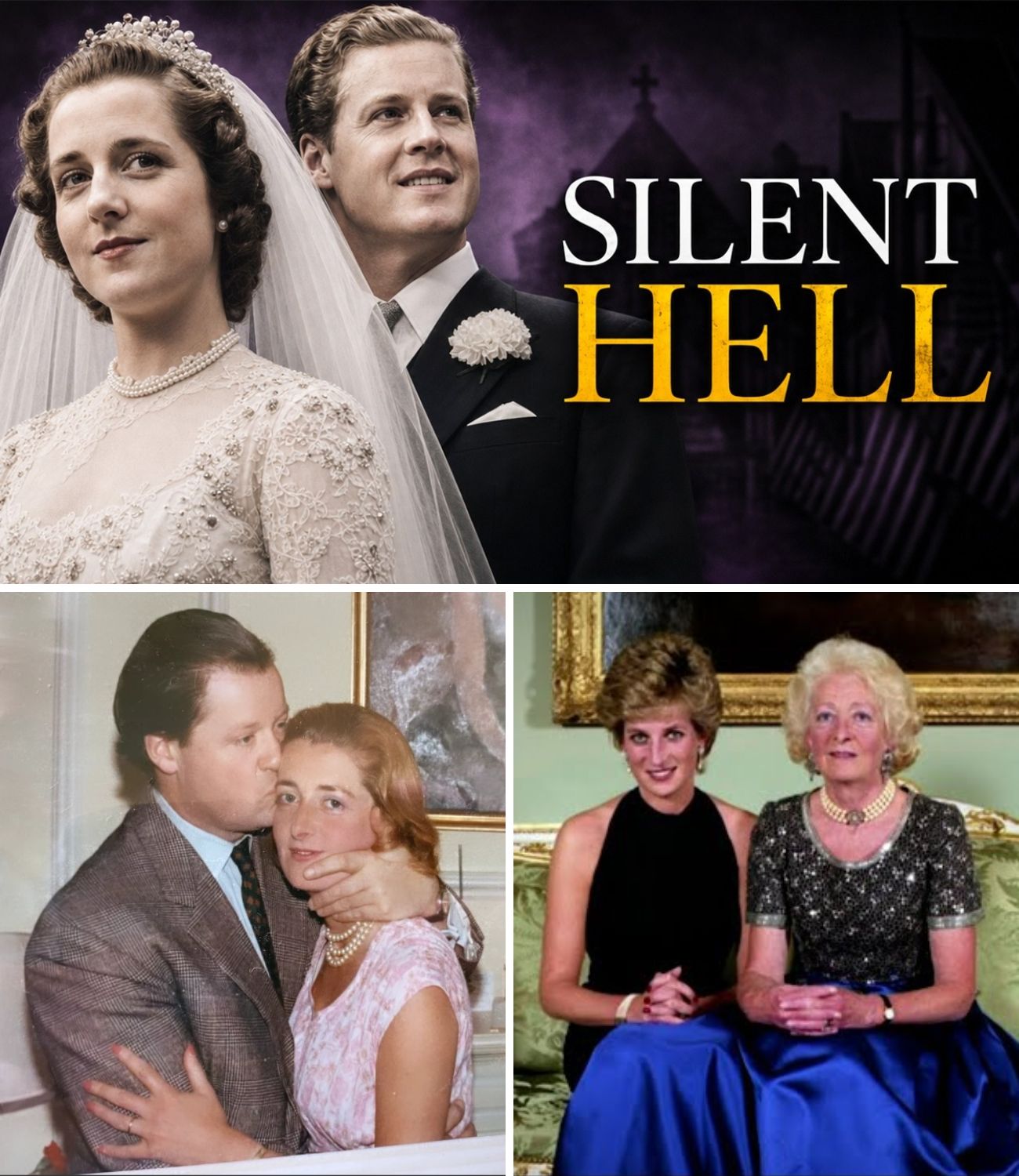
In January 1960, she gave birth to a boy at Park House. They named him John after his father and his grandfather. He lived somewhere between 10 and 11 hours. The contemporary and near-contemporary accounts differ slightly on the exact figure, which tells you how little of that day was recorded at all. He was buried without the public grief that the same family would later stage for other losses, and Frances was 23 years old.
What the family did next is the single most revealing fact in this entire marriage, and it was reported openly in her lifetime and has never been seriously contested. She was sent to Harley Street to specialists so they could determine the cause of the problem. Not they went, she was sent. There is no record of Johnny Spencer submitting to a single test, and by 1960, the medical profession understood perfectly well that fertility and infant death were not exclusively a female malfunction. It did not matter what medicine understood. The Spencer succession was in trouble, so the wife was inspected.
She was 23. She had buried a child eight hours after giving birth to him, and her husband’s family responded by putting her in front of London consultants to find out what was wrong with her. Keep that in mind for later, because 37 years afterward, this same woman would sit in a witness box and be asked in public to explain her failures as a mother. She had been under examination since she was a teenager. She got very, very good at what to say and what to withhold.
18 months after the boy died, in July 1961, she was in labor again at Park House. Another girl. There was no name ready. Nobody had prepared one, because nobody had planned for another daughter. And the child went a week without one before her parents settled on Diana Frances. Half of it borrowed from a distant Spencer ancestor who had once been considered for a Prince of Wales. Diana would spend her life being told she was born a disappointment. What almost nobody said out loud was who had been held responsible for the disappointment, and what it had already cost her mother by the time she arrived.
A son finally arrived in May 1964. Charles Edward Maurice Spencer, born at Park House, with the Queen standing as one of his godparents. The succession was secure. The thing the whole apparatus had been demanding for a decade was now asleep in a nursery in Norfolk.
It changed nothing between his parents. That’s the part that gets skipped. The standard telling treats the dead baby and the pressure for an heir as the wound in this marriage, and then the birth of Charles as the closing of it. But the marriage got worse afterward, not better, which means the heir was never really the problem. The heir was the excuse the family had been using to explain a marriage that had stopped working somewhere in the years when Frances was still in her 20s and had been handed a house, a title, four pregnancies, and no version of a life that was hers.
What was actually happening inside Park House is harder to establish. And here the honest thing is to slow down and separate what we know from what we’ve been told. Diana said her father hit her mother. She said it into a tape recorder in 1991 for Andrew Morton in the sessions that became Diana: Her True Story. Seeing him slap her mother across the face, hiding behind a door, her mother crying. That is a memory belonging to a child who was five or six at the time, recorded 30 years later by a woman who was at that moment engaged in a deliberate campaign to expose her own marriage. It is not nothing. It is the single most direct account we have from inside the house. But it is not a contemporaneous document, either. And it deserves to be labeled for what it is.
Alongside it sits the account of the biographer Penny Junor, who wrote that Johnny could be violent and that Frances believed she and the children would be safer out of the home. Both later alleged wrongdoing against the other in the divorce, including infidelity. And the detail of those claims has never been made public. So, the fair statement is this: At least two people close to that household, speaking decades apart, described a man who could be violent. And the woman living with him began arranging an exit.
The same man was also, by wide and consistent report, warm with his children, well-liked in his county, gentle in company, and later devoted to a second wife who nursed him through a stroke doctors expected to kill him. Both of those men existed. The second one is why people found it so easy to believe the worst about his wife.
She had no ground of her own to stand on. The house was leased in his name. The money was his. The county society was his. His father’s tenants, his family’s church, his shoot. Frances had two daughters at boarding school and two small children at home. No income, no property, and a mother 40 miles of social distance away whose entire standing depended on nothing embarrassing ever happening to the Fermoys.
In 1966, she met Peter Shand Kydd at a dinner party in London. He was heir to a wallpaper fortune, an ex-submariner, married to a woman named Janet with three children. He had sold the family firm in 1962 and taken his family to New South Wales to farm sheep. Then came back. He painted. He was funny in a way that aristocratic Norfolk was not funny. He was, above all, from outside. Not court, not county, not connected to a single person who could report her to her mother.
In the summer of 1967, Frances took a flat in London and left Park House. Now, hold on to the next fact because it is the fact the last 50 years of storytelling has systematically buried. She took the children with her. Diana and Charles, the two youngest, moved to London with their mother. Sarah and Jane were away at school. Diana was enrolled at a day school in Knightsbridge. This was, on the face of it, a trial separation with the small children in their mother’s care and Johnny had agreed to it. At Christmas, the children went up to Norfolk to see their father. He refused to send them back.
There was no dramatic hearing at that moment, no order, no seizure. He simply kept them, and in 1967, there was very little a separated wife could do about a father in possession of his own children in his own house. She had removed herself from the marital home. He had the address, the money, the name, and the lawyers. She sued him for divorce on the grounds of cruelty. He denied it and fought. Her petition failed. In April 1969, he divorced her instead on the grounds of adultery. And by then, the outcome had already been arranged by something worse than a judge.
Peter Shand Kydd’s wife, Janet, had filed her own divorce petition and named Frances in it. That put her name into a public legal document as the other woman before the custody question was ever argued. By the time the Spencer case came on, Frances Roche was on paper an adulteress who had walked out on a war hero. And then her mother went into the witness box against her.
Ruth, Lady Fermoy, gave evidence supporting her son-in-law. This is not a rumor or a family legend. It appears in her own obituaries, in Frances’s, and in the standard accounts of the case, and no one in the family ever denied it. Her testimony helped Johnny Spencer win custody of all four children. Whatever you were expecting from this story, it was probably an affair, a cold husband, a slow drift. It was a mother.
Why she did it has to be handled carefully, because Ruth Fermoy never explained herself in public. Her obituary in The Times recorded that she was a firm believer in the sanctity of marriage, and that is almost certainly true. But look at the structure. Ruth was Woman of the Bedchamber to the Queen Mother. She held that post for 33 years. Her husband’s friendship with the King had furnished the family’s house, its circle, its whole social oxygen. Her daughter had left a former royal equerry for a wallpaper heir and was about to be publicly named in a divorce. One of those two things could be sacrificed and it was not going to be the one with the palace attached to it.
Frances lost the children in the winter of 1968 into 1969. She was 32. The word that got attached to her afterward was bolter. Old aristocratic slang for a woman who runs. It followed her for the next 35 years into every newspaper profile, every royal biography, every documentary. It is a remarkably efficient word. It suggests a woman who ran off and left four children behind. And it entirely erases the fact that she took the two youngest with her and lost them in a courtroom to her own mother’s testimony.
Norfolk closed to her. Invitations stopped. That part of the punishment was administered socially without any court involved at all. On the 2nd of May, 1969, she married Peter Shand Kydd at a register office in London. Set that against the Abbey. 15 years earlier. The Queen. The Queen Mother. Princess Margaret. The guard of honor. St. James’s Palace. The tiara. Now. A registrar. A signature. And a man nobody’s mother approved of. It was the first wedding of her life that she chose.
For a while, it worked. They bought Ardencaple, an 18th-century farmhouse on the island of Seil, about 6 miles south of Oban on the west coast of Scotland, a place reachable only over a small humpbacked bridge. They kept a flat in London and a sheep farm at Yass in New South Wales, and for years they moved among the three. She kept a shop in Oban. She got involved locally. Every account of that period, including her own later remarks, describes a marriage that was genuinely happy in a place where nobody had ever heard of the Fermoys.
The children came in school holidays, trains, planes, handovers, the arithmetic of access. And in the house they went back to, a version of events was hardening. When Diana finally described her mother’s departure 30 years on, she used the phrase that has been quoted ever since, that the biggest disruption was when Mummy decided to leg it, that the four of them remembered it vividly, that people took sides and stopped speaking to each other, and that for her and her brother it was painful and confusing.
That is a real account of a real childhood injury and it should not be waved away. It is also the account of a 6-year-old who was raised from that Christmas forward entirely inside her father’s household. She never had access to the case papers. She was not told at 6 that her mother had taken her to London and been prevented from bringing her home. The most famous sentence ever spoken about Frances Shand Kydd was spoken by someone who had been given only one side of it, by the side that won.
In 1975, Johnny became the 8th Earl Spencer, gave up the Sandringham lease, and moved the family to Althorp. The following year, he married Raine, Countess of Dartmouth, daughter of the novelist Barbara Cartland, and Frances’s children acquired a stepmother they openly detested. Frances in Scotland said almost nothing about any of it.
Then in February 1981, her 19-year-old daughter got engaged to the Prince of Wales, and the machinery that had processed Frances at 18 came back around for a second pass. She knew exactly what it was. She had been married out of that world at the same age, in the same church, by arrangement, in front of the same family. And for the next 16 years, she kept what she thought about it almost entirely to herself, until one afternoon in 1997, when she finally said something out loud to a magazine, and her daughter stopped speaking to her.
Diana would not be married at Westminster Abbey. She chose St. Paul’s, and more than one account attributes the choice to the Abbey being where her parents were married. Whether or not that was decisive, the effect was the same. The two Spencer weddings were held in different cathedrals, and the second was watched by an estimated 750 million people.
Frances was there in the front rank, mother of the bride, photographed in blue. She had helped choose the dress with Diana in the weeks before. She was, for that single morning, restored to public respectability by her daughter’s marriage, the bolter back inside the tent.
Her own mother was there, too. Ruth Fermoy, still Woman of the Bedchamber, was widely assumed to have helped engineer the match, an assumption she flatly rejected when asked directly, saying people could say it if they liked, but it wasn’t true. What she did do, privately, is better documented. Andrew Morton recorded her warning Diana against the marriage in blunt terms, that the royal family’s sense of humor and way of living were different and that it would not suit her.
Read that warning again, knowing who gave it. Ruth Fermoy had watched her own 18-year-old daughter married into a great house with a court attachment. She had seen what it produced. And when it came around a second time, she told her granddaughter not to do it and then said nothing publicly while it happened anyway.
Both women were estranged from Diana by the time Ruth died in July 1993. According to Penny Junor, in her last months, Ruth apologized to the Queen and to Charles saying she had known all along that Diana was dishonest and difficult. That is a single biographer’s account sourced from the palace side and it should be weighed as such. If it is accurate, then Ruth Fermoy spent the last weeks of her life doing for the monarchy precisely what she had done in 1968 for the Spencers, choosing the institution and apologizing for her own blood.
Frances, by then, was on her own again. Peter Shand Kydd had left her in 1988 for another woman. The divorce came through in 1990 after 21 years. She was 54. She had given up her children, her county, and her name for that marriage and it ended the way the first one had, with a man leaving. She blamed the press and she blamed her daughter’s fame and she said so on the record.
Speaking to the Guardian, she put it plainly:
“The pressure had become impossible for Peter, that they didn’t want him, they wanted her, and that she had become Diana’s mom and not his wife.”
To an American interviewer, she said the media had descended on the island 16 years earlier and never left.
What she built next is the part of her life that almost nobody knows and it is the answer to what she did with everything that had been taken from her. In 1994, she converted to Roman Catholicism, a striking choice for a woman whose whole caste was Anglican and whose first marriage had been solemnized by a bishop of the Church of England. She joined the Catholic House of Prayer Trust on Iona as its appeal secretary and worked for it until she died, raising money, answering letters, doing administrative labor for a small religious charity in the west of Scotland.
She went to Lourdes as a helper with pilgrimages for sick and disabled children. The Bishop of Argyll and the Isles, who knew her, said she used to quote her father’s rule that you treat everyone the same, whether they come from castle, cottage, or caravan. There is no way to prove what conversion meant to her privately. What is documented is that a woman refused absolution by her own family and her own church-going class went and found a church that would take her in a country where nobody cared who her mother had been.
She was also, in these years, visibly not coping with everything. In 1996, she was convicted of drink-driving and banned. She denied having a problem with alcohol. She put a car into a ditch near her home, though a roadside breath test that time came back negative. This is not a saint’s biography and shouldn’t be written as one.
In May 1997, she gave an interview to Hello! magazine and talked about Diana’s divorce settlement, including the loss of the title Her Royal Highness, which Frances suggested her daughter was content to be rid of. Diana was not content, and she was furious that her mother had discussed it publicly. That was the last real conversation between them. Frances stated under oath five years later that she and Diana had not spoken during the final 4 months of Diana’s life, and that letters she sent were returned to her unopened.
Then, in the small hours of the 31st of August, the phone rang in Scotland. She went straight to London. Paul Burrell, Diana’s butler, later recalled that she was the first person to ring the bell at Kensington Palace that morning, and that she was in pieces, saying they had only just found this friendship and that it had been taken from them. Burrell is an interested witness with books to sell, and much of what he has said requires caution. On this point, the detail is plausible and unflattering to nobody. Frances did not hide. She went out among the crowds at the palace gates, and afterward described standing with thousands of people sharing a very deep hurt, and said that far too little had been said about what the public had given her daughter, that they had nourished her, made her smile, given her strength.
At the funeral on the 6th of September, she walked into Westminster Abbey behind her daughter’s coffin, the same building 43 years after she had been walked up that aisle at 18 to be married to a man her parents’ world had selected. She said afterward that the funeral was, strange as it sounded, probably the proudest day of her life. Proud of Diana, proud of her elder daughters who read steadily, proud of her son for the eulogy he delivered from that pulpit.
Then she went home to Oban and did the thing that tells you who she actually was. She stood up at a memorial mass at St. Columba’s Cathedral and gave her own address. Months later, she wrote to a friend about it that she had been seared rigid with nerves beforehand, but that since her children had taken on the world in the Abbey, she reckoned their mom should be able to do her home pitch.
She also went to see the family of Henri Paul, the driver of the car. And when Mohamed Al-Fayed began advancing his conspiracy theories about the crash, she publicly and forcefully rejected them, which took something given who he was and what he was willing to say about her family.
Which brings us to the last fight, the one over who owns the story. In October 2002, Frances Shand Kydd walked into the Old Bailey to give evidence at the theft trial of Paul Burrell. She was 66 and in open court in front of reporters, she confirmed the estrangement and the returned letters and agreed with defense counsel’s characterization that Diana could sometimes be a little tempestuous.
While she was in London testifying, thieves broke into her home on Seil and took jewelry reported at around 100,000 pounds. She told the truth about her daughter under oath and got robbed for it. Then Burrell, at the 2008 inquest, four years after Frances was dead and unable to answer, testified to two things about her: That Diana had asked him to listen in on a call in June 1997 in which her mother abused her over her relationships with Muslim men, and that after Diana’s death, Frances spent a week shredding the papers on her daughter’s desk.
Both claims come from a man who had already published two books, later said he burned most of his own material, and had every commercial reason to be interesting. Neither can be tested. Both are now permanently attached to her name.
In August 2005, a year after she died, a journalist published extracts of what were described as her diaries. Charles was called a spoiled brat, the Queen Mother called a fat Dutch whore, the royal family dismissed as a bunch of small Germans. The provenance was never established. They were reported as her private words by someone she had spoken to, which is not the same thing as a document in her handwriting. That is the shape of it. Her mother testified against her in 1968. Her daughter’s butler testified about her in 2008. The record was assembled by other people in rooms she was not in. Most of it after she could no longer object.
She died at home on Seil on the 3rd of June 2004, aged 68 after a long illness. The Queen sent a private message. Charles said she would be sorely missed. William and Harry said they were very upset and would miss her a lot. She was buried at Pennyfuir Cemetery outside Oban, 400 miles from Althorp in the country she had chosen.
Now look at the photograph again. Westminster Abbey, June 1954. The tiara that belonged to her mother’s family. The bishop her husband’s family knew. The palace reception granted because of two women’s service to a queen. The guard of honor for a regiment she had no connection to. The 18-year-old at the center of it holding still.
That marriage was not a love story that soured. It was a transaction between two households with court appointments and she was the consideration paid. What it produced was a Princess of Wales, an Earl, and a woman who spent 35 years being called a Bolter by people who never read the custody file.
She never apologized for it. Asked about that directly, she said that while remorse and regret were vitally necessary when you had failed others and yourself, repetitive apologies were a form of self-pity.
She walked into that Abbey once because her family put her there and once because her daughter was in a coffin. In between, she gave up the tiara, the title, the county, and the name, and kept exactly one thing: the right to say her own words out loud at home, in a church she had chosen herself.
You Might Also Enjoy

“We Thought They Would Negotiate”—What Argentine Soldiers Said When The British Attacked Goose Green

“You’ll Never Finish My Ruck March, Limey” — US Sergeant Who Challenged the SAS, Then Fell Out First






