Why Meghan Markle’s Parents HATED Her So Much
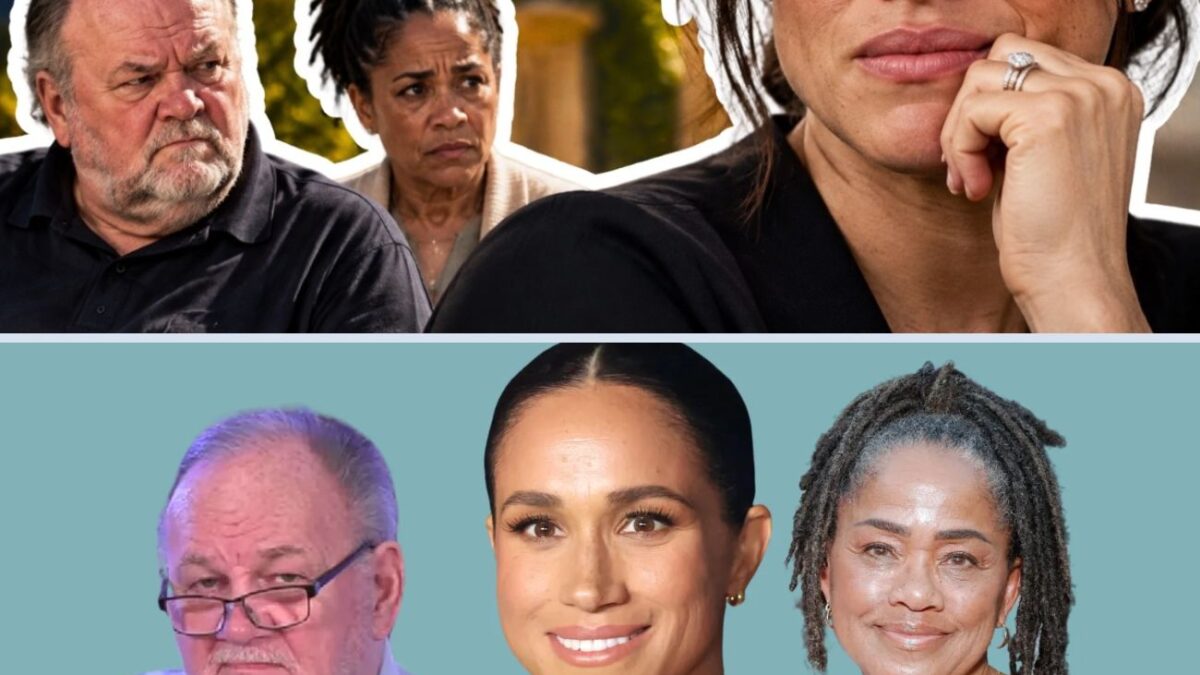
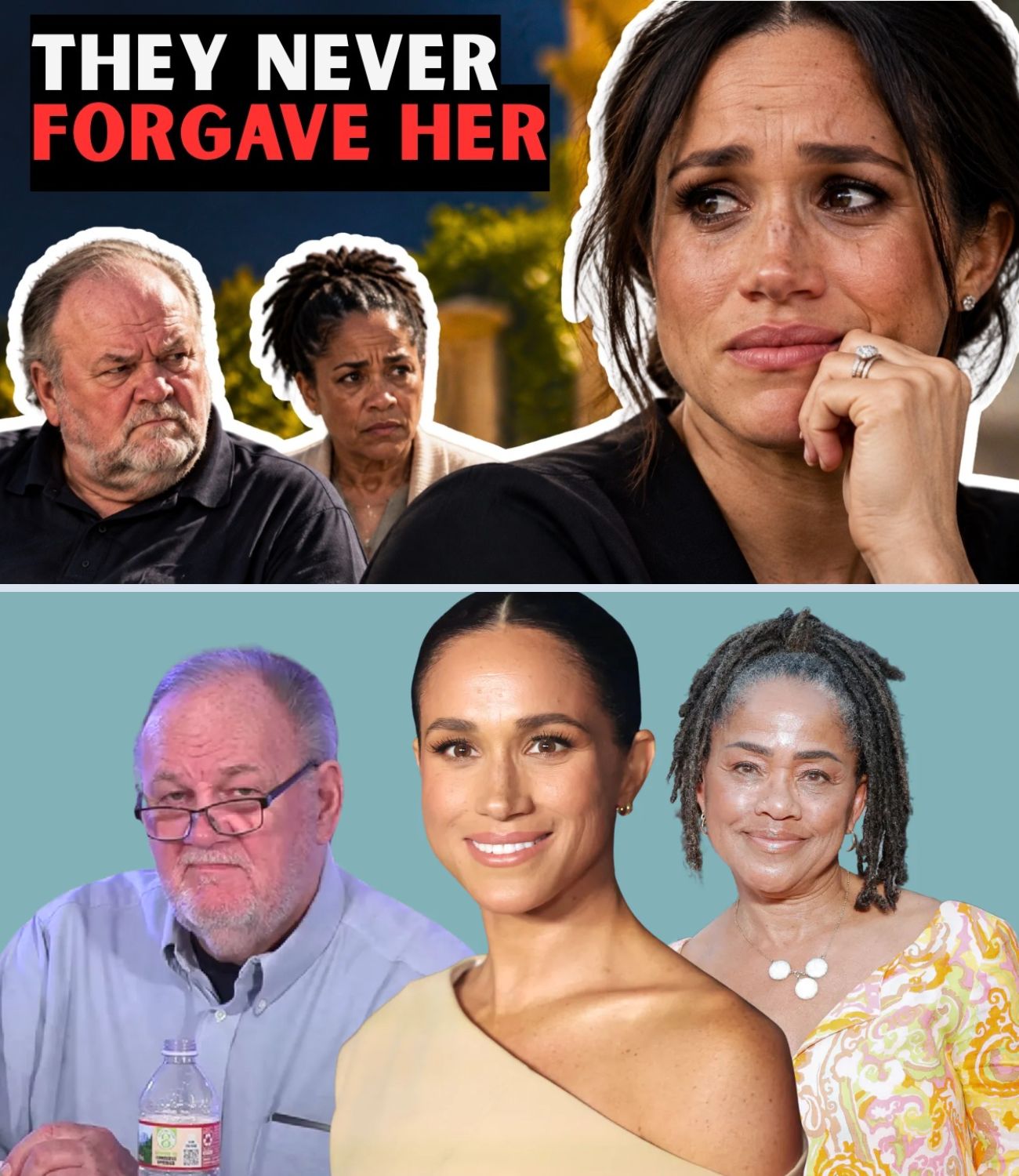
Somewhere in the archives of a British court, a handwritten letter is kept. Five pages. Written in careful handwriting. The ones that take time. The kind that makes a person slow down and put meaning into every word. The Duchess wrote to her father in the summer of 2018, begging him to stop giving interviews to tabloids.
He received it at his home in Mexico. And then shared its contents with the Mail on Sunday. The newspaper published her personal words. She sued and won. But this letter will never be private again. And the question remains: why? The letter didn’t appear out of nowhere. It came from a family that was divided long before anyone in it had heard of Windsor Castle, St. George’s Chapel, or the protocols of the British monarchy. To understand how these five handwritten pages became evidence in a London courtroom, one must begin with a divorce in Los Angeles in 1987, when Meghan Markle was about 6 years old.
Her father, Thomas Markle, was not some anonymous figure. He was a lighting director on Hollywood television, and a successful one at that. He won two Daytime Emmy Awards for his work on General Hospital—recognition of the highest level of daytime production. He understood studios, cameras, frame composition, and the mechanics of visual storytelling better than most people in his industry. For years, he worked on the set of Married… with Children, one of the most popular sitcoms in America. Little Meghan sometimes visited him there. I walked the sound stages, sat at the monitors while my father adjusted the lighting, absorbing the everyday reality that the image on the screen is almost never spontaneous. Everything is arranged. Everything is framed. Her father knew exactly how images are created, how stories are constructed through visual choices, and how the media sells what they capture.
This knowledge would be of immense importance later, because it makes one particular defense—saying he simply didn’t understand what he was doing—impossible to maintain. Her mother, Doria Ragland, was in a completely different world. She was a yoga instructor and social worker in Los Angeles. Quieter, more private, less connected to the mechanisms of public spectacle. She worked with people, not cameras. After the divorce, both parents participated in raising Meghan. Around the age of nine, she moved in with her father full-time and lived with him throughout high school, although she remained close to Doria throughout this time. Two households, two fundamentally different models of how to exist in relation to the attention, spectacle, and gaze of the public.
The gap between these two approaches was already established in Meghan’s life before she had her first audition for a role in a television series, before she met a British prince, and before she first set foot on English soil. This breakup was not about love or the lack thereof. It seemed like both parents cared about their daughter. The breakup was driven by what each of them would eventually do when their daughter’s fame became the most valuable asset next to them. Thomas reportedly helped finance Meghan’s education at Northwestern University, a prestigious private institution near Chicago. Although Meghan herself said that she relied on scholarships, financial aid, and work while studying.
In any case, the cost of attending Northwestern University in the early 2000s was significant. Well above $25,000 per year. Meghan graduated from the university in 2003 with a double major in theater arts and international relations, began an acting career, landed small roles on television, and eventually landed a recurring role on the USA Network legal drama Suits, which was filmed in Toronto. She played Rachel Zane for seven seasons, building a stable professional life in a competitive industry. During these years, the relationship between father and daughter was not publicly severed. They were complex, sometimes aloof, sometimes tense, but not the ruins they later became. Whatever tensions existed between them, there was no contempt or abandonment among them.
This makes what happened next not a story about a father who was never around. This makes it a story about a father who was there for her and then chose something else. It wasn’t Meghan who changed everything. Everything changed when the audience suddenly paid attention to her. In November 2017, Kensington Palace announced the engagement of Prince Harry and Meghan Markle. Within days, British tabloid reporters began pouncing on every available corner of Meghan’s past. They found her father in Rosarito, Mexico, a small, quiet border town south of San Diego, where he had retired. They found her half-sister, Samantha Markle, from Thomas’ first marriage, a woman who had not spoken to Meghan in years and previously used the surname Grant.
They found her half-brother, Thomas Markle Jr., who had an even less documented recent relationship with Meghan. And the British tabloid press discovered what it had always intuitively understood. Distant relatives of famous people are an inexhaustible commercial resource. Any quote could be purchased. Each insult had its own market price. Any family wound could be inflamed, photographed, packaged, and sold on the front page. The tabloid economy does not require reconciliation. It needs content. And the Markle family had content for sale. The half-brother and sister acted first, and they acted aggressively. Thomas Markle Jr. wrote an open letter to Prince Harry, published in In Touch Weekly ahead of the wedding, calling the upcoming marriage the biggest mistake in the history of royal weddings.
This was a half-brother who was barely visible in Meghan’s adult life, who had no documented close relationship with her in recent years, and who had no particular understanding of her character or motives. He positioned himself as an expert on her suitability for royal life for a tabloid audience that couldn’t tell the difference between a truly knowledgeable relative and an attention-seeking distant relative. The letter was not a private warning conveyed in confidence. It was a public performance sold to a magazine. Samantha Markle was louder, more assertive, and more commercially ambitious. She had been estranged from Meghan for years before the engagement, but quickly became a regular on British and American television, commenting on Meghan’s personality, ambitions, loyalties, and motives with the confidence of someone who was closely involved in her life.
She later published a book whose title itself reveals the commercial strategy: “Diary of the Upstart Princess’ Sister.” This name was not an attempt at family reconciliation. It was a brand created to capitalize on its proximity to a royal celebrity by playing the role of the wronged sister. Samantha’s real relationship with Meghan had been limited for many years. Her relationship with Meghan’s fame had no such restrictions. Later, in 2022, she filed a defamation lawsuit against Meghan, which was ultimately dismissed in March 2024. A man who wrote a book attacking his half-sister later claimed in court that he himself had been defamed. But the half-siblings were just secondary noise in a much larger disaster.
The structural damage, the wound that proved irreversible, came from the same Markle who was truly present throughout Meghan’s childhood. About 5 days before the royal wedding, a series of photos emerged that allegedly showed Thomas Markle in candid, casual moments. He flips through a book about Britain in an internet cafe, standing patiently while a tailor takes measurements for a wedding suit. The images look spontaneous. These are common scenes that a nervous father might experience as he prepares for the most important day in his daughter’s life. They were completely staged. Thomas arranged a photo shoot with a paparazzi named Jeff Reiner, co-owner of the Coleman Rayner agency. The images were fabricated, carefully staged, and commercially sold.
When the arrangement was exposed by rival media outlets that recognized the setup, Thomas initially denied any involvement. Then he confessed. Think about what this means in its entirety. A man who had worked in professional television production for decades, who had won two Emmy Awards for visual excellence, who had an expert understanding of angles, lighting design, and the mechanics of image creation, decided to stage “candid” photos and sell them to the paparazzi a week before his daughter’s wedding. He produced a picture of his own preparation. He sold the parental waiting game. This was not the behavior of a technologically disoriented elderly man who had fallen into a media trap set by someone smarter. This was a conscious decision made by a trained professional who understood exactly how images are created, distributed, and monetized.
The naivety defense, the idea that Thomas was just a confused old man being used by the press, collapses once you remember the two Emmy statuettes on his shelf. He knew what staged photography was. He spent his career creating them. The consequences were immediate and devastating. It was reported that Prince Harry called Thomas directly during the crisis, trying to resolve the situation before the wedding. The conversation didn’t solve anything. According to reports in the book Finding Freedom by Omid Scobie and Carolyn Durand, the conversation was tense and unproductive. The palace released a statement asking for Thomas to be given privacy and space. Behind the scenes, the question was no longer whether Thomas would behave properly at the wedding.
The question was whether he would come at all. Thomas then cited a heart attack and said he could not go to England. Contemporary accounts differ sharply on the exact sequence: whether the real medical crisis preceded the revelation of the scandal or occurred after it. Was the heart attack the main reason for his absence, or a medically convenient way out of an emotionally impossible situation. What is beyond doubt is the result. On May 19, 2018, Thomas Markle was not at Windsor Castle. He was not in St. George’s Chapel. He didn’t walk his daughter down the aisle. Instead, Prince Charles, the future King of England, heir to one of the oldest monarchies in the world, stepped in to escort Meghan.
The monarchy absorbed the family’s failure and made it solemnly visible to a global audience. The future king replaced a retired Los Angeles-based lighting director because a deal with the paparazzi for staged photos had destroyed the last bridge between father and daughter in the final days before the ceremony. An estimated 1.9 billion people watched the wedding broadcast worldwide. They saw the pomp, the military uniforms, the carriage procession, the vows, the gospel choir, the carefully managed brilliance of an institution that had spent centuries perfecting the art of appearing timeless. They also saw something that the palace could not direct or conceal. Doria Ragland sat alone on the bride’s side in the chapel.
She wore a pale green Oscar de la Renta dress and matching coat. She looked restrained, dignified, and completely alone among the 600 guests. Representatives of the aristocracy, European royal families, celebrities, high-ranking politicians, the military, and the entire institutional weight of the British establishment. One black woman from Los Angeles, representing her daughter’s entire family. Every chair around her, where the Markle relatives should have been sitting, was empty. The father, who had staged photos of his wedding preparations, was in Mexico. The stepsister, who had been trading comments for months, was not invited. The half-brother who published his open letter was far from Windsor. The mother, who sold nothing, said nothing, gave no interviews, and accepted no money, was the only one who came.
She sat among strangers in a medieval chapel and did not utter a single public word. This single image—Doria alone, in a single green dress among 600 guests, empty chairs around her—told the entire family story more clearly than any interview, book, or trial. Absence was proof. After the wedding, Thomas Markle did not indulge in reflection or private sadness. He escalated. He began giving media interviews with increasing frequency, fewer restrictions, and growing closer to people who were openly hostile to his daughter. He has appeared on Good Morning Britain several times, and his interviewer at several key stages has been Piers Morgan, a TV presenter who has already established himself as one of Meghan’s most vocal, aggressive, and personally interested public critics.
Morgan built a regular column around doubting Meghan’s sincerity, questioning her motives, and dismissing her stories of institutional abuse. Thomas did not appear next to a neutral journalist seeking to understand a family tragedy. He appeared next to a man who had partly built his media image on attacks on his daughter. A father who sincerely desires reconciliation would not sit repeatedly across from the person who most viciously attacked his daughter on national television. But Thomas came back again. He discussed private conversations he said he had with Meghan and Harry. He contradicted Meghan’s public statements. He confidently commented on the dynamics of the royal family, which he had never seen in person, and the relationships in the palace, which he had no idea about.
In the years following the wedding, he repeatedly appeared in the media discussing Meghan. Each such speech was presented as the pain of a broken father who asks only for contact with his daughter. Each such performance made this contact forever impossible. This pattern of behavior was devastatingly simple and self-destructive. Thomas used public platforms to demand private access. Each interview was presented as a manifestation of parental love. A father who just wanted to hear from his daughter, who just wanted to see his grandchildren, who just wanted to restore the relationship. But the medium of communication destroyed the message with mechanical precision.
You won’t rebuild a private relationship by broadcasting your grievances to millions of strangers. You won’t gain trust by discussing confidential family conversations on camera. You won’t convince your daughter to call you by sitting next to the person who is most aggressively attacking her reputation on national television. The method annihilated the stated goal. Either Thomas didn’t understand this, which seems almost impossible for someone who has dedicated his entire career to professional media production, or he understood everything but chose cameras anyway. Any explanation is destructive. Then Meghan tried to use the last private communication channel.
In the summer of 2018, shortly after her wedding, she sat down and wrote a handwritten letter to her father. Not a text message, not an email, not a statement through lawyers or palace staff. A handwritten letter. Five carefully written pages in her own handwriting. The slowest and most consciously personal form of written communication still available in the modern world. Every word is chosen with precision. Each line is handwritten. A manuscript cannot be “drafted” in a hurry, cannot be done in a hurry, cannot be faked. Meghan worked as a professional calligrapher early in her career, and she understood better than most what it meant to put words to paper with care and intention. She asked her father to stop communicating with the press.
She expressed her pain. She tried to explain how his media appearances were damaging to any possibility of a sincere relationship. She sent the letter privately in a sealed envelope through an intermediary to her parents’ home in Rosarito, Mexico. It was the most personal attempt to reach another person outside the media machines that had swallowed up all other channels of communication between them. Thomas Markle received a letter. He opened it. He read the words his daughter had written in her handwriting. And then he made a decision that ended everything. He shared the letter with the Mail on Sunday newspaper.
In February 2019, the newspaper published significant excerpts on its pages. The sealed letter became a headline on the front page. The daughter’s plea became tabloid content. A manuscript intended for one reader became available to millions. The most personal document Meghan has ever created is handwritten precisely because handwriting has a weight that printed words cannot convey. Addressed to one person, sent by the most private method of delivery, it became a commercial product, sold to readers who had no connection to the pain it described. Meghan sued. The case of The Duchess of Sussex v Associated Newspapers Limited was heard in the High Court of England and Wales.
The legal dispute focused on issues of privacy and copyright. This letter was a personal correspondence, never intended for publication, written by a private individual to a private addressee in the context of a family relationship. In February 2021, the High Court ruled in Meghan’s favour on summary judgment, meaning the judge found the facts so obvious that a full trial was unnecessary. The evidence was not ambiguous. Associated Newspapers was ordered to pay legal costs and print a front-page statement that the letter had been published unlawfully and that the Duchess’s right to privacy had been violated. The publisher filed an appeal. In December 2021, the appeals court upheld the original decision. Two separate instances of the British judicial system examined the facts and came to the same conclusion. Thomas Markle’s decision to share his daughter’s personal letter with the newspaper was a violation of her legal rights.
But this legal victory came at a brutal emotional cost. The contents of the letter are now permanently recorded in public court records, available to anyone who wishes to view them. The private words written by Meghan in her own handwriting, the grief, the sincerity, the special pain of a daughter who tried to reach her father through the last available private means, will forever remain in a court archive created to process evidence, not to protect feelings. And during the proceedings, Thomas reportedly made a statement that shattered any ambiguity that remained about the state of their relationship. He said he would be willing to testify against Meghan in court. The same father who paid for her education, the same father who raised her until she graduated from high school, the same father who saw her build a career from small roles to a royal wedding.
This person offered to testify against her on behalf of the newspaper that published her personal letter. She wrote a letter to save the relationship. He gave it to the tabloid. And when the tabloid was sued, he offered to help it fight against it. What made it all the worse—not just personally, but institutionally—was the system behind Meghan. The British monarchy depends on the tabloid press. It has been this way for generations. This relationship is not hostile, as it sometimes seems. They are symbiotic. The Sun, Daily Mail, Mail on Sunday, Express, Mirror. These newspapers maintain public interest in the royal family through relentless daily coverage of tours, outfits, births, marriages, scandals, and ceremonies.
Instead, the palace provides access, photo opportunities, briefings, statements, and carefully managed narratives. Each side feeds the other. When Thomas Markle sold stories and photos to British tabloids, he fueled the very media ecosystem on which the monarchy depended for its own survival and public significance. The newspapers that published his complaints were the very publications with which the palace was supposed to maintain good relations. Protecting Meghan from these publications meant confronting them. Confronting them meant threatening the institution’s own source of oxygen. And the institution chose its oxygen. According to statements made by Meghan during her landmark interview with Oprah Winfrey in March 2021, the palace was slow or unwilling to refute false stories published about her.
She described a feeling of isolation and insecurity within an institution that had the power to intervene but chose not to. Prince Harry later detailed similar frustrations in his memoir, Spare, published in 2023. He described an institutional culture that managed media relations with extreme diplomatic caution but was fundamentally unwilling to spend its accumulated media capital on protecting one member from tabloid hostility. Journalists Omid Scobie and Carolyn Durand documented a consistent pattern of institutional indecision and delayed responses in their book Finding Freedom. Whether one takes each individual statement at face value or treats certain reports with due caution, the structural picture that emerges is remarkably consistent across sources.
The monarchy had mechanisms for managing internal scandals. Hierarchy, protocol, controlled silence, strategic leaks of information, carefully planned announcements. What it did not have was any effective mechanism for managing an external family that existed entirely outside of it. Thomas Markle owed nothing to the crown. He had no title, no salary, no official duties, no position in the royal household, and no reputation within the institution that could be used as leverage. Samantha and Thomas Jr. were even further from any institutional connection. The palace could not cancel their invitations because they had never been officially invited anywhere except for the wedding, which Thomas did not attend.
He could not threaten their financial situation because they had no financial relationship with the monarchy. He could not silence them through institutional pressure, since they had never been inside the institution and had no reason to fear its disapproval. Markle’s relatives were, from the palace’s strategic point of view, completely unmanageable. Private individuals in a foreign country with no obligations to the crown and no active financial incentive to keep talking. And the tabloid press, which the palace could theoretically have pressured to reduce coverage of the Markle family’s grievances, was too commercially and institutionally valuable to antagonize over the personal crisis of one duchess.
Meghan found herself caught between a family that had discovered it could monetize her name and an institution that needed this bias more than it needed to protect Meghan. In January 2020, Harry and Meghan announced their decision to step back from their duties as senior members of the royal family. This decision shocked the British establishment. When the Oprah interview came out 14 months later, the gulf between the Sussexes and the institution became global, irreversible, and watched by tens of millions of viewers. Meghan spoke publicly for the first time about the situation with Thomas on her own terms. She told Oprah that she honestly couldn’t understand why her father did that.
A woman publicly described as complex, ambitious, judgmental, and ungrateful sat in a garden in Montecito, California, describing a father she could no longer reach, a connection she could not rekindle, and an institution that watched the damage pile up without any intervention. This interview was not an act of revenge. It was a controlled counter-narrative. This was the first time Meghan spoke about the family split to a wide audience outside of the courtroom. But the most important piece of evidence in this story has nothing to do with any interview, lawsuit, memoir, or tabloid headline. It has a relationship with silence. Doria Ragland’s silence.
Think, in all seriousness, what Doria could have done at any point during this multi-year public disaster. She could sell her story for huge sums. A mother’s account of her mixed-race daughter’s entry into the British royal family, the culture shock, the racial dynamics within the institution, the private disputes with palace staff, the tabloid attacks, the family rift, and the institutional failures would bring in millions in publishing advances, TV interview fees, and exclusive magazine articles. Every major publisher in the English-speaking world would compete for this book. Every TV channel would free up prime time for this interview.
She could write a memoir. She could give one carefully prepared exclusive interview to dot the i’s on terms she would control. She did almost none of this. Doria Ragland did not give interviews to tabloids or sell family stories to the press. She has not published any books. She didn’t sell any photos. She did not provide any comments to the newspapers that published Thomas’ complaints. Although she briefly appeared in a 2022 Netflix documentary series about Harry and Meghan, she has never used the media platform to trade family secrets or sell private information for personal gain.
In a saga largely defined by family members rushing to the microphones and cameras, Doria maintained a restraint so complete and consistent that it became a form of testimony in itself. And this restraint had a real, tangible price. It meant watching her daughter be publicly attacked by Thomas, Samantha, Thomas Jr., the British tabloid press, television commentators, and millions of strangers on the internet, and consciously choosing not to respond. This meant seeing how false narratives took root in the public mind and refusing to fuel the media cycle by engaging in discussion. It meant giving up money that most people in her position would have accepted without hesitation or remorse.
The title of this documentary asks why Meghan Markle’s parents hated her so much. The word “parents” in the plural hints at a shared history, at a unanimous rejection. Two people who both turned against their daughter for reasons the viewer will soon learn. Documentary evidence completely refutes this formulation. One of the parents arranged staged photo shoots and sold them. One of the parents sat alone in the chapel and said nothing. One parent shared a handwritten letter with the tabloid. One parent kept his silence for years, costing millions in rejected interview fees. A parent appeared alongside his daughter’s fiercest media critic on national television.
One of the parents decided to be present and at the same time remain invisible. One of the parents offered to testify against his daughter in court. One of the parents never sold a single word. The family members who spoke the most—Thomas, Samantha, and Thomas Jr.—were the ones who knew Meghan the least or had spent the most years away from her daily life. The father who remained closest, who raised her, who understood her, said the least. In May 2022, Thomas Markle suffered a severe stroke. He was hospitalized after being rushed from Tijuana across the border to a hospital in Chula Vista, California. Reports indicated that Meghan did not visit him.
Even emergency medical care—the type of crisis that in many families overcomes years of accumulated silence and resentment—did not bridge that gap. And after recovering, Thomas resumed giving occasional interviews to the media. The cameras remained. He later moved from Mexico to the Philippines and later returned to the United States for continued medical treatment. The defamation lawsuit filed by Samantha Markle against Meghan was finally dismissed by a federal judge in March 2024. Thomas Markle Jr. gradually disappeared from the tabloids’ sight. The half-siblings, who built a short-lived public identity around criticizing Meghan, found that the market for family feuds eventually narrowed as audiences lost interest. The tabloid economy is turbulent. She moves on. The damage it leaves behind never goes away.
In recent years, Meghan and Harry have been living in Montecito, California, building a life after royal duties through their Archewell foundation and production deals. Archie and Lilibet, Meghan and Harry’s children, have reportedly never met their maternal grandfather. Doria Ragland has become a regular guest in their home, close to her daughter and grandchildren. A mother who chose her daughter over all the commercial opportunities the tabloid market offered. Geography reflects this history with unpleasant accuracy. The parent who chose the cameras ended up far away. The parent who chose silence stayed by her side. The court decision remains in effect. The handwritten letter, five pages long, written with thoughtful care, sent in a sealed envelope to a retirement village, has remained forever in the British legal archives.
It was written to heal relationships. It was handed over to the newspaper. It was sued to set a precedent in the right to privacy. And now it lies in a system designed to catalog evidence, not to comfort those who created it. This handwriting has been preserved. The careful touches are still visible on the bound pages. The words she chose—each placed with the care that only handwriting requires—are forever inscribed in a building where strangers argued over whether her daughter’s private pain belonged to her or to the reading public. The footage from the wedding has also been preserved and will be preserved forever. They will always have St. George’s Chapel on May 19, 2018. There will always be 600 guests sitting in their seats. There will always be empty seats on the bride’s side. And they will always have Doria Ragland on them.
One woman in a pale green coat, sitting in reserved and complete silence among hundreds of people she has never met. She represented her daughter’s entire family, because she was the only one who came. Tabloid archives are also eternal. Every interview Thomas has given is indexed and searchable. Every quote from Samantha is cached. Every open letter from Thomas Jr. remains somewhere on the internet. The internet does not allow families to take back what has been sold. Words exchanged for money remain available to the public long after payments have been made, checks have been cashed, and the news cycle has moved on to the next story. And the letter survived. Five handwritten pages are in the court file. Written by a woman who resorted to the slowest, most personal, most consciously human form of communication still available.
Because handwritten text cannot be simplified. Because handwriting requires that every word have intention. Because the sealed envelope was supposed to mean that certain words still belonged only to the person to whom they were addressed. Her father opened it, read every page, and gave it to the newspaper. Doria never needed a letter. She entered the chapel, sat alone among strangers, and never uttered a word. The father, who said nothing, proved everything.
You Might Also Enjoy

“We Thought They Would Negotiate”—What Argentine Soldiers Said When The British Attacked Goose Green

“You’ll Never Finish My Ruck March, Limey” — US Sergeant Who Challenged the SAS, Then Fell Out First






