Why Princess Diana’s Own Sister Never Warned Her About Prince Charles
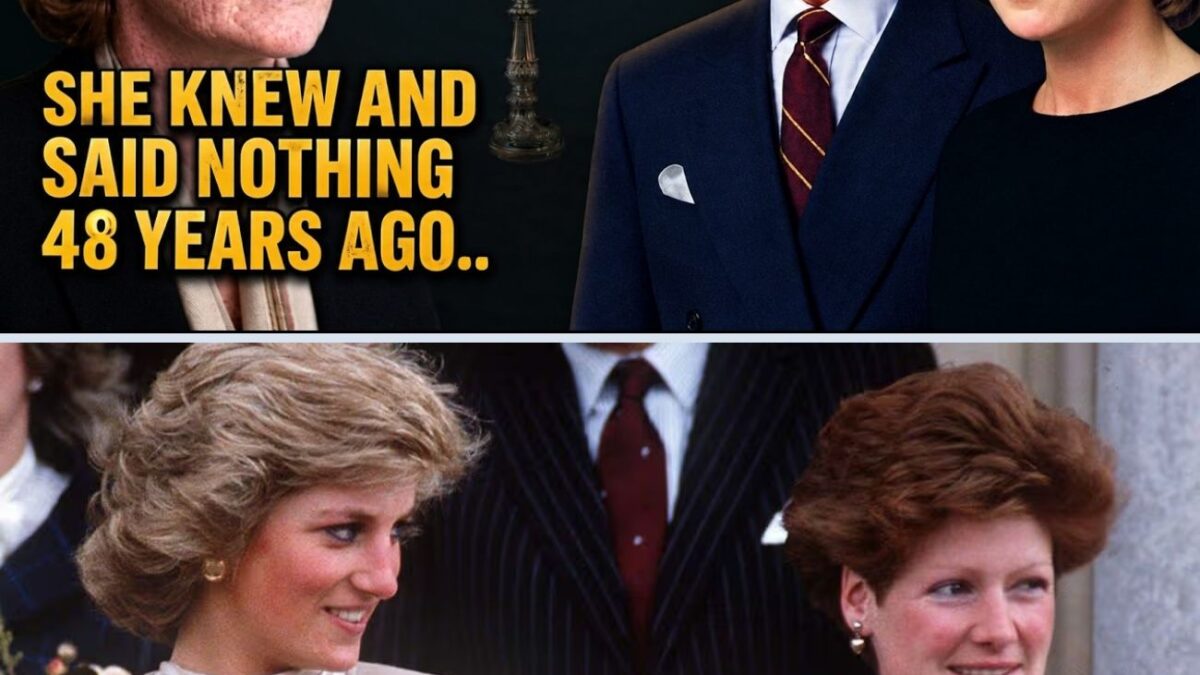
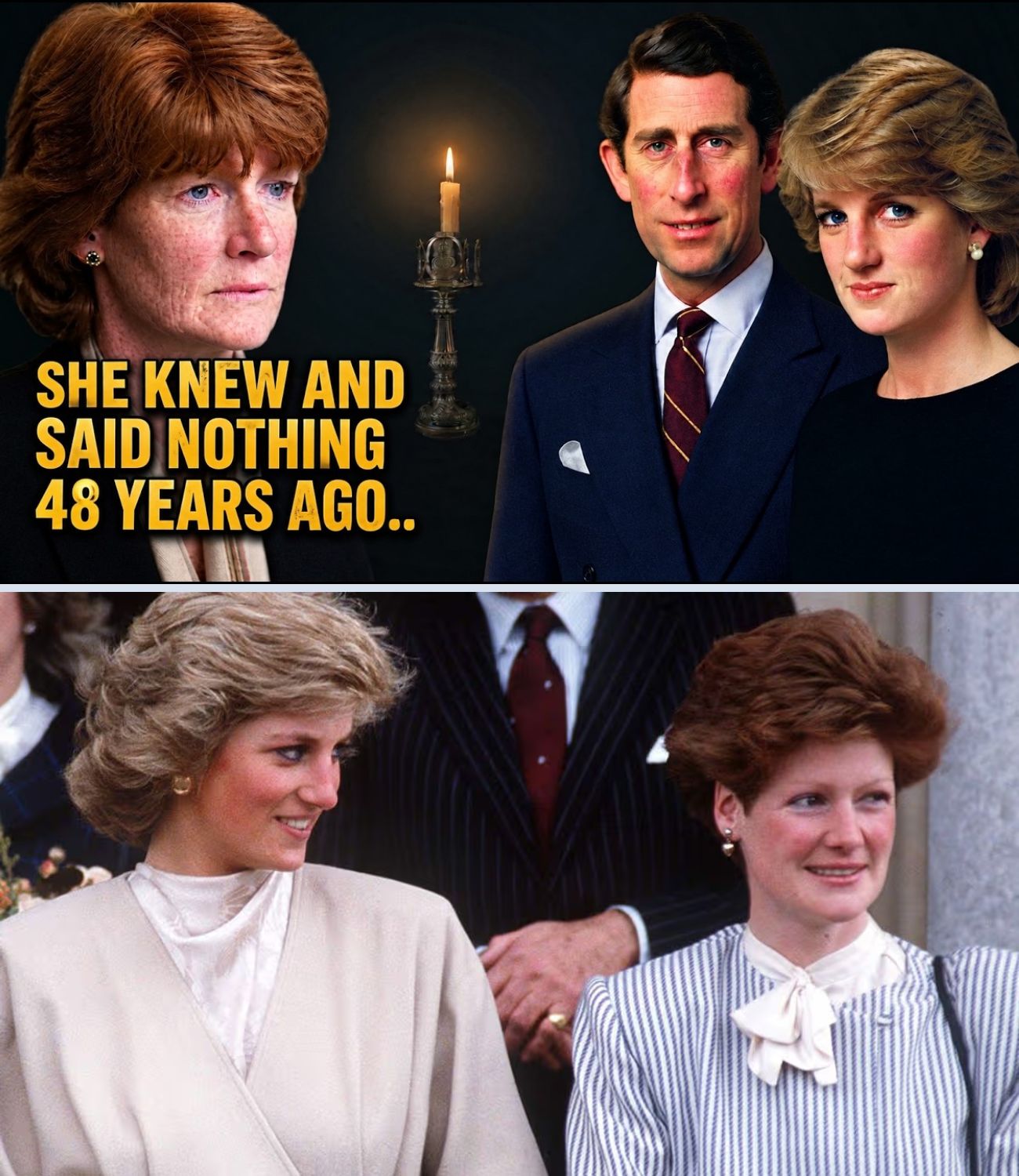
In 1981, a woman told a journalist a single sentence about the man her little sister had just married and then spent the rest of her life watching what that sentence actually meant play out in public, one decade at a time.
“I introduced them. I’m Cupid.”
That’s the line she gave, cheerful, almost proud, the year the wedding of the century happened. Now, here’s what she’d said about the exact same man three years earlier in private before any of it was funny:
“She wouldn’t marry him if he were the dustman or the king of England.”
Hold both of those sentences at once because by the end of this story, you’re going to understand exactly why the second one should have been the only warning anybody needed.
Before Diana Spencer ever met Prince Charles, her older sister already had. Lady Sarah Spencer was 22 in 1977, six years older than Diana. By every account from people who actually knew the family, she was the one Diana hero-worshiped as a child—funny, sharp-tonged, quick-witted, and possessing the exact kind of effortless composure a 16-year-old would have done almost anything to emulate.
Sarah met Prince Charles at the Royal Ascot that year. What followed was a real, if brief, high-society courtship: polo matches, cozy country house weekends, an invitation to ski with him in Klosters, the exact kind of royal squiring around that came with genuine perks attached. There were flattering invitations to Windsor, exclusive weekends at Balmoral, precisely the grand treatment a young aristocratic woman was supposed to find entirely irresistible. Biographers who covered the period describe real, tangible chemistry between them. He genuinely enjoyed her biting wit; she enjoyed, by her own later admission, the prestigious invitations.
It’s worth knowing where Sarah came from before any of this because the family’s own recent history explains a lot about how easily she could walk away from something most young women in her position were raised to relentlessly chase. Dynamics inside the Spencer family were complicated. The Spencer children had already lived through their own parents’ bitter, agonizing divorce in 1969, an unusually public, unusually ugly legal split for the era. Their father, Viscount Althorp, ended up winning full custody in a legal fight most fathers of that generation didn’t even attempt, let alone win.
Sarah, Jane, Diana, and their brother Charles grew up watching their own mother lose a custody battle and largely lose daily access to her own children. That’s not incidental texture; that is foundational trauma. A young woman who has already watched her own family’s fairy tale collapse into a ruthless courtroom fight develops a very different relationship to the idea of marrying into an institution for the mere prestige of it.
Sarah didn’t need Charles’s grand title to feel secure. She’d already learned the hard way at an age even younger than Diana was when she met him that titles, crowns, and sweeping country estates don’t actually protect anyone from what happens behind closed doors inside a marriage.
Here’s the detail almost nobody sits with long enough, and it is the whole tragic story in miniature: Sarah was never actually in love with him. She wasn’t performing indifference. She wasn’t playing hard to get the way the hungry tabloids might have preferred to write it later. She was genuinely, by multiple accounts, including her own contemporaneous behavior, completely unbothered by whether the romance went anywhere at all. She was 22, deeply aristocratic, and already remarkably confident in exactly what she was and was not willing to accept from a man, royal or otherwise.
That supreme confidence is what actually ended the relationship, and the way it ended is where this story gets genuinely strange. In early 1978, Sarah had lunch with two seasoned journalists, Nigel Nelson and James Whitaker. She told them, in the kind of loose, unguarded conversation young aristocrats of that era were not always careful enough to avoid, that she’d had thousands of boyfriends. And then came the detail that actually mattered, the one that should make you pause: she openly admitted that she had struggled with an eating disorder, specifically anorexia.
In an era when royal courtships lived or died on absolute discretion, on the strict, unwritten rule that whatever happened inside that elite circle stayed inside it, Sarah simply said the quiet part out loud to two men whose entire professional livelihood depended on repeating things as loudly as possible. The royal relationship ended almost instantly. And then Sarah said the sentence that should be far more famous than it is, the line this entire deep dive is actually built around. Asked point-blank by reporters whether she’d ever consider marrying Prince Charles, she stated plainly that she wouldn’t—not for the position, not for the royal title, not for anything the entire British Commonwealth could offer her:
“Not for any price, not under any title. The man himself is simply not the deal I want.”
Sit with the absolute audacity of that sentence for a moment. Almost nobody in Sarah’s entire social world would have dared to say something like that out loud in 1978. Here was the immediate heir to the throne, and a 22-year-old woman looked directly at the historic possibility of becoming the future queen, turned it down, and declared in effect that the man himself was simply not the deal she wanted.
Here is the question worth actually asking because it’s the one that never gets asked plainly enough: what did Sarah Spencer see in those few brief months of polo matches and ski holidays that made her that certain that fast? She never fully explained it in her own words, not then and not decades later. That silence itself is deeply revealing. She didn’t feel the need to build a public case or defend her choices; she simply knew, made her decision, and stated it with a bluntness that assumed nobody would need further convincing beyond the statement itself.
Now, here’s where the narrative turns from interesting social history into something far closer to an unbearable tragedy, and it happened within weeks of that blunt rejection actually landing. In November 1977, at a grouse shooting weekend at the Spencer family estate, Althorp, while Charles was still technically seeing Sarah, he was casually introduced to her younger sister. Lady Diana Spencer was just 16 years old. She later described meeting the Prince of Wales in a muddy plowed field, an image that has stuck to royal folklore for decades precisely because of how unglamorous and accidental it sounds.
Charles, by his own account years later, remembered thinking she was a very jolly, amusing, and attractive 16-year-old. Diana’s own memory of that exact first encounter, recorded years afterward once she had every reason to look back on it with crystal clarity, was far blunter and strangely prophetic. She remembered thinking:
“God, what a sad man.”
Notice what’s already sitting inside that single afternoon in 1977. You have the older sister who would decide within months that she wanted nothing to do with him regardless of the crown attached to his name, and you have the younger sister, still a child by any modern standard, meeting the exact same man and immediately reading him as emotionally sad rather than dashing. It was an instinct that read forward from the vantage point of 1997 turns out to have been infinitely more accurate than anyone standing in that field could have ever known. Two sisters, same royal bachelor, two completely different reactions recorded within weeks of each other. Yet only one of them had the maturity, the social standing, and the firm confidence to act on what she instinctively felt.
Three years passed. Sarah married a steady, pragmatic man named Neil McCorquodale in 1980. She moved directly into exactly the kind of quiet, unremarkable, contented, aristocratic life her comments about the dustmen had implied she actually wanted all along—not a crown, not international fame, just a stable marriage to someone she had chosen entirely on her own terms.
In that exact same window of time, Prince Charles was under mounting, immense pressure. His family, court advisers, and a ruthless tabloid press had spent a decade cataloging every single woman he had ever talked to. He desperately needed to find a suitable bride fast from a rapidly shrinking pool of acceptable candidates. Diana Spencer was 19 by 1980. She had the immaculate royal bloodline. She had no complex romantic history the newspapers could unearth. And crucially, this is the specific psychological detail that should genuinely unsettle you: she had grown up hero-worshiping her older sister, which meant she had also grown up absorbing at a subconscious level that her older sister had once been the primary object of the prince’s desire.
Think about what 19-year-old Diana was actually walking into when Charles’s royal attention turned toward her in 1980. She wasn’t just a total stranger encountering a charming prince for the first time; she was a vulnerable teenager who had spent three crucial years watching her adored older sister casually discard the heir to the throne. Somehow she had failed to absorb the vital lesson buried underneath that rejection—that being wanted by him was not automatically a prize worth keeping. If anything, a far more complex family dynamic may have been quietly at work: a younger sister finally succeeding at winning the full focus and devotion of the one man her older sister had once held and tossed aside without ever stopping to ask herself why Sarah had given him up so easily in the first place. Family psychology rarely gets more complicated or more dangerous than that, yet almost nobody covering the royal family stops to examine the story through that specific lens.
Which brings us back to the famous sentence Sarah gave the press. In 1981, once the royal engagement was officially announced to the world and the wedding of the century was being aggressively planned:
“I introduced them. I’m Cupid.”
Read that quote in total isolation, and it sounds like a charming, self-deprecating line from a proud older sister who is genuinely thrilled for her family. Now read it against everything you now know, knowing that Sarah herself had deliberately walked away from this exact man for reasons she never fully elaborated on beyond a single savage remark about dustmen and kings. When you view it through that lens, the quote becomes something considerably harder to stomach. She had the raw information; she had already personally run the experiment, tested the waters, and concluded cleanly and immediately that the answer was an absolute no, regardless of the grand prize attached to it. And yet, she introduced her 16-year-old sister to him anyway, just three short years before that same sister would walk down the long aisle of St. Paul’s Cathedral in front of 750 million viewers worldwide.
Now, it’s important to be careful here. It would be entirely unfair to turn this historical moment into a harsh accusation that Sarah McCorquodale does not deserve. There is zero historical evidence that she foresaw the immense tragedy that was coming—the lingering shadow of Charles’s affair with Camilla Parker Bowles that never truly stopped, the suffocating royal isolation, or the severe eating disorder that Diana would develop within the marriage in eerie, heartbreaking proximity to the exact same mental health struggle Sarah herself had confessed to reporters years earlier. Sarah wasn’t maliciously hiding a warning; by all accounts, she likely believed she was doing her little sister a massive favor, opening the grand door to the absolute pinnacle of aristocratic success.
The tragedy here isn’t a dark betrayal. It’s something much quieter, much more subtle, and in its own way, far worse: an older sister who had already tested the dangerous waters herself, found them cold and wrong, but never translated that sharp private verdict into a protective warning for the naive child walking in right behind her. It forces a question worth asking: is it possible to walk away from a bad situation correctly for entirely personal reasons and still unintentionally fail the person who follows you directly into it? Sarah wasn’t wrong to leave Charles; nothing about her sharp instinct in 1978 was mistaken. But what she apparently never did, as far as any public or private record shows, was sit her impressionable teenage sister down and say the one thing she had said so effortlessly to two reporters over lunch: that the man himself was simply not worth it, no matter what title came attached. She said it freely to the press; she seemingly never said it to Diana.
Look closely at what happened to that specific detail about eating disorders because it is easily the most haunting thread running through this entire family history. In 1978, Sarah told journalists that she suffered from anorexia, a remarkably rare, courageous, and controversial admission for a young noblewoman to make publicly at that time, regardless of how much it damaged her standing with the royal family. Years later, trapped inside a cold marriage, Princess Diana developed severe bulimia—a harrowing struggle she eventually spoke about with astonishing bravery in her famous 1995 Panorama interview, describing the illness as a desperate cry for help and a direct symptom of a marriage that was slowly destroying her from the inside out.
Two sisters, the exact same private, agonizing struggle with food and control. One sister named her diagnosis out loud before the royal trap could spring shut, walked away cleanly, and built an ordinary, happy life on her own terms. The other developed her condition after the heavy doors of the monarchy had already locked around her, leaving her with almost no room to simply walk away. Now, this isn’t a detail you should overanalyze; eating disorders were tragically common among young aristocratic women of that era, driven by intense social pressures that had little to do with individual royal courtships. But it is also impossible to ignore as the exact same emotional wound surfacing twice within the same family line. The stark difference between those two outcomes is what this entire story is fundamentally about.
There is another poignant detail from Diana’s own account of her engagement period that fits directly into this heartbreaking pattern. During their famous 1981 engagement interview, an interviewer asked the young couple if they were in love. 19-year-old Diana famously flashed a shy smile and answered immediately:
“Of course.”
Charles looked down, paused, and offered his infamous response:
“Whatever in love means.”
That single exchange, replayed millions of times in television documentaries ever since, captured in real time the massive emotional chasm Sarah Spencer had already identified and fled three years earlier. It showed a man for whom the entire marital arrangement was a duty-bound contract, blurting out his detachment on camera to a naive fiancée who either didn’t fully grasp the warning or felt she had no way out if she did. Sarah had sensed that exact same emotional void in 1977, but unlike Diana, Sarah had an exit strategy, the maturity to use it, and somewhere else to go.
Lady Sarah McCorquodale, unlike almost every other prominent figure who ever crossed paths with Princess Diana, never wrote a lucrative tell-all memoir. She never sat for explosive TV interviews. She never tried to publicly reposition herself as the brilliant visionary who saw the royal train wreck coming. Instead, in the devastating wake of 1997, she became one of the primary executives of Diana’s estate. She stepped into a quiet, functional, entirely unglamorous role, managing the massive practical machinery of her late sister’s legacy. Far away from the flashing cameras, she stayed married to Neil McCorquodale. She built the exact ordinary, quiet life her savage comment in 1978 suggested she had wanted all along, and she kept that life long after the fairy tale wedding she had casually facilitated turned into one of the most disastrous royal divorces in modern history.
Try to imagine what it must have actually felt like sitting in the ornate pews of St. Paul’s Cathedral on July 29th, 1981. You are one of 2,500 distinguished guests watching your 19-year-old sister walk down the aisle to marry the exact man you rejected three years prior. You are surrounded by a global broadcast audience of over 700 million people. Sarah was right there in the cathedral. She heard the solemn vows. She saw the nervous, distant groom. She watched that legendary 25-foot silk train sweep up the aisle, carrying with her the quiet, private knowledge that she had once stood in that exact same position, looked at the exact same future, and chosen to turn around and walk away.
There is no public record of what Sarah was thinking as she watched her sister say:
“I do.”
But there doesn’t need to be. Her line about the dustmen had already said everything her face couldn’t. Here is where this history ultimately leaves us. Sarah Spencer rejected the future king of England for reasons she never felt the need to fully defend, and history has never once proven her wrong. She then handed her own younger sister directly into that same rejected reality, wrapped it up as a grand royal introduction, and casually called herself Cupid while doing it. It is the story of two sisters, one accurate instinct, and only one woman who was mature enough, confident enough, and free enough to act on the truth before the invitations were sent out.
The warning about the dustmen was completely right. It was right in 1978 and it remained right for the next 20 painful years. It just wasn’t a sentence anyone thought to say to the one person who needs to hear it most.
You Might Also Enjoy

“We Thought They Would Negotiate”—What Argentine Soldiers Said When The British Attacked Goose Green

“You’ll Never Finish My Ruck March, Limey” — US Sergeant Who Challenged the SAS, Then Fell Out First






