Why Princess Margaret Wanted No Family at Her Cremation (Not Even the Queen)
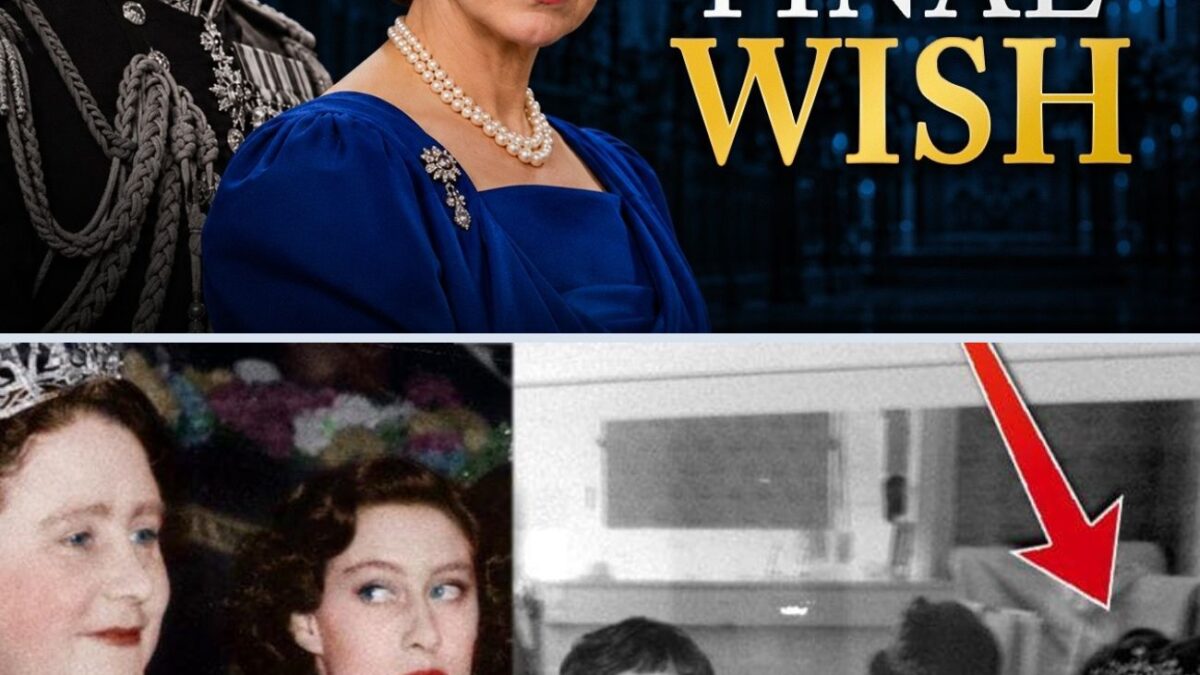
In the last weeks of her life, Princess Margaret told an old friend that she felt so ill she longed to join Papa. Papa was her father, King George VI, dead for 50 years. Not long after, Margaret died, too. And her last instructions broke with royal tradition. No burial at Frogmore, where so many of her relations lie. A plain crematorium in Slough instead. And nobody from her family was to go with her. Not her children, not her sister, the Queen. It looked like one last act of rebellion. But every one of those instructions pointed to one small stone room under Windsor Castle. And to the father she lost on a February morning in 1952.
Princess Margaret spent her last Christmas at Sandringham, the house in Norfolk where her father had died. She flew there by helicopter with her mother, Queen Elizabeth, the Queen Mother, and the two of them landed in a blizzard. The mother was 101, the daughter 71.
Her body had been failing for 4 years. A stroke in 1998 at her house on the island of Mustique. Scalds to both feet the next year, after which she needed support to walk. More strokes in 2001, which left her with partial sight and paralysis down her left side. She wore dark glasses when she went out at all. In August, she had sat beside her mother on the Queen Mother’s 101st birthday. The two of them side by side for the cameras. After that December, the public never saw her again. Her mother was not well, either. She had a cough over Christmas and was often in pain. But weeks earlier, at the staff Christmas party in St. James’s Palace, the Queen Mother had agreed to be wheeled round the room. And each time she stopped to talk to a group of people, she stood up out of the chair. She did it some 20 times. Margaret now needed the wheelchair.
In those last weeks, one of the people who came to see her was Anne Glenconner, one of her ladies in waiting and a good friend. On a Wednesday, sitting with the princess, Anne heard Margaret say that she felt so ill she longed to join Papa. Anne passed the words on to the Prince of Wales, and he put them in a letter to his grandmother. He told her he found it so incredibly touching. The letter stayed private until the Queen Mother’s official biography came out in 2009. Nothing closer to the wish itself has ever come out.
On Friday, the 8th of February, 2002, Margaret suffered another stroke and then heart problems. At half past 2:00 in the morning, she was taken from Kensington Palace to the King Edward the VII’s Hospital in London. Her son, David, Viscount Linley, and her daughter, Lady Sarah Chatto, were at her side. Her sister was at Windsor, kept informed through the night. At half past 6:00 on Saturday, the 9th of February, Princess Margaret died in her sleep. The Queen picked up the telephone and called her mother at Sandringham. Then she had the news given to the country in a statement that began with her own grief. The Queen, with great sadness, had asked for the announcement to be made immediately. Her beloved sister had died peacefully.
Prince Charles went straight to Sandringham to sit with his grandmother. She had outlived her younger child after watching her suffer with no hope of respite. She told Charles that the death of Margo, as the family called her, had probably been a merciful release. He agreed, and afterwards, he wrote the letter with Anne’s story in it. Papa had died on the 6th of February, 1952. His daughter died half a century and 3 days later, still talking about him. And over the years, she had already written and rewritten the instructions that would take her back to him.
“Lilibet is my pride,” King George the VI is supposed to have said.
“Margaret is my joy.”
That is the famous version. Nobody has found the letter or the diary it came from, and the wording changes from book to book. But the shape of it held. The elder daughter was dutiful and serious. The younger one, in another phrase credited to him, could charm the pearl out of an oyster.
Margaret was born in August, 1930, at Glamis Castle in Scotland. The second daughter of the Duke and Duchess of York. Nobody had expected her father to be king. He had a stammer and an elder brother who was heir to the throne. Then, in December, 1936, the brother abdicated, and Bertie became King George the VI. Margaret was six. Her sister, at 10, was suddenly the heir. From then on, the order was fixed. Lilibet would be queen, and Margaret would be the queen’s sister. At home, the order mattered less. People around the family thought her father spoiled her, letting her stay up to dinner at 13. Her biographer, Christopher Warwick, concluded that the love of her life was her father.
In September, 1951, a month after her 21st birthday, he had an operation on his lung, and he never fully recovered. In the early hours of the 6th of February, 1952, he died in his sleep at Sandringham. His valet found him at half past 7:00 in the morning. He was 56. The news went to Buckingham Palace by telephone under a code phrase Hyde Park Corner so the switchboard operators would not guess. His elder daughter was in Kenya and came home a queen.
When he died, Margaret called him such a wonderful person, the very heart and center of their happy family. Decades later, she described the weeks that followed to Ben Pimlott who was writing a life of her sister. There was an awful sense of being in a black hole. She felt tunnel visioned and did not really notice things. She was prescribed sedatives to help her sleep.
When his coffin reached London by train, three women followed it on foot out of King’s Cross Station. The new queen, the king’s widow, and Margaret. He lay in state in Westminster Hall for three days and about 300,000 people filed past. On the 15th of February, his mother, Queen Mary, too frail at 84 for the burial, watched the procession from a window of Marlborough House and a train took him to Windsor. In St. George’s Chapel, the Lord Chamberlain broke his white staff of office and laid half of it on the coffin, the sign that his service to that king was over. The king was lowered into the royal vault beneath the floor and his elder daughter dropped in a handful of earth.
The royal vault was meant as a waiting room. His death had been unexpected and no permanent resting place had been chosen. He would stay down there among older kings for 17 years. Grief sent Margaret two ways. One was faith. The royal writer Douglas Keay describes her as devastated and notes where she went for comfort. She went to post confirmation classes at a vicarage in Knightsbridge and had long talks with an old friend, Simon Phipps, a curate who later became Bishop of Lincoln. The other was a man. Group Captain Peter Townsend had been her father’s equerry, a wartime fighter pilot, and after the funeral, he became comptroller of the widow’s new household. He was 15 years older, divorced, and had lost the king she had lost. Before long, they wanted to marry.
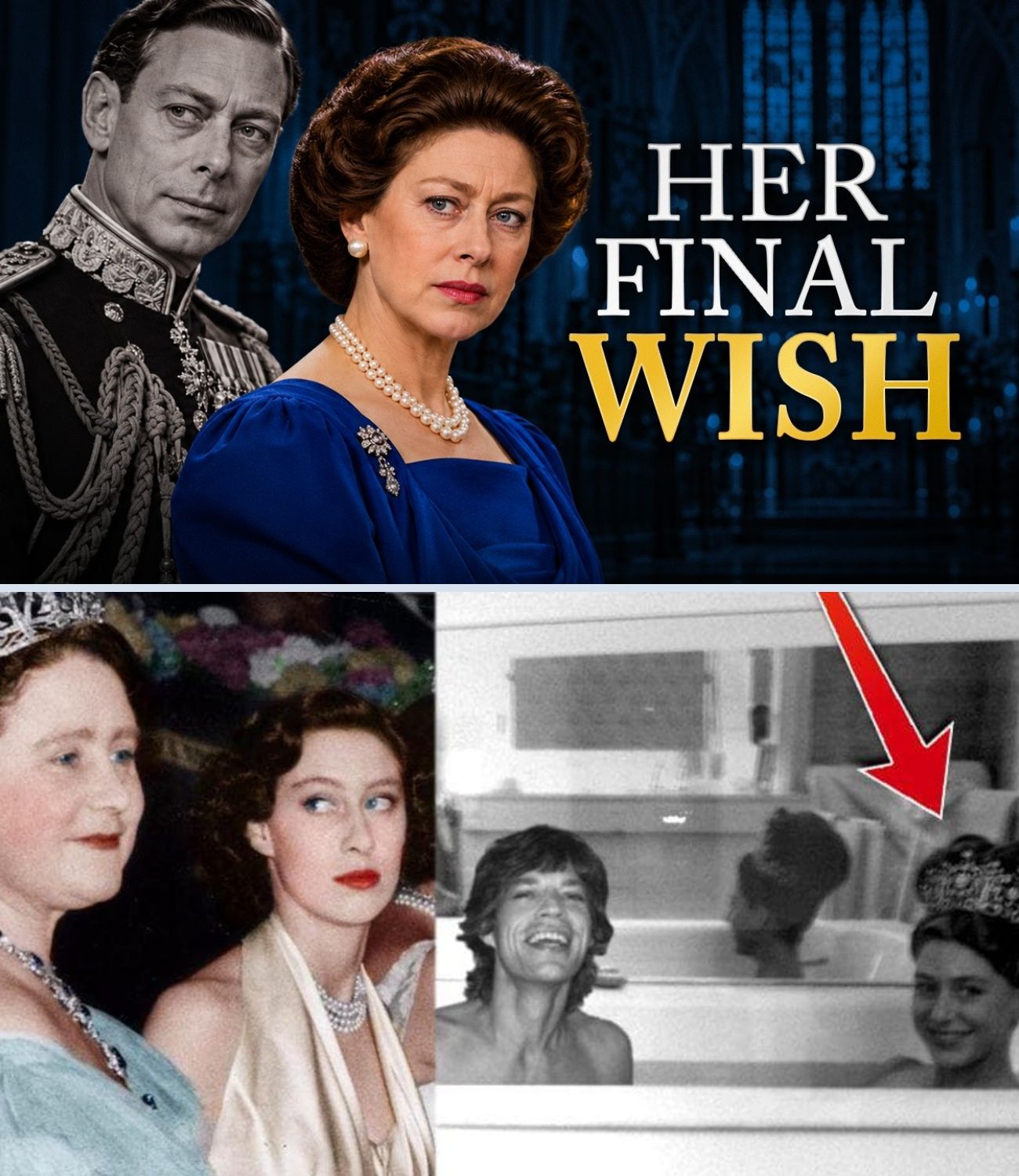
On the 31st of October, 1955, she gave him up in a statement issued in her own name. She knew there was another way. If she renounced her rights of succession, a civil marriage might have been possible. But, mindful of the church’s teaching that Christian marriage is indissoluble, and conscious of her duty to the Commonwealth, she had resolved to put those considerations before any others. She had reached the decision, she said, entirely alone. The faith she reached for in 1952 was the faith she named when that door closed.
She married the photographer, Antony Armstrong-Jones, in 1960, and they had two children, David and Sarah, before divorcing in 1978. By then, the king’s joy had become the family’s problem child in the newspapers, and Margaret understood the arrangement perfectly. She once explained it to the American writer, Gore Vidal.
“When there are two sisters, and one is the queen,” she told him.
“The queen must be the source of honor and all that is good. The other must be the focus of the most creative malice, the evil sister.”
Their cousin, Margaret Rhodes, saw something simpler. Margaret drove the queen mad frequently, but she was her sister, and she loved her. In December, 1962, the queen’s private secretary wrote to the Dean of Windsor, Robin Woods, with two requests. The first was that 14-year-old Prince Charles be prepared for confirmation. The second was a permanent resting place for her father.
10 years after the funeral, the king was still in the royal vault. His elder daughter decided to build him a room of his own. The King George VI Memorial Chapel went into a narrow space on the north side of St. George’s between two buttresses of the wall. It is small, 18 ft high, 10 ft wide, 14 ft deep. The Queen paid for it herself, 25,000 pounds. The architects were told it must take the remains of three monarchs and their consorts. Under the floor lies a small interment chamber.
Think about who that brief meant. The king, his daughter, and whoever reigned after her with their husbands and wives. A royal burial chamber is built for the line of succession. The younger daughter was not on it, and nobody had drawn her a place. In March 1969, the king’s coffin was moved into the new chamber, and on the last day of the month, the chapel was dedicated with his widow, the Queen, Prince Philip, Prince Charles, and Princess Anne, and the Knights of the Garter in their stalls.
One member of the family was not invited, the king’s brother, the Duke of Windsor, whose abdication had made George VI a king in the first place. The Duke had another place waiting. When he died in Paris in 1972, he was buried in the royal burial ground at Frogmore in the home park at Windsor near the mausoleum of Queen Victoria and Prince Albert. 14 years later, Wallace was buried beside him. Since the 1920s, Frogmore had become the place for the rest of the family, the uncles, the aunts, the cousins, and now one exiled king. The chapel was for the crown. Frogmore was for everyone else, and by every rule the family had, Margaret was everyone else.
Margaret knew it, and she did not leave her funeral to the officials. For years, planning it became something of a pastime. She once told the historianKenneth Rose,
“I am always altering the arrangements for my funeral. I drive the Lord Chamberlain’s department mad.”
Some of the alterations were jokes. She once mused to a friend that she would rather like to be buried at sea. The friend asked whether she would have a Union Flag wrapped around the coffin.
“Certainly not,” Margaret answered.
“I have my own standard.”
She dropped the sea. She kept the standard, her own royal flag, and it would cover her coffin in the end. And she never changed her mind about Frogmore.
In the week her cremation was announced, Ann Glenconner explained it. Margaret had told her she found Frogmore very gloomy, and Ann believed the princess would have wanted to be where her father was buried. The trouble was the room. Her father’s chapel had been built for whole coffins, and a full burial for one more person was never part of the design. Ashes were another matter. The Times reported that she chose cremation to make sure her remains could be accommodated in the small internment chamber beneath her father’s chapel.
A CNN correspondent outside the chapel on the day of her funeral called the reason dreadfully practical. There simply was not room in that chamber for many more bodies, and she wanted to lie next to her father. That same day, an American news anchor told viewers she could not remember a member of the royal family making that choice before. It is an easy mistake. In 1917, Princess Louise Margaret, Duchess of Connaught, the wife of one of Queen Victoria’s sons, became the first member of the royal family to be cremated. In 1939, Queen Victoria’s own daughter, Princess Louise, followed her. The ashes of both went first into the Royal Vault at Windsor, and both ended up in Frogmore. Margaret used the fire to go in the opposite direction. She was the first member of the royal family to be cremated in more than 60 years, and the first to do it to stay out of Frogmore.
Cremation was nothing new for the royals. Her destination was different. She broke the rule that decided where a princess who never reigned should lie, and she broke it to get back to her father. She chose the music, too. Swan Lake, for a woman who loved the ballet. The 23rd Psalm. Two hymns, “Immortal, Invisible, God Only Wise”, and “When I Survey the Wondrous Cross”. The Nunc Dimittis, the prayer of an old man allowed to see what he waited for, who can now depart in peace. And she left one more instruction about her family. The public heard it 3 days after she died.
The funeral was set for Friday the 15th of February at 3:00 in the afternoon in St. George’s Chapel. Family and friends only. Not a state occasion. It fell 50 years to the day after her father’s funeral, in the chapel where he had been buried. Nobody has said whether that was chosen. That is where it fell. On Monday evening, the coffin left Kensington Palace for the last time, covered by her personal standard, with lilies and roses on top. It was taken to the Queen’s Chapel at St. James’s Palace, where it would rest until Thursday. And the Queen’s Piper played the Skye Boat Song. Then the Queen went in to her sister. They had grown up in one nursery and staged pantomimes together at Windsor in the war, before the country cast them as the Queen and the evil sister. Now, the Queen stayed with Margaret’s coffin for an hour.
In the small hours of Tuesday, the BBC’s royal correspondent, Jenny Bond, broke the news. Princess Margaret was to be cremated in a break from usual royal tradition, and her ashes were expected to go beside her father. Later that day, the confirmation came with the instruction she had saved for last. The cremation would forego the pomp and circumstance of a royal funeral. And at the princess’s request, no member of her family or friends, not even her children or her sister, would witness her final departure.
Five years earlier, Margaret had held strong views about who deserved a royal funeral. When Diana, Princess of Wales, died in 1997, Margaret was the only member of the royal family, in Craig Brown’s account, who argued that Diana should not be given one. As Diana’s coffin passed, the others bowed their heads. Margaret gave it only the most cursory of nods. She was furious, too, about the mass of flowers piled outside Kensington Palace, her own home. Diana’s funeral had been relayed to the crowds outside Westminster Abbey. For herself, Margaret asked for a private chapel and then a crematorium.
The Queen Mother had already given up a great deal that winter. She had missed Princess Alice’s centenary, the one Margaret had managed to attend. Then the annual lunch of the Women’s Institute she presided over. Then the Sunday services at Sandringham. She was not going to miss this. On Wednesday, she fell and cut her arm. The reports from Windsor said the family, the Queen among them, begged her not to make the journey. On Thursday afternoon, she took off by helicopter for Windsor anyway.
That same evening, Margaret’s coffin was driven out of London to St. George’s, where it spent the night. At 3:00 on Friday, about 450 people sat in St. George’s and several thousand gathered outside the castle. The Queen and Prince Philip were there with their sons and grandsons. So were friends from the theater and the music she loved. Among them, Judi Dench. Lord Snowdon, her former husband, arrived separately and was heard to complain that the Lord Chamberlain had promised him there would be no steps. Roddy Llewellyn, whose friendship with her had filled the newspapers in the 1970s, sat with his wife. Craig Brown records that the two men exchanged glances but did not speak.
The Queen Mother came in a people carrier with blacked out windows. A car Margaret herself had recently been using. No photographer was to catch her in a wheelchair. She arrived 3 minutes late and was wheeled in through the north door in black behind a veil where the public could not see her. The historian Hugo Vickers was close enough to watch. In the words Craig Brown quotes, Vickers found her impressive and demonic. A steely resolve more involved with her own attendance than any sympathy she might feel for her dead daughter. And perhaps a tiny hint of triumphalism. That is one man’s impression from a few feet away of a woman who had come through a fall and a cut arm to be there.
The organ played Swan Lake as the mourners arrived. Lord Linley read the lesson. From Paul’s letter to the Romans, the passage that says nothing can separate us from the love of God. Canon Barry Thompson gave thanks for her loyalty and sense of duty. Her faithfulness towards her family and her friends, her quick wit and her love of life. The Archbishop of Canterbury gave the blessing. Then eight soldiers of her own regiment, the Royal Highland Fusiliers, carried the coffin out. A lone piper played a lament that Lady Sarah had chosen. It was called the desperate struggle of the bird. The last post sounded, then reveille. The organ played Bach’s Toccata and Fugue in D minor, and the family walked out behind the coffin. Her children first, then the Queen. The standard went with it. The flag she had once wanted wrapped around her at sea. Then the hearse left Windsor, and nobody from the family followed it.
Slough Crematorium sits about 8 miles from Windsor Castle, a low brick building from 1963, with a tiled roof and stained glass windows. The kind of place where ordinary English families say goodbye. It had a full list that Friday. Margaret’s was the sixth service of the day, and the last. In the car were the Dean of Windsor, her private secretary Viscount Ullswater, and a man from the Lord Chamberlain’s office. A few staff and officials, a short committal, a last prayer, and that was all. Not her children, not her sister. The family whose rules had shaped her whole life, from her place in the line of succession to the question of Peter Townsend, was not there for the end of it.
She had arranged it that way. Whether she meant to spare them, or to keep one last thing for herself, she never said. And nobody who knows has said it for her. A princess of the United Kingdom went through the plain door any family from Slough uses, at the end of an ordinary afternoon list. It’s hard to think of a less royal end. It was also the only way into the most royal room in Windsor.
The ashes came back to the castle in a casket. Her father’s chamber was not going to be opened straight away, so the casket went down into the royal vault, among George the third, George the fourth, and William the fourth. In 1952, her father had waited down there for his chapel. Now, she waited there, too. The obituaries had their verdicts ready. One called her extrovert or willful, imaginative or attention-seeking, depending on taste, and asked what, exactly, a princess was for. Her children answered the public in a short note. The messages and the flowers had meant a great deal. None of them knew the story had 7 weeks left to run.
The fall had not stopped the Queen Mother. Hugo Vickers later wrote that his glimpse of her in the chapel was his last. She went back to Royal Lodge in Windsor Great Park, a few miles from the vault where her daughter’s ashes were waiting. At a quarter past 3:00 on Saturday, the 30th of March, 2002, the day before Easter, the Queen Mother died in her sleep at Royal Lodge. She was 101. 7 weeks earlier, the announcement had been about the Queen’s beloved sister. Now, it was about her beloved mother.
The Queen Mother’s farewell was everything her daughter’s was not. Her coffin, draped in her own standard, with her crown on a cushion, lay in state in Westminster Hall, where her husband had lain in 1952. About 200,000 people filed past over 3 days. The queues stretched for more than a mile along the Thames and over Lambeth Bridge, and the officials had to keep the doors open longer than planned. At one point, four of her grandsons came and stood guard round the coffin themselves. In the old way, Prince Charles, the Duke of York, the Earl of Wessex, and Viscount Linley, 7 weeks after reading the lesson at his mother’s funeral, Margaret’s son stood at one corner of his grandmother’s coffin in front of the cameras of the world.
On the 9th of April, came the funeral in Westminster Abbey. That evening, in a private service with only senior members of the family, the Queen Mother was laid beside her husband in the chamber under his chapel. The official arrangements said that Princess Margaret’s casket would be taken from the Royal Vault and placed in the same vault as King George the VI and Queen Elizabeth. That night, the ashes went in beside her mother’s coffin. 10 days later, a service of Thanksgiving for Margaret was held in Westminster Abbey. 50 years after the black hole, the younger daughter was with Papa. Her mother came with her.
At Christmas, the Queen spoke about it to millions of people.
“Many of them knew only too well,” she said,
“the grief that follows the death of a much-loved mother or sister. Hers had been very much part of her life and had always given her their support and encouragement.”
Her own sadness had been tempered by the generous tributes so many people had paid to the service they gave. She spoke of facing up to her own personal loss and to the busy Jubilee summer ahead. She did not name them. A queen who rarely spoke about her private life used the word grief on television about the two women she had grown up with.
There was one more thing for Margaret’s children to settle. She left the two of them an estate of 7.6 million pounds, most of her fortune having come from her father. In June 2006, they held a sale at Christie’s in London to meet the tax and, in Lord Linley’s words, “normal family requirements such as educating her grandchildren.” Part of the money went to the Stroke Association, a charity for the illness that had taken her. The prices went far past the estimates. The diamond tiara she wore at her wedding sold for more than 900,000 pounds.
Then her son did something the catalog had not planned for. A portrait of his mother by Pietro Annigoni was in the sale and Lord Linley bought it back himself for 680,000 pounds, more than three times its estimate. For 20 years, the chamber held three of them. A king, his widow, and their younger daughter.
Margaret stone carries her monogram and the words in thankful remembrance of her royal highness, the Princess Margaret, Countess of Snowdon, born the 21st of August, 1930, died the 9th of February, 2002. Round the edges runs an epitaph she wrote herself.
“We thank thee, Lord, who by thy spirit doth our faith restore. When we with worldly things commune and prayerless close our door, we lose our precious gift divine to worship and adore. Then thou, our savior, fill our hearts to love thee evermore.”
It is a prayer about drifting from faith and being brought back to it. The woman cast as the evil sister chose as her last public words, a confession that she had sometimes closed the door and a thanks for being let back in.
On the 30th of March, 2012, 10 years to the day after her mother died, the Queen came to St. George’s for a memorial service for her mother and her sister together. 10 years later, she came for the last time. On the 19th of September, 2022, after the state funeral in Westminster Abbey, Queen Elizabeth II’s coffin was brought to St. George’s Chapel. Her funeral and committal were the first of any British monarch to be broadcast on television. Her sister’s had been a private service, not a state one.
Near the end, the Lord Chamberlain broke his white staff of office and laid the two halves on the coffin. 70 years earlier, in that chapel, another Lord Chamberlain had done it over her father with both his daughters there. Then, as the sovereign’s piper played a lament, the coffin went down into the royal vault. That evening, with only her closest family present, the Queen was laid in the chamber under her father’s chapel. And Prince Philip was moved to lie beside her. The Church Times wrote that she rests alongside her beloved husband, sister, and parents. The room she ordered for three monarchs and their consorts now holds two monarchs, two consorts, and one princess who was never part of the brief.
A new stone went into the floor with a garter star between the names of the two couples. Margaret’s stone now sits apart in the right-hand corner of the chapel. Go back to that Wednesday in 2002. The old friend at her side. The princess saying she longed to join papa. Nobody can measure how much of her plan was longing and how much was logistics. What she chose is clear. Ashes small enough for her father’s chamber and a last door that nobody else was asked to walk through.
She broke the tradition that sent a princess who never reigned to Frogmore and she kept an older one. In the end, the family lies together around the crown. Her sister did not go with her to Slough because Margaret asked her not to. 20 years later, the Queen went down into the chamber where Margaret was already waiting. Beside the father they had both lost on that February morning. The younger sister got there first.
You Might Also Enjoy

“We Thought They Would Negotiate”—What Argentine Soldiers Said When The British Attacked Goose Green

“You’ll Never Finish My Ruck March, Limey” — US Sergeant Who Challenged the SAS, Then Fell Out First






