Why Princess Margaret’s Children Hated Her So Much
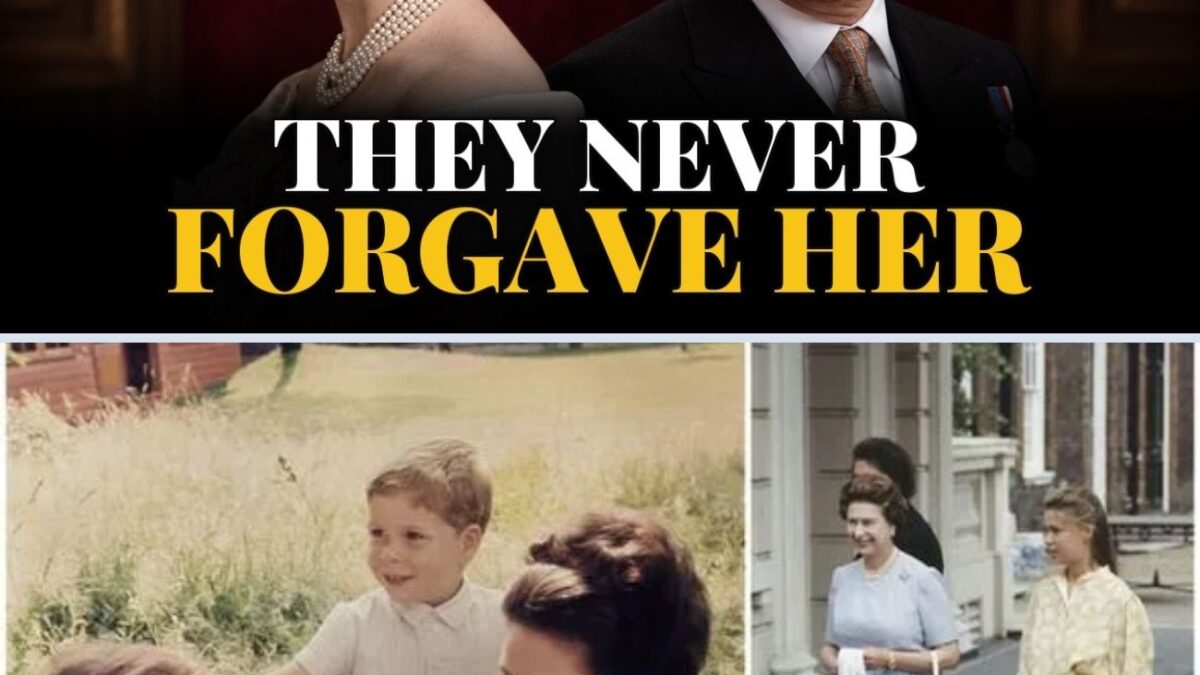
On the 3rd of November, 1961, in the private wing of Clarence House, Princess Margaret lay in a bed surrounded by doctors and nurses, having just delivered her first child. The birth had been danger and all night, and when they finally placed the boy in her arms, she looked at him for a long moment, and then she said something that would be repeated in royal circles for decades. She asked when the nanny would be arriving. She did not ask to hold him longer. She did not weep with joy. The Countess of Snowdon, fourth in line to the throne of England, handed her firstborn son to a uniformed stranger.
That boy, David Albert Charles Armstrong Jones, Viscount Linley, would grow into a man who rarely visited his mother, who gave interviews suggesting she had been largely absent from his childhood, and who, when she died, spoke of her with the careful politeness one reserves for a difficult acquaintance, rather than a beloved parent.
His sister, Lady Sarah, born 3 years later, would fare little better. She would spend decades in and out of treatment for depression, and would later admit that she had struggled her entire life to understand why her mother seemed to find her children so desperately inconvenient.
What you are about to hear is not another story of royal glamour. This is the story of what happened behind the nursery doors of Kensington Palace, where two children waited for a mother who almost never came, and what that silence cost all three of them for the rest of their lives.
The letters Margaret wrote during this period, now held in private family collections and referenced by her authorized biographer Tim Heald, reveal a woman who documented her social calendar in obsessive detail, but mentioned her children only in passing as logistical problems to be managed.
By the end of this story, you will understand why David and Sarah Armstrong Jones grew into adults who kept their mother at arms length, and you will have to decide for yourself whether Margaret was a monster, a victim, or something more complicated than either.
To understand why Margaret’s children would come to resent her so deeply, you have to understand what kind of childhood she herself had endured. Because the wound was planted long before David or Sarah ever drew breath.
Margaret Rose Windsor was born on the 21st of August, 1930, at Glamis Castle in Scotland, the second daughter of the Duke and Duchess of York. At the moment of her birth, she was fourth in line to the throne, comfortably removed from any expectation of duty.
Her childhood, by all accounts documented in the royal archives and in the memoirs of her governess Marion Crawford, was a peculiar mixture of extraordinary privilege and profound emotional starvation. Crawford, whose book The Little Princesses caused a scandal when it was published in 1950, described Margaret as a child who craved attention with an almost physical desperation.
While her elder sister Elizabeth was quiet, dutiful, and self-contained, Margaret was theatrical, demanding, and perpetually hungry for praise. The king, their father, adored her for it. He called her his Espiegle, his mischievous one. And he indulged her tantrums and her performances in a way that Elizabeth never required.
But the queen, the formidable Elizabeth Bowes-Lyon, was cooler. She loved Margaret, certainly, but she found her younger daughter’s neediness exhausting. Crawford recorded that the queen would sometimes simply leave the room when Margaret’s demands became too theatrical. And Margaret learned very young that love could be withdrawn without warning.
Then, in December of 1936, everything changed. Edward VIII abdicated the throne and Margaret’s father became King George VI and 10-year-old Elizabeth became heir presumptive to the crown. In a single week, Margaret went from being the adored baby of a minor royal household to being the spare, the shadow, the one who would never matter as much as her sister.
Biographer Anne de Courcy, in her book Snowdon: The Biography, argues that this moment broke something fundamental in Margaret’s understanding of love. She had been the favorite, the center of attention, the one their father spoiled. Now she was second. She would always be second. And she would spend the rest of her life trying to find someone who would make her feel like she was first again. Her children, when they came, never stood a chance.
On the 6th of May, 1960, Margaret married Antony Armstrong Jones at Westminster Abbey in a ceremony watched by 300 million people worldwide. It was the first royal wedding ever televised, and Margaret, at 29, was incandescent. She had finally found a man who seemed to see only her.
Tony, as everyone called him, was a society photographer from a complicated background. His parents had divorced when he was young, and he had been raised largely by a nanny, and then by boarding schools. He was charming, artistic, sexually magnetic, and utterly without deference to royal protocol.
Margaret found him intoxicating, but the warning signs were there from the beginning. Tony had maintained a long affair with a woman named Jackie Chan, a Chinese-born actress, and had ended it only reluctantly when the engagement was announced. He had also had relationships with men, a fact that would become an open secret in certain circles.
More disturbingly, Tony was not a man who wanted to be possessed. He had married a princess, but he had no intention of becoming a consort. Their first years were passionate and volatile. They fought in public, reconciled in public, and created around themselves a social world that scandalized and fascinated the British press. They were the glamorous couple, the artistic royals, the ones who went to jazz clubs and befriended photographers and actors, rather than country squires.
When Margaret became pregnant in 1961, the news was greeted with public celebration. But privately, those who knew her well worried. Margaret had never expressed any particular interest in children. She had once told a friend, according to biographer Theo Aronson, that babies were rather frightening and that she hoped to have a very good nanny.
She did have a very good nanny. In fact, she had several and those nannies would raise her children almost entirely without her.
What the public never understood about Margaret was that she was not simply a party princess, a woman who cared only for champagne and late nights. She was also, in her own strange way, genuinely conscientious about her royal duties. The royal archives contain appointment diaries showing that Margaret carried out hundreds of official engagements each year throughout the 1960s and 1970s.
She was patron of dozens of charities. She made state visits, attended hospital openings, presented awards, and sat through interminable ceremonial dinners with practiced grace. She was good at it. She had inherited her mother’s ability to make whoever she was speaking with feel, for that moment, like the only person in the room.
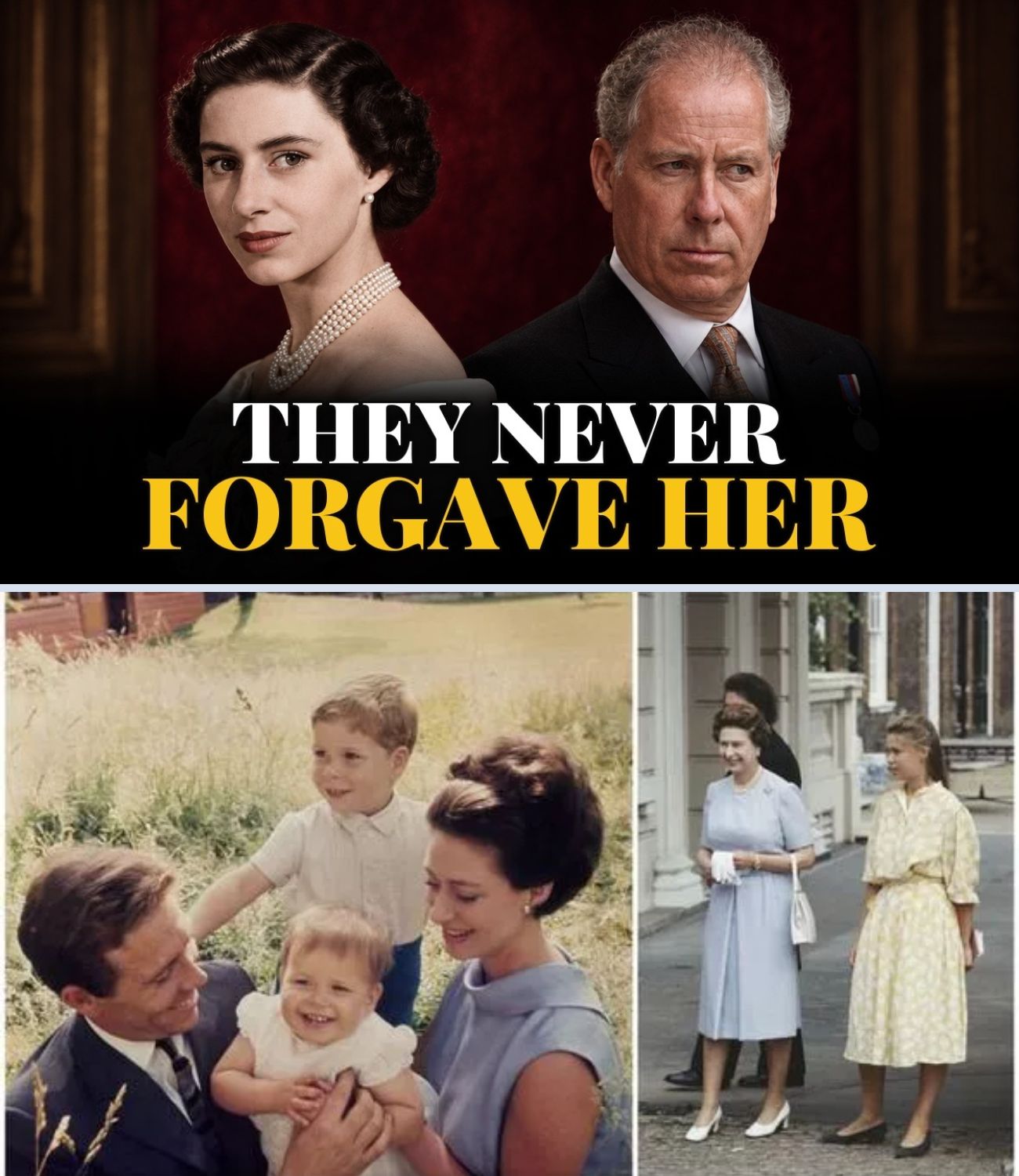
But this is precisely what made her failure as a mother so devastating to her children. David and Sarah did not grow up believing their mother was incapable of warmth. They watched her dispense that warmth freely, night after night, to strangers. They saw her laugh and charm and flatter and console.
They read about her in the newspapers, saw photographs of her visiting sick children in hospitals, heard stories of her kindness to young artists and musicians she had taken under her wing. And then they waited in the nursery at Kensington Palace and she did not come.
It was not that Margaret was absent from her children’s lives entirely. Nanny Sumner, who served the household from 1961 to 1968, gave an interview years later in which she described Margaret’s pattern. The princess would appear in the nursery at around 6:00 for what she called children’s hour, a ritual borrowed from her own childhood at Royal Lodge.
She would stay for perhaps 45 minutes, sometimes an hour. She would hear about their day, inspect their drawings, perhaps read a story, and then she would leave, often not to return until the following evening, or sometimes not for several days if she was traveling or simply occupied elsewhere.
Biographer Christopher Warwick, who was granted access to Margaret’s private correspondence for his authorized biography, noted that Margaret seemed to genuinely believe this was adequate. In a letter to a friend in 1965, she wrote that children needed routine and stability, and that nannies provided this far better than mothers who might be distracted by other obligations. She appeared to have no awareness that what she was providing was not stability, but abandonment dressed in silk.
What happened in the Snowdon marriage during the 1960s was not secret. It was merely unspoken. Tony began having affairs almost immediately after Sarah was born in 1964. His first serious extramarital relationship was with Lady Jacqueline Rufus Isaacs, daughter of the Marquess of Reading, and it was conducted with barely concealed carelessness.
He would disappear for weekends, offer thin explanations, and return to Kensington Palace without apology. Margaret knew. She had to know. And this is where her response becomes crucial to understanding what happened to her children, because Margaret did not confront Tony directly about his infidelities.
Instead, she began to drink more heavily, to stay out later at parties, and to direct her considerable anger at the only targets who could not fight back. The staff at Kensington Palace during this period have given fragmentary accounts over the years, and what emerges is a picture of a household ruled by Margaret’s moods.
She could be charming one moment and vicious the next. She would summon servants at 3:00 in the morning, berate them for imagined failures, and then weep and apologize by breakfast. She was demanding, capricious, and often cruel.
The children, protected by their nannies, learned to read their mother’s moods with the expertise of small animals sensing a predator. David, in particular, developed what one former household member described as an uncanny ability to make himself invisible. He would hear Margaret’s footsteps in the corridor and simply disappear into a cupboard or behind a curtain until she had passed.
Tony, meanwhile, responded to the chaos by withdrawing further. He built a shed at the bottom of the garden of their country house in Sussex, and he would spend entire weekends there working on his photographs, receiving visitors who were never introduced to his wife. The children called it Daddy’s house. It might as well have been on another continent.
Before we go any further with what really happened in that household, we need to address the stories that have circulated for decades because some of them are true, some of them are exaggerated, and some of them are simply lies.
The most persistent rumor is that Margaret was physically abusive to her children. This appears in various tabloid accounts and has been repeated in several unauthorized biographies, but there is no credible evidence to support it. No former staff member has ever made this claim on the record. Neither David nor Sarah has ever suggested it.
The authorized biographers, Tim Heald and Christopher Warwick, who had access to the family and to private papers, found no indication of physical violence. What they did find was emotional neglect of a profound and systematic kind, and this is in some ways harder to document and easier to deny.
Margaret was not a mother who hit her children. She was a mother who simply was not there. And when she was there, she was often too preoccupied with her own unhappiness to notice theirs.
Another rumor that requires careful handling is the suggestion that Margaret openly told her children she had not wanted them. This claim appears in at least two biographies, but both cite unnamed sources. And it contradicts what is documented in Margaret’s own letters, where she writes of David and Sarah with evident, if distant, affection.
The truth appears to be more complicated. Margaret did want children, or at least she wanted the idea of children. What she did not want was the reality of them, the mess, the noise, the constant demands, the way they required her attention at moments when she wished to be attending to something or someone else.
There is also the question of her drinking. Margaret was, by the mid-1960s, consuming what her doctors considered a dangerous amount of alcohol. Famous Grouse whiskey was her preference, and she would begin with a gin and tonic before lunch, move to wine with meals, and end with whiskey late into the night.
Whether this constituted alcoholism in the clinical sense is debated. What is not debated is that her children grew up with a mother who was frequently intoxicated and whose behavior became unpredictable after dark.
By 1975, both David and Sarah were adolescents, and the family had entered its most destructive phase. David, now 14, had been sent to Bedales, a progressive boarding school in Hampshire that Margaret chose specifically because it was coeducational and artistic.
He was, by all accounts, a talented furniture maker even then, and he threw himself into his craft with an intensity that suggested escape as much as passion. He came home for holidays and found a household in open warfare.
Tony had by now embarked on his most serious affair with Lucy Lindsay Hogg, whom he would eventually marry after the divorce. He made little effort to conceal it.
Margaret, in response, had begun her own relationship with Roddy Llewellyn, a landscape gardener 17 years her junior. She made even less effort to conceal that. The children were caught in the crossfire.
Biographer Anne de Courcy records that Sarah, then 11, walked into a room at the Sussex house to find her mother and Roddy in an embrace. Margaret’s response was not to apologize or explain, but to send Sarah to her room for intruding.
There were public humiliations as well. In 1976, photographs of Margaret and Roddy on the beach in Mustique were published in the News of the World. They showed the princess, then 45, in a bathing suit laughing with her young lover.
The scandal was enormous. Questions were asked in Parliament. The Queen was reportedly furious.
David and Sarah, away at their respective schools, learned of their mother’s exposure not from Margaret herself, but from classmates who had seen the newspapers. No one called them to prepare them. No one apologized afterward.
Margaret, when confronted by friends who suggested she owed her children some explanation, reportedly said that they were old enough to understand that adults had private lives.
On the 11th of July, 1978, Princess Margaret and the Earl of Snowdon formally divorced. It was the first divorce in the immediate royal family since Henry VIII, and it marked the final, formal collapse of the household.
Custody of the children was awarded jointly, though custody in this context was largely theoretical. David was 17 and preparing for his final year at Bedales. Sarah was 14 and at boarding school. They spent holidays shuttling between Kensington Palace, their father’s new home in London, and increasingly, wherever they could find to escape both.
What followed were the lost years. Margaret, freed from her marriage but stripped of her excuses, descended into a period of profound unhappiness. She drank more. She stayed out later. Her social circle narrowed to sycophants and hangers-on. The serious people, the artists and musicians she had once cultivated, drifted away.
Her children drifted away, too. David, after completing his education, threw himself into building his furniture business. He was talented, driven, and ruthless in a way that Margaret found baffling and somewhat hurtful.
He did not want her help. He did not want her connections. He wanted, as he told one interviewer years later, to make something that was his own, that had nothing to do with being royal or being her son.
Sarah struggled more visibly. She had inherited Margaret’s beauty, but also, it seemed, her capacity for self-destruction. She moved through a series of relationships, struggled with depression, and twice spent time in treatment facilities.
Margaret’s response to Sarah’s difficulties was complex and contradictory. She would make grand gestures of concern, summoning doctors and specialists, and then she would disappear to Mustique for weeks, leaving Sarah to manage alone.
By the late 1980s, the pattern was set. David saw his mother for formal occasions and obligatory family gatherings. He was polite, he was dutiful, and he was distant.
Sarah saw her more frequently, but found each visit exhausting. In interviews given decades later, Sarah spoke of her mother with palpable sadness, describing a woman who had never quite known how to be a parent and who had never admitted this to herself or to anyone else.
What did Margaret herself understand about what she had done to her children? The evidence here is contradictory and incomplete.
Her authorized biographer, Christopher Warwick, was granted access to portions of her personal correspondence and he quotes from a letter she wrote to a friend in 1994. In it, Margaret reflects on her relationship with David and Sarah with what appears to be genuine bewilderment.
“I do not understand,” she wrote, “why they seem so angry with me. I gave them everything I could.”
This is, in its way, the most damning sentence Margaret ever wrote because it reveals the fundamental disconnect at the heart of her motherhood. She had given them everything she could, everything she believed children needed. Good schools, excellent nannies, beautiful homes, access to the highest levels of society, material comfort beyond anything most people could imagine.
What she had not given them was herself and she appeared genuinely unable to understand why that mattered.
The question that hangs over this entire story is whether Margaret truly hated being a mother or whether she was simply incapable of being one. The evidence, such as it survives, points toward the latter but does not entirely exclude the former.
What the papers settle is this. Margaret followed the parenting model she had experienced in her own childhood where royal children were raised by nannies and saw their parents for limited scheduled periods. She did not, by the standards of her class and generation, behave unusually.
The Queen herself had relied heavily on nannies when Charles and Anne were young. The difference was that the Queen’s children grew up in a household that was stable, purposeful, and generally happy. Margaret’s children grew up in a household that was chaotic, unhappy, and dominated by their mother’s emotional volatility.
The point that biographers still argue about is whether Margaret understood, at some level, the damage she was doing. Anne de Courcy argues that Margaret was in profound denial, that she constructed a narrative in which she was a devoted mother, and simply refused to see evidence to the contrary.
Tim Heald takes a gentler view, suggesting that Margaret was herself so damaged by her own childhood, by the abdication crisis, by the Peter Townsend affair, by her miserable marriage, that she had no emotional resources left for her children. Neither biographer entirely exonerates her, and neither entirely condemns.
What remains unknown, perhaps unknowable, is what private conversations may have passed between Margaret and her children in her final years. What apologies may have been offered, and rejected or accepted. What reconciliations may have been attempted. Margaret’s personal papers remain largely with the family, and have not been made available to researchers. Until they are, if they ever are, we are left with the public record and the testimony of those who observed the family from the outside.
Princess Margaret died on the 9th of February 2002 at King Edward the 7th Hospital in London. She was 71 years old. She had suffered a series of strokes in her final years, and had been largely confined to a wheelchair. Her famous beauty ravaged by illness and decades of heavy drinking and smoking.
David and Sarah were both at her bedside at the end. What passed between them in those final hours has never been revealed.
What is known is that both children gave restrained, dignified statements after her death, praising her courage and her dedication to her royal duties. Neither spoke of her warmth as a mother. Neither spoke of childhood memories. The absences in their eulogies were as telling as anything they said.
David went on to build a successful career as a furniture designer and businessman. He married, had children, and by all accounts became the kind of attentive, present father that he himself had never had. When asked about his mother in interviews, he was unfailingly polite and unfailingly vague.
Sarah found more peace in her later years. She became a working artist, married and divorced, and made a kind of accommodation with her mother’s memory that seemed to involve neither forgiveness nor continued anger, but something more like exhausted acceptance.
The nursery at Kensington Palace, where David and Sarah waited for their mother, is now used for other purposes. The nannies who raised them are mostly dead. The world that created Margaret, that wounded her, and made her what she was, has largely passed away.
What remains is a question that has no comfortable answer. Margaret’s children did not hate her, not exactly. They were failed by her, consistently and profoundly, and they responded to that failure by withdrawing from her in the only way that protected them. They built lives that did not include her. Not because they wished her ill, but because including her had cost them too much.
Perhaps that is worse than hatred. Hatred, after all, is a form of passion, a kind of inverted love. What David and Sarah seemed to have felt for their mother by the end was something colder. The weary recognition that she had never been capable of giving them what they needed, and the acceptance that she never would.
Princess Margaret’s relationship with her children was everything the fairy tale promised it would not be.
You Might Also Enjoy

“We Thought They Would Negotiate”—What Argentine Soldiers Said When The British Attacked Goose Green

“You’ll Never Finish My Ruck March, Limey” — US Sergeant Who Challenged the SAS, Then Fell Out First






