Why the Dirtiest Soldier in the Room Is Usually SAS
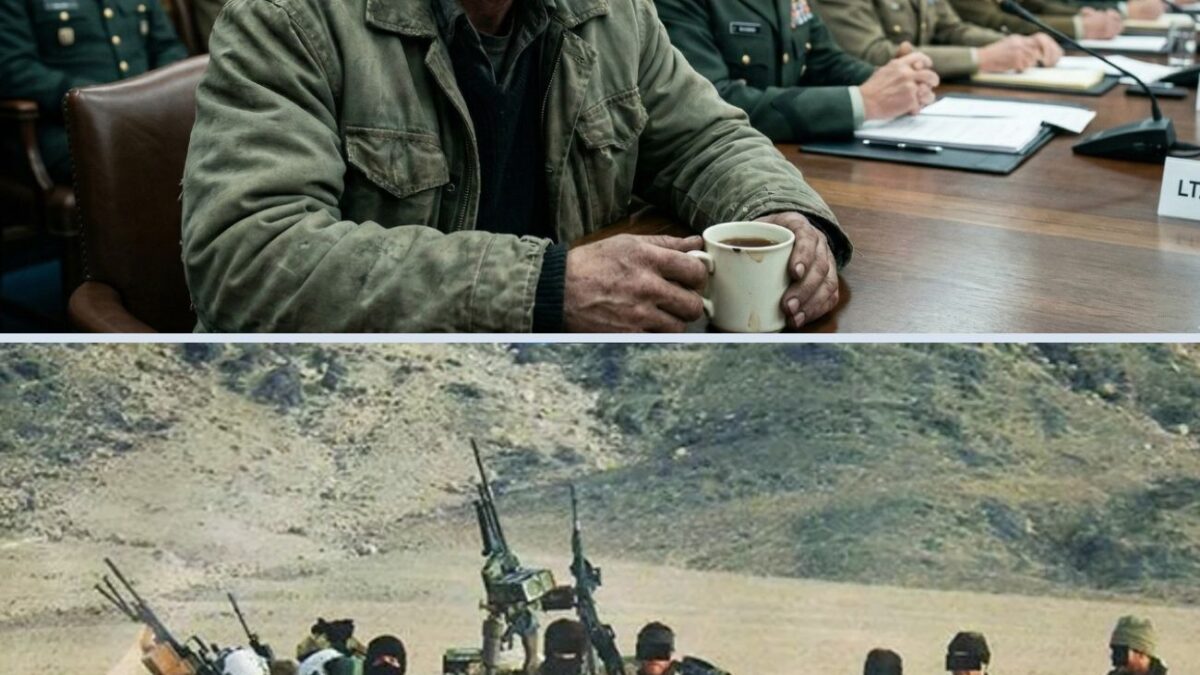
There is a photograph. You will not find it in any official archive. It was taken at a joint NATO exercise in Germany in the early 1990s, and the man sitting at the center of the conference table does not look like he belongs there. Every other person in that room is pressed, collars crisp, medals straight. The Americans are wearing their ranks like they were born with them. The Germans are immaculate in the way only the Germans can manage. The French liaison officer has somehow found time to shave twice. And then there is him, unshaven, hair curling past his ears, a jacket that looks like it has been used as a sleeping bag, because it has. He is holding a mug of tea in both hands and staring out of the window with the expression of a man who is thinking about something considerably more interesting than whatever is being discussed in front of him.
One of the American staff officers spent the better part of 20 minutes trying to have him removed from the building. Security was called, passes were checked, there were raised voices in a corridor somewhere. Then someone quietly explained who he was. He was the SAS officer commanding the entire British contribution to the exercise. He outranked everyone in that room except the German general at the head of the table, and even that was debatable depending on which set of orders you were reading. The American officer did not speak for a considerable time after that.
What makes that story worth telling is not that it happened. It is that it has happened so many times in so many countries across so many decades that it has stopped being a story and started being a pattern. The scruffy one by the coffee machine, the man with the three-week beard and the civilian boots and the jacket with the torn pocket, the soldier who looks like he slept in a hedgerow, because last week he did. He is almost always the most dangerous person in the room. And this is not an accident. The SAS does not look the way it looks because the regiment has relaxed standards or because Hereford has some peculiar blind spot about personal grooming. They look this way because the men who built the regiment decided very early on that appearance was the enemy of effectiveness. So that every minute a soldier spent polishing something was a minute he was not spending on something that might one day keep him alive. That the army’s obsession with looking correct was, in the most literal sense, getting people killed.
That idea did not come from a committee. It did not come from a memo or a policy review. It came from one man in one desert fighting one war that nobody in London thought could be won. His name was David Stirling. And the regiment he built in 1941 has carried his fingerprints ever since. Stirling was not, by any conventional measure, a promising military figure. He was tall, which he found occasionally useful. He was aristocratic, which he found mostly irrelevant. He had been commissioned into the Scots Guards, transferred to number three commando, and had spent the early part of the war building a reputation for sleeping through briefings and ignoring orders he disagreed with. His commanding officers were not admirers.
What Stirling had underneath all of that was something genuinely rare in any organization but nearly absent from armies. He could look at the way things were being done and ask, without any emotional investment in the answer, whether any of it actually worked. In 1941 in North Africa, the answer was no. The British Army in the Western Desert was fighting Rommel, who was better at war than almost anyone they had faced. The conventional approach, the set piece battles, the organized advances, the carefully structured lines of attack, was producing casualties and surrendering ground. Stirling, lying in a Cairo hospital recovering from a parachute accident that had temporarily paralyzed his legs, had time to think carefully about why. What he worked out was that the British were losing, not because they lacked courage or numbers, but because they were predictable. Rommel knew how British soldiers behaved because British soldiers always behave the same way. Same formations, same timings, same habits. Trained to look correct, trained to conform, trained to be, above everything else, recognizably military.
Stirling decided to build something that was not recognizable as anything at all. The Special Air Service, in its original form, was a fiction. The name was invented to deceive German intelligence into thinking there was an entire airborne brigade operating in North Africa when there were, at the start, 67 men. And the uniform was improvised. Ranks were largely ignored. The men Stirling recruited were chosen not for their compliance, but for their capacity to think on their own, to operate alone, to make decisions in the dark without anyone to ask. They raided Rommel’s airfields. They moved at night across distances that conventional forces considered impassable. They destroyed, in their first 18 months of operations, over 250 aircraft on the ground, more than any comparable Allied unit in the same period.
But alongside Stirling, there was another man who shaped what the SAS became. And he is sometimes overlooked in favor of the founder because he was harder to romanticize. Paddy Mayne was from County Down in Northern Ireland. International rugby player before the war, capped for Ireland, but built like something assembled for a different purpose. He was also, by any honest assessment, a man who found peacetime almost physically painful. He had been under close arrest when Stirling recruited him, serving time for striking a superior officer. In the British Army of 1941, that was the kind of thing that ended careers permanently. In the SAS, it was a recommendation. Mayne led more raids than any other officer in the regiment. He personally destroyed more enemy aircraft than most squadrons. He received four Distinguished Service Orders, a number so unusual that the men writing the citations appeared to run out of language somewhere around the third one. And he did all of it looking, by every account of those who served alongside him, like a man who had recently come through something that had not quite finished with him yet.
Stirling built the philosophy. Mayne proved it worked. The regiment they built together passed that proof down through every generation that followed.
The town of Hereford sits in the English countryside with the unhurried manner of a place that has no need to impress anyone. It is known for its cattle. It has a cathedral that has been standing since the 11th century. The River Wye runs through it without urgency. Just outside the town is Sterling Lines, the home of 22 SAS. What happens inside that base is classified. What happens to the men who attempt to join it is rather more widely understood because enough of them have written about it over the years that the broad shape of selection is reasonably well documented.
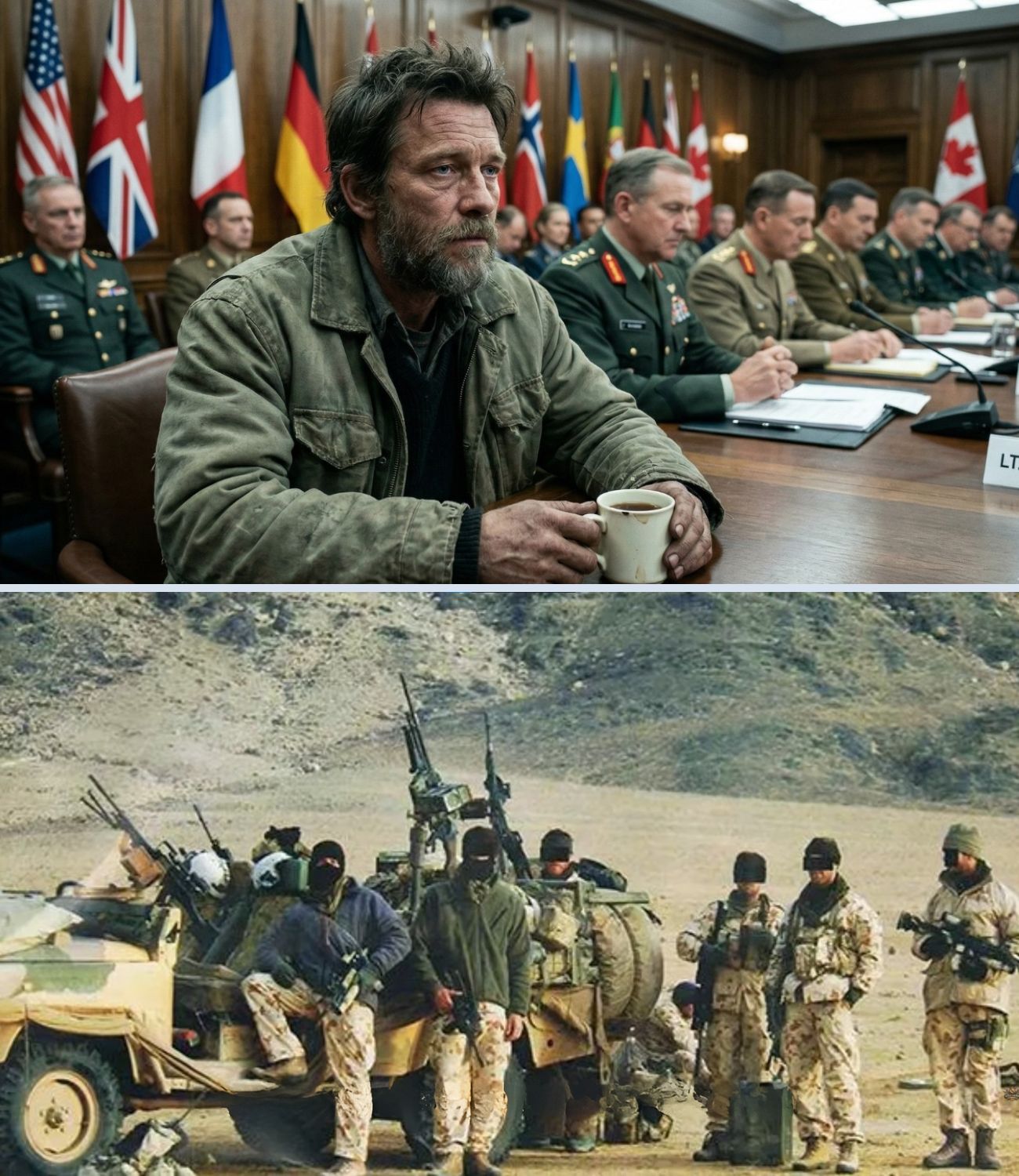
It begins with the hills. The Brecon Beacons in South Wales are not, by any global standard, large mountains. The highest point, Pen y Fan, stands at just under 900 m. Walked by tourists in summer, families on weekends, and they have a quality that does not photograph well, which is that they seem to change size depending on how tired you are. In winter with low cloud and freezing rain, and the kind of wind that arrives sideways and does not apologize, they are capable of killing a fit and experienced man without very much effort. They have done so more than once during SAS selection. And that fact is not a secret. And it does not reduce the number of men who attempt it.
The candidates walk. They walk for days carrying Bergen rucksacks that begin at 25 kg and increase as the weeks go on across terrain that has no interest in their performance whatsoever. They are not coached. They are not told whether they are ahead or behind. They are not encouraged. The directing staff watches in near silence. This is not cruelty. It is the whole test. The regiment is not looking for the fastest or the strongest. It never has been. Speed and strength can be trained into a man who does not yet have them. What selection is designed to find is something that cannot be built from the outside. The ability to keep making decisions when everything around you has stopped making sense. The ability to function at the edge of human capability without needing someone to structure the problem first.
The men who pass are almost universally not the men you would pick out of a lineup. Not the biggest. Not the loudest. They tend to have a slightly unfocused quality to their eyes that turns out on closer inspection to be concentrated attention rather than the absence of it. And almost to a man they share one thing that the directing staff notices and that cannot be manufactured. They have stopped worrying about how they appear. Not during selection. During selection, they are simply moving, eating when they can, sleeping in hours rather than nights, thinking about what is ahead and nothing beyond it.
But that state of mind, that complete displacement of concern about appearance in favor of concern about function, is not something that leaves them when the final march is over. It becomes how they think. A man who has stripped his life down to movement and decision making and endurance for 6 months does not emerge from that and start caring about whether his collar is straight. He comes out the other side with a settled indifference to the surface of things that is, inside the regiment, not considered a flaw. It is considered the point.
The hair came first. In most armies, hair length is a disciplinary matter. Regulation means conformity. Means the predictable uniformity that allows large numbers of men to operate together without someone having to explain everything from scratch. The British Army understood this from the beginning. You cut a man’s hair and you have already started the process of making him conform. The SAS stopped enforcing regulation haircuts in any consistent sense sometime in the late 1950s and early 1960s and the reasons were, at the start, operational rather than philosophical.
In Malaya, during the long counterinsurgency campaign against communist guerrillas in the jungle, it became obvious that men who looked like British soldiers were visible in ways that got them killed. The Malayan jungle does not reward convention. It rewards men who move quietly, who blend, who can sit in a village for 3 days without generating the particular unease that uniformed strangers produce. A short back and sides and pressed military trousers does not blend. It announces. The regiment adapted. Hair grew. Beards followed in theaters where they were useful. Clothing became a question of function rather than identity. And the men who came back from Malaya having operated this way for extended periods found, when they returned to Hereford, that they had lost something they did not miss. The reflexive concern about looking military.
Oman in the 1970s hardened all of this further. The Dhofar campaign and the largely secret war the SAS fought in southern Oman alongside Sultan Qaboos against the communist rebels of the People’s Front for the Liberation of Oman is one of the most successful counter-insurgency campaigns in British military history. It is also, for our purposes, one of the most instructive. The SAS strategy in Dhofar was built around the Firqat, units of former enemy fighters who had come over to the government side. British officers and NCOs lived with these men, ate with them, slept in the same conditions, learned their dialect well enough to make jokes in it. They did not live in forward operating bases behind wire. They lived in the population. You cannot do that looking like a soldier.
The men who did it successfully were the men who could, over weeks and months, become visually unremarkable to everyone around them. Long hair helped. Beards helped. The absence of anything that marked them as British Army helped most of all. A clean-shaven Englishman in a Dhofari village is visibly wrong in ways that are difficult to explain but impossible to ignore. An unshaven man who has been sitting in that village for 6 weeks, who knows the names of the headman’s children and which families are connected to the rebels and where the water source is that nobody talks about openly, is something considerably more useful.
The Falklands in 1982 added a different dimension. The SAS operations in the South Atlantic were conducted in conditions that made appearance management not difficult, but impossible. The patrols on South Georgia, the reconnaissance operations on East Falkland, the raid on Pebble Island that destroyed 11 Argentine aircraft in a single night. All of it was executed by men who had been living outside in South Atlantic winter for days or weeks at a stretch. Lying in water, moving through snowstorms, operating at the threshold of hypothermia in a theater where resupply was not guaranteed, and where the margin between alive and dead was not large. What they looked like at the end of it was what you would expect. They looked like something the weather had decided to move on from. They were the most effective fighting force the British military deployed in the entire campaign.
Northern Ireland changed everything again, but in a different direction. The jungle and the desert had demanded a kind of rough, elemental invisibility. Open terrain, distances, the enemy across open ground or in the undergrowth. But Belfast in the 1970s and 1980s was something else. Streets and pubs and corner shops and terraced houses with an insurgency running underneath ordinary life like a current through wet ground. The SAS deployed to Northern Ireland in January 1976, and what they found was that every lesson they had absorbed about appearance applied here, too. But in a form so intensely domestic that it required a new application of the same principle.
You could not look like a soldier. Not because there were no soldiers in Belfast. There were thousands of them. But a soldier in uniform was a target in ways that made sustained intelligence work almost impossible. The Provisional IRA had spent years studying British military behavior. They knew how soldiers walked. They knew the weight forward posture, the hands available stance, the way a man trained to respond to contact stands in a doorway compared to the way a civilian stands in the same doorway. They could read it at 50 m on a wet street at night.
The SAS in civilian clothes was still, for those who knew what to look for, recognizable by bearing, not by uniform, by the body language of men who had spent years preparing to be ready for something. So, the regiment adapted the training. Men were taught to carry themselves differently, to walk with the slightly forward leaning manner of a man going somewhere specific, but not urgently, to wait in a way that looked like waiting for a bus, rather than waiting for a contact, to look, at all times, like nothing of any significance was happening nearby.
The clothes they chose, because no quartermaster was involved in the decision on what unremarkable to the point of deliberate invisibility. Jeans worn enough to have the right kind of fade, jackets with the fraying that only comes from months of actual daily use, shoes that had seen rain in ways that new shoes have not, the specific unstudied shabbiness of a man who genuinely does not spend much time thinking about how he looks. They did not look like soldiers. They looked like men who had not quite got around to sorting themselves out, which, in large parts of Belfast in the late 1970s, was the most invisible thing you could possibly be.
There is an account from a former member of 14 Intelligence Company, the covert surveillance unit that worked alongside the SAS in Northern Ireland, about the first time he saw a group of operators at a briefing in one of the safe houses used for debrief sessions. He had been expecting something from the films, weapons visible, kit laid out, some tangible quality of readiness. What he found was four men in a kitchen who looked, taken together, like they had come from a midweek darts night at a pub that had seen better days. One of them was wearing a jacket he later described as genuinely offensive. They were drinking tea from mugs that had not been recently washed. One of those men had been, the previous night, 300 m from the most wanted man in Ireland, gathering the intelligence that would be used in an operation a fortnight later. He said the jacket was the thing he remembered longest. The man who would look like a vagrant in the corner of a German conference room a decade later had learned his trade in rooms exactly like that one.
There is a passage in the account of the Bravo Two Zero Patrol in Iraq in 1991 that does not get quoted as often as some of the others, but which says more about how the SAS thinks than almost anything else written about the regiment. The patrol, eight men under the command of Sergeant Andy McNab, was inserted behind Iraqi lines in January of that year to locate and report on the mobile Scud launchers Saddam was using against Israel. 300 km behind enemy lines, no vehicle extraction, in the coldest Iraqi winter in 30 years. What they were wearing when they crossed the border would not have satisfied any conventional military dress code on Earth. Layers of civilian and military clothing, mixed in ways that prioritized warmth and movement over any visual coherence. Boots chosen for silence and grip, rather than regimental uniformity. Kit modified and personalized to the point where two members of the same patrol could stand side by side and appear to have come from different armies. Webbing stripped of anything that rattled. Faces darkened with whatever had been judged most effective, rather than whatever had been issued.
The contrast with the conventional forces they had staged through on the way in was stark. The American special operations troops they had encountered were, by comparison, uniform, matching gear, identifying patches, the visual language of a professional military that wanted to be seen as exactly what it was. The SAS did not want to be seen as anything in particular.
Bravo Two Zero went wrong within 24 hours of insertion, and compromised by a young goatherd who had no idea what he had stumbled across. The operation became a running fight across hundreds of kilometers of Iraqi desert with the Republican Guard in pursuit. Three men died. Four were captured. One, Corporal Chris Ryan, walked 180 miles to the Syrian border in 7 days on almost no food and barely any water, a journey later listed as the longest escape and evasion on foot in the history of British special operations. In the accounts of the men who survived, what comes through consistently is the use of darkness and movement and silence and the ability to pass at distance as something undefined, not soldiers, not enemies, not anything you could put a name to quickly. That indefinability was among the last tools they had. They used it until they could not anymore.
Afghanistan was where the rest of the world finally caught up. After 2001, after the invasion and the long grinding years in Helmand and Kandahar, the logic the SAS had been operating on for 60 years became standard practice for every Tier 1 unit in the coalition. Delta Force grew beards. DevGru adopted local dress. The Australian SASR operated in ways that would have been, two decades earlier, associated almost exclusively with Hereford. The beard became the visual shorthand of the special operations community across the Western world.
A CIA ground branch officer who worked alongside British special forces in Helmand between 2007 and 2009 gave an account to a journalist that has since been widely repeated. He described arriving at a forward operating base to meet the British liaison team he would be working with for the coming months. And he had been told to find the senior SAS warrant officer coordinating the operation. He walked through the base for 20 minutes before giving up and asking a young signaller for help. The signaller pointed him toward a man sitting alone on a wooden crate outside a prefabricated building cleaning a weapon.
The man was wearing a pakol, the rolled wool hat common across Afghanistan and Pakistan, over hair that had not been cut in months. He had a beard that covered most of his face. He was wearing a combination of Afghan civilian clothing and body armor so heavily modified it was barely recognizable as military equipment. The CIA officer said he had walked past him twice. That man had spent the previous six weeks embedded with an Afghan militia unit in the upper Gereshk Valley living in the compounds, learning the patterns, rebuilding the relationships that allowed British forces to run a series of targeted operations against the IED networks supplying the Taliban’s Helmand campaign. He looked like he lived there. That was precisely why it had worked.
But there was a distinction between what the SAS was doing and what the other coalition units had adopted. And the veterans noticed it and talked about it quietly among themselves. For the Americans, the beard was a decision. Permitted, approved, authorized through the command structure by officers with the authority to grant exceptions to standing regulations. The relaxation of grooming standards was a policy change, which meant it existed inside a system that still fundamentally believed in the standards it was temporarily setting aside. For the SAS, the beard was not a decision, or more it was a consequence of never having made appearance a priority in the first place. The SAS soldier did not grow a beard because he had been given permission to. He grew one because no one had told him not to, and because the culture he had absorbed since his first week in the Brecon Beacons had already settled the question of what mattered and what did not. One is a permission. The other is a philosophy. And the distance between those two things is, in a certain sense, the distance between any other elite military force on Earth and the regiment that has been operating this way since a Cairo hospital room in 1941.
There is a type of organization that confuses its appearance with its effectiveness. That believes the clean line and the pressed uniform and the correctly placed badge are not merely symbols of professionalism, but proof of it. The British Army at its conventional best serves a real purpose with this approach. The parade ground is not arbitrary. The inspected kit and the polished boots create uniformity. Uniformity creates cohesion, and cohesion creates units that function under pressure without constant supervision. These are genuine goods, and the regiments that embody them have earned their pride.
But the SAS looked at all of that and arrived somewhere different. Cohesion in a four-man patrol 300 km behind enemy lines does not come from matching uniforms. It comes from trust built across years of shared selection and training, and the quiet, unspoken understanding that the man next to you has already proven he can function when everything has collapsed around him. Whether his collar is straight is irrelevant. Whether at 3:00 in the morning in a freezing Iraqi wadi with the Republican Guard moving toward your position, he makes a good decision quickly. That is not irrelevant at all.
Sterling understood this in a Cairo hospital bed in 1941 and built a regiment on it. Every commanding officer since has inherited that understanding and passed it forward. The scruffiness is not cosmetic. It is not a tradition kept alive for sentimental reasons. It is a statement. And the statement has been the same for 80 years. We are not performing soldiering. We are doing it.
The man who looks like a vagrant in the corner of the briefing room spent last week in a hole in the ground in a country whose name the other people in that room are not cleared to hear. He spent 20 years before that being stripped of every comfortable assumption about what a soldier is supposed to look like and rebuilt from the ground up into something that functions in the spaces where appearance is not a luxury anyone can afford. He is holding a mug of tea. He is looking out of the window. He is thinking about the next thing. The dirtiest soldier in the room is not an oversight. He is the whole point.
You Might Also Enjoy

“We Thought They Would Negotiate”—What Argentine Soldiers Said When The British Attacked Goose Green

“You’ll Never Finish My Ruck March, Limey” — US Sergeant Who Challenged the SAS, Then Fell Out First






