Why The Queen Mother Hated Her Daughter Queen Elizabeth II So Much
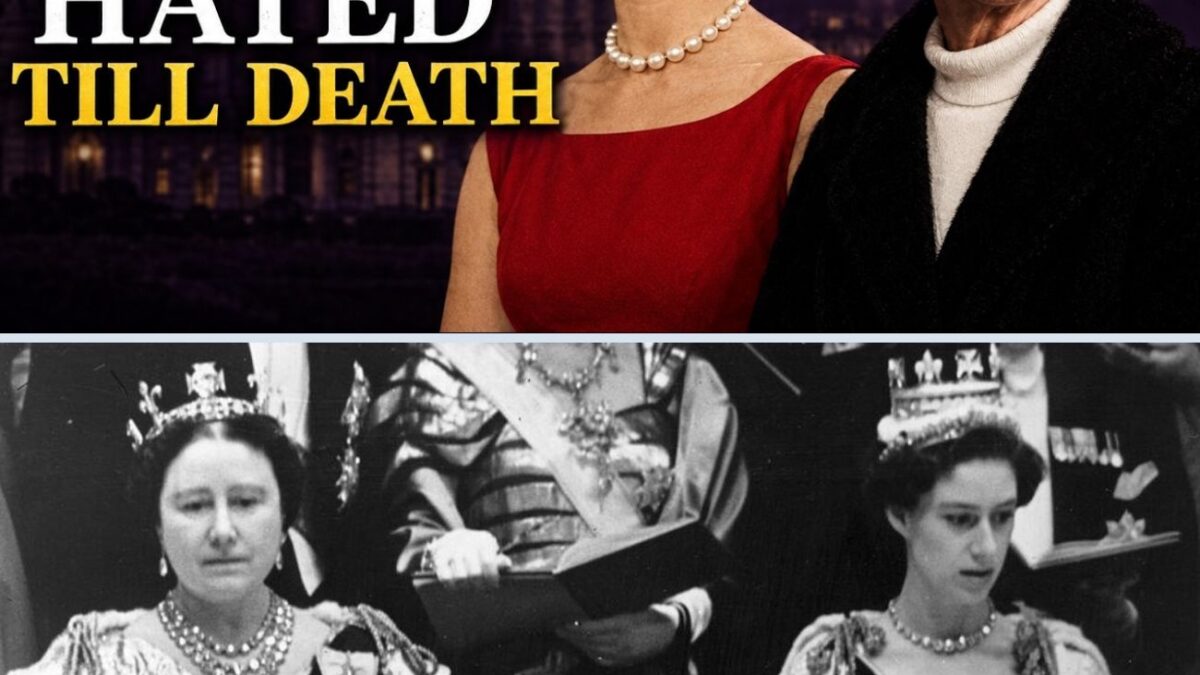
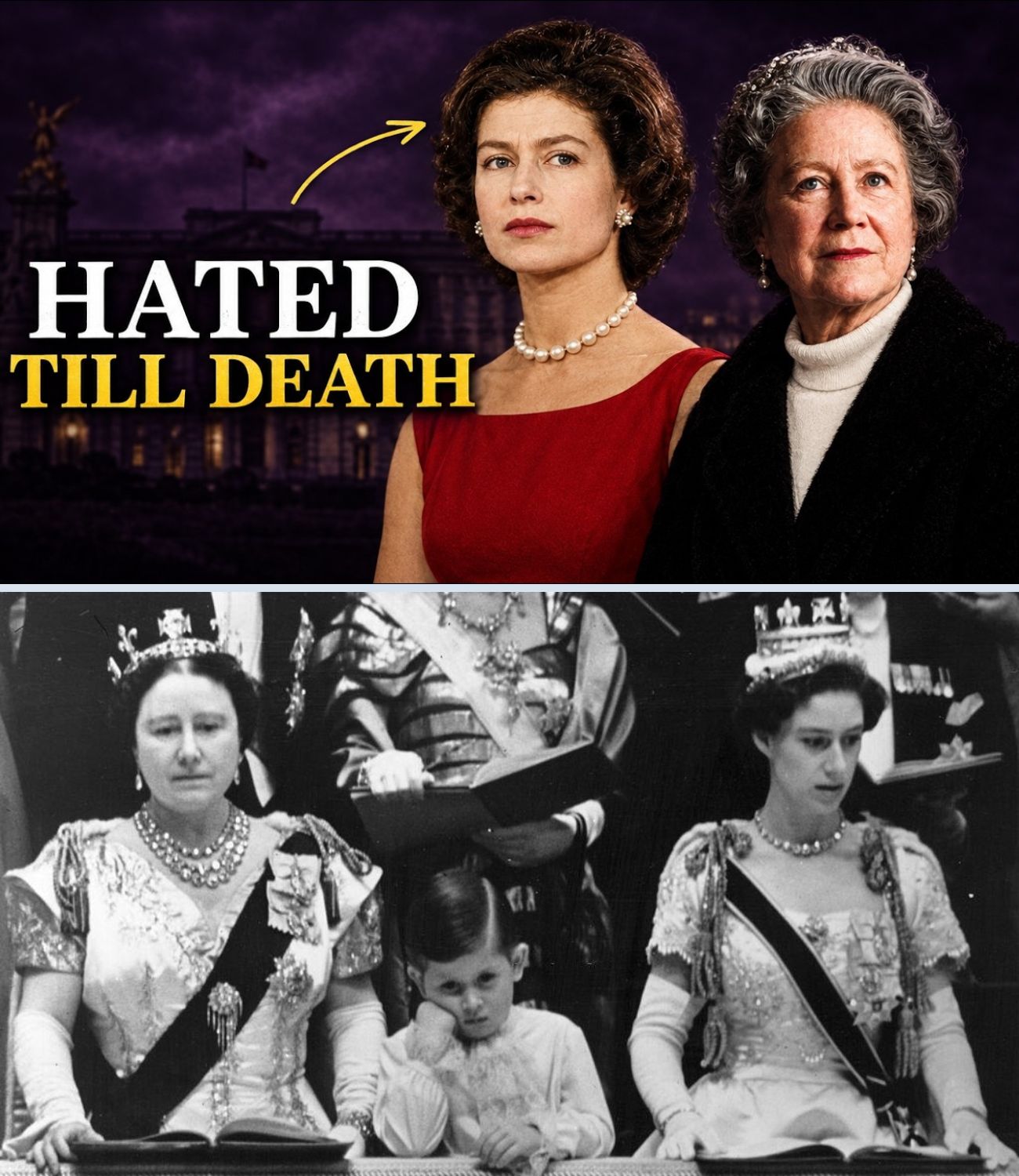
Two women in the same family signed their letters the same way: “Elizabeth R.” One was 25, and she had just become queen. The other was 51, had been queen for 15 years and refused to stop. She renounced the title of Queen Mother. She kept her signature. Then, a few months after her husband’s death, she left London and bought an austere castle on the north coast of Scotland.
While her daughter moved into the palace she had just vacated, Britain adored her. Her daughter’s account at Coutts eventually covered her debts. Why did the mother refuse to retreat into the shadows? The answer begins in 1936. But let’s start with the morning it happened, because everything in this story hinges on one administrative fact that most people never think about.
On February 6, 1952, George VI was found dead at Sandringham. He was 56. His eldest daughter was in Kenya, in a place called Treetops—a house built in a fig tree above a watering hole—and she had become queen sometime in those hours before anyone could tell her the news. Her husband told her. She returned home in a black dress, which she had packed in her luggage just in case, as royal delegations always took mourning clothes, and walked down the plane’s steps at London airport to a bench of men in top hats, including Churchill. This is an image that everyone knows.
Here’s the part that matters to this story. The woman waiting for her at Sandringham was Queen of England yesterday, not just a consort in the background, but Queen. For 15 years, she was the most photographed woman in the Commonwealth. She had her own court, a personal secretary, a schedule of events, primacy over all the women in the country, and a public identity so powerful that Hitler is said to have called her the most dangerous woman in Europe—a phrase that is constantly repeated but whose source is almost never given. And then, in one hour, her own child became higher than her in status.
There is no ceremony for this. There is no transfer of title, no renunciation, no documents. The mechanism is silent and complete. The moment her husband stopped breathing, her daughter received everything she had, plus the crown itself, leaving her with nothing but whatever the new government decided to give her. Her income now depended on payments from the civil list, which Parliament was to agree on on the occasion of her daughter’s accession to the throne. Her home was no longer her own. Its staff worked at the will of the monarch. And when these two women were in the same room in public, the older one had to curtsy to the younger one.
She did. Witnesses over the following decades described how she did it at Ascot, at services, at family events. A small, quick, perfectly executed curtsy from mother to daughter. She never seemed to resist it. She was a stickler for form. The uniform was one of the few things she still had control over. And here’s why she resisted, so let’s name it.
By custom, the widow of a king becomes a queen dowager. That is what Queen Mary had been since 1936, and Queen Alexandra before her. “Widow” is a technical term. It’s also a word that drives a woman into a wing of a house with beautiful china and poor lighting. According to her official biographer, William Shawcross, who had full access to her papers, she could not stand it. She was 51 years old. Her mother-in-law was still alive and still held the status of queen dowager.
And there was a second problem, more acute. Her daughter was now Queen Elizabeth. Two Queen Elizabeths in the same family. One of them is ruling, the other is not. Both are named Elizabeth. The solution was a phrase that had almost never existed before: “Queen Elizabeth, the Queen Mother.” That sounds like modesty. See what it actually does. This preserves the word “queen” twice. This leaves her personal name with the title, which widows are deprived of. And it defines her through that one bond that is higher than the crown itself. She wasn’t just a former queen. She was the mother of the current queen. She turned a demotion into a permanent claim to the legitimacy of the throne itself.
And then there is the signature. She continued to sign as “Elizabeth R.” Her daughter signed herself “Elizabeth R.” For the next 50 years, courtiers, private secretaries, ministers, and museum archivists dealt with a family where two different women signed themselves with the same two words. And you could tell who was who by the handwriting and the notepaper.
Her first public act as a widow was not an announcement of her retirement. On February 18, 12 days after her husband’s death, she released a message thanking the country for its condolences. Language is a clue. She wrote that her husband’s entire life was dedicated to service. And then, towards the end, here it is. Her only wish now was to be allowed to continue the work they were trying to do together. Read this like a job application and it will all become quite clear. The widow of the consort has no functions. She had just announced before the coronation, before the civil list debate, before anyone had decided what to do with her, that she intended to continue her public work on the same stage, in front of the same cameras. No one asked her to do it, and then she disappeared.
This is the part of the story that is glossed over in eulogies, even though it is the most telling in the entire first year. In the spring and summer of 1952, when her daughter was settled in Buckingham Palace and the coronation was already being planned, the Queen Mother traveled to Scotland and stayed there. She was staying at Birkhall, on the Balmoral estate, the home she and her husband had used before their abdication. She saw almost no one, except for a narrow circle of people. According to all accounts, including official ones, she was sincerely sad. She lost the man she loved, and at the same time, the entire reason for her existence in public life. These are not contradictory explanations. It’s the same wound.
While there, she stayed with old friends, Commander Clare Viner and his wife Lady Doris, at their home on Dunnet Head, the northernmost point of mainland Britain, a place where the weather comes from the Pentland Firth and the trees seem to give way. During a trip along that coast, she saw an abandoned 16th-century castle called Barrogill. Parts of it did not have a proper roof, there was no electricity, and sheep grazed on the territory. They were going to disassemble it into its materials. She bought it.
Think about time, not romance. Her daughter had just become queen. A house in Buckingham Palace is being rebuilt around a 25-year-old woman and her husband. Parliament determines the amount of widow’s maintenance allowance. And the widow’s answer was to buy ruins in the very north of the country, 600 miles from London, with her own money, restore them in three years, and rename them Castle of Mey, the only property she had ever owned personally. This was the first independent territory in her life. She was 52 years old and had never owned her own home.
The standard version of what got her back on track is Churchill. He came north in 1952, met her and insisted that she stay out of public life—a scene that appears in almost every version of her story, sometimes at Balmoral, sometimes elsewhere, with varying degrees of certainty. Biographers differ in their assessment of how decisive this was. Hugh Vickers, working outside the palace, sees the recovery as slower and deeper than the anecdote suggests. What is not controversial is the result. By 1953, she was back and never stopped again. She took on patronages, tours, grand openings, regiments, racehorses. 50 years in a row.
So, here’s the first real question, and it’s not psychological at all. Every other royal widow in modern British history has faded into the shadows. Queen Alexandra disappeared from sight. Queen Mary maintained a stern, obligatory, consciously secondary profile until the end of her life and died a year after her son. The Queen Mother did the opposite. She built a second court with its own house, its own staff, its own style, and a huge following, and ruled it in parallel with her daughter’s monarchy until 2002.
Why did a woman who had just lost her seniority refuse the exit offered to her? Because she wasn’t given a choice about all of this from the very beginning. And the last time power fell into her hands without her consent, it cost her husband his life. This is her belief, expressed more than once. And this is the key to all their relationships.
Which brings us back to 1936, to a young woman who said “no” twice. Elizabeth Bowes-Lyon was not of royal blood. She was the daughter of a Scottish earl, raised in Glamis and St. Paul’s Walden Bury in a large, loud, loving family that gave her a major asset that she used throughout her life. She got along great with people. Magic as a working tool. She could make it seem like the room was waiting for her. In his teens, Glamis became a hospital for wounded soldiers. And she spent the war years handing out cigarettes and writing letters home for men who couldn’t hold a pen. Her brother Fergus was killed near Loos in 1915. She understood early on what public pleasure looked like and how to display it without giving away the game.
Every man in London wanted to marry her. One of them was Prince Albert, the king’s second son, a shy, tense, physically weak young man with such a severe stutter that public speaking was torture for him. He proposed in 1921. She refused him. He proposed again in 1922. She refused him again. He proposed a third time in January 1923, she accepted, and they were married on April 26 of that year at Westminster Abbey.
The reason for these failures is the foundation of everything that happened later. The most quoted explanation comes from Maybelle, Countess of Airlie, a friend of Queen Mary, who later wrote that the young Elizabeth feared never, ever again having the freedom to think, speak, or act as she truly saw fit. These are memoirs, late memories, seen through the prism of an interested witness, so they shouldn’t be taken too seriously. But this is consistent with what her letters from the time show: hesitation, reluctance, a sober understanding of what joining this family will cost. She was not afraid of Albert. She feared the institution behind it, and then found a compromise.
Albert was a “spare.” His older brother, David, Prince of Wales, was the most popular young man in the world, a future king who would certainly marry and have children to inherit the throne. Marriage to the second son meant a title, her own home, money, status, a good husband who adored her, and no throne. Proximity to the crown without the burden of the crown itself. It was a deal she agreed to. A minor royal marriage. The Duchess of York, country houses, hunting, two daughters—life away from the big car. She kept this agreement for 13 years.
Then, on December 11, 1936, her brother-in-law went on the radio and gave everything to her husband. He did not hand over power. He just walked away. And this is not the same thing at all. And this difference is the source of resentment that has lasted for 65 years. Edward VIII was king for less than 11 months. He wanted to marry Wallis Simpson, an American woman who had two ex-husbands, and the government said he could not do so while retaining the throne.
On December 10, he signed the act of abdication at Fort Belvedere in the presence of three of his brothers. Albert was one of them. The next evening, Edward addressed the nation, telling of the woman he loved, and sailed for France. The next morning, Albert became king. He took the name George VI to signify his succession to his father, as succession was the main purpose of the act. His wife became queen consort. Their eldest daughter became heir to the throne.
A famous account of the new king’s reaction comes from Lord Mountbatten, who claimed that Albert told him that he had never seen state papers and was completely unprepared. Mountbatten was not an impartial narrator of royal history. He told many stories where he acted as a trusted assistant, so these words should be considered plausible testimony, not literal fact. The situation in general is not in doubt. Edward kept his brother out of the way. Albert inherited a position for which he was not prepared, having a speech impediment, in the year that Hitler militarized the Rhineland.
What his wife thought about it, she mostly didn’t put on paper, which in itself is telling, because she wrote constantly. She was in bed with the flu during part of the abdication crisis. In the letters that survive from those weeks, she is measured, practical, and focused on her husband. Resentment is revealed later, and it manifests itself in actions, not in confessions. She never forgave the Duke of Windsor. Not in the style of Christmas images. And in a structural, decades-long and administratively entrenched way.
Within months of the abdication, the new king’s court determined that the duke’s wife would not be given the title of “Her Royal Highness.” Letters patent in May 1937 restored the Duke to the status of Royal Highness, but expressly forbade it for his wife and any children. Wallis was the Duchess of Windsor, to whom no one curtsied. The Duke tried for years to change this, but he never succeeded. The question of who was behind this decision is still being debated. The King’s private secretary, Alec Hardinge, and Prime Minister Neville Chamberlain were involved, and the constitutional justification was so weak that several biographers have concluded that the Queen’s own insistence was a significant factor.
Others object and point out that the king had his own reasons. This is just an interpretation, not a proven fact. But what is documented is the result. The Windsors were not allowed into England, kept away from public family events, and made financially dependent on agreed payments. Her stated reason, which she repeated privately for years, was simple and had nothing to do with snobbery. She believed that the renunciation had undermined her husband’s health. She believed that the stress of a job he didn’t have to do shortened his life. When he died at age 56 from coronary thrombosis after lung surgery for cancer, about which he had apparently not been told the whole truth, this belief became something permanent.
Remember this, because it explains what seemed incomprehensible in 1952. She spent 13 years watching what happens to a person who is given a crown she didn’t ask for. Then her daughter got it at 25, and her mother’s reaction was not to retire to the widow’s wing of the palace. She remained on stage, continuing to do the part of the job that had nothing to do with government papers: the crowds, the heat, the performances, as if she still had some of that to carry with her.
By then she had 15 years of practice, and this practice had made her the most effective royal performer in the country. It was during the war that she gained this asset—not the throne, but the people’s love. And it’s worth understanding exactly how it was done, because it was done intentionally by a woman with a wonderful instinct for what a photograph means.
In September 1939, when London was emptied of children due to the evacuation, pressure was on to send the princesses to Canada. She refused. The phrase attributed to her, and quoted everywhere since, is that the children won’t leave without her. She will not leave without the king, and the king will never leave. This wording appears in later accounts, not contemporary documents, so take these words as legend, not as confirmed fact. But the decision itself was real. Elizabeth and Margaret spent most of the war at Windsor Castle, which was close to the bombing sites, lived in a blackout regime, and was about 20 miles from the burning city.
Buckingham Palace has been attacked repeatedly. On September 13, 1940, a bomber flew over the Mall in broad daylight and dropped a series of bombs into the courtyard while the King and Queen were in a small room upstairs. The windows were broken. Two bombs did not explode. A worker in the chapel area was killed in another raid. Three days before, or in the days that followed, depending on which version to believe, she had said a phrase that explained her visits to the bombed East End—she remarked that she was glad they had been bombed. Now she could look the people of the East End in the eye.
This phrase was doing several things at once, and she knew it. It turns privilege into shared risk. She puts the monarchy on the same list of targets as Stepney and Poplar. And these words were spoken by a woman who, in the middle of a city that lived by rations, considered it her duty to visit the ruins in soft colors and beautiful clothes, based on the theory—she declared—that people would dress better to meet her, so she dressed for them.
It worked. The King and Queen walked again and again through the ruined streets of the East End, Coventry, Sheffield. Something went wrong. There is a documented instance of her being booed in the East End even before the palace was bombed, a detail usually omitted in eulogies. After the palace was bombed, attitudes changed. Look who’s in those photos. There were two of them: her husband, tense and fragile, who did things that were not his nature, and she, who did things that came to her as easily as breathing.
The heiress to the throne in Windsor, at the age of 14, studied by correspondence and in October 1940 broadcast one careful message to evacuated children. The public warmth of the British monarchy as it still exists today—walking among the people, visiting disaster sites, the idea of family showing up where a city has been damaged—was largely invented in those five years by a woman who remained alive in the 21st century. This is her creation. It’s the only thing she created that the crown couldn’t take away from her because favoritism is not constitutional. It cannot be transferred with the death of the king.
And in 1945, it was not obvious that her daughter would be able to do the same. Elizabeth was reserved. She was conscientious, obedient, extremely attentive to detail, and noticeably embarrassed by publicity. Contemporary reports of her first public appearances note this awkwardness. This is visible in the newsreel footage. Her mother had an ease with strangers that her daughter never acquired and, as the records show, never tried to acquire. They were not both versions of the same woman. One was a natural sorceress who worked on duty. The other was a natural doer of duties who never mastered charm. This difference became the driving force for the next 50 years and began to manifest itself even before the old king died.
In 1947, the heiress married Philip of Greece and Denmark, and her mother’s attitude towards him is one of the real sources of conflict in this story. The standard version says that the queen was hostile. Philip was penniless, a foreigner, straightforward, with a mother who became a nun and sisters who married German nobles with Nazi connections. His German relatives were not invited to the wedding. The claim that the Queen privately called him “Hun” has circulated for decades. This appears in secondary evidence and gossip rather than in documents, and the authorized biography of Shawcross, which contained her letters, significantly downplays this resistance, claiming that she changed her mind and treated him better than the legend suggests. Vickers occupies an intermediate position.
There is no contemporary letter in which she attacks him in such terms, and there is correspondence in which she speaks of him quite kindly. What can be said without exaggeration is that the network of courtiers around the king, the men who had served during the abdication and the war, viewed Mountbatten’s ambitions for his nephew with suspicion. Mountbatten was a self-promoter with a clear interest in promoting his family. The king did not want to lose his daughter prematurely and made the couple wait. And the queen was not the driving force behind this marriage. It was her daughter who, sometime in the mid-1940s, decided she wanted Philip and allowed herself to be denied.
And then came the illness, and with it the last period of the mother’s true institutional power. The king’s health deteriorated throughout 1948 and 1949. Atherosclerosis of the legs, lumbar sympathectomy in March 1949, planned tour of Australia and New Zealand canceled. In September 1951, surgeons removed his left lung. The word “cancer” appears in medical records and in the stories of people around him. Public bulletins only talked about structural changes in the lungs. Whether this was spoken directly to the king himself remains a matter of debate. According to some reports, he was not told, and his wife knew but kept quiet.
If this is true, and this message is entirely plausible, then it clearly indicates her place in this system. She was within the circle of informed persons, outside of which the king himself remained. For two and a half years, she managed the conditions surrounding the dying monarch: who saw him, what he was told, and how this performance was maintained. Her daughter and son-in-law were sent on foreign tours that he could no longer afford. Nations announced that he was recovering.
On January 31, 1952, he arrived at London Airport to escort Elizabeth and Philip on a tour of the Commonwealth that he was to undertake himself. A photo has survived on the runway: he is hatless, the wind in his hair, extremely thin. He died 6 days later. His wife was the most informed person in the room during the latter phase of his reign. She had proximity, access, control over the flow of information, and all of that evaporated on February 6th, because none of it ever belonged to her. It belonged to him, and she was only acting on his behalf.
Now a 25-year-old woman with her own husband, her own personal secretaries, and no need for maternal guidance, became the monarch, so within weeks of the funeral the two courts began a war over the surname. Philip wanted his children to bear his last name. He took the surname Mountbatten in 1947, when he became a British subject; it was an Anglicized version of the Battenbergs, adopted by his mother’s family during World War I. On his wedding day, he was Lieutenant Philip Mountbatten. When his wife became queen, the question of the name of the royal house arose, and the answer was ambiguous.
A woman usually took her husband’s surname upon marriage. The House of Windsor was created by George V in 1917, meaning he was only 35 years old. A made-up name, not an ancient one. Uncle Dickie Mountbatten made a mistake by saying something he should have kept quiet about. At Broadlands in February 1952, he reportedly told guests that the House of Mountbatten now ruled. This remark reached Queen Mary, who was 84 years old, was the daughter-in-law of Queen Victoria, and considered the Windsor surname a personal legacy of her husband.
What happened next happened quickly, and it was done by two women who no longer had any constitutional status. Queen Mary contacted Jock Colville, Churchill’s private secretary, and the message reached the Prime Minister. The Queen Mother’s gaze was directed in the same direction. The Bowes-Lyon family and the old courtiers around the late king were unanimously against the Mountbatten seizure of power. Churchill brought the matter to the attention of the Cabinet. On April 9, 1952, the new Queen issued a declaration confirming that she and her descendants would belong to the House and Family of Windsor.
Philip’s recorded reaction, quoted by numerous biographers, is one of the most bitter phrases ever attributed to a royal consort: “that he was the only man in the country who was not allowed to give his last name to his own children.” They also say that he called himself a “damn amoeba.” Let’s put aside personalities and look at mechanisms. Two months into her reign, the new queen was pressured by her grandmother and mother, through the prime minister, into making a decision that went against her husband’s views on his own identity. She signed it. She was 25, had been a widow’s daughter for four months, and had not yet been crowned. The previous generation had just won a constitutional battle in her marriage.
And this has not yet been finally resolved. In 1960, after the death of Queen Mary and the resignation of Churchill, Elizabeth II quietly issued a new declaration. Descendants who do not have the title of Royal Highness will bear the surname Mountbatten-Windsor. She waited seven years, waited for the removal of the two people who were hindering her, and then gave her husband half of what he asked for. This is a miniature model of their relationship. Mother didn’t rule. She didn’t need it. She had a network of connections, a claim to family history, and the ability to channel private wishes through the Prime Minister.
Meanwhile, they were both arguing very politely about the houses. Clarence House is located next to St. James’s Palace, not far from Buckingham Palace. He was in bad shape. It took 2 years and reportedly £50,000 of public funds to make it habitable after the war. And Elizabeth and Philip moved there with their young son in 1949. This was their first real home as a couple. Charles learned to walk there. They lived there for less than 3 years.
Buckingham Palace belonged to the Queen Mother. She had lived there since 1937. Accession to the throne required an exchange, and none of the women wanted to make it. It is reported that the new queen was reluctant to leave Clarence House and even floated the idea of ruling from there. Her mother was in no hurry to leave the palace, which she had ruled for 15 years. Churchill was adamant. The monarch must live in Buckingham Palace. The move took place in May 1952. The Queen Mother moved to Clarence House in the spring of 1953, a year after her husband’s death, and lived there for 49 years. She inherited her daughter’s house. Her daughter inherited her house. Nobody chose this. Both later said they missed the place they had left behind.
Then there was the coronation on June 2, 1953, and the seating of the guests. Queen Mary died on March 24 of that year, leaving instructions that her death would not delay the ceremony. The Queen Mother was in the royal box with four-year-old Prince Charles; there is a famous photo of a boy in the foreground of a box, propping up his chin, between his grandmother and Aunt Margaret. His mother, on the other side of the abbey, is going through an hours-long anointing ceremony.
Look at this photo again, knowing what will happen in the next 40 years. The Queen Mother is an adult who accompanies the future king during the longest public day of his life. She is already in this role 5 months after losing her own. She is exactly where she will be for the rest of her life. Next to the heir, in the box, in the picture, without the crown.
The coronation was also the moment when her youngest daughter’s private life exploded. And how the Queen Mother handled it is the clearest evidence in all of history of where she saw responsibility. Princess Margaret was 22 years old. She was having an affair with Group Captain Peter Townsend, who was 16 years older, divorced, and—this is what makes the situation explosive—her subordinate. He was Master of the Stables to George VI and later Comptroller of the Queen Mother’s Household at Clarence House. He lived in her house. He worked for a widow.
On coronation day, Margaret was seen near the abbey shaking a speck of dust off Townsend’s uniform. An American reporter noticed this. The story spread around the world in a few days. The problem was the Royal Marriages Act of 1772. Until the age of 25, Margaret needed the Queen’s consent to marry. After 25, she could notify the Privy Council and wait a year, after which Parliament could object. Townsend was divorced, had two sons, was the injured party, but divorced nonetheless, and the Church of England, of which Sister Margaret [Queen Elizabeth] was the supreme governor, did not marry divorced people while the former spouse was alive.
17 years after the abdication, the royal family again faced the problem of divorce. Townsend was sent to Brussels as air attaché in July 1953. Here is a chronology of events that has always caused embarrassment. The Queen Mother and Margaret embarked on a tour of Southern Rhodesia at the end of June. Townsend was to move only after their return. He left early while they were abroad, and Margaret did not find him when she returned. It is still unknown who decided to speed up this process. The palace, the Foreign Office and Tommy Lascelles, the Queen’s private secretary, feature in various versions. Townsend’s own memoirs, published in 1978, describe this as a broken agreement.
The role of the Queen Mother—that’s the point. According to all reliable evidence, she did not engage in direct confrontation with her daughter. She didn’t forbid anything. She didn’t make a scene. She reportedly listened to the news from Townsend without raising her voice and left the room. She simply refused to take a public or family position, allowing the church apparatus, the cabinet, the secretaries and, most importantly, the queen herself to say “no.”
In October 1955, after weeks of the couple being photographed in country homes and newspapers arguing, Margaret made a statement. Mindful of the church’s teaching that Christian marriage is indissoluble, and conscious of her duty to the Commonwealth, she decided not to marry. The government has made it clear that she will lose her income, her place in line to the throne, and will likely have to live abroad.
The Queen carried this burden of guilt for 50 years. She was the one who couldn’t afford to agree. Her mother walked out of the whole thing without leaving any trace of her involvement. Remaining Margaret’s confidant and “soft spot” in the family. One daughter received a crown and accusations. The other found comfort in her mother, and the mother herself maintained the affection of both by refusing to be the one to say “no.”
This model—presence without responsibility—made the queen mother the emotional center of the family, of which her daughter was the true head. So why didn’t the Queen simply downplay her mother’s role? She was a sovereign. The court served her at her command. The money went through her. Because until the mid-1950s, the Queen Mother was the most popular member of the royal family. And eliminating it would be more expensive than condoning it.
This is not just a vague impression. This is clearly evident from the instructions she was given. In 1955, she became Chancellor of the University of London—the first woman to hold that position—and held it for 45 years. She was an honorary colonel of many regiments. She visited Rhodesia, Canada, the United States, Australia, New Zealand, and France. In 1954, she was greeted in New York by crowds that, according to reports at the time, numbered in the tens of thousands.
The palace did not remove her because it needed her. The new government was young, constrained, and just looking for its public voice. The only person in the family who could genuinely radiate warmth in front of the cameras was the widow, and she couldn’t go to sleep either—at least not really. Everything she had was tied to this role. Clarence House was the official residence belonging to the Crown. Her annuity was paid from a civil list established by Parliament and was justified by public duties.
Her staff, cars, trips, security, invitations—all of it stemmed from a role that existed only as long as she played it. A woman who stops appearing in public ceases to be a public figure, and after that she becomes simply an elderly widow in a borrowed house. She had one thing that truly belonged to her, and by 1955, it was under a roof. The same year, Castle of Mey was completed. She came there twice a year: for 3 weeks in August and for 10 days in October, and so on until the end of her life.
There were no ceremonies, no crowds or cameras. She kept Aberdeen Angus cattle and North Country Cheviot sheep. She raised her personal standard while in residence and set up an unusually tall flagpole. She grew vegetables in a walled garden on the coast, where almost nothing grows because the wall was 15 feet high. Neighbors and staff describe her as more relaxed there than anywhere else. This was the only area in Britain where she was not technically and effectively a guest of her daughter.
This order developed by the end of the 1950s and has continued to this day. The daughter had constitutional powers, prerogatives, red boxes, and the right to the final say. Mother had the love of country, the emotional center of the family, and a castle on the shores of the Pentland Firth. Neither of them could reject the other. Neither of them wanted it, and the costs of maintaining that second court were already mounting where no one outside the family could see it—in a private account at Coutts Bank in the Strand, where the overdraft would later become the subject of parliamentary curiosity and then national gossip.
Before the money came along, there were 15 years during which they actually got along, and there’s more evidence of that than there is evidence of most of their fights. From the late 1950s to the 1970s, mother-daughter relationships became quite acceptable. They saw each other constantly. The Queen came to Clarence House for dinner or drinks. It was a short walk from the palace, and it happened quite often, so the servants planned everything with that in mind.
They stayed at the same estate in Balmoral in August. The Queen is in a large house, her mother is at Birkhall, 7 miles up the River Dee. They spoke on the phone almost every day, as confirmed by numerous courtiers. And this habit persisted until the last years of the Queen Mother’s life, when she was over 100 years old.
The letters, published in 2012 in the book Counting Blessings, selected by Shawcross from the Royal Archives, show a woman writing to her daughter with genuine and effortless warmth: “Dear Lilibet,” affectionate, talkative, sometimes childishly sweet. These are also, and importantly, letters selected for publication by an authorized editor working with palace approval. So their lack of conflicts proves less than it seems at first glance.
What they do confirm is that affection was not invented later. It was real and became a habit. They had one common passion that belonged only to them—horses. The Queen Mother began steeplechase racing in 1949 with a steeplechase horse named Monawin, purchased jointly with Princess Elizabeth. Mother and daughter owned a racehorse together before either of them became a widow or queen.
Elizabeth later moved on to flat racing, where breeding was serious and the Queen’s knowledge of the pedigree was truly expert. Her mother stuck with steeplechasing, which is the riskier, rougher, and more sentimental part of the sport. And over 50 years, it has had about 500 winners. She also had the most famous losing horse in British racing history. In the 1956 Grand National, her horse Devon Loch, ridden by Dick Francis, was leading by five lengths with 40 yards to go, but inexplicably fell flat on his stomach.
No one has ever been able to satisfactorily explain it. The Queen Mother’s remark, recorded at the time and repeated many times since, was that she believed that “these races are just the way they are.” At Clarence House she established a separate line to the Exchange Telegraph racing service. She watched the races after lunch. The Queen was watching too, in her own house, half a mile away. For decades, it was the safest topic in the family, a shared enthusiasm that had nothing to do with status, and where the older woman’s expertise was genuine, not ceremonial.
The sixties gave them even more of that. The Queen gave birth to two more children: Andrew in 1960 and Edward in 1964, and the Queen Mother was an integral part of their lives. Margaret married Anthony Armstrong-Jones in 1960, which at the time seemed like a solution to the Townsend disaster. Those were good years. Photographs from the period from Balmoral and Sandringham show a family who were noticeably close.
So the picture is not that the two women were at war. The picture is that two women sincerely loved each other, communicated daily, and managed two separate centers of royal influence, one of which was steadily going bankrupt. The debate over the Civil List is where the issues come out in public.
By agreement in 1952, the Queen Mother’s annuity was set at £70,000. This amount was repeatedly revised upwards due to inflation and the expansion of its activities, reaching £95,000 in 1972. This was followed by a series of increases throughout the 1970s and 1980s, reaching £643,000 by the early 1990s. These are public funds. They financed her official duties and her home.
The house was huge. The staff at Clarence House numbered between 50 and 80, depending on the count and the year—all for one elderly woman. There were pages, footmen, a butler, valets, chauffeurs, two cooks, a florist, and a whole ceremonial structure of ladies-in-waiting, ladies of the bedchamber, a treasurer, a private secretary, and a lord chamberlain of her own court.
She maintained four residences: Clarence House, The Royal Home in Windsor Park, Birkhall and Mey. She hosted guests according to 1937 standards, which she never lowered. She also had her own structured and well-known drinking style. Gin and Dubonnet before dinner, wine during it, a dry martini in the evening—the drinks tray at Clarence House was not cheap.
And also racing. Owning steeplechasing horses on this scale, with entire stables trained at multiple venues over five decades, is a constant annual expenditure of large sums of money without any hope of profit. Obstacle races don’t pay off. None of this was funded by the Civil List, which only covered official duties. This was privately funded.
And private funding came through an overdraft at Coutts & Co, the Crown bank on the Strand, where the Queen Mother’s account had been in the red for years. The figure that entered public circulation was 4 million pounds. It appeared in British newspapers in the 1990s and early 2000s, was repeated everywhere, but was never confirmed by the palace or Coutts. This is a reported figure, not a documented one.
What is undeniable is that she constantly and significantly exceeded the limit on the account, the bank covered it, and the issue was resolved through family finances, not through public reporting. When she died, reports at the time indicated that the overdraft had been repaid from the Queen’s inheritance and her own resources, which raises the most inconvenient fact in this relationship, and it took time to realize it.
A woman who was deposed by her own daughter in 1952, who renounced the title as a dowager, who retained the right to sign, who built a court that rivaled the royal one and had greater public support, was financially dependent on this daughter. And not in a symbolic sense. And the fact that her lifestyle had a structural deficit, and the person who covered this deficit was someone who was higher than her in the hierarchy.
The mother had affection, the daughter had money, and affection was expensive. In the 1990s, this asymmetry became impossible to ignore. In 1992, a fire broke out at Windsor Castle. The government initially proposed funding the recovery with taxpayers’ money, and the public reaction was furious. 1992 was the year of Andrew and Sarah’s divorce, Anne’s divorce, Charles and Diana’s divorce, and the Queen herself gave a speech calling it an “annus horribilis.”
In November, a few days after the fire, the Prime Minister announced that the Queen would start paying income tax on her private income and that only the Queen, the Duke of Edinburgh and the Queen Mother would receive money from the Civil List. Other members of the royal family who performed duties were to be privately funded by the Queen.
So in the midst of the worst year in the monarchy’s modern history, the agreement specifically protected the Queen Mother’s income, while the sovereign herself took on a tax burden she had never had before. She was 92 years old. She never paid income tax. Her daughter has been doing this since 1993. The same 1993 memorandum of understanding contained a provision that is of immense importance in completing this story.
Inheritance from sovereign to sovereign was exempt from inheritance tax. The rationale was that the monarchy should not lose assets in every generation. The practical effect was that when the Queen Mother died, everything she left to the Queen passed without the 40% tax levy. Her daughter financed her for decades. Her daughter eventually inherited everything without paying taxes.
And this arrangement meant that the parallel court, which competed with the palace for the country’s sympathy, was all the while financed by the very institution it was overshadowing. Here is the paradox: not hatred, but dependence, directed in the opposite direction from affection. Now look what she did with this position, because it was here that the supposedly ostracized widow turned out to be a player who played a much longer game than anyone could have guessed.
She took over the airwaves. Prince Charles’ closeness to his grandmother is as thoroughly documented as anything else in this story, mainly because he himself has spoken about it publicly on numerous occasions. He called her an amazing example of fun, laughter, and warmth. Jonathan Dimbleby’s 1994 biography, written with Charles’s assistance and access to his letters and diaries, clearly describes the contrast the prince saw between his grandmother’s home and his parents’ home.
In the Royal Lodge and Birkhall he found indulgence, conversation, music, support. He constantly wrote letters to her. She encouraged hobbies that his father considered “soft”: art, architecture, gardens, opera. When Charles was unhappy at Gordonstoun, Philip’s chosen school, it was to his grandmother that he complained in his letters.
Dimbleby’s account of the period is one of the sharpest ever published by an authorised royal biographer about a royal superior, and the Queen Mother acts as a counterweight. She also, according to several accounts, encouraged his relationship with Camilla Shand in the early 1970s. Camilla’s grandmother, Sonia Keppel, was the daughter of Alice Keppel, mistress of Edward VII, and these families moved in the same circles.
The extent of her matchmaking is a matter of debate and prone to exaggeration. But what is undeniable is that Charles used her homes as a refuge from his own family for 50 years. This is a second legacy that exists in parallel with the constitutional one. The Queen received the throne. Her mother received the emotional devotion of the heir.
And she also got territory. She occupied the Royal Box at Windsor from 1952 until her death. She and the King had owned it since 1931, and she simply never gave it up. She held Birkhall in the possession of Balmoral. She had full ownership of Mey. Four homes, three of which were outside her daughter’s daily orbit, and all of which were run by her own staff on her own terms.
Then there was silence. She has never given an interview, not one in her century of life. Through the abdication, the war, Townsend, the 1969 television documentary, the Diana years, the 1992 disaster, the Panorama interview, the divorces—she never commented, explained, denied, wrote a memoir, or authorized friendly publications during her lifetime.
Everyone else was talking. Charles collaborated with Dimbleby. Diana collaborated with Andrew Morton and later appeared on the BBC. Sarah Ferguson was published. Townsend was published. The staff was published. Her daughter-in-law’s family spoke. She remained silent for 70 years and emerged from each crisis with her reputation not just intact, but significantly higher.
According to polls in the 1990s, her popularity among the people consistently exceeded that of her daughter. An elderly woman who had done nothing publicly controversial since 1936 headed a family that was vilified in the tabloids every week. Silence, it turned out, was a strategy, and she was the only one in the family disciplined enough to stick to it.
By the end of the 1990s, the balance of power in these relations had changed dramatically. The Queen presided over a discredited institution: paying taxes, opening Buckingham Palace to visitors to pay for the renovation of Windsor, and listening to her family’s demise. Her mother was 97, had an overdraft at Coutts, still curtsied to her daughter at Ascot, and was more loved than ever.
Then, in just 7 weeks in 2002, this whole arrangement ended. Margaret went first. She had been sick for years. Lung surgery in 1985, a series of strokes since 1998, burns to her legs on Mustique in 1999, after which she could barely move. In her last public appearances, she was in a wheelchair, wearing dark glasses, and with her left arm in a sling.
Her mother, 29 years older, was also at those events and stood. Princess Margaret died on February 9, 2002, at the age of 71. Her mother was 101 years old and had broken her arm in a fall at Sandringham 6 weeks earlier. She came to the funeral. It took place at St. George’s Chapel in Windsor, on February 15, 50 years and 9 days after her husband was buried in the same building.
She was flown from Sandringham by helicopter as the Queen and Prince Charles had asked her not to travel by car. She arrived in a wheelchair and then stood up and entered on her own. It was the last significant thing she did in public. And that says a lot about which instinct she had the strongest. A 101-year-old woman who buried her 51-year-old husband insisted on being seen at the funeral of her 71-year-old daughter.
Not for the sake of the crowd, but for the sake of following the rules. She died in the Royal Lodge on 30 March 2002, 7 weeks after Margaret, at the age of 101. The Queen was by her side. Charles was in Klosters and flew home. As he himself later admitted, his grandmother’s death saddened him more than anything else in his life.
Then the country did something the palace did not expect. Initial press coverage was cautious. Some observers, remembering the reserved mood of the public during other recent royal events, suggested that Britain had changed and people would not come. The BBC was criticized for its chosen tone. Peter Sissons was wearing a burgundy tie, not a black one, and that complaint in itself became news.
Small crowds were predicted. Instead, around 200,000 people lined up at Westminster Hall to say goodbye to the coffin, with queues stretching along the embankment for hours. The farewell to the deceased was continued. On April 9, about a million people lined the route to Westminster Abbey. On top of the coffin, on a wreath, lay a handwritten card.
It read: “With love and remembrance, Lilibet.” Not Elizabeth II (Elizabeth R), not from the Queen. The childhood name her mother used in every letter for 75 years, “Dear Lilibet,” was used publicly only once—on the day of her funeral. See what this card means. For half a century, the country watched two women who signed themselves identically, and could only be distinguished by which one of them wore the crown.
At the coffin, the reigning queen abandoned her own signature and replaced it with the name her mother had given her. This is the only moment in all 50 years when the daughter publicly emphasized relationships rather than status. And this happened when the other Elizabeth was no longer there. Everything that happened after that was about who would get what.
The will was the first question. It was filed in court and then, in accordance with the practice that was in place for royal wills for most of the 20th century, sealed. The value of the inheritance was not disclosed. No lists of bequeathed property. No public records. This seal became the subject of a legal dispute, thanks to which the public learned at least something.
In 2002, a man named Robert Brown, claiming without any corroborating evidence that he was the illegitimate son of Princess Margaret, filed a lawsuit to declassify the wills of Margaret and the Queen Mother. The application was rejected. During the hearing of the case, which lasted until 2008, the head of the Family Law Division, Sir Mark Potter, gave a ruling explaining the mechanism by which royal wills are sealed upon the submission of the monarch’s legal representatives.
Applications are considered in private, and the head of the Family Law Department keeps them in a safe. The decision also revealed that the hearings were held in private and that this practice would continue. So, the content remains unknown. What is known from the reports at the time and the structure of the 1993 agreement is where the bulk of the inheritance went.
The Queen Mother’s estate, estimated by press reports to be worth around £50 million—mostly in the form of works of art, Fabergé, jewellery, racehorses and the contents of four houses—passed to the Queen. According to a memorandum of understanding signed in 1993, inheritances passed from monarch to monarch are exempt from inheritance tax.
The Queen Mother was never a sovereign in her own right, but the arrangement was interpreted as covering this transition, and the property passed to her daughter without the 40% tax that would have applied to anyone else in Britain. The overdraft was repaid with these funds. Think about this sequence for a moment.
A woman who in 1952 gave way to her daughter, who renounced her title as a dowager, who created a rival court and overshadowed the palace for half a century, was financed by that daughter for decades, and then left her everything tax-free under a rule her daughter’s government had written 9 years earlier. Castle of Mey took a different path, and it was intentional.
In 1996, she donated the Castle of Mey and its grounds to a charitable foundation—the Queen Elizabeth Castle of Mey Trust—under the patronage of Prince Charles. The only property she owned personally, the only land in Britain that had never belonged to her daughter, she took out of the ordinary family inheritance and handed it over to her grandson, for whom it was a refuge.
It opened to visitors in 2002, the year of her death. Charles stayed there every summer, usually for about 10 days at the end of July, in the rooms she used. The ruin she had bought in her worst year became the only part of her fortune whose fate she had decided for herself. Then came the story itself, and it was here that the 50-year rivalry was finally resolved in favor of the daughter, completely, and in a way that seems generous until you delve into the details.
In 2003, the Queen appointed William Shawcross as her mother’s official biographer. He gained access to the royal archives at Windsor, to the private papers of the Queen Mother, and to family correspondence that no outside historian had ever seen. The book was published in 2009 and is over a thousand pages long. In 2012, he published a selection of her letters.
This is a wonderful archival work, but at the same time it is authorized. Shawcross spoke frankly about the conditions. He had exclusive access, and the family read the manuscript. The book is warm. She downplays her hostility towards Philip. She presents the controversy surrounding the Windsors as the King’s decision, not hers.
She presents her departure from the business in 1952 as grief, not resistance. As for the most pressing questions: what she really thought about her lower rank, what she said about her son-in-law, what the financial arrangements between mother and daughter really were—the book is either silent or reassuring. Hugh Vickers, who published his own biography in 2005 without palace approval, reaches many of the same, and sometimes different, conclusions.
Historians have been arguing about this gap ever since. But there is only one archive, and access to it is through the Royal Collection and the Royal Archives, that is, through the monarch. So, the papers went to my daughter. The estate went to the daughter. The selection of what the public would read went through a person appointed by the daughter.
The will was classified at the request of the daughter’s lawyers, and the judge hid it in a safe. The woman who was the more beloved of the two for 50 years lost control of her own story within 18 months of her death. And she arranged it all that way herself, or at least agreed to it, because there was never any other alternative.
That’s the thing about the position she refused to leave in 1952. Everything that made her powerful—affection, houses, economy, silence—was borrowed from the institution her daughter embodied. Affection is not ownership. It cannot be bequeathed. The only asset she had created from nothing—the popular love she had invented in the East End in 1940—died with her body, and the papers went to the palace.
Which brings us back to the beginning and to what that signature actually was. Two women, both signing as Elizabeth R. For 50 years, this looked like a rejection. The widow, who did not want to become a dowager queen, clung to two words that proved: she was a queen and could not simply be written off in the archives.
This interpretation is correct as far as it is possible. And that’s why this story has a title. She really refused to go. She really kept her name. She did build a second court and ran it with a constant deficit from her daughter’s bank account. And she was, by any public measure, the more beloved of the two. But look at the two signatures side by side and notice how they differ.
“Elizabeth R.” Her daughter was a legal instrument. He created laws. He appointed bishops, dissolved parliament, gave powers to officers, and sealed wills. Elizabeth R signed her mother’s thank-you notes, horse racing entries, letters to grandchildren, and visitation lists. Identical words. One of them was changing something.
That was the whole agreement, and neither of them ever said it out loud. There was no hatred there. There is no letter, no diary entry, or evidence that either of these women expressed disdain for the other. The archive testifies to daily calls, shared horses, constant lunches, 75 years of warm correspondence, and a mother who, at 101, boarded a helicopter to bury her youngest child because it was the right thing to do.
Anyone who tries to sell you a story about feuding is selling something that is not in the archives. What is actually in the archives is much stranger and harder to look at. Two women who loved each other found themselves, without their own will, in a state of constant competition for the same limited good.
The love of a country that could only truly adore one royal at a time. The eldest earned it first among the ruins and never gave it away. The youngest had a crown, but never received warmth. And since they were mother and daughter, neither of them could say anything about it. She saw what happens when a crown falls on someone who didn’t ask for it.
She watched as it destroyed her husband for 15 years. Then it went to her daughter at 25, and the only thing she could offer was a role she was better at. She continued this for 50 years and called it service. This was service, but it also prevented the younger woman from becoming the center of attention on her own.
In 1952, she wrote that her only desire was to continue the work she and her husband had begun. Everyone took this as a manifestation of grief. Read this as a requirement, because that’s how it worked. She continued this work. She continued it until 2002. 10 years after her daughter began to publicly destroy the monarchy, she remained until the very end the Windsor that no one could attack.
The card on the coffin read “Lilibet,” then the lawyers took the will to the family affairs department, and it ended up in a safe, where it remains to this day. One Elizabeth R kept this signature for 50 years. The other kept the portrait.
You Might Also Enjoy

“We Thought They Would Negotiate”—What Argentine Soldiers Said When The British Attacked Goose Green

“You’ll Never Finish My Ruck March, Limey” — US Sergeant Who Challenged the SAS, Then Fell Out First






