Why the Royal Family HATED Princess Diana So Much
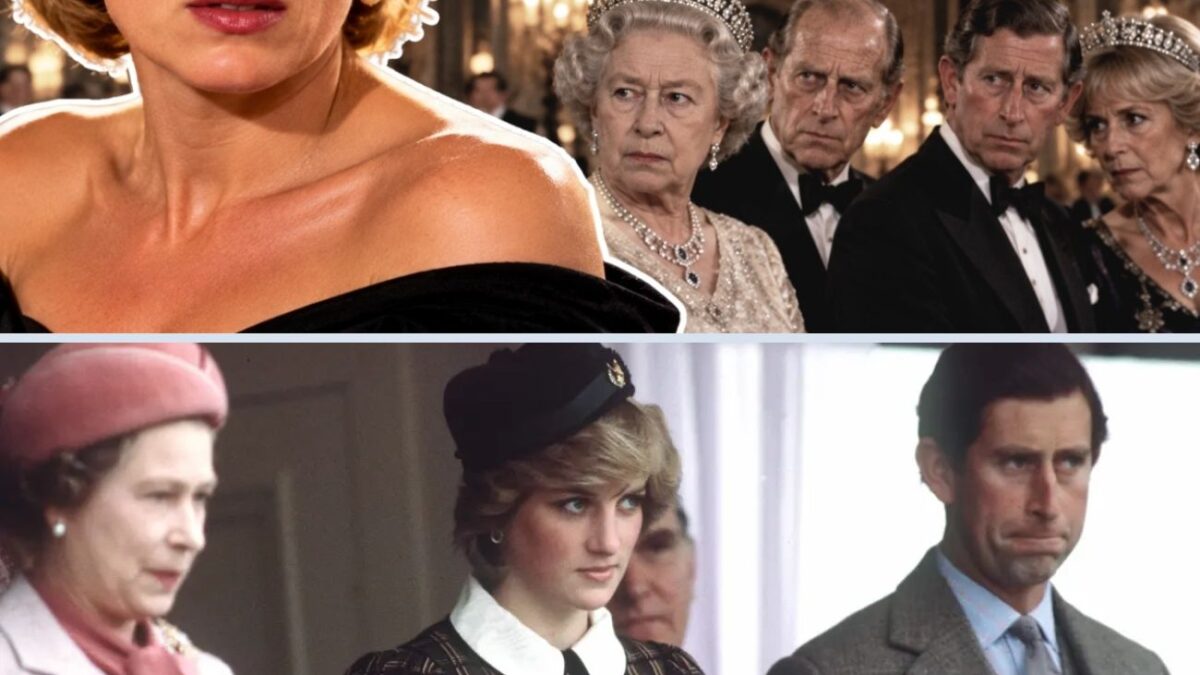
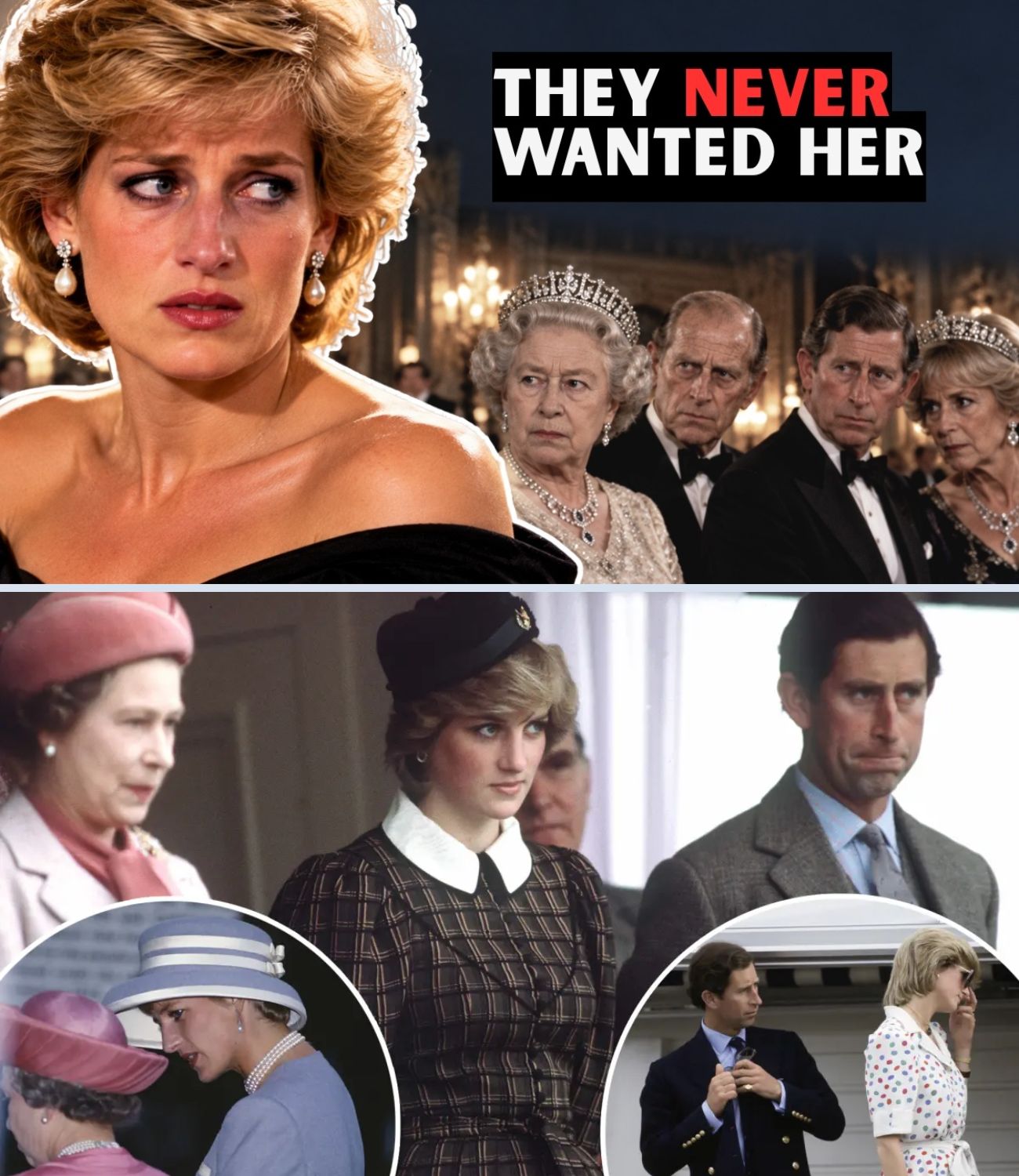
In 1991, a Greek-born London designer named Christina Stambolian created a black silk off-the-shoulder dress for Diana, Princess of Wales. Diana bought it, decided it was far too daring for a member of the royal family, and left it untouched in her Kensington Palace wardrobe for three years.
On the 29th of June, 1994, the same evening her husband confessed to adultery on national television before 14 million viewers, she finally wore it. Every newspaper front page the next morning belonged to her, not to him. That dress is now heading to a Sotheby’s auction in New York at an estimate of up to $300,000.
The woman inside it had been systematically rejected by the most famous family on Earth. This is why. The gown that turned Diana into the most photographed woman on the planet that night had been hanging inside her apartment at Kensington Palace since roughly 1991. She had originally planned to wear a Valentino design to the Vanity Fair summer dinner at the Serpentine Gallery in London’s Kensington Gardens.
But when the Valentino outfit leaked to the press days before the event, Diana changed course at the last minute. The Stambolian dress, the one she had never dared to put on because it violated every unwritten rule about how a princess was supposed to look, suddenly became the right and only choice.
Across London that same evening, her estranged husband sat inside an ITV studio opposite journalist Jonathan Dimbleby. It was a two-and-a-half-hour documentary designed to rehabilitate the public image of the Prince of Wales. When Dimbleby asked Charles whether he had been faithful and honorable during his marriage, Charles answered carefully.
“Yes,” he said, “until it became irretrievably broken down, us both having tried.”
It was a loyally meticulous admission that his wedding vows had been broken. Diana had known it was coming. She had seen the previews days in advance. So, she got dressed. The off-the-shoulder neckline bared her collarbones. The hemline stopped above the knee.
The chiffon side train added drama without adding modesty. She stepped from the car at the Serpentine Gallery and every camera in London detonated at once. Charles had spent an entire evening on television trying to control the narrative of his marriage. Diana obliterated it with a single dress she had owned for three years and never worn.
But by the time that dress existed, the damage inside the royal family had been accumulating for more than a decade. And to understand why the Windsors turned against Diana, not in one moment, but through a slow, systematic pattern of isolation, jealousy, institutional side-taking, title stripping, and public silence that escalated over 16 years, you have to go back to the beginning.
Not to the collapse, to the selection. Because the way the family chose Diana Spencer was itself the first act of destruction. In the autumn of 1980, Lady Diana Spencer was 19 years old. She worked as an assistant at a kindergarten called Young England in Pimlico, West London. She came from one of England’s most prominent aristocratic families.
The Spencers had served the crown for generations. And her father, the 8th Earl Spencer, had been an equerry to both King George VI and Queen Elizabeth II. Diana had no university degree. She had no diplomatic training. She had no political career that the palace would ever need to manage. She was young, well-bred, photogenic, and in the institutional language of the monarchy, suitable.
Prince Charles was 32, 13 years older. He had been under relentless pressure from the royal family, the press, and public expectation to find a wife and produce heirs. His most significant earlier relationship had been with Camilla Shand, who had married cavalry officer Andrew Parker Bowles in 1973. The official narrative was that the Charles-Camilla romance had ended with that marriage.
The official narrative was wrong. Charles and Diana had reportedly met only about a dozen times before their engagement was announced on the 24th of February 1981. The age gap was not the problem. The problem was that the institution had selected a bride based on suitability, bloodline, and public presentation.
And had neglected to mention that the groom had never emotionally left another woman. After the engagement was announced, Diana moved into Buckingham Palace. Charles was frequently away on royal duties or at Highgrove, the couple’s country house in Gloucestershire. The palace was vast, formal, and mostly empty of anyone near Diana’s age.
She was surrounded by household staff, footmen, dressers, private secretaries, and ladies-in-waiting, all of whom answered to the palace hierarchy, not to her. She was a teenager living inside one of the largest occupied buildings in Europe, waiting to marry a man she barely knew. And there was almost no one to talk to.
Two days after her wedding, a wedding that had not yet happened when she wrote the letter, Diana sent a handwritten note to a Buckingham Palace footman named Mark Simpson. It was dated the 31st of July, 1981.
“Dear Mark, I just wanted to thank you for all your kindness and patience you’ve showed towards me since I moved into Buckingham Palace. My stay was made so much easier by your company as it was so terribly lonely and we had so many laughs for that I can’t thank you enough.”
She asked whether he had enjoyed the wedding and whether he had liked her dress. She mentioned that she was heading to the Royal Yacht Britannia the next morning for the honeymoon.
That letter, casual, warm, and heartbreaking in what it reveals, is one of the earliest surviving pieces of documentary evidence that Diana Spencer was profoundly isolated inside the monarchy before the marriage had even legally begun. Then, in the weeks before the wedding, she found the bracelet. Diana walked into the office of Charles’s personal aide, Michael Colborne, a former naval officer who had served the prince for nearly a decade.
She spotted a small package among the wedding presents and correspondence. Over Colborne’s fierce and repeated objections, she opened it. Inside was a gold bracelet with a pendant made of blue lapis lazuli. Engraved on the pendant were two intertwined letters, G and F. Diana already knew what they meant. Friends had warned her that Charles and Camilla used secret pet names for each other, Gladys and Fred.
The bracelet had been commissioned from Asprey’s, the London jeweler, at Charles’s personal request. He gave it to Camilla in person. He delivered it two days before the wedding. He told Diana it was a farewell gift, a symbolic way of closing the chapter with Camilla before marrying. Diana did not believe him. She confronted Charles.
They quarreled. She considered calling off the entire wedding. She went to lunch with her older sisters, Sarah and Jane, and told them she could not go through with it. Their response, as journalist Andrew Morton later recorded, was devastating in its casual dismissal.
“Bad luck, Duch. Your face is on the tea towels now, so you’re too late to chicken out.”
On the night before the ceremony, according to Diana’s astrologer, Penny Thornton, who recounted the conversation in a later ITV documentary called the Diana interview, Revenge of a Princess, Charles reportedly told Diana that he did not love her.
Thornton said Diana was devastated and considered not attending the wedding at all. The next morning, on the 29th of July 1981, Charles married her in front of an estimated 750 million television viewers worldwide. The ceremony took place at St. Paul’s Cathedral, breaking the long-standing royal tradition of holding weddings at Westminster Abbey.
3,500 guests filled the pews. 600,000 people lined the streets of London to watch the procession of state carriages, foot guards, and household cavalry. The wedding dress, designed by David and Elizabeth Emanuel, was made of ivory silk taffeta with a 25-ft train and roughly 10,000 pearls. The Emanuels had secretly produced a second, less ornate, backup gown in case the original design was leaked to the press.
A level of institutional paranoia that says everything about how tightly the spectacle was controlled. Diana wore the Spencer family tiara, both old and borrowed. A small blue bow was stitched into the gown. On the Buckingham Palace balcony afterward, Charles and Diana kissed in front of the crowd. The photograph became one of the most reproduced images in modern British history.
The Queen stood beside them, watching. The monarchy had its fairy tale. The cost of the wedding was estimated at roughly $48 million, well over 100 million in today’s money, depending on the estimate. The public was delighted. The bride was 20 years old. Charles and Diana departed on a two-week honeymoon cruise aboard the Royal Yacht Britannia through the Mediterranean, followed by time at Balmoral Castle in the Scottish Highlands.
The public saw golden photographs of the couple on deck. Behind those images, the presence of Camilla Parker Bowles had already followed them aboard. Diana later described discovering personal items in Charles’s luggage that confirmed the relationship had not ended. Some accounts mention cufflinks with intertwined C’s, though the exact nature of the item had been somewhat disputed across different retellings.
What is consistent across every version Diana gave is the emotional truth. She had entered the marriage believing she was competing with a memory, and discovered she was competing with a living, active relationship that the court had quietly absorbed into its daily operations. Camilla telephoned Charles regularly.
He always took her calls in private. Camilla and her husband were included as weekend guests at Sandringham, the royal family’s country estate, even during the engagement itself. The affair was not hidden from the institution. It was managed by it. During the engagement, Diana’s health had already begun to deteriorate.
She lost roughly 20 lbs in 3 months. Her waist measurement for the wedding gown changed repeatedly, requiring constant refitting by the Emanuels. The cause was bulimia nervosa, triggered by anxiety over Camilla, isolation inside Buckingham Palace, and the overwhelming pressure of becoming the most scrutinized woman in the world at 19 years old.
The illness did not stop after the wedding. It continued throughout the marriage. Diana later spoke publicly, first through Morton’s book, and then on the Panorama interview, about postnatal depression after the births of William and Harry, and about episodes of deliberate self-harm driven by desperation, and a feeling that no one inside the palace was listening to her.
The institution did not respond to these revelations with empathy or medical support. It responded by treating them as evidence that Diana was unstable, a characterization that would later be used to justify the family taking Charles’s side in the separation. When Diana returned from the honeymoon and entered the full machinery of royal duties, the system locked around her.
She was expected to fulfill hundreds of official engagements each year, charity appearances, hospital openings, regimental visits, state dinners, foreign tours, public walkabouts. She was assigned a staff of ladies-in-waiting, private secretaries, dressers, and press officers whose loyalty ran upward through the household hierarchy to the Queen and to Charles’s own office, not to Diana.
She gave this apparatus a name. She called them the men in gray suits. Andrew Morton, in his 1992 biography, Diana: Her True Story, documented her view of the system in devastating language. She felt herself a prisoner trapped inside a bitterly unfulfilled marriage and shackled to a wholly unrealistic public image of her royal life and to an unsympathetic royal system.
She felt, she said, disempowered both as a woman and as a human being. The courtiers controlled her schedule, her wardrobe, her public statements, and her access. She believed they reported everything she did to Charles and the Queen. She called Charles’s private office the enemy because it resented the fact that she generated more newspaper coverage and more public adoration than the heir to the throne.
And the irony of that resentment was savage. Diana’s popularity on overseas royal tours was extraordinary. Crowds wanted her, not him. She was younger, warmer, more emotionally present than any senior royal in living memory. She crouched to speak to children at eye level. She shook hands without gloves. She made physical contact, touched shoulders, held hands, hugged people in ways that the royal family had never done.
The monarchy had recruited Diana Spencer specifically to modernize its image and connect with the public on a human level. She succeeded beyond anything the palace had imagined. And the institution punished her for it. The more the public adored Diana, the more Charles’s advisers and household staff resented, undermined, and briefed against her.
The woman who made the monarchy look warm was making the future king look cold by comparison. They had chosen her because she appeared controllable. She was not. And they never forgave her for it. The Camilla question never went away. It sat at the center of the marriage like a structural fault. Diana described the arrangement in her 1995 Panorama interview with a clarity that the palace could never match.
There was an unspoken understanding within the court that a royal marriage could operate as two parallel lives. One for public display, one for private truth. Separate bedrooms, separate schedules, separate travel arrangements, all managed by palace staff. The institution did not merely tolerate Charles’s continuing emotional and physical relationship with Camilla.
It incorporated the affair into its operating procedures. The expectation placed on Diana was not that Charles would stop seeing Camilla. The expectation was that Diana would remain silent about it. Her refusal to play along, her refusal to accept the two lives arrangement as normal, became, in the palace’s institutional judgment, her most unforgivable act.
By 1992, the facade had shattered. Charles and Diana announced their formal separation in December of that year. But the real war had started months earlier when Morton’s book landed like a bomb inside the institution. It contained a devastating portrait of the marriage. The Camilla affair. Diana’s bulimia.
Her isolation. The emotional neglect she suffered inside a palace full of people whose job was to serve her, but whose loyalty belonged to the system. The palace treated the book as a betrayal by an intrusive journalist. What they did not know, and would not discover until after Diana died, was that Diana was the primary source.
She had secretly recorded hours of tape-recorded answers to Morton’s questions from inside Kensington Palace itself. A trusted intermediary, widely reported to be her friend James Colthurst, smuggled the cassettes out. The book the institution denounced as a journalist’s act of treachery was in fact Diana’s own testimony covertly delivered from behind the very walls that were supposed to keep her controlled and silent.
The royal family’s response to the separation was not divided. It was unanimous. According to the royal biographer Sally Bedell Smith, the Queen sent the Archbishop of Canterbury to mediate between Charles and Diana as a last effort at reconciliation. His conclusion was damning in a single direction. He found little evidence that Diana was prepared to make the marriage work, and concluded, reportedly with some sorrow, that Charles was more sinned against than sinning.
When the Queen finally advised a formal separation, Bedell Smith recorded the institutional result. Everyone in Charles’s family took his side, including Princess Margaret, who had previously shown kindness, even tenderness to Diana. Prince Philip, Charles’s father, the Duke of Edinburgh, wrote his son a long personal letter praising what he called Charles’s saint-like fortitude.
The patriarch of the family praised the man who had entered the marriage while maintaining an active bond with another woman and who had never ended the affair. Margaret, who had been warm and even tender toward Diana, turned against her after the Queen advised the separation. The entire institution, Queen, consort, siblings, courtiers, locked into formation behind Charles.
Not because the evidence supported him, because the system demanded unity. And Diana had broken the system’s most sacred rule. She had told the truth about what happened inside it. Then came the evening of the 29th of June, 1994. The revenge dress. Charles’s televised confession, 14 million viewers hearing the future king admit that he had strayed from his marriage vows.
And Diana, at that exact hour, stepping from a car at the Serpentine Gallery in a short, off-the-shoulder, body-hugging black silk gown that she had owned for three years and never dared wear. Stambolian, the designer, later observed:
“Three years went by and she hadn’t worn it. Then I realized she’d been waiting for the right occasion.”
Diana’s former fashion stylist, Anna Harvey, recalled it simply:
“She wanted to look a million dollars and she did.”
The photographs ran on every front page in Britain and most front pages around the world. The headlines were not about Charles’s confession. They were about Diana’s shoulders. Charles had spent an entire evening trying to control the story of his marriage. Diana demolished the effort with a hemline and a pair of bare collarbones. But she had one final weapon. And she used it 16 months later.
On the 20th of November, 1995, Diana sat in her own sitting room at Kensington Palace across from BBC journalist Martin Bashir. She had sent her household staff home early that evening, telling them they were not needed. No one in the royal establishment, not the press office, not the private secretary, not the Queen, knew the interview was being filmed. When the Panorama broadcast aired, 22.8 million viewers in Britain watched. Diana confirmed what the public had long suspected and the palace had always denied. She named Camilla Parker Bowles.
She delivered the most famous single sentence of the entire Windsor saga:
“There were three of us in this marriage, so it was a bit crowded.”
She admitted her own affair with former army officer James Hewitt, who had served as her and her sons’ riding instructor. She described being very let down when Hewitt contributed to a tell-all book about their relationship. She questioned whether Charles had the temperament to be king. She said she wanted to be a queen of people’s hearts. The Sun tabloid reported that phone-in responses ran at 75% in Diana’s favor.
The interview was later shown to have been obtained through deceit. A 2021 independent investigation confirmed that Bashir had engaged in deceitful behavior, including showing Diana falsified bank statements that purported to prove palace aides were being paid to spy on her. The BBC permanently withdrew the Panorama program from distribution. Prince William issued a rare public statement saying the interview should never be aired again and that it had contributed to his mother’s isolation and paranoia.
But at the moment the broadcast aired in 1995, none of that mattered. Diana had bypassed every layer of palace control, the courtiers, the press office, the private secretaries, the men in gray suits, and spoken directly to the entire country from inside the institution’s own fortress. The Queen’s response arrived by letter. She wrote to both Charles and Diana making clear that an early divorce was now desirable. A palace spokesperson confirmed the letter publicly adding that Charles supported the Queen’s view and had communicated this to Diana.
The divorce was finalized on the 28th of August 1996 in a London court. Neither Charles nor Diana attended. A clerk from Charles’s solicitors delivered the application and a check for 20 pounds to a back office evading the reporters outside. Diana received a lump sum of 17 million pounds plus an annual allowance of 350,000 pounds to run her private office. She kept her apartment at Kensington Palace.
She and Charles shared joint custody of William and Harry. But the Queen, at Charles’s insistence, according to multiple reports, stripped Diana of the title Her Royal Highness. The loss of those three letters was the cruelest institutional blow of all. Without HRH, Diana was no longer formally royal. Protocol dictated that she would technically be required to curtsy in the presence of anyone who still held the designation, including her own children and her ex-husband.
Reports later emerged, including a 2018 account in the Mirror, that the Queen herself had been content to let Diana retain the title, given that she was the mother of the future king. But Charles pushed for its removal. The stripping was not a bureaucratic footnote. It was an act of institutional punishment, designed to make Diana’s diminished status visible to every person she encountered.
When the news reached William, who was then 14 years old, his response, as recounted across multiple credible accounts, was quiet and devastating:
“I don’t care what you’re called, you’re still Mummy.”
He reportedly promised to restore her HRH title when he became king. He never got the chance. After the divorce, Diana reduced her charity patronages from more than 100 organizations to just six, including causes connected to the English National Ballet, AIDS awareness, leprosy, and the campaign against landmines.
She framed it publicly as a voluntary choice, a chance to focus her energy where it mattered most. But the reduction was inseparable from the loss of HRH and the palace infrastructure that accompanied it. Without the title, the scheduling machinery, the official status, and the formal household support, she could no longer maintain the same scale of public work.
What she could do, and did, was choose her causes without asking permission from anyone. She walked through active minefields in Angola wearing a flak jacket and face shield. She sat on hospital beds and held the hands of AIDS patients at a time when stigma still made many people afraid of physical contact.
The palace considered these appearances politically provocative and inappropriate for someone who was no longer a working royal. The rest of the world considered them the precise reason Diana mattered more than anyone with a working title. The institution had stripped her HRH to diminish her public standing. Instead, it liberated her. The woman without the title became more beloved than the family that kept theirs.
For 14 months between the divorce and her death, Diana was the most famous woman alive without the protection of the royal machine. She lived in her Kensington Palace apartment, raised William and Harry during her custodial time, and traveled extensively. According to her brother Charles Spencer’s 2026 memoir Swan Song, she had even made plans to leave England entirely.
She had fallen in love with the heart surgeon Hasnat Khan and contacted the pioneering South African cardiac surgeon Christiaan Barnard asking him to help arrange a hospital position for Khan in Cape Town. She envisioned an ordinary life far from the gray institutional weight of the British monarchy. Khan later dismissed the idea of marriage. The escape plan dissolved. But Diana was not merely surviving after the divorce. She was actively building an exit.
On the 31st of August, 1997, Diana died from injuries sustained in a high-speed car crash inside the Pont de l’Alma tunnel in Paris. She was 36 years old. When news reached Balmoral Castle in the Scottish Highlands, the royal family was on summer holiday. According to Spencer’s memoir, the Queen’s initial reaction upon being woken was irritation, reportedly asking what Diana had done now before the severity of the crash became clear.
The palace has not confirmed this account. But what is beyond dispute is that the days following Diana’s death became the worst crisis the British monarchy had faced in modern memory. The Queen remained at Balmoral. The flagpole above Buckingham Palace stood bare. By centuries of unbroken protocol, the royal standard was flown above the palace only when the sovereign was in residence, and it was never, under any circumstances, lowered to half-mast.
The rules were being followed. The nation did not care about rules. An estimated 60 million bouquets of flowers were left outside Buckingham Palace, Kensington Palace, and Althorp House, Diana’s childhood home. The sea of cellophane and stems outside the palace gates grew so deep that staff had to clear pathways. Tabloid front pages screamed, “Where is our Queen? Where is her flag?” The Sun demanded a visible gesture of mourning. Polling showed nearly a quarter of the British public calling for the abolition of the monarchy.
Tony Blair and his communications chief, Alastair Campbell, recognized the danger immediately. Blair said he feared that the country’s sense of loss turned to a sense of anger and grievance, and then turned against the monarchy. The Queen, Blair said, was obviously very sad about Diana, but also deeply concerned about the monarchy itself. Five days after Diana’s death, the Queen appeared on live television.
She praised Diana as an exceptional and gifted human being. She ordered a break with centuries of protocol that had never before been broken. The Union Flag was raised above Buckingham Palace and flown at half-mast. When the Queen and Prince Philip later walked among the flowers outside the palace gates, the crowd applauded.
Inside Whitehall and the palace, there was enormous relief. The crisis had been contained, but only barely. The institution had spent 16 years trying to control Diana. It had then spent five days failing to control its own response to her death. The funeral took place on the 6th of September, 1997. It was watched by an estimated two and a half billion people around the world.
The cortege departed Kensington Palace at eight minutes past nine in the morning as the tenor bell of Westminster Abbey began to toll. Prince William, then 15, and Prince Harry, then 12, walked behind their mother’s coffin alongside their father, Prince Charles, their grandfather, Prince Philip, and their uncle, Charles Spencer.
The decision to have the boys walk in the procession had been the subject of agonizing private dispute. Spencer’s memoir alleges that he argued against it, believing that Diana would never have wanted her children to endure that ordeal. Prince Philip reportedly intervened forcefully with the palace officials managing the arrangements. According to Spencer and separately to royal author Tina Brown, Philip told the officials:
“Stop telling us what to do with those boys. They have lost their mother.”
It was described by multiple observers as a rare volcanic display of grandfatherly protectiveness from a man the public generally perceived as remote and institutional. Inside Westminster Abbey, Spencer delivered the eulogy. It was not gentle. It was not diplomatic. It was a controlled public attack on the family his sister had married into. He vowed that Diana’s blood family would do everything in their power to ensure that William and Harry’s souls would not be simply immersed by duty and tradition, but can sing openly as you planned.
He was promising the nation and the world in front of the Queen, in front of Charles, in front of the cameras, that the Spencers, not the Windsors, would protect Diana’s children from the institution that had damaged their mother. Applause began outside the Abbey among the hundreds of thousands of people listening on loudspeakers. It rolled inward through the great west doors, gathering force as it moved through the nave, until it washed over the seated congregation. The Queen sat still.
Behind the scenes, amid the full-blown public relations catastrophe, reports later surfaced that the palace had offered to posthumously restore Diana’s HRH title. Spencer rejected it. The family that had stripped the designation as an act of institutional punishment now wanted to return it because the gesture would serve them during a crisis. Spencer understood exactly what the offer meant. He said no.
After the Abbey service, a hearse carried Diana’s body on the long drive north out of London. Crowds stood in near total silence along the roads, on overpasses, on embankments, throwing flowers onto the roof of the moving car. She was not taken to a royal chapel. She was not placed in a Windsor family vault. She was not interred at Westminster Abbey, the resting place of monarchs and consorts. She was driven to Althorp, the Spencer family estate in Northamptonshire, where she had been born and raised.
Generations of Spencers have been buried in the family chapel at Great Brington, a village near the estate. But Charles Spencer did not place his sister there. He buried Diana on a small island in an ornamental lake called the Oval, within the private grounds of the estate. He chose the island deliberately so that William and Harry could visit their mother in peace, away from the cameras, the tabloids, the tourists, and the institution that had spent 16 years attempting to control her and failing.
The monarchy survived. It always survives. But Diana changed it in ways the institution can never undo. The bare flagpole that triggered a constitutional crisis led to a permanent change in protocol. The Union Flag now flies above Buckingham Palace whenever the monarch is not in residence, and it is lowered to half-mast in times of national mourning.
That rule did not exist before Diana died. The sapphire engagement ring, a 12-carat oval Ceylon sapphire surrounded by 14 solitaire diamonds chosen by Diana from a Garrard catalog rather than custom designed, itself considered unconventional for a royal engagement at the time, now sits on the hand of Catherine, Princess of Wales. William gave it to his wife.
The Panorama interview was permanently withdrawn after the Bashir scandal, but Diana’s words survived the deception that produced them, and the fracture she exposed inside the royal family never healed. Prince Harry left. He invoked his mother’s phrase, the men in gray suits, as recently as 2025. His memoir, his public interviews, his accusations against the palace machine, all of them trace directly back to the war Diana fought against the same apparatus.
Spencer’s 2026 memoir reopened every wound again, alleging fresh details about the funeral disputes, the Queen’s initial reaction, and Charles’s behavior. Nearly three decades after her death, the family is still answering for what it did to her.
The Stambolian dress still exists. It went on display at Sotheby’s in London before beginning a tour that ends under the hammer in New York with a pre-sale estimate of $150,000 to $300,000. Part of the proceeds will benefit the Royal Edinburgh Hospital through NHS Lothian Charity.
The dress was made around 1991 for a woman who thought it too dangerous to wear. She kept it in her wardrobe for three years. The right occasion arrived on the evening her husband told the nation he had broken his vows. She had already been rejected by the family. She was months away from losing her title. She would be dead in three years.
But in those photographs from the Serpentine Gallery in June of 1994, she looks more powerful than everyone who rejected her. The island at Althorp is quiet now. The flag above Buckingham Palace flies every day because of her. The dress outlived the marriage, the title, and the institution that tried to contain the woman who wore it. The royal family is still explaining why they let her go.
You Might Also Enjoy

“We Thought They Would Negotiate”—What Argentine Soldiers Said When The British Attacked Goose Green

“You’ll Never Finish My Ruck March, Limey” — US Sergeant Who Challenged the SAS, Then Fell Out First






