Why the Royals Feared Lord Mountbatten So Much?
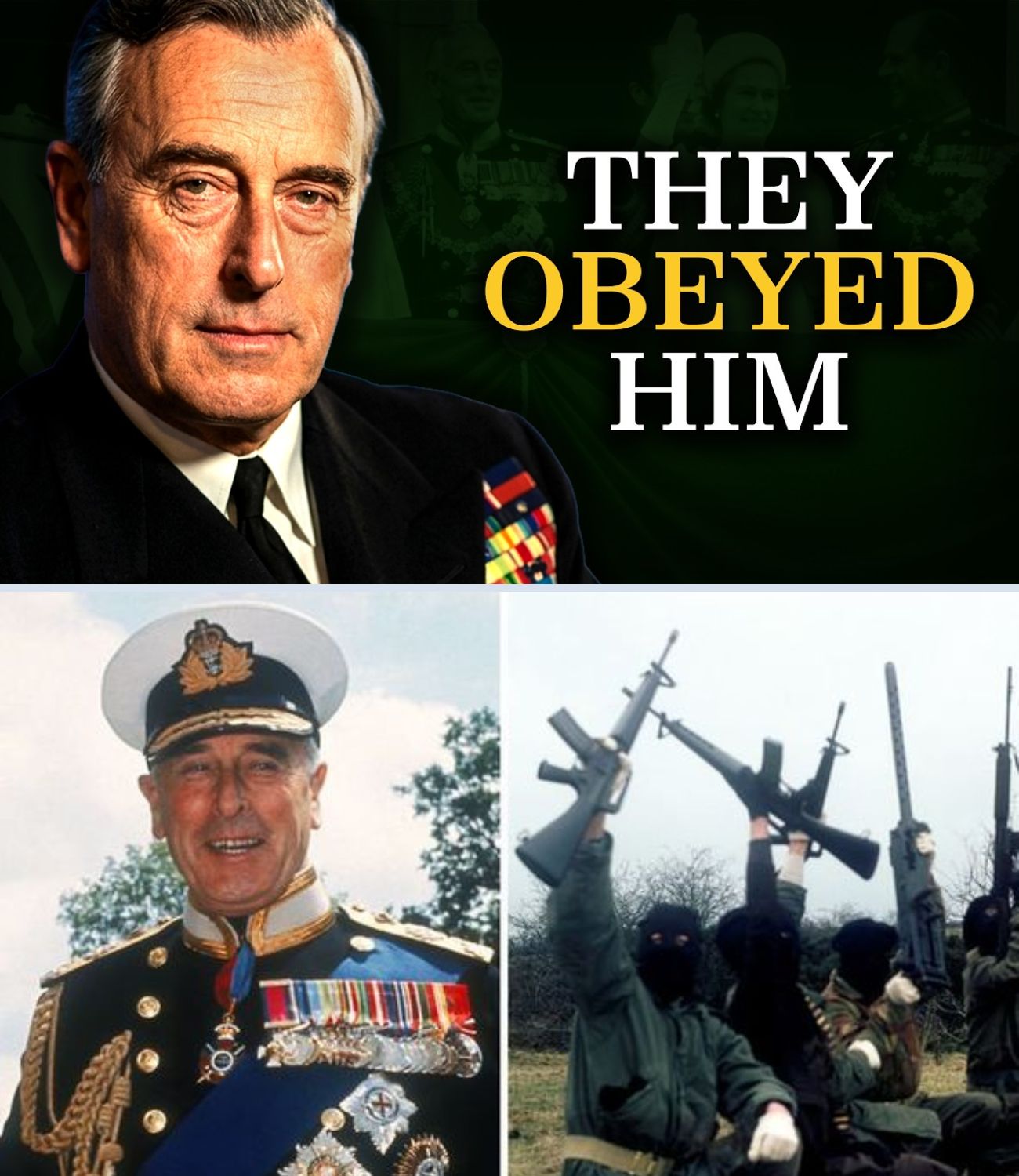
It is early 1952 and somewhere in London, a man raises a glass at a private dinner party. Tall, uniformed, impossibly handsome in the way only aristocrats, engineered across three generations of European monarchy can manage. He believes he just received the best news of his life. King George VI lies dead and Princess Elizabeth, his beloved niece by marriage, now sits on the throne beside her husband, his nephew, Prince Philip, the new royal consort. Lord Louis Mountbatten, first Earl Mountbatten of Burma, former Supreme Allied Commander of Southeast Asia, former last Viceroy of India, beams at his guests and delivers a line that will ricochet through Buckingham Palace like a bullet:
“The House of Mountbatten now reigns.”
He does not whisper the claim. He announces it loudly at a dinner table surrounded by people who talk, because people at London dinner tables in 1952 always talk. Within days, the remark reaches the ears of two women who do not find it charming at all. Queen Mary, the iron-willed grandmother of the new queen, and Queen Elizabeth, the Queen Mother, the grieving widow of the dead king. Neither reacts with amusement. What spreads through the senior corridors of the palace resembles something closer to alarm. A cold institutional recognition that this man, this relentless, dazzling, manipulative uncle by marriage, just revealed his endgame. He wants his name on the monarchy.
So, how did one of the most decorated men in the British Empire become one of the most distrusted figures inside the very family he claimed to serve? Why did courtiers loathe him and politicians call him a liar to his face while two generations of royal women treated him less like a beloved relative and more like a constitutional virus? And why, even decades after his death, does the British government still refuse to let the public read his unredacted diaries?
To understand the fear, and it really did function as fear, even if no one used the word, you need to understand the man who inspired it. Not just his rank, but his appetite. Louis Francis Albert Victor Nicholas Mountbatten entered the world in 1900 as a Prince of Battenberg, a minor branch of German royalty with enough bloodline credentials to sit at every table in Europe but not quite enough wealth to own any of them. His father anglicised the family name during the First World War. Battenberg became Mountbatten when anti-German sentiment turned the original into a liability.
The lesson lodged early. Names carry power and power can be rebranded. By the Second World War, Mountbatten ascended to Supreme Allied Commander of Southeast Asia, a title grander than his actual battlefield record. The gap between the title and the man beneath it troubled anyone who looked closely, and a number of people did look closely. Naval historian Stephen Roskill warned that Mountbatten’s personal accounts could never be trusted without independent verification. A damning assessment from a serious scholar. Anthony Eden, the future prime minister, put it less diplomatically. He called Mountbatten:
“A congenital liar.”
Field Marshal Sir Gerald Templer, one of the most decorated soldiers in the British Army, addressed the matter with even less diplomacy, telling Mountbatten to his face:
“You would excrete a corkscrew if you swallowed a nail.”
These were not off-hand remarks from jealous rivals. They came from senior figures in the military and political establishment who worked alongside Mountbatten and watched him operate at close range. The portrait they painted consistently and across decades depicted a man who treated truth as raw material, something to be shaped and polished until it reflected only the angles he wanted the public to see.
Yet none of this stopped his ascent. Mountbatten possessed a talent rarer than tactical genius. He grasped image management on a level that bordered on obsessive. Biographer Andrew Lownie documents how he poured enormous energy into curating his public reputation. He buried his blunders beneath a mountain of favourable press and self-penned historical narratives, cultivated friendships with journalists who could be relied upon to print the version of events he preferred, and appeared conveniently as the hero of nearly every story he told about himself. Even his royal connections functioned as props in this performance, lending him an aura of inherited greatness that papered over a record full of cracks.
In 1947, that reputation machine reached its zenith when the British government appointed him the last Viceroy of India, tasked with managing the transfer of power from the British Raj to the newly independent nations of India and Pakistan. The job required diplomatic patience, political neutrality, and a willingness to subordinate personal ambition to an enormously complex negotiation involving hundreds of millions of lives. Mountbatten brought his charm, his confidence, and his talent for ceremony. Whether he brought the judgement the situation demanded remains one of the most debated questions in 20th-century imperial history.
The partition that followed killed between 1 and 2 million people. It displaced roughly 15 million more, triggering one of the largest forced migrations in recorded history. And the communal violence that erupted along the new borders between India and Pakistan left scars that persist to this day. Mountbatten’s personal responsibility for the speed and chaos of the process remains fiercely debated among historians. But his uncanny ability to emerge from the wreckage looking like a statesman rather than a participant does not. He walked out of India with his reputation not only intact but enhanced. A feat of personal public relations that would have impressed even the most cynical political operator.
That same year, his nephew, Prince Philip, married Princess Elizabeth, and Philip adopted the Mountbatten surname. The chess pieces for a dynastic takeover slid quietly into position, though at that point most people inside the palace failed to notice what the board already looked like. Queen Mary noticed when the boast about the House of Mountbatten reached her. She did not send a polite note. She mobilised, and at 84 years old, she did so with the instinct of someone who had spent half a century defending the monarchy against abdication crises, family scandals, and wars. Someone who could smell dynastic ambition the way a farmer smells rain.
She contacted Winston Churchill, the Prime Minister, who shared her horror, and together they reached out to a man whose loathing of Mountbatten ran even deeper: Sir Alan “Tommy” Lascelles, Private Secretary to the Crown. Lascelles occupied a position that sounds bureaucratic, but functioned as something closer to a constitutional bodyguard. The Private Secretary controlled the flow of communication between the monarch and the outside world, managed the royal schedule, vetted political advice, and ensured that no one, however charming or well-connected, could bend the institution toward purposes it did not authorise. It required absolute discretion, zero tolerance for manipulation, and the kind of quiet ruthlessness that polite society pretends does not exist.
Lascelles possessed all of these qualities in abundance. He viewed Mountbatten’s ambition with what can only be called professional disgust. His diaries, later published as King’s Counsellor, reveal a courtier who considered Mountbatten not merely arrogant but constitutionally dangerous. A political operator who wore a family member’s mask while exploiting his proximity to the throne for personal glory. None of these opinions stayed private. Lascelles worked actively to block Mountbatten’s influence wherever it surfaced, extinguishing each new scheme before it could spread.
The relationship between Lascelles and Mountbatten illuminates something about how the monarchy actually functions behind the ceremonial curtain. Mountbatten assumed that his bloodline, his charm, and his military titles granted him a natural right to shape the institution from the inside. Lascelles viewed precisely those qualities as the threat. A stranger trying to manipulate the crown could be turned away at the gate. A family member with a seat at the table required constant surveillance, and Lascelles surveilled Mountbatten with the attentiveness of a man dismantling a bomb.
Even King George VI, who found Mountbatten useful during military transitions and treated him with courtesy, maintained careful boundaries around the relationship. The late king understood, as most senior royals did, that Mountbatten could be deployed as a tool of state when his talents aligned with the crown’s needs. But the moment his personal ambitions surfaced, the door closed. Together, Queen Mary, Churchill, and Lascelles closed ranks.
On the 1st of May 1952, barely two months after George VI’s death, Queen Elizabeth II issued a formal proclamation:
“The royal house will remain the House of Windsor. Not Mountbatten. Windsor.”
The proclamation landed like a sledgehammer, and Mountbatten’s grand vision collapsed in a single bureaucratic sentence. Lest anyone mistake this for a passive act by a young queen bullied by her grandmother and her prime minister, historian Ben Pimlott argues that Elizabeth II demonstrated strong independent agency in the decision. She deliberately managed Mountbatten’s vanity, kept him close emotionally, but locked him out constitutionally. Affection and access amounted to different currencies than power, and Elizabeth grasped the difference even at 25.
Prince Philip, caught between his uncle’s ambitions and his wife’s institution, responded with one of the most bitter private remarks in modern royal history. That fury festered for eight years, and Philip never fully forgave either his wife’s institution or the advisers who engineered his humiliation. In 1960, a compromise emerged. An Order in Council allowed certain male-line descendants to use the hyphenated surname Mountbatten-Windsor for legal and private purposes, while the royal house itself remained Windsor.
The compromise gave Mountbatten something. Technically, his name now appeared on legal documents, passports, and marriage certificates for a defined subset of descendants. But the royal house, the constitutional identity that mattered, still bore the name Windsor. It granted Mountbatten a hyphen, a footnote, but not the conquest he craved. And for a man whose entire life revolved around how history would remember him, a footnote amounted to a defeat dressed in ceremonial language.
The older generation prevailed. Queen Mary, who died in 1953, never lived to see the compromise, but she had already ensured the wall held. The Queen Mother, who considered Mountbatten a dangerously progressive influence according to biographer William Shawcross, maintained her suspicion of him until the end of his life and never once softened. In the world of royal family dynamics, where disagreements typically dissolve into stiff politeness within a decade or two, the Queen Mother’s sustained hostility toward Mountbatten tells you something about how seriously she took the threat. She did not merely disapprove of him. She viewed his presence near the institution as a permanent source of danger, carrying the memory of that dinner party boast like a grudge carved in stone.
If the older royals kept Mountbatten at constitutional arm’s length, the younger ones practically invited him through the front door. Prince Charles, heir to the throne, shy, insecure, and starved for a father figure who would actually listen to him, found in Mountbatten exactly what he lacked at home. Philip’s parenting style ran toward brisk naval discipline. Mountbatten supplied warmth and attention, plus the impression, seductive above all else, that the boy’s feelings mattered. Charles trusted him absolutely, confiding in him without reservation and coming to treat him as both a grandfather and an emotional anchor in a family not known for dispensing either.
This attachment did not go unnoticed inside the palace, and it worried the people who understood Mountbatten’s pattern. A man who spent decades trying to attach his name to the monarchy now enjoyed unfettered access to the mind of the person who would one day wear the crown. The Queen Mother’s wariness deepened. Lascelles, by this time retired, could only watch from the sidelines. Even Queen Elizabeth II, who handled Mountbatten with her characteristic blend of affection and constitutional firmness, could not control what her eldest son chose to discuss in private letters with a 70-year-old uncle who treated every conversation as an opportunity.
Mountbatten recognised the opportunity with the clarity of a man who spent his entire life identifying levers of influence, and mentoring Charles quickly grew into something larger than avuncular advice over tea. It meant shaping the future king’s most intimate decisions: who he loved and who he married. In the 1970s, Charles fell for Camilla Shand. The relationship appeared genuine and, by most accounts, emotionally fulfilling for both of them, but Mountbatten steered him away.
The reasons blended personal strategy with dynastic logic. Camilla, in Mountbatten’s assessment, carried too much romantic history to serve as a credible royal bride. She possessed a past, and in Mountbatten’s calculus, a past disqualified a woman from queenship, regardless of how compatible she might actually be with the prince. The advice carried an undertone that reveals how Mountbatten thought about women in relation to the monarchy. They functioned in his framework less as partners and more as instruments of dynastic continuity, selected for their purity of reputation, the way a breeder selects livestock for genetic cleanliness. Love entered the equation only if it happened to coincide with all the other criteria, and if it didn’t, love lost.
Instead, Mountbatten formulated a written philosophy of royal marriage, a kind of instruction manual for selecting a wife that he delivered to Charles in letters. The advice distilled into a devastating formula:
“Sow your wild oats in youth. Then choose a sweet, charactered girl with no previous romantic entanglements, someone who could withstand public scrutiny because there would be nothing to scrutinise.”
This philosophy haunted Charles for the rest of his life. It steered him slowly and inexorably toward Lady Diana Spencer, a 19-year-old who met every criterion Mountbatten outlined and almost none of the criteria that might have actually produced a happy marriage. Diana ticked every box on a checklist written by a man who viewed royal unions less as human relationships and more as strategic mergers between bloodlines. The catastrophe of that marriage, its very public disintegration, its corrosive effect on the monarchy’s reputation throughout the 1990s, traces a direct line back to a philosophy drafted by a man who believed he knew how kings should choose their wives.
Even though his own marriage to Edwina Ashley became one of the most famously dysfunctional unions in the British aristocracy, Edwina conducted affairs openly enough that London society treated her romantic life as a spectator sport, and the marriage survived not on affection, but on mutual convenience and a shared appetite for public status. That Mountbatten felt qualified to lecture Charles on choosing a pure and biddable bride, given the wreckage of his own domestic arrangements, tells you everything about the gap between the man’s self-image and the reality that surrounded him. He dispensed advice from a throne of his own imagining, seated high above a marriage that would have disqualified him as a relationship counsellor in any other context.
But the matchmaking extended beyond generic advice because Mountbatten carried a specific candidate of his own: his granddaughter Amanda Knatchbull. Beginning formally around 1974 and continuing until his death, Mountbatten pressured Charles to marry Amanda, arranging meetings and engineering proximity with the persistence of a man who believed his own bloodline deserved a second crack at the throne. It already lost in 1952. Amanda ultimately rejected Charles’s proposal after Mountbatten’s assassination in 1979, and whether the match would have worked remains unknowable, but the intent behind it carries no ambiguity at all. Mountbatten wanted his own blood on the throne, and since the name battle ended in defeat, the genes would have to do.
Now imagine a different kind of dinner. The date, May 1968. Harold Wilson, the Labour Prime Minister, presides over a British economy stumbling through devaluation and union unrest, while a public mood that curdled from postwar optimism into something bitter now saturates the newspapers with hostile editorials. At Mountbatten’s London flat, three men arrive for a private conversation: Cecil King, the chairman of the International Publishing Corporation and the most powerful newspaper magnate in the country; Hugh Cudlipp, King’s deputy and fellow press baron; and Solly Zuckerman, the government’s chief scientific adviser and a long-standing friend of Mountbatten.
King’s proposal runs extraordinary, even by the standards of 1968 establishment arrogance. He believes the Wilson government teeters on the verge of economic and political collapse, possibly even civil unrest. His solution: remove Wilson and install an emergency national government, a body of technocrats and establishment figures, free from party politics and parliamentary niceties. And he wants Mountbatten to lead it.
Consider what this actually means. A newspaper tycoon sitting in the private residence of a member of the extended royal family proposes the effective overthrow of a democratically elected government, not through a military coup in the traditional sense, but through a coordinated establishment intervention that would bypass the voters who put Wilson in office barely four years earlier. The proposal assumes that the normal machinery of democracy—elections, parliament, the cabinet—cannot be trusted to resolve a national crisis and that the correct response involves handing power to a group of unelected men who believe they know better.
King chooses Mountbatten for the role not because Mountbatten possesses any particular expertise in economics or domestic governance, but because he looks like a leader. The uniform, the titles, the royal blood, the jawline that photographs well in newspapers. King needs a figurehead who can project authority and calm to a frightened public. And Mountbatten, whatever his faults, projected authority the way a lighthouse projects light: automatically, forcefully, and without much concern for what the beam actually illuminated.
Mountbatten’s response fails to match the gravity of the moment. He does not refuse, does not leave, does not telephone the prime minister to report that one of Britain’s most influential media figures just proposed something that smells very much like sedition. He sits there. Zuckerman does not. He recognises exactly what the conversation amounts to, declares the entire proposition to be:
“Rank treachery.”
What Mountbatten did after Zuckerman left remains one of the most contested questions in modern British political history. Some historians believe the queen herself intervened and talked Mountbatten down from the ledge privately. Others argue that Zuckerman’s dramatic exit functioned as a cold shower, the sudden departure of the only credible government figure in the room stripping the fantasy of its last shred of plausibility. King himself lost his chairmanship within days, the victim of his own board’s alarm at his erratic behaviour, and spent the rest of his life insisting the meeting carried different intentions than everyone else remembered. But the meeting happened. Mountbatten hosted it, and he did not immediately reject the premise of replacing a sitting prime minister with a handpicked strongman.
Hugh Cudlipp, who attended and later recounted the evening in his memoir, Walking on the Water, provided corroboration that the conversation occurred exactly as Zuckerman described it. For the courtiers and politicians who already distrusted him, the Cecil King affair confirmed everything they suspected. Given enough flattery and enough assurance that he would sit at the top of whatever new structure emerged, Mountbatten could be talked into entertaining ideas that most constitutional actors would have dismissed before the first sentence ended.
The pattern the affair revealed stretched far beyond one evening in a London flat. Throughout Mountbatten’s career, from India to the Admiralty to the palace corridors, the same mechanism repeated itself. Someone with authority or access would approach him with a proposition that flattered his self-image, and Mountbatten, instead of measuring the idea against any principle or institutional boundary, would measure it against the size of the role it offered him personally. If the role sounded large enough, the idea received his attention. If it sounded very large indeed, it received his enthusiasm. The Cecil King meeting simply made the mechanism visible in its most naked form. An unelected newspaper baron dangling the leadership of a nation, and a member of the royal family sitting across the table, considering whether the fit felt right.
He did not fear power. He courted it. And the people who feared him understood that this courtship carried no natural stopping point.
The boat called Shadow V sits at a public dock in Mullaghmore Harbour. A small wooden fishing vessel. Nothing grand, nothing armoured, nothing remotely appropriate for a man with Mountbatten’s list of enemies. Every summer, Mountbatten brings his family to Classiebawn Castle in County Sligo on the northwest coast of Ireland. And every summer, he takes the boat out to check lobster pots accompanied by family members, usually young ones. The Irish police, the Garda Síochána, consider the trips reckless. They warned him repeatedly, but Mountbatten ignored them with the breezy confidence of a man who spent his entire life believing that the normal rules of danger applied to other people.
The Provisional IRA operates freely in border areas, and Mountbatten, a symbol of British military aristocracy and a cousin of the queen, represents everything the IRA swore to destroy. Security around the castle stays minimal. No one ever inspects the boat. The carelessness looks in retrospect like a final expression of the same arrogance that defined Mountbatten’s entire career. The assumption that his status would protect him, that his charm extended even to people who wanted him dead, that the world would accommodate his preferences because it always had before. For 79 years, the assumption held. Rank and privilege and the deference of others created a bubble around him that even his enemies within the palace never fully punctured.
Mullaghmore sits barely 12 miles from the border with Northern Ireland. The IRA did not need to mount a complex operation. They needed a fishing boat, a public dock, and a man too vain to vary his routine. On the morning of 27th August 1979, an IRA operative plants a 50-pound radio-controlled bomb aboard Shadow V while it sits unguarded at the dock. Mountbatten takes the boat out with his family, and minutes after leaving the harbour, the bomb detonates. The explosion kills Mountbatten instantly, along with his 14-year-old grandson, Nicholas Knatchbull, Paul Maxwell, a 15-year-old local boy working as a boat hand, and the Dowager Lady Brabourne, Nicholas’s 83-year-old grandmother who dies the following day.
That same day, the IRA ambushes a British Army convoy at Warrenpoint in Northern Ireland, killing 18 soldiers in what becomes one of the bloodiest days of the Troubles. Prince Charles, who treated Mountbatten as a second father for most of his adult life, falls apart completely. He loses his mentor and his confidant, the only senior family figure who genuinely loved him and showed it openly. And Amanda Knatchbull, who lost her brother Nicholas in the explosion, rejects Charles’s marriage proposal in the aftermath. The Mountbatten matchmaking project dies alongside the matchmaker.
Whatever the palace privately thought of Mountbatten—the scheming, the vanity, the dinner party boasts, the Cecil King meeting—his murder also eliminates one of the few people in Charles’s orbit who provided real emotional warmth. The grief runs deep, and it reshapes Charles’s emotional landscape in ways that the older royals, for all their institutional wariness, could not have predicted and did not manage. Without Mountbatten, Charles lost the one person who combined emotional availability with enough stature to push back against the palace machinery when it suited him.
The irony cuts in two directions at once. Mountbatten alive represented a constant institutional threat. A man whose schemes required monitoring and whose ambitions required containment. Mountbatten dead left a vacuum that no one else in the royal family possessed the temperament or the inclination to fill. And into that vacuum rushed loneliness, poor counsel, and the doomed marriage to Diana Spencer that Mountbatten’s own written philosophy helped engineer. The man who caused the monarchy so much anxiety in life managed through his absence to cause it even more.
Mountbatten managed his reputation during his lifetime with a ferocity that bordered on compulsion. Biographer Andrew Lownie describes a man who curated his own mythology as though it constituted a second career. He rewrote history through selective memoir and self-penned narratives, while every failure became someone else’s fault, and every controversy quietly vanished beneath layers of favourable coverage and royal charm. Death did not end the campaign, but merely transferred responsibility to the British state, which proved just as protective of the Mountbatten image as the man himself.
In 2019, Lownie published The Mountbattens: Their Lives and Loves, a biography that dragged into mainstream historical debate a document the British establishment spent decades trying to forget. A 1944 FBI file obtained through a Freedom of Information Act request containing an interview with Baroness Decies. Decies described Mountbatten as a homosexual with a perversion for young boys. The claim remains fiercely contested, and whether Decies’s statement reflects direct knowledge, high society rumour, or wartime character assassination cannot be determined from a single unverified intelligence file.
The FBI document amounts to raw intelligence, a transcription of gossip collected by an American agency with no particular reason to either protect or target Mountbatten. It proves that the allegation existed in 1944, but does not prove the allegation itself. But Lownie’s book triggered something the British government clearly did not want: public curiosity about Mountbatten’s private diaries, which remained partially censored by the Cabinet Office. A legal battle erupted between Lownie and the government over access to the unredacted records. A fight that dragged through the courts and generated headlines that Mountbatten, with his obsessive devotion to reputation control, would have found excruciating.
What exactly does the Cabinet Office protect? One possibility: the diaries contain material that would embarrass the royal family, not through any fault of its current members, but through the sheer proximity of a figure whose private behaviour, if the worst allegations carry any truth, would constitute one of the most disturbing scandals in modern British history. Another less dramatic possibility: the diaries record nothing more scandalous than the already known vanity and political meddling. And the government’s resistance to disclosure stems from institutional habit rather than genuine necessity.
The problem lies in the secrecy itself because secrecy breeds suspicion. When a government aggressively blocks access to the personal records of a man already accused of predatory behaviour in declassified intelligence files, the refusal itself becomes evidence not of guilt, but of a system that prioritises institutional comfort over public accountability. Every denied Freedom of Information request, every redacted page, every year the archives remain sealed adds another layer of suspicion that even a perfectly innocent set of diaries could never fully dispel because the act of hiding has already contaminated the act of revealing.
And then there lingers the larger question about the diaries themselves, one that no amount of litigation can answer. To what extent did Mountbatten and his wife Edwina doctor their own records before their deaths? Mountbatten, a man who spent decades polishing his public image with the care of a jeweller cutting a diamond, would hardly leave his most private writings to chance. If the diaries arrived already sanitised, what does the government protect? Mountbatten’s true history or his preferred version of it? The question sits at the centre of a paradox that Mountbatten himself would have appreciated given his lifelong obsession with controlling the narrative.
A man who dedicated decades to ensuring that posterity remembered him as a hero now depends in death on a government bureaucracy to maintain exactly the kind of selective silence he practised in life. The Cabinet Office functions in this sense as the final iteration of Mountbatten’s reputation machine, doing for free what he spent a career doing through personal effort. Whether they do it to protect him, to protect the crown, or simply because the institutional default setting runs towards secrecy in all circumstances, the effect remains the same. The full story stays locked away and the questions keep multiplying.
So, did the royals fear Lord Mountbatten? Not in the way the question implies. No one cowered or locked their doors when his car pulled into the palace courtyard, and Queen Elizabeth II managed him with a kind of practised calm that suggests she found him more exhausting than terrifying, though she never underestimated his capacity to cause damage when left unattended. The fear, and it deserves the word, even if the people who felt it would have rejected the term, operated on a deeper, more institutional frequency.
Queen Mary feared what his name on the monarchy would do to the Windsor line she spent her life defending, while the Queen Mother feared his influence over the younger generation. His ability to reshape the institution from the inside through charm and relentless persistence. Lascelles feared that Mountbatten would treat the Constitution the same way he treated his own war record: as raw material to be rebranded and bent toward personal glory.
Each of these figures occupied a different position within the royal structure, and each responded to the Mountbatten threat according to the tools available to them. Queen Mary deployed Churchill and the constitutional machinery to block the name change. The Queen Mother deployed something subtler: sustained social disapproval. An atmospheric coldness that reminded everyone in the royal orbit that Mountbatten’s welcome carried limits no amount of charm could dissolve. Lascelles deployed procedure, using his control of the Private Secretary’s office to ensure that Mountbatten’s schemes never gained institutional traction, no matter how enthusiastically Philip or Charles endorsed them.
All of them feared him because he could not be dismissed. Dismiss a stranger and you lose nothing. Dismiss a family member who mentors your heir and carries your blood, who commands public adoration and military titles and the loyalty of your own husband, and you risk cracking the institution from within.
The British monarchy survived the 20th century by learning to identify threats early and neutralise them quietly. Abdication crises, political entanglements, family members whose personal behaviour endangered the institution’s credibility. Most of these threats arrived from the outside or from individuals whose connection to the crown could be severed when necessary. Mountbatten occupied a different category entirely. His connection ran through marriage, through blood, through decades of shared family history and genuine mutual affection, and through his mentorship of the heir to the throne. Severing that connection would have required the kind of public family rupture that the monarchy spends its entire existence trying to avoid.
Mountbatten could not be fired. He could only be managed, contained, outmanoeuvred, and occasionally humiliated with a royal proclamation he never saw coming. And even then he adapted, shifting from the name to the matchmaking, from the matchmaking to the political plotting, always finding a new angle of approach to the power he believed belonged to him by right of blood and sheer persistence.
The bomb at Mullaghmore ended the campaign, and 79 years of ambition, vanity, genuine public service, possible monstrosity, and undeniable charisma vanished in a single detonation on a quiet Irish morning. But the diaries remain locked and the FBI file lingers unresolved. While the marriage advice still echoes through the wreckage of Charles and Diana’s union, the House of Windsor carries its name today, not his. A permanent reminder that the monarchy trusted Mountbatten with everything except the one thing he wanted most: his name on their throne.
You Might Also Enjoy

“We Thought They Would Negotiate”—What Argentine Soldiers Said When The British Attacked Goose Green

“You’ll Never Finish My Ruck March, Limey” — US Sergeant Who Challenged the SAS, Then Fell Out First






