Why US Special Forces Were Ordered to Never Follow the SAS After Dark in Baghdad.
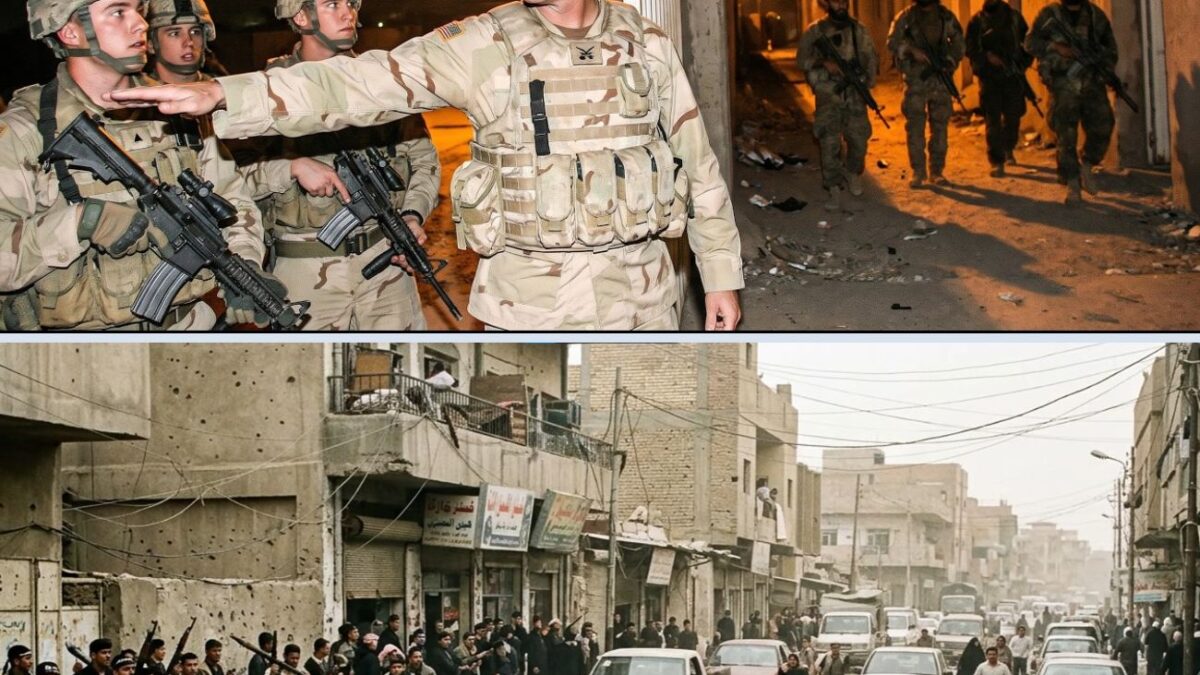
Thursday, 17th of June, 2004, 11 minutes past 1:00 in the morning in Baghdad on a street in the Adamiyah district, a few hundred meters from the east bank of the Tigris. A white Range Rover with Iraqi plates rolls to a stop behind a parked taxi and switches off its lights. Inside are four men in dishdashas and cheap leather jackets. Between their knees, under a folded blanket, lie short carbines and a radio handset wrapped in a rag to stop it clicking against the door.
200 meters back, a column of three American Humvees has just turned onto the same street with its own lights off, running on night vision because someone at a headquarters across the city has told the drivers that these men are not to be lost.
Before we go on, most of what you’ve heard about the SAS is the version that fits the legend. The parts that didn’t fit, the men who never came back, the missions that were denied, the medals that never came. I spent years finding them and I wrote them down. 25 case files from 1941 to 2008. Every source listed so you can check every one. Now, back to the file.
Above them, a little bird helicopter is circling at low altitude. Its crew has just been told that two vehicles are acting suspiciously near a mosque. One of them has no markings and the men inside are carrying weapons. Nobody on the American side knows that the men in the Range Rover are British. Nobody in the Range Rover knows the helicopter is there. It would take 11 more minutes for that to matter.
Afterwards, a British officer would be told by an American colonel that his men were never to be followed after dark again. The order would be written down. It would be obeyed and the reason for it would turn out to be much more embarrassing than anyone expected.
To understand why Americans could be forbidden to follow the best British soldiers in the city, you have to start with what Baghdad was that spring and who had been sent to work in it. By the first week of June 2004, the city had been under occupation for 14 months and it was no longer behaving like a conquered place.
In April, on the 4th, the militia of the cleric Muqtada al-Sadr had risen in Sadr City and in the southern towns of Najaf, Kufa, and Kut. Eight American soldiers had died in Sadr City in a single afternoon and 51 more were wounded. At the same time, the Marines were fighting for Fallujah, an hour to the west.
A truce with Sadr’s fighters had taken hold on the 6th of June and everyone who understood the truce also understood that it was a pause and not an ending. On the 30th of June, as the plan then stood, the Coalition Provisional Authority would hand a limited sovereignty to an Iraqi interim government and dissolve itself. That date sat on every calendar in the Green Zone like a deadline nobody could move. Insurgents knew it. The men who hunted insurgents knew it. Everybody was waiting to see what the city would do when the Americans formally stopped being its rulers.
And in the middle of that, quietly, in a compound inside the Green Zone known to the people who lived in it as the station, a British task force was working out of rooms nobody was allowed to photograph. The name on the paperwork was Task Force Black. It had been put together in the early months of that year around one Sabre squadron of the Special Air Service with a detachment from the Special Boat Service, men from the Special Reconnaissance Regiment who specialized in following people through crowded streets, and signalers from 18 Signal Regiment who made sure the rest of them could talk.
It operated under the American Joint Special Operations Command, which in the autumn of 2003 had come under a new commander, Major General Stanley McChrystal. This arrangement was already strange. The British did not command the task force they worked for. They worked inside an American structure with American aircraft and American intelligence, and they were guests who had been asked to stay because they were good at one thing the Americans did not yet do well. They could disappear.
An American special operations raid in Baghdad in 2004 was a loud and powerful thing. It came by helicopter or in armored vehicles. It arrived with a cordon and a gun truck and a casualty plan. It worked often, but it could not be hidden. And a man who knows a raid is coming is a man who is not at home when it arrives.
The British method was slower and quieter and looked a great deal less like a military operation. A small team would sit in an ordinary car in an ordinary street for an entire night wearing the clothes that men in that street wore and watch a single door. They would follow a single courier through the morning traffic for 6 hours without ever being in his mirror twice. They would learn where he bought his bread.
That skill was the reason the squadron had been invited. It was also, though no one had yet understood this, the reason it was about to become a problem.
The man who ran the squadron on the ground was a major whom the regiment’s own habits of secrecy prevent anyone from naming. For the purposes of this account, his name was Ellery. He was in his late 30s, a lean, slightly stooped officer who spoke very quietly and who was known in the squadron for one habit above all others. He never raised his voice in the operations room, and when he was angry, he simply stopped talking.
Beside him, as squadron sergeant major, was a heavy, gray-haired veteran of the first Gulf War whose name, for the purposes of this account, was Teague. Teague had spent most of his adult life being an uncomfortable presence for officers, and Ellery valued him for it.
The man who would be in the Range Rover that night was a troop sergeant. His name, for the purposes of this account, was Dunmore. He was 34. He had a wife in Hereford, a 4-year-old daughter, and a beard he had been growing since March, which he hated because it itched, and which the squadron had decided was now operationally necessary.
Dunmore’s team that month had been given one man to chase, an Iraqi in his 40s, a former officer in Saddam’s Republican Guard, who had become a courier. He carried money and instructions between a bomb-making cell in Dora, in the south of the city, and a financier in Adhamiyah to the northeast.
The Americans had a name for him and a photograph that was 5 years old. They had never been able to find him twice in the same place. He moved only at night. He did not own a phone that anyone had found, and he had driven the same battered white Opel to the same few streets on nine different nights in May without once being caught, because every time the Americans had tried to follow him in vehicles that looked like American vehicles, he had simply not turned up. That was the problem Task Force Black had been asked to solve. The rest of the story is what happened when it did.
The first night Dunmore saw the courier was on the 2nd of June, on the Baghdad side of the Tigris, near a petrol station that had been closed since the invasion. It was 10:10. The courier’s Opel was the color of a dirty bone, and one of its rear doors was a different shade of white from the others. Dunmore noted it in his book, a small green notebook he kept in the pocket of his leather jacket, because he liked to write things on paper, and because paper did not need batteries.
On that first night, he followed the Opel for 40 minutes. He used three different vehicles, handing off the Opel to a second car at a roundabout, then a third on a bridge, then a fourth when the Opel drifted onto a side street lined with date palms. Each vehicle was a civilian one and each carried two or four men dressed to match. Nobody got closer than 150 m. When the courier stopped, Dunmore’s team stopped and when he moved, they moved a minute later.
The courier stopped at a house in Adhamiyah. He stayed for 22 minutes. He came out carrying a sack that looked in a pair of night vision binoculars to be about the weight of a bag of flour. Then he drove south again all the way to Dora without once checking his mirror. That was when Dunmore began to understand that the man did not feel hunted. He had learned that Americans came in loud vehicles from the direction of the green zone and he watched the roads that led out of it and he had stopped looking at anything else.
On the fourth night, the 6th of June, Dunmore saw the same Opel in the same house and the same sack. On the 9th, he saw it twice.
By the 11th, the squadron knew the shape of the route and Major Ellery put a map on the wall of the station and drew four small circles in grease pencil.
“Four stops,” he said to the room. “He never goes to a fifth.”
He then did the thing that would cost him a night’s sleep for the next week. He walked over to a telephone and called the Americans.
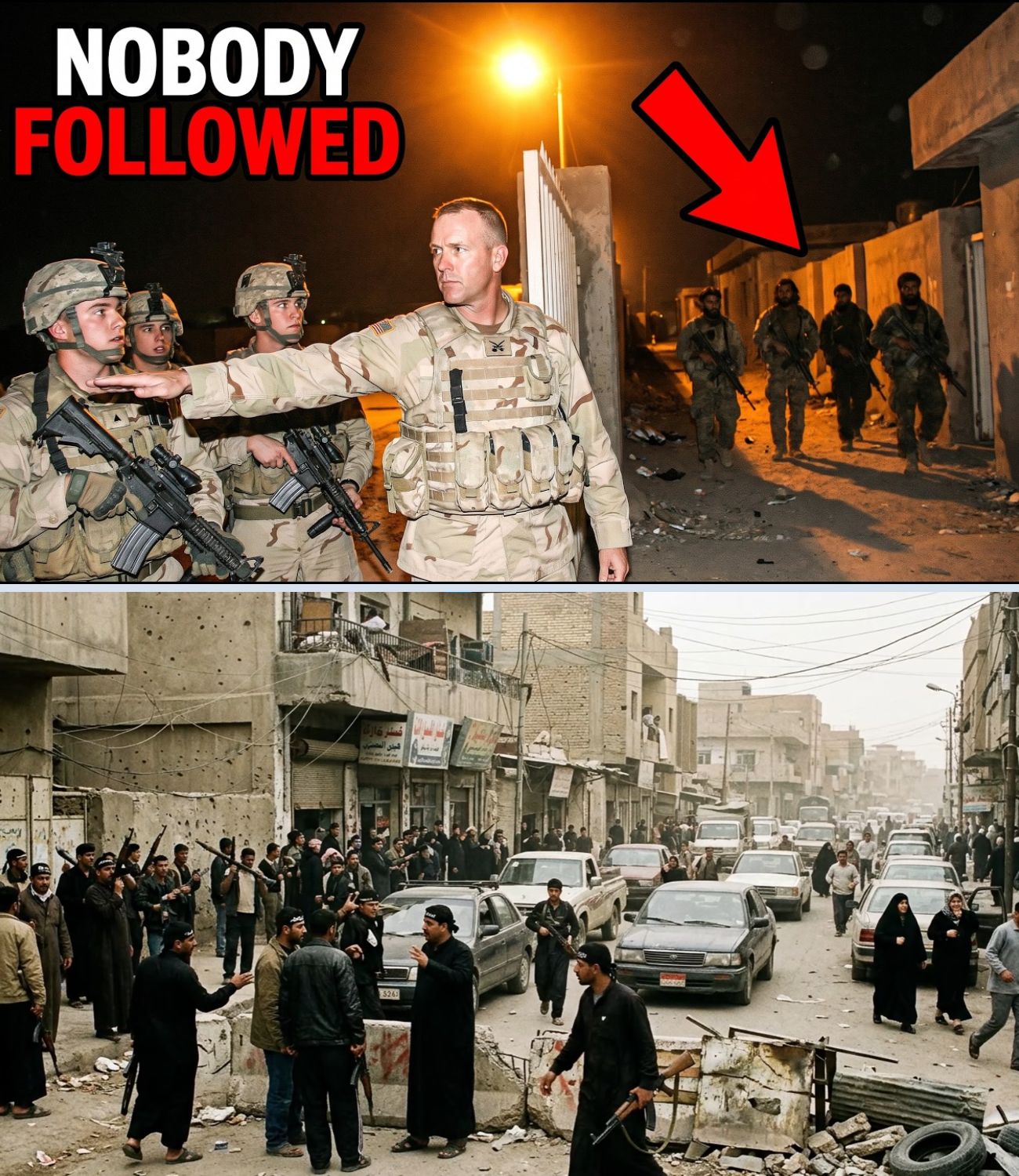
The American at the other end of the line was the operations officer of the ground element that shared the task force’s compound and the British have never published his name. For the purposes of this account, he was a lieutenant colonel called Brent, a tall army officer from the Midwest who had commanded a rifle company in the Gulf War and had very little patience for what he privately called the English art of standing around.
Ellery’s request was simple and he thought it was modest. His team would be working in plain clothes in civilian cars in a district where 3 weeks earlier American patrols had been fired on from rooftops. If they were compromised, they would have no armor, no air, and no way to fight their way out of a street. He wanted an American quick reaction force close enough to reach them in minutes.
Brandt did not like it. He said so, politely, in the first minute of the call. He had a force built to kick down doors under helicopter cover, and Ellery was asking him to park it in the dark behind four men who would not tell him where they were going. But Brandt also knew where the courier’s trail had gone cold and who had failed to follow it. He had sent two of his own teams after the couple in May. Both had lost it.
So he said yes, with a condition, and the condition was the sentence that would shape the next 12 days. His men would follow the British at a distance. They would not move until called, but they would always know where the British were. It sounded sensible. It was, on paper, the sort of arrangement a staff college would give an essay prize for.
The unit that would do the following was a platoon of Rangers from the task force’s attached infantry, led by a first lieutenant whom the Americans have never named in public. For the purposes of this account, he was Lieutenant Voss. He was 26. He had been in Iraq for 11 weeks and had developed a quiet, unfashionable respect for the SAS men he had never actually met, because from the roof of the station, he had watched them leave every night in cars no American would have been seen dead in and return at dawn with nothing to say.
Voss was given three Humvees, a radio frequency, and a grid reference for the first British lay-up point. He was told not to stray more than 300 m from it. He was told, in so many words, not to be seen.
Humvees are not built not to be seen. They are wide, high, and loud, and even with their lights switched off and their drivers wearing night vision goggles, they announce themselves to a street the way a bus announces itself to a library. Voss’s sergeants knew this. Voss knew it. Nobody said it aloud on the first night, the 8th of June, because there was a courier to catch, and because catching him was the point.
On that first night, the Opel did not appear. Dunmore, parked in the Range Rover in a side street off the main road in Otamiya, waited until 3:00 in the morning. The team in the second car did the same. By dawn, the squadron had a log full of blank hours, and Ellery had a short, controlled conversation with the sergeant major about whether the courier had been spooked.
“Spooked by what?” Tig asked.
“Something big and green,” said Ellery.
On the 10th, the Opel did not appear again. On the 12th, it appeared and left within 4 minutes without stopping at the house. Dunmore watched it go and wrote in his green notebook, “Saw us? Saw them?”
The problem with the American shadow was not that it was incompetent. It was that it was exactly as good as it could be, and what it could be was visible. The courier, who had survived nine nights of American attention in May, had changed his habits again, and the only variable that had changed on the British side was the one parked 300 m behind them.
Ellery did not complain. He had spent too long in the regiment to lecture anyone on what could not be helped, but by the 13th, he had moved the Rangers back to 600 m, then to 800, and he had begun running the nightly briefings in a smaller room with the door shut.
The Americans noticed. Brandt noticed. And Brandt, who was not a stupid man, drew a conclusion that was entirely reasonable and almost entirely wrong. He concluded that the British were losing confidence in him. He began asking, through Ellery’s staff, for the exact routes the team planned to take each night.
Ellery gave him the general direction, but not the streets. Brandt asked for the vehicle descriptions. Ellery gave him the color and the make, and not the plates. Brandt asked for the number of men in each car. Ellery told him four, and then the next night told him three, and the following night said only that it would be small.
Neither officer was being unreasonable. They were two men with different jobs, each following the rule he had been taught, and each was making the other’s job harder.
There was a third party in the compound whose job nobody had thought through, and he would turn out to be the most important one. He flew the aircraft, the helicopters that supported the American task force that spring were flown by the 160th Special Operations Aviation Regiment, the Night Stalkers, who flew the MH-6 and AH-6 Little Birds, the MH-60 Black Hawk, and the MH-47 Chinook out of airfields near Baghdad. They answered to a separate chain of command. They took their tasking from the task force’s operations center, and their target lists were drawn up each afternoon by officers who had no reason to read the British squadron’s notes.
The pilot who would be on station on the night of the 16th was a chief warrant officer. For the purposes of this account, his name was Mills. He was a veteran of two tours with some 1,100 hours on night vision goggles. He flew an AH-6 armed with guns and a rocket pod, and he was known on the airfield as a careful man, which on that airfield meant he had never shot at the wrong thing.
Mills had been told that the area northeast of the river might contain hostile vehicles, that friendly forces would be in the area, and that friendly forces would be marked. What he had not been told was how. That would turn out to be the problem.
The British had a way of marking their vehicles. As it happened, a small infrared beacon fixed to the roof that showed up through night vision goggles as a faint glow. It was a simple, standard thing, and the squadron signalers had passed the details of it to the task force headquarters on the 1st of June. Headquarters had received it, a staff officer had filed it, and there it stayed in a folder marked for the planning cell while the pilot who needed it was reading a different folder.
None of this was visible on the 16th of June when the squadron went to work on the last of the courier’s four stops. By that time, the team had learned almost everything it needed to. The Opel appeared only between half past midnight and 2:00 in the morning and only when the lights of the district were low. Dunmore had worked out that the man kept an odd ritual sort of discipline. He parked in the same spot behind the same taxi. He waited with his lights off for exactly 4 minutes. Then he walked to the house, wrapped on a metal door three times, waited, and wrapped once more. It was the kind of detail that is only visible to someone who has spent 14 nights looking at nothing.
Ellery’s plan for the 16th was therefore not complicated. He would not try to take the man on the street where in a rocky crowd might form and Americans might arrive. He would wait until the courier was inside the house with the sack. Dunmore’s team would watch the front. A second team in a Toyota pickup with a canvas cover would cover the rear alley. The Rangers would be told to stay back and wait to be called, and when the courier came out again, the British would take him quickly and quietly before anyone else could react. That was the plan. It had been briefed to Brandt in three sentences and Brandt had read it in two.
At 10 minutes to midnight, Dunmore climbed into the Range Rover, checked the blanket over the carbines, felt in his pocket for the green notebook, and said the thing he said every night, “Right, let’s go and be nobody.”
The first problem arrived before they had left the green zone. It was the Range Rover itself. The Range Rover had been bought second-hand and driven into Iraq by a contractor. It had Iraqi plates, a cracked dashboard, a crushed rear bumper, and an engine that was older than Dunmore’s daughter. It was perfect in the sense that nobody in Baghdad would look at it twice.
At 12:00 past midnight, 3 km from the Tigris, the temperature needle went to the red and a thin smell of hot coolant came through the vents. Dunmore pulled in beside a closed tire shop and lifted the bonnet. A hose clamp had worked loose. He and the driver, a lance corporal whose name, for the purposes of this account, was Price, fixed it with a strip torn from the inside of a jacket and a bottle of water meant for drinking. It took 38 minutes.
For the whole of that time, four armed Englishmen in Arab clothes stood at the side of a road with a bonnet up in a country where a stationary car could be a bomb or a trap or a target. And each of them kept his hands in plain sight and talked about football.
It was nearly 10:00 to 1:00 by the time the temperature settled. The window for the courier was already half gone.
Behind them, at 800 m, Voss was watching the same road from the turret of the lead Humvee, and he had been told one thing about the Range Rover that night. If it stopped, he was to stop. If it was still, he was to stay still. What he was not told was why it had stopped. The British radio net could not reach his set because the squadron had decided to keep its frequencies off the American net that spring. Voss could see a bonnet up and four men standing in the road. He could not see a hose clamp. For 38 minutes, he sat in the dark with three Humvees and a platoon of 19 men looking at a car.
Dunmore got back in at 10:00 to 1:00. He did not ask whether anyone had followed them. In 14 nights, he had learned that the Americans were never farther away than he expected and never closer than he wanted.
At 8 minutes past 1:00, a power cut came down over the northern half of the district. It was the third that week. The street lamps along the main road died in a ripple from south to north, and the little shops and tea houses blinked out one after another, and the whole neighborhood went suddenly and completely black.
The courier chose that moment to come. The Opel appeared at the mouth of the street at 9 minutes past with its headlights off rolling at walking pace. Dunmore saw it first, the bone-colored paint, the mismatched door. He keyed his handset once quietly and said a single word to the team in the pickup and they said a single word back. It parked behind the taxi. The man inside waited. Dunmore with the second hand on his watch counted the four minutes.
And at that moment on the other side of the river, a young captain in the task force operation center whom the account will call Hale was looking at a screen that showed two sets of marks on a map. One set was blue and stood for the American column. The other was a single yellow square and it stood for a report from a little bird pilot about two civilian-looking vehicles near a mosque in Adamiyah.
Hale had a pen in his hand and a list on his desk. The list, which had been prepared that afternoon, named every friendly unit known to be north of the river that night. The British were on it as a line and the line said, “UK elements, general area Adamiyah, no position.” No position. Hale looked at the yellow square and looked at the line. There was nothing on the page to connect them.
Mills had come on station at 10 to 1. He had already spent 20 minutes flying a loose, slow orbit at about 300 ft and what he had seen through the sensor on his helicopter and then through his goggles was a quiet district in a blackout with a small number of vehicles parked in a pattern that did not look random. A white sedan, a taxi, a white Range Rover that had stopped, a pickup truck with a canvas cover at the rear of a block, men in civilian clothes sitting in them. And a long way back, a column of three vehicles moving without lights. He knew the three vehicles. They were on his list. They were Americans. He did not know the others.
At 1:11, he spoke to the operation center. It was a short call, a few seconds long. He described what he could see, two unmarked vehicles with occupants who appeared to be carrying weapons. He asked whether anyone had friendly forces in those positions. It was the call that began the 11 minutes.
Hale looked at his list again. He picked up a telephone. He called the ground elements liaison desk and asked whether Colonel Brandt’s men had anyone on foot or in civilian vehicles in the area. The desk said it would check. The desk went to find Brandt. Brandt was asleep.
While this was happening, the British were not aware of anything. The courier had wrapped on the metal door three times, then once. It had opened. He had gone inside. Dunmore had started to count the minutes again. In the pickup truck at the back of the block, the second team had a sight line on the rear alley, which Dunmore had walked on foot three nights earlier, dressed as a man carrying a sack of flour. Everything was where it was meant to be.
And then Voss made a decision. He had been sitting in the dark for 40 minutes. His own radio net had begun to chatter because his battalion operation center had also heard Mills’s report and was asking all American elements north of the river to report their locations and any contacts. Voss answered the question honestly. He gave his position. He told them that he was shadowing a friendly element and he could see a vehicle in the target area and that it had stopped. Then, because he was a conscientious officer and thought he had lost the British for a stretch of 38 minutes, he told his drivers to close the gap to 200 m to 150. It was, in the narrow sense, exactly what he had been told not to do. In the wider sense, it was exactly what any good platoon leader would do.
From the Range Rover, Dunmore saw something change in his side mirror. A set of three large shapes, black on black, moving into the street behind him. No lights, the shape of a heavy vehicle, a tall turret, engines that he could hear now, a low growl under the whine of the generator next door. He looked at the shapes. For about 2 seconds, he did not think of Americans. In that district, in that month, large unlit vehicles that came for men sitting quietly in cars did not usually belong to anyone friendly.
“Price,” he said without turning his head. “Get the beacon ready.”
He meant the faint infrared lamp up on the roof. It was the device the signalers had documented on the 1st of June and the headquarters had filed. It had been switched off that night on Ellery’s orders because in that street at that time, a glow visible through night vision could be seen by anyone who had night vision, and in Adhamiyah in June of 2004, that included the insurgents.
Price reached for the switch.
At the same moment, in the helicopter above him, Mills had just been told something by the operations center that he had been waiting to hear.
“Be advised,” Hale said, “we have no friendly element in that position.”
Mills took a long second. Then he said the sentence that he would repeat, close to word for word, in the review that followed.
“I have two unknown vehicles, armed occupants, stopped in a blackout with a friendly column converging on them. Request clearance to engage if they show hostile intent.”
It was not a reckless request. It was the most careful form of the question that a pilot could ask. He did not say that he would fire. He said that he would like to be allowed to if it became necessary.
With a column of his own countrymen about to drive into a possible ambush, Hale did not say no. He said, “Stand by.”
And that was the second at which the evening could have gone another way. In the Range Rover, Dunmore had seen the shapes behind him and heard the helicopter and made a conclusion about the American column that was not entirely wrong. In the Humvee, Voss had seen the Range Rover and made a conclusion about the British that was not entirely wrong either. In the air, Mills had seen all of it and was waiting for someone to tell him who was whom.
Not one of the three had a bad plan. Each had done exactly what he had been trained to do with the information he had been given. The failure was not in any of them. It was in a folder.
It was Teague who broke it. He was sitting in the station’s operations room in front of a radio that carried the British net. He had been listening since midnight. He had heard the engine trouble. He had heard the word from Dunmore and at 1:17 he heard on the American net that a liaison officer had patched into a speaker on the wall. A voice he did not know say the words “unknown vehicle and possible hostile intent.”
The sergeant major stood up so fast that his chair fell over. He did not shout. He picked up the telephone on the wall, called the task force operations center and asked for Captain Hale by name.
When Hale came on, Teague said six words. “That Range Rover is ours. Hold fire.”
There was a pause on the line of about 2 seconds.
“Say again,” said Hale.
“The vehicle is British. White Range Rover. Iraqi plates. Four men. They are mine. Tell your bird.”
Hale told the bird. Mills was told at 1:19. He lifted his hand off the trigger guard, a thing he later said he did slowly and without comment, and keyed his radio and acknowledged. He then did something the pilots of the regiment are taught to do when a decision turns out to have been a close one. He took the helicopter up to 600 ft, opened the circle, and said nothing at all for 30 seconds.
Down in the street, none of the British heard any of this. What Dunmore heard was the helicopter climbing and the sound of the rotors changing as its crew changed their orbit. He understood quite suddenly that the machine had been looking at him for a long time. He turned to Price and told him to switch on the beacon.
It glowed on the roof, a faint steady blur like a coin, and at that moment the courier came out of the back of the house. He came out of the narrow door at the rear of the house with a sack over one shoulder and a torch in his hand that he did not switch on. He had heard the helicopter. Everyone in the district had heard it. In a blackout with an aircraft sitting over the roofs and engines moving in the next street, a man with a sack and $400 of someone else’s money does not wait to find out whether the noise is for him. He walked toward the alley mouth at the speed of a man pretending to be calm.
Behind a canvas flap on the other side of it, in the pickup that had been parked there since midnight, a corporal watched him through the gap in the tarpaulin and said, very quietly to the man beside him, “That’s him.”
There was no shouting. There was no chase. There was a man in an alley who saw a door open in a wall he had passed a hundred times, and then two pairs of hands, and then a pickup truck that moved forward and stopped across the end of the lane with its tailgate down. It took about nine seconds. The sack went into the back of the pickup followed by the courier. The pickup reversed out of the alley and joined the main road at an ordinary speed, and nothing in the district changed. Nobody came out of the neighboring houses. Nobody fired. The only people who saw it were two men on a nearby roof who watched it with great interest and said nothing to anyone.
The Opel was still parked behind the taxi. The British left it there for the Americans to find in the morning.
At 1:22, Dunmore’s handset made a single click. It was the pickup confirming. Dunmore took the handset, said one word into it, and pulled the Range Rover away from the curb. Behind him, the three Humvees reversed carefully out of the street without a shot fired. The little bird made a final slow circuit at 600 ft and went home.
It had taken 11 minutes from the moment the pilot asked his question to the moment the man was in the truck. Nobody on the American side had been hurt. Nobody on the British side had been hurt.
The courier, when he was searched, was found to be carrying a little over $4,000 in used notes, a handwritten list of 11 names, and a mobile telephone with a SIM card that the squadron signalers would spend the next week taking apart. It was the first arrest in Baghdad that spring of anyone connected to that cell.
It was also, in the opinion of everyone who studied it afterwards, an accident. The courier had not been caught because the plan worked. He had been caught because a helicopter circling over the street made him decide to leave by the back door, and the back door was the one place the British had thought to cover. Had the Americans been better at shadowing, he would not have been caught that way. Had they been worse, the alley would have been quiet, and he would have driven off with his sack as he had done on nine nights in May. It is a strange thing to be saved by the very thing that nearly killed you, but the people who understood that were not the ones who wrote the report.
The debrief was held at 9:00 that morning in a long room on the second floor of the task force headquarters in the green zone, with the blinds drawn and a ceiling fan turning slowly over a table of about 20 chairs. It was not a formal inquiry. It was what the Americans called a hot wash, an informal after-action discussion of what had gone wrong while the memory was still fresh.
Colonel Brandt was there. Major Ellery was there, with Teague standing behind him. Lieutenant Voss sat at one end of the table with his hands folded. Chief Warrant Officer Mills sat at the other. And at the head of the table, in a chair no one in the room had ever seen empty, was a more senior American officer who has never been publicly named and whom this account will call the chief of staff.
He was a quiet man with a tired face. He had read Mills’s account on the way in. He asked Mills to describe what he had seen, and Mills did in the flat, factual voice that pilots use when they have already told a story to themselves several times. He told them about the Range Rover and the blackout and the column. He told them about the call. He told them about the 8 minutes he had spent with his hand near the trigger.
The room was silent when he finished. The Chief of Staff turned to Brandt and asked in an even voice why the operation center had not known where the British were.
Brandt said that the British had not told him.
The Chief of Staff turned to Ellery.
Ellery said in his quiet way that he had provided the task force with his general area of operation and the identification device on the 1st of June and that the beacon details had been sent in writing.
There was a short pause. Then someone found the folder. It was brought in by a young staff sergeant. It was thin. It contained a single typed page, two paragraphs long, with a heading that read UK Identification Measures, and a stamp that said it had been received on the 2nd of June at 14:05 hours. It had been initialed by a clerk. It had gone no further than the clerk.
Nobody said anything for a very long time.
The embarrassing truth, which the Chief of Staff understood at once and the rest of the room understood a few seconds later, was that the near disaster was not a matter of recklessness or bad luck. A British squadron had done what it was supposed to do. An American helicopter crew had done what it was supposed to do. The failure sat in the gap between them in a piece of paper that had been sent to the right building and read by nobody.
And he had a problem. An American helicopter had just come within a few seconds of firing on a British team. And within 2 weeks, the American administrator of the occupation would hand sovereignty to an Iraqi government in front of the world’s cameras. The newspapers had been full for weeks of photographs from Abu Ghraib, which had broken on television on the 28th of April, and of reports about the treatment of prisoners in American hands. The thing that the Chief of Staff feared more than anything was a headline in a London paper saying that a US gunship had killed British special forces in Baghdad a fortnight before the handover.
He did not say that. What he said, turning back to Brent, was the sentence that closed the meeting.
“American elements will not follow British vehicles after dark, not shadow them, not trail them, not stand off behind them. If they need us, they’ll call.”
It was written down that afternoon. It was one line signed by the Chief of Staff, and it went into the task force’s standing orders by the end of the day. It said that no American element would shadow, follow, or position itself behind United Kingdom task force vehicles during hours of darkness except at the specific request of the British commander.
Lieutenant Voss read it that evening and said nothing. Colonel Brent read it twice. To the Americans, it looked like a rule. To the British, it looked like a reprieve.
Ellery thanked the Chief of Staff for the decision with great formality and then went out of the building and stood on the steps for a while with Teague.
“They think they’ve fenced us in,” said Teague.
“They think they’ve fenced themselves out,” said Ellery.
The sergeant major looked at the Tigris for a minute. “Is there a difference?”
“Not tonight,” said the major.
What neither man yet knew was how much freedom the order would give them. For 12 nights, the squadron had been working with an American platoon at its back, and for 12 nights its quarry had behaved like a man who could smell it.
From the 19th of June, with the order in force, the squadron went back to doing what it was good at. It used no shadow, no radio traffic it did not need, no vehicle larger than a pickup, and it learned from the courier’s phone what the Americans had not been able to learn in 3 months.
The list of 11 names took the squadron to a house in Dora, where the financier’s cell kept its workshop. The raid on it was an American one as the rules of the task force required. It was carried out at dawn on the 23rd of June by a force built for exactly that with helicopters and a cordon after the British had spent three nights confirming the address from a rented room across the road. It was loud and clean and it worked. Four men were detained. A quantity of material for roadside bombs was found along with maps of the airport road.
The courier himself said little. Over six days of questioning, he confirmed only that he had been paid by the trip, that he had never met the man who gave him the sack, and that he had stopped watching the roads behind him in May because in his words as the interrogators recorded them, the Americans always came from the front.
It was the most useful sentence in the file. It told the squadron that the whole spring’s worth of noise had taught the city one thing about American habits and that the only people who had not yet been counted were the ones who did not make any.
Brent, who had been in the assault force, said afterwards that it was the best intelligence he had been handed in six months and that it had come from a team that had spent most of those months making him feel stupid. He said this to Ellery’s face and Ellery, who disliked praise, nodded and changed the subject.
Five days later, the Coalition Provisional Authority dissolved itself two days ahead of its published date on the 28th of June in a ceremony so brief that reporters were told of it by telephone and the Iraqi Interim Government took over.
The city did not change in a day. The courier’s cell was gone. Others took its place, but something small had changed inside the task force. The folder with the British identification page was gone from the planning cell. In its place was a laminated card, one side of it printed with the British vehicle markings in color, which the chief of staff ordered pinned to the wall of every operations room in the building. A British liaison officer was moved into the American operations center and given a desk beside the telephone. The British squadrons grid positions began to arrive there every evening in the evenings before the cars left on a single sheet of paper handed across by Teague himself.
And there was a quieter change. Over the summer, the American headquarters began to trust the order that had embarrassed it. When someone suggested withdrawing it in August, the chief of staff said no. He said that it had worked. The British had gone on catching people. The Americans had gone on raiding the houses the British pointed to. Neither side was getting in the other’s way. The order had never been a restriction. It had been a division of labor written down.
In Voss’s platoon, there was a sergeant who kept a copy of the one-line order in the cover of his notebook. He said it was the only order he had ever been given that told him to do less and made the mission better.
Mills carried something different. For the rest of his career, he gave the same short talk to the young pilots who joined his company. He called it read the folder. It lasted 4 minutes and it contained no slides. He would hold up a single sheet of paper and tell them about a white Range Rover in a power cut and the 8 minutes and the page that nobody had read. Then he would hand them a stack of unit identification procedures, tell them to learn everyone, and leave.
Don Moore left the regiment 2 years later. He went home to Hereford to his daughter, who was six by then and remembered nothing about the summer he had grown a beard. He kept the small green notebook. On the page for the night of the 17th of June, in handwriting that had grown a little shaky with the cold, there are four lines. The first records the time the Opel arrived. The second records the minute it parked. The third records that he did not think of Americans for about 2 seconds. The fourth is the one he underlined. It reads, “Beacon on at 121 should have been on at 12.”
You Might Also Enjoy

“We Thought They Would Negotiate”—What Argentine Soldiers Said When The British Attacked Goose Green

“You’ll Never Finish My Ruck March, Limey” — US Sergeant Who Challenged the SAS, Then Fell Out First






