Why You Never Mess With the SAS
This is why you never mess with the SAS. The British Special Air Service is one of the most elite special forces in the world and the most dangerous military unit on Earth. The scariest thing about them is most of what they do is never shown to the public. It’s illegal to show their faces. Their missions are classified and when they are sent in it usually means the situation has already gone very, very wrong. Hostages have been taken, criminals refuse to surrender, a target is hiding somewhere no normal soldier can reach, innocent people are trapped in a war zone or an entire building is full of civilians and gunmen. Then suddenly masked men appear with ropes, flashbangs, gas masks, night vision, helicopters, body armor, and weapons designed to end the situation before the enemy even understands what’s happening.
This is the SAS. Their motto is only three words, “Who dares wins.” And that motto is not just something they put on a badge. Instead, it’s a warning because the SAS were never designed to fight fair. They were designed to appear when nobody expects them. Hit the target, rescue the hostage, eliminate the enemy, and disappear.
The SAS was created in 1941 during World War II. Britain needed a force that could sneak behind enemy lines, destroy aircraft, hit supply routes, assassinate top targets, and vanish before anyone could stop them. That is all the history you need to know because what makes the SAS so terrifying is not just where they came from. It’s what they became, a highly secretive special operations unit used for hostage rescue, counterterrorism, reconnaissance, sabotage, spying, jungle and desert warfare, and missions the government will never fully admit happened.
The SAS are not just soldiers. They’re what happens when you mix a commando, a spy, a survival expert, and a man who can stay calm while everything around him explodes.
One of their first operations took place in London. Six armed men stormed the Iranian Embassy in London taking 26 people hostage. For six days police surrounded the building. Negotiators tried to end it peacefully. News cameras stood outside, and millions of people watched the siege unfold live on TV. But, while everyone was watching, the SAS were quietly preparing to attack. They studied the embassy building, planned entry points, and rehearsed the assault. They prepared to enter through windows, doors, and the roof all at the same time. The SAS plan was simple: shock them from every direction at once. When the men took the lives of one of the hostages, the order was given.
The SAS were cleared to enter, suddenly appearing in all black on the side of the building, abseiling from the roof, smashing through the windows, and blowing open entry points. They threw stun grenades, entering through smoke, fire, broken glass, and chaos. Inside the embassy, the hostage takers had just seconds to react. The entire raid lasted 17 minutes. The remaining hostages were rescued, except one who passed away during the assault, and five of the six hostage takers were eliminated.
Before this, most people had never even heard of the SAS. But, after this, the whole world wanted to know who these masked men were. Mysterious men wearing all black with deadly weapons. But, the gear is not what makes them dangerous. The gear only works because of the training they go through. And, SAS selection is designed to remove almost everyone.
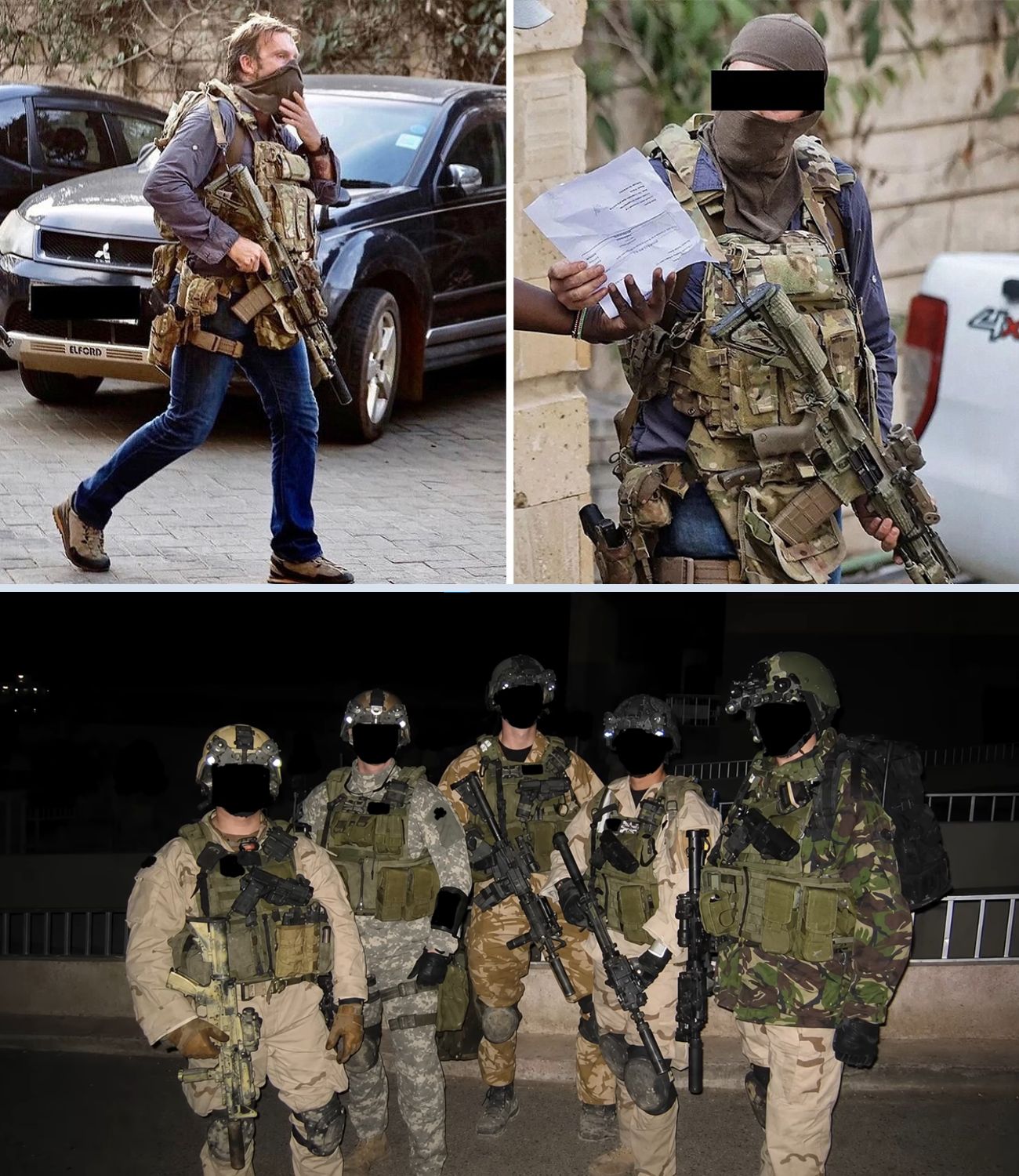
There are five levels of becoming SAS, and each one gets worse. Level one is basic fitness. This is the part normal people think is impressive: push-ups, pull-ups, running, swimming, heavy marches. The trainees do a 40-mile march, a 2-mile swim, and pass brutal physical tests, which were impossible for most people. But, to the SAS, that’s not the hard part. That’s just the entrance fee. You see, being fit does not mean you’re special. It just means you’re allowed to start the real suffering.
Level two is the hills. This is where strong soldiers start disappearing. Candidates are sent to the Brecon Beacons in Wales, one of the most brutal training areas in Britain. Cold rain, thick fog, mud, steep climbs, and heavy weights. Worst of all, they do it alone. There is no team carrying you or cheering you on, and no instructor keeping you motivated. Just a map, a compass, a mountain, and a time limit. They also have to march up and down the highest mountain in Wales. Soldiers turn up thinking they’re fit before the mountain destroys their ego.
Level three is navigation. This sounds boring until you realize it can get you killed. If an SAS candidate gets lost, they fail. Because on a real mission, being wrong is not just slightly bad. It can mean walking into the enemy, missing a drop-off point, or getting your entire patrol killed. So, candidates have to move across brutal terrain while exhausted, cold, hungry, and carrying weight, and then find the exact point they were told to reach. Not close, not nearly. It must be exact. This is where SAS selection becomes psychological. It’s not just about being strong. It’s about finding out if your brain still works when your body is begging you to stop.
Level four is the jungle. This is where the training becomes disgusting. Your clothes never dry. Your boots fill with water. Your feet rot, and your skin gets infected. Everything bites and hurts you. The heat and humidity slowly turn your body against you. In the jungle, even your gear becomes an enemy. If you carry too much, you suffer. If you carry the wrong thing, you suffer. And if you carry something useless, the jungle makes you pay for every step.
And that brings us to one of the most humiliating SAS stories ever. In 1962, an American officer named Charles Beckwith came to Britain to train with 22 SAS soldiers. Beckwith was not weak. He was a US Army Ranger who had served in Korea and Laos. He was the kind of soldier who had every reason to think he was elite. But, when he saw the SAS, he was not impressed. They did not look how he expected elite soldiers to look. They were relaxed and chilled out. They weren’t obsessed with saluting, shouting, or looking good. To Beckwith, they looked like tea-drinking amateurs.
But, when Beckwith began training with the SAS, he realized something. They were not undisciplined. They were so disciplined, they didn’t need to perform it. The jungle broke Beckwith. He became seriously ill and had to leave. An SAS veteran looked through his abandoned kit. Inside was a candle, and to the SAS, that said everything. Beckwith had packed for comfort, while they had packed for survival.
But, Beckwith did something most elite soldiers would never do. He admitted he was wrong, and he learned. He went back to America convinced the US needed a unit built like the SAS. For years, the US Army told him no, until hijackings and hostage crises became too serious to ignore. Eventually, the US Army gave Beckwith approval to create Delta Force. So, America’s most elite special unit was created thanks to lessons learned from the British SAS. That is how respected they are. Every other elite force studies them.
But, we’ve still not reached the worst level of selection. Level five is survival and interrogation. After the marches, the navigation, the jungle, and the exhaustion, candidates are hunted, captured, and interrogated. They’re tired, hungry, and isolated, and are then interrogated for 36 hours in a final test designed to break the candidate’s will. Because SAS soldiers may one day be captured, they may be wounded and alone, and may not know if rescue is coming. In that moment, the only weapon they have is their own mind. That is why SAS selection is so brutal. They’re not trying to create tough men. They’re trying to find numbers who remain useful when everything else has been taken away.
But, selection is only the beginning. The missions where the reputation becomes real. One of the most daring SAS missions took place in Sierra Leone. British soldiers had been captured by a dangerous militia group known as the West Side Boys. These were not normal criminals. They were armed, unpredictable, and deadly. Negotiations failed, so Britain sent in the SAS. This would not be a clean city hostage rescue like the embassy. This was a jungle with villagers, armed fighters, helicopters, and a near impossible target location. SAS paratroopers descended down as a diversion while SAS troops on the ground moved in. The operation was designed to overwhelm the West Side Boys before they could execute the captives or escape. The SAS found the British hostages and got them out. They also found civilian prisoners and freed them as well before eliminating the militia.
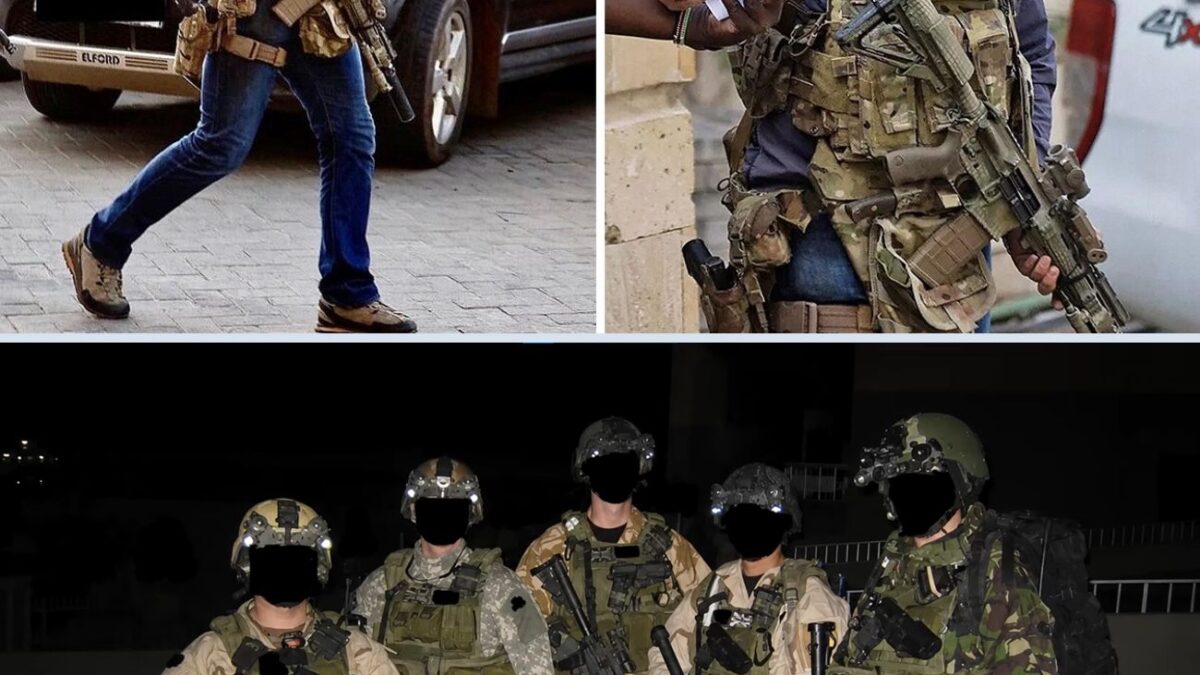
An even more deadly mission took place in Nairobi, Kenya in 2019. A militia group attacked a hotel and office complex. Explosions went off as gunmen moved through the complex. Civilians were trapped inside desperately trying to find hiding places. Kenyan police were overwhelmed, but in the middle of all of this, cameras captured one man who looked completely different from everyone else. He was wearing jeans, a shirt, body armor, and a balaclava. Equipped with a rifle and a pistol, he did not look like a police officer nor a regular soldier. And rather than running away from the gunfire, he was moving towards it.
That man was Christian Craighead, a British SAS operator who happened to have been in Kenya training local forces when the attack happened. When the militia struck, he joined the response helping civilians escape and then entering the complex, rescuing civilians and eliminating enemy combatants. Going back into the danger zone again and again, one man in jeans taking control of the entire situation.
A similar incident happened in 2013. A militia attacked the Westgate shopping mall in Nairobi, Kenya. But in the middle of the chaos, an SAS soldier swooped in. Running towards the gunfire, he helped civilians escape and helped the Kenyan police take out various enemy targets.
An even more deadly SAS mission took place in Libya in 2011. Libya was collapsing into violence during the uprising against Muammar Gaddafi. British and foreign oil workers were stranded in the Libyan desert far away from safety in a country falling apart with armed groups moving around and the situation changing by the hour. So, Britain launched a rescue mission. RAF Hercules flew into the Libyan desert with SAS troops on board. They parachuted in rescuing more than 150 civilians. On the mission, the aircraft was hit by gunfire, but thanks to the skills of the SAS pilots, they made it home safe.
More recently, the SAS carried out various missions in Syria and this is where things get even more secretive. In 2016, images appeared to show the SAS operating in Syria using long-range patrol vehicles with heavy weapons moving around near rebel bases. These were clearly not normal British soldiers. These were small elite teams doing surveillance and black ops as well as advising and training local forces. The SAS is so rarely photographed in the field that just a few images can become international news.
One of the most controversial SAS missions ever took place during the Gulf War. An eight-man SAS patrol was sent deep behind enemy lines in Iraq. Their job was to gather intelligence and disrupt enemy activity, but the mission went wrong. The patrol were discovered. They were cut off in the middle of enemy territory. They tried to escape across the desert. Three passed away, four were captured, and one made it all the way to Syria. The details of their mission is still argued about today, but it shows how dangerous being an SAS soldier is. Not every mission goes perfectly and when the plan collapses, the men still have to try and survive.
The SAS are not selected because every mission goes perfectly. They’re selected because missions often go wrong. Regular soldiers follow the plan, but SAS soldiers are trained for the moment when the plan dies.
One of the most deadly SAS moments took place in Oman. Around 300 rebels attacked a small SAS position. This was not a hostage rescue. Only a tiny number of SAS men were there. They were completely outnumbered, but one of the SAS sergeants had an idea. Talaiasi Labalaba ran to a 25-pounder artillery gun. The gun was normally operated by several men, but Labalaba operated it alone while under attack. Even when he was wounded, he kept firing. Other SAS men fought from the rooftops. As the rebels pushed towards them, the SAS held on long enough for support to arrive, allowing all of them to get out alive. Labalaba became an SAS legend that day, but the deadliest SAS soldiers are probably not the ones we know about. Instead, they’re the ones whose missions are still classified.
That is the real SAS, not fame, not public medals, just results. That’s why on some missions, they may not look like special forces at all, because the point is not to look cool or scary. The point is to win.
During missions, the SAS is famous for using compact weapons, flashbangs, breaching charges, ropes, night vision, body armor, and helmets. But the real weapon isn’t their gear, it’s their speed. When the SAS enter a building, they don’t give their enemy time to think. In seconds, doors explode, windows break, flashbangs detonate, and smoke fills the room. Before the target can understand what’s happening, the SAS are already inside. That’s what makes them so terrifying.
The SAS also overlaps with intelligence agencies. MI5 handles domestic security threats, while MI6 does foreign overseas missions. The SAS is a military unit, but its missions occupy that shadowy space between soldiers and spies, carrying out surveillance, hostage rescue, and sabotage, including operations the British government would not want to talk about publicly. That’s why some people call them soldiers, while others call them spies. They’re basically Navy SEALs and James Bond rolled into one, and that is why so much of their work stays hidden. The public know their famous missions, but their most sensitive operations are never announced in press conferences. They are not explained on the news, and sometimes the world only learns years later that the SAS were even there.
Right now, the SAS is said to be carrying out operations in Ukraine, training Ukrainian troops, gathering intelligence on Russia, and going behind enemy Russian lines, taking out key sites like ammo depots and targets such as military officials.
But, what happens when you mess with the SAS? The SAS do not arrive to scare people. They arrive to finish the job, only operating in the most dangerous places, behind enemy lines, inside hostile buildings, deep in the deserts, jungles, and mountains. In places where a normal soldier would need backup, permission, and a bigger plan, the SAS plan is very different, using far fewer men and making much less noise. By the time the target realizes what’s happening, the most dangerous part is already over, which is why their motto is “Who dares wins.” Because the SAS were built around one terrifying belief, a tiny number of the right men can change the outcome of a much bigger fight.
A few men on ropes can end a siege, and one operator in jeans can stop a militia attack, as long as they’re the right men for the job. A few blurred faces can show up in Syria and Ukraine, and it makes the world ask, “What is Britain really doing there?” But, the scariest missions are the ones we don’t know about. That is exactly how the SAS work. By the time you’ve seen them coming, they’ve probably already won.
You Might Also Enjoy

“We Thought They Would Negotiate”—What Argentine Soldiers Said When The British Attacked Goose Green

“You’ll Never Finish My Ruck March, Limey” — US Sergeant Who Challenged the SAS, Then Fell Out First






