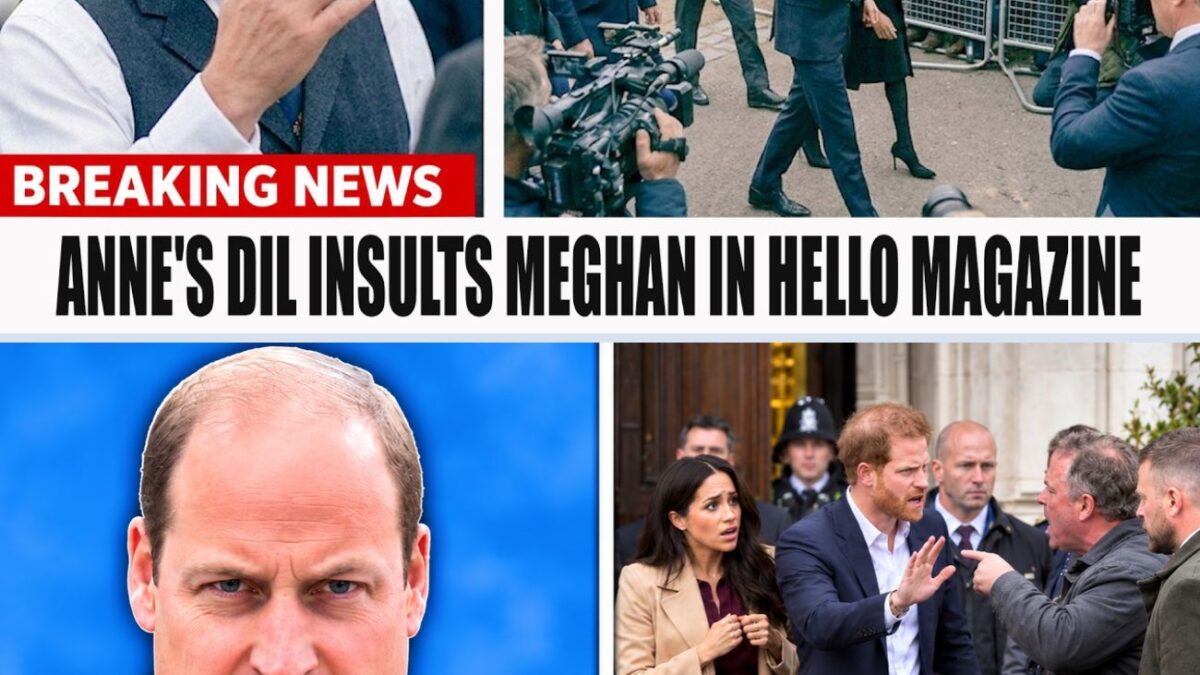
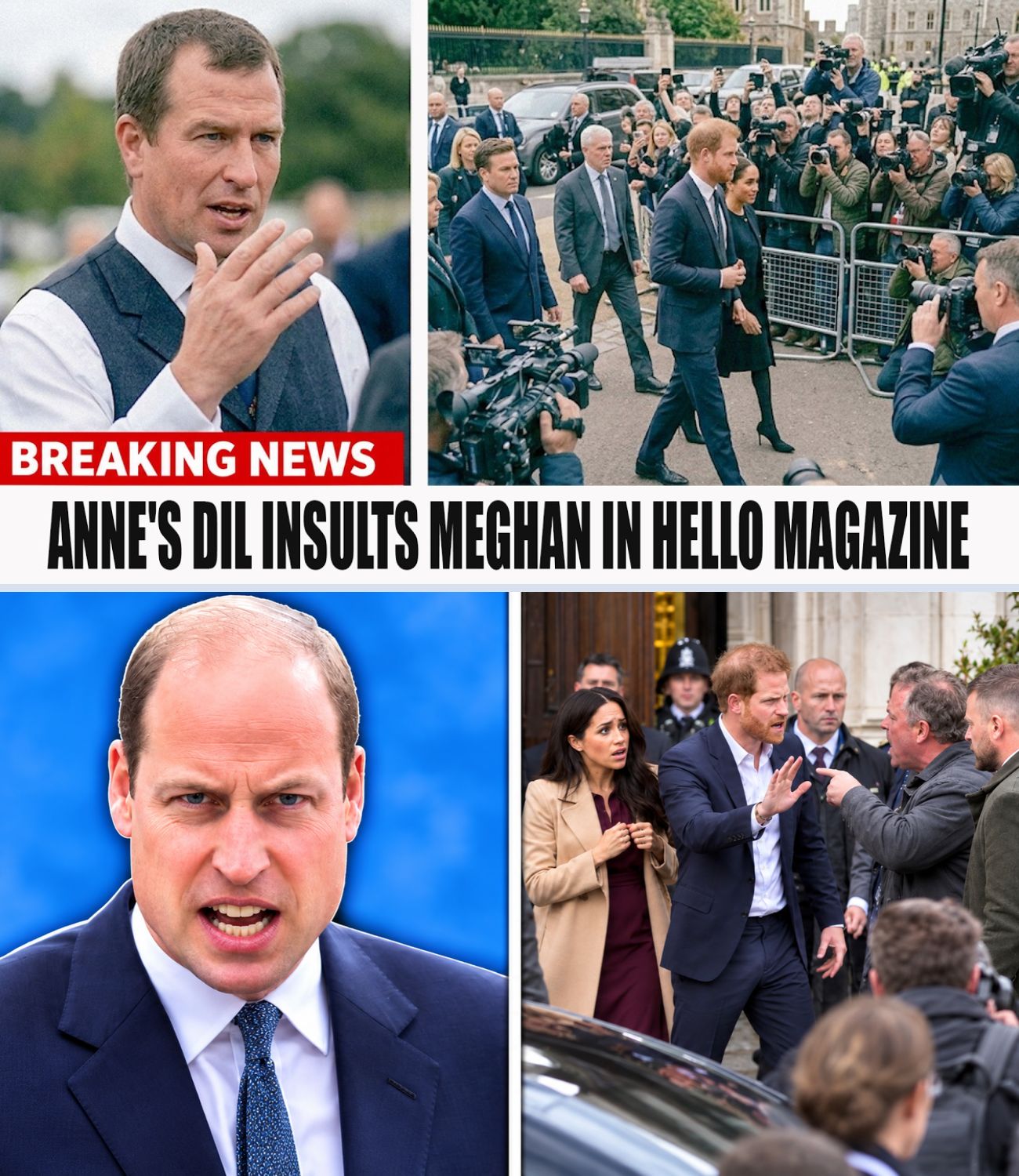
WILLIAM Intervenes!SUSSEX SCANDAL: HARRY & MEGHAN Attempted To BUY Royal Ascot VIP Access!
The Pencil, the Widow, and the Wall: Inside the Royal Ascot Rejection That Broke the Montecito Narrative
The Quiet Office Overlooking the Berkshire Turf
Picture a Tuesday morning in early summer. Inside a sprawling kitchen in Montecito, California—where the marble counters cost more than most people earn in a lifetime—two computer screens glow under the California sun. Sitting right between them on the pristine surface is a physical piece of paper that Meghan Markle has spent the last three weeks attempting to erase from her consciousness. It is an application form for Royal Ascot, sent all the way from Berkshire, England, bearing two blank sponsor lines circled in a sharp, uncompromising stroke of lead pencil. It is a bureaucratic artifact, yet it mocks her from across an ocean.
For five years, the global narrative propagated from this Californian sanctuary has rested on a singular, high-stakes premise: that the British royal family is an archaic, ice-cold institution designed to chew up independent women, spit them out, and slam the gates shut against any outsider who refuses to bow to aristocratic snobbery. At the core of that narrative stood Catherine, the Princess of Wales, subtly painted by sympathetic leaks and tell-all interviews as the ultimate gatekeeper of royal exclusion.
Yet, within less than twenty-four hours, that entire ten-year victim framework was dismantled. And the demolition crew did not consist of Fleet Street tabloids, bitter courtiers at Buckingham Palace, or Prince William wielding institutional power. It was engineered by a former local district nurse who married into the royal family, a 78-year-old widow with an old biscuit tin, and an administrative office run by three people who had never sent an email in their lives.
Seven Lines of Overreach
To understand why a simple racecourse application caused a catastrophic seismic tremor inside the Sussex household, one must look past the glossy magazine covers and examine the mechanics of how the Montecito machine operates. Since stepping down from frontline duties in January 2020, the Duke and Duchess of Sussex have not merely lived in exile; they have monetised an accusation. That accusation—that they were driven out by a hostile, rigid family—carried a heavy commercial price tag, funded by streaming giants, publishing houses, and television networks to the tune of over one hundred million dollars.
But empires built on perpetual grievance require fresh fuel. And when the couple decided they wanted to sample the social prestige of British high society without paying the institutional toll, they hit an immovable object: the bylaws of Royal Ascot.
It began early on a Tuesday morning in London—past midnight in California—when an email landed at the Royal Enclosure office. Composed by the Sussex communications desk, the message was precisely seven lines long. It requested two badges for Gold Cup day, the glittering centerpiece of the five-day summer meeting. The email casually invoked the Duke’s lifelong history with the racecourse, nodded briskly to security protocols, and concluded with a presumption: could the badges simply be held at the security gate for the couple to collect upon arrival?
Crucially, the email omitted an application form, disregarded the rules, and failed to name a single sponsor.
The Royal Enclosure office is not a sprawling corporate conglomerate. It occupies a modest room with grey filing cabinets and a view of the Berkshire turf, operating under rules established in 1711 under Queen Anne. Within forty minutes, officials pulled the card index. Harry had never held an individual membership; his previous entries were strictly part of the sovereign’s carriage procession.
Adhering to centuries of unyielding precedent, the office did not escalate the matter to the King or consult senior courtiers. They simply printed out the standard application form—the exact same document sent to local farriers, retired postmistresses, and district nurses. An official took a pencil, drew two circles around the mandatory sponsor lines, attached a brief, polite covering note stating that all applicants must apply “in the usual way,” and dispatched it to California by international courier.
The £300,000 Cheque and the Borrowed Box
When that envelope landed on the marble counter in Montecito, it was met with immediate disbelief. Meghan’s first instinct was not compliance, but escalation. Within a week, a second communication winged its way back across the Atlantic. This time, the suggestion was floated: would a substantial charitable donation to a racing foundation smooth the administrative friction?
The reply from Ascot was a masterclass in chilling British politeness. Financial gifts, they explained, have zero bearing on Royal Enclosure membership. A charitable donation and a membership badge are entirely separate entities. You cannot buy your way onto that lawn.
When financial leverage failed, alternative routes were explored. A well-connected friend offered to host them in an ultra-luxurious private hospitality box for the Thursday races, placing them just a flight of stairs away from the royal box. But Meghan recognised the trap of a corporate suite. Anyone with deep pockets can rent a hospitality box. What she required was the visual proof—the photograph of the Duchess walking across the manicured grass of the Royal Enclosure, demonstrating to the American media that she could waltz back into the British aristocracy whenever she pleased.
That left one final option: securing two personal sponsors. Harry reached out to an old polo acquaintance who held a lifetime badge. The friend agreed, but on one terrifying condition: someone else had to sign line one first. He refused to risk his social standing by attaching his name to an estranged prince without a primary guarantor.
And so, the entire architectural weight of the scheme rested upon the frail shoulders of an elderly woman living quietly in a brick cottage near Windsor.
The Widow, the Biscuit Tin, and the Letter
The woman in question was a 78-year-old widow who had held an Ascot badge for over forty summers. Over those four decades, she had sponsored precisely eleven newcomers, including a local farrier and a retired postmistress. Her cardinal rule was absolute: she only ever signed for individuals she had personally stood beside in the rain at the rails.
When a social contact from London phoned to ask if she would sign line one as a “personal courtesy,” the widow asked a straightforward question: when was the last time either applicant had stood at the rail on an ordinary, drizzly afternoon without a carriage?
The line went dead silent. Before her electric kettle had even boiled, she declined.
Faced with this refusal, Montecito made a fateful miscalculation. Rather than accepting the rebuff, a formal, sealed letter was dispatched directly to the widow’s private cottage, bypassing all official channels. The letter invoked Princess Diana’s memory, emphasized Harry’s royal bloodline, and subtly implied that refusing to endorse the King’s son would be interpreted as personal hostility.
The widow did not panic. She walked to her dresser, took down an old vintage biscuit tin where she stored four decades of laminated badges, and pulled out a personal note written years earlier. For decades, the widow had volunteered with local health charities in Berkshire—the exact same quiet nursing networks that Catherine, Princess of Wales, had visited for years without camera crews or vanity documentary crews in tow. The widow had stood beside Catherine on damp grass, watching her kneel to comfort elderly patients without seeking headlines.
When the widow compared Montecito’s frantic demands for unearned privilege with Catherine’s quiet, boots-on-the-ground service, her decision solidified. She shared the letter with trusted advisors close to Windsor Castle.
When the contents reached Princess Anne and Prince William, all polite patience dissolved. William did not issue a press release or leak fiery quotes to Sunday newspapers. He simply looked at his senior aides and gave a single, unalterable instruction: let the rules apply. No special dispensation, no side entrances, and no royal intervention. The system would treat Harry and Meghan precisely as it treats any other private citizen who refuses to queue.
The Harriet Phillips Bombshell
While the administrative machinery of Ascot was quietly bolting the doors, a far more devastating blow landed on newsstands across London. Hello! magazine published an exclusive cover story featuring Harriet Phillips—a former NHS district nurse and mother who had recently married Peter Phillips.
Harriet was the antithesis of Hollywood royalty. She met her husband on a muddy sports field while watching their daughters play hockey, and she drank ordinary tea with Princess Anne on wooden benches in the gardens at Gatcombe Park. In her interview, Harriet offered a glowing assessment of Catherine, describing her as open-hearted, remarkably warm, and the very first person she turns to when navigating public life.
The psychological impact in California was immediate and catastrophic. For five years, Meghan had anchored her public brand on the claim that the royal family was structurally hostile to independent women, framing Catherine as the chilly ringleader of palace snobbery. Yet here was an ordinary working-class NHS nurse stepping into the fold, embracing the institution’s quiet traditions, and publicly praising the warmth of the future Queen.
It was a public demolition of credibility served on a silver platter by the very demographic Meghan claimed to champion.
The Halloween Masterclass in Silence
As crisis managers in Beverly Hills scrambled to formulate a response, Catherine delivered the ultimate countermove without uttering a single syllable.
On Halloween morning, while commentators awaited a defensive statement or a carefully staged PR counter-offensive, Catherine opened her personal photo album. She selected a raw, unedited, candid photograph of Prince Louis from when he was a toddler, sitting on a living room floor without a corporate stylist in sight. She posted it to social media with a simple, three-word caption: “Happy Halloween.”
Within minutes, the low-resolution snapshot swallowed the global news cycle, suffocating every headline Montecito had spent weeks orchestrating. It was a masterclass in soft power. It reminded the public that authentic grace does not require multi-million-dollar production contracts or glossy lifestyle brands.
The Closed Ledger
Back in the quiet administrative office overlooking the Berkshire turf, the final act was completed with quiet finality. The senior official finalized the membership register for the upcoming meeting. Every single name on that list had submitted their paperwork in the usual way, backed by two verified signatures from individuals staking their personal honor on the applicant’s conduct.
When the ledger closed, there was no entry for Prince Harry, and no entry for Meghan Markle.
They were not barred by malicious royal spite; they were excluded by their own profound unwillingness to stand in line. In a world increasingly addicted to digital metrics and manufactured outrage, the ancient turf of Berkshire offered a sobering reminder: true institutional respect cannot be demanded as an entitlement. It must be earned through quiet duty, patience, and the willingness to stand in the rain with everyone else.
You Might Also Enjoy

“We Thought They Would Negotiate”—What Argentine Soldiers Said When The British Attacked Goose Green

“You’ll Never Finish My Ruck March, Limey” — US Sergeant Who Challenged the SAS, Then Fell Out First






