William SILENCES Camilla’s Clan! Catherine’s Parents FINALLY RECEIVE The Royal Honor Charles DENIED!
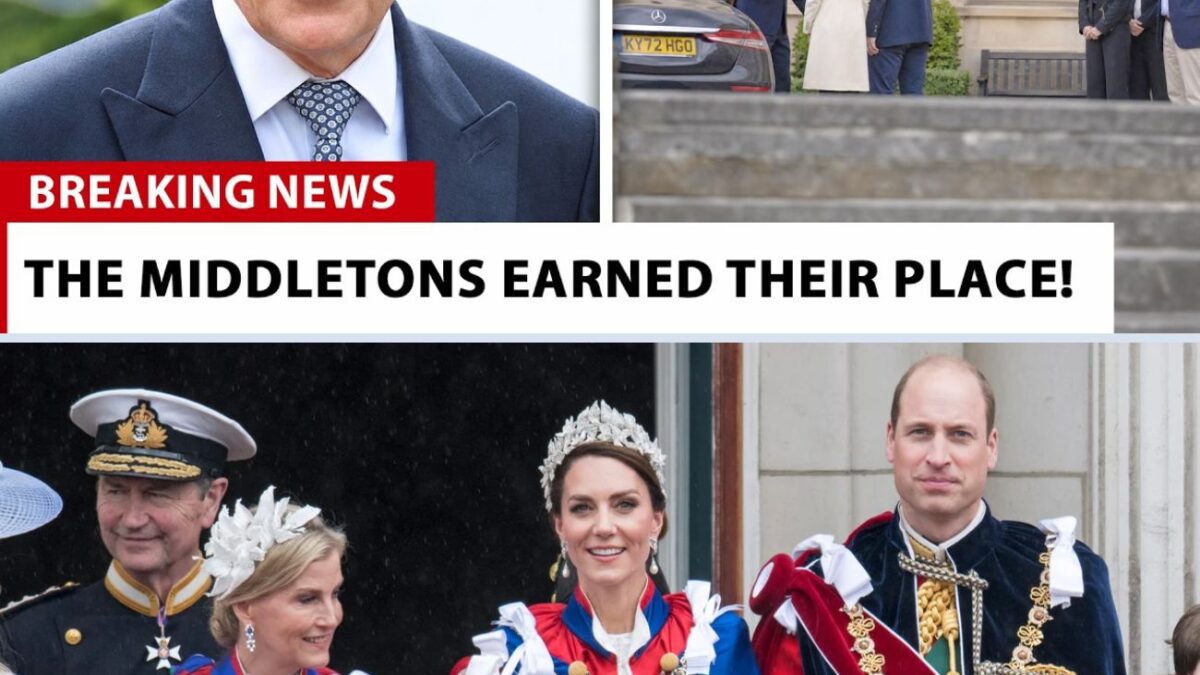
THE WINDSOR GATE WAR: How Prince William’s Secret Act of Defiance Exposed a Forgotten 21-Year Royal Secret and Left Queen Camilla Reeling
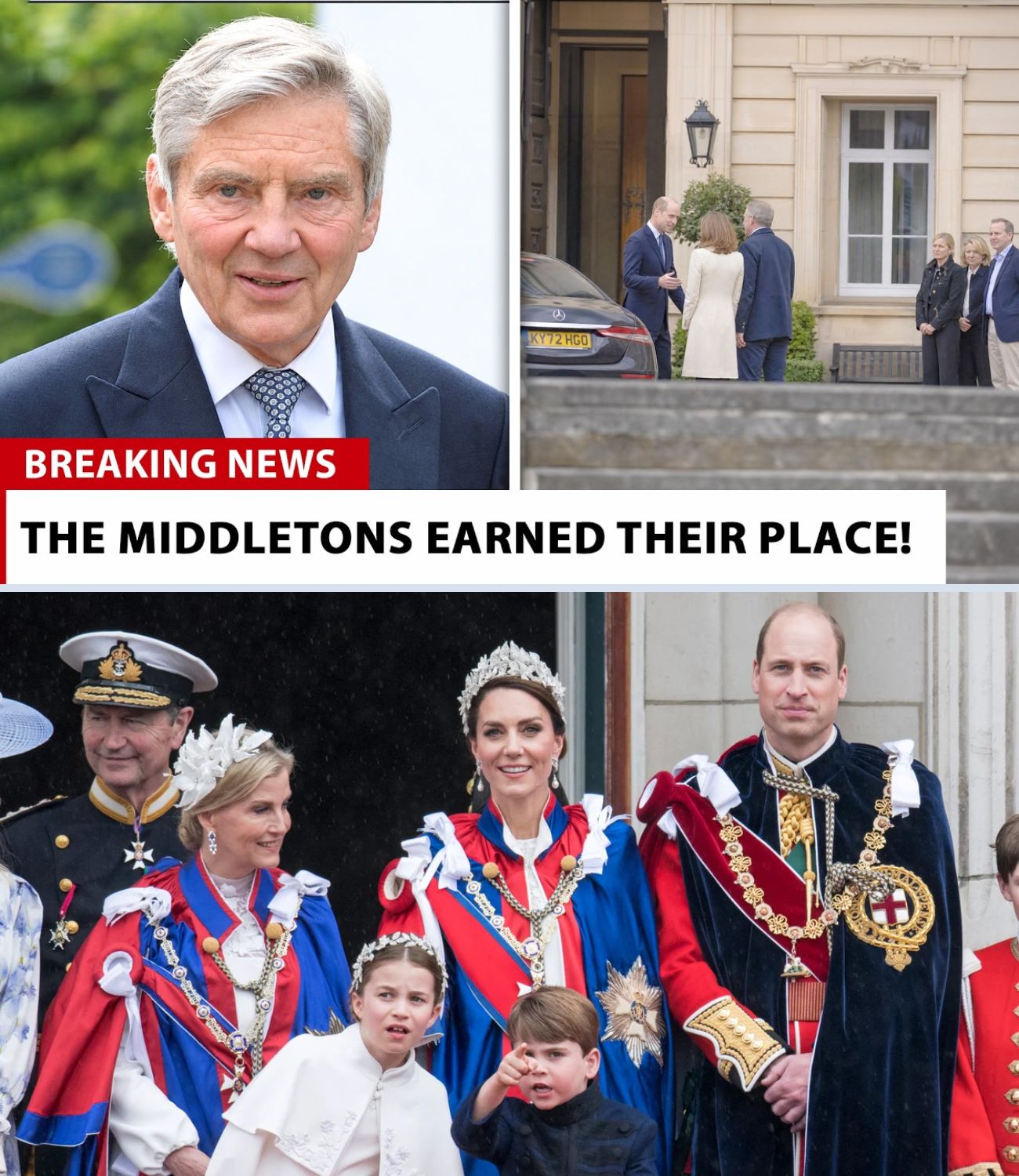
The machinery of the British monarchy is a vast, ancient, and often merciless leviathan that operates almost entirely on momentum. For decades, its survival has depended upon an unwritten code: once a precedent is established, no matter how arbitrary or inconvenient, it is rarely questioned. It is simply allowed to harden into absolute law, sustained by layers of administrative autopilot. But every so often, a quiet human collision occurs within those high stone walls—a small, seemingly mundane friction that jams the gears and exposes the rusty cogs turning beneath the surface.
Such a moment unfolded on a fiery, damp Tuesday evening in early September, when Prince William returned to Windsor through the steady autumn drizzle. Approaching the barrier near Forest Lodge, his vehicle slowed to a halt. Ahead of him, an engine was running, windshield wipers rhythmically slashing away the rain. Standing outside in the downpour, clad in a heavy waxed jacket with the hood pulled low over his forehead, was Michael Middleton. Inside the passenger seat sat Carole, holding a meticulously wrapped, covered meal. They had been standing at that security checkpoint for twenty-six minutes.
They were not being blocked by malice or political protest; rather, their names simply were not on that evening’s active guest list, and a young, mortified security officer was waiting anxiously for digital confirmation from the main house. When William stepped out into the rain to inquire why they had been left waiting, Michael glanced at his watch with practiced humility, offering a reassuring smile. “Not long, sir. Everything’s fine,” he murmured. The young officer looked thoroughly distressed, explaining that the notification paperwork had arrived past four o’clock. Michael gently placed a hand on the guard’s damp shoulder, looking directly at William. “Don’t be angry with him. He’s just doing his job properly.”
Then came the sentence that would linger in the Prince of Wales’s mind for days to come, spoken without a trace of bitterness or theatrical grievance: “We are used to being visitors.”
It was a quiet, devastating statement of fact from a man who had spent a decade and a half orbiting the most elite institution in Britain while remaining legally classified as an outsider on the threshold of his own daughter’s home. What followed was not a passing family grievance, but an exhaustive forensic audit that would rip open old wounds, challenge the unexamined habits of a twenty-one-year marriage, and force King Charles to confront a ghost he thought he had buried forever.
The 412 Entries and the Silence of the Gate
Had it been an isolated incident, the delay at the barrier might have been smoothed over with a hurried telephone call and a bottle of fine wine. But William, struck by the quiet dignity of his father-in-law standing in the rain, demanded something unprecedented: the complete printouts from the gate logs covering every entry of Mr. and Mrs. Middleton since the family relocated to Windsor four years prior, encompassing both Adelaide Cottage and Forest Lodge.
When the thick dossier arrived on his desk the following afternoon after lunch, it contained 412 distinct entries. Four hundred and twelve times in four years, Catherine’s parents had passed through those heavily guarded gates, and every single time, they were officially recorded as mere “visitors,” with the stated purpose of their presence prosaically marked down as “private.” It amounted to an average of roughly twice a week, every single week, for four years.
As Catherine sat at the kitchen table going through the printouts alongside William, the sheer institutional absurdity of it began to dawn on them. At first, she focused not on the dates, but on the timestamps: regular registrations recorded before eight o’clock in the morning throughout four bitter winters. Her parents had driven an hour in the pitch dark from Berkshire morning after morning to help look after the grandchildren, a quiet sacrifice that had apparently been registered by the state as nothing more than casual social drop-ins.
Then she turned the page and found the handwritten notes column. Nine times, written in different officers’ handwriting across four different seasons, appeared a recurring, silent annotation: Mr. M. suggested waiting outside.
Different guards, different months, yet the exact same man making the exact same unprompted suggestion to spare the staff administrative trouble—and never once mentioning it to his own daughter or son-in-law. Catherine placed her finger gently over the final entry, her voice dropping to a whisper. “He’s been doing this since Adelaide Cottage. He never told me.”
William did not hesitate. He gave immediate instructions to reclassify the Middletons from the visitor logs to the permanent family list, ordering the issuance of a private gate key and an updated electronic access pass. It was, financially speaking, the cheapest executive decision William had made all year—costing little more than a brass blank and a laminated card. Yet Catherine immediately anticipated the psychological barrier. “Did you ask them?” she challenged. “If not, don’t give it to them as a gift. Dad will refuse it.”
She was entirely correct. Michael Middleton was a man built on a lifetime of quiet independence; he had spent fifteen years avoiding the trap of entitlement. When William drove out to Berkshire unannounced on Tuesday morning and placed the small white envelope containing the brass key and pass card on the kitchen table, Michael’s reaction was immediate discomfort. After William explained the gate logs, the 412 entries, and the nine times he had offered to stand in the rain, Michael shifted uncomfortably in his chair with the acute embarrassment of a man caught red-handed in an act of profound decency.
“We don’t need a key,” Michael said softly, offering the predictable, sincere refusal Catherine had foreseen.
William pushed the envelope an inch closer across the wood. “I know you don’t need this. That’s the point. You never needed anything from us. You never asked for anything. Fifteen years, and you haven’t said a single word about us to anyone who shouldn’t have heard it. You drive an hour each way in the dark, then offer to stand in the rain so a young officer doesn’t get into trouble.” He tapped the envelope. “This is not a gift. This is a fix. You have never been a visitor. The documents were erroneous.”
It was a clever rhetorical distinction. One can politely reject a gift, but correcting an administrative error is much harder to wave away. Carole Middleton, who had remained entirely silent during the exchange, looked at the key the way one looks at a letter meant to be read alone in the dark. She looked up, her eyes sharp and knowing. “Does your father know?”
“He’ll find out on Friday through the standard weekly briefing.”
“And Camilla?”
William paused for a fraction of a second. “Her children never had this.”
Carole offered a measured, gentle nod. It was not phrased as a question; it was the first time anyone inside that circle had voiced what was quietly rotting beneath the surface of the royal household. Carole quietly placed the envelope into the drawer by the stove. “Then we’ll be careful with him,” she said—not offering gratitude, but caution. She already understood that a small piece of brass could carry the crushing weight of institutional politics.
The Lord Chamberlain’s Memo and the 21-Year Shadow
The system, however, was not long in catching up. Within days, a single sheet of cream-coloured paper arrived from the Lord Chamberlain’s office, confirming an immutable bureaucratic truth: no father-in-law, mother-in-law, stepson, or other relative by marriage of any member of the royal family currently held formal “family status” within the Windsor security ledgers. It was delivered not as a reprimand, but as a neutral statement of historical fact.
Yet, buried in the final paragraph was a single, devastating sentence that William’s private secretary had underlined in red ink before handing it over: Since the King’s marriage in 2005, Her Majesty’s children have been brought in as guests every single time.
Twenty-one years. Two decades of marriage, and every time Tom or Laura Parker Bowles visited their mother within a royal residence, they had been logged in with paper visitor passes and lanyards like visiting utility contractors. When the private secretary warned William that the move would inevitably invite comparisons, William offered a grim riposte: “It’s a comparison, but not the one people would think of.”
Word reached Camilla before the King chose to address it. Her personal secretary, anxious to maintain protocol, delivered a courtesy copy of the memorandum to Clarence House. Camilla read the two short paragraphs twice—once for the literal wording, and once for the institutional architecture behind it. She felt no immediate flash of anger toward the Middletons; she had always held a quiet, pragmatic respect for Michael and Carole, having shared numerous polite afternoons with them at public fixtures.
Her reaction was triggered entirely by that final paragraph. That very afternoon, her daughter Laura arrived for tea. Her car was stopped at the gate while her name was checked against the daily manifest, entering with a paper visitor’s pass dangling from a green lanyard. It was a routine as old as the marriage itself. Neither Laura nor Tom had ever uttered a public word of complaint about it.
As Laura unclipped her lanyard in the drawing room and tossed it onto the polished mahogany side table, Camilla’s eyes locked onto the string. The paper pass represented a transient authorization given to anyone passing through the gate; the cream-coloured memo on her desk represented a twenty-one-year institutional reality. Sitting by the window long after her daughter departed, Camilla found herself forced to confront a question she had deliberately avoided for two decades: when the heavy doors of this family closed, which side of the threshold did her own children actually stand on?
The Sunday Dinner Showdown in the Oak Hall
The inevitable family reckoning took place the following Sunday at Windsor Castle following morning church services. As the family gathered in the historic Oak Hall for coffee, the footmen quietly retreated, closing the heavy doors behind them. The silence that settled over the room was not peaceful; it was heavy with anticipation.
Camilla waited until the attendants had vanished, then spoke with the casual, disarming candour she reserved for moments of profound tension. “William, it seems Michael and Carol now have a key.”
William answered without flinching. “Yes, they do. Over four years, they were recorded as visitors 412 times. I fixed it.”
Camilla offered a warm, placating smile, assuring him she bore the Middletons no ill will. Then she dropped her quiet question into the center of the room—a question designed to pierce the armour of the entire establishment. “My children have been guests every single time for twenty-one years. That is recorded. Someone wrote it down. I just want to know if anyone ever considered them family.”
It was the most potent, irrefutable argument possible. She was not attacking Catherine’s parents; she was exposing a systemic vacuum that nobody in the room could answer.
Princess Anne, standing near the towering Gothic window with her characteristic pragmatic rigidity, broke the silence. “The problem, William, is what happens next. Every single relative in this extended family is now going to wonder why they don’t have a brass key.”
“Then let them show me 412 records,” William countered sharply.
Anne offered a dry, humorless smile. “They deserved it. I don’t deny that for a second. But I’ll tell you right now what the Lord Chamberlain’s office is going to think.”
Catherine spoke then, directing her words exclusively to Camilla rather than the wider room. “My parents didn’t ask for this. They tried to refuse it.”
“Mine didn’t ask either,” Camilla replied quietly, her voice tightening. “That is precisely the point.”
She turned her gaze toward the far corner of the room, fixing it upon the only person who had remained entirely mute throughout the exchange. “Did you know, dear?”
King Charles sat in a high-backed armchair by the window, holding a delicate porcelain cup and saucer steady in his hands. He had known about the gate reclassification for over a week. Everyone in the room knew he had known. Yet he offered no immediate defense, no administrative explanation, no diplomatic smoothing over. He simply stared out across the wet parkland, holding his teacup perfectly still.
The antique clock on the mantelpiece ticked loudly through the vacuum. According to a royal page stationed just outside the heavy oak doors, it was the longest, most suffocating silence ever endured in that room—lasting upwards of twenty-five agonizing seconds.
Finally, Charles lowered his cup onto its saucer with a faint, ceramic click and asked Anne whether the harvest had been brought in safely at Gatcombe Park yet. That was all.
Camilla held his gaze for a heartbeat longer, then stood up, announced she needed some fresh air, and walked out onto the stone terrace alone. No one moved to follow her.
The Blue Folder of 2005
In the inner courtyard as the cars prepared to depart, Princess Anne intercepted William near the steps. “Do you think he disapproves?” William asked, visibly frustrated by his father’s infuriating detachment.
Anne pulled on her leather driving gloves. “No. And you’ve got it entirely wrong. It wasn’t disapproval. I’ve seen that exact look on his face once before, a very long time ago, right after he married her. That is the face he makes when someone asks about something he should have done, but didn’t.” Before William could press for clarification, she climbed into her vehicle and swept out of the courtyard.
Determined to trace the root of the institutional oversight, Catherine requested a private audience with the Queen at Clarence House on Tuesday morning, meeting without staff or secretaries to smooth the edges. In the morning room, Camilla was remarkably composed.
“I am not angry with your parents,” Camilla assured her directly. “And I am not angry with William. He did a worthy thing for people who were entirely worthy of it. But I have two children who spent years dodging camera lenses in supermarkets simply because of whom their mother married—children who never aired their grievances publicly, who come to visit me, and who are handed a visitor pass at the gate like a meter reader. It’s profoundly unfair to the person checking the meter.”
Catherine laughed involuntarily, and Camilla joined her for a fleeting, human moment of shared exhaustion. Then Camilla returned to the core of her pain: “I deliberately kept them away. I didn’t want them dragged into this circus. I thought I was protecting them. But I want to know who decided they were visitors—was it a hard rule, an executive decision, or simply something that no one ever dared to change? And if I find out, I want to know why.”
Armed with that promise, Catherine urged William to bypass the modern bureaucratic memos and dig into the archival case files from the Lord Chamberlain’s office. Two days later, a faded blue folder was brought in from the archives, its label printed on an archaic typewriter that had not seen active service in decades. It was dated from the weeks immediately following Charles and Camilla’s Windsor town hall wedding in 2005.
Inside lay a single, neatly typed draft originating from the personal office of the then-Prince of Wales at Clarence House. The title was stark and unambiguous: Suggested Marital Status: Mr. T. Parker-Bowles and Miss L. Parker-Bowles.
The document proposed precisely what William had just done for the Middletons: that Camilla’s children be officially recognised as family, not guests, across Clarence House, Highgrove, and Birkhall, complete with their own private keys and access cards, implemented quietly without public fanfare.
King Charles had not been opposed to the idea; he had thought of it first.
At the bottom of the yellowed page, scrawled in handwriting William had known since childhood, was a definitive instruction: Wait. She wants them to be kept out of all this for now. Come back to this in a year. It was endorsed and dated May 12, 2005.
A single year. That was all the pause was ever intended to be. But the year had passed, and no one had ever reopened the file. The draft remained locked in the folder, and the household staff had continued treating the Queen’s children as transient guests simply because that was the final active instruction on record.
Catherine placed her palm flat against the paper. “So… no one actually decided that they were visitors?”
“No,” William whispered, staring at the ink. “Someone decided to wait, and then twenty years passed because no one was ever ordered to end the pause.”
The Unfinished Sentence
The mystery of the Oak Hall silence suddenly evaporated. Charles had been unable to answer Camilla’s questions honestly without exposing truths he could not voice in front of his son, daughter-in-law, and sister: that he had once wanted precisely this family integration for her children, that Camilla herself had asked him to pause for their protection, and that he—not she—had simply failed to pick the thread back up. He could not object to William’s key without condemning his own forgotten paperwork, nor could he defend the rigid exclusion without airing twenty-year-old private decisions. So he had chosen silence.
Yet William refused to let the matter quietly dissolve. Instead of quietly rolling back the Middleton key to restore domestic harmony, he marched back to the castle with the blue folder tucked under his arm on Saturday evening, requesting a private audience with his father.
When William laid the document before him, Charles recognized his own handwriting instantly. He read through the typed lines once, closed the leather cover slowly, and kept his palm resting over the title.
“I intended to,” the King murmured.
“I know,” William replied evenly. “Then finish it. Not for me. For her.”
There was no raised voice, no theatrical confrontation—just a son handing his father back his own unfinished sentence. Charles took up his pen.
By Saturday morning, the blue folder had been delivered personally to the Queen. Beneath the old 2005 entry, in the same familiar handwriting but aged by two decades, a brief, new line appeared: Reviewed September 2026. It’s up to you, Ch.
Camilla read the note in absolute solitude. Those who caught glimpses of her over the weekend noted an uncharacteristic calm settling over her features—not because of a brass gate key, but because the forbidden question had finally been dragged into the light. Below Charles’s note, she penned her final, definitive response: Still not. They love their lives, just like I do. But thank you for asking.
Her children would remain guests of their mother’s choosing, but the distinction was now officially recorded by her own hand rather than maintained by administrative negligence.
A few days later, the farm manager’s weekly logs returned through the red dispatch boxes. Attached was the paperwork from early September that had previously been returned blank. Next to the entry for Mr. and Mrs. M. Middleton, inscribed in the unmistakable, sweeping hand of the sovereign, were three final words: “They deserved it.”
At 5:57 on a crisp autumn morning, a dark station wagon rolled up to the Forest Lodge barrier. The metal arm lifted before the vehicle even came to a complete stop. The young guard who had stood anxiously in the downpour weeks prior raised his hand in respectful salute; Michael Middleton returned the gesture with a quiet nod, while Carole held a covered dish safely in her lap.
In the official travel ledger, the entry was reduced to a single, clean line: Middleton, M. and K. Family.
In the notes column, for the very first time in 413 entries, absolutely nothing was written. After twenty-one years of waiting, of quiet sacrifices in the rain, and of systems running blindly on autopilot, an empty column had finally been earned.
You Might Also Enjoy

“We Thought They Would Negotiate”—What Argentine Soldiers Said When The British Attacked Goose Green

“You’ll Never Finish My Ruck March, Limey” — US Sergeant Who Challenged the SAS, Then Fell Out First






