“You Do as I Say.” The Night the SAS Stood Against US Command in Kandahar
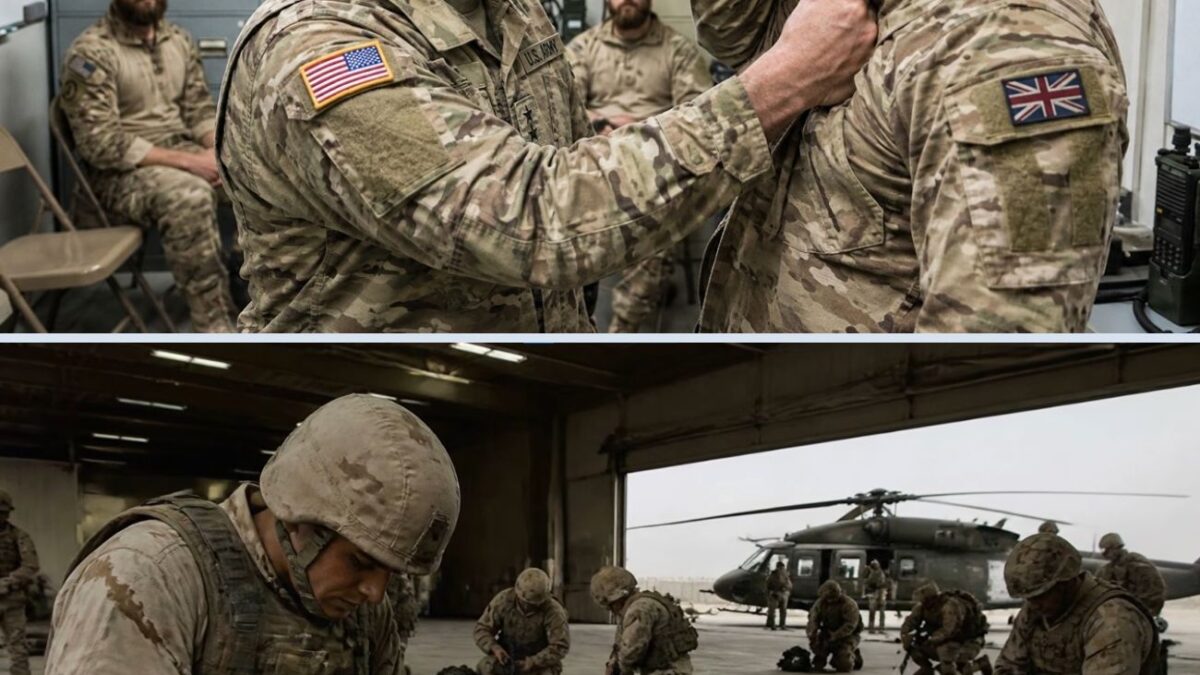
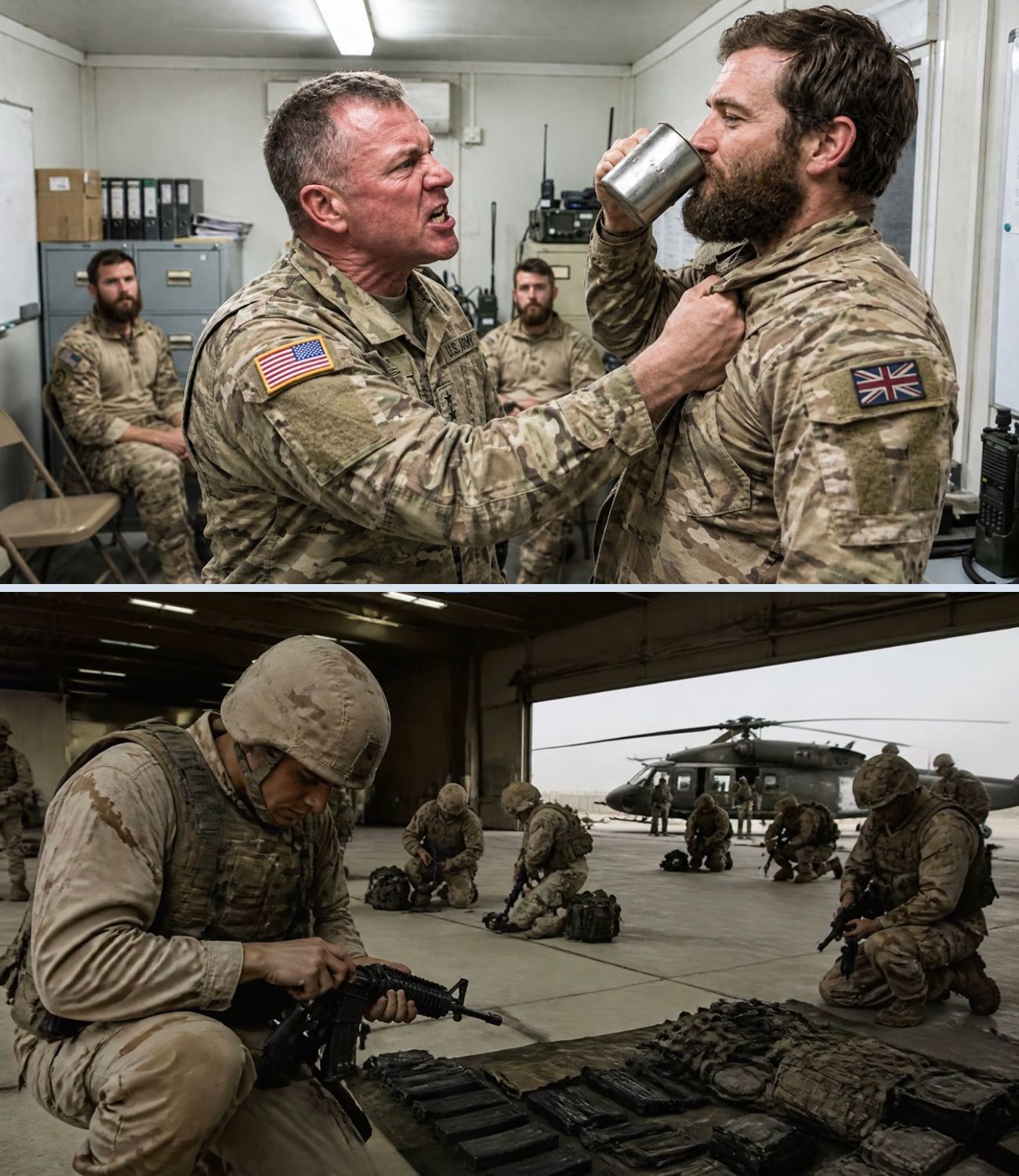
You are standing with your back against a gray filing cabinet in a plywood operations room at Kandahar airfield and a United States Army Brigadier General has just taken a British special air service by the front of his shirt. “You do as I say,” the general says, 6 in from the sergeant’s face, and every man in the room hears it.
His fist is bunched in the fabric just below the Union flag on the sergeant’s shoulder. His knuckles are white. His face has gone the dark blotched red of a man who has not slept in 30 hours and has just been told no by someone he outranks by a distance that has no name. The words United States Army are stitched above his pocket, and the flag on his own sleeve is the one every soldier on this airfield answers to.
In the end, the sergeant does not look at him. He looks past the general’s ear at the whiteboard. Someone has drawn a red oval there and written the letters H, L, and Zed beside it in capitals for helicopter landing zone. Under that is a time, 2200. Then the sergeant lifts a battered steel mug and drinks his tea. He does not hurry and he does not perform.
He drinks like a man who has already decided what he is going to do and has no further use for the argument. The fluorescent tubes hum overhead on the trestle table under the window. Three radio sets sit in a nest of cable, their handsets clipped and silent because every man who would speak into them is in this room watching.
By the door, an American sergeant major holding a paper cup of sunflower husks has stopped chewing. In the middle of the room, a little behind the two men, the British squadron commander has not moved at all. His beard hides most of his expression. What it does not hide is that he is not going to intervene.
In a little under 6 hours, helicopters are meant to land on that red oval 200 m from a mudwalled compound in the great country west of the city. They are there to take a man who builds the bombs that have been killing soldiers on the roads of Kandahar. The general has ordered it. The sergeant has refused. Between those two facts sits the life of every man who would ride those helicopters in.
You should know now that by dawn one of these two men will have been proved right in the only way that counts out here, which is by who comes home. And you should know that years later the general will stand in front of a room of American officers and describe this moment in words that no one in this bright room would have believed.
To understand how he came to have his hand in another soldier’s shirt, you have to go back seven weeks to the day he landed in Kandahar, certain of one thing. He knew what speed was for. His name was Curtis Halverson, and in the autumn of 2010, he was 52 years old and one of the most respected light infantry officers of his generation in the United States Army.
He had grown up on a dairy farm outside Fergus Falls, Minnesota. The son and grandson of Norwegian immigrants, milking before school in winters that froze the water in the troughs. He had the complexion to prove his ancestry, a face that went pink in a breeze and scarlet in an argument. He was commissioned through the University of Minnesota in 1981 and went straight to Ranger School, where he earned the black and gold tab at Fort Benning.
From there he was posted to the first battalion 75th Ranger Regiment at Hunter Army Airfield in Georgia. Two years later on the morning of the 25th of October 1983 he was a platoon leader standing in the door of a C30 over the runway at Point Salines Granada with the hot wind of the Caribbean tearing at his sleeves.
The aircraft came in at 500 ft. They flew that low because the anti-aircraft guns on the ridges could not depress far enough to hit them. At 500 ft, a reserve parachute is only extra weight because there is no time to use it, and Halverson, like many of the men around him, took his off before the door opened.
He jumped with his rifle, his rucksack, and a main canopy that had barely filled before his boots hit the tarmac. There was fire coming off the high ground. His platoon was off the runway and into cover in minutes, and he never forgot why they lived. The gunners were still adjusting for the aircraft when the Rangers were already on the ground and moving.
That morning gave him the belief he carried for the next 27 years. Speed is life. The man who hesitates gets people killed. He jumped again at Rio Hatau, Panama in 1989. this time as a captain at night into a darkness full of tracer. By 2003, he commanded a ranger battalion and he took it through rotations to Afghanistan and Iraq in the years when the regiment was doing more raids in a month than it had done in the previous decade.
His battalion’s alert to wheels uptime was a number he could still recite from memory years afterwards. It was faster than the standard and faster than his peers, and his men were proud of it. Targets fell to them early before the enemy had finished deciding where to sleep, and again and again he came home with men who should not have come home.
On his left wrist, through all of it, he wore the same black plastic digital watch. He had bought it at the post exchange at Hunter before Granada, and it had survived two combat jumps and more than two decades of rotations. He checked it the way other men touch a wedding ring. Staff officers learned to read his mood from how often he looked at it.
Once a minute meant he was thinking, every 10 seconds meant somebody was about to be relieved. Promotion to Brigadier General came in 2009. He was clever, blunt, and physically hard. A man who still ran the hills at dawn with soldiers half his age. Loyal to his soldiers to the point of fury, he was right far more often than he was wrong, which is exactly what makes a man dangerous on the one night he is not.
This is a story about two things that usually travel together and sometimes do not. Rank tells you who decides. It does not tell you who can see. On the night that matters, those two things will stand on opposite sides of a whiteboard in Kandahar. One of them will be wearing a single star. He landed at Kandahar airfield in late August 2010 in the middle of a heat that pressed on the back of the neck like a hand.
By then, the airfield had become one of the busiest in the world. Jets and helicopters worked the runway day and night, and the dust was so fine it got into sealed laptops and the seams of your socks. On the boardwalk at the center of the base, soldiers from a dozen nations queued for coffee under the noise of departing aircraft.
When the wind turned, the whole airfield smelt of the sewage lagoon on its edge, which everybody called by a much rudder name. You stopped noticing it after a week. You never quite stopped noticing it. Halverson was the new deputy commander of a joint special operations task force. The coalition’s campaign that Autumn was pushing into the districts west of Kandahar City, and his job, as he described it later, was to keep the target deck moving.
That meant a steady, relentless pace of night raids against the networks feeding fighters and explosives into the fight. for that rotation. By his account, a squadron of the British Special Air Service was working under the task force’s operational control. The precise arrangements have never been made public. What Halverson knew was simple.
He assigned targets. He approved plans. And he owned the clock. He also had a reason to care that went beyond the job. Three weeks before he arrived, a staff sergeant named Wade Tiller had stepped on a pressure plate on a track in Jarry district and died before the helicopter reached him.
Tillery had been a 19-year-old private in Hal Vorson’s battalion. Halvorson had pinned his first award on him on a parade ground in Georgia and told him he would make a fine squad leader, and he had. Tillery had left the regiment for a line unit and a promotion, and he had gone to Kandahar with a wife and a baby daughter waiting back at Fort Campbell.
The device that killed him had been traced through the patient forensic work that followed every blast to a network run by a man the task force knew only by his code name, Sparrow Hawk. He was careful. He never slept in the same compound twice. His improvised explosive devices were the reason soldiers on the roads west of the city moved at walking pace behind men sweeping the ground with metal detectors.
Halverson read the file on his first night under a desk lamp in a room that still smelt of the last man’s coffee and then he read it again. At his first staff meeting in the task force headquarters, the battle captain ran through the forces available and when he reached the British squadron, he paused.
“Sir, one thing, they’re very good. They don’t always love our timelines.”
At the end of the table sat a United States Army Special Forces Sergeant Major Named Hector Vilobos, the task force’s liaison to the special operations teams. He spat a sunflower husk into a paper cup. He did it constantly, and the cup was always there.
“They’re good, sir,” he said. “They’re different.”
Halverson did not look up from the target list. He had trained alongside the British before on exercises and exchanges, and he respected them. He simply did not see the problem.
“Everybody’s different until the clock starts, Sergeant Major,” he said. “They’re guests in my battle space. Guests keep my hours.”
Vobo spat another husk into the cup and said nothing. Somebody wrote the line down and it went round the headquarters by lunchtime. It was not said with contempt, and the men who repeated it did not take it as contempt. It was said with the easy certainty of a man who had jumped at 500 ft and never once been punished for being fast.
It would take him 7 weeks and one afternoon to find out what the British did with other people’s hours. On his fourth morning, he walked across to the British lines unannounced. At 7:00, with his aid two paces behind him, and the sun already hot on the gravel, he had expected something like a ranger compound, he expected a shout of attention, men coming to their feet, a harried officer hurrying out to meet him. Nobody shouted anything.
In the shade of a wall of blast barriers, a dozen men in mixed kit sat on ammunition boxes and camp chairs. Some wore faded desert trousers, some the new British pattern, and more than one wore a t-shirt that had given up years ago. Most had beards. One was cleaning the bolt carrier of an L19A1 carbine laid out on a towel.
The suppressor stood on its end beside the parts, the smell of gun oil sharp in the morning air. Two were asleep. Somebody had a kettle going on a gas burner, ticking and hissing as it came to the boil. A few of them looked up, registered the star on his chest, and nodded. It was polite and unhurried, the nod you would give a neighbor over a garden fence.
The man who stood up was a sergeant named Nile Faraday. He was 38 from Wigan with a dark beard gone ragged at the edges. He had passed selection on the Breen Beacons in Wales in the winter of 1998 and had served out of Sterling Lines at Cedenhill outside Heraford ever since. In his right hand he held a steel mug.
It was dented at the rim, blackened on the base and big enough to shave out of. By the squadron’s account, it had been in his Bergen on every tour since his first, and the tea in it was brewed so strong that the younger troopers claimed it could strip paint.
“Morning, sir,” Faraday said. “Brew?”
Halverson declined. He asked for the squadron commander, and a lean officer in his 30s came out of a doorway, wiping his hands on a rag. He was Major Anand Partia, born in Leicester, a former infantry officer who spoke so quietly that people found themselves leaning in to hear him. Most of them realized later that it was deliberate.
“General, you’re very welcome. We’re about to brief a task for tonight if you’d like to sit in.”
The brief took place in a plywood room with a whiteboard and a set of gray filing cabinets. It had no projector, no slides, and no one standing at a lectern. Faraday stood at the front with the mug in one hand and a marker in the other and talked for 11 minutes. Halverson, without quite meaning to, timed it. Faraday covered the ground, the enemy, the route, the actions on contact, the casualty plan, and the moment at which they would abandon the task and come home.
Then he said, “Questions?”
There were none. Instead, one by one, without being asked, each man said his own part back in a sentence, or two, his position, his task, and his fallback. Nobody wrote anything down. When the last man finished, Faraday nodded once, and the brief was over.
Halverson had sat through thousands of orders groups. He knew good ones from bad, and he knew how long a thorough brief took, because his own ran long, and he was proud of that. He had assumed the beards and the kettle meant a looseness he would have to manage. He walked out of the room with the uncomfortable sense that he had just watched the most disciplined 11 minutes of his week and that nobody had needed to raise their voice to get it.
That afternoon he came back to watch them rehearse. At the edge of the British lines, someone had built a rough mockup of an Afghan compound from plywood, sandbags, and engineer tape that snapped and fluttered in the hot wind. Faraday’s troop walked through the entry at a slow, deliberate walking pace. It looked, to Halverson’s eye, almost comic, grown men creeping up to a painted doorway as if they were afraid to wake it. They stopped.
Faraday said something quiet. They went back and walked it again, then a third time, still at a walk, and a fourth. Halvorson turned to him.
“When do they run it at speed?”
Faraday sipped from the mug and considered the question as if it were a fair one, which it was.
“Speed comes on its own, sir,” he said. “If it’s right at a walk, it’ll be right at a run. If it’s wrong at a walk, running just gets you there wrong quicker.”
Halverson was a ranger. Rangers rehearsed. He knew the principle and had preached it to leftenants for 20 years. What unsettled him was how far they took it and how certain they were that the speed would come without being asked for.
That night the troop ran the task for real. A small one, a single compound and a single man. Halverson watched it on a screen in the operation center, his watch in his line of sight the whole time. They were not fast, they were never once slow, and they came home without firing around.
In his third week, the task force received a report that Sparrow Walks network was using a compound near the Argandab River in Jari as a place to assemble devices. A meeting was expected there at 2:00 in the morning. Halverson wanted eyes on it before then. He tasked the British with putting an observation post into the vineyards overlooking the compound by 1:00, which gave the patrol an hour to settle before the meeting. Faraday’s patrol of eight flew out after dark and were dropped several kilometers away on the far side of the river to walk in.
In the operation center, the task force’s floor was a long room of desks facing a wall of screens cold from the air conditioning and smelling of burnt coffee. Halverson took the chair behind the battle captain and watched the feed from a Reaper drone circling high above Zaryi. The thermal camera painted the world in grays with warm things white.
Men, animals, the last heat of the day bleeding out of a mud wall. Jari was grape country and grape country in Kandahar is not flat. The vines grow on long high ridges of packed earth head height or more with deep trenches between them. Row after row of them run for hundreds of meters like the waves of a frozen sea.
The trenches are the only way through, and the ridges hide everything in them, scattered among the vines. Stand the grape huts, square mud buildings with slotted walls, as strong as bunkers. Every soldier who had served in Jari knew the grape walls were beautiful, and knew they were lethal. The trenches were where the bombs went. On the feed, the patrol moves through the rows as eight white shapes in single file, spaced wider than Halverson expects.
At the front is a figure that Vilobus, who has trained alongside Fijian soldiers of the British army before, identifies without being told.
“That’ll be Rau,” he says.
Corporal lead scout counts his paces in Fijian under his breath. Never been caught out on a route in two tours. The figure moves, stops, moves again. It keeps a rhythm Halvorson can almost hear.
At 11 minutes to midnight, the patrol stops. They go down into a trench between two grape walls, and they stay down. 5 minutes 10. The battle captain glances back at the general. 20 minutes. Halverson looks at his watch and then again and then again.
“What are they doing?”
Nobody on the floor knows.
The Reaper’s sensor operator, thousands of miles away, zooms in on the trench and finds almost nothing. Eight men are lying in the bottom of a ditch among warm earth below the line of the ridges, their bodies angled so they do not stand out against the ground. The camera loses them. It finds a smudge. It loses them again. 40 minutes.
Halverson does the arithmetic and none of it is good. At this rate, the patrol will not reach the observation post until well after the meeting has started. Everything he has learned since Point Salines tells him that a stationary patrol is a patrol waiting to be found.
“Tell them they’re burning my window.”
The battle captain passes it on.
A moment later, a voice comes back over the net, calm and low, with a fidget roll on the vowels.
“Wait out, that is all.”
Halverson taps the face of the watch with one finger three times, a habit his old battalion staff would have recognized with dread. Villobos cracks a seed between his teeth and does not look at him.
50 minutes, an hour, an hour, and a quarter. The air conditioning roars softly. Somebody at the back of the floor shifts in a chair and it sounds loud. At 5 1 in the morning, the net comes alive.
“Hello Zero, this is 21 Dicker on the roof of the compound northeast of us, 300 m, sitting with a radio. Second man on the track to our west, about 100 m short of where we’d have crossed. He’s digging over.”
The sensor operator slew the camera northeast and pulls in tight. On the flat roof of a compound, exactly where the patrol has said, a white shape is sitting cross-legged with something held to its head. The camera swings west to the track, a pale line along the edge of the vines. There, bent over the ground, a second shape is scraping at the earth with slow, steady movements.
A thin line runs back from him towards a wall. The floor goes quiet. Nobody has to say what a thin line running back to a wall means in Jari. Later, Halvorson learned what had happened in the trench. Ravouvu had heard a cough, a single dry cough from a rooftop in the dark from a man who believed nobody was near enough to hear it.
Faraday had stopped the patrol and lain there listening. Over the next hour, they had worked out the rest by sound and the faintest of light, a phone screen briefly glowing on the roof, a low voice passing information, and the scrape of a tool on hard earth to the west. The man on the track was laying a command wire along the route the patrol would have used. If they had kept to the timeline, they would have walked across his work within the hour.
The patrol went around. They took a longer route, 700 m further through the trenches, crossing the track well north of the digger. They reached the observation post at 20 to 3 in the morning, almost 2 hours behind Halverson’s schedule. The meeting at 2 did not happen.
At 4:00, three men arrived at the compound on motorbikes, their engines coughing in the cold, and went inside. And the patrol photographed every one of them. They were late because the network had been waiting to hear whether its ticker reported anything. Their man on the roof had seen nothing because there had been nothing to see.
It became one of the most useful nights of intelligence the task force collected that autole. Halverson read the patrol report the next day and found it barely a page long. It ended with a line that said the timings had been adjusted for ground. It did not mention the general at all. He sat with that page for a long time, the air conditioner ticking above him.
He had built his career on the belief that the enemy punishes delay, and on most nights of his life that belief had been true. Here the enemy had set its trap for men who kept to a timetable, and the men who ignored the timetable had walked around it. A harder question was forming behind that one, and he did not like it.
What would happen when the man on the ground and the man at the screen disagreed about something bigger than a route? By now the general had watched the British be slow and be right once. He had not yet been told no. That was coming. It would come in a bright room with a whiteboard on the afternoon sparrow walk finally surfaced.
What he did in the four weeks before it is the reason it came so hard. He did what intelligent, successful men do when something surprises them. He explained it. An observation post, he told himself, is patience work. Patience is easy when you have all night and nobody is shooting at you. The British were superb at reading ground.
And he had never doubted that. But reading ground and taking a building were different trades. A raid lived or died on violence of action. on the seconds between the door and the second room. That was where tempo paid, and that was what he had spent his life doing. He found the argument convincing, which is the trouble with arguments you make to yourself.
That evening, in the small notebook he kept in his chest pocket, he wrote a line that he later read aloud to an audience of officers without flinching,
“British, exceptional fieldcraft. Conservative on timelines will need pushing.”
And he pushed. He told his staff to tighten the planning cycle on British tasks, to set earlier hit times, to ask more often for updates. He was not being petty.
He believed sincerely that he was making a good unit better the way he had made good companies better in his own battalion. The pressure did not start with him. The campaign’s next phase was due in weeks, and the two-star general above him wanted the bomb networks west of the city broken before the troops moved.
He had said so on the phone twice with Sparrow Walk’s name at the top of the list. Every morning the casualty reports from the district came in. Every morning, Halverson read them before breakfast, and each time he thought briefly of a 19-year-old private on a parade ground in Georgia. One evening near the end of his fourth week, he found himself at the British lines again for no reason he could have named.
Faraday was sitting on an ammunition box with the steel mug in his hands, watching the sun go down over the runway, the whole sky over the airfield turning the color of a bruise.
“Bru, sir, I’m good.”
They watched a Chinuk lift off, turn, and settle into the dusk, its rotors thudding against their chests long after it had gone.
“I want Sparrow walk,” Sergeant Halverson said.
“So do we, sir.” Faraday turned the mug a quarter turn in his hands. “We’d like him alive. And us as well, if it’s all the same.”
“It’s never all the same.”
“No, sir,” Faraday said. “That’s rather the job.”
Hal Versen walked back across the gravel in the dark and for the first time in years he could not have said whether he had won an exchange or lost one in the fifth week the photographs from the vineyard produced a name.
A facilitator cenamed Tallow moved money and components for Sparrow Hawk’s network and a source put him in a compound on the edge of Jarry for one night. He was not the prize but he was the road to the prize. The British planned it. Halverson approved the plan and by habit moved the hit time 40 minutes earlier.
Batya in that quiet voice moved it back. He did not argue. He simply noted that the moon would not set until the later time and that 40 minutes of moonlight on a mud wall would show every man crossing it. Halverson let it stand, and he was surprised to find that he minded less than he expected. The Chinuks put the troop down 2 km short of the target.
The patrol approached on foot through a belt of pomegranate orchard where the trees were low and thick and the ground between them was soft and sucking from irrigation. On the reaper feed, Halvorson watched the troop split without a word being passed. A pair of shapes peeled away to the north and went to ground in a ditch behind the compound.
The cutff group, Ravu and a trooper, lying in the dark where anyone leaving by the back would have to pass them. The main group closed on the outer wall. They went over the wall on a lightweight ladder. The first man put one hand on the top, rolled over and dropped, and the next was already climbing. Suppressed carbines made no noise that reached the screens.
The door of the first building opened, and four white shapes flowed inside in a single fluid motion. Halvorson recognized the choreography at once. He had taught it. He had simply never seen it done at a pace that looked so unhurried and turned out when he checked his watch to be so quick.
“Jackpot,” came the call over the net. Tallow was in the first room and he was on the floor with his hands behind him within seconds of the door opening. Then the feed shows movement at the north wall of the first building. A figure squeezes out through a gap in the mud, low and fast, and slips into the building next door.
It is a singlestory block joined to the first by a shared wall.
“Squirter,” the battle captain says, “squirter into building two.”
On the floor, everybody leans forward. The figure is inside and the camera cannot see him. Building two has one visible door facing the courtyard and the assault group is standing 20 m from it.
“Recommend immediate clearance of building two,” the battle captain says into his headset.
Hal Vorson is already on his feet. It is exactly the moment he has trained for his whole life. There is an armed man in a room, a team at the door, and a window of seconds before the man settles in and turns the room into a fortress. Every instinct he owns, every lesson paid for on runways and in doorways, says the same thing. Speed is life.
“Tell them to clear building two. Now.”
The order goes out.
There is a pause and then Faraday’s voice comes back level and slightly breathless.
“Negative holding building two has women and kids in it. Cut off has the back.”
Halverson stares at the screen. The camera shows a closed door and nothing else. A gray rectangle in a gray wall.
“Say again. I want that building cleared.”
“Ground commanders call. Holding out.”
The word out lands on the floor like something dropped. The battle captain does not turn around. Vilobos has stopped chewing. Halvorson stands with his hand flat on the back of a chair, pressing down hard enough to whiten the fingertips.
Somewhere in a compound in Jarry, a British sergeant has just ended a conversation with an American general in the middle of a raid. 10 seconds pass. 20. Halverson’s jaw is working. On the screen, nothing moves at all. At 31 seconds, the figure comes out of building 2. He does not come out of the door.
He goes out of the back through a hole in the rear wall that nobody on the floor knew existed and drops into the ditch behind the compound. It is the ditch where two shapes have been lying since before the first man went over the ladder. The camera cannot zoom fast enough. The squirter lands almost on top of the cutoff group.
There is a splash, a tangle of white shapes in black water, and then only one shape is moving. Rauvu has him face down in the ditch, arms pinned before he can bring up what he is carrying. When they searched him, they found a rifle with the stock folded and a grenade in his waist coat with the pin still in, and his fingers had already been working at it when the corporal’s weight came down on him.
Nobody fired a shot. Nobody entered building two. Later in the debrief, Faraday explained it in four sentences. He had heard children through the shared wall of building one, a baby first and then a girl’s voice telling it to hush. There was washing on a line outside building two and small shoes left at the door.
The hole in the back wall had been on the imagery all along if you knew to look for a patch of darker mud. A man running from soldiers does not run into a room full of his family to fight. He runs through it to get out the back. If the assault group had gone through that door at Halvorson’s order, they would have been fighting in the dark among women and children against a man with a grenade and nothing left to lose.
You can picture what that room would have looked like by morning. Halverson could and did for a long time.
“Good call,” he said, and meant it, and it cost him something to say it.
He had been watching the finest surveillance system in the world. The man on the ground had been listening to a baby through a wall.
9 days later, at a quart 1 on a Tuesday afternoon, the intelligent cell came onto the floor at something close to a run. Sparrow Walk. The man who never slept in the same compound twice had just told half of Jari where he would be sleeping that night. The intelligence was good or it looked good.
A signals intercept and a human source reporting independently. Both placed SP A in a compound on the edge of the great country that night. He would leave before first light. By 3:00 in the afternoon, Halverson had a plan, and it was a good plan by any standard he knew. Two helicopters would land the assault force at 10:00 in the open field beside the compound, 200 meters from the wall.
The force would cordon, assault, and be out in 40 minutes. It was fast and direct, and it gave the target no time to move. He took it across to the British lines himself. In the planning room, under the fluorescent tubes, he drew the red oval on the whiteboard and wrote the time beside it, pressing hard enough that the marker squeaked.
Faraday looked at the board for a long moment, the steel mug in his hand.
“It’s too clean, sir,” he said. “He’s never slept in the same place twice, and suddenly two different people are telling us exactly where he is. That field’s the only open ground for 3 km you can put a shinook on. If I wanted to kill a helicopter, that’s where I’d wait.”
He laid out the alternative. The helicopters would put them down 7 km south on the desert edge and the troop would walk in and hit the compound at 3:00 in the morning.
“He’ll be gone by 3.”
“He won’t, sir. He’s waiting for you.”
Batya spoke then so quietly that Halverson had to lean in.
“General, I’m not able to commit the squadron to the landing zone plan. If you direct it, I’ll refer it to my national chain tonight.”
Every officer in the coalition knew what that meant. Each contributing nation kept the right to refuse a mission for its own troops. The officers called it the red card, and it was the one thing a deputy commander of a task force could not order his way past. It was then, in front of four men and a whiteboard, with 30 hours without sleep behind him, and a dead ranger’s face somewhere under all of it, that Halverson took Faraday by the shirt.
The words came and the mug came up exactly as you saw it. When the sergeant lowered the mug, he spoke without heat.
“Sir, I’ll do as you ask the moment it gets my bloss home and your man in the bag.”
Halverson let go. He did not remember deciding to. He walked out into the white afternoon without another word, and the door banged behind him on its spring.
He had one card left and he played it. Back on the floor, he ordered a platoon of rangers from his own task force to prepare to fly his plan in place of the British. They were superb soldiers, men from the regiment he had given his life to, and they would land on the red oval at 10:00. He pushed the Reaper over the target an hour early to cover them.
On the flight line, the helicopters were being fueled. In a hanger, the rangers were checking their kit, taping down loose straps, and doing all the small, careful things that good soldiers do before a night they expect to go well. At 20 to 10 that night, the sensor operator said,
“Sir, you’ll want to see this.”
Along the treeine bordering the field, white shapes were arriving. Two came, then five, then 11. They came in pairs from the grape rows and settled into the cover along the edge of the open ground. On the flat roof of a grape drying hut overlooking the field, three figures were working around something heavy on a tripod. A long barrel pointed straight down the length of the field across the exact ground where the helicopters would flare to land.
Halverson looked at his watch. It read 2200 on the screen. and the men in the treeine had stopped moving. They were in position, facing the field, waiting for helicopters that were due at exactly that minute. He stood the rangers down in a voice that nobody on the floor had heard him use before. Then he sat down. He did not give another order for 20 minutes.
The coffee on the desk in front of him had gone cold and grown a skin. The screens hummed. He could see with terrible clarity the helicopter he had nearly sent flaring nose high over that field with the heavy gun waiting for it. He could see the ramp of a C17 at dawn with the flag draped cases going up it one after another and the letters he would have written to wives at Fort Benning and Hunter and Fort Lewis.
The man who had jumped at 500 ft sat in a padded chair in Kandahar and understood that he had been certain and wrong and very nearly fatal. Villobos put a fresh cup of coffee in front of him and walked away without a word, leaving the paper cup of husks behind on the desk. Halverson did not touch the coffee. The notebook stayed in his pocket.
It was a little after 10 at night. Sparrow Walk was still in his compound. The ambush was still in the treeine, and a British troop was sitting on its kit, waiting for a decision. What the general did next is the reason anyone still tells this story. He walked back across the gravel to the British lines, alone in the dark, with the jets howling off the runway behind him.
The planning room was exactly as he had left it, gray walls, the hum of the tubes, the red oval still on the whiteboard. Faraday stood at the kettle. He looked up, said nothing, took a second mug from a shelf, filled it, and held it out. Halverson took it. The tea was so strong it was almost bitter, and so hot it hurt his fingers through the metal.
“I put my hands on you,” he said.
“You did, sir.” Faraday let that sit for exactly as long as it needed to. “Tea’s getting cold.”
Halverson understood that he was being let off, and that he was not being let off lightly. He would carry that one sentence much longer than he would have carried any shouting.
“Show me,” he said.
Faraday took him to the corner of the room where the troop had built a model of the ground on the floor. It was a patch of swept dust with string for the irrigation canals, matchboxes for compounds, and lines of pebbles for the grape walls. The task force floor had a wall of 40 screens. The British had dust and string, and that night the dust turned out to be the better map.
Faraday walked him through it with the toe of his boot. The helicopters would drop them 7 kilometers south on the edge of the desert, and nobody watching the field would hear them land. Ravuvu would lead them north through the grape rose on a route he had studied all afternoon, and they would cross the main canal, where it was only waste deep.
They would reach the compound at 3 when the men in the treeine would have been lying on cold ground for 5 hours looking the wrong way with half of them drifting home to bed. Halverson saw it then standing over a patch of dust with a mug of tea going cold in his hand. The British plan did not avoid the ambush. It used it.
The enemy had put its best men in the one place the raiders would not be. For 7 weeks he had read the refusal as pride. A guest refusing the host’s hours, a proud unit protecting its habits against an American clock. Now he saw it for what it was, a man who would not spend other men’s lives to save time.
“What do you need from me?” he asked.
“Eyes all night,” Faraday said. “A gunship overhead and someone to keep the phone away from us, sir.”
Halverson made the call from the British planning room on a secure handset from the trestle table with the cable trailing across the floor behind him. His twoar answered on the second ring and Halverson told him that the sparrow walk mission would go on the British plan, not the task forces at 3 instead of 10.
The two star asked him why.
“Because my plan would have put a helicopter into a killing ground, sir. I watched it form on the feed. The British plan is my plan now. If it goes wrong, it’s mine.”
There was a silence on the line long enough for Halverson to hear his own pulse. Then the two star said, “Understood,” and hung up.
When he put the handset down, he arranged a gunship to cover the troop for the whole night. He moved the rangers from the assault roll to the quick reaction force, fueled and ready if the troop needed them. and he told the task force floor that on this target the ground commander’s word would be final. Then he finished the tea.
At 20 to midnight, two Chinuks flare over the desert edge, 7 km south of the target, and the dust swallows them whole. The ramps drop. Men in plate carriers and belt kit run down into the brownout with night vision goggles down, carbines up, and suppressors fitted and go flat in a ring on the gravel.
Grit stings their faces and rattles against their helmets. The helicopters lift away northeast away from Jari and the noise goes with them. What is left is silence, stars and the faint green gray of the ground through night vision. On the task force floor, Halverson watches 18 white shapes rise from the desert and begin to walk.
Rauvu Vu leads. On the feed, he is a small bright figure at the head of the file, and the rhythm is back. The one Halvorson noticed a month ago. Move, stop, move. Somewhere under the corporal’s breath, in a language nobody on the floor speaks, the paces are being counted. where the desert meets the river country.
The patrol reaches the main canal. The water is black and slow and as Faraday said it would be waste deep. They cross in pairs, weapons held high, one pair covering the next, and climb out on the far bank soaked to the chest in October cold that has come down hard off the deserts in sunset. On the thermal feed, their wet legs glow darker for a moment, cooling.
Then the grape walls. The file disappears into the trenches and the camera catches only fragments. A shoulder, a helmet, a pale smudge that might be a man. Twice the patrol stops. Twice. Halverson does not look at his watch. He watches a trench and waits. And the patrol moves on. 2 km to the north.
The treeine along the open field is still full. Halverson can see them on a second screen. The men who came for a helicopter at 10:00 and are still there at 1 and 2:00 and 2. Some are lying down. Two stand up, stretch, and walk back into the grape rose towards the villages and do not return. The heavy machine gun on the drying hut still points down an empty field, its crew huddled beside it against the cold.
They are guarding a door that nobody is going to use. At 2 minutes to three, the troop is at the compound wall. The ladder goes up. The first man is over, then the next, and the next. There is a guard asleep in the gateway, and he wakes with a hand over his mouth and a knee in his back.
Four shapes cross the courtyard at the walking pace Halverson once found comic. And it is not slow. It was never slow. It only looked that way because nothing is wasted. The door opens. At 11 minutes past 3, the net comes alive.
“/021. Jackpot. Sparrow walk. No shots fired. He was asleep. They took him on his sleeping mat.”
Before his eyes had properly opened beside him, the searchers find a canvas bag of switches, a coil of wire, and two notebooks of diagrams in a careful hand. the plans of the men who killed a staff sergeant from Fort Campbell on a track 3 kilometers away. On the floor, somebody lets out a breath that sounds almost like a laugh. Halverson says nothing at all.
At 25 3, a phone lights up in the treeine. Someone has seen something or heard a woman crying in the compound or simply noticed that a man is no longer answering his phone. The shapes along the field come to their feet all at once and start south through the grape rose at a run.
They are heading for the canal, the only crossing, the one they have correctly guessed the raiders must use to get out. The troop reaches the canal first, but only just. Fire comes out of the grape rose on the far bank in long ripping bursts, and the crack of rounds splits the cold air over the water.
On the feed, the muzzle flashes stutter like faulty bulbs. A trooper on the near bank goes down with a round through the thigh. Two men drag him into a ditch while a third works on the leg by feel in the dark. The rest of the troop spreads along the bank and returns fire, the gun smoke hanging low over the black water.
“SL0 21 contact one casualty stable. Enemy in the grape rose on the north bank. grid to follow. Request the gunship.”
Now, this is the moment the whole night has been leading to. On a normal night, the request for fire would work its way through the floor, confirm the grid, check it against the known positions of friendly forces and the estimate of harm to civilians, and then clear it. Every step exists for a reason. Every step takes time the men on that bank do not have. Halverson does not wait for any of it. He has the patrols grid in front of him. He has the enemy’s heat signatures on the screen well clear of any compound. And he has the ground commander’s call.
“Ground commander’s call. Cleared. Give him everything.”
11 seconds later, the grape rose on the north bank of the canal disappear in fire from the gunship. The screen flares white and the thud of it rolls across the dark country towards the troop. A heartbeat later. The shooting from the far bank stops. The troop is already moving, carrying the wounded trooper between two men heading east to a new landing zone that Faraday picked from the dust model hours earlier. It is not the red oval.
At 7 minutes to 5, the Chinuks settle onto the gravel at Kandahar airfield. The troop comes down the ramp with Sparrow walk hooded and flexcuffed between them. The wounded trooper is already on a stretcher and headed for the hospital, pale and swearing and very much alive. Every man is on his feet. On the task force floor, Halverson looks at his watch for the first time since 10:00 the night before. He realizes he has no idea when he stopped looking.
Eight years later, in the autumn of 2018, a retired brigadier general stood in a classroom at Fort Benning, Georgia. A few miles from where he had first earned his Ranger tab. In front of him sat 40 American majors and left tenant colonels who were about to take command of their own battalions.
He had been asked to speak about leadership in combat. By the account of officers who were there, he did not use slides. He stood at the front with nothing in his hands. He talked about Kandahar. He did not use the British soldiers real names. The details of that night, like most things from those years, were never made public, and what survives is his own telling.
But he did not spare himself, and the men who heard it said later that the room went so quiet they could hear the air conditioning. He told them about the watch, and the timeline, and the belief he had carried since Point Salines. He told them about the man on the roof who coughed and the baby behind the wall.
He told them about a red oval on a whiteboard and the dead ranger who had been in his head when he drew it. He read them the line from his notebook, the one about the British needing to be pushed, and he read it without flinching. Then he told them about the afternoon in the bright room.
“I want you to understand,” he said, “that my plan was good. You’d all have approved it. I’d have given you an A for it at the staff college. My rangers would have flown it better than anybody on the planet, and they’d have died doing it perfectly. The problem wasn’t the plan. The problem was that I’d stopped being able to hear anybody who could see what I couldn’t.”
He paused and looked at the floor for a moment, and when he looked up, he said,
“I took a British sergeant by the shirt, and I told him, you do as I say.”
“He finished his tea, and he didn’t. That is the only reason I can stand here and tell you about it. I was in command that night. He was right. Learn the difference before it costs you.”
For a long moment, nobody spoke. Then a major in the third row, a former ranger himself by the scroll on his shoulder, raised his hand.
“Sir, with respect. Isn’t that insubordination? If my NCOs start refusing orders because they think they know better…”
Halverson nodded as though he had been waiting for it.
“It’s a fair question. He wasn’t my soldier. He belonged to another army, and his government kept the right to say no, and his commander used it properly. Nobody broke a rule that night except me. When I put my hands on him…”
He let that land.
“But here’s the part I want you to take home. The chain of command exists to get a decision to the person who can see the ground. When it does that, it’s the finest system ever built. When it stops doing that, it’s just a chain and you’re the one holding the other end of it.”
If you have ever held rank over someone who knew the ground better than you did, you will understand why nobody in that room reached for a pen. They were not taking notes. They were checking themselves.
He told them one more thing before he sat down about Grenada.
“I spent 27 years believing speed is life. It isn’t. Speed is a tool, not a creed. On the runway at Point Salines, it kept us alive. And I’ll believe that until I die. But the gunners on that ridge were still aiming at the aircraft. In Kandahar, the enemy wasn’t aiming at the aircraft. He was waiting for me to be fast. The British sergeant knew that and I didn’t. And if he’d done as I said, I’d have given the enemy exactly what he wanted on time.”
He looked round the room from face to face as if memorizing them.
“The fastest decision I made that entire war, he said, was the one where I finally trusted the man on the ground. 11 seconds. It took me 7 weeks to get there.”
On the morning after Sparrow Walk was taken, before he slept, Halverson did something almost no one knew about for years. He wrote a short formal note to his commanding general reporting that he had laid hands on an Allied soldier during a planning dispute. He asked that it be placed on his record. The two star read it called him in and asked whether the British wanted to take it further.
Halverson said he had no idea. Batier, when he was asked, replied in one quiet sentence. The matter had been settled over tea. Halverson and Batier later wrote a joint memorandum for the task force. On any target, it said the ground commander’s assessment of the landing site and the approach should carry decisive weight, and the headquarters job was to feed him information, not overrule what he could see.
By his account, parts of it outlived both their tours. The bomb strikes on the roads west of Kandahar did not stop because they never stopped. But Sparrow’s notebooks led to a dozen more targets over the following months and his network did not recover. 3 weeks later, the squadron finished its rotation. On the morning the British flew home to Heraford, Halverson came into his office and found something on his desk that had not been there the night before.
It was a steel mug dented at the rim. A strip of masking tape on the side carried four words in marker pen.
“Brew before you brief.”
He never saw Faraday again. He tried once years later through official channels and received a courteous reply that told him nothing. That was the regiment’s way, and he respected it. He retired in 2014. Today he lives outside Fergus Falls, not far from the farm where he grew up. And the winters there are long enough to make Kandahar feel like a story about somebody else. Snow banks against the fence posts. The fields go silent for months at a time. The mug sits on the desk in his study under a lamp.
It is not in a bright room with fluorescent tubes and a whiteboard, and no one is shouting. Some mornings he drinks coffee from it, which he admits would horrify the man who left it. He still wears the black plastic watch. He looks at it less. He is remembered in that classroom at Benning for the story, but he always said the story wasn’t really his.
It belonged to a sergeant who drank his tea while a general shouted at him and then went out into the dark and brought everyone home. Rank told Halverson who decides the ground told the sergeant who could see and a mug of tea drunk slowly in a bright room in Kandahar told everyone which of the two mattered that night.
You Might Also Enjoy

“We Thought They Would Negotiate”—What Argentine Soldiers Said When The British Attacked Goose Green

“You’ll Never Finish My Ruck March, Limey” — US Sergeant Who Challenged the SAS, Then Fell Out First






