“You Lot Can’t Even Read a Map” — When the British SAS Refused US Orders in Fallujah
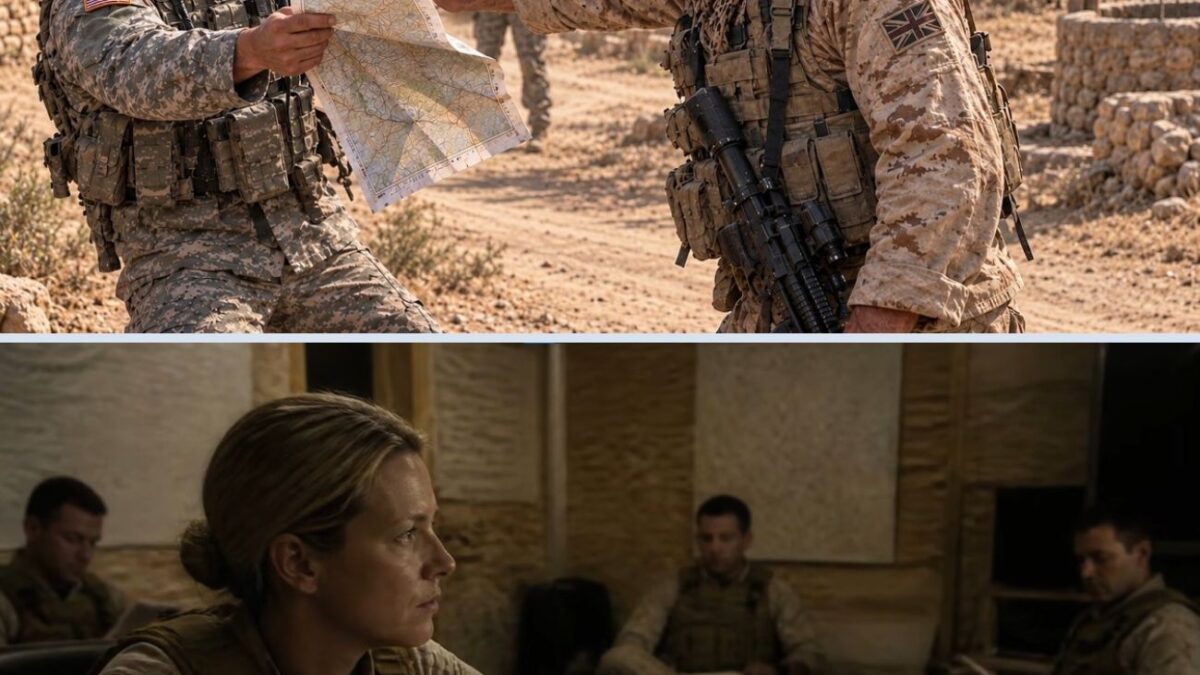
There is a plywood operations room on the eastern edge of Fallujah in the autumn of 2004 and inside it a United States Marine Lieutenant Colonel named Royce Deckland looks at four British soldiers standing on the far side of a map table and says in a voice loud enough for every person in the room to hear it, “You lot can’t even read a map.”
He does not stop there. He taps the acetate with the blunt end of a chewed pencil and says it again, slower, as if the problem is that the men in front of him have not understood him the first time. “You can’t read a map. You’ve been handed a four-figure grid and a line of advance and you are standing in my ops room telling me the line of advance is wrong. So, either you can’t read it or you won’t follow it. Either way, you’re no use to me.”
“You are standing where Staff Sergeant Ewan Price is standing, which means you are looking across that table at a man with a bronze star ribbon pinned to a utility blouse in a room where nobody else is wearing ribbons and you are deciding in the two seconds you have whether to answer him or let him finish.”
Price lets him finish. That is the first thing the Colonel does not understand about the men in front of him and it will not be the last. Deckland finishes. He puts the pencil down on the map, point towards the Special Air Service Patrol and he says the sentence that the room will remember for the rest of its working life, “Tea-drinking amateurs sent here to tell Marines how to fight. You are not elite. You are a joke. And when I send a team down that wadi tonight, it is going to be mine because you lot can’t even read a map.”
He would remember saying it. He would be made to. The record can say now, without taking the weight from anything you already feel coming, that by the time the sun went down on that same day, the Colonel would be standing in that same ops room with the same pencil in his hand looking at a grid reference on a screen he had not drawn and could not argue with listening to his own intelligence officer say nine words to him in front of his own gunnery sergeant that he would not be able to answer.
He would not be converted. He would not shake anybody’s hand. He would be diminished publicly specifically on the record by the four men he had just called a joke and the mechanism of that diminishment would be the one thing he had decided they could not do. Read a map. The insult is on the table. The debt is open. What follows is how it was paid in full in the room where it was incurred.
Royce Deckland was not a fool and that is the first thing you have to accept if the rest of this is going to mean anything to you. Men who are fools do not get to the rank of Lieutenant Colonel in the United States Marine Corps and they do not end up in a plywood operations room on the eastern edge of Fallujah with a J3 liaison brief and a cell of their own. The man had done the work. Two tours in Iraq already. The first of them with a Marine reconnaissance element in the opening months when the maps were still being drawn in grease pencil on the hoods of vehicles. The second of them in Al Anbar in the hard spring before this one.
There was a Bronze Star with the Combat V device on his jacket for a night in a town north of here that nobody in the Corps who had been there spoke lightly of and there was a reason. When the operations cell at the eastern edge of Fallujah needed somebody to run the interservice liaison desk that his name had come up and nobody above him had bothered to argue it. He was reconnaissance by trade infantry by doctrine and American by every bone in his body and he had earned the right to think the way he thought.
The way he thought was this. The British had been given a liaison slot in his cell because the coalition had asked for one. And the coalition had asked for one because somebody above both of their heads had decided that the regiment’s presence in the city would be good for the paperwork. The four men who had walked in that morning were, as far as he was concerned, decoration. He had seen their file. He had seen the squadron letter and the troop and the number of years and he had seen the little annotation that said the patrol commander was an experienced man.
And he had decided, before any of them had opened their mouths, that experience was not the question. The question was what you did with the orders you were handed. And the orders he was handing out tonight were not orders he intended to see argued with by four men in sand-colored kit who, by his lights, had wandered into his city to drink his coffee and nod wisely at his briefings.
So, when Price had looked at the acetate overlay on the map and said, in the quiet, specific voice that men of his trade use when they do not want to be wrong in public, “Sir, I think the line of advance you’ve drawn runs through a channel we’d want to look at twice before we committed to it.” Declan had heard the sentence as an insult, which is not what it was. And he had answered it as an insult, which is what started everything.
The room around him when he answered was not empty. His intelligence officer, Captain Mala Osen, was at the end of the table with a sharpened pencil in her hand and a face that did not move. His senior enlisted, Gunnery Sergeant Emmett Cove, 22 years in and still calling everyone sir, was standing by the door with a mug of coffee going cold in his fist. Colonel Westrock, who ran the cell and signed its reports with a fountain pen, was in the next room over, within earshot but not in the room, which Deckland had either not noticed or decided did not matter.
Four Marines of various rank were at the plot boards along the wall, and on the far side of the map table were the four British soldiers he had just finished calling a joke. He had the credentials. He had the room. He had, by the lights of his own service, the authority to speak the way he had spoken. Those are the three legs of the chair he was sitting on, and they are the legs that are about to be kicked out from under him, one at a time, by men who, at that moment, were simply standing there with their hands clasped in front of them and letting him finish.
The patrol he had just insulted had come down from the liaison desk at Credenhill in Herefordshire, by way of the usual places, and the man at the front of it, Price, was a Welsh-speaking staff sergeant from B Squadron, who had done his first selection a decade ago in the Brecon Beacons of Wales, and his second kind of selection, the one the regiment does not call that, the one every operator does privately in his own head after his first contact, in a wadi in the Western Desert of Iraq that he had never written down.
Behind him, Sergeant Davie Aram was the signaler, left-handed and quiet. Beside Aram, Corporal Hendrick Vowser, the patrol’s long gun, was already looking at the acetate and chewing the inside of his cheek. And on Price’s left, the youngest of the four, Trooper Lewin Garrock, was the demolitions and medic man, with a spare field dressing taped flat to the sling of his L119A2. Four men, one room, one lieutenant colonel who had just told them, in the plainest English available to him, that they could not do the thing their entire trade is built on doing. They let him finish.
Then Price, in the same quiet voice, said, “With respect, sir, we’d still like to look at it twice.”
Deckland laughed. That was the moment the debt was fixed. If you want to understand what the colonel could not see, you have to go outside with the patrol while he is still inside with his pencil. Because the thing he had just called impossible was happening in his own motor pool at that moment, and he was not watching.
Price had walked out of the obs room without a word, taken the four steps down into the dust of the compound, and gone to the bonnet of the nearest Humvee, where he had unfolded a 1 to 50,000 sheet of the ground east of the city, and laid it flat with four small stones at its corners. Auram was next to him with the notebook open and the pencil in his left hand. Vos had drifted to the wire at the edge of the compound and was looking east through a pair of binoculars, not at anything in particular, which is what a sniper does when he is building a mental picture of ground he has never walked. Garoc, youngest, was unloading two burgans from the back of the vehicle and checking the straps on his own belt kit.
What they were doing on the bonnet of the Humvee is the thing the colonel had told them they could not do. They were reading the map, not reading it the way an American lieutenant colonel in a plywood obs room reads a map, which is to say by taking a grid from an overlay and drawing a line on it in red and calling that a plan. Reading it the way the regiment teaches a man to read it over the course of six months in Wales and a decade in places most of the coalition would not go without a battalion.
Price had a prismatic compass flat on the paper, and in his left breast pocket next to it, there was a small plastic compass his daughter had given him before his last trip home, which he kept there and did not take out and did not explain. He was shooting a back bearing from the minaret of the mosque at the eastern edge of the village out to the dark line of the wadi beyond it. And then a second bearing from the water tower off to the north, and he was crossing those two bearings on the paper with the point of a pencil and watching where the cross landed. It landed about 200 m short of where the red line on Declan’s overlay said the wadi should be.
Oram wrote the number down without being told in his waterproof notebook, left-handed, in the small square printed script the regiment’s signalers all seem to acquire in their first year and never lose. Price looked at it. He said in Welsh something that was not for the room and not for the colonel and not for any other witness. Oram answered him in English because Oram was from Nottingham. The two of them looked at the map again.
“Call it 200 south of what he’s drawn.” Oram said.
“At least.” Price said.
“Pattern of life. Haven’t walked it yet. We walk it. We’ll know.”
Vor at the wire without lowering the binoculars said. “There are goats at a well about 400 east of the line. Four goats, maybe five. A boy with them. One of the goats is tethered. The rest aren’t.”
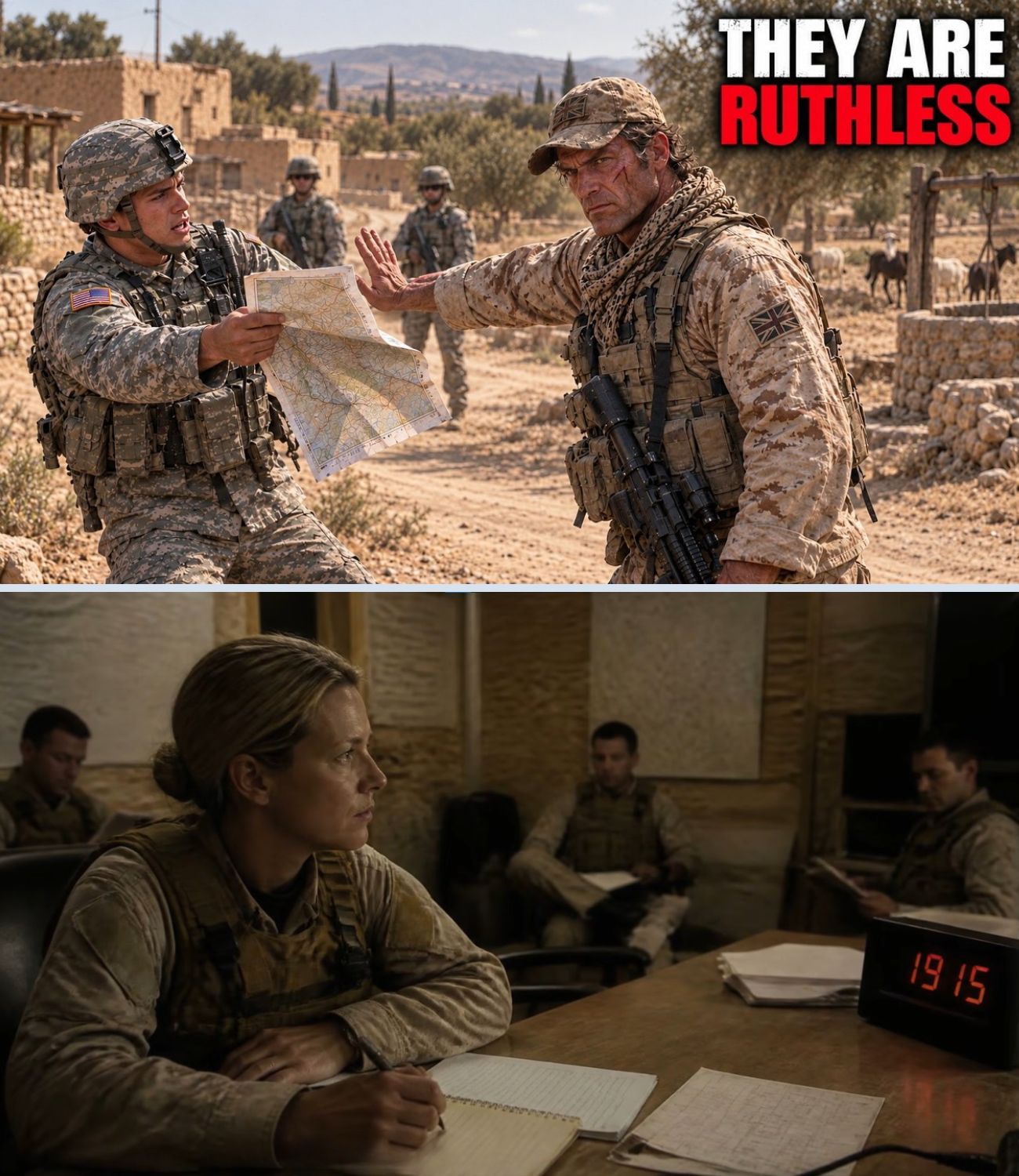
Nobody in the patrol said anything to that because nobody needed to. Four goats at a well with a boy with one tethered and the others loose was not information. It was the beginning of information. It meant the well was being used and it meant somebody in the village had a reason to put a boy at a visible point of ground at a particular time of day with a particular arrangement of animals. And the only way to find out whether that reason was innocent or not was to go and look.
That was the plan. The plan was to go and look, not down the red line, along a parallel feature 900 m to the south, which was a shallower wadi that did not show up well on the imagery, but which Price had, on the ground, with a compass and his own eyes, already decided existed in a form that would let a four-man patrol move along it at last light without being skylined and without being funneled.
Inside the ops room, Declan was explaining to O’Shaughnessy, who was not arguing with him because she had already learned which arguments were worth the pencil she was holding, that the British patrol would be moving down the wadi he had drawn in red at the time he had specified because the marine element supporting them needed a clean line of advance for the follow-on, and clean lines of advance did not get redrawn by liaison staff sergeants on the bonnet of a Humvee.
O’Shaughnessy said, “Yes, sir.” She said it in the way a captain says it to a lieutenant colonel when the captain has read the intelligence summary and the lieutenant colonel has read the overlay.
Major Elias Frayne, the regiment officer who had come down to the cell as the senior British presence that week, was in the back of the ops room with a mug of tea, which he had, at some point, set down on the corner of the map and then forgotten because Frayne drank his tea black and lukewarm and did not care where he put the cup. He had heard Declan’s speech. He had not responded to it. He had, instead, watched Price let the colonel finish and had understood from 15 ft away that whatever happened in the next 6 hours was not going to be a disagreement he needed to referee. The regiment did not referee disagreements with men like Declan. The regiment went and did the job and let the result referee it.
Out on the Humvee, Price folded the map along its creases, slid it into the map pocket on his thigh, and said to the three men around him, “Last light. Southern feature. Four up. We’ll loop and have a look at the well on the way back if the boy’s still there.”
Garrock said, “Comms check at the gate.”
“Comms check at the gate.” Price said. They moved.
The colonel inside drew a longer red line. What the colonel did not see, because he was not outside, was that the thing he had told the four men they could not do had already been done on the bonnet of a vehicle in his own motor pool in the time it had taken him to find his pencil. The map had been read. It had been read twice. It had been read against the ground with a compass and a back bearing and a pattern of goats at a well and it had been read against itself by two men who did not need to speak to agree. He had drawn a line. They had read a map. He thought those were the same thing. They are not the same thing. That is what the next six hours are going to teach him.
The patrol came back into the ops room at 17:30 with the dust of the compound still on their boots and the light outside already starting to go flat. Price walked to the map table. The three others stood where they had stood that morning, hands clasped, saying nothing.
Deckland looked up from the overlay, saw who it was, and smiled the kind of smile a man smiles when he has already decided the conversation. “Change your mind, sergeant?”
“Staff sergeant, sir.”
“Change your mind, staff sergeant.”
“No, sir.”
Deckland put the pencil down. “Then I don’t know what you’re doing in my ops room.”
“We’re not going down that wadi, sir.”
The room, which had been noisy with the small working noise an operations cell makes, at last light went quiet in the way rooms do when somebody has said a sentence that cannot be unsaid. Osen, at the end of the table, put her sharpened pencil down and folded her hands on top of her notebook. Cove, by the door, did not move at all. In the next room, which Declan had still not noticed was within earshot, the sound of a fountain pen stopped.
Declan said, “Say that to me again.”
Price said it again in the same voice. “We’re not going down that wadi.”
“You’ve been given an order.”
“Yes, sir.”
“By a United States Marine Corps Lieutenant Colonel.”
“Yes, sir.”
“Then what exactly are you doing?”
Price reached into the thigh pocket of his trousers, unfolded the map he had folded that morning on the bonnet of the Humvee, and laid it on top of the Colonel’s overlay. He did not move the overlay. He laid his map on top of it, so the two were together, and he put the point of his pencil on the cross he had marked that morning where the two back bearings had met.
“Sir,” he said, “the wadi you’ve drawn runs about 200 m north of where it actually is. The channel on your overlay is a feature we think is pre-registered. There’s a tethered goat at a well 400 east of the entry point with a boy watching it in a pattern we don’t like. If you send four men down that line at last light, somebody who isn’t us is going to know they’re coming, and we’re going to lose the patrol inside the first 5 minutes, and we’re not going to bring you back the thing you want.”
He paused. He said, “With respect, sir, we’d like to go down the southern feature, 900 m south. We’ll loop and come back past the well. You’ll have your grid by 2200.”
Declan looked at him for a long moment. Then he looked at the map. Then he looked at the overlay. Then he picked his pencil back up, and in a voice that had lost some of its earlier volume, but none of its contempt, he said, “You’re telling me, Staff Sergeant, that the United States Marine Corps intelligence shop has drawn a wadi in the wrong place.”
“No, sir,” Price said. “I’m telling you the imagery is good and the ground is different and the difference matters.”
“That is the same sentence.”
“It isn’t, sir.”
Osin, at the end of the table, moved for the first time. She did not speak. She reached for the overlay, lifted the corner of it, laid it over Price’s map so the two could be seen through each other against the ceiling light and set it back down. The red line was 200 m north of the penciled cross. She said quietly to Declan, “Sir.”
Declan did not look at her.
Price said, “Sir, we’re going down the southern feature. If you want to recall us, you can recall us. We won’t ignore a recall, but we’re not going down the wadi you’ve drawn because if we do, we won’t come back and you won’t get your grid.”
That was the first blow. It did not look like a blow. It looked like four men standing in a plywood room letting a colonel finish his sentences and then saying in a quiet voice that they were going to do the opposite of what he had said and the person who felt it first was not Declan.
It was Captain Osin who had seen the two lines through the paper and understood in the five seconds it had taken her to lift the corner of the overlay and put it back down that the men in front of her had done something in the motor pool that morning that nobody in her own shop had done. They had gone outside. They had put a compass on a bonnet. They had shot a back bearing from the mosque and a back bearing from the water tower and crossed them on paper and they had found a difference of 200 m between the imagery and the ground and they had done it in the time it took to drink a cup of coffee.
The second person who felt it was Cove by the door who said nothing, which is what Cove did when he had understood something before his colonel had. The third person who felt it was Frayne in the back who looked at his lukewarm tea on the corner of the map, picked the mug up, moved it 2 in to the left so it was no longer sitting on the overlay, and set it back down. That was the only thing he did. It was enough.
Declan said, “If you go down the southern feature, Staff Sergeant, and you come back without a grid, I will have you off this cell by midnight.”
“Yes, sir.”
“If you go down the southern feature and you come back with the wrong grid, I will have you off this cell by midnight.”
“Yes, sir.”
“If you go down the southern feature and you come back dead, I will put it in the report that you refused an order.”
Price said, “Yes, sir.”
He folded his map. He put it back in the thigh pocket. He turned, and the three men behind him turned with him in the small economical way men turn who have done the maneuver a thousand times. And they walked out of the ops room into the evening air without looking back.
Olsen at the end of the table picked her pencil up and wrote in the margin of her own notebook a four-figure grid.
Declan said, “What are you doing, Captain?”
She said, “Writing down where the wadi actually is, sir.”
That was the first time that day he was wrong. It would not be the last. The macro question is still open, and the night is still ahead of us. So, let the record go with the patrol for an hour and come back to the ops room when the colonel does something he will have cause to regret.
The four men moved out through the compound gate at last light with the sun doing its final work on the dust west of the city, and the shadows of the vehicles lying across the ground in long soft stripes. The patrol order was Voce front, Oram second, Price third, Garock trail. A four up with the sniper leading because Voce had the eye for the ground and the long optic for the pattern of life calls. And because Price wanted the man who had already found the goats at the well to be the man who found what was waiting past them.
They did not speak. They did not need to. Voss stepped onto the shallow track that led southeast out of the compound and the other three fell in behind him at 6 m spacing and the four of them moved together into the half-light with the economy of men who had done it since before some of the Marines in the ops room had been in high school.
The schoolgirls, Declan had called them, in another part of the same insult that had included the amateurs and the joke and the map. If any of the four men were thinking about that sentence as they left the wire, they were not showing it. The regiment does not carry its grudges on the ground. It carries them home and files them.
What the colonel could not see from his plywood room, because the ops cell had a feed from a drone that was tasked on the wadi he had drawn and not on the southern feature the patrol was walking, was that the four men were by any technical measure available invisible. They moved below the skyline. They stopped at every reverse slope crest and let Voss go forward alone to look over. And when he came back, he came back by the same way he had gone. So that his tracks and his return tracks were the same tracks. They did not use their torches. They did not speak. Oram carried the radio and did not use it. Because the comms plan was to call in at the halfway point and at the objective and at the return and the halfway point was still 40 minutes away.
They passed within 300 m of the well with the goats and the boy and Voice took 1 minute from behind a low shoulder of ground to count the goats again. There were still five. The tethered one was still tethered. The boy, perhaps nine years old, was still there, and he was holding one of the untethered goats by the ear. That meant the boy was keeping the loose goats near the well deliberately. That meant somebody had told the boy to keep the goats near the well. That meant the well was a reference point for somebody who was not in the village.
Vos came back to Price in the shallow dead ground behind the shoulder and held up five fingers, then one finger tapped to his ear, then a flat palm. Five goats. The boy, not yet. Price nodded once. The patrol moved on.
Back in the ops room, Declan was watching the feed. The feed was showing him the wadi he had drawn, which was empty, because the patrol was not in it. He had by this point said three times to three different people that he had told them it was clear, and now the British were off the net, and O’Hearn was going to have to explain to the colonel next door why a four-man liaison patrol was wandering around East Fallujah without a drone on them.
O’Hearn had not answered any of the three times. She had the four-figure grid she had written in her own notebook earlier in the afternoon in front of her, and she had next to it the time of the halfway comms check that the patrol had agreed before they left the wire, and she was watching the clock.
The clock rolled over to 1915. The radio in the corner of the ops room clicked once, and O’Hearn’s voice, left-handed Nottingham choir, said, “Zero Charlie 4-1, halfway no change. Out.”
Declan said, “Where are they?”
O’Hearn said, “At the halfway point, sir.”
“Which halfway point? Mine or theirs?”
“Theirs, sir.”
He stared at her. He said, “They’re going to come back empty.”
She said, “Yes, sir.” She said it in a flat voice. She did not mean yes. She meant the only word available to a captain whose lieutenant colonel has asked a question for which the answer will embarrass him in six words or fewer. Cove, by the door, moved the coffee mug in his hand from his right hand to his left, which was the only thing Cove did when he was choosing not to speak.
Out on the ground, the patrol crossed the southern feature at a shallow point Price had identified from the map that morning and did not identify on the drone imagery because the drone imagery was looking at a different piece of ground. They crossed in 40 seconds. They went to ground on the far side. They waited 2 minutes listening and then they moved northeast along a low fold in the dirt that led them towards the back of the compound they had come out to look at.
They were at this point approximately 400 m closer to the objective than Declan’s plan would have placed them. And they were approaching it from the one bearing the opposition inside the compound was not watching because the opposition inside the compound was watching the wadi. That was the second blow. It had not happened in the ops room. It had happened on the ground and the ops room would not know it had happened until later. But the ground had already decided it and the viewer standing where Osin was standing with the halfway call still in the air can see what Declan in his plywood room cannot. Four men the colonel had called a joke were at that minute inside the enemy’s blind arc because they had read the map correctly and he had not. And it got worse.
The compound was a low rectangle of mud brick and concrete at the edge of a date palm belt with a single truck parked against its northern wall and a thin wire running from one corner of the roof to a transmitter mounted on a pole. There were no lights. There were no voices. There was, however, inside the compound, exactly the thing the op cell had been looking for the whole week, and the four men outside the compound in the low fold of dirt did not yet know it because they had not yet gone over the wall.
They did not go over the wall. That is the thing the colonel, when he was told later, found hardest to accept. He had assumed from his plywood room that the patrol would do what patrols did on television, which was go over the wall, kill whatever was inside, and come back with it in a bag. He had, in his head, drawn the next 6 minutes of the operation already. He had drawn them wrong.
Price lay on his belt kit in the fold of dirt, 40 m from the compound’s southern wall, and did not move for 11 minutes. Voss, next to him, did not move for 11 minutes. Oram, further back, did not move for 11 minutes. Garock, further back again, was watching their rear, and he did not move for 11 minutes.
The patrol, in that time, logged seven separate pattern of life indicators: the sound of a generator, briefly, from the north wall, a cough from a window on the first floor, the flare of a cigarette in a doorway lasting 4 seconds, then gone, the shuffle of a man moving across a gravel surface somewhere inside, the opening and closing of a vehicle door at the north end, a second cough, and, at the 10-minute mark, the low, unmistakable sound of a satellite phone being switched on inside the first-floor window.
Satellite phone. Not a radio, not a mobile, a satellite phone with the characteristic acquisition tone that any signaler with a year’s work on the trade would recognize the way a mechanic recognizes the sound of a bad injector, and Oram, lying 30 m back in the dirt, recognized it on the first beat and reached left-handed into his own kit and brought out the compact signals intercept module the regiment’s patrols were carrying that year and powered it up without a sound.
He did not try to break the call. He did not need to. He needed the fact of the call and the direction of the call and the time of the call. He got all three in under 4 minutes. What he also got, as a quiet byproduct of the intercept, was a 3-second burst of voice at the start of the transmission that was in a dialect of Arabic the module had been configured to flag, which meant that the module in Oram’s left hand, in the dirt, in the dark, flashed a single orange light under his thumb, which meant that the man on the phone was one of the men the ops cell had been looking for the whole week, and the compound they were looking at was his.
Oram looked at Price. Price looked at Oram. Neither of them spoke. Vorce, who could not see the module from where he was lying, saw the exchange of looks, understood it the way Vorce understood everything, and did not move his rifle a millimeter. The patrol stayed exactly where it was. 11 more minutes passed. The call ended. A light came on behind the first floor window and went off again. The truck at the north wall started, idled for 40 seconds, and switched off. A door opened. A door closed. The compound breathed slowly in the particular way a compound breathes when the man inside it has just told somebody on the other end of a satellite phone that his night is going according to plan, which, in a sense, it was, because the Americans had sent a four-man patrol down the wadi to the north, and nobody down the wadi to the north had come back because nobody down the wadi to the north had gone.
Price tapped Oram once on the shoulder. Oram powered the module down, slid it back into his kit, and crawled backwards out of the fold of dirt the way he had come in. Voice followed. Price followed. Garoc, who had not moved for 22 minutes, moved last. They were off the ground around the compound in under 4 minutes. They did not take anything with them. They did not fire a round. They did not leave a boot print anybody could use. What they took with them was a time, a bearing, a dialect flag, and the three-digit sequence from the acquisition tone that Oram had written left-handed in the waterproof notebook in the dark by feel.
They walked back the way they had come. They passed the shoulder above the well. The boy was gone. The tethered goat was gone. The other goats were asleep. That told the patrol one more thing, which was that the pattern of life watcher had been pulled off station once his job was finished, which was consistent with everything else the night had told them. They crossed the southern feature at the same shallow point. They moved along the shallow track northwest towards the compound gate.
At 21:49, three men inside the ops room, Deckland, Osen, and Cove, heard the radio click once, and Oram’s voice said, “Zero Charlie 4-1, returning grid to follow. Out.”
Deckland, for the first time in 6 hours, did not say anything. Osen looked at Covey. Covey looked at the floor. The third blow was not that the patrol had found the man. The third blow was that they had found him, named him, timed him, and left without touching the wall because the job the ops cell had actually needed doing was not to kill a man tonight. It was to locate him for the strike tomorrow, which was what every briefing in the cell that week had said in writing that the op’s cell wanted. And a four-man patrol that the colonel had called a joke had, in silence, in a fold of dirt, in the dark, done the thing the briefings had asked for. He had not stopped arguing yet. He was about to.
2200 hours. The plywood op’s room smells of coffee, dust, and the particular dry heat a plywood op’s room generates when a dozen bodies have been in it for 12 hours, and the air conditioning unit over the door has been losing a quiet, dignified fight all evening. The lights are on. The map table is clear. Captain Auson is at the end of it with her notebook open to a fresh page. Gunnery Sergeant Cove is standing where he has been standing all day, which is beside the door, with his hands behind his back and a mug in his right hand that nobody has seen him drink from in 4 hours. Major Frayne is in the back. His tea is cold. He has not moved it. Lieutenant Colonel Royce Deckland is at the map table. The pencil is in his hand. The ribbon is on his blouse. He is looking at the door.
The door opens. Price comes in first. He is dusty from the knees down. There is a smear of something dark on his left sleeve that is not blood and that nobody is going to ask about. Oram is behind him with a notebook already in his hand, open to the page where he has written, in the small square left-handed signaler’s script, four lines of information. Vos and Garock are behind Oram. They do not sit down. Nobody has offered them a chair.
Price walks to the map table. He does not look at Deckland. He looks at the map. He puts his finger on a point 200 m south of the red line. He says, “That’s where the wadi is, sir.”
He moves his finger 400 m east along the paper to a square compound at the edge of the date palms. He says, “That’s where he is.”
He takes Oram’s notebook out of Oram’s hand, lays it open on the map table so Osen can read it, and reads out, flat and clinical, the four lines Oram has written. “Compound at grid 37/6. Two, eastern edge of the palm belt, single transmitter aerial on the southeast corner. Satellite phone acquisition logged at 21:04. Three-second voice signature in the flagged dialect. Intercept module serial on request. Charlie 4-1 out.”
He stops. He says, “The strike window is yours, sir. We’d recommend before first light.”
The room is quiet. Osen writes the grid down in her notebook. She writes it slowly, in block capitals, the way a person writes a number that is going to end up on a target list. She underlines it once. She looks up. She says, “Sir, that’s the man.”
Declan says, “What man?”
She says, “The man we’ve been looking for all week, sir.”
She turns her notebook around on the table so he can see the grid in her writing and the grid in Oram’s writing side by side. And the two sets of figures are the same. And the timestamp under Oram’s grid is 21:04, which is 17 minutes before Declan’s own red line on the wadi was due to put a patrol into the kill zone.
Cove by the door puts his coffee mug down on the shelf beside him. He does not pick it back up. Frain in the back says nothing. He does not need to. The number is on the table. The number is correct. The number is in two notebooks and on the map, and the timestamp is on both of them, and the two notebooks are from two different services, and the number is the same.
Price says quietly, “Sir, the route the colonel had drawn in red is pre-registered. We found the spotter, boy at the well, 400 east of your entry point. He was pulled off station after the phone call. If we had gone down that line at last light, we would be in the open ground at the mouth of the wadi right now, and the man on the phone would be telling somebody else that we weren’t.”
Declan looks at the map. He looks at Ousmane’s notebook. He looks at Oram’s notebook. He looks for the first time in 6 hours at Price. He does not speak.
Price says, “That’s all, sir.”
He closes Oram’s notebook. He hands it back to Oram. The four of them turn in the same economical quarter turn they had used that morning, and they walk out of the ops room, past Cove, past the door, into the compound, where the air outside is cooler now, and the dust has settled, and somewhere in the distance a generator is running.
They do not say anything to each other on the way to their basher. There is nothing to say. The map had been read. The compound had been found. The man inside it had been named. The number was in the notebook. The ops cell had, at 2200 hours, exactly the information it had been asking for all week. And it had it because four men had stood in a plywood room 6 hours earlier and said, in a quiet voice, that they were going to go and look at it twice.
In the ops room, the grid is on the map in block capitals, underlined. It is the same number Oram has in his notebook. It is the same number Ousmane has in hers. It is the number that will go, within the hour, up the chain to the colonel next door with the fountain pen and from there to the strike cell and from there onto a target list that will be actioned before first light and the ops cell will record in its morning summary that the man was located on the night of the 13th by a four-man British liaison patrol operating east of the city on a southern approach. A southern approach, not the wadi.
Deckland is still standing at the map table. The pencil is still in his hand. He has not moved for 1 minute and 40 seconds. The clock on the wall above the door reads 22:03. He puts the pencil down. The debt at this moment is paid. Not in words, in a grid, in two notebooks, in the same handwriting on neither of them, under a timestamp from a satellite phone the patrol never touched. What happens next is the colonel being made to live in the room where it was paid.
He does not move. That is the thing that makes it worst for him. A man with a bronze star and two tours and 20 years in the Marine Corps has in his working life developed a repertoire of responses to being wrong. And he reaches for the repertoire now and finds that none of it fits. He cannot shout at the men who brought him the grid because the men who brought him the grid have left the room. He cannot argue with the grid he did not find because the grid is in Osan’s handwriting as well as in Oram’s. He cannot argue with the timestamp because the timestamp is on the intercept and the intercept module is at the basha and Oram has already offered the serial. He cannot say the patrol disobeyed an order because the patrol has brought back the exact thing the order was supposed to produce and nothing in the Marine Corps’s tradition of writing after-action reports has a column for an order that was refused and vindicated in the same 6-hours.
He stands at the map table with his pencil down. Oasan closes her notebook. She does not close it loudly. She closes it the way a captain closes a notebook when she has written the grid she is going to put in her own summary and she does not need anything else off the table. She looks across at her Lieutenant Colonel. She does not look at him in a way that is unkind. She looks at him in the way a staff officer looks at a staff officer who has in her presence, in front of her gunnery sergeant, in front of the senior British officer in the back of the room, been shown to be on the single question that mattered that evening incorrect.
She says, “They just did your job for you, sir.” Nine words in front of Covey, in front of Frayne, in front of the Marines on the plot boards who have not pretended not to hear it and have not needed to pretend because every one of them is a professional and every one of them has watched the last 20 minutes.
Cove does not move. His mug is still on the shelf. He has not picked it back up and he will not pick it back up until Oasan has finished and left the room. And when he does pick it up, he will carry it out to the sink without drinking from it because the coffee in it has been cold for 2-hours and that is not the point.
Frayne in the back gets up. He takes his cold tea off the corner of the map, carries the mug out of the ops room, past Cove, past Oasan, past the Lieutenant Colonel with the pencil down and does not say anything on the way. The regiment does not referee disagreements with men like Declan.
Declan is still at the table. Through the plywood wall into the next room, there is the quiet specific sound of a fountain pen being capped and uncapped once, which is Colonel Westrop’s sound. And anybody in the ops cell who has worked a week in it knows the sound and knows what the sound means, which is that Westrop has heard every word from Ozen’s nine words backwards through Price’s reading of the grid, backwards through Oram’s halfway call, backwards through the morning, backwards through the sentence from the morning about the tea-drinking amateurs and the joke and the map. And Westrop will, before midnight, have a short, dry conversation with Deckland in his own office, the content of which the op’s cell will never be formally told, but the shape of which the op’s cell will understand from the fact that Deckland’s name will not appear on the planning overlay for the strike that goes in at 0430.
Outside in the compound, the four men of Charlie 4-1 are at the basher. Price is sitting on his bergen cleaning the dust out of his compass with a tooth of a comb. Oram is at the small table with the notebook open, writing the long form of what he wrote in short form in the dark, left-handed, in waterproof script. Voice is lying flat on his back on his cot with his eyes closed. Garrock, youngest, is making tea. Nobody in the basher is saying anything about the colonel. The regiment does not carry its grudges on the ground, and it does not carry them in the basher, either. It carries them home and files them, and then it does not take them out again because the next trip is next week.
In the op’s room, Deckland picks the pencil up. He does not do anything with it. He puts it in the breast pocket of his utility blouse, point down, next to the ribbon. He walks out of the op’s room, past Cove, past the empty chair where Frayne had been, into the compound, where the air is cool. And he stands for perhaps 30 seconds looking at the basher where the light under the door is on, and the four men inside it are not thinking about him.
He goes back inside. He does not go into the basha. He does not knock on the door. He does not shake anybody’s hand. There is no conversion in this room. There is no handshake. There is a lieutenant colonel with a pencil in his breast pocket and a captain in the ops room with a notebook that has his misjudgment written down in block capitals and underlined. And there is a strike going in before first light on a grid he did not find. And that is what he has to live inside now.
He has been made to watch. He has been made to watch his own intelligence officer write the correct grid down from the mouth of a man he called an amateur. He has been made to watch the strike list get the number from his own op cell with his signature not on it. And he has been made by Osen in nine words to understand that the sentence he spoke in the morning was the sentence the room will remember. And the grid on the map is the sentence he will not be able to answer. He is diminished. He is not redeemed. That is the end of the colonel’s story.
He had said in the morning in a plywood room at the eastern edge of Fallujah in a voice loud enough for every person in the room to hear it that the four British soldiers on the far side of his map table could not read a map. He had been right about one thing and wrong about everything else. He had been right that the four men did not read a map the way he read a map. They did not take a grid off an overlay and draw a line on it in red and call that a plan. They put a compass on the bonnet of a Humvee and shot a back bearing from a mosque and a back bearing from a water tower and crossed them on paper and went outside and walked the ground and counted goats at a well and waited 11 minutes in a fold of dirt 40 m from a wall and brought back a grid in a notebook written left-handed in the dark.
He had been right about the tea. He had been wrong about the men who drank it. That is the thing contempt does, and it is the thing this story is about. And if there is a sentence worth taking out of a plywood room at the eastern edge of a city in the autumn of 2004, it is this one. Contempt is a map that stops at the paper. It will show you a line of advance. It will not show you the ground under the line. It will show you a wadi. It will not show you the boy at the well, or the tethered goat, or the 3-second voice signature on a satellite phone from a first-floor window. A man who is sure in the morning that the people in front of him cannot do the thing their trade is built on doing is a man who has stopped reading the ground. And the ground, in the end, is where the grid lives.
Staff Sergeant Ewan Price went home, eventually, to a house in a village in the Welsh Borders. And he put the prismatic compass in a drawer. And he kept the small plastic compass his daughter had given him in the left breast pocket of a jacket he did not wear to work. And when his daughter was older, she asked him once why he had carried a toy compass in a war. And he told her it was because the toy one had reminded him, on days he had needed reminding, that a compass is only ever as good as the man holding it.
In the plywood room, after the strike had gone in before first light, somebody had taken the red overlay off the map and rolled it up and put it in a tube and filed it. And the overlay with the correct wadi, the one Price had laid on top of it the evening before, had gone up to the strike cell, and from the strike cell into the morning summary. And nobody in the ops cell had ever mentioned the overlay again, because the ops cell did not need to mention it. The grid had done the work. The debt had been paid in a notebook in block capitals underlined in a room where the man who had opened it had been standing with his pencil down.
You Might Also Enjoy

“We Thought They Would Negotiate”—What Argentine Soldiers Said When The British Attacked Goose Green

“You’ll Never Finish My Ruck March, Limey” — US Sergeant Who Challenged the SAS, Then Fell Out First






