“Your Team Fails Safety Code” — The US Safety Officer Sent to Inspect the SAS, Flown Home in 3 Days
1976, three children were discovered living in a root cellar beneath what the locals called the Fowler property.
They had no photographs, no medical records, no birth certificates. When state officials finally took blood samples, the results came back with a notation that would be sealed away for three decades.
Genetic markers inconsistent with any known human populations. 2 days later, the lab technician who processed the samples quit her job and never spoke publicly about what she had seen.
The children were separated. Their files were buried under layers of bureaucratic red tape and the Fowler property was burned to the ground by persons unknown.
This is not folklore. This is not a legend. This is a story that was deliberately erased from public memory. And tonight we are going to uncover the reason why….
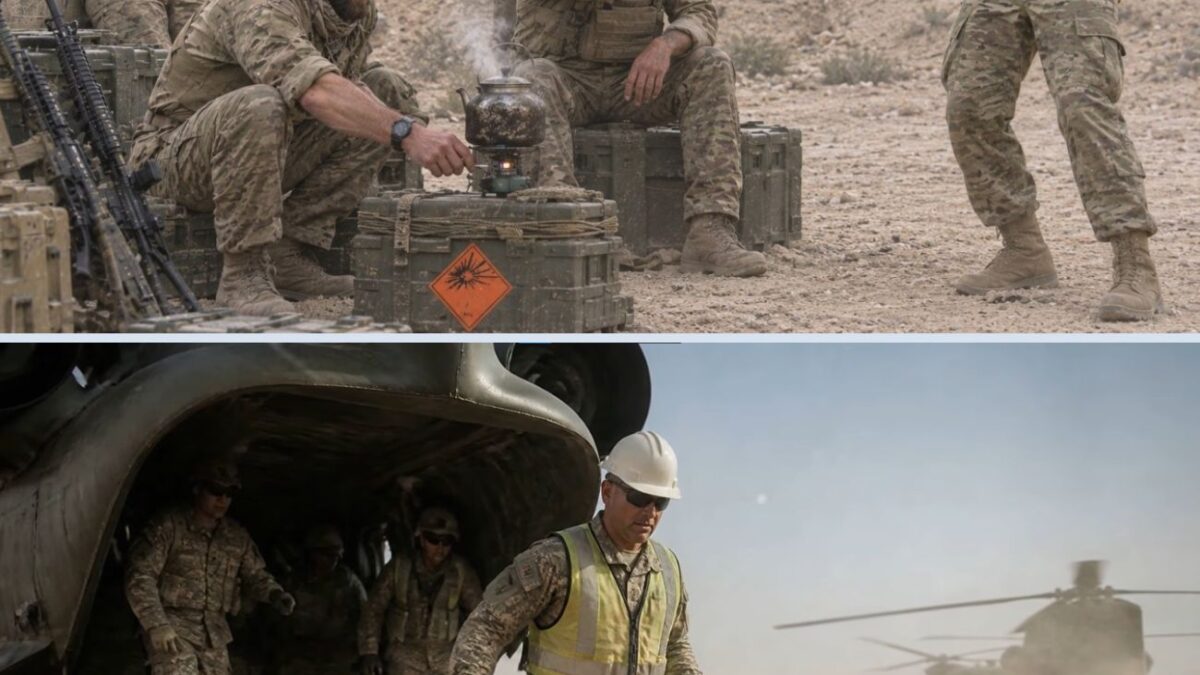
There is an inspection sheet with 12 red crosses on it, and the man who put them there is standing on hardened sand in western Iraq in a yellow high visibility vest and a white hard hat he was asked to leave at the gate and refused telling four bearded men in camouflage that they are not operators.
He is saying this, “Your team fails safety code, all of it. The weapons, the vehicles, the sleeping arrangements, the stove. In 20 years I have never seen a professional outfit run this loose. You people are not operators. You are cowboys with English accents.”
His name is Lieutenant Colonel Raymond Vosler, US Army. Safety and standards. 20 years in, a bronze star on his chest, the Ranger Regiment behind him, a master’s degree framed on an office wall 9,000 kilometers away.
He has flown in on the morning resupply to inspect a British Special Air Service mobility troop forward of the wire. And before his second cup of coffee he has written the words, inspection failed, across the top of the sheet in red biro and underlined them twice.
He has said what he has said in front of a staff sergeant, a troop commander, a troop medic, and a sergeant major who are between them laughing. They are not laughing at him. That is the part he will keep getting wrong for the next 72 hours.
They are laughing because the staff sergeant has just offered him a white enamel mug of tea with the chipped lip turned carefully away so he gets the clean side. And the colonel has pointed his pen at the mug as if the mug itself were a safety infraction.
The sergeant major, squatting on a ration crate with a radio in his lap, is grinning the slow patient grin of a man who has already decided how this ends and is content to wait for it.
The medic, Welsh dark-eyed, is tilting his head back in open delight at a line the colonel has not understood was a line.
You are watching the exact moment that a credentialed, decorated American officer who has done nothing wrong in his career to earn being wrong today decides out loud in front of witnesses that the men in front of him are a joke.
He will remember saying it. He will be made to. Not quietly, not at distance, not through a filed memo 6 weeks later in an office he has flown back to. Here, on this strip, in front of the same men, with his own clipboard in his hand and his own pencil shaking.
There is a flight off this site at first light on the third day. It is a Hercules, inbound empty, outbound light. In 72 hours time, the colonel will be its only passenger with a kit bag, and the inspection sheet he has just underlined will be folded in his breast pocket next to the two mechanical pencils he sharpens every morning. And every one of the 12 red crosses on it will have been answered in daylight, in front of him, by the cowboys with English accents.
This is the three days in between.
A word before we go further. This is a fictional story built on real units, real kit, real places, and real military culture. The men and the moment are invented. The texture around them is not.
Raymond Vasser was not a fool, and the story does not work if you let yourself believe he was. He had 20 years in uniform the morning he climbed out of the Chinook at the pump station. He had commanded a Ranger company in the mountains east of Khost in 2003 and brought every man of it home, and the Bronze Star pinned above his left breast pocket on home station khakis had been earned on a night in which he had personally dragged two wounded sergeants off a hillside under fire and then written the after action report on his own injuries as if they belonged to somebody else.
He had a master’s degree in operational risk management from a serious school. He had spent the last four years at the point where soldiering meets paperwork, which is a point most soldiers refuse to stand on. And he had grown in those four years into a particular kind of expert, the man who walks into other people’s camps and finds the thing that will kill them before it does. He had in that time saved lives.
That is the sentence the story cannot do without. Vossler had failed a US infantry company at Fort Polk because a young private was storing pyrotechnics 6 ft from a diesel generator and 3 weeks later a different unit at a different post had an identical setup catch fire and lost two men and the memo Vossler had written after the Polk inspection was quietly circulated.
He had grounded a helicopter squadron for a maintenance infraction and been hated for a month and thanked for a decade. His clipboard had teeth and the teeth had more than once bitten the right thing.
So, when the general officer commanding the American side of the coalition decided in the summer of that year that liaison inspections ought to be extended to the British special forces element working out of the pump station in Al Anbar, Vossler was the obvious name.
He went willingly. He went with the professional confidence of a man who had never yet walked into a camp he could not read in 40 minutes. He read this one in 12.
The brief had been given to him in a prefab office at Al Asad the night before by a thin captain named Louisa Reinhardt from the US intelligence liaison cell who had told him carefully that the mobility troop at the pump station were on a short notice readiness posture for a particular task that could not be discussed and that he should present his findings privately to their officer commanding before putting anything in writing.
Vossler had thanked her for the brief and ignored the second half of it. He landed at the strip at 08:47.
By 08:59, he was photographing a stack of L119 carbines leaned, not racked, against ammunition crates in the shade of the lead jackal and writing the words improper weapon storage in block capitals.
By 09:08, he had found the stove, a small camping burner with a kettle on it boiling. The water rolling, set up 2 m from an open fuel can and had written fire hazard and underlined it.
By 09:14, he had looked inside the half-collapsed stone building the troop was using as a basha, seen three roll mats laid out directly on the floor with no cots and no mosquito frame and written inadequate sleeping provision.
By 09:22, he had the clipboard braced against his left forearm and 12 items on it and he was walking back out into the sun with the particular long stride of a man about to tell other men their business.
He found them in a half circle around the stove. Staff Sergeant Ewen Ballantyne was rolling a cigarette on the bonnet of the lead vehicle, one-handed, the paper never once leaving the pad of his thumb. Captain Ned Askwith was sitting on a ration crate with a map case across his knees reading something and did not look up.
Warrant Officer Class Two Trelawney, Griff to the troop, Sergeant Major to everyone else, was squatting on his heels in the dust with the radio handset on his thigh listening to a feed from somewhere further north. Trooper Dilwyn Prothero, the troop medic, was lifting the kettle off the burner with a cloth folded twice around the handle.
Vossler stopped 3 m from the stove in the yellow vest, in the white hard hat, and he delivered the paragraph you have already heard word for word. He said it with the clipboard raised to chest height so they could see the red crosses. He said it slowly so that the point would land. He finished with the line about cowboys, and he waited.
The medic laughed first, a short, surprised, honest laugh, as if someone had told a joke slightly louder than they meant to. The staff sergeant did not laugh because he was concentrating on his cigarette, but the corner of his mouth moved. The sergeant major’s grin widened by a careful millimeter.
The captain looked up from his map case and said, in a voice as polite as a church, “Sir, would you prefer tea or coffee? We have both.”
Vossler did not answer. He had been in rooms where men laughed at him before. He had always, in the end, been proven right. He wrote the word “unprofessional” at the bottom of the sheet in capitals, and he underlined it, and he tore the top copy off along the perforation, and he handed it to the captain, who accepted it with both hands as if it were a wedding invitation.
That was 0931. He had been on the ground 44 minutes. The next 72 hours of his life began at 0932.
The pump station sat on a low shelf of hardened sand 22 km east of the Syrian border where a decommissioned oil line ran north out of a half-collapsed compound of stone buildings, and the only sign that anybody had ever cared about the place was the painted number on the side of a rusted holding tank.
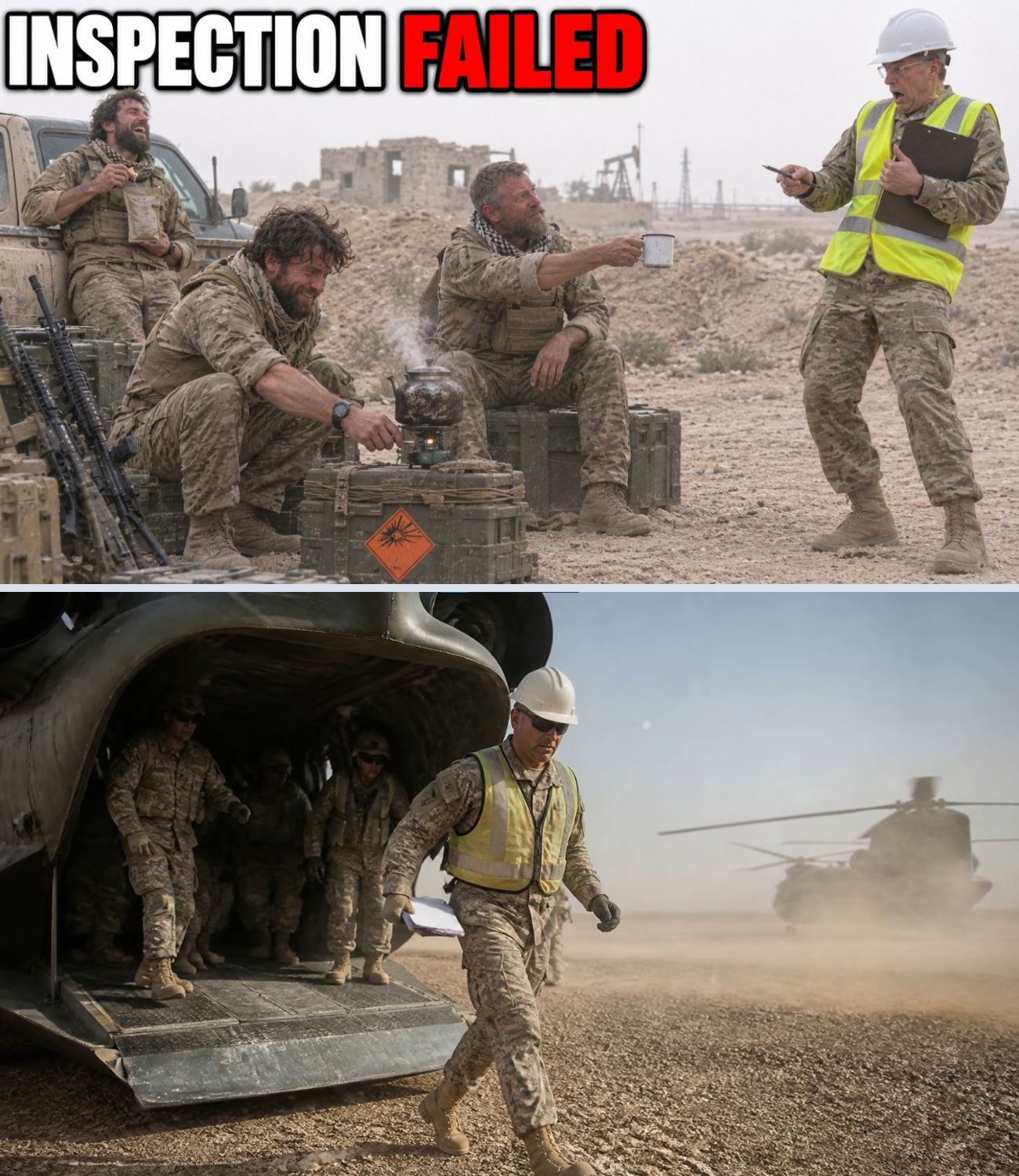
The strip was 190 m of flattened grit the Chinooks could land on if the wind was right, and the troop had been forward of the main wire for 11 days when the colonel arrived. They would be forward for four more. They did not know that yet. They knew it was close.
Major Eian Brudenell, the squadron elements officer commanding, flew in at 11 that morning from the main site at Al Asad in a Lynx that stayed on the ground for 9 minutes. He took the inspection sheet from Asquith, read it twice, folded it in quarters, and put it in his left thigh pocket.
He asked the staff sergeant one question, which was whether the colonel had been offered tea. He was told the colonel had been offered tea and had pointed a pen at the mug. The major nodded as if this confirmed something he had already suspected and went to find the colonel.
What the colonel saw when the major found him was a man slightly older than himself in a plate carrier that had been patched twice on the left shoulder with electrical tape, no beret, no badges of rank visible, a face burnt down to the color of the sand, and a white enamel mug in his left hand with a thumb size chip on the lip turned inward.
The major offered his right hand and said, “Bruden, I understand you have concerns.”
“I have 12 of them,” the colonel said.
“We shall address them in order,” the major said, “if that would suit.”
“It would suit.”
Vossler had expected either indignation or servility and had received neither, and the small off-balance moment of that was already in his face. The major led him on a slow walk around the compound, and for 40 minutes the colonel saw the mobility troop do ordinary things in ways his sheet had no boxes for.
He saw the stack of leaned carbines, and the major told him quietly that the weapons were leaned rather than racked because the troop was on an 8-minute standby to roll, and a weapon in a rack is a weapon you have to open a rack to get.
He saw the stove and the medic, the Welsh boy Protheroe, showed him, without being asked, the second kettle inside the stone building, the sterilizing tray above it, the saline bags warming in a plastic crate beside, and the colonel realized, a half second too late to say anything useful, that the camping burner 2 m from the fuel can was boiling water for a reason that had nothing to do with tea.
He saw the three roll mats on the floor of the basher and the sergeant major passing through said, “Rotation, sir. Two on, one down. The third mat is for whoever’s just come off stag.”
The colonel did not know what stag was. He did not ask.
He saw a sniper pair come in off a position they had been holding for 26 hours, a sergeant called Hallsworth and a corporal called Fenwick. Both of them so coated in dust that their faces looked carved out of the ground, both of them moving at the particular tired, economical pace of men who had just walked 11 km with full kit at night and were not going to make a performance of it.
He saw Hallsworth hand his rifle to Fenwick without a word, and Fenwick hand Hallsworth a water bottle without a word, and both of them disappear into the stone building without acknowledging the colonel’s vest or his hat or his pen at all.
He saw Ballantyne finish his cigarette, pinch it out between a finger and thumb, drop the dead end into a tobacco tin in his pocket, and begin, without hurry, checking the oil in the lead jackal while the sergeant major read him a weather update off the radio.
He saw the captain Askwith fold a crossword into his map case before closing it. He saw none of the swagger he had been half expecting. He saw none of the deference he had been fully expecting.
The major walked him past the vehicles last. There were four of them. Three Jackals and a Supercat. All of them sand-colored, all of them bristling with the untidy practical additions that a troop makes to a vehicle when the troop, not the manufacturer, is going to have to live with the vehicle under fire. Fuel cans strapped where fuel cans fit. Jerrycans of water on the roll bars. A general-purpose machine gun on a swinging mount. Belt kit hung in the shade of the chassis so a man coming back to the vehicle in the dark could find his own by touch.
The colonel pointed at a Bergen jammed under the driver’s seat of the lead Jackal and said, “That is a trip hazard.”
“That is Trooper Protheroe’s Bergen,” the major said, “and it contains the troop medical pack. Under the driver’s seat because that is where the driver’s left hand can find it without looking in the dark from the ground. With one arm broken, we tested it with him lying under the vehicle at night. It worked. That is why the Bergen is there.”
The colonel wrote nothing down. He also did not strike anything out. By the time they came back to the stove, the kettle was on again, and the medic was holding out a second enamel mug to the colonel. The chip was turned inward.
Vossler, who had not noticed the chip the first time, did not notice it the second. He took the mug. He did not drink from it. He held it as if he had been handed somebody’s child.
The sergeant major squatting on his crate said, “The thing about safety, sir, is it looks different depending on what you think you are being safe from.”
The colonel said, “I know what safe looks like.”
“I’m sure, sir,” the sergeant major said, and he lifted the radio handset to his ear because a voice had come through it, and he listened for 12 seconds, and he said into it, “Understood. 30.” And he put the handset down.
The major looked at him. The sergeant major gave the smallest possible nod. The captain closed his map case. The staff sergeant screwed the oil cap back onto the jackal. The medic took the mug back out of the colonel’s hand because the colonel had not noticed he was still holding it and poured the tea back into the pot. None of them had spoken. All of them were moving.
Vossler, standing in the yellow vest, said, “What?”
“30 minutes, sir.” The major said, “You are welcome to stay. I think, in fact, I would prefer you to. The colonel was welcome to stay.”
He stayed.
The call that had come through Griff’s handset was not the task they had been forward for. It was a smaller thing, which in that country meant a thing that could still kill you. A fuel bowser belonging to the coalition had been ambushed on a track 11 km southwest of the pump station. The two drivers had got out and were in a culvert returning fire. And reaction force that was supposed to go to them was 40 minutes away from a different compound. The troop was 11 minutes away.
Vossler watched them leave. He had, before that morning, considered himself a connoisseur of unit readiness. He had, in his 20 years, watched Rangers kit up for a company raid, Marines mount out for a ship to shore, a Delta element clear a shoot house in a time that had impressed him enough to write it down in a notebook he still kept in his quarters.
He knew what fast looked like. He did not know what this was.
There was no shouting. That was the first thing. There was no man standing in the middle of the compound with a watch calling out times, counting men onto wagons.
The sergeant major who had taken the call said two words to the staff sergeant, and the staff sergeant said one word to the captain, and the captain said nothing to anybody because by then the medic was already in the back of the lead Jackal and the sniper pair who had come in 6 hours earlier were already in the second.
And Hallsworth who had been asleep 8 minutes ago on a roll mat with his boots still on was pulling the charging handle on his rifle in the vehicle bed with the slow deliberate care of a man who had done the action in his sleep for most of his adult life.
Ballantyne slid into the driver’s seat of the lead Jackal and the only motion the colonel registered that was not economical was the single almost affectionate pat the staff sergeant gave to the dashboard before starting the engine as if reminding the vehicle who was driving.
Vossler afterwards could not have told you how long it had taken from the call to the vehicles rolling out of the compound. He thought 3 minutes.
Captain Reinhardt who had flown in on the links with the major and was standing beside Vossler in a flight jacket she had put on correctly looked at her watch and told him quietly that it had been 2 minutes and 51 seconds.
“That is not possible,” Vossler said.
“Sir,” Reinhardt said, “that is what it was.”
“They did not do a weapons check,” he said.
“They checked their weapons,” she said, “on the way to the vehicles. You were watching the vehicles.”
“They did not do a comms check.”
“They did a comms check from the vehicles while the vehicles were moving. I heard it. You could have heard it if you had been on the net.”
The colonel was quiet for a moment and he wrote slowly on the back of his inspection sheet in a hand slightly less firm than the one that had written inspection failed the words 2 minutes 51.
The engagement of the culvert took the troop 14 minutes to resolve. It did not resolve with a battle. It resolved with the ambushers withdrawing when they heard the engines coming Because they had expected to have 40 minutes with the drivers in the ditch, and they had instead had 11.
The troop reached the bowser, pulled the two drivers out of the culvert, one with a flesh wound in the thigh that Protheroe dressed in the back of the lead jackal with the medical Bergen the colonel had that morning called a trip hazard, and recovered the drivers and the vehicle, and were back inside the compound by 1300 hours.
The two drivers were American. They were from a transport unit the colonel knew by name. One of them, a sergeant, climbed down out of the jackal and stood for a moment in the dust and looked at the four bearded men who had come for him and said, “You guys got here fast.”
Ballantyne, lighting a fresh cigarette with the same one-handed roll, said, “Mate, we were supposed to be 11 minutes. We did it in a bit under.”
The sergeant looked at the colonel in the yellow vest. The yellow vest looked back at him.
The sergeant said, in the careful voice of a man who has just been pulled out of a culvert by strangers and is now trying to work out why one of the strangers looks like he inspects warehouses, “Sir, are you—”
“He’s safety,” Ballantyne said kindly. “He’s just here to watch.”
The sergeant said, “Oh.” And then he said to the staff sergeant, and not to the colonel, “Thank you.”
Reinhart, standing at the colonel’s elbow, did not look at Vossler. She did not need to. The colonel who had written the words “improper weapon storage” on a clipboard four hours ago because of a stack of leaned rifles had just watched those exact leaned rifles come off the exact leaned stack and travel 11 kilometers and pull two of his countrymen out of a ditch in a time that, by his own count, was faster than the standard he would himself have signed off as acceptable for the company he had once commanded.
Protheroe came past him with the empty medical Bergen slung now over one shoulder, and the colonel saw for the first time a sachet of strawberry jam poking out of the top pouch. He did not know what it was doing there.
The medic saw him see it, and he grinned briefly, the same bright surprised grin from the morning, and he said, “Spare, sir, from a ration. My brother sent them.”
Vossler nodded as if he had understood something. He had not. Not yet.
He stood at the edge of the strip in the long heat of early afternoon, and he looked down at the sheet in his hand, and he found the item marked “Improper weapon storage.” And for a long moment he considered striking it through. He did not. He had been in the army too long to admit before lunchtime on day one that any item on a clipboard he had written was wrong. He put the clipboard under his arm instead. And that was only the first time that day he would be wrong.
He did not sleep that night. He told himself it was the heat, and the roll mat in the corner of the stone building the sergeant major had assigned him, and the ache in his lower back from the Chinook flight, and the fact that his quarters at Al Asad had a cot with a frame, and this did not.
He wrote all four of those reasons into the small green notebook he kept in his breast pocket under the mechanical pencils, as if writing them down proved them. The real reason was Protheroe’s Bergen.
He had, after the fuel bowser recovery, walked out to the Jackal in the long shadow of late afternoon with Ballantyne’s permission, and he had looked at the way the Bergen was jammed under the driver’s seat. He had put his hand on it. He had reached with his eyes closed to see if his left hand could find the handle without looking. It could.
He had opened the top pouch, which was not fastened, because fastenings in the dark cost seconds. And he had seen the way the morphine, the saline, the chest seals, and the tourniquets were laid out in the order a one-handed man would reach for them if his other hand was holding a wound closed.
He had closed the pouch and stood up from the Jackal and said nothing to anybody. He had, on the walk back to the stone building, taken the inspection sheet out of his breast pocket, found the item marked “Trip hazard under driver’s seat” and drawn in blue biro a single straight line through it. It was the first strike through on the sheet. There would be 11 more.
The troop went out at 9:00 that evening, not on a task, on a shaping patrol, which is the regiment’s way of putting eyes on a track their task might or might not use in the next 48 hours.
The sergeant major, in the brief, used the phrase “shaping” twice and the phrase “task” never. And the colonel understood that there were things in the room he was not being told, and that he was being allowed to stay in the room anyway.
They offered him a seat in the rear Jackal. He took it. He was still wearing the yellow vest.
The sergeant major, with the mildest possible courtesy, held out a hand for it. The colonel looked at the hand and at the dark coming down over the pump station and at the pale yellow fluorescent strip across his chest. And he took the vest off and gave it to the sergeant major, who folded it twice and put it inside the stone building. The hard hat went with it.
The colonel got into the rear Jackal in his own helmet and his own body armor and sat where he was told to sit and did not speak. They drove without lights. He had, in Afghanistan, driven in convoys without lights. He had considered himself an experienced man in the matter of night movement in hostile country. He discovered, in the first 6 km of that drive that he had never truly done it.
Ballantyne drove the lead Jackal on night vision alone at a pace that would have been slow in daylight and was unholy in the dark. And the vehicle under the Colonel’s seat moved with the same pace and nobody in it spoke and nobody in it coughed and the only sounds in the open bed were the wind, the engine and the single barely audible voice of the sergeant major in the lead vehicle reading grid references over an encrypted net in a tone of such flat professionalism that the Colonel realized somewhere around kilometer eight that he was listening to a man who had done this hundreds of times in his life and would not be impressed by any of it.
They stopped twice. The first stop was two minutes. The sniper pair, Hallsworth and Fenwick, went off into the dark on foot, came back 14 minutes later and said one word to the captain which the Colonel did not catch.
The second stop was six minutes at a ridge where Prothero got out of the lead Jackal and walked back to the rear vehicle and leaned in and said quietly to the Colonel, “Sir, if we take contact in the next hour, you stay in the vehicle. You do not get out. The thing you do if anybody in the vehicle is hit is you put pressure on the wound with both hands. That is all. Can you do that?”
The Colonel said, “I was a ranger.”
“Yes, sir,” Prothero said with no edge in his voice at all. “That is why I am asking you with the words I am using. Can you do that?”
The Colonel said, “Yes.”
“Good man,” said Prothero, who was 24 years old and he walked back to the lead vehicle.
They did not take contact. The patrol came in at 4:00 in the morning having moved 61 km over broken ground in near total darkness without a single lamp lit, without a single wrong turn, and without, the colonel realized when they rolled back through the gate of the compound, a single word spoken on the net above a murmur.
The sergeant major got out of the lead jackal and lifted a radio handset and said flatly, “In. All green. Nothing to report.”
The colonel got out of the rear jackal and found that his hands were trembling. Not with fear, with a particular kind of professional embarrassment he had not felt since he was a lieutenant.
Reinhardt was waiting at the stove with a mug in her hand. She said, “Sir, you should probably eat.”
He said, “They moved 60 km in the dark.”
She said, “Yes, sir.”
He said, “The schoolgirls, I called them.”
He had not called them schoolgirls. He had called them cowboys. He realized as he said it that he had been thinking all evening of a different word. A word he had not used. A word that was circulating in his head because he had been so sure he was going to need something harsher than cowboys by the end of the trip. He had not needed it. He was already running out of words that would still be true in the morning.
He sat down on the ration crate the sergeant major usually sat on and he drew a second blue line on the sheet through the item marked inadequate sleeping provision because he had just understood what the three roll mats on the floor were. Two down.
The second day began with the kind of brittle gray light the desert gives you when the dust has settled overnight and not yet lifted. And the colonel woke on his roll mat at a quarter past five because somebody had set a mug of tea on the floor beside his head and the steam from it had touched his cheek.
He did not know who had put it there. He looked at it. The chip on the lip of the mug was turned inward. He noticed it this time. He turned the mug slowly in his hand and understood in the quiet way a tired man understands things in the half-light that somebody had done this on purpose three times now and that none of the three times had anybody made a point of it. The clean side was always facing him.
He sat on the floor of the Stern building with the empty mug in his lap and he thought about that for a long time.
At 9:00, the sniper pair went out. Hallsworth lead, Fenwick spotter. They were going to a ridge 4 km north of the compound to put eyes on a stretch of road that one of the troop sources had suggested would carry something interesting that afternoon. They walked because vehicles on the ridge would be seen.
The colonel asked with the first genuine deference he had shown anybody since landing whether he might walk with them.
Askwith looked at the sergeant major. The sergeant major looked at Hallsworth. Hallsworth looked at the colonel’s boots, which were desert boots broken in from his own time in the mountains, and he said, “Sir, if you can keep up, you can come. If you drop behind, I don’t come back for you. That’s the rule.”
“Understood,” the colonel said.
He kept up. He was 52 years old and he was not fit for the ridge and by the second kilometer his shirt was soaked through and his breath was coming in the shallow deliberate pattern of a man rationing his lungs, but he kept up.
Hallsworth did not look back. Fenwick did once at the third kilometer and nodded at him, which was the first acknowledgement the colonel had received from the sniper pair in 48 hours.
They lay up at the ridge for 4 hours. The colonel had in his career laying up in observation positions before. He had done it in Georgia as a captain on an exercise and in Coast for two nights as a company commander. He had never lain up with men whose stillness was a trained physical capacity like a soldier’s grip or a swimmer’s lungs.
Holesworth beside him did not move. Not his hands, not his head, not the muscles of his back under the ghillie veil. His breathing was so shallow that the Colonel two feet away could not hear it unless he listened for it. And if he listened for it, he found himself making enough noise with his own breathing to make Holesworth’s irrelevant.
At 20 past 1:00, Holesworth hummed under his breath for perhaps 3 seconds. Four notes. The Colonel caught them and then did not catch them and then was not sure he had caught them at all.
Fenwick, on the other side of the sergeant, wrote something on the inside of his left wrist with a biro and said quietly, “Nine knots, right to left.”
“Temperature up two.”
“Seen,” said Holesworth.
The road below them had been empty for 3 hours and 40 minutes. At 22 past 1:00, it was not empty anymore. A single vehicle, a white pickup, came along it at the pace of a man who did not want to be seen by anybody he had not already paid.
In the bed of the pickup were two men with rifles and in the cab were two more. And in the passenger seat of the cab was a man the troop had, the Colonel understood as he watched Holesworth’s hands adjust by one click on the scope, been looking for.
The Colonel will, for the rest of his life, be unable to tell you exactly what happened in the next 90 seconds because what happened in the next 90 seconds was two things at once.
The first thing was that Holesworth, lying on the ridge with cover beyond the ghillie veil and the shadow of a rock the size of his own torso, took a single shot at a vehicle moving at 30 km an hour at a measured range of 880 m in a nine-knot crosswind, and the man in the passenger seat of the pickup, not the driver, not the men in the bed, the specific man in the specific seat, stopped being a problem the troop would have to solve later.
Hallsworth did not take a second shot. He did not need to. The pickup slowed, drifted, stopped. The two men in the bed looked at each other and did not look up at the ridge because they did not know a ridge was something they ought to look at.
The second thing was that the colonel, lying 3 ft to Hallsworth’s left, in a position he had asked for with a notebook and a mechanical pencil in his hands that he had entirely forgotten about, said out loud, without meaning to, “Jesus Christ.”
Hallsworth, without taking his eye off the scope, said, “He wasn’t in on it, sir.”
Fenwick, on the other side, laughed once, very softly.
They lay there for another 40 minutes while the men in the bed of the pickup worked out what had happened and tried to decide whether to stay or run, and in the end, ran. And when the troop walked back off the ridge in the long slanted light of the late afternoon, the colonel walked between the two of them without a word.
At the compound, the sergeant major took the colonel’s helmet off him with surprising gentleness and set him down on the ration crate and poured him a mug of tea with the chip turned inward.
And the colonel, who had, in 20 years, inspected several hundred shooting ranges and signed off on several hundred qualification scores, said to the sergeant major, quietly, “What is the range on that scope?”
The sergeant major, who did not need to think about it, said, “He prefers it inside a thousand. He is comfortable to 1,200. He has, on one occasion, gone further. He does not talk about that one.”
The Colonel nodded. He did not pick his clipboard up. Three down, nine to go. He had stopped counting the ones he had struck through because he had struck them all through on the walk back in his head, one by one.
At 2:37 on the morning of the third day, a compromise siren does not sound at the pump station because there is no siren at the pump station. What there is, instead, is a voice on the net, a double click, a boot on stone, and 3 seconds in which every man in the stone building goes from asleep to standing to moving without any of the three stages being visible from the outside.
The task they have been forward for has, in the previous 46 minutes, come alive. A convoy carrying a man the coalition has been trying to put eyes on for 11 weeks has stopped unexpectedly. At a cluster of farm buildings 2 km beyond the pumping station’s effective reach, and the window to take him alive is open and small and closing.
The troop has rehearsed this. They have not rehearsed it with a man in a yellow high-visibility vest on the strip, so they have, by the sergeant major’s quiet order, placed Colonel Vossler at the edge of the landing strip with Reinhardt beside him and the staff sergeant’s spare stopwatch, a cheap black digital thing on a lanyard, pressed into his left hand.
Ballantyne says to him pleasantly, “You wanted to inspect us, sir. Inspect this.”
The Colonel does not answer. He is watching. What he sees is this:
0 seconds, four men out of the stone building, Profferow in the lead, Bergen already slung, going straight to the lead jackal and into the back of it without breaking stride.
12 seconds, the sniper pair, Hallsworth and Fenwick, out of the second building, rifles slung muzzle down, moving at the loping stride of men who know the ground under their boots by foot count. They go to the second jackal.
20 seconds, Askwith, map case under his arm, on the net already, voice flat, giving a grid to Al Assad.
28 seconds, the sergeant major, last out of the stone building, pulling the door closed behind him because an open door at night is a shape the enemy can read, moving to the lead vehicle.
41 seconds, Ballantyne, in the driver’s seat of the lead jackal, hand on the ignition, waiting. Not starting. Waiting because the engine running is a sound the compound does not want to make until the compound is leaving.
1 minute, 9 seconds, all four vehicles manned. All four engines together, starting together in a single sound that is less a roar than a long low cough.
1 minute, 44 seconds, the lead jackal rolls through the gate.
2 minutes, 51 seconds, the rear jackal clears the gate.
The compound is empty of men. The stove is cold. The kettle is on the floor of the stone building, upside down because somebody turned it over on the way out so dust would not get in the spout.
4 minutes, 19 seconds, the lead vehicle hits the main track and goes dark.
The colonel reads the stopwatch and reads it again. 4 minutes, 19 seconds. From the first boot on stone to the lead vehicle dark on the track. He writes the number down. His hand is steady. His face is not.
What happens next, he does not see directly. What he sees, from the strip with Reinhardt beside him and the sergeant major’s radio crackling faintly against her hip, because she has been given a spare handset, is the shape of it on the net.
The troop makes contact with the farm buildings at 03:19. They go in through a side wall that was identified in the planning as the weakest point, and the room clearing takes— The colonel will later be given the figure formally in an after-action brief, 1 minute and 58 seconds from first entry to all rooms clear.
There is one burst of fire from a doorway on the first floor, which Hallsworth answers from the courtyard with two shots from a position he moved to without being told.
The man they came for is in a back room with a mobile phone in one hand and a glass of water in the other, and he puts both down and raises his hands because the first face he sees through the door is Protheroe’s. And Protheroe is smiling at him the same bright, surprised grin he grinned at the colonel on the first morning. The man has, somewhere in his head, the right instinct for who to surrender to.
They are out of the farm buildings at 03:28. They are back on the strip at 04:01. All four vehicles, all four engines, the man they came for in the back of the lead Jackal, hands flex-cuffed, uninjured. The troop uninjured. One minor burn on Protheroe’s left forearm from a kettle he knocked over leaving the stone building and did not stop for.
The colonel is still at the edge of the strip. He has not moved. He is still holding the stopwatch.
The sergeant major gets out of the lead Jackal and walks across the hardened sand to him and takes the stopwatch gently out of his hand and reads it and says, “4:19 to roll, sir. Thank you for the timing.”
The colonel says, “The man?”
“Alive,” the sergeant major says, “in the vehicle. We’ll be at Al Asad by first light. The troop, all in, one burn. Nothing serious.”
The Colonel looks down at the stopwatch, which the Sergeant Major is now holding, and at the sheet he has been carrying for 48 hours, which is in his left hand, folded in quarters now, soft at the creases.
He unfolds it. He looks at the 12 red crosses. He looks at the two he had already struck through in blue on days one and two.
He takes the mechanical pencil from his breast pocket. He sharpens it with the pocketknife, as he does every morning, because that is a thing his hands know how to do when the rest of him does not.
And he draws, one by one, in careful straight lines, a strike through across every remaining item on the sheet. All 12, the leaned weapons, the stove, the sleeping provision, the bergen under the seat, the fuel can proximity, the lack of a weapons rack, the unmarked exits, the uncovered pot, the absent fire extinguisher, the improvised comms antenna, the non-regulation footwear worn by Prothero.
The last item on the sheet, which he had written at 9:22 on the first morning, and underlined, which was unprofessional conduct. He strikes it through hardest.
He stands on the strip in the paling dark, and he reads the number on the stopwatch to himself, under his breath, once. 4:19. Read that number again. 4 minutes, 19 seconds.
From a cold compromise in the dark, to vehicles dark on the track, to a high-value target alive in the back of a Jackal, to a troop coming home with one burn on a medic’s forearm, in front of a man who had, two mornings earlier, called them cowboys with English accents, and had put 12 red crosses on a sheet of paper, and had, in 20 years of inspecting men who could shoot, never seen anybody shoot like this at anything, let alone at the clock.
The debt is paid. It is paid in full. It is paid where he can see it.
He does not fly out that morning. He flies out the next. They do not make him leave. They do not need to. The Hercules on the first light resupply has empty seats, and the sergeant major, who has an understanding with the loadmaster at Al Asad that is older than most of the troop, has quietly made sure one of those seats has the colonel’s name against it.
He is told, courteously, that there is a flight if he wants it. He wants it.
He spends the day in between, which is day three, writing. Not on his clipboard. The clipboard with its 12 strikethroughs goes into the bottom of his kit bag, and does not come out again. He writes in the small green notebook from his breast pocket, and he writes slowly, and he writes alone on the ration crate the sergeant major has been using as a seat, which the sergeant major, without being asked, has given up to him for the day.
Reinhardt finds him there in the middle of the afternoon with a mug of coffee from the US liaison stove in her hand. She sits down on the ground beside the crate, which is not the right place for a captain to sit when there is a colonel on the crate, and she does not care, and he does not tell her to move. She watches him write for a while.
She says, “Eventually, sir, captain, permission to speak.”
“Granted.”
She looks at the stone building and the stove and the leaned rifles against the ammunition crates and the jackals and at the sergeant major, who is 30 m away showing Protheroe how to redress the burn on his own forearm because Protheroe cannot reach the back of his own arm with the hand he usually uses.
She says, “Carefully, sir, we failed them this morning. They passed us this afternoon.”
She says it quietly. She says it the way a professional says something she has thought about. She does not say it to hurt him. She says it because he is a man who has, in 20 years, taught her and taught people like her that an inspection is only useful if the inspector is willing to be wrong in writing, and she is giving him the chance to be wrong in writing now, when it is still a small thing, before it becomes a career-sized thing in a report she will have to sign.
He does not answer her immediately. He writes for another minute. He closes the notebook.
He says, “Reinhardt.”
“Sir?”
“The after-action report for the operation last night, who writes it?”
“The task force headquarters writes it, sir. We feed in.”
“When you feed in,” he says, “I would like my timing used.”
“Yes, sir.”
“4:19,” he says, “from compromise to vehicles dark.”
“Yes, sir.”
“And in the section on coalition liaison,” he says, and he stops, and for a long moment he does not go on, and Reinhardt does not fill the silence. “In that section,” he says, “there was an inspection on day one. The inspection failed. On review, over the subsequent 48 hours of operational observation, every item on the inspection sheet was found by the inspecting officer to be in error. Record that in my name. Do not soften it.”
Reinhardt says, “Yes, sir.”
She does not smile. She does not look pleased. She looks, if anything, tired, because she has been in the country longer than he has, and she has seen the opposite outcome more often than this one, and she knows what it has cost him to say it out loud to a captain on a ration crate in the dust.
He gives her the inspection sheet, all 12 items struck through in his own hand, she folds it in quarters and puts it in her chest pocket. She stands up.
She says, “Sir, captain, the tea is better than the coffee, if you want one.”
He almost smiles. Not quite. He says, “Thank you.”
She goes to find the sergeant major.
In the evening, before the sun drops, the troop comes past him, not deliberately, just because the vehicles are being refueled and the troop is moving as the troop moves through the compound on its own business.
Ballantyne walks past him with a jerrycan in each hand and nods once, pleasantly, as if the colonel were a man he knew slightly from a previous job.
The sniper pair walks past him on their way stone building and Holdsworth, carrying his rifle muzzle down, does not look at him, which is a form of courtesy the colonel understands now that he could not have understood 2 days ago.
Protheroe walks past him with his left arm bandaged and set something on the bonnet of the lead jackal as he passes, and the colonel does not look to see what it is until Protheroe is well past. And when he looks, it is a single unopened sachet of strawberry jam.
He picks it up. He holds it for a long time. He puts it in his breast pocket, next to the two mechanical pencils.
Brudnell comes to him at last light with a mug in his hand and the chip turned inward. The major does not say what the mug is for. The colonel takes it. The major sits on the ground beside the prate in the same spot Reinhardt sat, and the two men do not speak for perhaps 10 minutes. And when the major gets up to go, he says, “Only flight at 0500, colonel. Safe trip.”
The colonel says, “Major, sir. Thank you for keeping me.”
“We would have, in any case,” the major says mildly, and he walks away.
The Hercules lifts at 5:07 on the morning of the third day. The colonel is its only passenger with a kit bag.
He had said, “Your team fails safety code. All of it. The weapons, the vehicles, the sleeping arrangements, the stove. In 20 years, I have never seen a professional outfit run this loose. You people are not operators. You are cowboys with English accents.”
He had been right about the surface and catastrophically wrong about what the surface meant.
He had been right that the weapons were leaned, not racked. He had been wrong that leaning them was carelessness. It was 8 minutes of readiness bought back from a lockable rack.
He had been right that the stove was close to the fuel. He had been wrong about what the stove was for because what the stove was for was not tea.
He had been right that there were three roll mats on the floor. He had been wrong about why there were three. Because there were three because there were always three men awake in a troop of 12.
He had been right that the bergen was under the driver seat. He had been wrong that this was a hazard. Because the only hazard the bergen existed to prevent was a man dying under his own vehicle in the dark. Which was the one hazard his sheet did not have a box for.
He had been right about the tea. He had been wrong about the men who drank it.
He had been wrong 12 times in writing, in his own hand, on his own clipboard, in front of a captain from his own army, and he had made the correction in writing, in his own hand, before he left the ground. He had done it because he was, in the end, the thing his record said he was, a professional who could stand in the open and admit that the professionals in front of him were professionals he had not been equipped to see.
The three days did not convert him. He did not go home and spend the next decade writing admiring papers about the regiment. He did not keep in touch with the troop. He did not keep the chipped enamel mug because they did not offer him one to keep, and he would not have taken it if they had.
He went home. He went back to his desk. He went on inspecting American units with the same clipboard and the same red Biro and the same 20 years. And he was, by every account from the people who worked under him afterwards, a slightly quieter man about what a professional outfit was permitted to look like, and that was all.
The sachet of strawberry jam stayed in his breast pocket. He never ate it. He did not throw it away.
Somewhere in a filing cabinet in an operations cell at Al Asad, there is an after-action report with the timing in it. 4 minutes and 19 seconds, and a line underneath it in a captain’s hand that reads, “Inspecting officer’s findings, day one, retracted in full. Day three in writing by inspecting officer, who stands by the retraction.”
The men who did the 4 minutes and 19 seconds are not named in it. They were not the kind of men who are named in it. They were the men in the dust around the stove with the kettle and the chipped mug and the laid rifles and the Welsh medic laughing who were, on the morning the colonel arrived, exactly what he said they were not.
If this is the kind of story you want to spend an evening in, there are more of them where this came from, told the same way, in the same voice, at the same pace.
You Might Also Enjoy

“We Thought They Would Negotiate”—What Argentine Soldiers Said When The British Attacked Goose Green

“You’ll Never Finish My Ruck March, Limey” — US Sergeant Who Challenged the SAS, Then Fell Out First






