“You’re Under Arrest, Limey” — The US Military Police Who Tried to Detain the SAS at the Gate
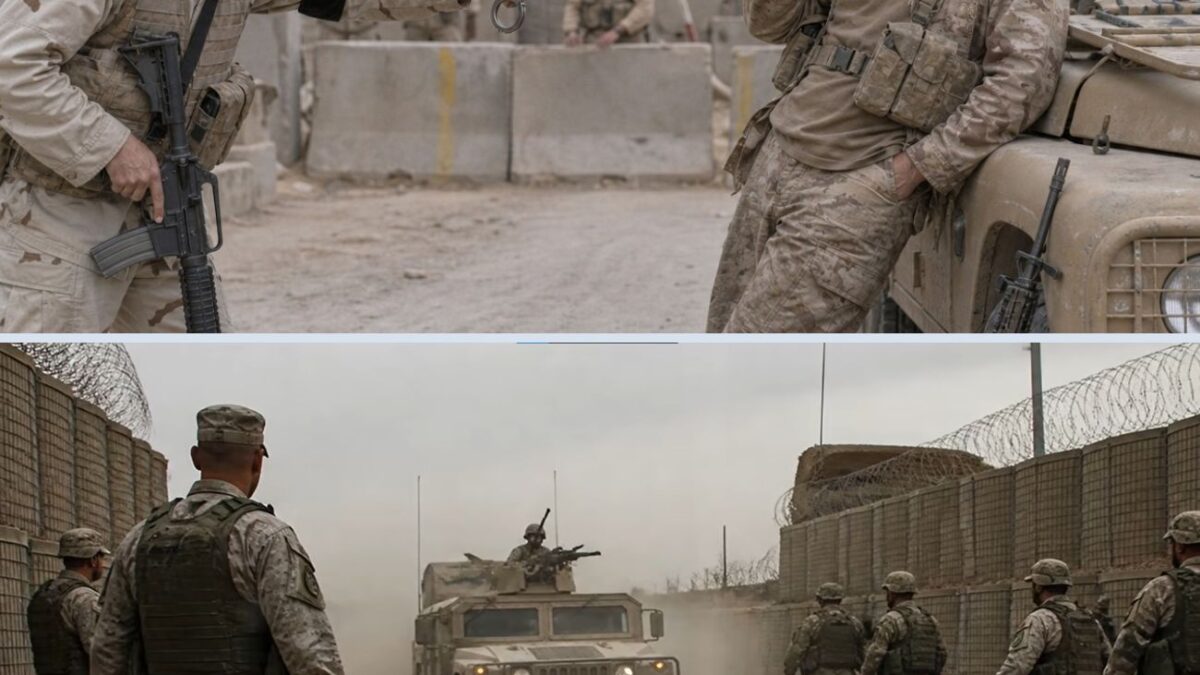
There is a gate on the western edge of Anbar province, three strands of razor wire and a Hesco wall and two sandbagged firing points. And on an overcast morning in the second month of the invasion, a United States military police major stood 10 feet in front of a dust-caked Land Rover with his M4 up and a pair of handcuffs in his other hand and he was shouting.
You can picture it the way the men behind the barriers remember it. The rifle is level. The handcuffs are extended, actually extended dangling from his right fist as if he intends to use them, which he does. Four men are in the vehicle. The one in the passenger seat has the door open and one boot on the ground and a dirty white enamel mug in his left hand. He has not put the mug down. His beard is dark and full. His shemagh hangs loose. His weapon lies across his lap with the muzzle pointed away from everything that matters. And his trigger finger rests on the receiver where any instructor at any school in any army would have told him to rest it.
“You’re under arrest, limey.”
The major’s voice carries across the gate.
“On your knees, all of you. You’re not SAS, you’re not anybody. You’re four dirt bags in a stolen truck and I am done being lied to at my gate.”
The man with the mug lifts it to his mouth and takes a sip. He does not stand up. He does not put his hand near his weapon. He looks at the major the way a tired man at a bus stop looks at a dog that has started barking at nothing. Behind him, in the back of the Rover, three other men sit in exactly the positions they have been sitting in for the last two hours of driving and none of them move either. The driver keeps both hands on the wheel and his eyes forward. The signaller in the back writes something small and neat in a logbook on his knee. The one next to him is asleep or doing an exceptional impression of it. He will remember saying it. He will be made to.
Everything that happens in the next 48 hours happens because a credentialed, competent, well-regarded American officer stood at his own gate with his own handcuffs out and told four men they were not what they said they were in front of witnesses, on tape, in the log, and in his own voice. The debt was opened at 9:11 that morning. It would be paid in counted seconds and in front of the same man before the week was out. He just did not know it yet.
The base did not have a name yet. On the maps that reached the task force, it was a four-digit grid and a note that said FOB TBD, which the engineers had taken as instruction and painted in black on the water tower. It sat astride the main supply route that ran up to the Syrian border, a converted Iraqi army compound with the shell holes still fresh. And in the first weeks of the occupation, it had become the unloading point for every unit, every contractor, and every rumour of a unit that passed through Western Anbar on its way to somewhere else.
The perimeter was being rebuilt daily. The gate was the only gate and the gate was Major Darren Kowalski’s. He was 11 years in. He had done two tours in the Balkans with a line military police battalion, one of them on the Brčko Corridor, during the worst of the smuggling, and he had a Bronze Star from Mosul route security that he did not talk about because the citation mentioned a soldier who had not come home. He had instructed at Fort Leonard Wood for 18 months between postings and the junior MPs who had passed through his classroom all remembered the same thing about him, which was that he read the regulations on Christmas Day.
He kept a laminated gate protocol card in his left breast pocket. He tapped it lightly with two fingers when he was about to be right about something. His battalion sergeant major, who did not give praise easily, had written on his last evaluation that Major Kowalski was the man you wanted on the gate when you did not know who was coming through it. In the context of that gate, in that month, that was the highest compliment the army could pay a man. He was not a fool. He was not a bully. He was the kind of officer his own corporals went looking for when the day got complicated.
His contempt was almost reasonable. In the three weeks before the Land Rover arrived, Kowalski had turned away a four-man team claiming to be Delta, who were in fact a private security detail with forged documentation. He had detained two men who told him they were Rangers, and who turned out to be journalists. And he had, on one memorable afternoon, arrested a full lieutenant colonel of Iraqi intelligence, who had walked up to his wire in a stolen uniform and demanded fuel. He had been right every time. The pattern in his head was clean. Men who arrived without proper documentation, in non-standard vehicles, with non-standard kit, were not who they said they were.
The pattern had been reinforced three times. The pattern was the problem.
The night before the arrest, Colonel Kent Pettingill, who ran the joint special operations slice attached to the base, had given a briefing in the plywood operations hut that Kowalski had sat in on because gate security had been invited. Pettingill was tall and tired and precise. He had put a slide up with an aerial photograph of a bend in the Euphrates near the town of Al Qaim, a crossing site the smugglers had used for 40 years, and the insurgency had now adopted as its principal rat line into Syria. He tapped the slide with the back of a pen and said in a voice that carried to the back of the room that shutting that crossing was a 14-day problem, minimum, with the forces currently in theatre. Three battalions, air support, armour on the roads.
Kowalski wrote the number down, 14 days, minimum. It had seemed to him, sitting there, a conservative estimate from a man who did not exaggerate. He underlined it twice.
The Land Rover arrived at 9:11 in the morning. The log recorded it to the minute because Sergeant First Class Ruben Garza, Kowalski’s shift lead, had been a sheriff’s deputy in Val Verde County before the war and still logged everything to the minute as a matter of habit. The vehicle was a short-wheelbase 110, desert tan, no markings, no national flag, no unit flash, with four men inside and enough kit on the roof rack to supply a small village.
The passenger-side man had a full dark beard and a shemagh wound loose around his neck and a tan baseball cap pulled low. He did not look like any soldier Kowalski had ever seen. The driver had a beard, too. The two in the back had beards. None of them were in a recognizable uniform.
The passenger had a mug in his hand and when the vehicle rolled to a stop at the wire, he took a sip of whatever was in it and he did not get out and he did not raise his hands and he said, in a voice that did not carry any further than it needed to,
“Morning. We’re expected.”
They were not expected. Not by Kowalski. The task force had not told the gate. The task force operated on need-to-know and the gate did not need to know. Kowalski tapped the card in his pocket. He walked out from the firing point. He unholstered his sidearm, thought better of it, reholstered, and brought his M4 up instead. And he pulled a pair of handcuffs from the pouch on his belt as he came because he had decided in the seven paces from the sandbag to the vehicle that he was looking at the fourth lie this month.
The thing a man like Chetwynd Allgood had learned in 15 years of this work was that there was no profit in explaining yourself to someone who had already decided. The major was shouting, the handcuffs were out. Behind the major, Garza was in the firing point with the shift gunner and the shift gunner’s barrel was tracking Allgood’s chest, not fast, but steady. The way men track a thing when they are nervous and have been told to be nervous. Allgood took another sip of his tea. The tea was black and lukewarm because he would not wait for a kettle at a stop, he said in a voice pitched to carry only as far as the major.
“Mate, get your bloke on the radio. Ask him for Zulu 6-4. He’ll tell you we’re expected.”
That was all he said. He did not raise his voice. He did not reach for a document because he did not get out of the vehicle because getting out would have been theatre and theatre was what the major was already providing.
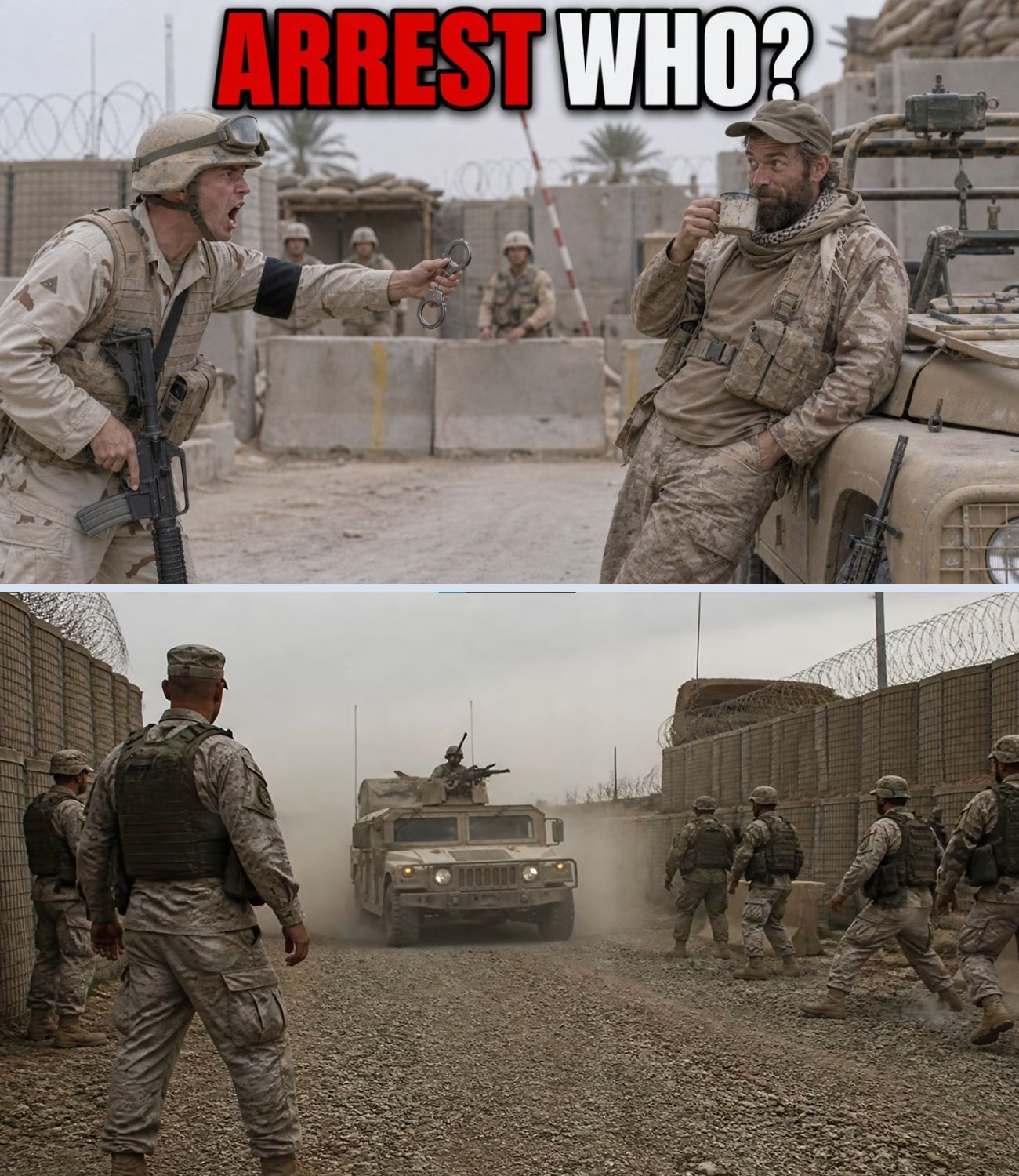
The men of the regiment do not argue with men pointing rifles at them as a rule because arguing is a form of asking for permission and asking for permission is the thing their job requires them never to do. Staff Sergeant Ewan Threlfall in the back seat kept his hands on his knees. Trooper Marchand Oakley wrote in his log in handwriting so small and neat it looked like a child’s attempt at copperplate the time, the grid, and the words gate dispute, awaiting liaison. Sergeant Michael Doak in the opposite rear seat closed his eyes. He did not pretend to close them. He actually closed them because he had been up for 31 hours and this was not his problem. Corporal Roland Trescothick, the driver, kept both hands at 10:00 and 2:00 on the wheel, exactly where a man wanted them visible, and did not move.
In Allgood’s lap lay an L119A1, the regiment’s chosen carbine, built on the Diemaco pedigree out of Canada because the men who had to use it had been given a say and had chosen accordingly. The weapon was dusty. The weapon was clean under the dust. The weapon was exactly as the man wanted it, which is to say boring to look at and ready to work.
Chief Warrant Officer 3 Delmar Ivy walked out from the operations hut 4 minutes into the standoff. He was 51 years old. He had been on an operational detachment Alpha in the First Gulf War. He did not raise his voice anymore, as a rule, because he had used his voice up in his 20s and preferred now to use other people’s attention. He saw the Land Rover. He saw the beards. He saw the mug. He saw Allgood in the passenger seat, and he did a thing with his face that was not quite a smile and not quite a sigh, and he walked up alongside Major Kowalski at a measured pace, and he put one hand very lightly on the barrel of the major’s M4, and he pushed it gently towards the ground. He said,
“Darren.”
He said,
“Darren, these are our guys.”
Kowalski did not lower the rifle. Ivy did not push harder. Ivy said,
“Darren, I need you to walk with me.”
And Kowalski, who was credentialed and competent and well regarded, did not walk. He said,
“Chief, these men do not have identification. They do not have a uniform. They do not have a unit flash, and I am not clearing them into my base on your word.”
Ivy nodded because that was in fact a defensible position by the book. Then he walked back to the operations hut and radioed Colonel Pettingill. They were cleared through the gate 41 minutes later on a radio instruction from Pettingill himself and Major Kowalski logged the clearance in the gate book under protest and tapped the card in his pocket twice as he did it.
The Land Rover rolled through the wire and parked in the shadow of the water tower. The four men got out. They did not stretch. They did not complain. They did not look back at the major who had tried to arrest them. They unloaded their kit in a sequence so practised it looked choreographed and then they did an extraordinary thing which was that they did almost nothing visible for the next six hours.
Threlfall sat on the running board of the Rover with a map case on his knees and read the map. He had two watches on his left wrist. One was set to Zulu time. The other, a cheap digital that his wife had bought him, was set to the clock in their kitchen in Hereford. He looked at the Zulu watch, then at the kitchen watch, then at the map and then he wrote three lines in a notebook. Doak laid a paperback, a battered copy of a John le Carré novel, the spine broken in two places, on the bonnet of the Rover face down to keep his place and went to find somewhere to sleep. Trooper Price-Hollingworth, who did the demolitions, sat cross-legged on the ground and laid out a length of detonation cord on a square of hessian and began checking it inch by inch. And as he worked, he hummed under his breath the tune of a hymn which was his habit when he cut cord because it kept his hands steady. Allgood went into the operations hut with Ivy and did not come out for two hours.
What the major on the gate saw when he came off shift at noon and crossed the compound to the mess was four unshaven men in non-standard uniform doing nothing visible in the middle of a working base with their vehicle parked in the best shade drinking from enamel mugs. What the major did not see because he was not permitted to see it and because they would not have shown him if he had been was that in those 6 hours the four of them with Ivy and Pettingill had planned an action on the crossing site at Al Qaim that the task force had declared a two-week problem a day earlier. They had planned it, rehearsed the actions on in their heads, and submitted the plan up the chain. Pettingill had not told the gate. Pettingill had not told anybody who did not need to know.
The clock on the plan was 48 hours. The crossing was the thing. The crossing was the loaded gun that was sitting on the table of the operations hut, and the man who had tried to arrest the men who were about to fire it was walking across the compound to get a tray of chicken and rice feeling by the laminated card in his pocket that he had been right at his gate and would be proved right in the end. He was right that they did not have identification. He was wrong about everything that mattered.
At the long trestle table in the plywood mess, Major Kowalski ate chicken and rice with his sergeants and did not keep his voice down. He said through a mouthful that the four men in the Rover were a mess. He said that in his battalion a soldier who arrived at a gate out of uniform with a beard without identification in a non-standard vehicle was a soldier who did not take his job seriously, and that the British, bless them, had a long tradition of letting their special units become so impressed with themselves that they forgot how to look like soldiers. He said,
“Schoolgirls in shorts, that lot. Tea-drinking amateurs with their mugs and their maps.”
A corporal at the table laughed because corporals laugh at majors. Sergeant First Class Garza did not laugh. Garza had been a sheriff’s deputy in Val Verde County for 7 years before the war, and he still said, “Sir,” to civilians. And the thing a deputy learned in Val Verde was that a man who looked wrong at a traffic stop was either a problem or he was not. And you could usually tell by watching his hands. He had watched the hands of the four men in the Rover. The hands had not moved.
An hour later, Garza was walking the inner perimeter, and he passed the vehicle park, which was a dusty rectangle of hard standing behind the water tower. And in the vehicle park, he saw a thing that stopped him.
The four men from the Rover had marked out with lengths of cord and tent pegs a floor plan on the ground. It was not a large plan. It was perhaps the footprint of a two-room building with a doorway on one side and a window on the other. And inside the doorway, they had set up three empty ration crates to stand in for furniture. And inside one of the crates, they had set a water bottle on its end to stand in for something. And they were walking the plan.
They were not running. They were walking. Allgood went first. He walked to the doorway, turned on the ball of his right foot, placed his left foot where the threshold would have been, raised his rifle to a low ready, and stepped through. Behind him, in a sequence as smooth as a hand closing, Threlfall came through at a 1-second interval, then Doak, then Hollingworth. They did not speak. Each man’s weapon covered a different arc. Each man’s feet landed in a place that the man before him had cleared. They reached the water bottle. Allgood touched it with the muzzle of his weapon lightly, the way you tap a man’s shoulder to say, “This one.”
Then they walked back out, reset to the start line, and did it again. Then, they did it again. They did it 11 times while Garza watched, and on the 11th time, it was no slower, no faster, no different in any respect from the first. Garza stood by the water tower, and he counted. He counted the seconds between the first man crossing the threshold and the last man touching the bottle. The number was six. Six seconds every time.
He thought of the arrest drills he had taught at the academy, where six seconds was the time it took a competent deputy to clear a motel bathroom with the shower curtain closed. And he thought about the fact that these men were doing it with a four-man stack, in silence, into an imaginary building in a dusty vehicle park in Iraq, as if they were brushing their teeth.
He went looking for the MP major. He found him at the ammunition point, signing a form. Garza said quietly,
“Sir, you need to come look at something.”
Kowalski, in the middle of a sentence to the ammunition sergeant, said,
“In a minute, Reuben.”
Garza said,
“Sir.”
The tone did the work. Kowalski looked up and said,
“What?”
Garza said,
“The British. They’re rehearsing in the park. You should come.”
Kowalski came. He stood next to Garza in the shade of the water tower, and he watched the four men walk the plan for the 12th time. He watched Allgood’s feet find the threshold. He watched Threlfall come in behind him at 1 second, Doak at 2, Hollingworth at 3. He watched them touch the bottle and walk back. He watched them do it again. And the thing a credentialed, competent, well-regarded man will do when the evidence in front of him contradicts the pattern in his head is reach for a reading of the evidence that preserves the pattern. And Kowalski reached. He said under his breath to Garza,
“They’re walking it. Any troop can walk a drill. I want to see them do it at speed, under contact, in a real building. Walking a plan in the sand doesn’t prove a thing.”
Garza, who had been a deputy, did not reply. Garza, who had been a deputy, understood that a man who had just watched four strangers execute the cleanest four-man entry he had ever seen, in silence, 11 times without variation, and whose first response was to downgrade what he had seen, was a man who was going to be surprised later. He did not say so. He stood in the shade, and he kept his eyes on the hands of the men in the park, and the hands never once did anything other than what they were supposed to do.
That evening in the mess, Chief Warrant Officer Ivy sat down opposite Kowalski with his tray and his coffee, and he did not raise his voice because he had used his voice up in his 20s. He said,
“Darren, I need to tell you something because I like you, and because you are a good officer, and I would prefer that you heard it from me. The men you tried to arrest this morning are the men the colonel is sending out tomorrow night to do a job the task force said was a two-week problem.”
He let that sit. He said,
“I am not telling you this to embarrass you. I am telling you this because you are going to see them come back. And when you see them come back, I want you to remember what you said about them at lunch.”
The MP major tapped the card in his pocket twice and said,
“Chief, with respect, I’ll believe it when I see it.”
Ivy nodded. Ivy said,
“That is exactly what you are going to do.”
And that was only the first time that day he would be wrong. The man at the gate had said, in front of witnesses, that four men in a Land Rover were four dirt bags. He had said it with handcuffs out and a rifle up. The debt he had opened at 9:11 that morning was still open, and the men he had opened it against were, that afternoon, about to do the second thing he had not budgeted for.
Behind the compound, in the dry wadi beyond the back wire, the engineers had bulldozed a strip of flat ground and set up a rough thousand-metre range with steel plates at a hundred, three hundred, five hundred, and eight hundred metres. The plates were old and pockmarked, and the eight-hundred-metre plate had a hole punched through its upper left corner that whistled faintly in the wind. The task force had put a sign at the firing point that said, “Range open daylight” in black spray paint on a bit of plywood. Nobody used the range much because the task force shooters preferred to zero on their own private range the engineers had built them further out, and so the dusty strip of ground was, that afternoon, empty except for a plywood table, a set of ear defenders hanging on a nail, and a tin ammunition box.
Doak and Threlfall walked down to the range at four in the afternoon with a long black case and a canvas bag. Doak was carrying the paperback. He had been halfway through it on the drive. He laid it on the bonnet of the Rover, face down to keep his place as he had earlier, and he and the staffy walked the two hundred metres to the firing point without hurrying. Oakley, who signalled and spotted, came behind them with a spotting scope. They did not speak on the walk. Garza, who had come down out of habit because the range was within his perimeter, stood a respectful distance back at the plywood table and did not interrupt.
Doak unpacked the long black case. Inside was an AWM, the suppressed sniper rifle in .338, lying in foam. He set up on the firing point without a sandbag because the firing point had a berm that would do. Threlfall lay down beside him with the spotting scope. Oakley watched the 800-m plate with his own glass. There was a crosswind, perhaps six knots, from the right.
Doak loaded one round. He said quietly,
“Eight.”
Threlfall said,
“Send.”
Doak sent. The round hit the plate at 800 m with the flat metallic bang that steel makes when a heavy round finds the middle of it. And the plate rang for a long second afterwards. Doak loaded another round. He said,
“Five.”
Threlfall said,
“Send.”
The plate at 500 rang. He loaded another.
“Three.”
The 300 plate.
“One.”
The 100. Four rounds. Four plates, four centres of mass in a sequence that took Garza counted 19 seconds from the first shot to the last. Then Doak laid the rifle on the bag, sat up, and said to Threlfall,
“That’ll do.”
Threlfall checked his Zulu watch and wrote three lines in the notebook. They packed the rifle back into the foam case. They walked back up the wadi to the compound at the same unhurried pace. Doak picked the paperback off the bonnet and tucked it under his arm.
The MP major had come down to the range at some point during the sequence. He had come because Garza had, without saying anything, told the shift gunner to tell him. He had stood behind the plywood table and he had watched. When Doak and Threlfall walked back past him, Doak did not look at him. Threlfall nodded, the small efficient nod of a man acknowledging that another man exists, and said,
“Afternoon, sir.”
Kowalski said,
“Afternoon.”
He watched them go. He said to Garza, when they were out of earshot,
“Any decent marksman can do that on a known distance range in good light.”
He said it the way a man says a thing he wants to be true. Garza, who had qualified expert on the M24 in the guard, said,
“Sir.”
Kowalski said,
“What?”
Garza said,
“Four plates, no sighters, no adjustments between shots, with the wind.”
Kowalski said,
“On a quiet range.”
Garza said,
“Sir.”
Kowalski said,
“What, Reuben?”
Garza said,
“He didn’t dial. He called the hold off and shot it.”
Kowalski tapped the card in his pocket and did not reply. Garza was aware, as he stood there, that for a man like the major, the pattern was taking on water in a way the pattern could not sustain much more of. He did not say so. He had been a deputy. He had watched men’s hands.
Threlfall and Doak walked past the vehicle park on their way back to the Rover, and Threlfall stopped by the water tower and looked at his two watches. He looked at the Zulu one. He looked at the kitchen one. He stood for perhaps 4 seconds perfectly still, and did arithmetic that had nothing to do with the range and everything to do with the fact that his wife, in Hereford, would be putting the children to bed in 40 minutes, and that he would not call because they were going out again tomorrow night, and because calling meant a satellite footprint he did not want to leave. He put his wrist down. He walked on.
The schoolgirls, the major had called them. The schoolgirls in their shorts, with their mugs. The staffy with the two watches walked past the water tower and did not look back at the man who had said it.
At 23 minutes past 4 that afternoon, a vehicle-borne device went off at a culvert on the main supply route, 2 km south of the base, and the small logistics convoy that had been coming back from the border post with mail and water lost its rear vehicle. The gunner in the turret was gone before he hit the ground. The driver was concussed. In the back of the Humvee, pinned under a crate that had come loose, was Private First Class Terrell Beatty, 19 years old, from a town in Georgia nobody at the base had heard of, with a piece of the vehicle’s own metalwork driven through his right thigh at a point 4 inches above the knee. The femoral artery was torn, not transected, but torn, and he was bleeding into the floor of the vehicle at a rate that gave him, by any medic’s estimate, 4 minutes.
The quick reaction force reached the culvert in six, which was impressive and which would have been not enough. The problem, as the medic on the quick reaction force discovered when they got him into the back of the second Humvee, was that the tear in the femoral was proximal, up near the groin, where a standard tourniquet would not hold because there was not enough leg above the wound to cinch against. The medic was good. The medic put a tourniquet on anyway and leaned on it with both hands and told the driver to drive, which the driver did, and they came through the gate at 26 minutes past the hour at a speed that scattered the shift and ran the Hesco at the chicane.
Private Beatty was conscious. Private Beatty was asking, in a thin voice, for his mother.
Corporal Roland Trescothick, the driver and medic of the regiment’s patrol, was standing in the doorway of the plywood operations hut when the Humvee came through drinking from an enamel mug that was, in his case, condensed milk and water because he had opened the tin that morning, and the tin was for reasons he would not say. He put the mug down on the step without spilling it, and walked fast to the aid station. He did not run. He walked fast. He unslung the medical bergen from the back of the Rover as he went past, and by the time he reached the aid station, the medical bergen was open on the ground beside him, and his hands were already in it. He had not been asked. He had not been introduced. He walked past the aid station medic, a captain, a reservist, a good man who was doing his best, and he said,
“Mate, junctional. Let me.”
The captain, who had the proximal tourniquet in his hands and knew it was not going to hold, stepped sideways. He did not ask who the man with the beard was. He had seen hands like these before, and he had not seen hands like these before, and either way, he was not going to argue with a tin of saline and a packed wound. He stepped sideways.
What Trescothick did in the next 90 seconds was the kind of thing a man like Kowalski, who had come up to the aid station because the shift was his, and the casualty was his, had read about in training packages, and had not seen done. Trescothick put a junctional tourniquet, a device the task force did not yet have in theatre, and that Trescothick carried in his bergen because the regiment’s medical course had decided they ought to, across the inguinal crease, and he cinched it hard, and the arterial bleed slowed to a stop you could see on the floor. He put a 16-gauge line in Beatty’s left antecubital on the first attempt, without a tourniquet, because Trescothick could cannulate a man in the dark. He hung a bag of saline. He put a pack of blood-clotting gauze into the wound, and he packed it. Pressure. Two hands, counting out loud under his breath. He counted to 90. Then he put his ear to Beatty’s chest, said something to the reservist captain that the captain nodded at, and sat back on his heels.
Beatty was alive. Beatty’s eyes were open. Beatty was still asking, in a thinner voice, for his mother. Trescothick said, in a Welsh accent so soft it was almost a lullaby,
“She’s coming, son. You’ll see her. Keep your eyes on me. Keep your eyes on me.”
He held Beatty’s left hand with his own left hand, while his right hand kept pressure on the pack. He did not let go until the surgical team came and took Beatty into the back room. And when they lifted the stretcher, the knees of his trousers were black with another man’s blood. He walked out of the aid station without looking at anyone. He walked back to the operations hut. He picked up his mug of condensed milk and water from the step where he had put it. He drank it.
The MP major stood in the aid station doorway and did not say anything. He had not said anything for the last 2 minutes. He had watched a corporal he had tried to arrest the previous morning do a procedure on an American soldier that the American surgeon, when he came out 10 minutes later wiping his hands on a towel, described in one sentence to Chief Warrant Officer Ivy, who was now standing next to Kowalski. The surgeon said,
“If your corporal hadn’t walked in, that kid loses the leg at best and bleeds out at worst, in that order, in about 3 minutes.”
He said it to Ivy. He did not look at Kowalski because he did not know who Kowalski was and did not know he needed to. Ivy said,
“Thank you, Doc.”
The surgeon went back into the back room. Kowalski did not tap the card in his pocket. He had not tapped it since the range. He stood in the doorway of the aid station and he watched the corporal walk back across the compound in a pair of trousers black to the knee with another man’s blood and he did not say anything at all.
The thing a credentialed competent man understands when the pattern in his head has broken is that there is no further rationalization available. He understood it. He did not want to understand it. He understood it anyway and the loaded gun in the operations hut, the plan Pettingill had not told him about, the crossing site at Al-Qaim, the two-week problem, was due to be fired the following night. And the four men who had done the 12-walk entry in the vehicle park and the four plates in 19 seconds and the junctional tourniquet on his private were the men who were going to fire it. The debt opened at 9:11 on the first morning. By the second night it was due. The man who had said four dirt bags and a stolen truck would be in the operations hut standing where he had been told to stand. When the number came back on the radio and the number would be read aloud in his hearing by the colonel who had declared the problem a two-week minimum four days earlier.
The insertion goes in at 2200 local on the second night. A single Chinook from a forward strip in Jordan drops them 3 km west of the crossing site in a shallow wadi lined with tamarisk and the four men are off the ramp and into the vegetation before the loadmaster has finished counting them. They are joined by two more from a sister patrol who have come overland. Six men. The ferry at Al-Qaim is a flat-bottomed boat winched across the Euphrates on a cable operated by three brothers who have been running it since before the first Gulf War and who in the last six months have been running fighters and ammunition across it for anyone who pays. The guard force on the eastern bank is 12 by the imagery, nine by the human intelligence, 14 by the pessimistic estimate Allgood has chosen to plan against. Hollingworth is humming as they move. The tune is Guide Me, O Thou Great Redeemer, and he is humming it under his breath because he is cutting the fuses on his breaching charges in the dark, and his hands are steadier when he hums.
In the operations hut at the base, 300 km away, Colonel Pettingill is standing in front of a plasma screen that is showing a grainy infrared feed from the unmanned aircraft overhead. Chief Warrant Officer Ivy is beside him. Lieutenant Colonel Howard Pryne, the base commander, is at the back of the hut with his green Write in the Rain notebook open on a trestle table. And the MP major is in the hut. He is in the hut because Pettingill, on Ivy’s recommendation, has invited him in. The invitation was phrased as an order. Kowalski is standing against the back wall, arms folded, where he can see the screen. He has not been told what the number is going to be. He has been told that the number is going to matter. In Pettingill’s right hand is a stopwatch, the old kind, with a sweep hand, a ritual the colonel has kept since his captain days. And the stopwatch is not yet running.
On the eastern bank of the Euphrates, Allgood’s six men are in position. Allgood is on the ferry side of the cable with Threlfall and Hollingworth. The other three are across the river on the western side, cutting off the retreat. The imagery is confirmed. The guard force is nine men in a mud-walled compound 10 m from the water, with one sentry on the roof, and two in a sandbagged position by the gate. Doak is 600 m back on a low ridge with the AWM. Oakley is beside him with the scope.
The order to breach goes at 22:52 local. The breach goes. Hollingworth’s charge takes the compound gate off its hinges with a hard flat thud and a sudden rush of grey dust that the infrared sees as a bloom of warm air. Pettingill in the hut clicks the stopwatch and the sweep hand starts. On the screen, three white human shapes move through the smoke into the compound. One white shape on the roof drops before the smoke clears. Doak from the ridge has taken the sentry with a single round that nobody at the compound has heard because the AWM is suppressed and the breach is louder than the shot. Two more shapes drop in the sandbagged position at the gate.
Allgood is first through the breach. Threlfall is at 1 second. The third man from the sister patrol is at 2. Hollingworth is at 3, moving through to the inner building. There is no shouting. There is no challenge. The guard force wakes to a situation they do not have time to understand. Three go down inside the compound in the first 18 seconds. Two run for the ferry and reach the cable and are dropped by the cutoff team on the far bank who have been lying in the reeds for an hour. One surrenders, kneeling in the courtyard with his hands on his head, and is left kneeling. The last two are in the inner building and are the longest problem.
Allgood goes in through the doorway. The muzzle of his carbine touches the shoulder of the man ahead of him lightly, the way a hand on a shoulder passes a message. The two men inside fire first. They miss. The six men of the patrol do not. The whole thing is a sequence of specific decisions that happen in silence and that resolve one after another in the colour of the smoke clearing. Threlfall at the central point of the compound lifts his left wrist, looks at the Zulu watch, and keys his radio once. Allgood’s voice in the earpieces of the men in the hut says,
“All secure.”
Pettingill clicks the stopwatch. He holds it up. He looks at it. He looks at it for a long moment because the number on the dial is a number that does not match the plan he gave on the slide 4 days ago. He turns the face of the stopwatch to Ivy. Ivy reads it. Ivy turns the face of the stopwatch without saying anything to the back wall of the hut where the MP major is standing with his arms folded. The sweep hand is on 4 minutes 11 seconds.
4 minutes 11 seconds from the moment the breach charge took the gate off its hinges to the moment Allgood’s voice said “All secure” over the radio. 4 minutes and 11 seconds have elapsed. The crossing is shut. The ferry cable will be cut and the ferry sunk in the current in the next 90 seconds by Hollingworth who is still humming. The rat line that the task force has declared a 14-day problem, minimum, with three battalions and air support has been closed by six men in 4 minutes and 11 seconds, witnessed on an infrared feed, counted on a stopwatch held by the colonel who declared the 14 days in the hearing of the major who declared the men dirt bags in a stolen truck.
Pryne in the back of the hut opens his green notebook and writes in his careful hand the number 04:11. He underlines it. He closes the notebook. Pettingill does not say anything for perhaps 10 seconds. Then he says quietly to Ivy,
“Chief, pull them out.”
Ivy nods and keys his microphone. The screen shows six white shapes moving down the bank towards the reeds, where a small boat is waiting to take them down river to the exfiltration. One of the shapes, the smallest, is moving with the slight bounce of a man humming a hymn to himself.
Nobody left the operations hut immediately. Pettingill stood in front of the screen with the stopwatch still in his right hand, and the sweep hand still frozen at 4:11, because he had not yet reset it. Ivy, beside him, folded his arms. Pryne, at the back table, kept his hand on his closed notebook. And the major, against the back wall, had not moved. His arms were still folded. His laminated card was still in his left breast pocket. He had not tapped it. He had not tapped it since the aid station.
The thing a man does in the moment the pattern in his head is proven wrong in a counted number is nothing. He stands against the back wall, and he looks at the stopwatch, and he counts in his own head backwards from 4 minutes and 11 seconds to the thing he said at his gate, and he finds that no arithmetic can be done in that direction that does not come out humiliating.
The men came back through the gate at 11 minutes past 4:00 in the morning by the gate log, which Garza wrote up because the shift was his. The Land Rover, which had gone out 36 hours earlier, came in filthy. Allgood was in the passenger seat. The mug was in his hand because the mug had been in his hand on the exfiltration boat, and on the pickup, and on the drive back from the strip, and the tea in the mug was long cold. He did not look at the gatehouse. He said to Garza through the open window,
“Morning.”
In exactly the voice he had said it in the first time. Garza said,
“Morning, sir.”
Garza had been a deputy. Garza knew how to say “sir” to a man who had just done the thing the deputy could not have done. The vehicle rolled through.
The four men got out at the water tower. They unloaded the kit. They did not stretch. They did not complain. They walked in the first thin grey light past the aid station and past the operations hut and they went to find somewhere to sleep. They walked past the major who was standing outside the operations hut because Pettingill had kept him there until the vehicle came in. Allgood did not look at him. Threlfall nodded, the small efficient nod of the previous afternoon, and said,
“Morning, sir.”
Doak did not nod. Doak was carrying his paperback. Hollingworth, still humming, did not look up. The humming was the hymn from the compound, now at a slightly livelier tempo because the man was tired and because tired men hum faster. They went past. They went into the plywood hut where the cot beds were and the door closed behind them and the compound was quiet.
Garza walked back to the Land Rover. He did not know when he walked to the Rover why he was walking to it. He stood by the bonnet and he looked at it. On the bonnet, where Doak had laid it on the first morning and where Doak had laid it again now, was the paperback. The spine was broken in two places. The cover was faded. Garza picked it up. He turned it over in his hands. He put it back down on the bonnet carefully, face down to keep the man’s place. He walked away. He did not say to anyone why he had picked it up or why he had put it back exactly where it was. He had been a deputy. He understood, in a way he could not have put into words, that the man had come back to the vehicle he had left the book on as if he had never left it, as if the 36 hours and the 4 minutes and 11 seconds were a slight inconvenience in a reading schedule.
Pryne opened his green notebook in the operations hut and he read the number aloud once for the record. He said,
“Breach to all secure, 04 minutes 11 seconds. Objective closed. Six men. One minor injury, friendly in the breach team. No further friendly casualties.”
He said it in a flat voice because he was tired and because Pryne wrote everything down and read everything flat. He closed the notebook. Pettingill, who had not yet reset the stopwatch, finally pressed the reset. The sweep hand swept back to 12. The dial was clean. The number was in the notebook now and it was in the task force’s log and it was in the heads of every man in the hut and it would be in the base’s folklore within 48 hours.
Ivy, on his way out of the hut, stopped beside the major. He put one hand lightly on Kowalski’s shoulder the way he had put it on his rifle barrel the previous morning. He did not raise his voice. He said,
“Darren, you tried to arrest the man who just shut the border.”
He did not say any more. He walked out. Kowalski stood where he was with his arms folded and the sun came up over the Hesco wall behind him. The handcuffs were still on his belt. They had not been opened. They had not been needed. They would never be mentioned again by any man present, which was a kind of mercy and a kind of sentence at once.
The compound was quiet by 6:00 in the morning. The air was cool briefly before the day’s heat came up. The flag on the pole over the operations hut hung without wind. In the plywood hut where the four men were sleeping, nobody stirred. On the bonnet of the Land Rover, the paperback stayed where Garza had replaced it, face down, spine broken, the breeze lifting the top corner of the back cover and setting it down again.
The gate was Garza’s shift now. He wrote the log in his neat hand. He did not log the paperback. He did not need to.
The man at the gate had said with handcuffs out and a rifle up that they were four dirt bags in a stolen truck. He had said they were not of the regiment, not anybody. He had been right about the stolen-looking truck, which was in fact a stripped Land Rover with no plates and no markings, because the men who used it did not want plates or markings. He had been right about the lack of identification, because the men who did their job did not carry any. He had been right about the beards and the mugs and the shorts of his imagination. He had been right about the surface of every one of them. And he had been catastrophically, counted stopwatch, 4 minutes 11 seconds wrong about the only thing that mattered, which was what those four men with their beards and their mugs and their unpressed uniforms were going to do before the week was out to the problem his own colonel had declared a 2-week minimum. Right about the tea, wrong about the men who drank it, right about the mug in a man’s hand at a gate, wrong about what that same hand would do in silence at the breach in 4 minutes and 11 seconds.
The lesson, if the hut’s green notebook is the final record of it, is not that one force is better than another. The lesson is quieter than that and worse for the man who had to learn it. The lesson is that the loudest officer at the gate is almost never the one who knows what is coming through it.
In the shade of the water tower by 8:00, Allgood was awake again. He was sitting on the running board of the Land Rover with a fresh mug in his hand, map case on his knee, looking at the ground where the cord and tent pegs had been the previous afternoon. He took a sip. The tea was lukewarm because he would not wait for a kettle.
You Might Also Enjoy

“We Thought They Would Negotiate”—What Argentine Soldiers Said When The British Attacked Goose Green

“You’ll Never Finish My Ruck March, Limey” — US Sergeant Who Challenged the SAS, Then Fell Out First






