Uncategorized
Grace Kelly Left Hollywood — Then She Said This
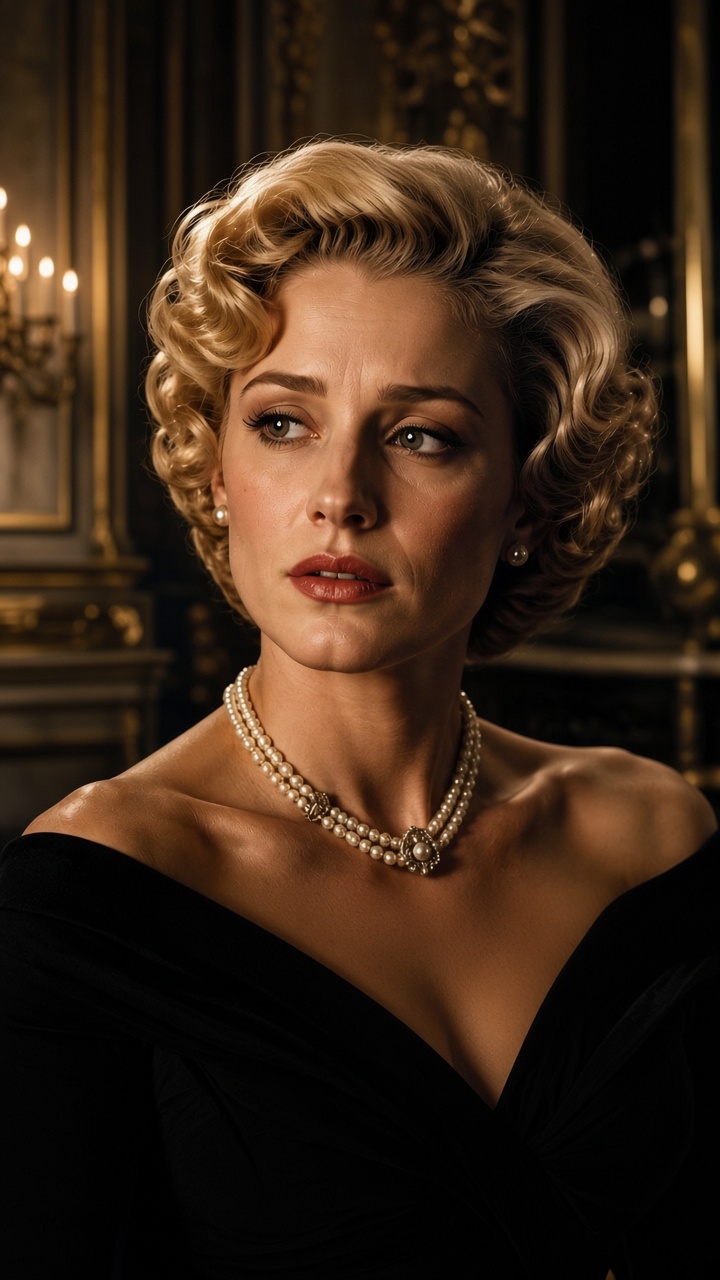
Grace Kelly was only 26 years old.
Eighteen months earlier, she had won the Academy Award for Best Actress for The Country Girl. In just five years, she had appeared in eleven films. She had worked with some of Hollywood’s biggest stars and had become one of Alfred Hitchcock’s most celebrated actresses. Her face appeared on magazines across the world, and newspapers repeatedly described her as one of the most beautiful women in America.
Yet she was leaving.
At the moment when her Hollywood career seemed to be reaching its greatest height, Grace Kelly was preparing to become Princess of Monaco.
To millions of people, the story looked impossibly romantic. A Hollywood actress was marrying a European prince. The American dream had somehow turned into a royal fairy tale.
But the decision contained far more than romance.
Grace Patricia Kelly had spent years building an identity that was entirely her own. She had overcome family expectations, established herself as a serious actress, and finally received the recognition she had once desperately wanted. Walking away from Hollywood therefore meant giving up something much larger than a job.
It meant surrendering a part of the life she had fought to create.
Grace Kelly was born on November 12, 1929, in Philadelphia, Pennsylvania, the third of four children of John Brendan Kelly and Margaret Katherine Majer. Her father was already a major figure in Philadelphia society. John Kelly had won three Olympic gold medals in rowing and had built a successful business career.
He was disciplined, demanding, ambitious, and accustomed to getting results.
Grace grew up under those expectations.
Her father wanted his children to achieve. Athletic accomplishment, professional success, discipline, and social respectability were important within the Kelly family. Acting, however, did not fit comfortably into that vision.
Grace was shy as a child. She was quiet and observant, often watching rather than dominating the room. Her reserved personality would eventually become one of the qualities that made her so compelling on screen, but during childhood it could make her appear less forceful than her siblings.
According to the story repeated in biographies of her life, her father regarded her as the less remarkable child, sometimes referring to her as the “boring” one.
For Grace, acting became a way of discovering a different version of herself.
She performed in school productions and became increasingly interested in theater. At 18, despite her father’s objections, she went to the American Academy of Dramatic Arts in New York.
That decision was important.
Grace was not simply a young woman chasing fame. She approached acting as a craft. She studied, worked in theater, modeled, appeared in television productions, and gradually developed the controlled presence that would later become her trademark.
Hollywood eventually noticed.
She made her first film at 21. Within only a few years, she was working alongside major stars including Gary Cooper, Clark Gable, and James Stewart.
Then Alfred Hitchcock entered the story.
Hitchcock worked with Grace Kelly on Dial M for Murder, Rear Window, and To Catch a Thief. Across those films, she developed the screen image that would become almost inseparable from her name: elegant, restrained, intelligent, glamorous, and seemingly calm even when the world around her was falling apart.
Her beauty was obvious, but the success of her performances demonstrated that there was much more underneath it.
The Country Girl proved the point.
Released in 1954, the film gave Kelly a very different kind of role. She played Georgie Elgin, the wife of an alcoholic actor, and the character required her to move away from the polished image that Hollywood had created around her.
She did not rely on glamour.
Instead, she delivered a controlled and emotionally difficult performance.
The result was an Academy Award for Best Actress.
At 25, Grace Kelly had achieved something that seemed to confirm everything she had been working toward. The daughter who had once been discouraged from becoming an actress had become an Oscar-winning star.
And yet, success did not necessarily produce the life she wanted.
Her career had brought fame, money, recognition, and professional validation. It had also brought something else: a growing lack of privacy.
Grace Kelly could no longer simply walk through a city. Photographers followed her. Magazines discussed her clothing, her relationships, her appearance, and her private life. Hollywood studios carefully managed the public images of their stars.
MGM held her contract.
That meant the studio had substantial influence over which films she made and how she was presented to the public.
For a woman who had spent years proving that she could make her own decisions, the machinery of Hollywood could become another kind of limitation.
There were romantic relationships as well.
Grace Kelly had been linked to several prominent men, including Clark Gable, Bing Crosby, and Ray Milland. Some relationships were more complicated than others, particularly when existing marriages were involved.
What seems consistent across accounts of her personal life is that Grace took relationships seriously. She wanted emotional commitment rather than simply the excitement surrounding celebrity romance.
By 1955, the tension between the life she had built and the life she might want had become increasingly significant.
Then came Monaco.
Grace Kelly met Prince Rainier III at the Cannes Film Festival in April 1955. The meeting was connected to a Paris Match photography opportunity at the Palace of Monaco.
She was initially reluctant to go.
Her schedule was complicated, her clothes were not ready, and her luggage had reportedly been delayed. When she finally arrived at the palace, she was not prepared for the carefully staged royal encounter that awaited her.
Rainier received her in the palace gardens.
The photographs taken that day became famous.
They showed Grace and Rainier together in a setting that seemed almost too perfect: the Hollywood actress walking through the gardens of a European palace with the sovereign prince of Monaco.
Yet behind the images was a more ordinary beginning.
They talked.
They spent time together.
Grace returned to Hollywood.
Then the letters began.
Their correspondence continued for months, allowing the relationship to develop away from the immediate pressure of cameras and public appearances.
Rainier eventually traveled to Philadelphia to meet the Kelly family. He brought a priest and formally asked John Kelly for Grace’s hand.
John Kelly approved.
The engagement was announced, and the world reacted immediately.
A Hollywood star was going to become a princess.
The symbolism was almost impossible to resist.
Grace Kelly had grown up in an ambitious Philadelphia family, entered acting against her father’s wishes, conquered Hollywood, won an Oscar, and now appeared to be stepping into a completely different world.
Before the wedding, she made one final film.
The Swan was released in 1956. In the movie, she played a princess who becomes involved with a commoner.
The timing was extraordinary.
Her real-life engagement had transformed the film into something that audiences could not help interpreting through the lens of her own life.
But once the wedding approached, Grace’s Hollywood career effectively ended.
She gave up her MGM contract.
She left behind the film industry that had made her famous.
On April 12, 1956, she arrived in Monaco aboard the Constitution.
Thousands of people waited.
The principality was decorated for the occasion. Journalists and cameras followed her every movement.
On April 19, Grace Kelly and Rainier were married in a civil ceremony.
The religious ceremony followed on April 20 at the Cathedral of Saint Nicholas.
Grace wore a wedding gown designed by Helen Rose, the MGM costume designer who had worked with the studio. The dress was made from silk taffeta and lace, with a high neckline, long sleeves, and an elaborate skirt.
The wedding became one of the defining royal images of the twentieth century.
Grace Kelly was no longer simply a Hollywood actress.
She was Princess Grace of Monaco.
But becoming a princess did not mean that the difficult parts of her previous life simply disappeared.
Monaco was tiny compared with the cities where she had lived and worked. There was no anonymity. The royal court was close-knit, formal, and highly observant.
Grace also had to adapt to French.
She had not arrived in Monaco fluent in the language, and she had to learn the customs and expectations of her new environment.
She was no longer being directed by a Hollywood studio, but she was now living inside another institution with its own rules.
Rainier was also very different from the men Grace had known in Hollywood.
He had grown up with the responsibilities of hereditary rule. He had been raised to think in terms of duty, continuity, protocol, and the survival of Monaco’s monarchy.
He was reserved.
He was not naturally expressive.
Grace, meanwhile, had spent years performing and communicating through subtle emotion. She understood the power of presence, gesture, silence, and expression.
Their marriage developed within those differences.
There were difficulties, but Grace remained committed to the life she had chosen.
The couple had three children: Caroline, born in 1957; Albert, born in 1958; and Stéphanie, born in 1965.
Motherhood became one of the central roles of Grace’s life.
She approached it with the same seriousness she had brought to acting.
At the same time, she began building a public identity in Monaco that was not dependent on Hollywood.
She became involved in charitable work and cultural initiatives. She supported artists and helped establish the Princess Grace Foundation, which later became associated with support for emerging artists.
She also devoted considerable attention to flowers and gardening and became involved with the Garden Club of Monaco.
These activities were not simply replacements for a film career.
They became part of the life she had constructed.
But Hollywood had not completely disappeared.
Alfred Hitchcock still wanted her.
In the early 1960s, Hitchcock developed Marnie, and Grace Kelly was seriously considered for the lead role.
For Hitchcock, the possibility made sense.
Grace possessed the exact combination he had valued in her earlier films: elegance and reserve, beauty and psychological complexity.
For Grace, returning to the screen would have meant reconnecting with a part of herself she had left behind.
But the possibility created opposition.
Rainier did not want his wife returning to Hollywood.
The idea of Princess Grace appearing in a major motion picture generated resistance within Monaco as well.
Eventually, Grace withdrew from consideration.
Tippi Hedren took the role of Marnie.
Grace Kelly never returned to feature films.
That decision has remained one of the central questions surrounding her life.
What might her career have become if she had continued acting?
There is no answer.
The films she could have made in the 1960s and 1970s do not exist. There is no way to know which directors she might have worked with, what performances she might have delivered, or how her acting might have changed as she aged.
Instead, her creative life found other forms.
In the 1970s and 1980s, she participated in poetry and music programs, including A Bouquet of Poetry and Music.
She could still stand before an audience.
She could still use her voice.
She could still perform.
But it was different from being Grace Kelly the actress.
The woman who had once stood before cameras for Hitchcock was now standing before audiences as Princess Grace.
That distinction mattered.
Publicly, Grace often spoke positively about her life in Monaco. She presented herself as a woman who had chosen family and duty and was satisfied with that decision.
And perhaps she was.
Human lives rarely fit into a simple equation in which one choice means happiness and another means regret.
Grace could love her children and her husband while still missing acting.
She could appreciate Monaco while remembering Hollywood.
She could feel proud of the life she had created while wondering about the life that had disappeared.
That complexity became especially visible in the way she spoke about herself.
Years after leaving Hollywood, when a journalist asked whether she missed her former life, Grace reportedly offered a revealing response.
She explained that she dressed to please her husband and wore her hair the way he liked it, but then gestured toward herself and emphasized that what was inside remained hers.
The meaning of the statement is striking because it separates appearance from identity.
The world had spent years telling Grace Kelly what she looked like.
Hollywood had built an image around her.
The royal court had another set of expectations.
Marriage brought another.
Yet beneath all those layers, Grace insisted there was something that remained private.
Something that belonged to her.
It was perhaps the most important thing she had learned during her extraordinary transition from actress to princess.
She could change clothes.
She could change hairstyles.
She could change countries.
She could change titles.
But she could not completely surrender the person she had become.
That may also explain why her departure from Hollywood should not be described simply as a woman abandoning her dream.
She had made a choice.
The choice carried costs, but it also created possibilities.
She became a mother.
She became a major cultural figure in Monaco.
She supported charitable and artistic causes.
She helped shape the public identity of the principality.
She built relationships and institutions that could not have existed if she had remained a Hollywood actress.
At the same time, the sacrifice was real.
The screen career ended at an extraordinarily young age.
Grace was only 26 when she made her final film.
She had potentially decades of acting ahead of her.
Instead, her filmography stopped.
The last chapter of her acting career was written before she had even reached 30.
Then, in September 1982, tragedy struck.
Grace was driving along the mountainous road above Monaco with her daughter Stéphanie in the car.
The precise circumstances surrounding the accident have been discussed and debated over the years. Reports have differed about what happened immediately before the vehicle left the road.
The car went down the mountainside.
Stéphanie survived.
Grace suffered catastrophic injuries and died the following day, September 14, 1982.
She was 52 years old.
The news shocked Monaco and the wider world.
For decades, Grace Kelly had occupied a unique place in popular culture. She had been a Hollywood actress, an Oscar winner, a Hitchcock star, and then a real-life princess.
Her death seemed almost unbearably tragic because the image of Grace Kelly had always been associated with elegance, beauty, and control.
Now that image was suddenly frozen in time.
Rainier was devastated.
The man who had often appeared formal and emotionally restrained in public was visibly affected by Grace’s death.
He never remarried.
He remained in Monaco for the rest of his life, and Grace continued to occupy an important place in the story of the principality.
Her father, John Kelly, had died in 1960, only four years after Grace became Princess of Monaco.
By then, he had lived long enough to see his daughter achieve something he had never expected when she left Philadelphia for New York.
She had not followed the path he originally imagined.
She had become an actress.
Then she had become a princess.
And through both transformations, she had demonstrated the same qualities that had characterized her from the beginning: discipline, determination, restraint, and an extraordinary ability to adapt without completely disappearing inside the role.
That may be the most complicated truth about Grace Kelly.
Her story is often presented as a fairy tale.
The beautiful actress meets a prince.
She leaves Hollywood.
She marries him.
She becomes a princess.
They live happily ever after.
But real life was more complicated.
There was ambition behind the beauty.
There was insecurity behind the composure.
There was sacrifice behind the wedding photographs.
And there was a woman beneath both the Hollywood image and the royal identity who continued to insist that something inside her belonged to no one else.
Grace Kelly did not get to live both possible lives simultaneously.
She could not know what her acting career might have become.
She could not return to Hollywood and remain completely untouched by the expectations of Monaco.
She had to choose.
And she chose the life that eventually became hers.
Her story is therefore not simply about a woman who gave up Hollywood for a prince.
It is about identity.
It is about what happens when a person reaches the summit of one life and decides to walk into another.
Grace Kelly had spent her youth proving that she could become an actress despite the doubts of her family.
She spent her twenties becoming one of Hollywood’s most celebrated stars.
Then, at 26, she stepped away.
The cameras continued to follow her, but the role had changed.
She was no longer playing a princess.
She was one.
And years later, when she was asked about the life she had left behind, her words suggested that the transformation was never as complete as the photographs made it appear.
The princess remained.
The mother remained.
The wife remained.
The public figure remained.
But somewhere underneath all of them was Grace Kelly herself.
That was the part she could change only on her own terms.
And perhaps that is why her story has remained fascinating decades after her death.
The Hollywood career ended.
The royal life began.
But the woman existed in the space between them, carrying both identities, both memories, and the knowledge of what she had gained—and what she had left behind.
Grace Kelly died at 52.
Her film career contained only a little more than a decade of work, yet her image became almost timeless.
She left behind films, photographs, a royal family, charitable institutions, and a story that still invites questions.
Was the princess happier than the actress would have been?
No one can answer that with certainty.
What can be established is simpler and perhaps more meaningful: Grace Kelly made a choice, understood that the choice carried consequences, and lived the life that followed with the same determination she had shown when she first walked into the world of acting.
Hollywood gave her fame.
Monaco gave her another identity.
Marriage gave her a family.
Royal life gave her responsibilities.
And through all of it, she retained one thing she had fought for since childhood—the right to understand herself as more than the image other people created for her.
That was Grace Kelly’s most enduring role.
Not actress.
Not princess.
Grace Kelly.
Disclaimer: This story is fictional and created for entertainment purposes only.
Any names, characters, places, or events are fictitious or used fictitiously.
No real person or organization is intended to be portrayed.
