Uncategorized
The Quiet Rules That May Have Changed Camilla’s Role
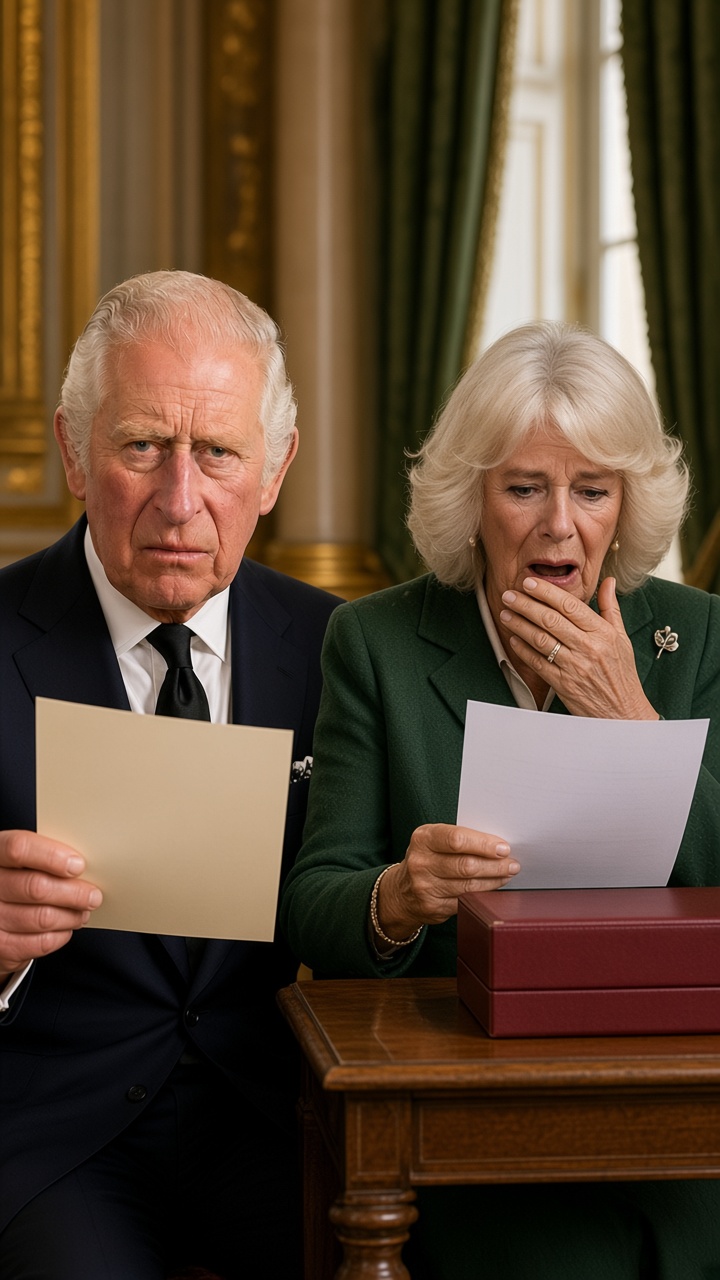
The claim is nevertheless intriguing because Queen Camilla’s position is not merely ceremonial. Under the Counsellors of State Act 2022, the spouse of the sovereign is among those who can be called upon to exercise delegated royal functions when the monarch is unavailable because of illness or absence. The legislation explains that Counsellors of State may perform certain royal functions when delegated by the sovereign, although important limitations apply and the precise powers are determined through Letters Patent. In other words, Camilla’s constitutional position gives her responsibilities that go beyond appearing beside Charles at ceremonies or supporting charitable organizations. It is a formal role created within Britain’s constitutional framework.
That background makes the allegation of tighter internal controls sound more consequential than an ordinary administrative adjustment. Yet it is important not to confuse constitutional authority with the day-to-day management of a royal household. The Counsellor of State role is defined by law. The organization of a royal office, including how diary decisions, communications, patronages and public statements are approved, can operate through internal procedures that are not necessarily made public. The existence of one does not automatically prove the existence of the other.
The July 2026 report claimed that the changes followed a gradual accumulation of disagreements over how Camilla’s office operated. It alleged that some announcements, scheduling decisions and communications had been handled without the level of coordination expected by the King’s office. The report described this as a pattern rather than a single incident. It also suggested that Prince William had been concerned about accountability and wanted similar standards to apply across the royal household.
No publicly available official announcement located for this article confirms those specific allegations. The Royal Family’s website continues to publish official engagements through the Court Circular and Royal Diary, documenting the public work carried out by members of the family. The Court Circular is described by the institution itself as the official record of past royal engagements, while future engagements are published in advance through the Royal Diary. These records provide evidence of what members of the family publicly do, but they do not reveal every internal conversation or administrative decision that may occur behind the scenes.
That is precisely where the story becomes difficult to verify.
The report portrays Camilla as someone whose influence was built gradually over decades. There is a factual basis for the broader history behind that part of the narrative. Camilla became closely associated with Charles long before their marriage, and after their wedding in 2005 she developed a substantial public role through charitable patronages and campaigns. The Royal Family’s own historical material notes, for example, that she had been involved with the Royal Osteoporosis Society since the 1990s and that the organization became one of her significant causes as Duchess of Cornwall. Her work has also included literacy and other charitable initiatives. An official review of her work with Charles’s former Prince of Wales office highlighted her literacy campaign and her involvement with charitable organizations.
Her public rehabilitation is also an important part of the history. Camilla entered marriage to Charles after decades of intense public scrutiny surrounding the breakdown of his marriage to Diana. The monarchy eventually embraced her more openly. One of the most important public moments came in February 2022, when Queen Elizabeth II expressed her “sincere wish” that Camilla would be known as Queen Consort when Charles became king.
That statement mattered enormously because it represented the late Queen’s public acceptance of Camilla’s future position. It also helped define the constitutional and symbolic direction of the monarchy before Charles’s accession.
Seven months later, Charles became king. In his first address to the nation and Commonwealth, he explicitly recognized Camilla’s public service and said that she would become Queen Consort. Her position was therefore not the result of an informal arrangement secretly created inside Buckingham Palace. It was part of the formal transition from the reign of Elizabeth II to the reign of Charles III.
This is why the allegation of a sudden restriction needs to be handled carefully. If internal protocols have changed, that would not necessarily mean Camilla’s constitutional position had been removed or weakened. It could simply mean that the King’s office had changed how certain administrative decisions were coordinated.
The distinction is crucial.
A monarch can delegate certain functions to Counsellors of State under the law, while the royal household can separately establish procedures governing communications, scheduling and public engagements. The two systems overlap, but they are not identical.
The report also placed considerable emphasis on Charles’s health. This part of the story touches on an independently documented reality: Charles has been undergoing cancer treatment since 2024. The palace has continued to document his official activities during that period, and reporting has repeatedly noted the adjustments made to his schedule. However, the suggestion that his health specifically caused him to approve new restrictions on Camilla is an inference presented by the YouTube report, not a publicly established fact.
The same caution applies to the report’s descriptions of private conversations between Charles and Camilla.
The video claimed that Camilla was informed of the alleged changes during a short private meeting at Clarence House with a senior member of Charles’s office. It further claimed that she asked whether the decision came directly from Charles and that she was told it did. According to the video, she later discussed the matter with Charles privately over dinner.
Those details are dramatic, but they are also impossible to independently verify from the public evidence identified here. No official transcript, statement or named firsthand source has been produced to establish that such a meeting occurred. The report relies heavily on unnamed people described as being close to the household.
That does not automatically make the story false. Royal households are private institutions, and not every internal decision receives a public announcement. But anonymity also means readers cannot independently assess the source’s position, access or reliability. A responsible account therefore has to present those details as allegations rather than established events.
The alleged involvement of Prince William raises another important issue.
William is not simply a distant member of the royal family. He is the heir to the throne and, in practical institutional terms, one of the most important figures in the monarchy. His public responsibilities have expanded considerably since Charles became king. Reporting in 2026 has also highlighted the broader modernization and restructuring taking place across the royal estate and household.
Yet the claim that William personally demanded restrictions on Camilla remains unverified.
There is a broader institutional context that makes the allegation plausible enough to attract attention, without making it proven. Charles’s monarchy has increasingly emphasized efficiency, modernization, financial transparency and the use of royal properties. In June 2026, it was reported that Charles and Camilla would remain at Clarence House rather than move into Buckingham Palace after the palace’s major renovation. Buckingham Palace will continue to serve as the main venue for major ceremonial and official functions.
That decision demonstrates that significant changes to the way the monarchy operates can occur without dramatic changes to titles or public appearances. The institution can preserve its familiar ceremonial image while altering the practical machinery underneath it.
This is perhaps the most interesting aspect of the Camilla story.
Even if the alleged new protocols are eventually confirmed, they would not necessarily represent a public demotion. Camilla would remain Queen. She would continue carrying out engagements and supporting charitable causes. Her official public role would continue to be recorded in the Royal Family’s diary. Nothing in the current official record indicates that her title or constitutional status as a Counsellor of State has been removed.
Indeed, the law makes clear that the spouse of the sovereign remains part of the statutory pool of Counsellors of State unless the legal framework changes.
The YouTube report, however, presents the alleged changes in much more dramatic terms. It suggests that Camilla’s office had accumulated informal independence over time and that Charles had eventually decided that certain decisions could no longer be made without approval from his own office. It also portrays William as an important force behind a broader demand for clear institutional boundaries.
One particularly striking claim concerns joint royal engagements. The report describes an event at which Catherine supposedly delivered remarks while Camilla did not, interpreting this as evidence that the new protocols had already begun affecting the distribution of public roles.
Again, the underlying event would need to be checked against the official Court Circular and contemporaneous reporting before such an interpretation could be treated as fact. The official royal records document engagements, but they do not automatically establish why one person spoke while another did not.
That distinction matters because royal ceremonies contain many variables. A member of the family may not speak because the event is organized around another patron, because of scheduling, because of the nature of the organization being visited, or simply because speeches are unnecessary. Interpreting a single appearance as evidence of a palace power struggle requires additional evidence.
The same applies to the allegation that Camilla’s communications team has remained silent because she was told that she had no room to challenge the new rules.
The palace’s traditionally restrained communications style makes silence difficult to interpret. The Royal Family routinely does not comment on private family matters. Its public website is primarily designed to document official duties, speeches, announcements and constitutional information rather than private disagreements.
That means an absence of a statement cannot, by itself, establish that a private confrontation took place.
There is another reason the story has gained traction: the monarchy is constantly balancing personal relationships with institutional requirements. Charles and Camilla are husband and wife, but they also occupy separate constitutional and administrative roles. William and Catherine likewise operate within their own office and public responsibilities. The Royal Family’s official contact information itself identifies separate private offices for the King and Queen and for the Prince and Princess of Wales.
So the existence of separate offices is not controversial. The unanswered question is how much independence each office exercises internally and what approval procedures apply to specific categories of decisions.
That is where future reporting could potentially establish whether the July 2026 allegation contains a real institutional change.
For now, the confirmed picture is more restrained.
King Charles remains sovereign. Queen Camilla remains Queen and continues to undertake public engagements. Her position within the Counsellors of State framework remains grounded in legislation. Prince William remains heir to the throne. Buckingham Palace continues to function as the principal ceremonial and official venue even though Charles and Camilla are expected to remain based at Clarence House.
The unconfirmed picture is considerably more dramatic: an alleged internal protocol requiring Camilla’s office to seek additional approval; a supposed tightening of control over public statements and scheduling; private dissatisfaction within the royal household; and a possible role for William in pushing for greater institutional discipline.
Those claims should not be presented as established facts without corroboration.
Still, the story raises a legitimate question about the future of the monarchy.
As Charles’s reign progresses, the royal institution is already preparing for a transition that will eventually place William at its center. Some of that preparation is unavoidable. The heir must develop his own working model of monarchy, his own staff structures and his own approach to public duties. Changes made today may influence how the institution functions tomorrow.
That does not mean that every disagreement between royal offices represents a deliberate campaign by William against Camilla. Nor does it establish that Camilla has lost meaningful influence. It simply means that the monarchy, like any large institution, evolves through procedures, staffing decisions and administrative practices as well as through public ceremonies.
Camilla’s own career demonstrates how much can change over time.
She moved from a deeply controversial figure in British public life to an established senior member of the monarchy. Queen Elizabeth II publicly endorsed her future role as Queen Consort. Charles publicly recognized her contribution when he became king. Her charitable work has continued to form a substantial part of her public identity.
If internal procedures are now being tightened, that would therefore be another stage in a much longer institutional evolution rather than proof that Camilla has suddenly been stripped of authority.
And that may be the most revealing question of all.
The dramatic version of the story asks whether King Charles has finally “said no” to Camilla. The evidence currently available does not establish that. A more useful question is whether the royal household is moving toward a system in which responsibilities, communications and decision-making are more formally coordinated across separate offices.
The monarchy has always depended partly on precedent and convention. But modern royal institutions also rely increasingly on professional staff, administrative systems, public accountability and carefully coordinated communications. As the institution changes, informal arrangements can be replaced by more explicit procedures without any public confrontation.
That possibility makes the alleged rules interesting even before their existence is confirmed.
For Camilla, the public reality remains largely unchanged. She is still Queen. She remains active in royal life. Her constitutional role remains recognized by law. For Charles, the challenge is to balance his responsibilities as monarch with the complex network of offices surrounding him. For William, the challenge is different: he is gradually preparing for a future reign while operating within an institution that still belongs to his father.
What happens behind closed doors will probably remain partly invisible.
That is normal for a constitutional monarchy whose official communications reveal only a fraction of its internal administration. The Royal Family’s published diary can tell the public where senior royals are going and what duties they are performing. It cannot tell the public every conversation held beforehand, every disagreement between advisers, or every internal approval granted or withheld.
For that reason, the July 2026 report should be read as a claim about an alleged palace development, not as proof that a dramatic power struggle has been settled.
But if the specific restrictions described in the report are eventually confirmed by credible sources, they would still be significant—not necessarily because they would remove Camilla’s title or constitutional position, but because they could reveal a shift toward more formal boundaries between royal offices.
And in an institution where small administrative changes can shape how future generations operate, that could matter considerably.
For now, the palace doors remain closed on the most dramatic part of the story. There is no public announcement confirming that King Charles has imposed the detailed restrictions described in the video. There is no official statement establishing that Prince William demanded them. There is no publicly verified account of the private conversation allegedly held between Charles and Camilla.
What can be documented is the larger transition: Charles’s monarchy is evolving, Camilla remains an important working royal, William’s position as heir is becoming increasingly central, and the royal household continues to adapt its organization to a changing institution.
The most sensational version of the story may therefore be premature.
The more interesting story may be quieter: a monarchy gradually replacing informal understandings with clearer administrative structures, while the people at its center continue to perform the public roles that millions recognize.
Whether the alleged new rules become a confirmed chapter in that transformation—or remain an unverified palace rumor—will depend on evidence that has not yet entered the public record.
Disclaimer: This story is fictional and created for entertainment purposes only.
Any names, characters, places, or events are fictitious or used fictitiously.
No real person or organization is intended to be portrayed.
