The Seat Camilla Was Forbidden to Take
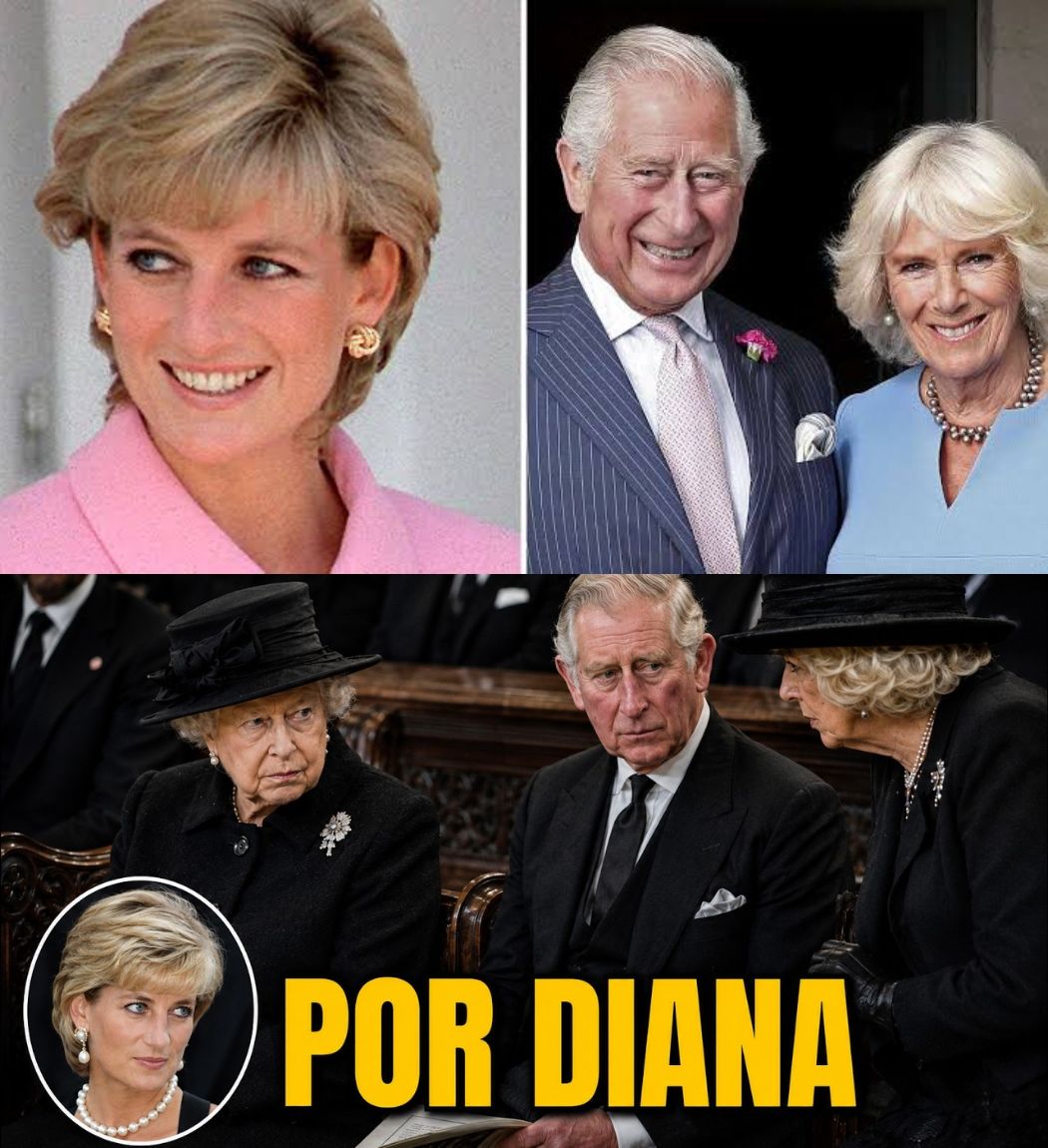
January 2005 should have been a moment of triumph for Charles and Camilla. After years of controversy, public hostility and painstaking efforts to rehabilitate their relationship, the couple were only months away from announcing their engagement. Camilla Parker Bowles had gradually moved from being one of the most controversial figures surrounding the royal family toward becoming an accepted part of Charles’s public life. Yet inside St George’s Chapel at Windsor, an extraordinary reminder of the past remained. Charles and Camilla were both attending the funeral of Sir Angus Ogilby, husband of Princess Alexandra of Kent. They were in the same building, surrounded by members of the royal family and representatives of Britain’s establishment. But they were not permitted to sit together. According to contemporary reporting, palace officials regarded the image of Charles sitting beside Camilla at a funeral as unacceptable. The seating arrangement was therefore carefully separated. For Charles, who was reportedly furious about the decision, the incident demonstrated that the past had not disappeared simply because eight years had passed since Diana’s death. The significance of that moment becomes clearer when traced back to September 1997, when Camilla was not merely separated from Charles at a royal occasion. She was absent altogether. On August 31, 1997, Diana, Princess of Wales, died following a car crash in Paris. The news sent Britain and much of the world into shock. Diana had been one of the most recognizable people on the planet, and her death created an extraordinary wave of grief. Charles immediately travelled to Paris and remained closely involved in arrangements surrounding Diana’s body and return to Britain. Her funeral would become one of the most watched public events in modern history. But while Diana’s coffin travelled through London, Camilla Parker Bowles was far away. She was at Ray Mill House in Wiltshire, watching the funeral on television. The transcript on which this account is based portrays Camilla’s absence as a deliberate decision rather than a personal choice to avoid Diana’s funeral. There is an important distinction here. Camilla did not hold an official royal position in 1997, and her relationship with Charles was still deeply controversial. Her presence at Diana’s funeral would have carried enormous symbolic meaning, particularly because the public already associated her with the breakdown of Charles and Diana’s marriage. Whatever the precise internal discussions among palace officials, the practical result was unmistakable: Camilla was nowhere near the funeral. Diana’s death had transformed the public atmosphere surrounding the monarchy almost overnight. Flowers began appearing outside Kensington Palace in extraordinary numbers. Bouquets, candles, photographs, letters and personal messages accumulated until the area became a vast public memorial. The emotional response was not confined to London. People around the world watched the developments closely, and pressure mounted on the royal family to respond to a public that expected a visible expression of grief. The Queen, Elizabeth II, was at Balmoral in Scotland with the royal family. The decision to remain there became controversial. Critics argued that the monarchy appeared distant at a moment when the country was grieving. The constitutional and ceremonial traditions surrounding the Royal Standard and the Queen’s location complicated the question of what should happen at Buckingham Palace, but public expectations were changing faster than traditional protocol. Tony Blair, then prime minister, played a prominent role in the public response to Diana’s death. His description of Diana as “the people’s princess” became one of the defining phrases associated with the national mourning. Pressure on the palace intensified. Eventually, Queen Elizabeth returned to London. On September 5, the day before Diana’s funeral, she appeared outside Buckingham Palace and acknowledged the crowds and the sea of flowers. That evening, she delivered a televised address in which she spoke as both Queen and grandmother. Her words expressed admiration for Diana and acknowledged the extraordinary public affection surrounding her. The intervention helped change the tone of the national conversation. The following day, Diana’s coffin travelled through London. The procession became an extraordinary spectacle of mourning. Crowds lined the streets as the gun carriage carried Diana’s coffin from Kensington Palace toward Westminster Abbey. Charles walked behind the coffin alongside members of the royal family. William and Harry, then only 15 and 12, also walked in the procession. Their participation has remained one of the most discussed aspects of the funeral. Harry later described the experience in his memoir Spare, while other members of the family have offered different recollections of how the decision was reached. One account credits Prince Philip with helping persuade the boys to participate by promising to walk alongside them. Whatever the private discussions, the image became permanently associated with Diana’s funeral: her two sons walking behind their mother’s coffin through a silent and grieving London. When the procession passed Buckingham Palace, Queen Elizabeth stood outside with the royal family. As Diana’s coffin approached, the Queen bowed her head. The gesture lasted only moments, but it became one of the most widely viewed images of the funeral. The symbolism was powerful. The Queen, who had faced criticism during the days following Diana’s death, visibly acknowledged the coffin as it passed. Inside Westminster Abbey, the funeral combined royal ceremony with elements of Diana’s public identity. Elton John performed a rewritten version of “Candle in the Wind,” with new lyrics by Bernie Taupin. Earl Spencer delivered an address that included pointed references to Diana’s life, her relationship with the royal institution and the future of her children. His distinction between Diana’s “blood family” and the royal family became particularly memorable. The speech was followed by prolonged applause, an unusual response during such a formal royal service. While the world watched the funeral, Camilla remained at Ray Mill House. Her absence was not simply a matter of geography. She had become one of the most controversial figures in the entire Diana story. Public anger toward her intensified after Diana’s death. Newspaper coverage and popular commentary frequently portrayed her as the third person in Charles and Diana’s marriage. The hostility became so intense that Camilla’s private life was profoundly affected. Royal biographer Ingrid Seward has described Camilla’s circumstances after Diana’s death as extremely difficult, while Tina Brown has documented the sustained hostility directed toward her in the years that followed. The insults were personal and often vicious. Camilla herself later used dark humour when corresponding with Charles, reportedly signing some letters with variations of the phrase “your devoted old bag.” The remark reflected an attempt to reclaim some control over an insult that had become associated with her public image. But the palace could not simply erase the controversy. Charles and Camilla’s relationship would have to be carefully managed if the monarchy was to accept them publicly. That process gradually became known as an effort to rehabilitate Camilla’s public image. Charles hired public relations specialist Mark Bolland, and carefully staged public appearances helped introduce Camilla to a wider audience. One of the most significant moments came in January 1999, when Charles and Camilla were photographed together leaving the Ritz Hotel in London after the 50th birthday celebration of Camilla’s sister, Annabel Elliot. The appearance was highly significant because it represented a transition from secrecy toward controlled public visibility. Instead of pretending that Camilla did not exist, the strategy was increasingly to allow the public to become accustomed to seeing her beside Charles. Over the next several years, the relationship became more visible. By the early 2000s, there were signs that attitudes toward a future marriage were changing, although substantial reservations remained. William and Harry appeared to have accepted Camilla’s presence in their father’s life. Public opinion was still divided, however, and the question of whether Camilla could eventually become queen remained sensitive. Then came the funeral at St George’s Chapel in January 2005. Eight years had passed since Diana’s death. Charles and Camilla were now established as a couple in public life. Their relationship was no longer a secret, and their marriage was becoming an increasingly realistic possibility. Yet the seating decision demonstrated that certain images remained too sensitive for the palace. Charles and Camilla could attend the same funeral, but they could not sit together. Contemporary reports described Charles as extremely angry about the arrangement. The symbolism was difficult to miss. A funeral had already become inseparable from the most painful chapter of Charles’s public life. Diana’s funeral had been watched by an enormous global audience, and images of Charles, his sons and the royal family behind Diana’s coffin remained deeply embedded in public memory. Allowing Charles and Camilla to appear together at another royal funeral could inevitably invite comparisons. Palace officials therefore had to consider not merely where two people preferred to sit, but what the resulting image might communicate. This distinction is important because the seating arrangement was not necessarily a personal declaration about Camilla. It was a decision about public presentation, royal ceremony and institutional symbolism. Nevertheless, for Charles the restriction appears to have been deeply frustrating. The couple were only months away from announcing their engagement, yet the past still influenced even the most ordinary details of royal ceremonial life. Three months after the funeral, Charles and Camilla announced their engagement. Charles made clear that the relationship was central to his life, and the couple proceeded toward marriage. But the wedding itself demonstrated that the monarchy was still navigating the consequences of Diana’s legacy. On April 9, 2005, Charles and Camilla married in a civil ceremony at the Guildhall in Windsor. The Queen did not attend the civil ceremony. Instead, she attended the subsequent service of blessing at St George’s Chapel. The official explanation centred on her role as Supreme Governor of the Church of England and the distinction between the civil marriage and the religious service. Whatever private interpretations commentators attached to the decision, the arrangement ensured that the Queen was not present when Charles and Camilla exchanged their civil vows. Public opinion remained divided. A YouGov poll reported in 2005 found that only a small proportion of respondents believed Camilla should eventually become queen. This demonstrated how difficult the transition remained. Camilla had moved from being publicly excluded to being officially married to the future king, but public acceptance was still incomplete. The story resurfaced again in 2007, when William and Harry invited Camilla to the memorial service marking ten years since Diana’s death. Camilla initially accepted the invitation. She then reconsidered and withdrew. Her official explanation was that she believed her attendance might divert attention from the purpose of the event, which was to honour Diana’s life and service. The decision was significant because it showed that even a decade after Diana’s death, Camilla understood the extraordinary sensitivity surrounding any appearance of hers at an event dedicated specifically to Diana. It was not simply a question of whether Camilla had become accepted within the royal family. She had. It was a question of context. A memorial to Diana created a unique emotional and symbolic environment in which Camilla’s presence could become the story itself. That possibility was enough for her to step away. Ingrid Seward has highlighted the apparent contradiction in the Queen’s relationship with Camilla. According to Seward, Elizabeth felt sympathy for Camilla and regarded her as someone who had suffered intense public hostility. At the same time, the Queen maintained strict boundaries around how Charles and Camilla appeared together in sensitive ceremonial settings. These two positions could exist simultaneously. Personal sympathy did not necessarily translate into unrestricted public acceptance. The monarchy had institutional interests that extended beyond individual relationships. This distinction helps explain why the 2005 seating arrangement was so revealing. The Queen did not necessarily have to believe that Camilla was personally unworthy of sitting beside Charles. Instead, she had to consider what that image would mean in the specific context of a funeral. Royal ceremonies are highly visual events. Seating plans, processions, clothing, gestures and photographs can become part of the public narrative. A few feet between two people can communicate something different from two people sitting shoulder to shoulder. In Diana’s case, visual symbolism had always been unusually powerful. Her wedding photographs, her appearances with Charles, her divorce, her humanitarian work and ultimately her funeral had all become global images. After her death, those images gained an additional emotional force. Diana’s memory became central to the public understanding of the royal family during the years that followed. Charles and Camilla therefore had to build their public relationship within an environment where Diana remained an unavoidable reference point. On May 6, 2023, that long journey reached another extraordinary stage. Charles was crowned King Charles III at Westminster Abbey, and Camilla was crowned Queen. The location itself carried enormous historical symbolism. Westminster Abbey was the place where Diana’s coffin had rested during her funeral in 1997. It was the place where Earl Spencer had spoken about Diana’s family and her children. It was the place where Elton John had performed during the service that had become one of the most famous royal funerals in history. Now Camilla stood there as Queen. The transformation was extraordinary. In 1997, she had been absent from the funeral and watched from a country house. In 2005, she had been separated from Charles at another royal funeral. In 2007, she had withdrawn from Diana’s memorial service. In 2023, she was crowned Queen beside Charles in the same historic abbey associated so strongly with Diana’s final public farewell. Yet the transformation did not erase history. It demonstrated how differently the same institution could treat the same person across different periods of time. Camilla’s journey from exclusion to queenship was not simply a story about one woman overcoming criticism. It was also a story about how the monarchy manages memory. Institutions survive partly by controlling continuity, ceremony and symbolism. Diana represented one of the most emotionally powerful chapters in the modern history of the British royal family. Charles and Camilla represented another. For years, the two narratives could not easily occupy the same visual space. That is why the seating arrangement at the 2005 funeral mattered far beyond a few chairs or a single pew. It was a reminder that royal ceremony is never merely about furniture. Every position can carry historical meaning. Every photograph can become evidence in a much larger public story. Eight years after Diana’s death, the palace still remembered the extraordinary public reaction of 1997. The separation of Charles and Camilla at the funeral therefore reflected a broader effort to avoid creating an image that could revive old controversies. The Queen had experienced the crisis of 1997 from the centre of the institution. She had seen public anger intensify, watched the flowers accumulate outside royal residences and eventually returned to London to address the nation. She had also stood before Diana’s coffin and bowed her head as the procession passed Buckingham Palace. Whatever her private feelings toward Camilla, she understood that Diana’s memory had enormous public power. The most striking part of the story is therefore not simply that Camilla was once kept away from Charles. It is that the restrictions changed gradually as the years passed. First she was absent from Diana’s funeral. Then she became a visible companion of Charles. Later she was permitted to marry him, although the wedding ceremony was carefully structured. She withdrew from Diana’s tenth-anniversary memorial. Finally, she became Queen and stood publicly in Westminster Abbey. The same woman who had once been considered too controversial to appear beside Charles at a funeral ultimately occupied the highest ceremonial position beside him. Yet the old images remain. Camilla watching Diana’s funeral from Ray Mill House. Charles and Camilla separated by a seating arrangement at St George’s Chapel in 2005. Camilla withdrawing from Diana’s memorial service in 2007. And, finally, Camilla wearing a crown in Westminster Abbey in 2023. Taken together, those moments reveal the extraordinary length of the transition. Diana died in 1997, but her presence remained part of the public story surrounding Charles and Camilla for decades. The question was never simply whether Camilla would eventually become accepted. The deeper question was whether the public could separate Charles’s second marriage from the emotional memory of his first. The answer varied depending on the year, the occasion and the audience. That is why the 2005 funeral remains such a revealing moment. Charles and Camilla were already a public couple. Their relationship was no longer hidden. Their engagement was approaching. Yet one royal funeral was enough for the palace to draw a line between them. The decision showed that, in certain contexts, the memory of Diana still carried greater ceremonial weight than the relationship Charles was preparing to formalize. And perhaps that is the central paradox of the entire story. Camilla eventually became Queen, but becoming Queen did not rewrite the past. It simply added another chapter to it. Diana remained part of the historical landscape in which Charles and Camilla’s relationship was understood. The Queen’s decisions after Diana’s death were never publicly explained in every detail, and accounts of private palace discussions vary. Some interpretations emphasize institutional protection and ceremonial prudence; others focus on personal relationships and unresolved family tensions. The available evidence does not allow every private motive to be established with certainty. What can be documented is the sequence of events: Diana died in 1997; Camilla was absent from the funeral; Charles and Camilla gradually became more public; they were separated at the 2005 funeral of Sir Angus Ogilby; they married later that year; Camilla withdrew from Diana’s tenth-anniversary memorial in 2007; and in 2023 she was crowned Queen beside Charles at Westminster Abbey. The meaning of those events has been debated for years, but their chronology is remarkable on its own. In 1997, Camilla could not be part of Diana’s funeral. In 2005, she could attend a royal funeral but could not sit beside Charles. In 2007, she chose not to attend Diana’s memorial. In 2023, she stood crowned in the same abbey where Diana’s coffin had rested. Three decades of royal history had transformed one of the most controversial relationships in Britain into a constitutional reality. But history does not disappear simply because ceremony moves forward. The empty space beside Charles in that 2005 pew became a small but powerful reminder that, within the royal family, the past could still determine the present. Camilla eventually sat beside Charles as Queen. Yet before she could take that place, there were years when a seat beside him remained one of the most carefully controlled spaces in the British monarchy.
