Uncategorized
The Five Words Harry Never Forgot
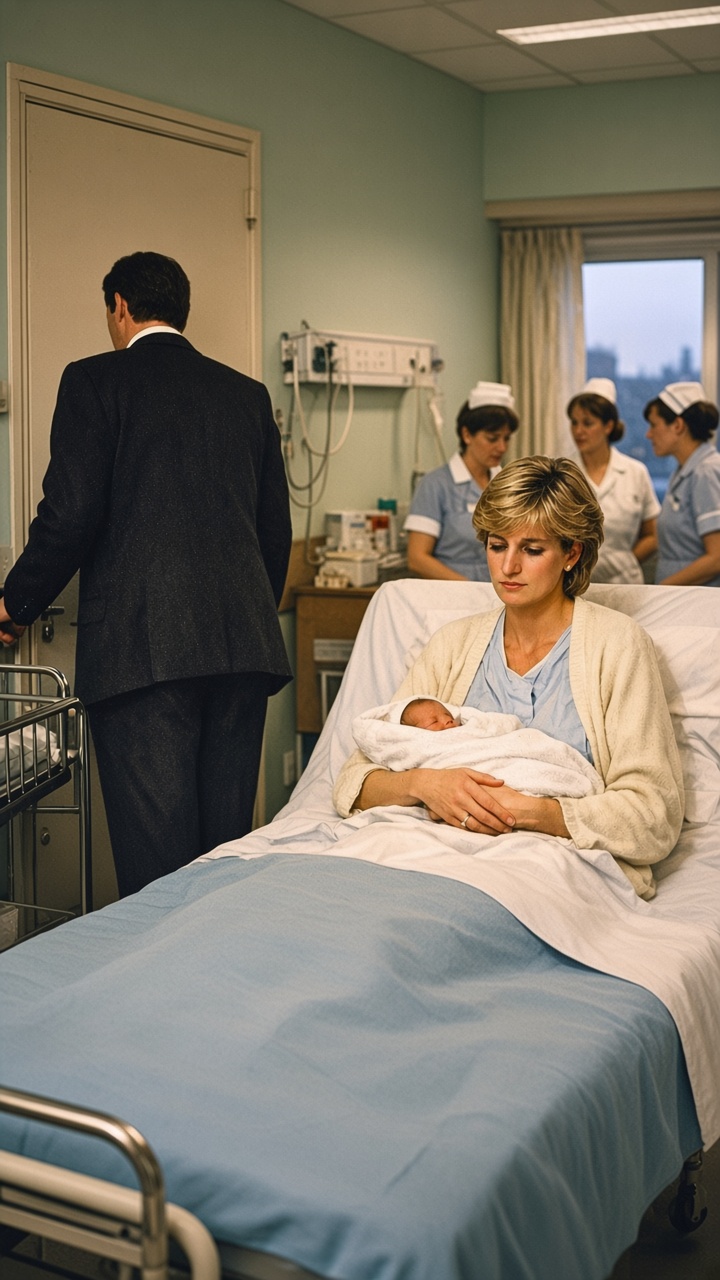
Instead, according to accounts Diana later gave to people close to her, the first moments after Harry’s birth became one of the memories she carried for the rest of her life.
The story centres on a reaction attributed to Charles when he first saw his newborn son. According to Diana’s recollections, he had expected a daughter. When he discovered that the baby was a boy—and that the child had red hair—his reaction was reportedly one of disappointment.
The words themselves have been repeated for decades in biographies, interviews and accounts connected to Diana’s private conversations. One version recalled by her former butler Paul Burrell describes Charles looking at the baby and commenting on his red hair before making a remark about finally having an “heir and spare.”
For Diana, the significance was not simply the words. It was the timing.
She had just given birth.
She was exhausted.
And, according to her later recollections, she had spent the previous six weeks believing that something between herself and Charles had finally begun to change.
Those six weeks would become particularly important in understanding why the birth of Harry remained such an emotional memory for Diana.
Before Harry was born, Diana already knew that the baby was a boy. She had seen the scan. Charles, according to accounts attributed to Diana, did not want to know the sex of the child.
Diana therefore kept the information to herself.
In later recordings associated with Andrew Morton’s biography of Diana, she described the final weeks of the pregnancy as an unusually happy period in her marriage. She reportedly remembered the couple as being exceptionally close during those weeks.
For a woman who believed her marriage was already deteriorating, the change was enormously important.
Diana later described those weeks as among the closest she and Charles had ever been.
There was a reason she allowed herself to believe in that temporary happiness.
She knew Charles wanted a girl.
She knew that he was emotionally distant from her in many other respects.
And she knew that their marriage had already been complicated by the continuing presence of Camilla.
But Diana apparently decided not to reveal what she had learned from the scan.
Perhaps, as she later remembered it, she simply wanted those final weeks to remain peaceful.
Perhaps she hoped that another child could give the marriage something new to hold on to.
Whatever her precise motivation, the birth of Harry transformed that fragile period of hope.
The baby arrived healthy.
But according to Diana’s account, Charles did not respond in the way she had imagined.
The remark about Harry’s red hair became the first part of a story Diana would repeat to people she trusted.
The second part was even more painful.
Charles reportedly left the hospital later that evening to attend the theatre.
He was dressed formally, in black tie.
When Diana questioned why he was leaving, the explanation attributed to him was blunt: his “work” was done.
The details of this account have been repeated through Diana’s former staff and biographers, although individual retellings differ. What remains important is how Diana herself reportedly remembered the experience.
She had not experienced the birth simply as the arrival of a new child.
She experienced it as a revelation about her marriage.
For months, she had tried to maintain the appearance of a functioning royal household. Public photographs showed a young princess, a future king and their first son. Their second child was now safely born.
From the outside, the picture appeared complete.
Inside the relationship, however, Diana reportedly believed something very different.
She later described herself as crying herself to sleep after Harry’s birth.
She reportedly came to believe that the marriage was effectively finished.
The significance of that night therefore goes beyond one sentence.
It represented the collision of several things that Diana had been trying to keep separate: motherhood, marriage, royal duty, Charles’s relationship with Camilla, and the enormous expectations placed on a young woman who had become one of the most recognizable people in the world.
Harry was born into that complicated environment.
He was not merely the second child of Charles and Diana.
He was the second son of the future king.
That distinction would eventually become central to the way his public identity was understood.
For the royal institution, Harry’s arrival had an obvious constitutional significance. Prince William was the heir to the throne, while Harry occupied the next position in the succession.
That later inspired the shorthand “heir and spare,” a phrase that would become deeply associated with Harry’s own understanding of his place in the family.
But the story did not end in the hospital.
According to Diana’s recollections, another painful episode occurred at Harry’s christening.
At the ceremony, Charles reportedly spoke to Diana’s mother, Frances Shand Kydd, and expressed disappointment that the baby had not been a girl.
The comment was particularly sensitive because Frances had experienced the death of her infant son, John, who lived for only a matter of hours.
According to the account attributed to Diana, Frances responded sharply, telling Charles that he should appreciate how fortunate he was to have a healthy child.
Whether every detail of the exchange can be independently established is difficult decades later. Much of the story comes through Diana’s own recollections and accounts from people who knew her.
But the emotional importance of the episode is clear in the way Diana reportedly remembered it.
The christening reinforced what she had already felt in the hospital.
The problem was no longer simply that Charles had made an insensitive comment.
Diana believed she had discovered something deeper about the emotional distance between them.
And there was another issue that made the situation more complicated.
Camilla.
Charles’s relationship with Camilla had already become one of the central tensions within his marriage to Diana. Diana knew about the relationship, and according to numerous accounts from the period, it caused enormous distress.
The public image was different.
Photographs showed a beautiful young princess, an heir to the throne and their children.
The royal family appeared stable.
The reality behind the photographs was considerably more complicated.
Diana increasingly understood that maintaining the appearance of unity required her to conceal what she was experiencing privately.
That conflict eventually became one of the defining features of her life.
She could perform the role expected of her in public.
But privately, she wanted to be heard.
And according to people who knew her, that desire became particularly important when it came to her children.
Diana reportedly did not want Harry to grow up completely unaware of the circumstances surrounding his parents’ relationship.
She had experienced the consequences of silence herself.
She therefore spoke about the family situation with her sons as they grew older, although exactly what she told them, when she told them, and how much detail she provided is not always documented consistently.
This distinction matters.
The popular version of the story often presents Diana as deliberately handing Harry a single traumatic sentence and telling him that it defined his entire childhood.
The reality was more complicated.
Harry was born into a family whose problems developed over many years.
The marriage between Charles and Diana eventually separated in 1992 and ended in divorce in 1996.
Diana continued to remain a major public figure until her death in Paris in 1997.
Harry was only 12 years old when his mother died.
The effect of Diana’s death on both sons has been discussed extensively by Harry himself in later interviews and in his memoir.
For Harry, memories of childhood became intertwined with grief, royal expectations and the public scrutiny that followed him throughout his life.
The story of his birth therefore acquired another layer.
It was no longer only about something Charles allegedly said in a hospital room.
It became part of Harry’s understanding of his position within his family.
Years later, Harry would use the word “Spare” as the title of his memoir.
The title immediately drew attention because it described the traditional relationship between the heir and the second son in a hereditary monarchy.
Prince William was the heir.
Harry was the second son.
That distinction had existed from the moment Harry was born.
But the meaning Harry attached to it was shaped by decades of experience.
The idea that his father had viewed his birth primarily through the lens of producing an heir and a spare became a recurring theme in discussions surrounding his memoir.
Accounts involving Paul Burrell add another layer to the story.
Burrell had worked for Diana and became one of the people she trusted deeply.
He later recounted conversations in which Diana allegedly described Charles’s reaction to Harry’s birth.
The precise wording has appeared in different forms in different retellings.
That is important because viral versions of royal stories often transform complicated memories into one definitive quotation.
The broader account, however, remains consistent in one respect: Diana remembered Charles’s reaction to Harry’s birth as deeply hurtful.
She did not regard it as an amusing family anecdote.
She remembered it as part of the collapse of her marriage.
And she apparently continued to speak about it long after Harry had grown up.
This is where the story becomes particularly significant.
A childhood event can become something entirely different when it is repeated within a family.
The child who experiences an event directly remembers it one way.
The child who hears about it years later receives another version.
Harry did not remember being born.
He could not.
He was an infant.
His understanding of that night therefore came from other people.
Most importantly, it came from Diana.
That means the story was not simply an event.
It was a family memory.
And family memories can influence how people understand themselves, particularly when they are repeated over many years.
Harry later became increasingly outspoken about the pressures of royal life.
His relationship with the institution changed dramatically after his marriage to Meghan Markle.
In 2020, Harry and Meghan stepped back as senior working members of the royal family and eventually established their lives primarily in the United States.
The move represented a major change from the life Harry had been born into.
The second son of the future king had become a husband, father, author and public figure living far from the institution that had defined his childhood.
When his memoir “Spare” was published in 2023, the title immediately invited readers to reconsider the traditional language surrounding the second son of a monarch.
Harry wrote extensively about his childhood, his mother’s death, his relationship with William, his relationship with Charles and his experience within the royal family.
The memoir also demonstrated how differently members of the same family can remember the same events.
For Harry, childhood was not simply a collection of ceremonial photographs.
It was a series of relationships, expectations, losses and conflicts that continued to influence him into adulthood.
For Charles, the circumstances surrounding Harry’s birth have been described differently over the years.
Accounts from people close to Charles have not always accepted Diana’s interpretation of events.
Charles has also been portrayed in biographies and public statements as having loved his sons deeply, even while his marriage to Diana deteriorated.
That creates an important distinction.
A hurtful remark, if it was made as described, does not necessarily provide a complete explanation for an entire relationship.
Likewise, Diana’s recollection represents her perspective.
The royal family’s history contains many events for which the public has only partial evidence.
Some details come from biographies.
Some come from private recollections.
Some come from interviews conducted years later.
And some have become distorted through repetition.
The famous words attributed to Charles therefore should not be treated as a complete historical record of his feelings toward Harry.
What they reveal more clearly is how Diana experienced the moment.
She remembered the comment.
She repeated the story.
And the story survived.
That survival is perhaps the most fascinating part.
Diana died in 1997, long before Harry became the man who would publicly discuss his family conflicts.
She never saw her son marry Meghan Markle.
She never saw him become a father.
She never saw him move to California.
She never saw the publication of “Spare.”
She never saw Charles become King.
Yet the emotional legacy of her relationship with Charles continued into the next generation.
Harry was born into a family in which duty and personal emotion were constantly intertwined.
The institution required continuity.
The public expected stability.
The monarchy depended heavily on appearances.
But Diana increasingly challenged that culture of silence.
Her relationship with the press was complicated and frequently controversial, but she also understood the power of telling her own story.
The Andrew Morton biography became a major example of that.
Diana secretly recorded material that was used in Morton’s book, helping provide her perspective on her marriage and personal struggles.
The book changed public understanding of the relationship between Charles and Diana.
It also demonstrated something that would become central to Harry’s own public life decades later: the enormous power of controlling the narrative.
Diana could not change what happened in the hospital.
She could not force Charles to behave differently.
She could not erase the presence of Camilla from the history of the marriage.
And she could not prevent the royal institution from presenting its own version of events.
But she could tell her side.
Harry eventually did something similar.
His memoir gave readers his version of events.
That does not mean every interpretation contained in the memoir is universally accepted.
It means that a private family story became part of the public historical record through competing accounts.
That is why the story of Harry’s birth continues to attract attention.
It is not really about five words.
It is about what those words came to represent.
For Diana, they reportedly represented the moment when she realized that the brief period of closeness before Harry’s birth might not save her marriage.
For Harry, the story became part of a much larger narrative about being the second son.
For the public, it became one of the many stories that challenged the carefully maintained image of a perfect royal family.
And for the monarchy, it became another example of how private family conflicts can become public history.
The irony is difficult to miss.
Harry was born as a symbol of continuity.
He was the second son of the future king.
His birth strengthened the succession.
The photographs from the period presented an image of happiness and stability.
Yet the private memories associated with that birth told a different story.
Decades later, the baby in the cot would become one of the most controversial members of the modern royal family.
Charles would become King.
Camilla would eventually become Queen.
William would remain the heir.
And Harry would build a life outside the institution.
The five words attributed to Charles therefore became part of a much larger story.
But there is one final detail that makes the entire episode so powerful.
Harry cannot remember the moment himself.
He was a newborn.
His first memory of that night belongs to other people.
The person who remembered it most strongly was Diana.
She carried the memory for years.
She told people close to her.
And eventually, her version became part of Harry’s understanding of his own beginning.
That is how family history works.
Sometimes the events we remember most intensely are events we never personally experienced.
They are stories told to us by parents.
Stories repeated at dinner tables.
Stories whispered during difficult conversations.
Stories that acquire new meanings as we grow older.
Harry’s birth was one such story.
A healthy baby arrived.
A marriage was already under enormous pressure.
A mother heard words she considered devastating.
A father left for the theatre.
And a memory was created that would outlive the people who originally experienced it.
Forty years later, the world had changed completely.
Charles was no longer simply the Prince of Wales.
He was King.
Harry was no longer the infant whose red hair had attracted attention.
He was a husband, father and author who had publicly separated himself from the royal institution.
And Diana was no longer alive to explain what she truly meant by the stories she told.
That leaves historians, biographers and readers with an uncomfortable reality: there is no single sentence that can explain everything that happened between Charles, Diana and Harry.
The hospital-room remark, whether remembered word-for-word or repeated through later accounts, was only one moment in a much larger family history.
But for Diana, it mattered.
For Harry, the idea behind it mattered.
And for millions of people watching the royal family from the outside, it became another glimpse behind the official photographs.
The most enduring part of the story is therefore not the shock of a father supposedly disappointed by the birth of his son.
It is what happened to the memory afterward.
Diana carried it.
She told it.
Harry eventually inherited it.
And decades later, when Harry chose the title “Spare” for his memoir, readers around the world immediately connected that word with the position he had occupied since the day he was born.
The baby in the cot had no idea what the future held.
He could not have known that his parents’ marriage would collapse.
He could not have known that his mother would die when he was still a child.
He could not have known that his father would one day become king.
And he certainly could not have known that his own account of royal life would become one of the most closely examined family memoirs of the modern era.
But the story had already begun.
It began in a hospital room in September 1984, with a newborn boy, an exhausted mother and a father whose reported reaction became a memory that refused to disappear.
Four decades later, the words were still being discussed.
Not because five words alone could explain Harry’s life.
They could not.
But because sometimes a few words become symbols for everything that came before them—and everything that came afterward.
Disclaimer: This story is fictional and created for entertainment purposes only.
Any names, characters, places, or events are fictitious or used fictitiously.
No real person or organization is intended to be portrayed.
